Start With the Load, Not the Logo
Cotton drawstring backpacks for tech startups are often treated as a visual branding item first and a transport item second. That ordering causes sourcing mistakes. Procurement teams should start with what the bag must carry, how it will be handled, and how long the recipient is expected to reuse it. A simple booth giveaway that holds a brochure, badge holder, and sticker pack is a very different product from a launch kit that contains a water bottle, hoodie, charger, notebook, and welcome card. If the request begins with logo size only, suppliers will assume a generic low-cost build and quote accordingly.
The right sourcing sequence is load, use case, then material. Ask whether the bag will be handed out at a one-day conference, packed by a kitting house, shipped to remote employees, displayed in retail, or sold as merchandise. Then decide whether the bag should feel soft and lightweight or structured and premium. Tech startup buyers often want a low-waste, natural look, but that does not mean the thinnest fabric is the best choice. A cotton bag that stretches at the bottom corners or prints poorly can make the brand feel less deliberate, even if the logo file is perfect.
A practical way to scope the product is to define real weight, not just item count. Two onboarding kits may each contain five items, but one kit may weigh under 700 g and another may exceed 1.5 kg because of a bottle or power bank. That difference affects fabric selection, seam strength, drawcord diameter, and carton packing. Once the use case is clear, the supplier can recommend a safe fabric weight instead of guessing from a photo. That creates a more accurate quote and a cleaner approval process.
For procurement, the goal is to avoid hidden mismatch between marketing expectations and factory reality. If the bag is only meant to be a light event handout, 6 oz cotton may be enough. If the startup wants the bag to survive repeated commuting or later resale in a merch store, 8 oz or 10 oz is more appropriate. In short, choose the fabric for the actual life of the bag, not for the logo alone.
- Use 5-6 oz cotton for flat event handouts and short-term giveaways.
- Use 8 oz cotton canvas for most onboarding and employee welcome kits.
- Use 10 oz cotton canvas for retail, premium gifting, or repeated reuse.
- Add reinforcement when the packed load exceeds about 1.5 kg.
- Treat seam quality, cord hardware, and packing method as part of strength, not extras.
Fabric Weight Choices That Actually Change Cost
Cotton drawstring backpacks are commonly quoted in ounces or GSM. As a rough sourcing reference, 5 oz is around 170 GSM, 6 oz around 200 GSM, 8 oz around 270 GSM, and 10 oz around 340 GSM. These conversions are approximate because weave density, yarn count, finishing, moisture content, and coating or washing can shift the result. A useful RFQ should therefore specify both the target weight and the allowed tolerance. If a quote simply says cotton bag or cotton canvas without a stated weight, buyers cannot compare offers on equal terms.
The choice of fabric weight changes more than the softness of the bag. Heavier cotton usually increases fabric cost, cutting resistance, sewing time, needle wear, ink usage, drying time after printing, and carton gross weight. It can also affect freight and warehouse handling. A 10 oz bag may look more premium in a sample, but if the product is for a one-day developer conference, the added weight may not justify the cost. Conversely, a 6 oz bag used as a paid retail item may create complaints if it feels flimsy or distorts when filled.
The buyer should think in terms of business value, not only unit price. A lighter bag can be perfectly suitable if the program is disposable or low-load, but it should be clearly positioned that way. A heavier bag can support a better brand perception and longer reuse, but only if the logo size, artwork, and packing are also upgraded to match. This is why procurement should ask suppliers to quote at least two fabric weights side by side. It makes the trade-off visible before the PO is issued.
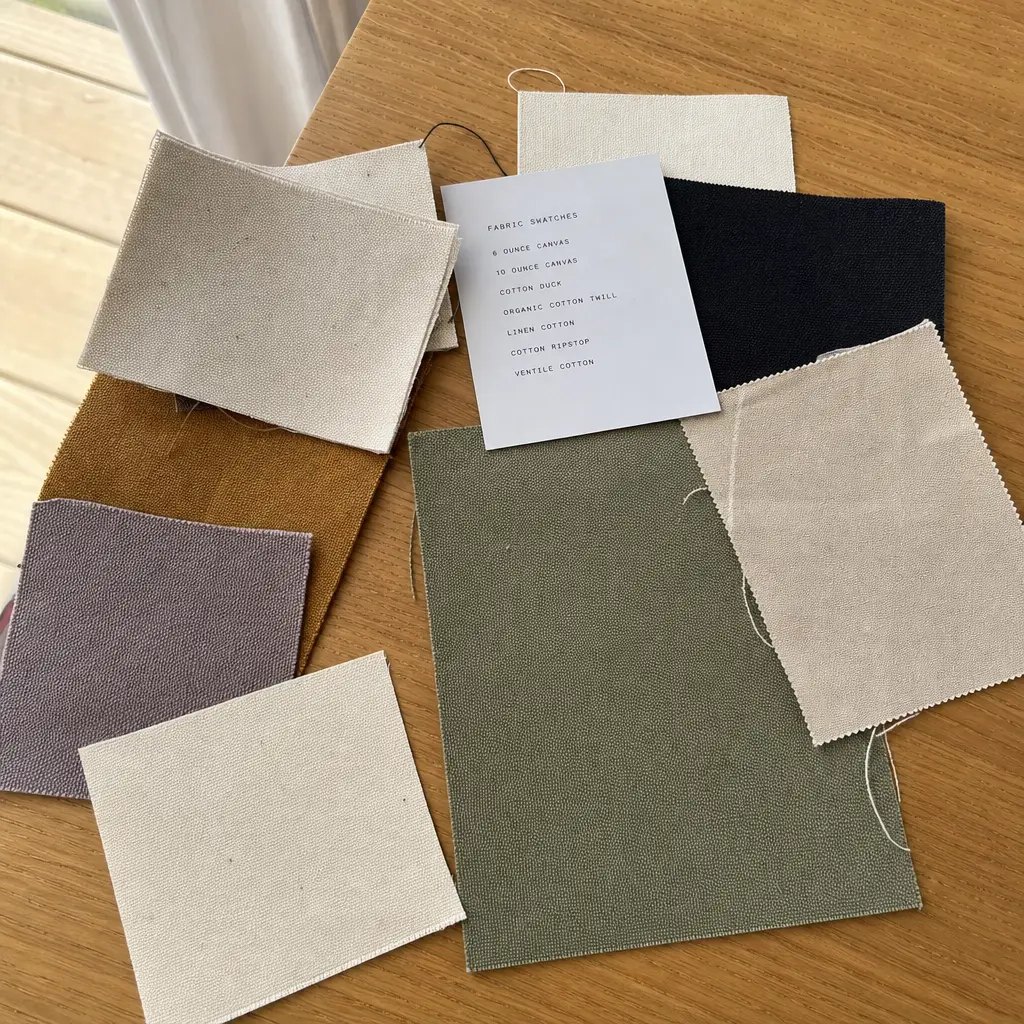
When comparing quotes, keep in mind that some suppliers may use different fabric constructions while quoting the same weight. For example, one 8 oz cotton canvas may feel denser and more durable than another because of a tighter weave. That is why swatches and pre-production samples matter. The final decision should be based on a combination of weight, weave, and end-use performance, not a single number on a price sheet.
- 5 oz cotton: low-cost, light hand feel, limited structure, best for flat inserts.
- 6 oz cotton: common promotional weight, acceptable for basic event packs.
- 8 oz cotton canvas: better body, better print surface, stronger for onboarding kits.
- 10 oz cotton canvas: premium feel, higher freight weight, better for retail or long reuse.
- 12 oz and above: possible, but often too stiff for a soft drawstring backpack unless the design changes.
Why GSM Alone Does Not Prove Durability
Two suppliers can quote the same GSM and deliver very different performance. A dense plain weave cotton canvas may carry better than a loosely woven fabric with the same nominal weight. A soft brushed finish can feel premium in hand but may reduce print sharpness and attract lint. A recycled cotton blend can strengthen a sustainability story, yet yarn consistency and shade consistency can vary more than with virgin cotton. For tech startup programs, consistency matters because the bag may pass through a kitting line, a fulfillment warehouse, or an event booth before the end user even sees it.
That is why the material description in the RFQ should not stop at GSM. Buyers should ask for the exact fiber content, weave type, finishing, and source if any sustainability claim will be used in marketing. If the bag is supposed to be organic cotton, recycled cotton, or a blend with a recycled content claim, request the documentation required to support that claim. If the program is internal or unbranded, a stable conventional cotton canvas may be the smarter sourcing choice because it reduces documentation risk and usually simplifies lead time.
Another reason GSM is not enough is that fabric behavior affects decoration. A coarse weave can make small icons or thin letters look broken, while a smoother weave can hold fine print better even at a similar weight. Dark cotton can also reveal rub issues after printing. This is why suppliers should receive actual artwork and not just a reference image. The factory can then advise whether the chosen fabric supports the logo detail without distortion.
A good buyer mindset is to treat material claims as commercial inputs, not marketing language. A sustainable-looking natural bag may still fail if its seams tear or its print rubs off. Likewise, a very heavy bag may be overbuilt for a simple event and create unnecessary freight cost. The best fabric is the one that matches the use case, can be documented, and can be repeated reliably across reorders.
- Specify weave type when possible: plain cotton, cotton canvas, or twill.
- Request fabric swatches from the same source intended for bulk production.
- Review natural cotton shade variation before promising exact white or beige tones.
- Avoid loose weave fabrics when printing small software icons, thin lines, or QR-style details.
- Treat sustainability claims as quote items with documentation, not casual descriptions.
Print Method and Fabric Weight Must Match
Most startup logos work best with screen printing on cotton drawstring backpacks. Screen print is efficient for medium and larger runs, handles simple brand colors cleanly, and sits naturally on cotton. The catch is that cotton texture influences print quality. On a lighter or more open weave fabric, tiny type and fine lines can spread or fill in. A buyer who wants a crisp app icon, QR element, or micro text should ask for a strike-off or pre-production sample on the actual fabric weight, not just a digital mockup.
Heat transfer can be useful when the artwork has gradients, multiple colors, or a short run where screen setup is not worth the cost. Still, heat transfer changes the hand feel and may not align with a soft, natural brand position. Embroidery can work on heavier fabric, but it can pull the cloth and is usually better for a small mark than for a large logo panel. Woven labels are often the most controlled option for subtle branding, especially if the buyer wants a retail-style finish with lower print risk. The decoration method should be selected together with the fabric weight because each affects the other.
The logo area must also be sized realistically. A large solid print on 6 oz cotton can feel stiff, and heavy ink coverage on dark fabric may require better curing control. If the artwork contains gradients, shadows, or complex line art, the supplier should say whether the file needs simplification before production. Procurement teams should require vector art, Pantone references, and a clear print position measured from the top edge and side seams. That allows the factory to build the screen, set the placement, and inspect the final location against an approved standard.
For tech startup buyers, the most practical rule is to simplify where possible. A one- to three-color screen print on 8 oz cotton canvas usually gives the best balance of cost, speed, and appearance. If the branding story depends on eco positioning or retail polish, add a woven label or a small placement print rather than making the entire bag a decoration challenge.
- Use screen print for bold one- to three-color startup logos and event graphics.
- Use discharge or water-based ink only after testing fabric color and rub performance.
- Use heat transfer for gradients, small batches, or complex full-color marks.
- Use woven side labels for subtle retail-style branding and lower print-risk programs.
- Avoid very thin typography on coarse canvas unless artwork is enlarged or simplified.
MOQ Logic for Startup Buyers
MOQ is rarely a single number for a customized cotton drawstring backpack. A supplier may have one minimum for sewing, another for custom fabric dyeing, another for woven labels, and another for special packing. That means a quote for 500 bags in stock natural cotton can be very different from a quote for 500 bags in custom navy cotton with woven labels and barcode stickers. If the buyer compares only the bottom-line unit price, the apparently expensive quote may actually be the more realistic one because it includes the full production path.
For tech startups, demand often arrives in bursts. One order may support a product launch, the next may be a remote onboarding shipment, and a later run may support a partner event or retail release. Buyers should tell the supplier whether the order is one-off or likely to repeat. If repeat orders are likely, the factory may recommend stock fabric and standard cord colors to speed future production. If the startup is still testing the program, it may be better to avoid custom-dyed materials until the item has proven demand.
MOQ also affects what kind of branding is sensible. Screen printing becomes more cost-efficient as volume increases because setup cost is spread over more units. Woven labels can have their own MOQ separate from the bag order. Custom packaging can also add minimums that surprise the buyer. The procurement team should therefore ask for MOQ by component, not just by finished bag. That creates a clearer picture of what is truly flexible and what is fixed.
The healthiest sourcing approach is to design the first order for repeatability. A bag that depends on a rare fabric, an unusual cord color, or a special finishing step may look great in a sample but become hard to reorder. If the startup expects multiple waves of onboarding or events, choose components that can be sourced again without redesign. That protects continuity and reduces future lead time.
- Stock natural cotton usually supports lower MOQ and faster sampling.
- Custom-dyed cotton often needs higher MOQ because dyeing has batch minimums.
- Custom woven labels may have their own MOQ independent of bag quantity.
- Screen printing becomes more cost-efficient as setup cost spreads over more units.
- Special packing, barcode labels, or retail hangtags can push MOQ above sewing MOQ.
Build an RFQ That Suppliers Can Price Correctly
A good RFQ removes guesswork. For cotton drawstring backpacks for tech startups, include finished size, fabric weight, fiber content, weave type, color standard, drawcord material, reinforcement method, decoration method, print size, print colors, packing style, quantity, destination, and required delivery date. If any of those inputs are missing, suppliers will fill the gap with assumptions, and the quotes will not be comparable. A missing fabric weight alone can create a false price gap between 6 oz and 8 oz products that look identical in a spreadsheet but perform very differently in use.
The RFQ should also reflect how the bags enter your supply chain. If the bags go to a third-party kitting house, the carton count, barcode requirement, and carton weight limit matter. If the bags are going direct to retail or distributors, carton markings and individual packing may matter more. If they are for internal onboarding, speed and consistency may matter more than retail presentation. That means the best RFQ is not a generic product request, but a buying brief that shows the factory exactly how the product will be received and used.
When possible, request two quote paths: a baseline option and an upgraded option. For example, ask for 6 oz natural cotton with standard print and 8 oz natural cotton with reinforced corners and the same print. This makes the cost impact of each upgrade visible. It also helps internal decision-makers understand where the money is going instead of treating all customization as one opaque number.
A complete RFQ should also state what is included in the offer. Ask the supplier whether the price includes screens, artwork setup, lab dip, strike-off, sample, export carton, inner packing, and destination-specific labeling. If those items are excluded, the procurement team should model them separately so the landed cost is realistic. That prevents surprises after the order is approved.
- Finished size: width, height, shape, and drawcord channel dimensions.
- Material: cotton type, GSM or oz, color standard, and tolerance.
- Construction: seam type, stitch density, reinforcement, and drawcord diameter.
- Decoration: artwork file, print size, print position, color count, and Pantone target.
- Packing: individual pack, carton quantity, carton marks, barcode, and maximum carton weight.
- Trade data: quantity breaks, incoterm, destination, sample cost, screen cost, and lead time.
Sample Approval Before Bulk Production
A sample should prove the production route, not just the silhouette. A sales sample made from available stock fabric may help confirm shape, but it does not automatically approve bulk quality. For a startup onboarding kit, the pre-production sample should use the actual fabric weight, actual color, actual drawcord, actual logo method, and actual packing method that will be used in the order. That sample becomes the reference standard for bulk production and for buyer-side inspection. If the sample is only approved by photo, the buyer can miss issues such as print stiffness, cord friction, seam puckering, or folding marks from packing.
Good sample review is measurable, not just visual. Weigh the swatch or sample to confirm the target GSM, measure the bag flat, insert the actual kit contents, and test the drawcord action several times. Look at the print after drying and curing, then rub it to check for transfer or edge loss. Review natural cotton in both office light and daylight because unbleached cotton shade can vary in perception. If the order uses dyed cotton, ask for a lab dip before sampling, because shade approval and print approval are separate decisions.
A useful approval process also includes packaging. Ask whether the sample was packed the same way the bulk order will be packed. Creasing can matter if the logo sits near the fold line. If the bags are going to a distribution center, confirm that the sample carton size and carton marks match the intended receiving process. These details sound small, but they create downstream delays when ignored.
The buyer should keep one sealed reference sample and one open review sample. The sealed sample stays as the production benchmark; the open sample can be used by quality, logistics, or marketing teams during internal review. If the order is large or time-sensitive, the factory should not begin bulk cutting until the sample is fully approved in writing. That discipline saves time later by preventing disputes about what was actually agreed.
- Approve one sealed factory sample and keep one buyer-side reference sample.
- Measure finished size flat, not stretched by the drawcord.
- Test the backpack with real kit contents, not empty display photos.
- Review print edges, ink coverage, curing, and hand feel after drying.
- Photograph approved print position with ruler references for bulk QC.
- Do not release bulk production until fabric, print, cord, and packing are all confirmed.
QC Thresholds That Prevent Shipment Disputes
Cotton bags always have natural variation, but commercial quality control only works when the variation limits are explicit. Buyers should agree on acceptable measurement tolerance, fabric defects, print defects, stitching defects, and packing defects before production starts. Without that agreement, a factory may judge a small slub, a slight shade shift, or a minor print movement as acceptable, while the buyer’s brand team may see the same issue as a reject. The answer is not to demand perfection; it is to define the acceptable range for the intended channel.
For many drawstring backpacks, finished width and height tolerance of plus or minus 1 cm is workable, though buyers may want tighter limits on premium programs. Print position tolerance should be set relative to the visual panel so the logo does not drift too close to the seam or top edge. Stitching defects that affect function should be treated as major defects. That includes open seams, skipped stitches at the drawcord channel, weak bar-tacks, loose corners, and areas where the cord can cut through the fabric under load. AQL inspection can be useful, but only if the defect definitions are customized to the bag construction.
Inspection should also reflect the end use. A bag for a one-day event can accept more cosmetic variation than a bag intended for paid retail. If the program is distributed to employees or partners, the buyer should tighten standards on print consistency and overall appearance. If the bags are going through a warehouse kitting line, the factory should also inspect carton labels, folding method, and carton count. Shipment disputes are often caused less by actual poor quality and more by vague quality standards that were never agreed in writing.
The most useful QC documents are simple and specific: a measured sample, a defect checklist, an approved color reference, and a packing standard. When those four items exist, the buyer and factory can talk about the same product instead of arguing after production. That saves time, reduces rework, and helps reorders stay consistent.
- Major defects: open seams, broken cords, wrong fabric weight, wrong logo color, severe stains, or missing reinforcement.
- Minor defects: small loose threads, slight natural cotton slubs, minor shade variation within approved range.
- Print defects: pinholes, smearing, poor registration, excessive ink bleed, wrong position, or poor curing.
- Measurement defects: finished size outside agreed tolerance after normal flat measurement.
- Packing defects: wrong carton count, missing carton marks, crushed bags, or barcode mismatch.
- Functional defects: cord does not slide, knots pull through, or corners tear during pull testing.
Packing and Freight Affect the Real Cost
Soft goods still need disciplined packing. Individual polybags protect light-colored cotton and keep warehouse handling clean, but they add material cost and may conflict with sustainability goals. Paper bands or master packs reduce plastic use, but they provide less protection against moisture, dirt, and abrasion during transit. For a tech startup that wants an eco-conscious message, the packing format should support the story while still surviving export handling and storage. In many cases, the right answer is not all plastic or no plastic, but a measured compromise that protects the product and fits the brand position.
Fabric weight changes freight more than many buyers expect. Moving from 6 oz to 10 oz increases carton gross weight and can affect air freight, warehouse lifting, and carton stacking. A heavy print or thick reinforcement can also make the bag bulkier when folded. Overtight folding may crease a large logo area, especially when the ink coverage is solid. If the bags are going directly into a kitting process, the carton dimensions, carton count, and ease of unpacking can matter more than a slight price difference at unit level.
Procurement should ask for packing photos and carton specs before production is finalized. Request gross weight, net weight, carton size, pieces per carton, outer carton material, and carton marking details. If the order will go through multiple hands before the end user sees it, ask for pallet or export packing options. These details are part of landed cost, and they also influence how professional the product looks when it arrives.
A simple rule helps: the more premium or resale-oriented the program, the more important the packing standard becomes. A giveaway bag can tolerate simpler packing, but a retail or executive kit cannot. In both cases, however, the factory should know the maximum carton weight and whether the receiving warehouse has any specific labeling or count requirements. That avoids rework and receiving delays.
- Use individual polybags when bags are light colored, retail handled, or stored for long periods.
- Use paper bands or master packs when plastic reduction is a buyer priority.
- Keep carton gross weight practical, often under 15-18 kg for easier warehouse handling.
- Avoid folding directly across a heavy printed logo when creasing is a concern.
- Request carton drop suitability for export shipments and distributor handling.
- Confirm carton marks match PO, SKU, color, quantity, and destination requirements.
Lead Time and Schedule Risk
Lead time should be measured from final approval, not from the first inquiry. A standard natural cotton backpack with a simple one-color screen print may move quickly once artwork and sample are approved, but every custom step adds schedule risk. Custom dyeing requires lab dips and shade approval. Woven labels require label production. Special cords, barcode packing, extra QC, and third-party inspection all add calendar time. A buyer planning for a launch event should work backward from the delivery date and build in time for sample review, correction, and confirmation.
The highest-risk point is usually before bulk cutting. If the buyer changes fabric weight, print size, logo color, or packing after the sample is approved, the factory may need to remake screens, reorder fabric, or revise the cutting plan. That can create delays even when the change seems small from the buyer’s side. Tech startup teams often refine branding late in the process, especially when they are moving quickly toward a launch or event. Procurement should lock the product spec before sample approval and treat later changes as exceptions, not normal workflow.
The safest path for a time-sensitive order is to keep the first production simple. Choose stock fabric where possible, avoid unusual cord colors, use a straightforward print method, and simplify packing. If the brand wants a more premium version later, that can become a second-stage reorder once the first run proves the product and the timeline is stable. This approach reduces the risk of missing a launch date because of a production detail that was not frozen early enough.
The schedule should also account for shipping mode. Air freight can rescue a deadline, but it may erase the cost savings from a heavier fabric choice. Sea freight is usually better for cost control, but it needs more buffer time. The right choice depends on the business impact of missing the date versus the landed-cost effect of faster transport. That trade-off should be explicit before the PO is placed.
- Allow time for RFQ clarification, fabric swatch review, artwork adjustment, and sample approval.
- Custom dyeing adds risk from lab dip approval, shade correction, and fabric finishing.
- Screen print cannot start safely until final vector artwork and Pantone targets are approved.
- Third-party inspection should be booked before production finishes, not after goods are packed.
- Air freight may save schedule but can erase savings from a heavier fabric choice.
- Repeat orders are faster when the buyer keeps approved specs, screens, and packing standards consistent.
Specification comparison for buyers
| Spec decision | Recommended option | When it fits | Buyer risk to check |
|---|---|---|---|
| Fabric weight for event giveaway | 6 oz cotton, about 200 GSM, plain weave | Short campaigns, booth giveaways, lightweight swag packs under 1 kg | Too thin for laptops, bottles, or repeated commuter use; light colors may show contents |
| Fabric weight for onboarding kit | 8 oz cotton canvas, about 270 GSM | Welcome packs with notebook, T-shirt, bottle, charger, and printed insert | Quote must state actual GSM tolerance and finished bag size after sewing shrinkage |
| Fabric weight for premium retail pack | 10 oz cotton canvas, about 340 GSM | Paid merchandise, investor events, executive gifts, or retail shelf programs | Higher unit cost, heavier cartons, longer drying time after printing, and possible drawcord mismatch |
| Fabric color choice | Natural unbleached cotton or dyed black/navy with lab dip approval | Natural for sustainability messaging; dark colors for daily use and stain resistance | Natural shade varies by cotton batch; dyed fabric needs crocking and shade band control |
| Logo decoration method | Screen print for bold startup logos; heat transfer only for gradients or small runs | Most B2B tech logos are 1-3 colors and work well with screen printing | Fine UI icons, QR codes, and thin type may fill in on coarse cotton if artwork is not adjusted |
| Drawcord material | Cotton rope for natural look; polyester cord for stronger color consistency | Cotton cord suits eco-positioned kits; polyester suits dyed corporate colors | Cord diameter and knot security affect perceived quality more than buyers expect |
| Reinforcement points | Bar-tack or box stitch at lower corners and cord exits | Any bag intended to carry bottle, hoodie, headset, or event literature | Unreinforced eyelet areas can tear even when fabric GSM is adequate |
| Packing configuration | Individual folded polybag or paper band, then export carton with carton marks | Retail, distributor, or kitting warehouse receiving | Overtight folding can crease printed logos; carton weight over 15-18 kg slows handling |
Buyer checklist before sampling
- Define the real load: giveaway leaflet only, onboarding kit, retail merchandise, or commuter-use pack.
- State finished bag size, fabric GSM, fabric construction, color standard, and drawcord material in the RFQ.
- Require fabric weight tolerance, finished measurement tolerance, and print artwork size in the supplier quote.
- Approve pre-production sample with the actual fabric weight, actual drawcord, actual print method, and actual packing.
- Check whether quote includes mold, screen, lab dip, sample, inner packing, carton marking, and export packaging costs.
- Set carton weight and packing method before production, especially if bags move to a third-party kitting warehouse.
- Keep one sealed approval sample at buyer side and one at factory side for production comparison.
- Confirm lead time from artwork approval and material approval, not from the first RFQ date.
Factory quote questions to send
- What is the fabric weight in GSM and oz, and what tolerance do you control in bulk production?
- Is the quoted fabric plain cotton, cotton canvas, recycled cotton blend, or organic cotton? What documentation can be supplied if claimed?
- What is the finished size tolerance after cutting, sewing, washing if any, and packing?
- Which print method is included in the quote, how many colors, and what is the maximum printable area?
- Are screen charges, artwork setup, lab dip, strike-off, and pre-production sample costs included or separate?
- What MOQ applies to fabric color, bag style, print color, and packing method separately?
- What reinforcement is included at the drawcord exits and lower corners?
- What is the carton quantity, carton size, gross weight, and packing style for the quoted specification?
- What inspection standard do you use for fabric defects, print defects, stitching defects, and measurement tolerance?
- What is the production lead time after approval sample, and what risks can extend it?
Quality-control points to confirm
- Fabric GSM should be verified by cutting and weighing a measured swatch, not judged by hand feel only.
- Finished bag width and height should be checked flat within agreed tolerance, usually plus or minus 1 cm for basic drawstring backpacks.
- Print position should be measured from top edge and side seam, with registration tolerance agreed before bulk printing.
- Logo adhesion and rubbing resistance should be tested after drying, especially for dark dyed cotton or heavy ink coverage.
- Drawcord channel should open smoothly without skipped stitches, puckering, or tight corners that block the cord.
- Lower corner reinforcement should withstand repeated pull testing without seam opening or fabric tearing.
- Shade variation should be reviewed under standard light, especially for natural cotton and dark dyed cotton batches.
- Cartons should be drop-resistant enough for export handling and not exceed buyer warehouse weight limits.