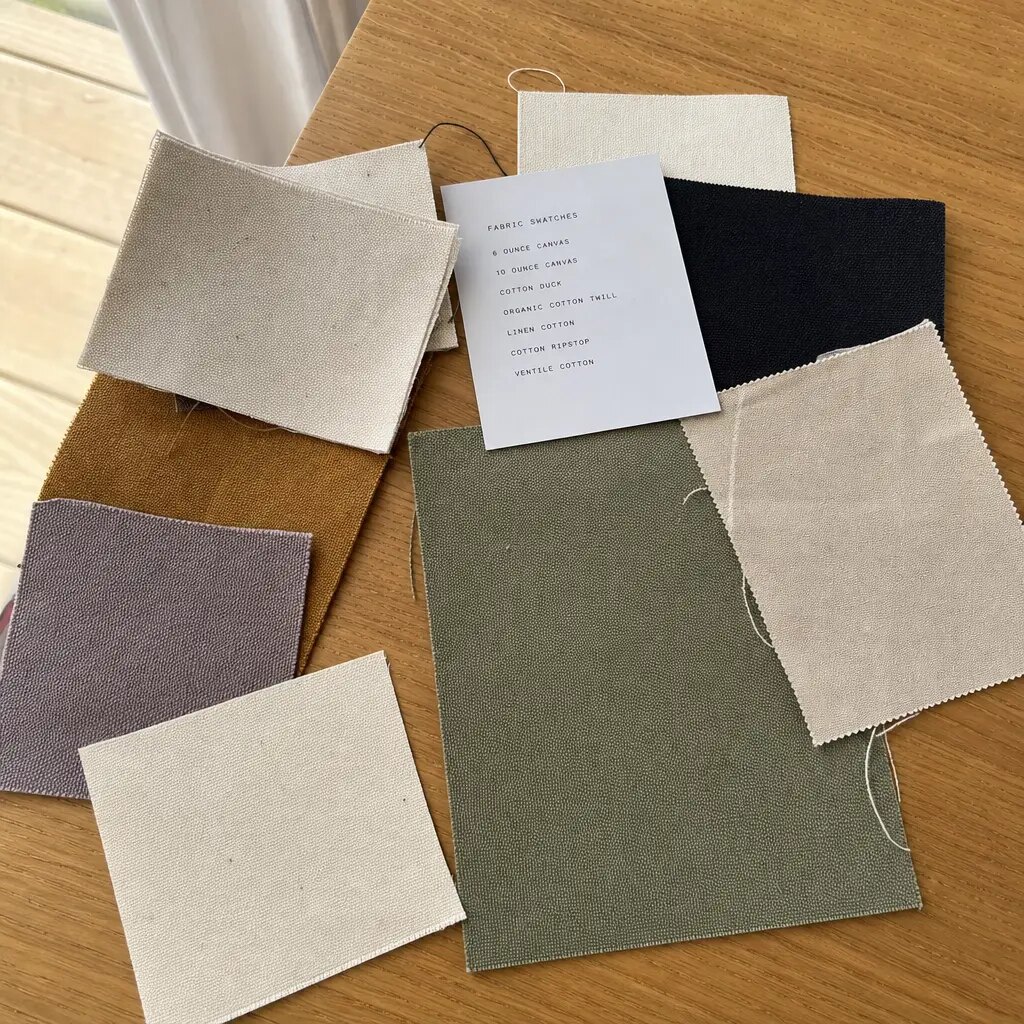
Why fabric weight drives the whole buying decision
For eco apparel brands, cotton drawstring backpacks can look deceptively simple. They are flat panels, cords, seams, and a logo. Yet the fabric weight you choose affects nearly every commercial detail: hand feel, print clarity, finished size behavior, carrying comfort, carton volume, freight cost, and the way the bag supports your brand at retail. A 130 GSM plain cotton bag and a 190 GSM cotton canvas bag may share the same outline on a spec sheet, but they will not feel, fold, print, or carry the same way.
That is why price-only sourcing becomes risky so quickly. If one supplier quotes a lightweight promotional construction and another quotes a heavier canvas version, the lower unit price may only reflect a thinner product. It may not be the better offer. The cleaner approach is to tell suppliers what the bag must do: carry one folded hoodie, hold a T-shirt and cap set, ship as retail merchandise, or function as low-cost event packaging. Once the use case is clear, GSM becomes a decision tool instead of a guess.
Fabric weight also changes how the factory handles production. Lighter cotton folds smaller and can support lower entry costs, but it is less forgiving around the drawcord channel and the lower corners where stress collects. Heavier cotton canvas gives a more substantial retail feel and often a cleaner print panel, but it can slow sewing, increase needle wear, create bulkier seams, and raise carton weights. The goal is not to buy the heaviest bag possible. The goal is to buy the right bag for the load, channel, budget, and brand promise.
- Below 140 GSM: best for giveaways, event kits, and very light loads
- 150-170 GSM: practical baseline for branded merch and most eco apparel programs
- 180-220 GSM: stronger choice for repeat-use programs and premium merchandising
- Heavier fabric usually improves perceived value, but it also raises freight and sewing complexity
Match GSM to the real use case
Start with the contents, not with a number. If the backpack is mainly a branded carrier for a T-shirt, cap, socks, flyers, or an event kit, 120-140 GSM may be enough. In this range the bag is doing the job of packaging plus promotion. It can be folded tightly, shipped efficiently, and kept within a sharper cost target. The tradeoff is visible. The fabric may feel soft around the opening, show the outline of contents, and look less opaque beneath darker artwork.
For many eco apparel programs, 150-170 GSM is the most balanced starting point. It gives the backpack enough body to feel intentional without turning it into a heavy canvas product. This range usually works well for store merchandise, apparel bundles, online order gifts, and repeat-use customer bags. It is also a useful middle ground for buyers who need a product that feels better than a disposable giveaway but cannot justify the cost or freight impact of heavyweight canvas.
Move to 180-220 GSM when the bag itself is part of the product offer. If customers will buy it as merch, use it repeatedly, or carry heavier garments, the extra structure can matter. Heavier fabric tends to sit better in photography, feel more substantial in hand, and handle larger logos with less panel distortion. Still, GSM alone does not make a strong bag. The construction must match the intended load, especially at the channel, lower corners, and cord attachment points.
- Use 120-140 GSM for event kits and short-life promotional packaging
- Use 150-170 GSM for most branded merch and general eco apparel programs
- Use 180-220 GSM when the bag itself is part of the product offering
- Write the intended load in kilograms or a clear contents list so suppliers can quote the right structure
Plain cotton and canvas are not interchangeable
Many quotes say cotton, but cotton is not a complete fabric specification. Weave matters. A 150 GSM plain cotton bag can feel relaxed, soft, and less structured. A 150 GSM cotton canvas bag may feel firmer and denser even though the nominal weight is the same. The difference comes from yarn build, weave construction, and finish. For a promotional carrier, softness may be perfectly acceptable. For a retail-facing bag, canvas can make the product feel more deliberate.
This distinction is especially important when you are comparing multiple factories. Some suppliers use the word canvas broadly for any heavier cotton. Others mean a more specific fabric construction. If the RFQ only says cotton drawstring backpack, each factory may fill in the blanks differently. One may price natural plain cotton at a light weight. Another may price a heavier canvas with a different hand feel. The spreadsheet will look tidy, but the products behind the numbers will not match.
Be specific in buyer language and factory language. Write natural plain cotton 140 GSM, natural cotton canvas 170 GSM, or dyed cotton canvas 200 GSM. Ask for a swatch tied to the quote number. If the bag has an organic or recycled content claim, separate the shell fabric claim from the drawcord, labels, ink, and packing. A clear material scope prevents awkward changes later when marketing, compliance, or customs documentation asks what the product actually is.
- State both weave type and GSM in the RFQ
- Request a swatch or photo set that identifies the exact fabric quote
- Do not compare suppliers on the word cotton alone
- Clarify whether the claim is for the shell fabric, the finished bag, or both
Build an RFQ that suppliers can price fairly
A strong RFQ removes guesswork before anyone starts negotiating. For cotton drawstring backpacks, the factory needs the finished size, fabric construction, GSM target, artwork file, print method, cord specification, seam finish, packing method, label needs, and target order quantity. If those details are missing, the supplier will either quote assumptions or exclude items from the price. Both outcomes make comparison messy.
A practical example is much better than a loose request. Instead of asking for a cotton drawstring bag with logo, write: 35 x 45 cm finished size, natural cotton canvas around 170 GSM, one-color screen print centered on the front panel, 5 mm black cotton cord, overlocked internal seams, reinforced bottom corners, and bulk packing at 100 pieces per export carton. Add tolerances where they matter. For simple bags, a finished body tolerance such as plus or minus 1 cm is commonly used, but the key is to state the measuring method and have the supplier confirm it.
For retail or e-commerce use, go a step further. State whether cords should be tucked inside the bag, whether each unit needs a barcode, whether hangtags are required, and whether individual protection is needed for light-colored fabric. Packing may look secondary at first, but it changes labor, material usage, carton count, and arrival condition. When every supplier quotes the same size, fabric, print, trim, and packing assumptions, the price comparison becomes useful instead of performative.
- Include finished size, not just a nominal size name
- State the fabric as weave plus GSM target
- Attach a vector logo or print-ready file with Pantone references
- Describe the cord, seam finish, and packing method in the RFQ
- Ask suppliers to separate base bag cost from print, packing, and label cost
Choose print method with the fabric, not after it
Printing is tied to fabric weight and surface texture. Screen printing remains a common choice for cotton drawstring backpacks because it is cost-efficient and durable for simple logos. On lighter cotton, though, large solid areas can make the printed panel feel stiff while the surrounding fabric stays soft. Fine lines can also lose crispness if the cloth shifts or if the fabric texture interrupts small details.
Heavier canvas often gives the printer a flatter, more stable panel, which can help larger marks look cleaner. That does not mean every canvas print is automatically better. Too much ink can feel heavy, especially across fold lines, and a dense print can crack or look overloaded if the bag is folded tightly for packing. Artwork scale, ink coverage, and fabric hand feel need to be approved together.
Transfers and digital methods can be useful for multicolor artwork, gradients, or small detailed graphics that would be expensive to separate into multiple screens. They are not a universal upgrade. Buyers should check edge definition, adhesion, surface feel, and wash or rub behavior on the actual production fabric. A test on a random cotton sheet does not prove how the finished backpack will perform. For a minimal eco apparel logo, one-color screen print often gives the cleanest balance of cost, durability, and visual restraint.
- Use screen print for simple logos and stable medium-to-large runs
- Review large solid graphics carefully on lighter GSM fabrics
- Use transfer methods only when the artwork truly needs them
- Approve print on the final fabric, not on a substitute swatch
- State the print clearance from seams, cord channels, and fold lines
Construction can rescue or ruin the spec
A good fabric choice will not compensate for weak construction. The load path on a drawstring backpack is simple: force moves through the cords, into the channel, down the side seams, and toward the lower corners. If stitch density is too low, seam allowance is too narrow, or back-tacking is careless, the bag can start to look tired quickly. Procurement teams should ask how the bag is built, not just what it is made from.
The drawcord deserves its own line in the spec. Material, diameter, length, color, and knot style all affect usability and appearance. A thin cord may help control cost, but it can feel weak on the shoulder and look under-scaled on heavier canvas. A thicker cord can improve comfort and presentation, but the channel must be sized and stitched to match it. If the cord drags, twists, or creates puckering at the opening, the finished product will feel cheap even when the fabric is adequate.
Inside finishing matters too. Overlocked seams are common and can be suitable for many programs. Bound seams or double-stitching may be worth considering for higher-value retail lines or heavier expected contents. Reinforcement at the bottom corners and channel ends is especially important because these are the points that take repeated stress. Ask the factory what is standard, what is optional, and how each option changes price, MOQ, and lead time.
- Check reinforcement at the bottom corners and channel ends
- Specify drawcord material, diameter, color, and knot style
- Ask whether the factory uses overlock, binding, or double-stitch finishing
- Require clear thread control so loose ends and skipped stitches do not reach packing
- Request the stitch method for load-bearing seams and the seam allowance used in bulk
Scope sustainability claims before sourcing starts
Eco apparel buyers are right to think carefully about material claims, but cotton alone is not a complete sustainability story. If the backpack will be described as organic, recycled, certified, low-impact, or traceable, the claim must match the exact material and documentation available. A supplier may be able to provide a declaration for shell fabric content. That is different from certification for the finished bag.
The finished backpack can include several components: body fabric, drawcord, label, thread, ink, hangtag, and packaging. A claim may apply to one of those components, several of them, or the whole finished item. Those differences matter. If your marketing copy says organic cotton drawstring backpack, confirm whether the organic claim covers the body fabric only or the complete product as sold. If your customer requires a transaction certificate or chain-of-custody document, that requirement belongs in the RFQ, not in a late email after the factory has already bought fabric.
Documentation also affects cost and timing. Certified cotton, special trims, and specific packaging materials may need longer booking windows or higher MOQs. That is not a reason to avoid them. It is a reason to plan honestly. Clear claim language protects the buyer, the supplier, and the end customer from confusion.
- State whether the claim applies to the shell fabric or the finished product
- Ask for the exact document needed, not just a generic sustainability statement
- Confirm whether labels, cord, thread, ink, and packaging also need to meet the claim
- Do not market a certification until the supplier has shown the supporting paper trail
MOQ and lead time move with the custom details
MOQ is rarely only about sewing capacity. For cotton drawstring backpacks, the effective minimum can be driven by fabric availability, dyeing, print setup, cord color, labels, inserts, individual packing, or certification requirements. A supplier may offer a lower MOQ with stock natural cotton, standard cord, and a one-color print. The same factory may need a much higher commitment for custom dyed fabric, custom cord, woven labels, multiple print placements, or retail-ready unit packs.
Fabric weight also changes flexibility. Common stock weights are easier to book, especially in natural or undyed cotton. Heavier canvas, special finishes, certified cotton, and dyed shades may require more planning. If the launch volume is uncertain, it can be smart to start with a standard fabric weight and simple trim package, then upgrade the specification on a reorder once demand is proven. That is a commercial decision, not a compromise in values.
Ask suppliers to break the quote into visible cost drivers. Base bag, print, label, cord upgrade, packing, and documentation should not be hidden in one vague number if you are trying to compare options. A quote with separated lines helps procurement see which choices are adding value and which are only adding complexity. It also makes future reorder planning much easier.
- Ask for MOQ by color, by design, and by packing type
- Treat custom labels, cords, and inserts as separate MOQ drivers
- Use stock natural cotton if the launch needs a lower barrier to entry
- Confirm whether specialty materials or certifications require booking windows
- Compare quotes on the same fabric basis before comparing price
Make sample approval reflect the real bulk order
A nice development sample is useful, but it may not be enough. For cotton drawstring backpacks, the pre-production sample should use the final bulk-intended fabric, actual print method, intended cord, approved seam finish, and confirmed packing approach. If the sample uses a substitute fabric because the bulk material is not available yet, write that down. Otherwise, the factory and buyer may later disagree about whether the production goods match the approved standard.
A strong approval set usually includes three things: a sewn bag, a print strike-off on the real fabric, and a labeled fabric swatch showing the agreed construction and GSM. If retail appearance matters, add a packed sample. Fold lines, cord placement, pressure marks, and logo creasing are much easier to judge when the sample is packed the same way bulk goods will be packed.
The sample should also answer practical questions. Does the logo sit straight after the bag is drawn closed? Do the cords hang evenly? Does the print remain readable when the bag is lightly filled? Does natural cotton show dirt from handling? These checks are simple, but they catch problems while there is still time to fix them. Once fabric is cut and printed in bulk, even small changes can become expensive.
- Approve a sewn sample made from final bulk-intended materials
- Approve print on the actual fabric weight and color
- Review the packed presentation when retail appearance matters
- Mark any substitute material clearly so the approval record is not ambiguous
- Keep the sample approval sheet tied to the purchase order or technical pack
Write QC and packing rules before production
Natural cotton shows handling defects clearly. Oil marks, rust spots, dirt, slubs, and needle contamination are easier to see on light cotton than on many synthetic bags. A vague standard like good quality is not enough. Buyers should define visible acceptance criteria for the logo area, front panel, seam cleanliness, cord finish, and carton presentation before bulk production starts.
Structural inspection should focus on the places where force concentrates: the drawcord channel, lower corners, side seams, and any reinforced points. On lighter GSM fabric, tension mistakes can create puckering or seam grin. On heavier canvas, poor stitch control can create bulky corners and visible distortion. Inspectors should check skipped stitches, broken threads, weak back-tacking, uneven cord length, loose knots, and fraying inside the bag. A simple load check using the buyer's intended contents, or a close proxy, can catch obvious stress failures before shipment.
Packing deserves the same discipline. Bulk packing may reduce packaging material and cost, but light cotton can collect dust or carton rub if handling is rough. Individual polybags can protect units for retail or e-commerce, but they add material, labor, plastic usage, and may change carton counts. Confirm whether bags are folded logo-out or logo-in, whether cords are tucked, whether barcodes face the same direction, and whether compression will crease the print. Quality control is strongest when the factory knows these rules before the first carton is sealed.
- Reject oil stains, rust marks, and contamination in visible areas
- Inspect seam quality at the corners and the drawcord channel
- Define print placement tolerance and color tolerance before bulk starts
- Check cord length symmetry and end finishing on random samples
- Ask the factory to explain its inspection points, not just its final packing check
- Confirm packing pressure will not crease the logo or flatten the cords
Specification comparison for buyers
| Spec decision | Recommended option | When it fits | Buyer risk to check |
|---|---|---|---|
| 120-140 GSM cotton | Choose for entry-price giveaways and very light carry loads | Best when the bag is used for event kits, folded tees, flyers, or packaging that needs a branded carrier | Thin fabric can show print strike-through, seam grin, and cord-channel distortion if the bag is loaded too heavily |
| 150-170 GSM cotton | Use as the baseline for most eco apparel programs | Works well for store merch, bundled apparel, and reusable carrier use without pushing the price too high | Confirm whether GSM refers to finished fabric or greige fabric, and verify the print panel stays flat after folding and sewing |
| 180-220 GSM cotton canvas | Use for retail resale or stronger repeat-use expectations | Good for premium merch, heavier apparel, and customers who expect a more structured bag | Heavier fabric increases freight, changes stitch handling, and can make carton packs bulkier |
| Plain weave cotton | Use when softness and cost control matter more than structure | Fits promotional programs and lighter-weight bags where a relaxed look is acceptable | May look thinner or less structured than canvas at the same nominal GSM |
| Cotton canvas | Use when the brand wants a more durable, substantial feel | Better for retail positioning, heavier contents, and cleaner printed panels | Confirm the supplier is quoting the same weave type across all offers before comparing price |
| Organic cotton version | Use when the sustainability claim is part of the product story | Suitable for certified programs or retail lines where traceable material content supports the price premium | Ask whether the claim applies to the shell fabric only or the full finished bag, and request supporting documents |
| Single-color screen print | Default for simple front logos and stable volumes | Best for medium to large runs with one-color branding and durable ink coverage | Large solid areas can feel stiff on lighter fabric and small details can fill in on textured cloth |
| Heat transfer or digital transfer | Use for multicolor or detailed artwork in smaller runs | Helpful when artwork complexity matters more than the softest hand feel | Edges, adhesion, and wash durability can vary by fabric finish and press control |
| Bulk pack without individual bags | Use when the buyer wants less packaging and the goods are not retail-unit handled | Works for wholesale cartons, internal merchandise, and programs where minor fabric creasing can be steamed or accepted | Light natural cotton can pick up dust or carton rub, so confirm carton lining and handling standards |
Buyer checklist before sampling
- Define the intended carry load and reuse frequency before choosing GSM, because performance depends on use case more than fabric weight alone.
- State the fabric structure in the RFQ as plain cotton or cotton canvas, not just cotton, because factories may quote them differently.
- Specify finished size with tolerance, for example 35 x 45 cm plus or minus 1 cm, and state whether the measurement is taken flat and unfilled.
- Clarify whether GSM refers to the finished fabric, pre-shrink fabric, or finished bag, and ask the supplier to state the measurement method and tolerance in writing.
- Include artwork size, print coverage, Pantone references, print position, and the required clearance from seams or fold lines, for example 8-10 mm where practical.
- State drawstring material, diameter, color, length, knot style, and whether self-fabric loops, metal eyelets, or stitched cord channels are required.
- Note whether seams should be overlocked, bound, double-stitched, or reinforced at the bottom corners and channel ends.
- Confirm whether any sustainability claim requires certification documents, transaction certificates, or only a material declaration.
- Set packing requirements by unit, bundle, inner pack, carton count, barcode label, and whether hangtags or inserts are required.
- Request a pre-production sample made from the final bulk-intended fabric, print method, and cord, not a similar previous sample.
Factory quote questions to send
- What is the exact fiber composition, weave type, and GSM tolerance for the body fabric, and how is it measured?
- Is the cotton carded, combed, recycled, organic, or a blend, and what documentation is available to support the claim?
- What is the finished size tolerance, print placement tolerance, and seam tolerance in bulk production?
- Which print method is included in the quote, and how does the price change if artwork coverage, number of colors, or print position changes?
- What stitching construction is used at the drawcord channel, bottom corners, and load-bearing points?
- What is the default drawcord material, diameter, and color, and can the factory match custom cord specifications?
- What is the MOQ by fabric color, by print design, and by packing configuration?
- Does the sample fee apply to the bulk order, and will the pre-production sample use the exact bulk materials?
- What are the lead times for fabric booking, print strike-off, pre-production sample, and mass production after approval?
- How are the bags packed per carton, what is the carton size and gross weight, and can the supplier provide a loading estimate for 20GP and 40HQ?
Quality-control points to confirm
- Check fabric GSM on incoming rolls or cut panels using the same agreed method the supplier used, and confirm the tolerance in writing.
- Inspect finished bag dimensions against the approved spec, especially opening width, body height, and cord length symmetry.
- Review print centering, edge sharpness, color consistency, and whether the logo remains readable on the folded or stuffed bag.
- Check for oil marks, rust spots, dirt, slubs, and needle contamination because natural cotton shows handling defects clearly.
- Inspect the drawcord channel for skipped stitches, puckering, loose thread ends, and any distortion where the cord pulls through.
- Verify that left and right cords match in length and tension after knotting, and that cord ends are finished consistently.
- Confirm bottom corner reinforcement is intact, with no broken threads, weak back-tacking, or seam opening under moderate pull.
- Check internal seam allowance and overlock quality so fray does not show after repeated use or washing.
- Verify carton count, barcode labels, assortment ratios, and any retail insert or hangtag placement before cartons are sealed.
- Perform a simple load check on randomly sampled bags using the buyer's intended contents or a close proxy to catch stress failures before shipment.