1. Start with fabric weight, but do not treat GSM as the whole specification
Fabric weight is one of the first decisions that changes the commercial outcome of a cotton drawstring backpack. It affects fabric consumption, print appearance, corner strength, folded bulk, carton weight, freight cost, and customer perception. A 140 GSM event bag and a 220 GSM retail-style bag can look similar in a supplier photo, but they behave differently once filled, worn, printed, folded, and shipped.
GSM means grams per square meter. It is a measurable reference, not a complete quality grade. Two fabrics can both be 180 GSM and still differ in yarn type, weave density, shrinkage, lint, opacity, slub level, and surface smoothness. Still, GSM is the right starting point because it prevents suppliers from filling in the blank with their cheapest available cloth.
Drawstring backpacks fail in different places than flat tote bags. The top channel is pulled every time the user opens the bag. The lower corners take shoulder-load tension through the cords. Side seams are stressed when the customer packs apparel, shoes, samples, or a bottle. If the body fabric is too light for the load, the logo may distort and the corners may strain. If the fabric is heavier than the use case requires, the buyer may pay for unnecessary cloth and freight.
The practical goal is not to buy the heaviest fabric. The goal is to match fabric weight with use case, logo coverage, expected load, sustainability claims, and landed-cost limits.
- Use GSM as the measurable starting point for quote comparison.
- Do not compare prices unless size, GSM, cord, print, packing, and reinforcement are aligned.
- Avoid vague terms such as "canvas" unless GSM, weave, and hand feel are also defined.
- Choose weight by end use, not by supplier photo.
- Record the approved fabric swatch so repeat orders do not drift.
2. Practical GSM ranges for apparel brand programs
Most cotton drawstring backpacks for apparel campaigns sit between 120 and 220 GSM. Above that, the product starts to move toward a canvas accessory, which may be right for premium merchandise but can add sewing bulk and freight exposure.
The 120-140 GSM range is a light promotional route. It can work for one-day events, flyers, socks, folded T-shirts, or low-load gifting. It is not a good default for footwear bundles, resale programs, or marketing that suggests daily reuse. Expect more wrinkling, lower opacity, and less resistance at the lower corners. Large dark prints can look heavy on thin fabric and may show unevenness if the weave is open.
The 150-180 GSM range is the usual starting point for many eco apparel campaigns. It balances cost, availability, print stability, and perceived quality better than very light cloth. Natural cotton around 160 or 180 GSM can suit gift-with-purchase programs, pop-ups, e-commerce packaging upgrades, and light reuse with apparel contents.
The 180-220 GSM range is stronger for capsule launches, paid add-ons, influencer kits, apparel bundles, and brand programs where the bag is part of the customer experience. The panel tends to sit flatter, opacity improves, and the product feels more intentional. At this point, pay closer attention to carton weight, fold marks, top-channel thickness, and needle selection.
- 120-140 GSM: light promotional use only; state low load expectations.
- 150-180 GSM: balanced commercial range for many apparel programs.
- 180-220 GSM: better retail hand feel and logo presentation.
- Above 220 GSM: canvas-like direction; check sewing bulk and freight carefully.
- For first quotes, compare adjacent weights such as 160 versus 180 GSM or 180 versus 220 GSM.
3. Finished GSM, greige GSM, ounces, and tolerance
A frequent RFQ problem is asking for GSM without stating when the GSM is measured. Greige fabric is unfinished fabric before dyeing, washing, or finishing. Finished fabric is measured after processes that can change weight, width, shrinkage, shade, and hand feel. For procurement control, specify finished GSM unless your technical team intentionally buys against greige weight.
Tolerance should also be written into the purchase order. A practical commercial tolerance for many cotton backpack fabrics is plus or minus 5%, though the right tolerance depends on the mill, finishing process, and buyer standard. If the PO states 180 GSM finished fabric with plus or minus 5%, the acceptable range is approximately 171-189 GSM. Without that line, inspection disputes become subjective.
Ounce terminology can add confusion, especially when teams use phrases such as 8 oz canvas. Fabric ounces may refer to ounces per square yard in some markets, and suppliers may use trade shorthand loosely. For international sourcing, GSM is usually clearer. If your internal brief uses ounces, include a GSM target or require the supplier to confirm the finished GSM conversion.
QC should verify bulk production, not only a showroom sample. Agree whether testing will use bulk roll fabric, cut specimens, or non-critical areas of finished goods. Record the source, lot reference if available, and result.
- Write "finished GSM after dyeing/finishing" in the RFQ.
- Use a defined tolerance, commonly plus or minus 5% unless otherwise required.
- If using ounces, also provide or request GSM.
- Ask whether the supplier is quoting greige, finished, washed, or catalog weight.
- Require bulk verification before shipment.
4. Composition, yarn, weave, and finish change the same GSM
GSM does not identify fiber content. A quote that says cotton may mean 100% conventional cotton, certified organic cotton, recycled cotton blend, cotton-poly blend, or simply a cotton-look fabric. For eco apparel brands, this ambiguity can undermine consumer-facing claims. State the exact composition and list the documentation required for any organic or recycled content.
Yarn and weave change the product even at the same weight. Carded cotton often has a casual texture. Combed cotton may feel cleaner. Open-end yarn can be economical but may feel rougher. Ring-spun yarn can provide a different hand and strength profile. Recycled cotton blends may show fiber variation, shade specks, or a more irregular surface. These traits are not automatically defects, but they must be approved before bulk.
Weave matters during cutting, sewing, printing, and packing. A plain-weave 180 GSM cotton may be flexible and easy to fold. A canvas-style construction can feel firmer and more structured. A loose weave may reduce print edge sharpness and seam resistance. A tighter weave can improve logo clarity but may increase cost or change drape.
Finish controls what the customer sees. Natural unbleached cotton may show seed flecks, slubs, and shade variation. Custom dyed cotton needs lab dip approval and shade tolerance. Washed finishes may soften the hand but alter dimensions. The word natural is a style direction, not proof of an environmental claim.
- Specify exact composition and claim documentation before PO release.
- Approve yarn and weave where hand feel or print clarity matters.
- Control natural cotton shade variation with swatches or marked photos.
- For custom dye, review lab dip, shade tolerance, crocking, and shrinkage.
- Define the acceptable appearance of recycled cotton variation.
5. Match fabric weight with decoration method
Decoration should be chosen with the fabric, not after it. On 120-140 GSM cotton, a large solid print may overpower the panel or show uneven coverage. Fine-line artwork can lose sharpness on open weaves. Fold marks may become visible when printed panels are packed tightly.
Screen printing is usually the most cost-efficient option for simple one-color or two-color logos, especially on 150-220 GSM cotton. It suits bold marks, clean type, and repeat orders where setup cost is spread over volume. The strike-off should be made on the exact fabric weight, shade, and finish planned for bulk. A logo approved on white 200 GSM cotton may not look the same on natural 160 GSM cotton.
Digital print works for multicolor art, gradients, artist graphics, and shorter runs. It is more sensitive to base shade, pretreatment, curing, and batch consistency. If bags will be displayed together in retail, check color consistency across bulk lots.
Embroidery can feel premium, but dense stitching on a lightweight panel can pucker or distort the front. For embroidery, heavier fabric is usually safer, especially for small marks. Specify backing, stitch density expectations, thread color, logo size, and placement tolerance. For woven labels, confirm label position so branding is visible without rubbing when worn.
- Screen print: best for simple bulk logos; require strike-off and cure check.
- Digital print: useful for multicolor art; check shade shift on natural cotton.
- Embroidery: test puckering and backing before bulk approval.
- Quote large logo coverage separately from body GSM.
- Measure print placement from fixed reference points with written tolerance.
6. Build supplier quotes that can be compared line by line
Two suppliers can quote an 180 GSM cotton drawstring backpack and mean different products. One price may include cotton rope, reinforced corners, a large screen print, hangtag, individual packing, and export cartons. Another may include thin polyester cord, no reinforcement, a small logo, bulk packing, and loose size tolerance.
Separate the cost drivers before choosing a supplier. Body GSM, body color, cord material, cord diameter, print method, print size, number of colors, labels, reinforcement, packing, carton plan, and testing can all change price. Ask for a base version and adders for upgrades so the team can decide which improvements are worth paying for.
Landed cost should be reviewed before PO release. Heavier GSM increases material consumption and may raise gross weight or reduce pieces per carton. A small FOB increase can become larger after freight, warehousing, and retailer requirements. The reverse can also be true: a sturdier bag may better support a paid accessory price or reduce disappointment if the product is intended for repeated use.
Watch for quiet downgrades after sampling. Common changes include lower finished GSM, narrower seam allowance, thinner cords, smaller print area, omitted bartacks, altered shade, or over-tight packing. If a supplier proposes a cost saving, ask exactly what changes in the specification and approve it in writing.
- Ask for side-by-side quotes for 160, 180, and 220 GSM using the same size and logo.
- Quote print size and print colors separately from bag construction.
- State whether cotton cords, reinforced corners, labels, and packing are included.
- Request carton dimensions, pieces per carton, gross weight, and net weight with each option.
- Do not approve a low price unless it matches the RFQ and approved sample.
7. MOQ and inventory planning for eco programs
MOQ is not driven only by sewing time. For drawstring backpacks, minimums can come from fabric booking, dye lots, cord sourcing, print setup, labels, hangtags, and packing materials. A standard natural cotton body in a common 150-180 GSM range is usually less complex than a custom dyed 210 GSM body with matched cord and retail packing.
For eco apparel brands, over-ordering creates both cash-flow and sustainability problems. If the first launch is a test, a simpler specification may be more responsible: natural cotton, mid-range GSM, one print position, standard cord, and uncomplicated packing. Once demand is proven, the program can move to custom color, heavier fabric, embroidery, special cords, or retail presentation.
SKU structure changes MOQ. Several artwork versions on the same fabric, size, and body color may be easier than several custom body colors. If the brand wants regional logo versions, ask whether one fabric lot can be printed with multiple screens. If the brand wants three dyed colors, dye MOQ may apply separately to each shade.
Ask which components are standard and which require special booking. This helps merchandising and procurement avoid a specification that looks simple on paper but creates excess inventory or long approvals in production.
- Standard natural cotton usually supports lower complexity than custom dye.
- Common GSM ranges can reduce fabric booking risk.
- Multiple artwork versions are often easier than multiple body colors.
- Custom cords, woven labels, and hangtags can raise the effective MOQ.
- Use a standard launch specification when demand is uncertain.
8. Sampling should predict bulk production
A sample is useful only if it represents the product being ordered. A showroom sample in 220 GSM canvas does not prove that a 160 GSM bulk bag will print, drape, fold, or sew correctly. When comparing weights, keep size, cord, seam construction, print position, and packing the same so the team can judge the fabric difference accurately.
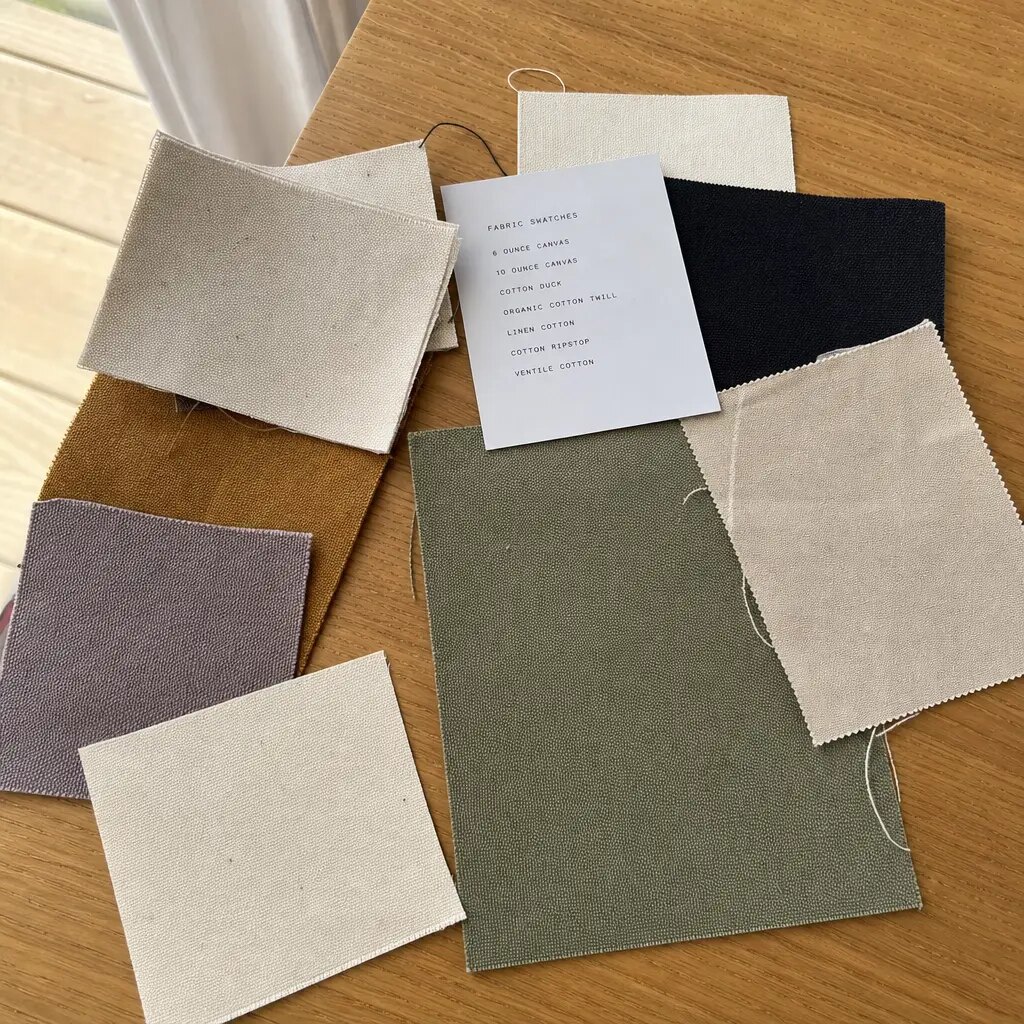
A practical approval path includes a fabric swatch set, blank construction sample, print strike-off, pre-production sample, and, when presentation matters, a packed sample. The swatch confirms weight, hand feel, shade, and slub level. The blank sample confirms dimensions, top channel, seam construction, and cord function. The strike-off confirms logo performance on the intended fabric. The pre-production sample locks the complete product before bulk.
Sample comments should be measurable. Instead of writing "logo too low," state "move logo center to 10 cm below top edge, tolerance plus or minus 5 mm." Instead of "cord too long," specify the cord length when the bag is fully open and confirm balance when closed.
Use the sample as the customer will. Fill it with the intended contents, open and close it repeatedly, wear it briefly, fold it in the planned packing method, and reopen it. Look for channel drag, lower-corner strain, print distortion, fold creases, and cord-knot marks.
- Compare GSM options using the same construction and artwork.
- Approve strike-offs on the exact fabric intended for bulk.
- Use measurable sample comments with dimensions and tolerances.
- Keep one approved physical sample for final inspection reference.
- Test the bag filled, flat, folded, and packed before bulk approval.
9. QC standards and packing checks that prevent disputes
Purchase orders should not rely on phrases such as good stitching or premium cotton. QC standards should define what inspectors measure and which defects are unacceptable. The highest-value checks are finished GSM, composition, dimensions, seam construction, cord function, print quality, reinforcement, cleanliness, packing count, and carton labeling.
For simple drawstring backpacks, plus or minus 1 cm on finished dimensions is commonly workable, though tighter control may be needed for retail fixtures, barcodes, or automated fulfillment. Print placement should be controlled separately, often within plus or minus 5 mm to 10 mm depending on logo size and method. Measure from consistent reference points such as the top edge, channel seam, or side seam.
Functional inspection should focus on stress points. Check lower corners, cord exits, top-channel ends, backstitching, seam allowance, skipped stitches, seam grin, and raw edge exposure. If bartacks or reinforcement are specified, confirm location, stitch density, thread color, and consistency.
Packing affects both cost and presentation. Over-compression can create hard fold lines, especially across printed panels. Approve fold method, inner pack count, hangtag position, barcode placement, carton quantity, carton marks, and moisture protection before bulk packing. If individual polybags are restricted or required, state that in the RFQ because it changes materials, labor, and carton planning.
- State finished GSM tolerance, often plus or minus 5%.
- Use written size and print placement tolerances.
- Inspect lower corners, cord exits, and channel ends as priority stress points.
- Check print curing, cracking, smudging, registration, and off-center placement.
- Request carton dimensions, pieces per carton, gross weight, and net weight before shipment.
10. Lead time and freight risks tied to fabric weight
Lead time depends on the slowest component, not only sewing capacity. Standard natural cotton with a one-color screen print is usually the lowest-complexity route. Custom dyed fabric, uncommon GSM, matched cotton cords, embroidery, woven labels, and special packing add approval steps.
Ask for milestone dates instead of accepting one broad lead-time number. Useful milestones include fabric readiness, lab dip approval, strike-off approval, pre-production sample approval, cutting, printing, sewing, packing, inspection, and shipment release. Late artwork, shade changes, or cord changes can restart parts of the schedule.
Fabric weight changes freight math. A heavier GSM can increase gross weight and reduce pieces per carton if the folded bag becomes bulky. Procurement should request carton dimensions, pieces per carton, net weight, gross weight, and estimated total cartons for each GSM option. If backpacks ship with apparel, carton sizes may need to support consolidation or pallet rules.
Eco packaging decisions also belong in the schedule. Some brands prefer bulk packing, paper bands, grouped inner packs, or recyclable materials. Retailers may still require individual polybags, suffocation warnings, barcode labels, or routing-guide carton marks. Resolve these requirements before production begins, not during final inspection.
- Use milestone dates for approvals and production stages.
- Compare freight data for each GSM option before PO release.
- Confirm retailer or 3PL packing rules early.
- Avoid late changes to artwork, dye shade, cord, or labels.
- Treat packing requirements as part of the product specification.
Specification comparison for buyers
| Spec decision | Recommended option | When it fits | Buyer risk to check |
|---|---|---|---|
| 120-140 GSM cotton body | Light promotional specification only; not a canvas substitute | One-day events, flyers, socks, folded T-shirts, sample handouts, low-load gifting | Low opacity, wrinkling, weak lower corners, show-through on dark prints, poor fit for shoes or bottles |
| 150-180 GSM cotton body | Default commercial range for many apparel brand programs; specify finished GSM | Gift-with-purchase, pop-ups, e-commerce packaging upgrades, light reusable apparel carriers | Supplier may quote greige or catalog weight; verify finished GSM, weave density, shrinkage, and print strike-off |
| 180-220 GSM cotton body | Stronger retail-facing range with better hand feel and opacity | Capsule launches, paid add-ons, influencer kits, apparel bundles, repeat-use merchandise | Higher material and freight cost; check seam allowance, cord channel drag, print cure, and corner reinforcement |
| 8 oz to 10 oz cotton canvas equivalent | Use when a firmer canvas-like look is intentional; include GSM as well as ounces | Premium merchandise, collaborations, heavier apparel, footwear bundles | Top-channel bulk, skipped stitches, visible needle holes, fold thickness, and print cracking if the line is not set for heavier fabric |
| Natural unbleached cotton | Best for simple eco positioning when raw shade and flecks are acceptable | Minimal branding, lower-complexity launches, natural packaging stories | Seed flecks and lot shade variation are normal only if approved; natural cotton is not proof of organic or recycled content |
| Custom dyed cotton | Use when brand color alignment matters more than speed or lowest MOQ | Retail drops, seasonal campaigns, coordinated apparel collections | Lab dip, dye-lot MOQ, crocking, shade bands, and post-dye shrinkage must be controlled |
| Screen print on 150-220 GSM | Most efficient decoration for bold one-color or two-color logos | Clean type, simple marks, repeat orders, moderate to high volume | Fine lines can fill on textured cotton; require artwork size, Pantone target, placement tolerance, cure check, and strike-off |
Buyer checklist before sampling
- Define the use case first: giveaway, retail resale, packaging upgrade, e-commerce insert, festival pack, footwear bundle, or daily-use merchandise.
- State target finished GSM and tolerance. A practical starting tolerance is often plus or minus 5% unless your standard requires otherwise.
- Clarify whether the quoted weight is greige, dyed, washed, finished roll weight, catalog weight, or actual bulk production weight.
- Specify composition exactly: 100% conventional cotton, certified organic cotton, recycled cotton blend, cotton-poly blend, or another construction.
- Ask for weave and yarn details when relevant: plain weave or canvas-style weave, carded or combed cotton, open-end or ring-spun yarn.
- Confirm finished flat dimensions with tolerance, including top width, bottom width if different, height, and any gusset or boxed corner.
- List drawcord material, diameter, color, length, construction, knot method, cord-end treatment, and whether the bag uses one loop or two separate cords.
- Specify top channel width, side seam allowance, bottom seam construction, and whether lower corners include bartack, reinforcement patch, or standard backstitching only.
- Match decoration to fabric: screen print for simple bulk logos, digital print for multicolor artwork, embroidery only after puckering tests on a suitable weight.
- Approve print position using measurable references, such as logo center 10 cm below top edge and centered left-to-right within plus or minus 5 mm.
Factory quote questions to send
- What finished fabric weight in GSM is included after dyeing, washing, or finishing, and what bulk tolerance do you propose?
- Is the quoted GSM measured internally or by a recognized fabric-weight method, and will QC test bulk roll fabric or finished bag specimens?
- Is the fabric 100% conventional cotton, certified organic cotton, recycled cotton blend, cotton-poly blend, or another construction?
- Is the price based on greige weight, finished roll weight, catalog weight, or the actual cut-and-sewn bulk fabric weight?
- What finished bag size, channel width, seam allowance, drawcord material, and cord diameter are included?
- What fabric width and cutting layout are assumed, and does the price depend on a specific roll width or fabric booking quantity?
- What estimated fabric consumption per piece is used for costing, including normal cutting loss?
- Which print method, number of colors, print positions, and maximum print area are included in the base price?
- What are the adders for second-side print, larger coverage, additional colors, specialty ink, digital print, embroidery, woven label, hangtag, or individual packing?
- Can you provide a strike-off on the exact fabric shade, GSM, surface finish, and logo size intended for bulk production?
Quality-control points to confirm
- Verify finished GSM from bulk fabric or finished product specimens according to the agreed method; do not rely only on the sales sample or catalog.
- Finished GSM should remain within the purchase-order tolerance, often plus or minus 5% unless a tighter buyer standard is agreed.
- Fabric composition, weave, shade, slub level, and hand feel should match the approved swatch, lab dip, and pre-production sample.
- Finished size should meet the agreed tolerance. For simple drawstring backpacks, plus or minus 1 cm is common unless retail packing requires tighter control.
- Top channel width and cord openings must be consistent so the bag opens and closes smoothly without heavy drag or twisting.
- Side seam allowance and bottom seam construction should match the approved sample; narrow seam allowance is a common hidden downgrade.
- Lower corner stress points, cord exits, and channel ends should show no skipped stitches, seam grin, loose backstitching, raw edge exposure, or fraying.
- If bartacks or reinforcement are specified, confirm location, stitch density, thread color, and consistency across bulk.
- Drawcord lengths should be balanced, knots secure, and cord ends trimmed or finished consistently.
- Print placement should be measured from agreed reference points with written tolerance, not judged by eye only.