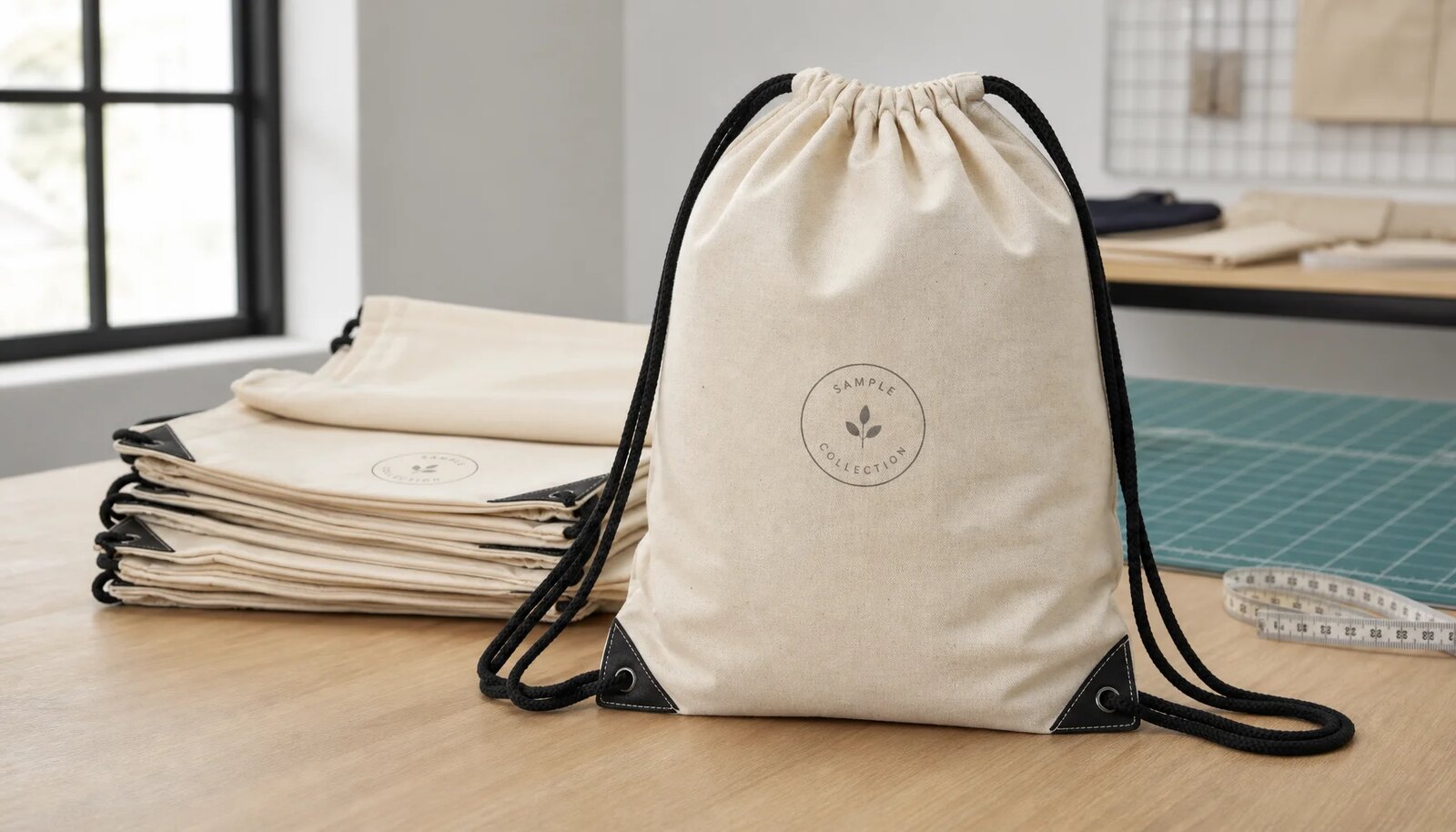
Start With the Buyer Use Case
Cotton drawstring backpacks for craft fairs look simple, but the right specification depends on the selling channel. A free event giveaway, a paid artisan-brand resale item, and a museum-shop backpack may all use cotton, cords, and a front logo. They do not need the same fabric weight, print durability, label content, fold quality, or inspection depth.
Begin the supplier compliance checklist with the commercial use. Who receives the bag? Will it carry flyers for one afternoon, packaged craft kits for a weekend, or retail purchases after checkout? Is the order for a local event, distributor stock, online resale, or a retail chain? These answers decide the material, packing, compliance records, and acceptable defect level.
This also improves quote comparison. If one supplier prices a 150 GSM giveaway bag and another prices a 260 GSM retail backpack, the cheaper offer is not a saving; it is a different product. State the delivery market, event date, expected load, branding standard, and packing format before sending the RFQ.
- Giveaways need stable lead time, simple branding, acceptable handfeel, and reliable carton counts.
- Retail programs need stronger fabric, cleaner seams, accurate labels, barcode control, and better presentation.
- Distributor orders need repeatable specs, price-break clarity, carton data, and inspection records.
- Brand-owner programs need sample custody, artwork control, material declarations, and deviation approval.
- Children-oriented events need early review of safety, cord, labeling, and chemical requirements.
Build a Quote-Ready Specification
A strong RFQ is short but specific. Avoid supplier-friendly phrases such as standard cotton, normal size, good print, and export packing. Each factory may interpret those differently. The quote sheet should let several suppliers price the same bag without guessing.
Finished size is a common dispute. A 35 x 40 cm backpack and a 40 x 45 cm backpack may both be called standard, but fabric consumption, wearing comfort, print area, and carton volume change. State width and height measured flat, the measurement stage, and the tolerance allowed after sewing and packing.
Use controlled references. A signed physical sample, fabric swatch, trim card, print swatch, and packing sample are stronger than photos alone. Each reference should show order number, style name, version, date, and approver. If the supplier changes fabric lot, cord batch, ink, label, or packing material, the change should need written approval.
- List finished width, height, channel width, cord length, seam allowance, and reinforcement position.
- State whether measurements are taken flat, empty, after pressing, or after unpacking.
- Attach production artwork, print placement drawings, and label files, not only lifestyle mockups.
- Assign version numbers to specs, samples, print proofs, labels, and packing instructions.
- Write inspection checkpoints into the purchase order so standards are not informal.
Specify Cotton by GSM and Finish
Fabric drives handfeel, durability, print result, price, and freight. Suppliers may quote by ounce, GSM, or loose terms such as thin cotton, medium cotton, or canvas. Ask for measured GSM and the commercial ounce description. Typical ranges are about 140-170 GSM for light 5 oz cotton, 180-220 GSM for stronger 6 oz cotton, 240-280 GSM for 8 oz cotton, and 300 GSM or higher for heavier canvas-style backpacks. Exact conversion varies by weave and finishing.
Natural cotton is common for craft fairs because it fits handmade and artisan branding. It also brings shade variation, seed specks, slubs, and crease marks. Those features may be acceptable when they match the approved sample. They should not excuse stains, oil marks, major weaving faults, heavy shade mismatch, or contamination.
Finish affects compliance and cost. Unwashed cotton may feel crisp and shrink more. Washed cotton can feel softer but may vary in shade. Bleached cotton gives a cleaner print base. Dyed cotton improves brand matching but can increase MOQ and lead time. Organic cotton, recycled cotton, or other claims need order-specific evidence, not generic marketing language.
- 140-170 GSM fits budget distribution but can feel thin for resale or heavy event use.
- 180-220 GSM is a practical middle range for many craft fair promotional backpacks.
- 240-300 GSM improves perceived value, seam strength, and print stability for retail programs.
- Natural cotton needs approved shade and speck tolerance because batches vary.
- Dyed cotton needs color-standard approval, dye-lot control, and extra matching time.
- Any recycled or organic claim should be supported by documents tied to the actual material.
Control Cords, Channels, and Corners
The construction is simple, so small details matter. The top channel must be wide enough for smooth cord movement. Side seams should hang straight. Bottom corners need reinforcement because the cord transfers carrying load to those points. A bag can photograph well and still fail when shoppers carry brochures, small jars, samples, or packaged goods.
Cord choice affects comfort and appearance. Cotton cord matches natural fabric but can fray if poorly finished. Polyester cord is strong and slides well, though it may look less natural. Braided cord feels more substantial. Flat tape improves shoulder comfort if the channel is wide enough. Specify material, diameter or tape width, color, length after knotting, knot method, and end finish.
Lower-corner construction should be treated as a functional detail. Options include folded corners, bar-tacks, triangular patches, reinforced side-seam openings, or eyelets with backing. Lightweight giveaways may use simpler reinforcement. Resale or heavier-use bags need stronger stress-zone control.
- Measure channel width; narrow channels cause slow opening, cord twisting, and seam stress.
- Confirm both cords are equal length so the backpack sits evenly when worn.
- State bar-tack position, stitch length, thread color, and seam allowance for repeat orders.
- Use reinforced lower corners for jars, catalogs, craft kits, apparel, or retail purchases.
- Reject weak corner stitching when the cord pulls against one unreinforced seam.
- Clarify whether the fit is adult, youth, or universal before sample approval.
Choose Decoration by Artwork Risk
Screen printing is usually the safest decoration for cotton drawstring backpacks used at craft fairs. It works well for solid logos, slogans, simple illustrations, and repeat programs. The buyer should state print size, number of colors, color references, file format, and placement method. Always approve the print on the real fabric because natural cotton texture changes color strength and edge sharpness.
Heat transfer can suit detailed or multi-color artwork, but it adds different controls. Film edges may show, handfeel may be heavier, and poor curing can cause peeling or cracking. DTG can work for short runs or complex art, but fabric surface and pretreatment affect results. Embroidery can look premium only when fabric weight, stabilizer, and stitch density are suitable; thin cotton may pucker.
Print placement should be measured from defined points such as the top opening, side seam, centerline, or finished bottom. Photos are not enough for approval. Ask whether printing happens before or after sewing because each method affects accuracy, speed, and allowable print area.
- Screen print fits 1-4 solid colors, medium quantities, and repeatable event branding.
- Heat transfer needs checks for edge feel, peel resistance, cracking, and rub performance.
- DTG needs sample approval for color strength, absorption, and pretreatment marks.
- Embroidery needs suitable GSM, stabilizer, stitch density, and pucker review.
- Large graphics need distortion checks after curing, folding, and carton compression.
- Quotes should show setup cost, print method, maximum print area, and tolerance.
Compare MOQ and Landed Cost
MOQ is tied to fabric stock, dyeing, cutting setup, cord sourcing, print screens, labels, and packing materials. A supplier may accept 300-500 pieces for natural cotton with one print color because materials are in stock. The same factory may require more for dyed cotton, custom cord, woven labels, paper belly bands, or individual packing.
Unit price changes when handling becomes complex. A plain natural cotton backpack can move quickly through cutting, sewing, trimming, and bulk packing. Add four print colors, two artwork versions, hangtags, barcode stickers, and mixed cartons, and the labor model changes. Ask what is included before artwork approval.
Request price breaks at 500, 1,000, 3,000, and 5,000 pieces using the same specification. Otherwise, the comparison may hide material downgrades. A quote based on 150 GSM cotton is not comparable with a quote based on 260 GSM cotton, even if both use the same product name.
Compare landed cost, not only unit price. The RFQ should state Incoterm, currency, payment terms, quote validity, sample charges, screen charges, inspection costs, carton data, freight exclusions, duty, tax, and any special packing costs.
- Fabric availability often drives MOQ more than the bag pattern.
- Custom dyeing, special cord, and private labels usually increase MOQ and lead time.
- Each print design may create separate setup, screen, transfer, or sampling cost.
- Individual packing adds material, labor, inspection time, carton volume, and freight cost.
- Mixed designs should be quoted by design count and packing plan.
- Excluded costs should be visible before the PO is issued.
Verify Supplier Compliance Evidence
Compliance evidence should match the order, market, and claim. A simple giveaway may need confirmed material, approved sample, correct carton information, and reliable shipment records. A retail program may also need composition labels, country-of-origin marking, care instructions where required, restricted substance information, barcode accuracy, and inspection records.
Separate evidence into product, factory, and shipment records. Product evidence includes fabric composition, GSM records, ink details, trim information, and approved samples. Factory evidence includes production-site identity, business license, audit reports if required, and subcontracting controls. Shipment evidence includes packing list, carton labels, inspection report, export documents, and final photos.
Check document scope. A chemical test for a different ink does not prove the ink used on this order. An audit for another factory does not cover the actual sewing site. An organic cotton claim does not support retail marketing unless documentation covers the material and required chain-of-custody process. Ask which documents are standard, which require third-party testing, who pays, and how much time is needed.
Label review should happen before bulk production. Depending on market and sales channel, the buyer may need fiber content, care wording, country of origin, barcode, hangtag, warning language, or carton marks. Keep final approved label artwork and inspection reports in the order file so repeat orders do not restart from memory.
- Request composition confirmation for body fabric, cord, labels, and claimed recycled or organic content.
- Clarify country-of-origin marking and care-label requirements by destination market.
- Ask for restricted substance testing options when bags are sold through retail channels.
- Confirm social or factory audits cover the actual production site, not only a sales office.
- Require inspection records, defect photos, and carton data to be owned or accessible by the buyer.
- Reject documents missing issue date, test scope, material description, or site relevance.
Use Samples as Production Controls
Sample approval is the strongest control point before bulk cutting and printing. Start with a construction sample that confirms size, fabric weight, handfeel, cord, channel, seam quality, reinforcement, and shape. Then approve decoration and packing. Combining every decision into one rushed sample may save days but increases the chance of missing a weak corner or underweight fabric.
The approved sample should become a controlled reference. The factory keeps one sealed sample, the buyer or agent keeps one, and the inspector uses the same standard. The tag should list order number, style, fabric GSM, fabric color, cord type, print method, artwork version, label version, packing style, date, and approver.
Before mass production, request first-piece photos or a line-start sample made with bulk fabric, bulk cord, actual ink, planned stitching, and final packing. This is important when samples are made in a sample room but bulk production moves to another line. Define what requires rework and what may be accepted only by written concession.
- Approve construction before expensive multi-color decoration or retail packing.
- Keep sealed approved samples with the factory and buyer, agent, or inspector.
- Record print size and placement in measurements, not only photos.
- Use a separate sample sign-off for each fabric color, print design, and packing version.
- Require first-piece confirmation before full bulk sewing or printing begins.
- Treat wrong GSM, missing reinforcement, wrong cord color, and wrong print size as major deviations.
Inspect Function, Appearance, and Quantity
Final inspection should focus on defects that affect use, presentation, and shipment accuracy. Critical defects include wrong product, wrong artwork, missing cords, broken seams, severe contamination, unapproved components, unsafe features, and serious shortage. Major defects include weak corner stitching, poor print adhesion, large color deviation, open seams, skipped stitches, oil marks, and badly distorted shape. Minor defects may include small thread ends or slight cotton slubs within the approved standard.
AQL inspection can be useful, but the checklist must be product-specific. Generic textile checks may count loose threads while missing cord function. The inspector should open and close selected bags, pull lower corner points, rub the print, measure units from several cartons, compare fabric and print color against approved swatches, verify labels, and count cartons against the packing list.
Timing matters. Inspect after goods are packed but before shipment release so the supplier can sort, replace, reprint, or repack. If the defect is found only after arrival, the buyer may face fixed event dates and expensive warehouse labor. For higher-value retail programs, add an in-line check during sewing or printing.
- Critical defects should trigger rejection, full sorting, or documented corrective action.
- Print position should stay within approved tolerance across cartons and production shifts.
- Corner reinforcement should not tear or open under agreed pull checks.
- Natural cotton slubs are acceptable only inside the approved visual tolerance.
- Sample all designs, fabric colors, and packing formats, not only the easiest cartons.
- Confirm carton count, bundle count, SKU separation, carton marks, and barcode scans.
Define Packing and Shipment Data
Packing affects landed cost, presentation, warehouse labor, and sustainability perception. Bulk-packed backpacks reduce material cost and plastic use, but they need strong count control and crease expectations. Individual bags protect print surfaces and support resale, but they add labor, carton volume, and inspection time. Paper belly bands, hangtags, recyclable bags, and barcode stickers work well for craft retail only when placement and durability are approved.
Request carton quantity, carton dimensions, gross weight, net weight, and CBM before the purchase order. Cotton backpacks are compressible, but overfilled cartons can damage prints, create hard fold marks, and make manual handling difficult. Set a practical carton weight limit and confirm whether moisture protection, palletization, or retailer-specific carton marks are needed.
Freight assumptions should be checked with fabric and packing choices. Heavier cotton and individual packing can raise air cost quickly. Sea shipment may be cheaper but needs stronger cartons, moisture control, and a realistic handover date. If the craft fair date is fixed, do not approve production without carton data and shipment milestones.
- Bulk pack fits giveaways but requires bundle count control and crease management.
- Individual packing fits resale but increases material, labor, inspection time, and carton volume.
- Retail packing needs approved fold direction, barcode position, hangtag location, and label artwork.
- Carton gross weight should be practical for warehouse handling and retailer receiving.
- Moisture protection matters for cotton shipped by sea or stored before seasonal events.
- Carton data should support landed-cost comparison, not only freight booking.
Specification comparison for buyers
| Supplier option | What to verify | Commercial advantage | Buyer risk to control |
|---|---|---|---|
| Direct sewing factory | cord material proof, reinforcement close-ups, load-test photos, approved sample tag, and bulk-line first-piece record | Better sample-to-bulk control and faster production feedback | May be weaker on export paperwork or branded packing unless checked early |
| Trading company | Factory name, production photos, trim-source proof, and who owns QC decisions | Can coordinate small mixed orders and extra services | Markup can hide real factory capability and slow defect decisions |
| Specialized bag workshop | cord diameter, eyelet or reinforced channel, bottom corner reinforcement, seam allowance, bar-tack position, and load target | More practical for detailed construction, trims, and repeat programs | Capacity may be limited during peak seasons |
| Low-price general supplier | 6-10 oz cotton canvas, 210D polyester, rPET, or blended cotton with shrinkage and colorfastness expectations set before sampling | Useful for simple promotional runs with loose specs | Material downgrades, weak packing, and vague inspection scope can erase savings |
| Retail-ready supplier | fold direction, cord protection, bundle count, carton compression, moisture bag, and retail label position | Can handle labels, SKU separation, carton marks, and receiving rules | Higher unit cost must be compared against reduced warehouse work |
| Compliance-focused supplier | Fabric records, labeling review, test plan, and production traceability | Safer for retail programs and repeat brand orders | Documentation claims need evidence, not only sales language |
| Local sample room plus bulk factory | Signed sample, bulk factory handoff, first-piece photos, and deviation owner | Good for complex branding before large production | Sample room quality may not match bulk line unless handoff is controlled |
Buyer checklist before sampling
- Define the product as a cotton drawstring backpack with finished width, height, drawstring channel, cord route, lower-corner attachment, and intended carrying load.
- State fabric composition, finish, and measured GSM; include ounce equivalent only as a supporting description, not the only standard.
- Identify whether cotton is natural, bleached, dyed, washed, unwashed, organic, recycled-content, or blended, and require evidence for any claim used in marketing.
- Set tolerances for body size, channel width, cord length, print placement, label position, and carton quantity before sampling.
- Specify cord material, diameter or tape width, color, knot/end finish, channel compatibility, and lower-corner reinforcement method.
- Choose decoration by artwork and use: screen print for solid logos, heat transfer for detailed graphics, DTG for short runs, embroidery only on suitable fabric weight.
- Approve a pre-production sample made with confirmed fabric, cord, thread, decoration, label, fold, and packing method before bulk cutting or printing.
- Ask MOQ by fabric color, print design, cord color, label type, and packing style; do not rely on one total MOQ figure.
- Confirm compliance evidence needed by market: composition label, country-of-origin marking, care instructions where required, restricted substance testing, and inspection report ownership.
- Lock packing instructions, carton dimensions, gross/net weight, CBM, SKU separation, carton marks, and shipment handover date in the purchase order.
Factory quote questions to send
- What exact fabric composition, measured GSM, ounce equivalent, weave, finish, and color standard are included in this quote?
- Is the fabric from stock or made to order, and what are the fabric-width, cutting-loss, shrinkage, and shade-lot assumptions?
- What finished size do you recommend for craft fair drawstring backpacks, and what tolerance applies after sewing, pressing, and packing?
- Which cord options are available, including cotton, polyester, braided cord, flat tape, or recycled cord, and what are their diameter, width, color MOQ, and lead time?
- How is the lower cord point reinforced: side-seam opening, patch, bar-tack, eyelet, folded corner, or another construction?
- Which decoration method is quoted, and what are the setup charge, color limit, maximum print area, curing standard, registration tolerance, and rub expectation?
- What MOQ and price breaks apply at 500, 1,000, 3,000, and 5,000 pieces for the same specification?
- Which costs are excluded: sample, courier, screens, color matching, labels, hangtags, barcodes, special folding, inspection, freight, duty, or tax?
- Can you provide a pre-production sample using the same fabric batch, cord, thread, ink, label, fold direction, and packing planned for bulk?
- What carton quantity, carton dimensions, gross weight, net weight, and CBM should we use for landed-cost comparison?
Quality-control points to confirm
- Measure fabric GSM from a swatch or roll record and compare it with the approved sample and purchase order.
- Check fabric composition, finish, shade, handfeel, seed specks, slubs, stains, weaving faults, and shrinkage risk against the signed reference.
- Measure top width, bottom width, height, drawstring channel width, cord length, print position, label position, and corner reinforcement location.
- Open and close selected bags repeatedly to confirm smooth cord movement without channel tearing, twisting, or uneven pull.
- Pull lower corner stress points by hand or fixture according to the agreed inspection method; weak cord attachment should be treated as a major defect.
- Check print adhesion, dry rub, tape result, registration, pinholes, cracking, peeling, smearing, and color transfer on actual cotton fabric.
- Classify loose threads, skipped stitches, open seams, oil marks, needle holes, distorted corners, and heavy creasing during final inspection.
- Verify care labels, composition labels, country-of-origin marks, hangtags, barcodes, SKU labels, and carton marks against buyer artwork and market requirements.
- Count pieces by carton and bundle; do not accept compressed bundles without independent count control.
- Keep inspection reports, defect photos, carton data, and approved sample references with the order file for repeat purchasing.