Why MOQ negotiation is harder than it looks for cotton drawstring backpacks at craft fairs
Cotton drawstring backpacks look simple on a product page, but MOQ negotiation becomes more layered the moment a buyer ties them to a real craft fair program. One event may need branded giveaway bags for volunteers, another may need retail merchandise for the booth, and a third may require several artwork versions for sponsors, town names, or seasonal promotions. The factory sees one basic backpack. The production team sees cutting, stitching, printing, drying, packing, carton labeling, and sometimes multiple changeovers in one order. That difference in perspective is where many negotiations go off track.
For procurement buyers, the key issue is that MOQ is rarely one single number. A supplier may have one minimum for the bag body, another minimum for each artwork, a third for custom fabric color, and a separate threshold for special packing or labeling. If the buyer asks only, What is your MOQ? the supplier has to guess which part of the process is being discussed. That is how confusion begins. The more specific the request, the more useful the answer.
The real leverage comes from standardizing the things the factory has to repeat. If the bag body stays the same across all versions, the cord stays the same, the sewing pattern stays the same, and the carton format stays the same, the supplier has more room to lower the per-design minimum. If each version uses a different size, different fabric, different print method, or different pack style, then every small batch becomes a separate production problem. Even a supplier that wants the order may not be able to run it efficiently.
Craft fair buyers should think of MOQ as a production-planning issue first and a price issue second. The supplier is far more likely to reduce the minimum or accept multiple artworks under one PO when the buyer helps preserve efficiency. That is especially true for seasonal event goods, where timing matters as much as unit cost. A cheap quote that cannot be produced cleanly or on time is not a good procurement result.
This guide focuses on the parts of the order that shape MOQ the most: use case, fabric, construction, print method, packing, QC, and lead time. If those are aligned before negotiation starts, the discussion becomes clearer and the quote becomes more reliable.
In practice, the buyer who can explain what the bag must carry, how it will be distributed, how many artwork versions are required, and when it must arrive is in a much stronger position than the buyer who only asks for a lower number. That simple shift changes the conversation from resistance to problem solving.
- Good negotiation position: same size, same fabric, same cord, same packing, multiple simple screen-print artworks.
- Weak negotiation position: mixed sizes, custom dyed fabric, different cords, individual barcodes, several print methods, and urgent shipment.
- Best RFQ structure: one base backpack specification plus an artwork breakdown table showing quantity per design.
- Useful commercial target: reduce MOQ per design without forcing the factory to restart cutting, sewing, and packing for every version.
- Buyer rule of thumb: the more identical the body spec is, the easier it is to lower the per-design minimum.
Start with the craft fair use case before choosing the backpack spec
The first procurement question is not what the backpack should cost. It is what the backpack has to do at the craft fair. A bag handed out free to visitors has a very different requirement from a bag sold as a retail item or included in a vendor welcome kit. If the bag is only carrying a brochure, a postcard, or a small sample insert, a lighter build may be enough. If it needs to hold packaged goods, a bottle of water, handmade ceramics, or several purchases from different booths, the buyer should demand stronger fabric, better stitching, and more reliable cord reinforcement.
For most craft fair programs, a sensible starting point is a cotton body in the 6 oz to 8 oz range, roughly 200-270 GSM. That range tends to feel substantial enough for retail use while still remaining economical at scale. It also gives the factory more room to sew a backpack-style bag that looks intentional rather than flimsy. Lighter cotton can work for giveaway programs, but the handfeel may not support the artisan, handmade, or lifestyle image that many craft fair brands want to communicate.
Natural cotton is popular because it looks warm, neutral, and aligned with the market's handmade presentation. It is also easier to negotiate because many factories keep it as a stock option. Still, buyers should know that unbleached natural cotton often includes small seed flecks, subtle fiber specks, or shade variation from panel to panel. That is normal unless the buyer asks for a cleaner bleached finish or tighter visual control. If the artwork or brand design depends on a very uniform background, this should be stated up front.
Use case also determines how much presentation matters. A giveaway bag is usually judged by function, logo visibility, and distribution speed. A retail bag is judged by appearance, feel, repeat purchase potential, and how it looks on a shelf or hook. Those are not the same job. Procurement should not let one spec try to serve both jobs unless the commercial plan truly calls for it.
A practical method is to start from the end use, then work backward. Define the load, the distribution path, the impression the bag should make, and the likely handling conditions. Once those are clear, the fabric, reinforcement, decoration, and packing choices become much easier to align. That sequence helps buyers avoid overengineering a low-value giveaway and under-specifying a retail item that should feel premium enough for a paying customer.
- Giveaway level: 140-180 GSM cotton, simple one-color logo, bulk packed, low load expectation.
- Standard craft fair use: 200-270 GSM cotton canvas, reinforced cord exits, screen print, better seam control.
- Retail merchandise level: 270-340 GSM cotton canvas, heavier cord, premium print or embroidery, individual packing or hangtag.
- Natural cotton note: seed flecks and slight shade variation are part of the look unless bleached or tightly controlled fabric is specified.
- Use-case rule: the bag should be specified by what it must carry, not only by what it must cost.
Fabric GSM, color choice, and construction details that drive MOQ up or down
Fabric availability is one of the biggest hidden drivers of MOQ. If the supplier already has the right cotton canvas weight in a stock color, the factory can usually quote more flexibly across multiple artwork versions. Once the buyer asks for custom dyeing, recycled content, organic certification, a special weave, or a hard-to-source color, the minimum often rises because the mill or greige supplier has its own order threshold. In other words, the sewing MOQ may be manageable while the fabric MOQ is not.
That is why natural cotton is often the safest route when a buyer is testing a new craft fair program or launching a limited seasonal item. Black or a standard dyed stock color can also work well if the factory already keeps that material on hand. If the brand needs a specific color, ask whether it can be matched from stock yarn or whether a custom dye lot is required. That question affects MOQ, lead time, shade consistency, and the risk of leftover stock after the event season ends.
Construction complexity matters just as much as the fabric itself. A flat drawstring backpack with straight seams, reinforced cord corners, and a simple fold-over top is much easier to produce at lower quantities than a custom-shaped bag with gusset panels, lining, zipper pockets, contrast panels, metal eyelets, or extra trim. Every added operation takes time. If the order is small, those extra steps have to be spread across fewer units, which pushes up the unit price and often the minimum quantity as well.
Procurement should also define how the finished size is measured. Many disputes begin because the sample was measured one way and the production target another. State whether the finished size is measured after sewing, with seams complete and the drawcord relaxed. If the bag may be washed or steam-treated, ask whether shrinkage is expected and whether the supplier has test data or a practical allowance. Cotton is a natural material, and natural material needs tolerances that are real, not cosmetic.
For low-MOQ craft fair orders, the easiest way to keep the quote manageable is usually to keep the body spec standard and place the customization budget into the artwork instead of the bag structure. That keeps the product easier to quote, easier to sample, and easier to repeat later if the event program grows.
- Common size range: around 34 x 42 cm for adult event use, adjusted to target market and load.
- Fabric choice to support MOQ negotiation: natural 6 oz or 8 oz cotton canvas from stock.
- Construction to avoid for early small runs: custom gussets, multiple pockets, contrast panels, metal eyelets, and nonstandard closures.
- Important tolerance: finished size should be stated after sewing, because cotton cutting and seam allowance can change the final dimension.
- Shrinkage note: if washing is expected, request shrinkage data or test wash the sample; most event bags are not pre-washed unless specified.
- MOQ tip: stock fabric and simple construction often matter more than trying to negotiate harder on sewing labor alone.
Choose the print method with MOQ, handfeel, and event presentation in mind
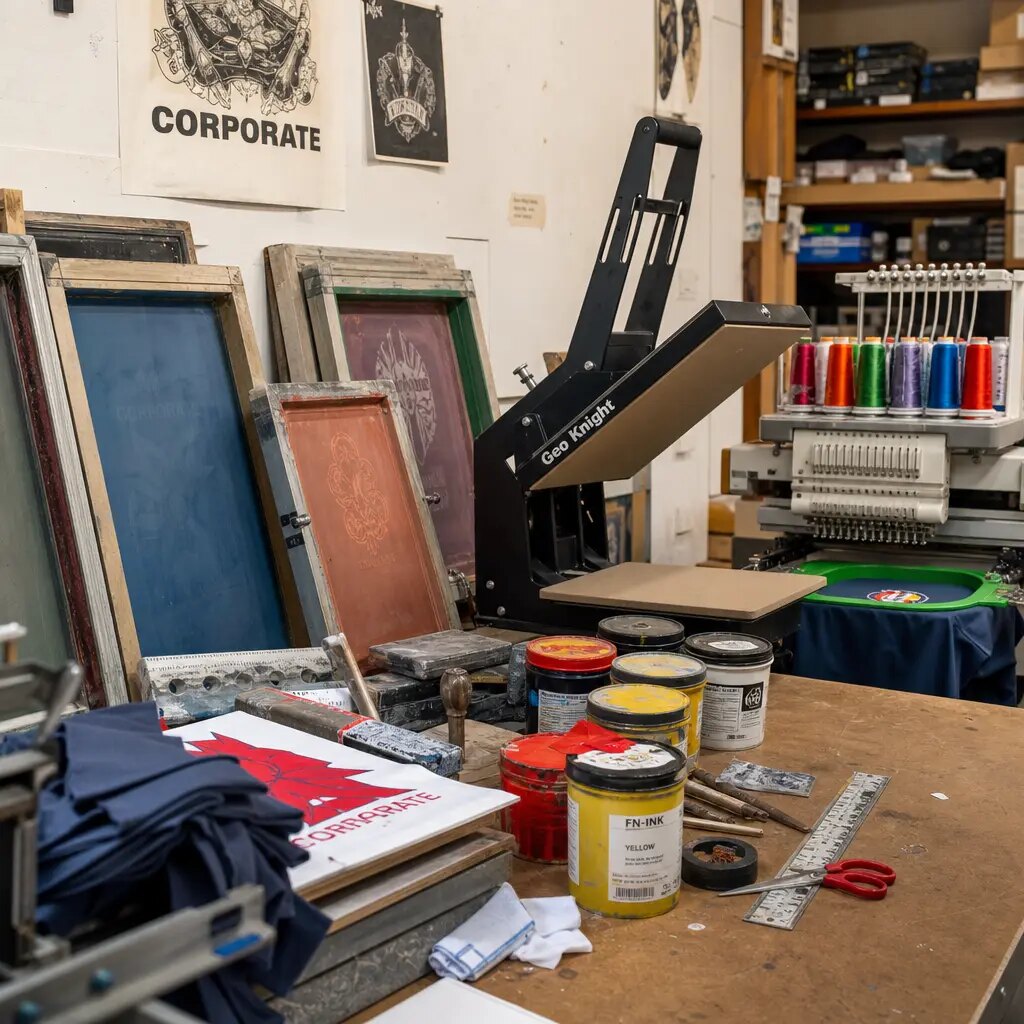
Print method has a direct effect on MOQ because each decoration process creates its own setup cost and its own quality risk. Screen print is usually the strongest baseline for cotton drawstring backpacks when the design is simple and uses one to three solid colors. It gives good coverage on cotton, is repeatable, and is often the most stable route for event logos, town names, sponsor marks, or clean graphics. The tradeoff is setup: each screen, film, or color separation adds time and cost. If the order includes several designs, the buyer should ask whether any of them can share print size, ink colors, or placement to reduce changeovers.
Heat transfer can help with some low-quantity or multi-color jobs, but it should not be treated as the default answer. On textured cotton canvas, transfers may feel like a film rather than a print, and quality depends heavily on film type, heat, pressure, dwell time, and curing practice. A buyer who values a soft, natural handfeel should request a physical sample instead of assuming the finish will look right from a mockup. For a craft fair audience, touch and appearance matter more than production terminology.
DTG may suit very small runs or sample work, but it is not always the best production route for cotton drawstring backpacks because fabric texture, bag shape, and throughput can limit consistency. Embroidery gives a premium and durable look, but it increases cost, adds production steps, and can push the item out of range for low-cost giveaways. It also changes the visual language of the bag, which may or may not suit the event brand. The safest choice is the one that fits the buyer's market, not the one that sounds most advanced.
Artwork detail matters as much as process choice. Buyers should provide vector files when possible, list Pantone references if color is important, define final print size, and explain whether the graphic should look crisp, distressed, or handmade. If the supplier receives only a low-resolution image with no size and no color control, the print recommendation will be a guess. The more exact the artwork brief, the better the odds of keeping MOQ under control while still hitting quality targets.
For craft fair orders, the print method should be selected not only by unit cost but by how the bag will be judged at the table, in the booth, or on a retail hook. A lower-cost process is not a saving if the print looks cheap, feels wrong, or fails after short use.
- Screen print: best baseline for one to three solid colors on cotton canvas.
- Transfer print: useful for detailed art, but request a physical sample because handfeel and durability vary.
- DTG: can work for small runs, but is not always the most consistent choice for textured backpack fabric.
- Embroidery: premium look, higher cost, and best reserved for retail-oriented or higher-value programs.
- Artwork rule: specify vector files, Pantone references where needed, print size, and desired finish before asking for MOQ.
- MOQ tip: each added color or print position can create its own setup threshold.
How to negotiate MOQ without breaking the price or making quality worse
The most effective MOQ negotiation starts with a production plan, not a demand. Instead of asking for the lowest possible number, the buyer should explain how the order is structured and where flexibility exists. For example, a procurement team may need 2,000 total units for a craft fair season, but only 500 units per artwork across four designs. If all four designs use the same cotton canvas weight, the same bag size, the same cord construction, and the same packing format, the supplier can usually manage the job more efficiently than if those four designs were treated as separate products. That is the real negotiation point: consolidate operations without diluting the spec.
One strong tactic is to negotiate the total order first and the minimum per design second. Factories often prefer one production run with multiple artworks to several tiny stand-alone runs. Buyers can also ask for a tiered quote: standard MOQ, target MOQ, and test quantity. That side-by-side view shows whether the price gap comes from fabric purchasing, cutting efficiency, print setup, or packing labor. If the supplier says the lower quantity is possible but only at a higher price, ask which specification would reduce the premium. Sometimes the answer is very specific, such as using natural stock fabric instead of custom dye or limiting the order to one print color instead of two.
It also helps to accept transparent setup costs rather than forcing them into the unit price. Screen charges, film charges, artwork setup fees, strike-off charges, barcode labeling, and special packing charges are easier to approve when they are visible. When those costs are hidden in the unit price, buyers lose the ability to compare factories fairly. Procurement teams often think they are getting a lower quote when they are actually just losing line-item clarity. Transparent pricing is usually more useful than a quote that looks lower but contains hidden assumptions.
Forecast visibility can also support negotiation if the craft fair program is likely to repeat. A supplier may be more willing to reduce the first-order minimum if the buyer can credibly show seasonal repeat potential. But that forecast should be conservative and tied to an actual buying schedule. Suppliers remember the difference between a real reorder plan and a hopeful promise. Overstating future volume is a fast way to damage trust when the next order does not appear.
If the MOQ still does not fit the budget, simplify the product before pushing harder on the supplier. Reducing print colors, switching to a stock fabric color, keeping one artwork placement, or moving from retail-style packing to bulk packing can lower the threshold more effectively than asking the factory to absorb inefficient small-batch production. Smart negotiation protects both the unit price and the finished quality.
- Negotiate total quantity first, then minimum per artwork.
- Keep one approved body specification for all designs.
- Limit print colors and placements during the first order.
- Accept a reasonable setup charge instead of forcing it into unit price where it becomes unclear.
- Offer forecast visibility if repeat craft fair events are likely, but do not promise volumes that purchasing has not approved.
- If MOQ is still too high, consider blank stock bags with local decoration only after comparing print quality, freight, and handling cost.
- Ask for the lowest MOQ that still allows the factory to follow a normal production workflow.
- Ask which cost driver changes first when quantity drops: fabric, print setup, packing, or sewing efficiency.
Quote data that makes supplier comparisons fair and actionable
Cotton drawstring backpack quotes are often misleading because they do not describe the same product. One supplier may quote a lighter fabric. Another may exclude packing. A third may assume a smaller print area. Another may include a custom color that materially changes the MOQ. This is why procurement should not compare price alone. The real question is which quote matches the same spec, the same quality risk, and the same landed-cost basis. Without that discipline, the cheapest offer can become the most expensive once missing items are added later.
A practical RFQ should list both the product spec and the commercial assumptions. The buyer should confirm whether the price is ex-works, FOB, or another Incoterm; whether the validity period is fixed; whether sample costs are refundable; and which setup charges apply per color or per design. For cotton products, carton dimensions and CBM are particularly important because the bags are usually bulky relative to their value. Freight can swing significantly if the packing method changes from bulk to individual polybag.
The quote should also clarify version control rules. If the buyer wants to split one order across multiple craft fair designs, each design should have an item code or artwork code. That code should appear on the mockup, sample label, packing list, carton mark, and invoice if possible. The goal is to prevent the common problem where the total quantity is correct but the design allocation is wrong. That kind of mistake can ruin an event campaign even when the product itself is acceptable.
For internal procurement review, it helps to compare suppliers in a table that includes unit price, setup fees, sample timing, production lead time, fabric source, packing format, and carton data. That makes it much easier to tell whether a supplier is truly flexible on MOQ or simply shifting cost from one line to another. The best quotes are specific enough that a purchasing manager can calculate landed cost and delivery risk without guessing.
If the buyer wants to negotiate with confidence, the RFQ should leave as little room for interpretation as possible. Cotton drawstring backpacks are simple products only after the specification is controlled. Before that, they are one of the easiest items to misquote.
- Required price basis: unit price, currency, Incoterm, validity period, and payment terms.
- Required setup data: sample charge, screen charge, film charge, artwork change charge, label charge, and packing surcharge.
- Required logistics data: carton quantity, carton size, gross weight, net weight, CBM, and loading method.
- Required spec data: fabric GSM, bag finished size, cord material, print method, print size, and packing method.
- Required schedule data: sample lead time, strike-off lead time, bulk lead time after approval, and final inspection timing.
- Quote rule: compare only offers that use the same fabric, same size, same decoration method, and same packing assumptions.
- Commercial check: ask whether a lower unit price is offset by a higher setup fee, heavier freight, or tighter defect tolerance.
Make sample approval prove function, not just appearance
A digital mockup is useful for concept approval, but it is not enough for production approval. With cotton drawstring backpacks, fabric feel, stitching quality, cord function, and print behavior all affect whether the product suits a craft fair audience. A flat artwork file cannot tell the buyer whether the bag closes properly, whether the cord is comfortable on the shoulder, or whether the print smears during stacking. That is why the sample stage should include both a blank pre-production sample and a printed strike-off.
The blank sample proves the body specification. It confirms the finished dimensions, the fabric weight or at least the fabric handfeel, the cord diameter, the seam finish, the bottom reinforcement, and the way the cord exits are stitched. The printed strike-off then confirms ink opacity, placement, color, registration, and curing on the actual fabric. If the buyer approves only a digital mockup, the first physical check may not happen until bulk production is already underway. For a seasonal or event-driven program, that is too late.
Sample approval should be written down in practical terms. Buyers should measure width and height flat with the drawcord relaxed, take photos of the front, back, interior, cord exits, and bottom corners, and record any required corrections. If the sample is approved with edits, those edits must be listed clearly. Phrases like make it cleaner or improve the feel do not help the factory. The supplier needs measurable instructions such as increase print width by 1 cm, move the logo up 0.5 cm, or add stronger bar tacks at the cord corner.
A sample should also be stress-tested in a way that matches the intended use. If the bag will carry brochures or merchandise, load it with a realistic weight and check whether the shoulder cords sit evenly and whether the seams hold under mild tension. For a retail-facing product, buyers should also check whether the folded bag looks neat, whether the print scuffs when stacked, and whether loose threads or stitching defects would be visible to customers. The sample stage is the cheapest place to find those issues.
The main principle is simple: approve the product the way it will be received by the customer, not the way it looks on screen. That discipline prevents a large share of MOQ disputes later.
- Measure finished width and height flat, with drawcord relaxed.
- Weigh the sample or request a fabric GSM confirmation to prevent substitution.
- Load the bag with a realistic craft fair weight and test shoulder comfort.
- Pull cord exits and bottom tabs gently to detect weak reinforcement.
- Rub the printed area with a white cloth after curing to check ink transfer.
- Place several samples together to see whether prints scuff or stick during stacking.
- Approve final print placement using measurements from seams or top edge, not only visual centering.
- Keep a written sample approval sheet with dated photos and exact change requests.
Packing choices change MOQ, freight, and how the bags are distributed at the fair
Packing is one of the fastest ways to change the cost structure of a cotton drawstring backpack order. Bulk packing is usually the most efficient option for event giveaways because staff can unpack cartons and distribute the bags directly from storage or the booth. It reduces material use, labor, and carton volume. Individual polybags are more appropriate when the product will be sold at retail, barcoded, or stored in a way that requires dust protection and a cleaner presentation. They also add cost and can increase the package volume that freight carriers charge against.
For low-MOQ negotiation, buyers should know that packing can be used to simplify or complicate the order. If the goal is to split the total quantity across several craft fair designs, the packing plan should be set early so the factory can separate design codes correctly. Mixed cartons are sometimes acceptable, but only if the carton marks and internal count rules are explicit. Otherwise, a factory may meet the total quantity while shipping the wrong design mix to the wrong location.
Carton labeling matters more when the order is distributed across multiple fairs, vendors, or sponsor groups. Each carton should ideally show the PO number, item code, artwork code, quantity, carton number, and destination if applicable. That labeling saves time for warehouse staff and reduces the chance of an embarrassing distribution error just before an event. If the buyer is shipping direct to several locations, clear carton marks are often worth more than a small unit price reduction.
Moisture control also matters with cotton. Cartons should be packed only after the fabric and print are fully dry and cured. If ink is not fully set, bags can scuff, transfer, or stick during transit. If cartons will move through multiple handoffs, palletizing or stronger outer cartons may matter more than a tiny reduction in pack density. Cotton may be a simple material, but it is still vulnerable to humidity, pressure, and handling damage.
The packing decision should therefore be based on the final distribution method, not habit. A retail item and a giveaway item should not be packed the same way unless the business case truly says they should.
- Bulk pack: lowest packing cost and less plastic, good for event handout distribution.
- Individual polybag: useful for retail shelf handling, barcode control, or premium presentation.
- Inner pack by design: useful when multiple artworks must be separated for different vendors or sponsors.
- Carton marks should include PO number, item code, artwork code, quantity, carton number, and destination if applicable.
- Moisture protection matters for cotton; avoid packing before print is fully cured and fabric is dry.
- Request carton drop suitability if cartons will move through parcel networks rather than palletized freight.
- Match packing to distribution method, not to what the factory usually prefers.
- Ask whether pack changes affect unit MOQ or only add labor and material cost.
Plan lead time backward from the craft fair date, not from the factory's first promise
Craft fair orders are schedule-driven, and the event date usually cannot move. That makes lead time a procurement risk, not just a logistics detail. Buyers should work backward from the fair date and leave room for artwork confirmation, sample production, sample shipping, sample corrections, material booking, sewing, printing, final QC, packing, export or domestic transit, and local delivery. The wrong lead-time assumption can turn a low-MOQ success into a missed event. Once the fair is over, the inventory may still be usable, but the sales opportunity is gone.
The most common mistake is counting only the factory's bulk sewing days. That is rarely the full schedule. A supplier may quote 20 working days for production, but that number often starts after deposit, artwork approval, sample approval, and material confirmation. If the order requires custom dyed fabric or a special cord, the fabric lead time may be longer than the sewing lead time. If the order has multiple artwork versions, the print schedule and carton separation can also add days.
MOQ negotiation and lead time are linked. A buyer may succeed in lowering the minimum quantity, but the tradeoff can be a tighter schedule if the factory must fit the smaller job into existing production queues. That is especially true in peak seasons, when many buyers are ordering event merchandise at the same time. If the timeline is fixed, it may be better to simplify the spec and accept a standard MOQ than to push for a low quantity that cannot realistically ship on time.
Procurement teams should also build in a buffer for public holidays, local trucking delays, vessel space issues, and customs checks if the goods cross borders. Cotton drawstring backpacks may be small in unit value, but the business impact of a late shipment can be significant if they are tied to a specific fair weekend or retail launch date. The safest schedule is the one that assumes something will take longer than planned.
In practice, the buyer should ask the factory for a schedule broken into sample time, strike-off time, bulk production time, packing time, and handoff date. A single total lead time is less useful than a dated production plan with approval checkpoints. That level of detail makes it easier to intervene early if the schedule starts slipping.
- Artwork approval should be completed before the factory books print screens or transfers.
- Material booking should not start from an unapproved color or uncertain GSM.
- Printed strike-off approval should be scheduled before bulk printing, especially for sponsor logos.
- Final inspection should occur before balance payment and before cartons leave the factory.
- Build a buffer for public holidays, vessel space issues, customs checks, and local trucking delays.
- For urgent craft fair delivery, reduce spec complexity before asking the factory to compress sewing and printing time.
- Ask for a dated production schedule, not only a single bulk lead-time number.
- Confirm whether the supplier's lead time starts at deposit, at sample approval, or at artwork confirmation.
Define QC acceptance criteria before production starts
Quality control for cotton drawstring backpacks should focus on defects that affect use, appearance, and distribution efficiency. Natural cotton will always have some visual variation, but that does not mean all variation is acceptable. Buyers should define which issues are tolerated and which are not before production starts. For example, a small seed fleck may be normal, but a large stain, a hole, a broken seam, or a print shift that makes the artwork look visibly off-center should trigger rework or rejection depending on the agreed standard.
The inspection plan should cover both the product and the packing. Product checks should include fabric appearance, finished dimensions, stitching quality, cord function, reinforcement at stress points, and print performance. Packing checks should include carton count, unit count, design allocation, carton marks, and whether the cartons are dry, clean, and properly sealed. If several artwork versions are included in one order, each design should be inspected separately. Sampling only the first carton is not enough when the order is split across multiple codes.
Procurement buyers should also think about how defects appear in the hands of end users. A backpack with loose threads may still function, but if it is intended for retail or sponsor gifting, visual roughness can lower perceived value. A print that passes at a glance may still rub off in transit or stick to another bag if the curing is poor. Those are the kinds of problems that matter for craft fair presentation, where products are often handled closely and compared side by side by customers.
The acceptance standard should therefore be practical and measurable. It is better to say that print position must stay within a defined tolerance from the top edge and side seam than to say it should look centered. It is better to define acceptable size variation than to rely on a visual impression alone. The more the buyer can measure, the easier it is for the factory to maintain consistency and for the final inspector to approve or reject shipment without debate.
Once shipment is approved, the final packing list and carton count should match the inspected quantity exactly. If the order is going to multiple fairs or locations, the carton labels should make distribution straightforward for the receiving team. A good QC process protects both the product and the event schedule.
- Fabric: no large stains, holes, obvious weaving faults, or unacceptable shade mismatch within the same design batch.
- Sewing: no open seams, skipped stitches in stress areas, loose cord tabs, or sharp thread ends left untrimmed.
- Cord function: drawstrings should close smoothly and shoulder lengths should be reasonably balanced.
- Print: no major pinholes, smearing, poor registration, wrong color, wrong placement, or ink transfer after curing.
- Packing: correct quantity per carton, correct artwork code, readable carton marks, and no wet or crushed cartons.
- Documentation: final packing list should match inspected quantities and carton numbering before shipment booking.
- QC rule: inspect each artwork code separately when one PO contains multiple fair designs.
- Inspection sequence: incoming materials, inline sewing, post-print curing, final random inspection, then carton verification before release.
Specification comparison for buyers
| Spec decision | Recommended option | When it fits | Buyer risk to check | Commercial tradeoff |
|---|---|---|---|---|
| Fabric weight for craft fair retail or giveaway use | 6 oz to 8 oz cotton canvas, roughly 200-270 GSM | Most craft fair programs need a reusable bag that feels substantial enough for brochures, small purchases, or event inserts | Below 180 GSM may show print bleed-through, feel flimsy in hand, and fail earlier at cord exits or bottom corners | Lower GSM can improve price and freight efficiency, but it can also reduce perceived value and sell-through if the bag is sold rather than handed out |
| Low-MOQ fabric color | Natural, black, or standard dyed stock colors | Best when testing a design, launching a seasonal event range, or splitting one PO across multiple artworks | Custom dyeing often raises fabric MOQ, adds lab dip approval time, and increases shade variance and leftover inventory risk | Stock colors usually shorten lead time and support lower MOQ; custom colors can strengthen branding but may trap cash in unsold inventory |
| Print method for small artwork runs | Screen print for 1-3 solid colors; transfer only for detailed multicolor art when handfeel is acceptable | Screen print is usually the most stable and repeatable option on cotton canvas for logos and fair graphics | Transfers may feel plasticky, can crack if cured poorly, and may not suit textured canvas or premium retail presentation | Screen print has setup costs but better repeatability; transfer can reduce setup complexity on tiny runs but may hurt durability or retail appeal |
| MOQ negotiation lever | Negotiate by total bag quantity first, then split artwork under controlled limits | Useful when one craft fair program needs several town names, sponsor logos, or seasonal designs on the same backpack body | Too many artwork changes create screen setup losses, mislabeling risk, and a higher defect rate even if sewing MOQ is met | Consolidating body spec improves factory efficiency and usually protects the unit price better than forcing multiple tiny runs |
| Cord and closure construction | Cotton rope or flat cotton drawcord with reinforced corner tabs and bar tacks | Appropriate for natural branding and moderate carry weight at craft fairs | Thin cord, weak stitch density, or unreinforced exits can cause early failure when the bag is worn as a backpack | Heavier cord and extra reinforcement improve utility but add material cost and sewing time |
| Sample approval sequence | Blank pre-production sample plus printed strike-off before bulk | Best when size, fabric handfeel, and artwork placement affect buyer acceptance or event timing | Approving only a digital mockup leaves no proof of print opacity, shrinkage, cord feel, or usable capacity | Sampling adds time and cost up front, but it is usually cheaper than rework, missed event windows, or chargebacks |
| Packing format | Bulk pack for giveaway distribution; individual polybag for retail or barcode control | Bulk packing reduces cost and carton volume; individual packing supports retail presentation and inventory control | Unnecessary individual bags increase landed cost; no separation between wet/uncured prints can cause scuffing or transfer | Bulk packing lowers freight and labor; individual packing can improve shelf readiness but often raises CBM and handling cost |
| Lead time planning | Allow time for material booking, sampling, printing, sewing, final QC, and carton packing | Reliable for craft fair season where event dates are fixed and late delivery has no recovery value | A quote that shows only production days may exclude sample approval, art confirmation, export booking, or local transit time | Short lead time is valuable only if the factory can actually slot the order without quality shortcuts or overtime risk |
| Quote comparison basis | Compare same GSM, same size, same print area, same packing, same Incoterm, same carton quantity | Essential when collecting prices from factories, printers, and trading companies | The cheapest quote may hide lighter fabric, smaller dimensions, thinner cord, excluded sample fees, or bulk-only packing | A fair comparison often reveals that a slightly higher quote has better landed cost, fewer surprises, and lower execution risk |
Buyer checklist before sampling
- Define the actual use case first: free giveaway, paid merchandise, vendor welcome kit, retail resale, or sponsor gift.
- State target finished dimensions, not only cutting size; include acceptable tolerance for width, height, and cord length.
- Specify fabric weight in oz or GSM and whether natural cotton, bleached cotton, dyed cotton, recycled cotton, or organic cotton is required.
- Limit artwork versions before negotiation; separate bag-body MOQ from print setup MOQ in the RFQ.
- Confirm print method, number of colors, print size, ink handfeel, and whether a white underbase is needed on dark fabric.
- Require a blank sample and printed strike-off before mass production if the order is event dated or retail facing.
- Define reinforcement at cord exits and bottom corners, including stitch density and bar tack requirement if load is expected.
- Choose packing format based on distribution method, not habit: bulk pack, inner carton, individual polybag, barcode sticker, or retail hangtag.
- Request carton dimensions, gross weight, units per carton, and estimated CBM so freight is not discovered after price agreement.
- Set a latest approval date for artwork and samples; MOQ concessions are not useful if they compress production into an unsafe schedule.
Factory quote questions to send
- What is your standard MOQ for this cotton drawstring backpack body in natural, black, and dyed stock colors?
- Can the MOQ be split across multiple artworks if the bag size, fabric, cord, and packing remain identical?
- What is the minimum quantity per print design, and what setup or screen charge applies per artwork and per color?
- Which cotton fabric weights are currently available from stock, and what GSM tolerance should we expect in bulk?
- Is the quoted size measured before or after sewing, and what size tolerance do you apply in final inspection?
- What cord material, cord diameter or width, and corner reinforcement method are included in the base quote?
- For our artwork, do you recommend screen print, transfer print, DTG, or embroidery, and why?
- Can you provide a printed strike-off on the same fabric before bulk production, and how many working days are required?
- What packing method is included: bulk pack, individual polybag, inner carton, barcode label, hangtag, or master carton only?
- Please provide carton quantity, carton size, gross weight, net weight, and estimated CBM for the quoted order quantity.
Quality-control points to confirm
- Fabric weight should match the approved standard within an agreed tolerance, commonly plus or minus 5 percent unless otherwise specified.
- Finished bag size should stay within the stated tolerance, often plus or minus 0.5 cm to 1 cm depending on construction and fabric stretch.
- Print position should be measured from the top edge and side seams, with a practical tolerance such as plus or minus 0.5 cm for screen print.
- Print color should be compared against the approved strike-off or Pantone reference under consistent lighting.
- Ink curing should pass a basic rub test and not transfer onto adjacent bags during carton packing.
- Drawcord length should be consistent enough for both shoulder straps to sit evenly when the bag is closed.
- Cord exit points and bottom corners should have reinforced stitching or bar tacks if the bag is intended to be worn as a backpack.
- Seams should be locked with no skipped stitches, loose thread nests, or open seams after a light pull test.
- Carton counts should match the packing list, with mixed artwork cartons clearly labeled to prevent distribution errors.
- Moisture control matters for cotton; cartons should be dry, clean, and packed only after fabric and print are fully cured.