Start with the buying problem: craft fair bags are handled before they are judged
Cotton drawstring backpacks for craft fairs sit between packaging, merchandise, and light-duty carry gear. A shopper may touch the fabric, pull the cords, compare the print, and decide whether the bag feels worth paying for or reusing. This is different from a low-cost giveaway where the lowest GSM can pass because the bag is only expected to survive one event.
For procurement teams, the main material decision is not simply cotton versus polyester. It is whether the fabric, cord, and print are strong enough to support the retail promise without pushing the cost beyond the craft fair channel. A clean RFQ should define the expected use: carrying small purchases, holding workshop kits, bundling handmade products, or selling as branded merchandise. Each use changes the fabric weight, reinforcement, print area, and packing method.
- For packaging-only use, 5 oz cotton may be acceptable if the bag is not marketed as durable.
- For paid merchandise or brand retail, 8 oz cotton canvas is usually a safer baseline.
- For premium craft kits or heavier contents, 10 oz cotton canvas or reinforced construction should be considered.
- If the buyer wants an all-natural story, specify cotton fabric and cotton drawcord instead of accepting mixed materials by default.
Choose fabric weight by use case, not by a generic product name
Supplier quotes often use product names such as cotton backpack, canvas drawstring bag, or muslin drawstring backpack without a consistent fabric standard. One factory may quote 5 oz cotton, another may quote 8 oz canvas, and both may describe the item as a cotton drawstring backpack. Without GSM and oz in the RFQ, the lowest price may simply be the thinnest fabric.
A useful reference range is 5 oz cotton around 140 to 170 GSM for light promotional use, 6 oz to 8 oz cotton around 200 to 270 GSM for mid-range craft fair bags, and 10 oz cotton around 320 to 340 GSM for a sturdier retail feel. Exact GSM varies by fabric construction and finishing, so the buyer should define an acceptable range rather than one unrealistic number.
- 5 oz cotton: low cost, soft hand, easier to fold, but less structure and lower perceived value.
- 6 oz cotton: acceptable for light contents, small craft kits, or event packaging where budget is tight.
- 8 oz cotton canvas: balanced option for most craft fair retail and reusable merchandise programs.
- 10 oz cotton canvas: stronger hand feel, better display presence, higher freight weight, and higher unit cost.
- 12 oz canvas: premium but may be too stiff for small drawstring backpack formats unless the design is adjusted.
Natural, bleached, or dyed cotton changes more than the appearance
Natural unbleached cotton is popular for craft fairs because it matches handmade, organic, and local-product positioning. It also hides slight shade variation better than pure white in some cases. However, natural cotton can contain seed flecks, minor slubs, and shade variation from lot to lot. These are not always defects, but they need to be classified before production to avoid disputes at final inspection.
Bleached cotton gives a cleaner print background and may suit modern retail branding, but it can look less rustic and may show dirt more quickly during handling. Dyed cotton requires additional control: lab dip approval, colorfastness expectations, and a discussion about shade tolerance between panels, cords, and labels. If an importer is buying multiple colors, the MOQ may be driven by fabric dyeing lots rather than total order quantity.
- Use natural cotton when rustic texture and minor flecks are acceptable to the brand.
- Use bleached cotton when artwork needs a cleaner white base and stronger color contrast.
- Use dyed cotton when brand color is important, but budget for lab dip approval and possible higher MOQ.
- Define whether shade variation is acceptable within one carton, between cartons, and between repeat orders.
Construction details decide whether the bag behaves like a backpack
A cotton drawstring backpack is not just a flat pouch with two cords. When worn on the shoulders, the cord pulls against the top channel and lower corners. The lower exit points take a concentrated load, especially when buyers use the bag for brochures, jars, small ceramics, or packaged kits at a craft fair. Weak construction may pass a visual inspection but fail after several hours of use.
The RFQ should define top channel construction, seam type, stitch density, cord attachment, and reinforcement. A double-fold top channel reduces fraying and gives the cord a cleaner path. Side seams should be lockstitched with backstitching at stress points. Lower cord exits may use metal eyelets, fabric tabs, reinforced stitched corners, or inserted loops. Each option changes cost, look, and durability.
- Recommended stitch density: often around 8 to 10 stitches per inch, adjusted for fabric weight.
- Lower corner reinforcement: bartack, triangle stitch, or reinforced fabric tab for better load resistance.
- Top channel: double folded and evenly stitched to reduce fraying and cord drag.
- Seam allowance: enough to prevent pull-out after trimming; very narrow allowances are a common hidden cost cut.
- Cord path: should close smoothly without twisting, snagging, or cutting into the fabric channel.
Drawcord selection affects comfort, cost, and the sustainability brief
Drawcord is a small line item that can cause large user complaints. Thin round cord is cheaper and easy to source, but it can feel sharp on the shoulder when the bag carries anything heavy. Flat cotton tape distributes pressure better and supports a natural-material story, although it may increase cost and require a wider channel.
Polyester cord is common in promotional drawstring backpacks because it is strong, smooth, and color-consistent. For a craft fair cotton backpack, however, polyester cord may conflict with a buyer’s all-cotton or plastic-reduction brief. The best choice depends on the sales channel. A retail buyer may prefer flat cotton tape for comfort and texture, while a distributor serving price-sensitive events may accept round cotton or polyester cord if the specification is transparent.
- Flat cotton tape: better shoulder feel, stronger natural look, higher cost, requires wider channel.
- Round cotton cord: balanced natural option, softer look, may stretch or fray if low quality.
- Polyester cord: durable and smooth, lower moisture absorption, but less aligned with natural cotton positioning.
- Cord color: natural, dyed-to-match, or contrast color should be quoted separately if custom dyeing is required.
- Cord length: must allow closure and shoulder wear; too-short cords make the backpack function poorly.
Match print method to artwork, fabric texture, and order quantity
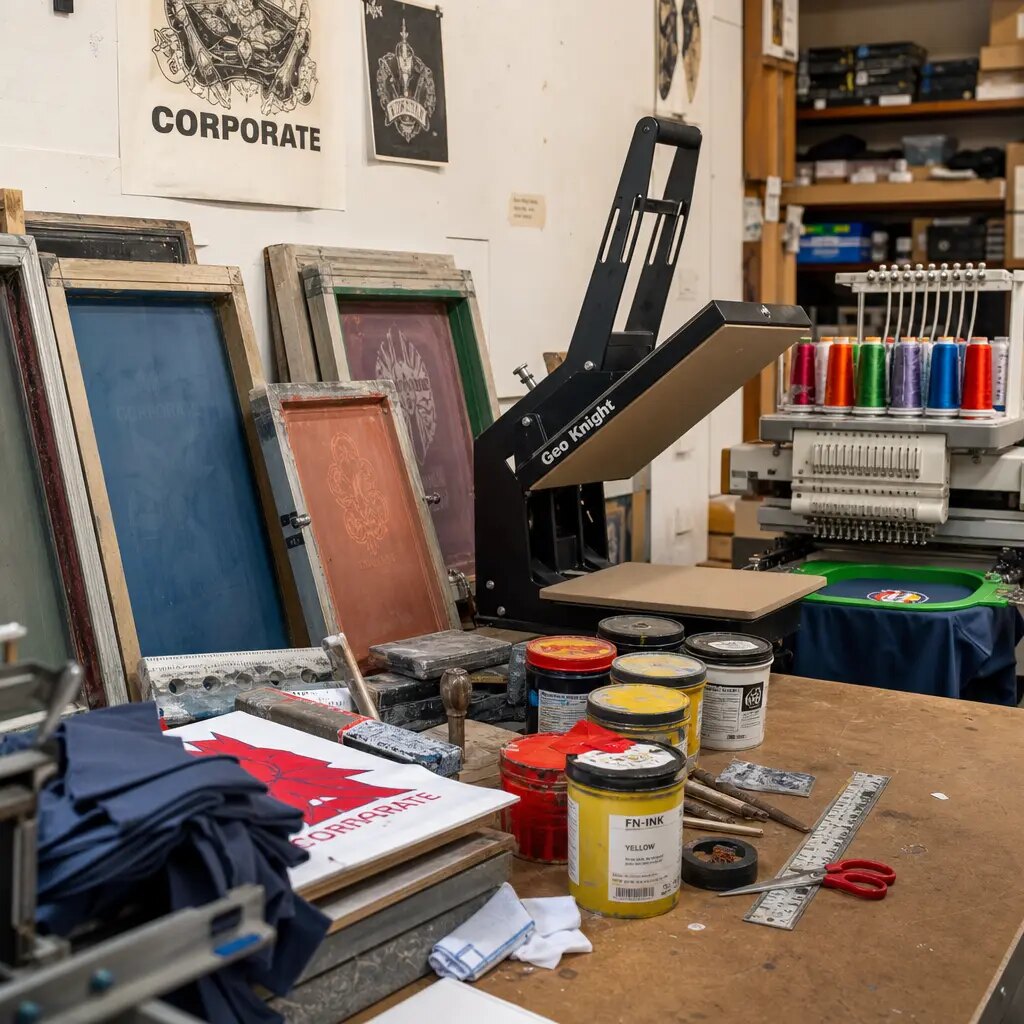
For cotton drawstring backpacks at craft fairs, screen printing is usually the most practical print method for solid logos, event names, and simple artwork. It gives good opacity on cotton canvas and is cost-efficient once the screen is made. The quote should state print size, number of colors, ink type if relevant, and whether screen charges are included or separate.
Heat transfer can be useful for small runs, detailed artwork, gradients, or many design variations, but it may change the hand feel and can look less integrated with natural cotton. Digital direct-to-garment printing can handle complex graphics, but on heavier or textured cotton canvas the result depends heavily on pretreatment and color expectations. Embroidery looks premium but can pull or pucker lighter cotton and is usually better for small logos than large artwork.
- Screen print: best for one- to three-color logos and medium to large production runs.
- Heat transfer: useful for low MOQ and complex artwork, but test edge adhesion and hand feel.
- DTG or digital print: suitable for photographic detail only after reviewing actual fabric print samples.
- Embroidery: premium for small marks, side labels, or patches, but not ideal for large flexible panels.
- Woven label or side tag: good for subtle branding when the front panel should stay clean.
Understand MOQ logic before comparing unit prices
MOQ for cotton drawstring backpacks is not only a factory preference. It is connected to fabric purchasing, dyeing, cutting efficiency, print setup, sewing line changeover, and packing requirements. A supplier may accept a low total MOQ if the bag uses stock natural cotton and one simple screen print. The same quantity becomes harder if the buyer requests four fabric colors, six artwork versions, custom dyed drawcords, and individual retail labels.
When comparing quotes, split the program into production lots. A 3,000-piece order with one fabric and one print may be efficient. A 3,000-piece order divided into ten designs of 300 pieces each may carry repeated setup costs and more artwork risk. Buyers should request price breaks by real production scenario, not only by total quantity.
- Low MOQ is easier with stock natural fabric, standard size, and one-color print.
- Custom dyed fabric usually has its own minimum, often separate from sewing MOQ.
- Multiple artwork designs may require separate screens, setup time, and packing segregation.
- Small color splits increase cutting waste and shade-control workload.
- Retail packing and barcode sorting can raise labor cost even when the bag itself is simple.
Sample approval should lock material, construction, and packing together
A good sample is not only a shape sample. For this product, the approved sample should represent fabric weight, cotton shade, cord type, print method, print placement, seam quality, and packing. If the first sample is made from substitute fabric, it can still help confirm dimensions, but it should not be treated as the final production standard.
The pre-production sample should be retained by both buyer and factory. Mark it with approval date, fabric GSM, print artwork version, and packing revision. This avoids later disputes when bulk production is compared against a vague email approval. For larger programs, it is worth approving a material card separately: fabric swatch, drawcord sample, label sample, print color strike-off, and carton label.
- Prototype sample: useful for size and construction review, but may use available materials.
- Print strike-off: used to approve ink color, opacity, registration, and curing on the actual fabric.
- Pre-production sample: should use final fabric, final cord, final print, and final packing.
- Retention sample: kept by factory and buyer as the inspection reference.
- Approval note: should list allowed deviations, not just say sample approved.
Packing decisions affect damage rate, warehouse labor, and landed cost
Natural cotton bags can pick up dust, moisture, and warehouse smell if packing is too loose. At the same time, individual polybags may be unnecessary for wholesale craft fair distribution and can conflict with a low-waste brand position. The right packing method depends on whether the bag is sold as a retail item, used to pack other products, or shipped to event teams for giveaway or kit assembly.
Bulk packing is cost-effective when bags will be unpacked and filled by the buyer. Add a master poly liner or moisture protection inside the carton, especially for natural cotton. Individual polybag packing is useful for ecommerce, retail shelving, barcode control, or preventing handling marks on white or light fabric. If hangtags, belly bands, or retail header cards are required, include artwork, barcode placement, and carton segregation in the RFQ.
- Bulk pack: lower cost and less packaging waste, suitable for kit assembly or distributor stock.
- Individual polybag: better cleanliness and barcode control, but adds cost and plastic waste.
- Paper band or hangtag: retail-friendly option if the bag must communicate material and brand story.
- Carton liner: useful for natural cotton during ocean freight and humid storage.
- Carton weight: keep manageable for warehouse handling; overloaded cartons deform bags and increase handling complaints.
Lead time risk usually comes from approvals, not only sewing capacity
Cotton drawstring backpacks look simple, so buyers sometimes plan them too late. In real production, the schedule can be delayed by fabric availability, dyeing, lab dip approval, artwork correction, print strike-off, sample shipping, holiday periods, and packing label changes. Sewing time may be short, but approvals can consume the calendar.
A realistic sourcing workflow separates decision points. First lock fabric and size. Then confirm artwork and print method. Then approve the pre-production sample and packing. Only after those are stable should the factory cut bulk fabric. Changing artwork after fabric cutting may be manageable; changing size or cord construction after cutting can create waste, delay, and rework cost.
- Stock natural fabric with simple screen print has the shortest route.
- Dyed fabric needs lab dip approval before bulk dyeing and may add schedule risk.
- Complex artwork needs print strike-off review before mass printing.
- Retail packing adds time for label artwork, barcode proofing, and carton mark approval.
- Peak season and pre-holiday craft fair demand can extend sampling and production queues.
Specification comparison for buyers
| Spec decision | Recommended option | When it fits | Buyer risk to check |
|---|---|---|---|
| Main fabric weight | 8 oz cotton canvas, about 270 GSM, or 10 oz, about 340 GSM, for better shelf feel | Craft fair retail, maker kits, museum shops, and brand merchandise where the bag is handled before purchase | Very light 5 oz cotton may meet a low price target but can look limp, show contents, and shrink more noticeably after washing |
| Fabric finish | Natural unbleached cotton for rustic craft positioning; dyed cotton only with lab dip approval | Eco-style packaging, artisan product bundles, and neutral retail displays | Natural cotton shade varies by batch; dyed cotton needs colorfastness and crocking review before bulk approval |
| Bag construction | Double-fold top channel, lockstitched side seams, reinforced drawcord stress points | Reusable backpack-style handling rather than one-time promotional giveaway use | Cheap single-fold channels and weak lower cord exits can tear during loaded use at fairs |
| Drawcord material | Flat cotton tape or round cotton cord matched to fabric weight | Comfortable shoulder wear and a consistent natural-material story | Thin polyester cord lowers cost but may cut into shoulders and can conflict with an all-cotton buyer brief |
| Print method | Screen print for solid logos; heat transfer only for small runs or detailed multicolor artwork | Simple craft fair branding, event logos, store names, and one- or two-color graphics | Heavy ink coverage on loose cotton can bleed, crack, or distort unless artwork, mesh, and curing are controlled |
| Size range | Common retail size around 34 x 42 cm or larger 38 x 45 cm with tolerance stated | Adult shoppers, product samples, catalog inserts, and small purchases carried hands-free | Under-sized bags look cheaper after drawcord closure; quote comparisons are unreliable without finished-size tolerance |
| MOQ logic | Base MOQ by fabric and print setup, not only by total pieces; combine colors carefully | Programs with multiple craft fair locations or seasonal designs | Splitting 1,000 pieces into many fabric colors or print designs can create several small production lots and higher unit cost |
| Packing method | Individual polybag only when retail display needs it; otherwise bulk pack with moisture protection | Wholesale distribution, craft fair kits, retail backroom replenishment, or online order preparation | Over-packing adds cost and waste; under-packing risks soiling natural cotton during ocean freight and warehouse handling |
Buyer checklist before sampling
- Define the finished bag size, not only the cut panel size; include a practical tolerance such as plus or minus 1 cm.
- State cotton fabric weight in oz and GSM so suppliers cannot substitute a thinner cloth while keeping the same product name.
- Decide whether natural cotton shade variation is acceptable; if not, require a lab dip or approved bulk fabric swatch.
- Specify drawcord material, width or diameter, color, end treatment, and reinforcement at lower exit points.
- Send vector artwork with print size, Pantone reference, placement distance from top and side edges, and acceptable registration tolerance.
- Require a pre-production sample made with actual bulk fabric, actual cord, actual print method, and final packing style.
- Set load test expectations based on intended use, such as carrying brochures, small handmade goods, or packaged craft kits.
- Confirm whether the product is sold as reusable merchandise, event packaging, or retail stock because this changes QC strictness and packing.
- List carton size, gross weight limit, pieces per carton, and any retailer carton label requirements before quotation.
- Separate tooling, screen, sampling, freight, and inspection costs from the unit price when comparing supplier quotes.
Factory quote questions to send
- What fabric weight are you quoting in both oz and GSM, and is it greige, bleached, dyed, or natural unbleached cotton?
- Is the price based on stock fabric or custom woven/dyed fabric, and what MOQ applies to each fabric color?
- What is the finished bag size after sewing, and what dimensional tolerance do you apply in production inspection?
- What drawcord type, width or diameter, and length are included in the quote?
- Which print method is included, how many colors, what print area, and are screen charges or setup charges separate?
- Can the pre-production sample be made using actual bulk fabric and final print curing conditions?
- What packing method is included: bulk pack, individual polybag, retail header, hangtag, barcode label, or carton mark?
- What is the estimated production lead time after artwork, sample, and deposit approval, and what production steps drive the schedule?
- What inline and final inspection criteria do you use for seam strength, print adhesion, stains, size tolerance, and packing count?
- What quote validity period, payment terms, incoterm, carton data, and port of loading are included?
Quality-control points to confirm
- Fabric weight verified by cutting and weighing a measured fabric sample or by mill certificate cross-check; major deviation should be agreed before shipment.
- Finished size measured flat before loading the bag, with tolerance controlled around length, width, and drawcord channel position.
- Seams inspected for skipped stitches, open seams, loose thread nests, and insufficient backstitching at stress points.
- Drawcord exits checked for tearing, misalignment, sharp edges, or weak bartack/reinforcement where the cord bears load.
- Print checked for placement, color match, opacity, pinholes, smudging, cracking, curing, and rub resistance after handling.
- Natural cotton panels inspected for oil marks, dark contamination, excessive seed flecks, mold smell, and unacceptable shade mismatch.
- Load test performed using a realistic weight for the program, with attention to lower corners and top channel deformation.
- Packing count, carton mark, moisture protection, and barcode or hangtag placement checked against the approved packing sample.