Why carton planning matters more than buyers expect
For coffee roasters, cotton drawstring backpacks are often treated as a simple promo item: choose a natural fabric, add a logo, and ship in bulk. The cost problem usually appears later. If the bag body is oversized, the cord is bulky, or the fold method is inefficient, the order can consume far more carton volume than your initial product quote suggested. When the bag is low in unit value, poor packing efficiency can erase margin faster than a small increase in fabric cost.
Carton planning should be settled before sample approval, not after bulk production starts. Coffee roaster programs frequently combine event distribution, ecommerce bundles, wholesale resale, and seasonal gift packs. Each use case changes the ideal bag weight, print method, and folded dimensions. The strongest RFQs give the factory a target carton logic from day one: how many pieces per carton, maximum carton weight, whether palletization is needed, and whether the buyer prioritizes freight efficiency or retail-ready presentation.
- A low FOB piece price can still lose against a slightly higher quote if carton cube is worse
- Cord thickness and fold direction affect carton count more than many buyers expect
- Screen print curing time can influence how tightly bags can be packed without offset risk
- Resale packaging and barcode labeling often reduce units per carton compared with pure bulk promotion packing
Start with the actual coffee roaster use case, not only the bag shape
A drawstring backpack used to hold a 250 g bean bag and a coupon card needs a different construction from one sold as branded merchandise in a roastery. Buyers often overbuild the first type and under-spec the second. The result is either wasted freight on overly heavy fabric or quality complaints when the bag feels too thin for a retail product. Carton planning becomes more accurate once the intended product role is clear.
For giveaway or event use, 140 to 170 GSM cotton is often the most practical range. It prints cleanly, folds compactly, and keeps outer carton weight manageable. For premium merchandise, 230 to 270 GSM gives a fuller handfeel and more structure, but the freight model changes. Fewer units fit per carton, cord channels become bulkier, and gross weight can hit warehouse handling limits sooner. The useful question is not 'what fabric is best' but 'what fabric reaches the target perceived value without inflating shipping cube.'
- Giveaway use: usually lighter GSM, one-color print, higher carton count
- Retail merchandise: heavier GSM, better seam finish, lower carton efficiency
- Subscription kit insert: size must fit the kit workflow, not just the bag itself
- Gift-with-purchase: print area and fold pattern matter because presentation affects customer perception
Fabric weight, weave, and cord choices that change carton efficiency
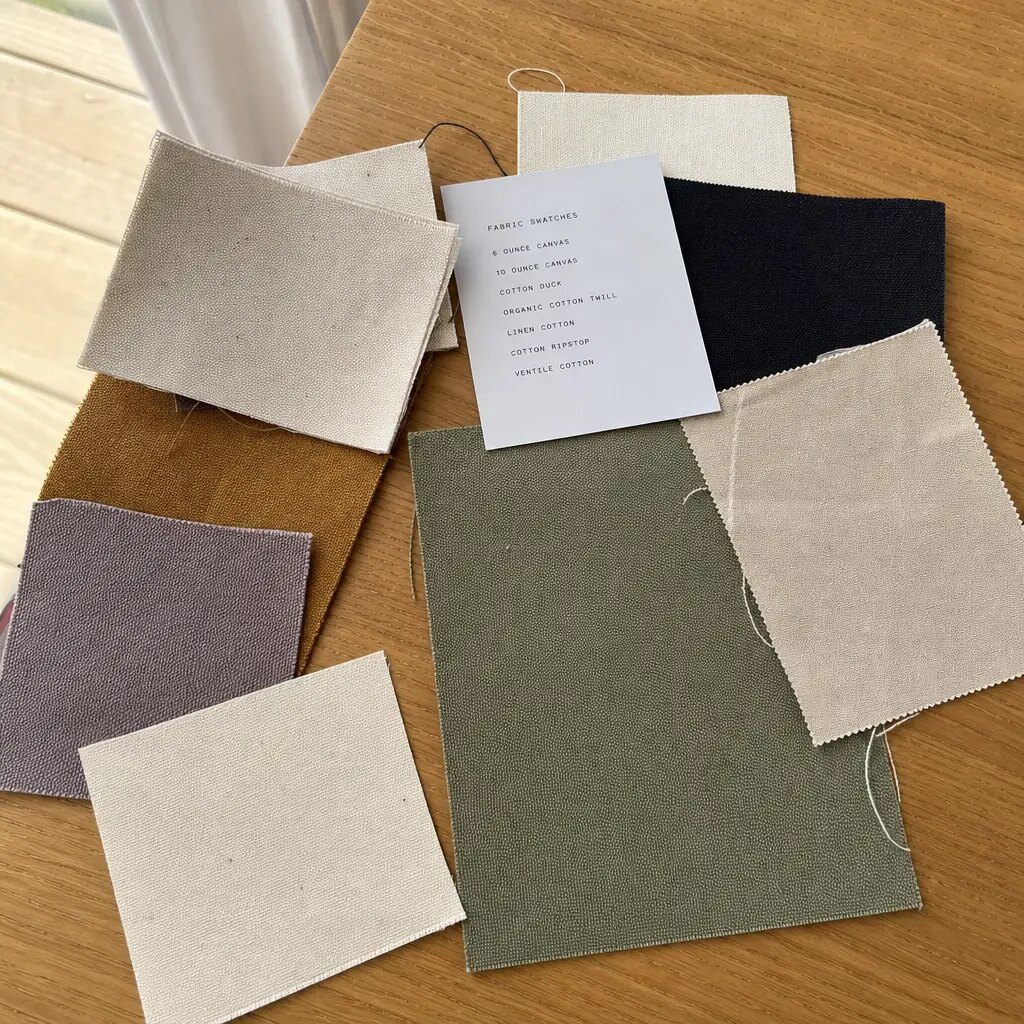
Fabric is the first major carton variable. Plain weave cotton around 5 oz to 6 oz usually folds flatter than heavier canvas and creates more predictable carton stacking. Once you move to 8 oz or above, the bag mouth, cord channel, and seam bulk begin to reduce packing density. This is not automatically bad; many coffee brands want a more durable, premium bag. But the quote should show how much the heavier construction changes pieces per carton and freight assumptions.
Cord construction matters almost as much as fabric weight. Soft cotton rope gives a better natural-brand look than polyester cord, but thicker rope occupies real carton volume. Braided 8 mm cotton may feel ideal in hand, while a 5 mm cord can improve carton count if the bag is primarily promotional. Some buyers also miss the impact of knotted cord ends, metal tips, or extra-long cords, each of which adds localized bulk and changes how neatly the bags nest in a carton.
- 140 to 170 GSM: efficient fold, lower freight, suitable for short-use campaigns
- 230 to 270 GSM: stronger handfeel, lower pieces per carton, higher gross weight
- Plain cotton cord: brand-consistent but bulkier than thin synthetic alternatives
- Long cords and large knots reduce nesting efficiency inside inner bags
- Request folded bulk photos of the exact fabric and cord combination, not just loose sample photos
Print method affects both look and shipping performance
Coffee roaster artwork is often simple: logo, origin reference, roast event, or seasonal campaign line. That usually makes screen print the sensible method. One- or two-color screen print gives strong opacity on natural cotton, keeps setup straightforward, and works well at common MOQs. It is also relatively stable in packing if the print is properly cured. The mistake is approving a bold print panel that sits on a fold line or extends too close to side seams, which can create cracking, misalignment, or visible distortion once the backpack is cinched.
Heat transfer and digital options can make sense for multi-color artwork or lower-volume trial runs, but they can also change how the printed surface behaves in a packed carton. Some transferred surfaces stick slightly under pressure or show edge lift if bulk curing is inconsistent. A coffee roaster ordering for humid sea transit should be especially careful with freshly printed goods packed too tightly. Carton planning and print planning should therefore be reviewed together.
- Screen print is usually the best value for bold coffee brand marks
- Keep key artwork away from main fold lines and side seams
- Require rub and fold resistance review after print curing
- Dark inks on natural cotton may need opacity review if fabric slub is visible
- If using transfer methods, ask how long goods rest before final packing
MOQ logic buyers should decode before comparing quotes
MOQ on cotton drawstring backpacks is rarely one simple number. A factory may advertise a low MOQ for a standard natural bag with one-color print, but the practical MOQ changes once you add dyed fabric, woven labels, custom inner packing, barcode stickers, or multiple logo variants by region. Coffee roasters often run seasonal campaigns with split deliveries or several roast-series designs, so MOQ logic must be tied to the production workflow, not the sales headline.
When quote comparisons look inconsistent, the root cause is often different MOQ assumptions. One supplier may quote 1,000 pieces total using the same fabric and screen across two artwork versions; another may price each artwork as a separate setup. Carton planning also links to MOQ because smaller runs can force less efficient packing or mixed cartons. Buyers comparing only unit price miss these hidden cost movements.
- Clarify MOQ by fabric color, print colorway, size, and packing style
- Ask whether split SKUs can share the same carton spec or require separate packing runs
- Small test orders often carry disproportionate setup cost in printing and labeling
- Mixed designs with one shared blank bag can still be economical if print scheduling is handled together
How to build a usable carton spec instead of a vague packing request
A packing note such as 'export standard carton' is too vague to protect freight planning. A better carton spec includes target units per inner bag, units per carton, fold orientation, print face direction, master carton dimensions, gross weight cap, and whether pallet loading is planned. This matters for coffee roasters because promotional items may be redistributed through multiple channels: importer warehouse, 3PL, retail stores, event teams, or direct ecommerce fulfillment. The carton has to work at every handoff point.
For many cotton drawstring backpack orders, a practical starting range is 25 pieces per inner bag and 100 to 150 pieces per master carton, depending on GSM and cord bulk. But that should be validated by actual folded samples. If the buyer needs easier counting for store-level redistribution, 20 or 25 piece inners may justify slightly lower packing efficiency. If the shipment goes direct to one central warehouse for bulk break-down, a denser carton may be acceptable as long as gross weight remains manageable.
- Include external carton dimensions in cm on the approved packing spec
- Set a maximum gross weight that your warehouse team can handle safely
- Define whether cartons must be pallet-friendly for your destination market
- State carton marks, SKU labels, and barcode position if cross-docking is involved
- Approve actual folded packing photos before bulk sealing
Sample approval should include a packed sample, not only the bag itself
Many importers approve a pre-production sample based on fabric, size, sewing, and print appearance, then discover during shipment booking that the packed order takes more space than planned. The correction is simple: include one packed sample stage in the approval flow. That means the factory folds the exact bag, uses the intended inner packing quantity, and places it in the proposed export carton or a carton mock-up with the same dimensions. This is the only reliable way to verify real packing density.
A packed sample is also the best place to catch practical defects. Does the logo sit on the outer fold and show crease whitening? Do cords tangle when 25 pieces are bundled together? Is the carton too soft at the corners after stacking? These issues are not visible from a beauty sample. For coffee roaster buyers, this step is especially useful when the bag will support a premium brand image but still move in cost-sensitive bulk.
- Approve fabric handfeel and print first, then approve packed folding logic
- Review whether inner bags compress the print surface too tightly
- Request carton side, top, and stacked photos with actual sample fill
- Measure finished carton dimensions physically, not from estimate only
Common production mistakes that create freight or receiving problems
The most frequent production issue is inconsistent folding. Even if the bag itself is acceptable, small changes in fold width and cord placement can add centimeters to carton height. Across hundreds of cartons, that changes cubic volume enough to affect freight booking. Another common issue is underestimating the bulk created by cord knots and side seams. On paper, the piece count seems achievable; in practice, the carton flares or bows once fully loaded.
Coffee-themed artwork introduces another issue: dark, saturated ink on natural cotton. If curing is rushed to maintain schedule, the print can offset inside tightly packed stacks, especially in warm containers. Receiving teams then report ghosting, sticking, or visible print transfer. This is not only a print defect; it is a packing defect tied to production timing. The buyer should set acceptance standards that connect print cure and packing release.
- Uneven fold width leads to unstable carton stacking
- Loose cords can create tangling and slow receiving counts
- Overpacked cartons bow outward and are more likely to crush in transit
- Fresh dark prints need curing and cooling time before tight bulk packing
- Carton dimensions should be re-measured after final sealing, not before loading only
Lead time planning: where coffee roaster programs usually slip
Lead time for cotton drawstring backpacks is not just sewing time. It includes material sourcing, print screen preparation, sample approval, bulk printing, sewing, folding, counting, packing, and final inspection. Coffee roasters often run around campaign dates, trade events, new blend launches, or holiday promotions, so the timing risk is usually in artwork approval and packaging details rather than core stitching capacity.
A realistic planning approach separates sample lead time from bulk lead time and identifies the stages that can block packing. For example, if woven labels or barcode stickers are approved late, the sewing line may finish but packing cannot close. If print approval is delayed, the whole carton plan moves with it because the fold pattern can depend on the print face. Build a production calendar that identifies the point at which carton dimensions become fixed for freight booking.
- Blank sample or material swatch often comes first for GSM and color review
- Pre-production sample should include print placement and cord construction
- Packed sample or packing confirmation should happen before bulk completion
- Peak seasons can delay printing and accessory supply more than bag sewing
- Do not book final freight from estimated carton data if the order is spec-sensitive
How to compare quotes on landed value instead of piece price only
The useful comparison is cost per delivered usable unit, not only FOB piece price. A supplier quoting a lower bag price on heavier fabric waste, inefficient folding, or oversized cartons may produce a worse landed result than a supplier with a slightly higher unit cost but tighter packing. This matters most on low-to-mid value promotional bags, where freight forms a large share of total delivered cost.
Buyers should line up quotes with at least these fields: bag spec, GSM, print method, MOQ basis, units per carton, carton dimensions, estimated gross weight, sample charges, and lead time assumptions. When one quote leaves carton dimensions blank, it is not complete enough for fair comparison. For coffee roaster buyers shipping seasonal programs, the hidden cost of a late or over-cubic shipment can outweigh visible savings in the product line.
- Convert supplier offers into cost per thousand delivered units where possible
- Compare cubic volume per 100 bags, not just pieces per carton
- Add screen/setup charges and labeling charges into the real unit economics
- Evaluate whether the quote includes moisture protection and export-grade cartons
- Use the same Incoterm and same destination assumptions when benchmarking
Specification comparison for buyers
| Spec decision | Recommended option | When it fits | Buyer risk to check |
|---|---|---|---|
| Fabric weight | 5 oz to 6 oz cotton canvas, about 140 to 170 GSM | Best for coffee sample packs, event giveaways, and retail add-on bags that need low carton weight and clean print results | Too light for sharp-edged coffee accessories or heavy bottled gift sets; seam strain and print show-through can increase |
| Heavier body fabric | 8 oz cotton canvas, about 230 to 270 GSM | Fits premium roaster merchandise, subscription welcome kits, and resale bags where handfeel matters more than lowest freight cost | Carton count drops, outer carton weight rises, and more fabric bulk can push freight cost higher than expected |
| Bag size | Approx. 35 x 45 cm with standard drawstring top | Useful for apparel bundles, coffee beans, brochures, and everyday promotional use without oversized cartons | Large artwork on a narrow body can distort near side seams; verify usable print panel after seam allowance |
| Print method | 1 to 2 color screen print on one side | Good for bold roaster logos, seasonal campaigns, and lower MOQ programs with stable unit economics | Fine lines, halftones, or dark roast-themed full coverage art may need different print setup and can reduce packing efficiency if ink is not fully cured |
| Cord style | 8 mm cotton rope or braided cotton cord | Appropriate for natural brand positioning and better comfort than thin polyester cords on medium-weight bags | Cord shedding, knot slippage, and uneven cut length can create retail presentation problems if not controlled |
| Inner packing | 25 pcs per polybag, flat packed with cords aligned | Works for mixed wholesale distribution and helps counting, receiving, and repacking at importer warehouse | Over-tight inner bags can crease print and set fold marks; ask whether desiccant or vent holes are used for sea shipment |
| Master carton range | 100 to 150 pcs per export carton depending on GSM and cord thickness | Efficient for sea freight and palletization while keeping carton handling practical for warehouse teams | Factories sometimes quote piece count only, not actual carton dimensions and gross weight; this makes freight comparison unreliable |
| Carton construction | 5-ply export carton with moisture barrier liner for long transit | Recommended for coffee roaster promotions shipping in humid seasons or mixed-container conditions | Light cartons can crush during stacking; request burst or edge-crush standard if cartons will be pallet stacked |
| MOQ structure | Base MOQ by fabric color plus print color, with split allowed across SKUs sharing fabric and artwork setup | Useful for roasters running regional variants or subscription inserts without carrying too many separate developments | A low advertised MOQ may exclude custom dyeing, woven labels, or individual packing, so the true commercial MOQ can be much higher |
Buyer checklist before sampling
- Define bag size, finished tolerance, and target fill weight before asking for a carton plan
- State whether the backpack is for giveaway, resale, subscription kit, or retail bundle because GSM and print requirements change
- Request fabric specification in oz and GSM, plus weave type and pre-wash status if shrinkage matters
- Specify print method, print colors, print area, and whether artwork sits above fold lines in packed condition
- Confirm drawcord material, diameter, knot style, and whether cord ends are heat cut, taped, or folded
- Ask for proposed units per inner bag, inners per carton, carton dimensions, net weight, and gross weight
- Set a maximum carton gross weight that matches your warehouse handling rules, usually around 12 to 18 kg depending on region
- Require photo evidence of carton drop resistance and stacked carton condition with actual production fold method
- Approve a pre-production sample packed in the planned export fold, not only a loose sample bag
- Clarify whether spare pieces are included and how short shipment or overrun is handled on printed orders
Factory quote questions to send
- What is the exact finished bag size, body fabric weight in GSM, and fabric tolerance used for the quoted price?
- How many pieces fit per master carton with this fabric, cord, and print spec, and what are the external carton dimensions in cm?
- What are the estimated net and gross weights per carton, and what maximum stacking level do you recommend for warehouse storage?
- Does the MOQ apply per size, per fabric color, per print colorway, or per total order across shared material?
- Is the quoted print screen charge included, and how does price change between one-color, two-color, and double-side printing?
- What is the standard folding method before packing, and will the print face inward or outward inside the inner bag?
- What inner packing is included in the quote: loose bulk, polybag by 10, 25, 50, barcode sticker, or carton marks?
- What sample stages are available: blank material swatch, digital artwork placement, pre-production sample, and packed carton sample?
- What lead time applies from artwork approval versus from deposit receipt, and what are the common delay points during peak season?
- What quality standard do you use for seam tolerance, print position tolerance, color shade variation, and carton count verification?
Quality-control points to confirm
- Measure finished width and height on at least 10 sampled bags per lot; keep tolerance aligned to approved spec, commonly around plus or minus 0.5 to 1.0 cm depending on size
- Verify fabric GSM from bulk material, not only from sample roll, especially when lightweight cotton is quoted aggressively
- Test drawcord attachment and side seam strength under realistic load based on intended coffee pack contents
- Inspect print opacity, edge sharpness, curing, and rub resistance after folding because under-cured prints can offset inside cartons
- Check print placement from top edge and side seams so logos stay centered after the bag is cinched
- Confirm knot position and cord length consistency; mismatched cords create visible retail presentation defects
- Open random inner bags to review fold direction, counting accuracy, and whether moisture or odor is trapped in packed goods
- Review carton dimensions and gross weight against approved packing list before booking freight; actual over-cubic cartons can change landed cost quickly