Why liquor retailers need a defined carton packing plan, not just a bag specification
Cotton drawstring backpacks look simple, but procurement problems usually come from packing execution rather than from the bag pattern alone. In liquor retail programs, goods may move through importer warehouses, distributor depots, store networks, event agencies, or third-party fulfillment sites. Each handoff increases the chance of recounting, relabeling, carton damage, and timing pressure. A bag that looked acceptable at sample approval can still create claims if the carton plan is weak.
That is why a cotton drawstring backpacks for liquor retailers carton packing plan should sit inside the product specification from the start. If it is treated as an afterthought, factories will default to whatever they consider standard export packing. That often means carton counts chosen for freight efficiency, not for your warehouse limit, your receiving method, or your promotion launch schedule.
For liquor retail, timing also matters. Many orders support holiday gifting, launch events, gift-with-purchase campaigns, or loyalty redemptions. Store teams usually want cartons that are easy to open, verify, split, and stage quickly. If they face tangled cords, unclear carton marks, mixed quantities, or excessive creasing on the logo panel, the item immediately feels lower value and the campaign becomes harder to execute.
- Cartons may be opened and split more than once before the consumer sees the backpack.
- Count accuracy, carton weight, and label clarity matter almost as much as sewing quality.
- A low-cost pack-out can become expensive if it creates DC receiving delays or store-level repacking labor.
- For promotional launches, packing mistakes often become schedule problems, not just quality problems.
Define the commercial end use first: premium giveaway, loyalty item, or general promo support
Before choosing carton count or board grade, buyers should define what the backpack is supposed to represent in the program. A premium reusable item for a whiskey gift campaign is not sourced the same way as a low-cost event giveaway. The expected hand feel, print finish, and retail presentation all influence the right fabric and the amount of compression the packed goods can tolerate.
In many liquor retail programs, the bag is not used as a primary bottle carrier. It is more often a branded backpack for accessories, apparel, point-of-sale collateral, tasting kits, or promotional merchandise. That distinction is important because it affects both material choice and buyer expectations. A premium-feel campaign usually justifies 270-340 GSM cotton canvas. A lighter 150-220 GSM cotton may reduce unit cost, but it also tends to show fold lines more easily, feel softer in hand, and present less cleanly after transit.
Finished size should also be anchored to the real use. Common sizes such as 33 x 40 cm or 35 x 45 cm often give enough print area without inflating carton cube. If the retailer only needs a compact branded backpack for event materials, an oversized bag wastes both fabric and shipping space. In sourcing terms, unclear end use creates unclear quotations, because suppliers start making their own assumptions.
- State whether the bag is expected to feel premium on first touch or simply function as a promotional carrier.
- Use size and GSM decisions that match campaign purpose, not generic backpack norms.
- If the item is not intended to carry bottles, do not overbuild the spec just because the customer is in liquor retail.
- A short written use-case statement helps suppliers quote on the same basis.
Lock the core technical spec with measurable tolerances before asking for quotes
B2B buyers get the most useful supplier comparison when the RFQ includes measurable technical controls rather than descriptive language. Terms like 'thick cotton,' 'good print,' or 'standard packing' are too subjective. The supplier may quote one thing while the buyer expects another, and the disagreement only appears after production.
A strong RFQ line for this category should include at minimum: finished size, fabric composition, target GSM, fabric color, print colors, print size, print placement references, cord material, cord diameter, fold method, inner pack quantity, master carton quantity, and maximum carton gross weight. If one of those variables is missing, the quotation is still incomplete from a procurement standpoint.
Tolerance language matters because it converts quality expectations into inspectable facts. Typical examples for this product are finished size tolerance of +/-1 cm per dimension, print position tolerance of +/-0.5 cm to +/-1.0 cm depending on artwork size, and cord length pair tolerance of +/-2 cm. Fabric GSM should also be defined by method. For example, you may agree a shipment-average finished fabric GSM target rather than expecting every cut panel to measure identically.
This level of detail may seem strict for a simple bag, but it prevents the most common quote mismatch: one factory prices a heavier canvas, stronger carton, and lower pack count while another prices a lighter cloth, softer fold, and aggressive carton loading. On paper both may look like the same cotton drawstring backpack. Operationally they are not the same product.
- Convert preferences into measurable controls before quotation.
- Specify both the product and the pack-out in the same RFQ.
- Set tolerances early so suppliers cost the same target.
- Ask suppliers to confirm any assumptions they made where your brief is silent.
Fabric, weave stability, and print method all affect packing performance
For this category, material and decoration decisions should be made with carton compression in mind. The best-looking sample on the table is not necessarily the version that arrives looking best after bundling, stacking, and sea transit. Buyers should evaluate how the fabric and print behave under pressure, not only how they look when laid flat.
For most liquor retail runs, 1-color or 2-color screen printing on flat cut panels before sewing remains the most practical logo method. It is cost-efficient at scale, gives predictable placement, and is easier to inspect than many post-sew decoration approaches. However, buyers should pay attention to print coverage. Large solid areas, heavy white prints on dark dyed canvas, or thick underbase layers can increase the risk of offset, blocking, and visible fold impressions if packed too soon.
Weave stability matters almost as much as GSM. A stable medium canvas folds more consistently, prints with cleaner edge definition, and creates less variation in bundle height. A loose or irregular weave may still hit a nominal GSM target but behave less predictably in production. That variation can lead to inconsistent carton fill and greater temptation to over-compress.
Color choice also affects sourcing risk. Natural cotton is often the simplest route for shorter lead times and easier print control. Dyed black, navy, or dark green may better suit a premium liquor brand image, but they add dye-lot approval, colorfastness considerations, and usually greater dependence on underbase printing. Buyers should weigh those trade-offs before locking artwork and timing.
- Screen print before sewing is usually the most controllable method for volume production.
- Large solid logos need extra attention to curing and fold-pressure behavior.
- Dark dyed fabric may look premium but often adds printing and timing risk.
- Do not assess print only flat; inspect after folding and compression too.
Choose folding, bundling, and carton counts based on weight caps and recount speed
The right carton plan is rarely the one with the highest possible piece count. For liquor retail buyers, the better question is: what pack-out moves efficiently through receiving, survives handling, and still presents cleanly at opening? Cotton drawstring backpacks are soft goods, so factories may try to save carton count by compressing more units into each master carton. That can lower the visible packaging cost while increasing downstream friction.
A common starting point is 25 pieces per inner bundle and 100 or 150 pieces per master carton. But those numbers only work if the bag size, GSM, print thickness, and fold method support them. A 35 x 45 cm backpack in 10 oz canvas with heavy print coverage may need a different carton count than a smaller 8 oz natural bag with a small logo. The proper sequence is to estimate folded dimensions, confirm bundle height, and then cap the master carton by gross weight.
For many warehouse operations, a practical gross weight target is 12-16 kg per carton, although buyers should use their actual site limit. This matters because a carton with acceptable dimensions can still be rejected, slowed, or mishandled if it is too heavy for manual receiving. It also affects claim exposure. Over-packed cartons often crush lower bundles, deepen fold creases, and increase print pressure marks.
Fold standardization is equally important. If all pieces are folded in the same direction, logo panels align, cords are tucked consistently, and DC staff can count or split bundles quickly. Loose random fill may appear harmless for a soft item, but it creates tangling, slower recounting, and a less controlled first presentation when stores open cartons.
- Set carton count only after folded bulk and gross weight are understood.
- Use weight caps, not piece count alone, to control overpacking.
- Standardized folds reduce tangling and speed up branch allocation.
- Request actual carton dimensions to estimate CBM and pallet fit.
Specify carton construction and labeling with the same precision as the bag itself
Many sourcing briefs devote pages to fabric and logo but reduce outer packaging to one phrase: standard export carton. That is not enough for B2B procurement. Carton failure can create the same commercial disruption as a defective bag, especially when goods pass through several handling points before final use.
At minimum, buyers should ask whether the factory is quoting 5-ply or 7-ply board, and whether they can state a board grade, burst reference, or ECT reference used in their normal export practice. Not every supplier reports carton strength in the same way, but they should be able to explain the construction they are pricing. For lighter bags on short routes, 5-ply may be adequate. For long sea transit, floor stacking, or distributor networks with repeated manual handling, 7-ply is often safer.
Outer carton labeling should also be locked before packing starts. Core information usually includes PO number, style or item code, color, quantity, carton number sequence, country of origin, and destination code. If the program requires retailer barcode labels, ASN references, or branch routing codes, those should be supplied as approved artwork or mark sheets in advance. Handwritten fixes or last-minute relabeling create too much risk of mixed cartons.
If the importer or retailer uses palletized receipt, the buyer may also need pallet logic confirmed: pallet size, maximum carton layers, overhang rules, stretch wrap, and pallet label placement. Even when the bags are light, poor palletization can crush bottom cartons and trigger avoidable receiving disputes.
- Replace vague 'export carton' wording with stated carton construction.
- Confirm whether 5-ply or 7-ply is included in price.
- Approve outer carton marks before mass packing begins.
- If retailer labels are required, provide a placement visual, not just text instructions.
Use a staged sample approval process that includes a full packed-carton sample
The most common approval gap in this category is that buyers approve the backpack but do not approve the packed condition. A flat pre-production sample can look good while the final packed goods still fail on creasing, rubbing, overweight cartons, or poor count presentation. That is why sample stages should mirror the actual sourcing risks.
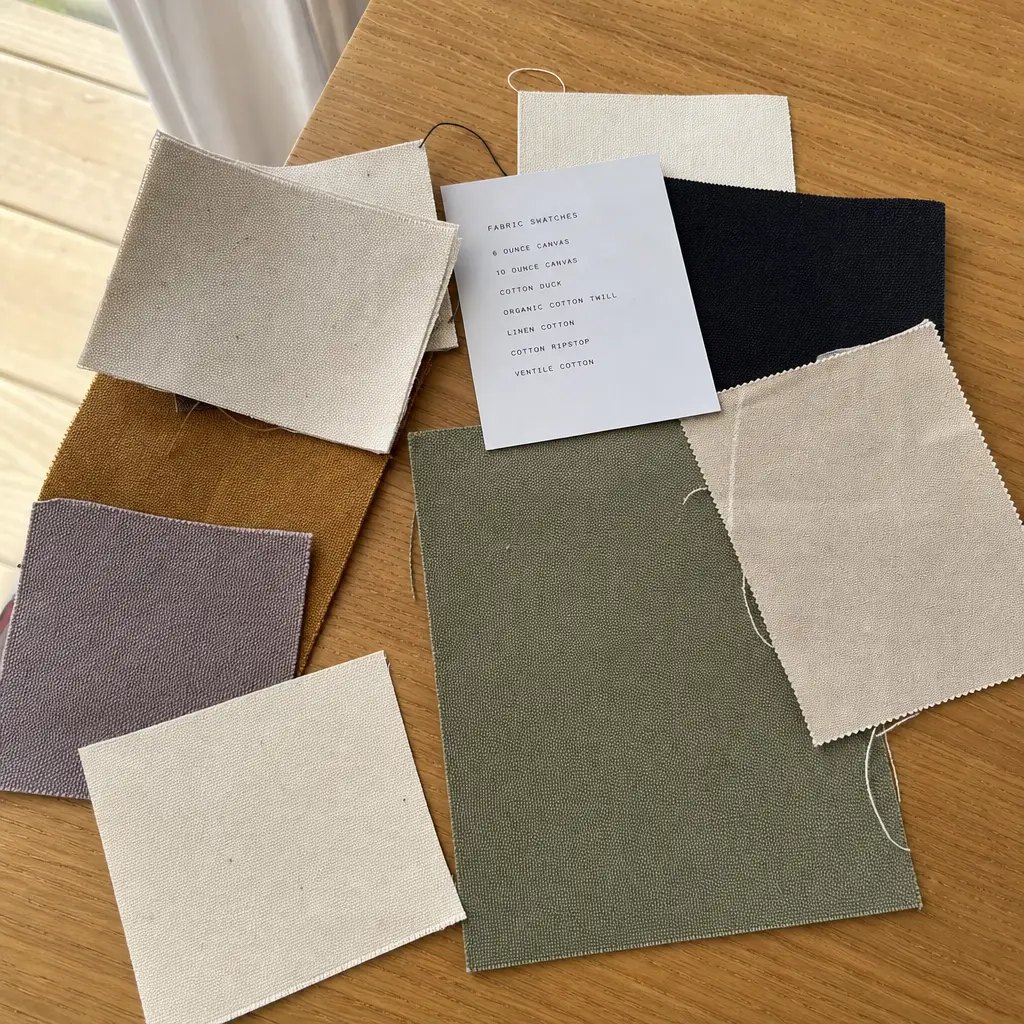
A practical sequence starts with fabric confirmation. This may be a swatch, a previous approved reference, or a stated stock fabric base with target GSM. Next comes a print strike-off or drawdown so the buyer can verify shade, underbase need, edge clarity, and expected print hand feel. Then comes the sewn pre-production sample, using the actual fabric, print process, cord, and stitching method planned for bulk.
The final and often most valuable stage is the packed sample. Ideally this includes one approved folded unit, one approved inner bundle, and one full master carton packed to the proposed count. That sample lets the buyer check not only aesthetics but also operations: Are the bundles easy to recount? Is the carton within weight cap? Do the folds press directly across the logo? Are the cords causing imprinting or tangling? Are the outer marks accurate and readable?
Document sign-off in detail. Instead of 'sample approved,' record what was approved: size, GSM target, print placement, cord spec, fold method, bundle quantity, carton count, carton dimensions, and maximum gross weight. That record becomes useful if production teams or freight partners raise questions later.
- Approve fabric, print, sewn sample, and packed sample as separate checkpoints.
- A full packed-carton sample often reveals risks that photos cannot show.
- Record approved fold method and carton details in writing.
- If the packed sample already looks stressed, bulk packing will not solve it.
Build QC around measurable product defects and measurable packing defects
Quality control for cotton drawstring backpacks should focus on the defects that actually generate complaints. Generic terms like 'workmanship good' are too broad for a commercial inspection brief. Procurement teams should identify the defects that affect use, appearance, and receiving efficiency, then set measurable checks around them.
At the product level, the main risk points are usually fabric GSM drift, off-position print, incomplete ink curing, rubbing or offset on folded print areas, cord mismatch, frayed cord ends, seam opening, and weak lower corners. The lower corners deserve special attention because they take drawcord stress during use. If seam allowance, stitch consistency, or reinforcement is weak there, failure rates rise even if the rest of the bag looks acceptable.
At the packing level, focus on bundle count, carton count, gross weight, carton mark accuracy, and physical carton condition. A visually acceptable bag can still create a claim if cartons are mislabeled, overweight, short-counted, or crushed. For many retailer and distributor networks, count accuracy is a quality point, not just a logistics point.
Where buyers use AQL, the style-specific inspection brief should still state priority defects. For example, wrong count, incorrect carton mark, severe print offset, major seam opening, or carton collapse may be treated as major defects for this program. Minor loose threads may matter less than in a fashion bag, but count and labeling errors often matter more.
- Separate bag-quality checks from pack-out-quality checks.
- Inspect the drawcord exit and lower corners as stress points.
- Treat count accuracy and carton mark accuracy as QC essentials.
- Use measurable reject criteria wherever possible, not descriptive preferences only.
Plan lead time around approvals, printing cure time, and packing change risk
Buyers often assume this is a quick textile item because sewing is simple. In reality, the lead time is usually driven by material readiness, approvals, and packing coordination. If those stages are not controlled, even a basic drawstring backpack can slip.
Natural stock canvas usually supports the shortest route because it avoids dyeing and may simplify print behavior. Dyed dark shades add approval steps and can slow down printing if the artwork needs white underbase. Large solid prints may also require more cautious curing and cooling before folding. If the order includes destination splits, retailer barcode labels, or custom carton marks, packing can become the schedule bottleneck rather than sewing.
One avoidable cause of delay is changing the carton plan after production has started. Late changes to bundle count, destination labels, or carton sequence create rework and increase the risk of mixed cartons. The safest practice is to freeze the packing plan when the pre-production sample and packed sample are approved, then require written approval for any later change.
Instead of accepting one total lead-time number, buyers should request a milestone schedule: fabric booking or stock confirmation, dyeing if required, print strike-off, PP sample, bulk sewing, bulk printing, packing, and shipment readiness. That level of detail helps buyers understand what can still be accelerated and what cannot.
- Lead time is often limited by approvals, not sewing capacity.
- Natural fabric usually reduces timeline risk.
- Packing changes late in production create both delay and error risk.
- Ask which milestones depend on buyer approval so your own response time does not become the bottleneck.
Compare supplier offers on delivered usability, not just ex-works piece price
When buyers compare quotes for cotton drawstring backpacks for liquor retailers carton packing plan needs, the lowest piece price often reflects a weaker packing assumption somewhere in the offer. The supplier may be using lighter canvas, a more compressive carton count, thinner board, or less controlled bundling. Those choices may not be obvious if the quote is presented as one line item.
A better comparison method is to review total delivered usability. Ask each supplier to state the same core assumptions: finished size, finished GSM target, print method, print colors, cord spec, bundle quantity, master carton quantity, carton construction, carton dimensions, net weight, gross weight, and estimated CBM. If one supplier quotes 150 pieces per carton and another quotes 100, the difference should be evaluated not just on freight cost but on handling weight, crease risk, and recount efficiency.
The quote should also separate product cost from packing cost. Useful breakout lines include bag body, print, sampling, carton upgrade, special labels, split packing, and local charges if FOB. That transparency helps procurement identify which supplier is genuinely efficient and which one is simply omitting operational detail from the first round quote.
In this category, the cheapest quote can become the expensive one if it leads to relabeling, repacking, receiving delay, or claim deductions. The stronger sourcing decision is usually the one with the clearest specification match and the lowest operational ambiguity.
- Standardize the RFQ basis before comparing supplier prices.
- Require carton dimensions, CBM, and gross weight in all offers.
- Ask what assumptions are included and excluded in 'standard packing.'
- Value should be measured by usable delivered units, not just quoted unit cost.
Specification comparison for buyers
| Spec decision | Recommended option | When it fits | Buyer risk to check |
|---|---|---|---|
| Fabric weight | 8 oz to 10 oz cotton canvas, approximately 270-340 GSM finished fabric | Best for liquor retail gift-with-purchase, loyalty reward, premium promo, and reusable merchandise where hand feel matters at first touch | Below about 220 GSM often increases panel distortion, print show-through, and visible compression lines after export packing |
| Fabric construction | 100% cotton canvas in plain weave, commonly 16s x 12s or similar medium canvas construction where available | Use when you need stable print surface, repeatable fold thickness, and more predictable carton loading | Loose weave or inconsistent yarn construction can create GSM variation, uneven print edges, and changing folded height from lot to lot |
| Finished size | 33 x 40 cm or 35 x 45 cm finished size with size tolerance of +/-1 cm per side after sewing | Fits most collateral, apparel, and branded retail giveaway use without paying for unnecessary cube | Oversized bags raise fabric consumption, folded bulk, carton CBM, and receiving complaints if the campaign only needs compact packaging |
| Cord specification | Cotton rope or polyester cord, 5-6 mm diameter, heat-cut or taped ends, cord length tolerance typically +/-2 cm per pair | Cotton rope supports natural branding; polyester gives more stable diameter and lower fray risk in high-volume giveaways | Thin or uneven cord can cut into corner exits, pull poorly, or present unevenly on shelf; unsealed ends shed fibers in cartons |
| Logo method | 1-color or 2-color screen print on flat cut panels before sewing; print position tolerance commonly +/-0.5 cm to +/-1.0 cm | Most economical and controllable method from low-thousand MOQ upward, especially for simple retail branding | Large solids, white underbase on dark fabric, or poor curing can cause offset, blocking, cracking, or fold pressure marks |
| Inner pack method | 25 pcs per bundle in same fold direction, with PE bag or paper band by buyer preference | Useful when DCs or distributors split cartons by branch and need fast recounting with low counting error | Loose bulk packing causes cord tangling, slower recount, panel rubbing, and more chance of mixed quantities |
| Master carton count | 100 pcs or 150 pcs per carton, selected only after bag GSM, fold bulk, and gross weight are confirmed | Balances freight efficiency with manual handling and product protection for most drawstring backpack programs | Carton count chosen without gross-weight control can create overweight cartons or excessive compression on lower layers |
| Carton specification | 5-ply export carton for lighter/shorter routes; 7-ply for longer sea transit, floor stacking, or rough distributor handling | Use stronger board where cartons may be stacked several layers high or moved through multiple warehouses | Generic 'export carton' wording is too vague; ask for ply, board grade, burst or ECT reference, and max stack assumption |
| Gross weight control | Target carton gross weight typically 12-16 kg depending on buyer warehouse rule | Fits manual receiving, safer carton movement, and fewer handling claims at DC level | A low carton count on paper can still become a problem if the actual carton gross weight exceeds site handling limits |
Buyer checklist before sampling
- Define the end use clearly: premium gift-with-purchase, event giveaway, loyalty redemption, reusable merchandise, or accessory pack. End use changes acceptable GSM, print coverage, and packing density.
- Write one technical spec line for RFQ: finished size, fabric composition, target GSM, color, logo colors, print size, cord material, fold method, inner pack, carton count, and max carton gross weight.
- State tolerances up front. Typical examples: finished size +/-1 cm, print position +/-0.5 to 1.0 cm, cord length pair tolerance +/-2 cm, and shipment-average GSM tolerance by agreed method.
- Clarify whether GSM is based on greige fabric, finished dyed fabric, or finished bag fabric test result. Suppliers should quote the same basis.
- Specify logo location with measurable references from top hem and side seam, plus Pantone reference and approved artwork version.
- Confirm whether screen print is applied before sewing and whether dark fabric requires white underbase. This affects print hand feel, curing time, and fold risk.
- Define cord details: material, diameter, color, end finishing, knot style, and whether metal tips are prohibited or allowed.
- Fix the fold method and face orientation in writing. Example: logo inward, cords tucked, bag folded to specified width and height before bundling.
- Set inner pack quantity and master carton count together with a maximum gross weight. A count target without a weight cap is incomplete.
- Require outer carton dimensions, net weight, gross weight, and estimated CBM per carton in the quotation.
Factory quote questions to send
- What exact fabric are you quoting: fiber content, weave type, yarn count if known, finished GSM target, and normal shipment-average GSM tolerance?
- Is the printed area applied on cut panels before sewing or on the finished bag, and what print position tolerance can you hold in bulk?
- What finished size tolerance do you control for this style after sewing and shaping? Please state tolerance in centimeters.
- What cord material, diameter, and end finishing are included in your standard price, and what is your control method for cord length matching?
- What MOQ applies per fabric color, per print colorway, and per packing variation such as different carton marks or destination labels?
- What fold method are you proposing, and how do you prevent cord tangling, print rubbing, and face-panel creasing during bundling?
- What bundle quantity and master carton quantity are included in the quote, and what carton dimensions, net weight, gross weight, and CBM will result?
- What carton board specification are you using: 5-ply or 7-ply, board grade, and any burst strength or ECT reference?
- Can you provide one pre-production sample, one packed bundle sample, and one full packed carton sample before bulk shipment?
- What is the production timeline by stage: fabric sourcing, dyeing or stock confirmation, strike-off, PP sample, sewing, packing, and shipment readiness?
Quality-control points to confirm
- Fabric GSM should be checked from bulk fabric lots using an agreed method, not judged by hand feel only. Record target GSM and tolerance on the inspection brief.
- Finished size should be measured on completed bags after sewing and light shaping. A practical control is +/-1 cm per dimension unless the buyer approves a different tolerance.
- Print position should be measured from fixed points such as top hem edge and side seam. Position drift outside the approved tolerance should be flagged as a measurable defect.
- Screen print curing should be verified after adequate cooling and preferably after at least 24 hours before heavy carton compression. Check for offset, tackiness, and rub-off.
- If dark fabric uses a white underbase, inspect for blocking and cracking risk after folding pressure, not only when the panel is laid flat.
- Cord lengths should be checked in pairs. Uneven cords beyond the agreed tolerance can affect closing function and retail appearance.
- Cord ends should be heat-cut, taped, whipped, or otherwise finished as approved so fibers do not fray during unpacking and handling.
- Lower corners and cord exit areas require close seam inspection. No skipped stitches, broken stitches, weak bartack, or seam grin should be accepted in this stress zone.
- Stitch density and seam allowance should be consistent enough to prevent seam opening under normal pull use. If the buyer requires a seam pull test, method and force should be agreed before production.
- Fold direction, face orientation, and bundle count must match the approved packing sample exactly. Deviations cause recounting errors and inconsistent presentation.