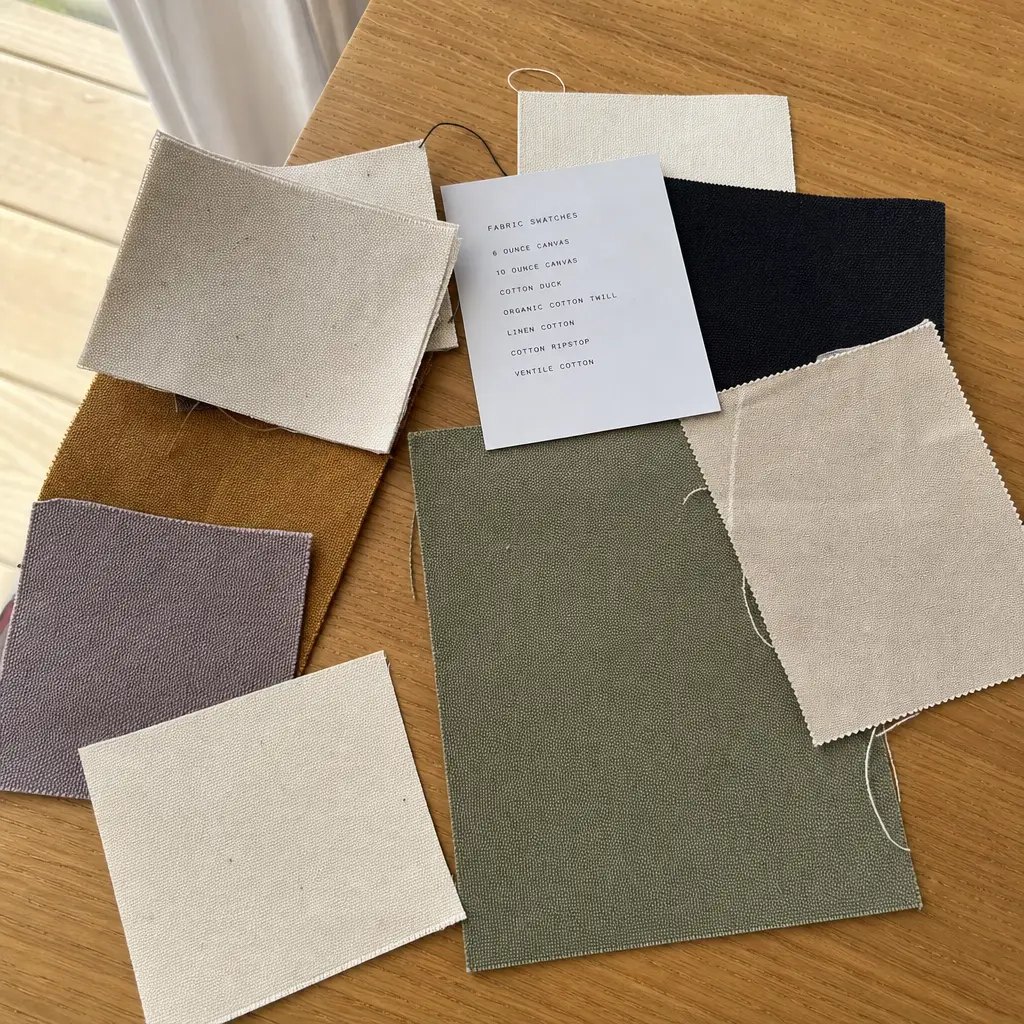
Why wellness studios buy cotton drawstring backpacks in bulk
Wellness studios buy cotton drawstring backpacks for two reasons that matter to procurement: they carry the brand and they have to work in daily use. The same bag may serve as a new-member welcome item, a class kit carrier, a retreat handout, or a retail add-on at the front desk. Those uses sound similar, but they create different expectations for softness, load capacity, print quality, and presentation. That is why the buying spec should follow the real use case instead of the look of a product mockup.
In bulk pricing, the cheapest quote is not automatically the best value. A lower price can come from thinner cloth, looser tolerances, simpler packing, or a print method that fits the artwork only on paper. Buyers need to know what is actually included. A 140 GSM bag can be a sensible giveaway item, but it may feel too light for retail. A 200 GSM canvas version may feel more premium, but it can increase freight weight, carton volume, and storage demand. The cost difference is not just in the sewing line; it shows up again in logistics and handling.
Wellness brands also tend to care about a calm, natural presentation. That usually means unbleached cotton, restrained branding, and packaging that does not feel loud or promotional. Simple does not mean easy. The buyer still has to decide on cotton shade, rope style, print size, label placement, and whether the bag should feel soft, structured, or somewhere in between. Those decisions shape both the quote and the final customer experience.
Operational fit matters as much as appearance. A single-location studio may accept bulk-packed cartons and sort the bags later. A multi-location brand may need unit-packed bags with barcode labels for easy allocation. A retreat program may require bags packed with inserts, while a retail program may need each bag protected for shelf presentation. Those downstream details affect real cost, so they belong in the quote request from the start.
- Use-case clarity matters because retail, welcome-kit, and giveaway bags do not share the same cost target.
- A simple natural cotton bag can still fail if print quality, hand feel, or packing format is off.
- Wellness brands usually need a cleaner, calmer product spec than general promotional buyers.
- Operational handling should be part of the product decision, not an afterthought.
Start with the bag spec that controls price
Cotton drawstring backpacks are priced through material, labor, and finishing. Fabric weight is the first major lever, but not the only one. Bag size, drawcord type, seam reinforcement, logo method, and packing format all influence the quote. A low price often comes from simplifying one of those variables, so buyers need to separate real savings from quiet spec changes.
A procurement-ready RFQ should define the bag in finished terms, not vendor shorthand. Include the finished dimensions, rope length, print area, whether the bag is flat or gusseted, and whether the cotton is natural or bleached. Also define the expected use: towels, shoes, apparel, or a mixed kit. A bag for low-load gifting can be lighter. A bag for retail or repeated daily use needs sturdier cloth and more controlled finishing.
For wellness studios, the simplest construction is often the best fit: one main compartment, cotton rope drawcords, reinforced stress points, and one logo zone. That setup works for events and merch without adding zippers, pockets, lining, or extra sewing steps. Once the bag adds those features, the sewing flow changes and the factory may need more labor, more inspection, and more time. That can raise cost quickly even when the bag still looks minimal from the outside.
Repeat orders are easier when the spec stays disciplined. If the studio expects quarterly reorders, avoid unusual stitching, specialty rope colors, or custom wash effects that are hard to reproduce. The tighter the spec control, the easier it is to compare future quotes and the lower the risk of an awkward mismatch between batches.
- Define the bag as a finished product, not just a material type.
- Keep construction simple unless the studio has a clear functional need for extras.
- Specify carry use, size, and presentation target before asking for pricing.
- Favor repeatable details if the bag will be reordered in future seasons.
How GSM changes feel, durability, and quote structure
GSM changes both the feel and the price. In this category, 140 GSM is usually a lighter promotional feel, 160–180 GSM adds more body and better shape retention, and 200 GSM and above starts to feel closer to retail textile goods than a giveaway. That extra body can be the right choice for a premium wellness brand, but it should be a conscious choice because the user will notice it right away.
The buyer should confirm whether the supplier is quoting raw fabric GSM or finished bag spec. Those are not always the same. A factory may describe the cloth before cutting, washing, or stitching, which can make the quoted material sound stronger than the finished bag. Ask how the fabric is measured, whether shrinkage allowance is included, and whether the cloth is pre-shrunk. Those answers affect finished size, surface smoothness, and the chance of distortion after use.
GSM also affects decoration. Light cotton can show seam distortion, which makes print alignment harder and can reduce logo clarity near stress points. Heavier fabric tends to hold the print zone flatter, which helps screen printing and gives cleaner edges. The tradeoff is obvious: heavier cloth increases material cost, freight weight, and carton volume. The right answer is not always the heaviest cloth; it is the weight that fits the use without paying for unnecessary bulk.
A practical comparison method is to ask for the full fabric description: GSM, weave type, finish, shrinkage allowance, and whether the bag is natural, bleached, or dyed. If two quotes differ materially, the unit price alone is not enough to judge them fairly. The cheaper quote may simply rely on thinner cloth or looser tolerances.
- Check finished bag spec, not just raw cloth language.
- Heavier cotton improves structure but raises freight and material cost.
- Ask how the supplier measured GSM and whether shrinkage is already included.
- Confirm weave and finish because they affect print sharpness and hand feel.
Print method choices that protect margin
For wellness studios, decoration should fit the artwork and the order size. Screen printing is usually the most efficient route for simple logos, especially when the design uses one or two colors and needs consistent repeatability. Most factories know how to run it, which helps reduce variation from batch to batch. If the logo is small, clean, and bold, screen printing often gives the best balance of cost and appearance.
When the logo has tiny text, thin strokes, gradients, or several colors, the buyer needs to understand the tradeoffs. Heat transfer or digital methods may reproduce more detail, but they can raise unit cost and introduce different durability concerns. On coarse cotton weave, small letters can fill in, edges can blur, and tonal gradients may not hold up well. A good supplier should be honest about where the design needs to be simplified instead of pushing a technically risky decoration method.
The hidden print costs are often what distort bulk pricing. Setup charges, color separations, screen changes, strike-off fees, and extra labor for low-opacity inks can materially change landed cost. Ask the factory to quote the decoration separately from the blank bag so the print cost is visible. That makes supplier comparison easier and helps the studio see when a simpler logo lowers spend without hurting the brand.
For wellness brands, restrained decoration usually looks more premium. A small centered mark, a side seam label, or a subtle front-panel logo often fits the category better than a large graphic. Simpler art also reduces production risk. Procurement should push for files that are easy to execute, not only attractive on screen.
To keep quotes comparable, define the print standard in measurable terms. Specify logo size, placement from the top edge and side seam, acceptable color variation, and the minimum line width the artwork can contain. If the logo includes fine typography, ask the factory to confirm the smallest readable stroke before production starts.
- Screen print is usually the most economical choice for simple, repeatable logos.
- Ask for decoration cost separated from the blank bag cost.
- Set minimum line thickness and logo size so the artwork prints cleanly.
- Favor restrained branding when the studio wants a premium, natural look.
MOQ logic and the pricing ladder buyers should request
MOQ is better treated as a production planning signal than a hard yes-or-no number. A factory may prefer 1,000 pieces because that aligns with fabric cutting efficiency, print setup, and sewing flow. If your studio only needs 300 bags for a launch, the supplier can still quote it, but the unit price will usually rise because the fixed setup is spread over fewer units. The right move is to understand the cost curve, not reject MOQ on principle.
Ask for a pricing ladder instead of one number. At minimum, request 300, 500, 1,000, and 3,000 pieces with the same spec so you can see how setup costs amortize. If the price drops sharply as volume increases, the smaller run likely carries a real fixed-cost penalty. If the price barely changes between tiers, that can point to efficient production or hidden assumptions elsewhere in the quote. Either way, the ladder is the cleanest way to see what you pay for a pilot order.
The best pricing ladder includes more than unit price. Ask for sample fees, print setup charges, label costs, packing fees, and carton fees alongside each tier. Otherwise, the cheapest tier may simply be the one with the least complete quote. The buyer then compares partial prices rather than actual landed cost.
For wellness studios planning a seasonal launch, the ladder can guide the decision. If you only need a small quantity to test front-desk demand, the 300- or 500-piece price may be acceptable. If the bag will go across multiple locations, the 1,000- or 3,000-piece tier may create a more stable per-unit cost and lower administrative workload over time.
- Use pricing tiers to reveal the real setup cost of a smaller order.
- Ask for sample, print, packing, and carton fees at every tier.
- Do not compare partial quotes that hide the fixed-cost portion.
- Choose the order size based on launch risk, not just the lowest unit price.
Comparison of sourcing routes and supplier setups
The sourcing route changes the quote as much as the product spec does. A direct factory that handles cutting, sewing, and printing in-house is usually the cleanest option for procurement because it makes the cost structure easier to see. That setup often improves sample control too, since the same team can manage cloth, stitching, and decoration. For a wellness studio brand that needs repeatable reorder quality, that transparency matters.
A trading company or agent can still be useful, especially when you need smaller-order flexibility, a broader supplier network, or coordination across multiple product types. The tradeoff is that the buyer must verify who actually owns the production line and which steps are subcontracted. If the quote seems unusually low but the supplier cannot clearly explain production responsibility, ask more questions before moving ahead.
Another sourcing variable is whether the supplier already makes similar bags. A factory that regularly produces cotton tote bags, backpacks, or promotional sacks may understand stitching, reinforcement, and packing expectations better than a general soft-goods supplier. Category familiarity helps, but it does not replace direct verification. Buyers still need sample approvals, QC checkpoints, and pack-out clarity.
For wellness studios, the best route often depends on repeatability. If the bag is a one-time retreat gift, a flexible source may be enough. If it is a branded item you will reorder every quarter, prioritize stable spec control, predictable sample behavior, and consistent shade matching over a small initial price difference.
- Direct factories usually provide better visibility into real production cost.
- Agents can help, but buyers must verify who runs cutting, sewing, and print.
- Category familiarity helps, but sample approval and QC are still required.
- Repeat-order programs benefit most from stable, well-documented supplier setups.
Sample approval and pre-production controls
A sample is a control tool, not a formality. The approved sample should match the exact fabric, size, rope, decoration method, and label placement used in production. If the factory sends a more polished sample made with different cloth or a different printing process, that sample can mislead the buyer and create conflict later. Procurement should require the sample to become the reference standard for bulk inspection.
The sample stage is where many bulk disputes can be avoided. Check seam spacing, rope smoothness, edge finishing, logo placement from the seam line, and how the bag behaves when lightly loaded. For wellness studios, comfort matters because recipients may carry shoes, clothing, yoga accessories, or water bottles. If the drawcord feels rough or the opening catches, the product may look fine on paper but disappoint in use.
Ask for a strike-off or printed panel when the logo has fine elements. That matters especially on natural cotton, where the weave can distort small typography. A digital mockup is not enough; it cannot show how the ink will sit on the fabric or whether the weave will interrupt the logo edge. The safest approval package includes the physical sample, the approved artwork file, and a written note on acceptable color shift, placement, and thread variance.
Before bulk production starts, freeze the spec. Any post-approval change to artwork, rope color, size, or packing method can trigger delay and cost. The studio team should treat sample approval as the point where the order is locked, not as a stage for continued redesign.
- Treat the sample as the production reference, not a nice-to-have preview.
- Check comfort, seam behavior, and logo placement under light load.
- Request a strike-off or printed panel when artwork is detailed or small.
- Freeze the spec before bulk cutting begins to avoid delay and rework.
Packing, labeling, and carton planning
Packing affects cost and handling more than many buyers expect. Bulk-packed bags are simpler and usually cheaper, which makes sense for studios receiving a large shipment into one location or a distribution center. Individual polybags with barcode labels add labor and materials, but they reduce the work required later if bags will be split across locations, sold at retail, or picked one by one from a warehouse. The right choice depends on who touches the product after it lands.
Carton planning should be requested as part of the quote, not added later. Ask for pieces per carton, carton dimensions, gross weight, and whether the bags are folded flat or lightly stuffed to preserve shape. Packing method affects carton efficiency, transit weight, and crease risk. If the factory overpacks, the fabric can develop harsh fold lines. If it underpacks, the shipment may move around too much and pick up scuffs or label damage.
Labeling should also be standardized. If the studio needs UPCs, SKUs, or location codes, define the label size and placement before production. A supplier can often add this with little difficulty if it is planned early, but late changes usually create rework. Buyers should also clarify whether master cartons will carry receiving information such as color, size, PO number, and count. That discipline improves inbound processing and reduces warehouse errors.
If retail resale is part of the plan, look beyond the initial carton cost. Unit-packed bags may add cost up front, but they can reduce labor, simplify merchandising, and protect the bag surface from dust or handling marks. For many wellness brands, that tradeoff is worth it.
- Choose bulk or unit packing based on downstream handling, not habit.
- Request carton dimensions, gross weight, and pieces per carton in the quote.
- Plan labels early so SKU and location codes do not require rework.
- Unit packing can be worth it when the bags are destined for retail or multi-site distribution.
Lead time risk, production schedule, and freight timing
Lead time is a schedule system, not a single number. Sample time, bulk production time, inspection time, packing time, and freight time each carry their own risk. A typical sample lead time for a cotton drawstring backpack may be 5–10 days, while bulk production often lands in the 25–40 day range after sample approval and deposit. Those ranges only work when the spec is frozen and the supplier already has the necessary fabric available.
Delays usually come from late decisions, not from sewing itself. Artwork changes, revised label placement, a different rope color, or a request to alter carton packing can all move the schedule. For this reason, the studio should back-plan from the date the bags must be in hand, not from the factory's promised ship date. A good procurement plan builds in time for sample review, artwork signoff, production queueing, and freight booking.
Freight planning matters because cotton bags are light but space-consuming. They do not behave like dense goods that absorb packing changes without affecting cost. If the bags are overpacked or unit packed, carton count and volume rise. If they are bulk packed, warehouse handling may be easier but downstream distribution may be harder. The buyer should ask for carton dimensions early so logistics can estimate volume accurately.
For importers or multi-location brands, the safest schedule includes a buffer. That buffer should account for inspection, rework if needed, and transit uncertainty. If a wellness studio is launching a retreat, opening a new branch, or supporting a seasonal campaign, missing the date can be more expensive than paying slightly more for better schedule control.
- Plan from required receipt date, not the factory ship date.
- Late artwork or packing changes are common causes of delay.
- Ask for carton dimensions early because freight volume changes the true landed cost.
- Build a buffer for inspection, booking, and transit uncertainty.
Landed-cost comparison and what belongs in the RFQ
A strong RFQ forces each supplier to quote the same specification. That means the same fabric weight, the same bag size, the same closure style, the same print method, the same packing format, and the same carton expectations. If one factory quotes lighter fabric or excludes unit packing, its number will look attractive without being comparable. Procurement should make each vendor answer the same cost questions so the quote stack can be compared line by line.
The RFQ should also request separate pricing for the key cost drivers. Ask for blank bags, decorated bags, sample charges, setup charges, and packing charges individually. That structure makes it easier to spot where a vendor is adding cost and where a lower price may simply reflect an omission. If the supplier cannot break out the quote, the buyer has little way to judge whether the number is realistic.
Landed cost is bigger than unit price. It includes production defects, inspection effort, rework risk, and warehouse handling. A slightly higher factory quote may still be the better choice if it produces cleaner stitching, more consistent print placement, and fewer receiving problems. That is especially true for wellness studios, where the bag is part of a brand impression and may be handed directly to members or guests.
Before issuing the RFQ, procurement should decide what is non-negotiable. For example: minimum GSM, exact logo area, acceptable shade variance, carton labeling, and whether a pre-production sample must be signed off before sewing begins. Once those requirements are written down, the buyer has a much stronger chance of getting usable quotes instead of broad estimates.
- Make every supplier quote the same spec and packing format.
- Request separate prices for blanks, decoration, samples, setup, and packing.
- Compare landed cost, not just the factory unit price.
- Write non-negotiables into the RFQ before asking for quotes.
Specification comparison for buyers
| Spec decision | Recommended option | When it fits | Buyer risk to check |
|---|---|---|---|
| Fabric weight | 140–180 GSM unbleached cotton | Studio welcome kits, class giveaways, low-to-mid load carry | Ask whether the number is raw fabric GSM or finished bag spec; require ±5% GSM tolerance on the approved cloth |
| Print method | 1–2 color screen print or heat transfer for small runs | Simple logo, predictable repeat orders, modest art complexity | Require strike-off approval, minimum line width of 1.5 mm, and placement tolerance of ±10 mm |
| Premium route | 200–240 GSM canvas with woven label | Retail resale, premium membership kits, heavier daily use | Confirm finished size, bag weight, and freight impact; heavier cloth can add volume and cost faster than expected |
| MOQ strategy | Tiered pricing at 300 / 500 / 1,000 / 3,000 pcs | When you need a pilot order before committing to a seasonal volume | Ask for the same spec at every tier and separate fixed charges from unit price |
| Supplier route | Direct factory with sample room and in-house printing | Brand owners and importers that need repeatable reorders | Verify factory photos, stitch controls, and which steps are outsourced |
| Packing | Bulk packed 100 pcs per carton or unit-packed with barcode label | Warehouse stock, retail resale, or multi-site distribution | Confirm carton count, carton dimensions, net weight, and whether bags are folded flat or lightly stuffed |
| Closure style | Cotton rope with reinforced eyelets or stitched channels | Wellness studios using bags for events, towels, shoes, or merch bundles | Ask for pull-test guidance and reinforcement detail at stress points |
| Lead time planning | Sample 5–10 days; bulk 25–40 days after approval | Seasonal launches with enough buffer for artwork and packing signoff | Lock artwork early and build in time for sample review and transit |
| Compliance file | Spec sheet, approved sample, color standard, inspection checklist | Importers and multi-location brands needing traceability | Keep written tolerances for size, shade, stitch count, and print placement |
Buyer checklist before sampling
- Confirm target fabric weight in GSM and ask if the quote is based on raw cloth or finished bag weight.
- Lock bag size, rope length, print area, seam allowance, and closure style before requesting price tiers.
- Request separate quotes for blank bags, decorated bags, sample fees, setup charges, and unit packing.
- Ask for a pre-production sample against the exact artwork, fabric shade, and label placement.
- Set acceptable tolerances for bag length, width, rope length, shade variation, stitch density, and print registration.
- Verify carton count, carton size, gross weight, and whether cartons are export-strength 5-ply or lighter retail cartons.
- Confirm what is included in the quote: sampling, art adjustments, packing, labels, and origin handling.
- Ask the supplier to list exclusions so hidden add-ons do not distort supplier comparison.
Factory quote questions to send
- What fabric GSM, weave, shrinkage allowance, and finished bag size are you quoting?
- Is the price for blank bags, printed bags, or unit-packed retail bags?
- What are the MOQ and price breaks at 300, 500, 1,000, and 3,000 pcs?
- Which print method is included, and what are the setup charges per color?
- What is your sample lead time, bulk lead time, and what starts production?
- Can you share pack-out, carton dimensions, and gross weight by size?
- What QC checks do you perform for stitching, rope attachment, seam strength, and print placement?
- Can you make a pre-production sample using our exact file, Pantone reference, and label position?
- What part of the quote covers sampling, art changes, rework, and replacement if the first sample misses spec?
- How do you control fabric lot changes and shade continuity from sample to bulk?
Quality-control points to confirm
- Fabric weight matches the approved GSM within ±5% unless the PO states a different tolerance.
- Finished bag dimensions stay within ±10 mm for length and width, excluding rope stretch.
- Seam allowance, edge finishing, and rope length match the approved spec sheet.
- Stitch density is even, with no skipped stitches, open seams, loose threads, or needle damage at stress points.
- Print registration stays within the approved placement window, typically ±10 mm, and color matches under daylight.
- Rope channels, eyelets, or reinforced stitching pass a practical pull test without tearing or distortion.
- Carton count, inner pack count, and barcode labels match the purchase order exactly.
- No excessive shrinkage, oil stains, moisture marks, or shade variation beyond the agreed standard.
- Approved sample, production sample, and bulk output remain consistent on fabric hand feel and print sharpness.
- Labels, hang tags, and retail packaging are attached in the specified location without blocking the logo area.