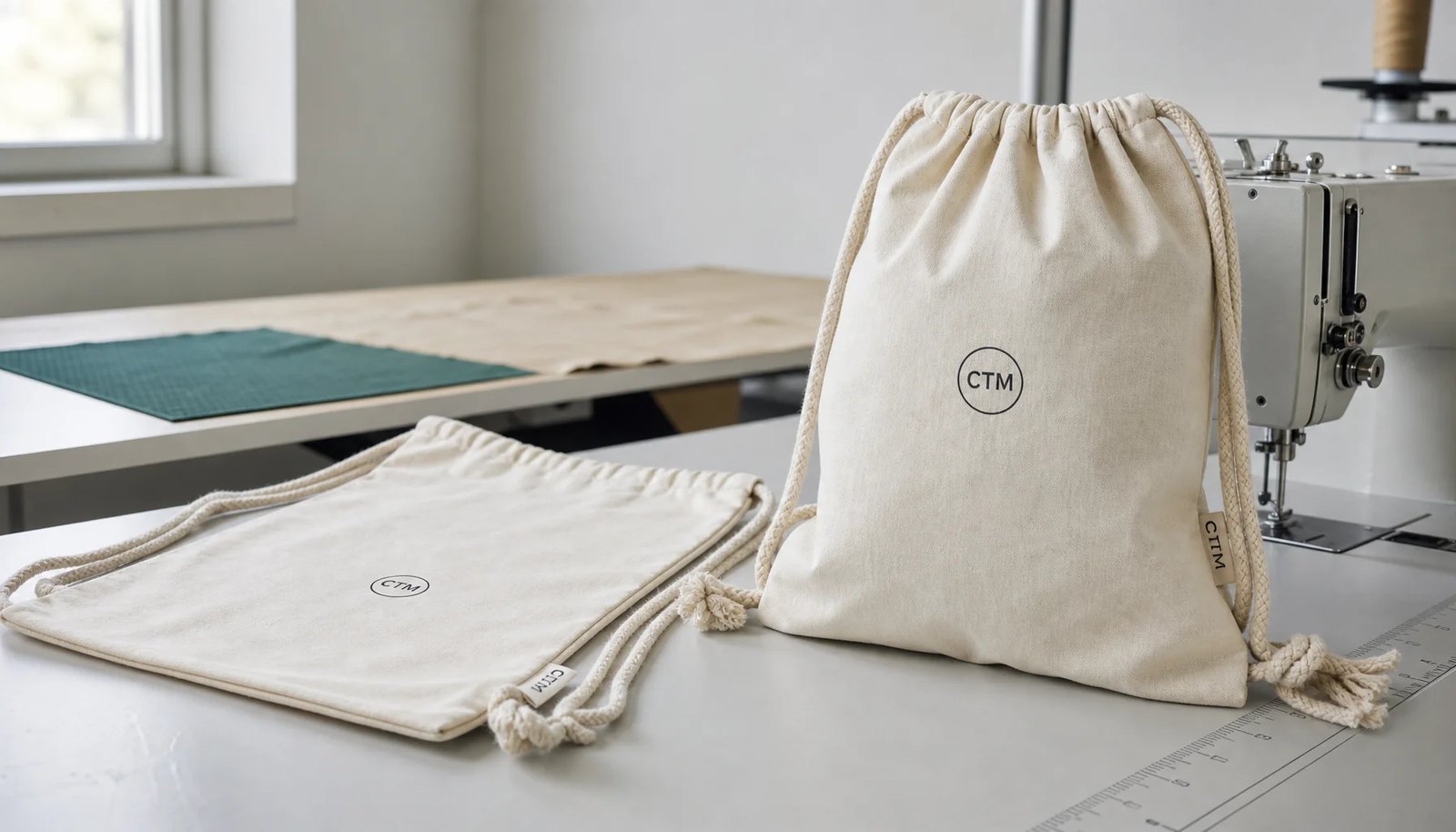
Why this bulk pricing plan matters for subscription boxes
Cotton drawstring backpacks for subscription boxes look simple, but the quote is usually built from a stack of small decisions. Fabric weight, cord type, print method, reinforcement, packing, and carton count all change the final unit price. If those details are not fixed early, suppliers will quote from different assumptions and the comparison becomes unreliable.
The real buying problem is not finding the cheapest bag. It is finding a price structure that holds when the box launch date is fixed, the artwork is approved, and the warehouse needs consistent packing. A good pricing plan lets you compare factories on the same basis, then choose the route that protects margin without weakening the bag or delaying shipment.
- Use one finished spec for all quotes, not a rough concept note.
- Separate bag cost from print, packaging, and freight assumptions.
- Treat sample approval as part of pricing, not an afterthought.
Start with a spec that supports the box, not just the logo
For subscription boxes, the bag often carries inserts, seasonal items, or bundled products, so a light promotional sack is not always enough. In practice, 120-140 GSM cotton twill or plain weave is the safer starting point for most brands because it balances hand feel, print quality, and durability. If the bag is mainly decorative or holds lightweight samples, a lower GSM may work, but the cost saving is often smaller than buyers expect once print and packing are added.
Finish matters as much as raw fabric weight. A neat cord channel, even seam lines, and proper corner reinforcement affect both customer perception and warehouse survival. If the bag is too thin, the print can show on the reverse side, cords can distort the opening, and cartons can arrive with more crease marks and damage claims.
- 120 GSM is a common floor for light retail use.
- 140 GSM gives more body and usually improves print presentation.
- Ask whether the quoted GSM is before or after finishing.
How fabric weight, size, and construction drive the quote
Factories do not price cotton drawstring backpacks by size alone. Fabric consumption, sewing time, cord length, reinforcement pieces, and waste rate all sit behind the unit price. A slightly larger bag may use disproportionately more fabric if the pattern needs extra seam allowance, a deeper hem, or a stronger bottom fold. Buyers often miss that these changes also affect carton fill and shipping efficiency.
The safest way to request quotes is to lock a finished size and allow one practical alternate if the supplier wants to improve cutting yield. For example, a 35 x 45 cm bag and a 38 x 42 cm bag may appear close on paper, but one may fit the factory cutting marker better and produce a lower unit price. That difference only matters if the final contents still fit the box plan and the brand approves the visual proportion.
- Lock finished size, not only open size.
- Ask for cutting yield assumptions if the supplier offers a better-priced alternate size.
- Require the same reinforcement method in all quotes.
Pick a print method that matches artwork complexity and MOQ
For most bulk subscription box programs, one- or two-color screen print is the most reliable cost-to-quality option. It keeps setup manageable, produces a clean look on cotton, and remains stable across larger quantities. If the artwork needs more detail, a woven label or a small heat-transfer element may be better than forcing a complex full-color print that raises setup cost and increases the risk of mismatch between samples and bulk.
Do not choose print method only by appearance. The same artwork can create very different cost structures depending on color count, print placement, and cure process. A front-center print is usually easier to keep consistent than a wraparound or multi-position layout. If the design is intended for a premium box, a woven side label or simple embroidery can sometimes outperform a busy print with fewer production surprises.
- Screen print works well for bold logos and simple icons.
- Heat transfer suits short runs or multicolor artwork, but approval control must be tighter.
- Woven labels help if the buyer wants a premium, low-risk brand mark.
MOQ logic: why one supplier quote can look cheaper than another
MOQ is often where quotes diverge most. One factory may quote a lower unit price but require a larger MOQ, a single color, and a standard material. Another may accept a smaller run but add setup fees, sample charges, or higher labor for custom trimming. The true comparison is not just unit price at one quantity; it is the total landed cost at your actual launch volume and reorder plan.
For subscription boxes, the most efficient route is usually standard fabric, one print version, and one packing style across the first run. If you split quantities by colorway or change print placement for each box tier, you multiply setup and risk. Buyers should also ask whether the MOQ is per design, per size, or per color, because that detail can change the effective price more than the headline number.
- Compare MOQ per design, not just total order quantity.
- Separate startup costs from recurring unit costs.
- Ask if mixed colors can be combined under one production batch.
Use a supplier comparison that shows the real sourcing route
A direct factory is usually the best fit when the buyer needs stable specs, export packing, and a clear path for sample correction. Trading companies can be useful when the purchase is small, the schedule is compressed, or several product lines must be combined, but the quote should still show who actually makes the bag. If the sourcing route is unclear, it becomes harder to hold one party accountable for fabric changes, print drift, or packing errors.
The best route depends on how strict the box launch is. If the subscription box calendar is fixed and the bag is a core branded item, a factory quote with an approved sample and written packing standard is usually safer. If the project is exploratory, a trading route may be acceptable, but the buyer should still demand the same tech pack details and QC thresholds to avoid comparing apples to oranges.
- Direct factory: better control, clearer factory-level accountability, stronger repeatability.
- Trading route: sometimes faster for mixed items, but higher risk of hidden margins or spec drift.
- Hybrid sourcing: useful only if one party owns QC and export packing end to end.
Quote data to request so you can compare apples to apples
A usable quote should not just show a single piece price. It should separate base bag cost, print setup, sample charges, packing, carton specification, and any special handling. When those items are merged into one number, procurement teams lose the ability to see whether a supplier is inexpensive because of the bag itself or because they quietly omitted necessary services. That creates unpleasant surprises later in approval or shipping.
For a realistic comparison, ask every supplier to quote the same quantity ladder, such as 1,000, 3,000, and 5,000 pieces, with the same color count and same packaging. That lets you see whether the unit price drops with scale or whether a supplier is padding the small run with heavy setup charges. It also shows whether the supplier is comfortable with a reorder structure, which matters for subscription businesses that refill inventory every season.
- Request pricing at multiple volumes, not one batch only.
- Require line items for print, sample, packing, and carton charges.
- Ask for freight assumption separately from ex-works pricing.
Sample approval should test fit, print, and packing together
A sample is not only for visual approval. It should confirm size accuracy, fabric hand feel, cord tension, print placement, and how the bag packs into cartons. For subscription boxes, a bag that looks good flat on a table may behave badly once it is folded, inserted, and stored for fulfillment. That is why pre-production samples should be checked in the same condition the warehouse will receive them.
A practical approval process uses one sealed reference sample and one written spec sheet. The sealed sample captures the approved hand feel, color tone, and print quality; the spec sheet records size, GSM, cord length, and packing details. If a supplier replaces the fabric or shifts the print by even a small amount, the difference should be visible against that reference before bulk begins.
- Measure the sample and record actual dimensions.
- Confirm print placement against the approved artwork proof.
- Test a folded sample inside the intended carton or box kit.
Packing, lead time, and schedule risk in subscription box programs
Packing often decides whether the final project runs smoothly. Bags should be counted by inner pack and clearly marked by SKU, color, and PO number. If the subscription box team needs direct-to-fulfillment packing, the factory should confirm carton counts that fit the receiving workflow, not only the production line. Poor packing increases labor at the warehouse and can damage printed surfaces through unnecessary rubbing or compression.
Lead time also needs realistic padding. A common pattern is 7-10 days for sample approval and 25-40 days for bulk after approval, but that window depends on fabric readiness, print complexity, and the supplier’s sewing capacity. Buyers should treat artwork revision and approval delays as schedule risk, especially when the bags are linked to a monthly box drop or seasonal launch. The safest plan is to freeze the spec before confirming the ship date.
- Use carton markings that match the warehouse receiving file.
- Avoid mixed SKUs in the same carton unless the fulfillment center requests it.
- Build approval time into the launch calendar, not just production time.
Land your cost before you lock the run
A low ex-works quote can still become expensive once you add packing extras, inland transport, freight, duties, and rework risk. For cotton drawstring backpacks in subscription boxes, the landed cost should include the full path from approved sample to warehouse receipt. If you only compare unit price, a supplier with better yield control and cleaner packing may actually save money by reducing claims and warehouse handling.
The practical buyer move is to compare three scenarios: a standard direct-factory quote, a lower-priced quote with lighter fabric or simpler packing, and a premium quote with stronger construction. That comparison reveals where the savings are real and where they are just hidden quality tradeoffs. In many programs, the middle option wins because it protects brand presentation without overspending on features the customer will not notice.
- Include freight, duties, and receiving labor in the total cost view.
- Measure savings against likely reject and rework exposure.
- Use the approved sample as the reference for landed-cost decisions.
Specification comparison for buyers
| Spec decision | Recommended option | When it fits | Buyer risk to check |
|---|---|---|---|
| Fabric weight | 120-140 GSM cotton twill or plain weave | Best for subscription boxes that need a better hand feel and fewer breakages in fulfillment | Thin fabric below 100 GSM can look weak, show print-through, and crease badly in packing |
| Reinforcement | Double-stitched side seams plus bottom bar-tack or boxed corner | When the bag carries sample kits, cosmetics, small apparel, or heavier inserts | Single-row stitching often fails at the cord channel or bottom seam under repeated packing |
| Print method | 1-2 color screen print or heat transfer only for small runs; woven label for premium look | When artwork is simple and the brand wants controlled unit cost | Too many colors or gradients drive setup cost up and can delay approval if artwork is not simplified |
| Cord type | Cotton cord or cotton-poly cord with matching color | When the brand wants a natural look and softer hand feel | Thin cords can fray, twist, or cut into the channel if the bag is filled tightly |
| MOQ route | Factory standard size/color with limited print variation | When you need the lowest quote and predictable lead time | Custom size, custom dye, and multiple print placements quickly increase MOQ and setup charges |
| Sample path | Pre-production sample before bulk with measured specs and artwork proof | When the box launch date is fixed and rework would be expensive | Skipping a real sample often causes size mismatch, color drift, and logo placement disputes |
| Packing format | Flat packed with bulk inner polybag by count, carton marked by SKU | When bags are inserted into boxes or shipped to a fulfillment center | Loose packing can crease printed areas and slow warehouse receiving |
| Supplier route | Direct factory with export packing and export carton QC | When you want tighter cost control and clearer responsibility | Trading routes may look convenient but can hide fabric substitution or mixed lot risk |
| Lead time plan | 7-10 days for sample, 25-40 days for bulk after approval | When artwork is ready and the buyer confirms all specs fast | Late approvals, missing trims, or rework on artwork can push ship dates beyond the subscription box schedule |
Buyer checklist before sampling
- Confirm finished bag size, fabric GSM, cord thickness, and stitching reinforcement before requesting quotes.
- Send vector artwork with color count, print placement, and acceptable pantone tolerance.
- State required sample stage: pre-production sample, sealed sample, or photo sample only.
- Specify packing count per inner polybag and carton, carton mark format, and warehouse label needs.
- Ask for quote separation by base bag, print, sample, packaging, and freight assumption.
- Set acceptance criteria for measurement tolerance, print registration, seam strength, odor, and needle damage.
Factory quote questions to send
- What fabric options are you pricing, and what is the exact GSM after finishing?
- Is the quote based on direct factory production or trading with outsourced sewing?
- What is the MOQ per color and per print version, and how does the unit price change at 1,000, 3,000, and 5,000 pieces?
- What print method is included, what are the setup charges, and how many colors are covered in the quoted price?
- What sample is included, how many revisions are allowed, and who pays courier cost for approvals?
- What packing standard is included, and can you quote alternative carton counts for e-commerce fulfillment?
Quality-control points to confirm
- Finished size tolerance within +/- 0.5 cm for small bags or +/- 1 cm for larger bags, unless the artwork or construction requires a tighter window.
- Fabric weight consistent with the approved sample and no visible substitution to a lighter cloth.
- Stitching straight and secure at cord channel, side seams, and bottom corners with no skipped stitches or loose thread tails.
- Print alignment within the approved placement window and no obvious cracking, smearing, ghosting, or color mismatch against the sealed sample.
- Cords pull smoothly without bunching, twisting, or cutting into the channel after repeated opening and closing.
- Cartons cleanly packed with the correct SKU count, no mixed artwork, and no moisture damage or odor on arrival.