Start with a pricing plan, not a loose unit price
Cotton drawstring backpacks look simple, but the same product name can hide very different quotes. One supplier may price light cotton sheeting, another may price heavier canvas, and another may include print setup while excluding carton labels. If every quote says only “cotton drawstring backpack with logo,” procurement cannot compare cost, quality, or operational fit.
Coffee roasters use these bags in different ways. A cafe retail SKU needs cleaner finishing than a one-day giveaway. A wholesale account kit needs dependable sizing, carton sorting, and correct counts. A subscription insert may need barcode labels and a predictable folded size. A cupping event bag may prioritize fast handling and bulk cartons.
A useful cotton drawstring backpacks bulk pricing plan for coffee roasters separates the base bag from adders. The base bag controls size, GSM, cord, construction, decoration, and standard packing. Adders cover extra print colors, underbase, individual polybags, barcode stickers, woven labels, hangtags, custom dyeing, destination sorting, inspection, and special documentation.
- Quote the same base bag across all suppliers before comparing prices.
- Use practical tiers such as 1,000, 3,000, and 5,000+ pcs to see how setup and splits affect cost.
- Keep one-time charges separate from unit price so finance can calculate total program cost.
- Decide the sales channel first; the correct specification depends on how the bag will be used.
Build the base specification before the RFQ
A practical base specification for many coffee programs is a 35 x 45 cm finished cotton drawstring backpack made from 8 oz to 10 oz cotton canvas, approximately 270 to 340 GSM. This range usually feels more substantial than thin promotional cotton while staying realistic for cafe merchandise, account kits, and event programs. If the bag must hold hoodies, brewers, boxed accessories, or several retail coffee packs, test the actual contents before finalizing size.
Write size as a finished measurement, not a cutting size. A clear line is: 35 x 45 cm, measured flat after sewing and pressing, with ±1 cm tolerance unless otherwise approved. This prevents confusion between cut panels, unpressed samples, and final packed goods.
Construction should be written into the RFQ. Include a single-layer body, folded top channel, double drawcord, reinforced lower cord exits, bartacks at stress points, and a stated inside seam finish. For cafe retail or e-commerce bundles, add thread trimming, consistent folding, and presentable inner packing to the requirement rather than assuming they are included.
- Suggested base: 35 x 45 cm finished, 8 oz to 10 oz cotton canvas, double cord, reinforced lower corners, one front print.
- Confirm the intended contents: T-shirts, notebooks, coffee packs, brew tools, cupping forms, boxed accessories, or welcome-kit inserts.
- Specify top-channel depth, seam finish, seam allowance, corner reinforcement, and bartack positions.
- For resale, include visual cleanliness, thread trimming, folding, and packing requirements in the base specification.
Plan quantity tiers around real roaster programs
Quantity planning should follow the channel, not only the desire for a lower unit price. A 1,000-piece run can suit a cafe retail test, local launch, cupping event series, or limited subscription insert. At this level, screens, PPS samples, artwork cleanup, and courier costs have a visible per-unit effect, so unnecessary colorways should be avoided.
A 3,000-piece order often fits multi-location cafe programs, wholesale account welcome kits, seasonal merchandise, or regional trade events. This tier can support limited variants if the bag body stays the same. One natural cotton body with three city-logo prints is easier to manage than three fabric colors, three print sizes, and three packing formats.
A 5,000-piece or larger program may support distributor packs, national events, subscription campaigns, or planned replenishment. At this tier, the risk shifts from unit price to execution control. Define quantities by SKU, artwork, destination, and packing type before production starts. A low factory price can lose value if warehouse teams must re-sort unclear mixed cartons.
- 1,000 pcs: keep one fabric color, one artwork, and one packing method where possible.
- 3,000 pcs: allow controlled artwork splits if size, GSM, cord, and print position remain fixed.
- 5,000+ pcs: create a SKU and destination map before PO placement.
- Use evergreen artwork for inventory that may move through cafes, online bundles, wholesale kits, and future events.
Control fabric decisions: GSM, cotton type, and color
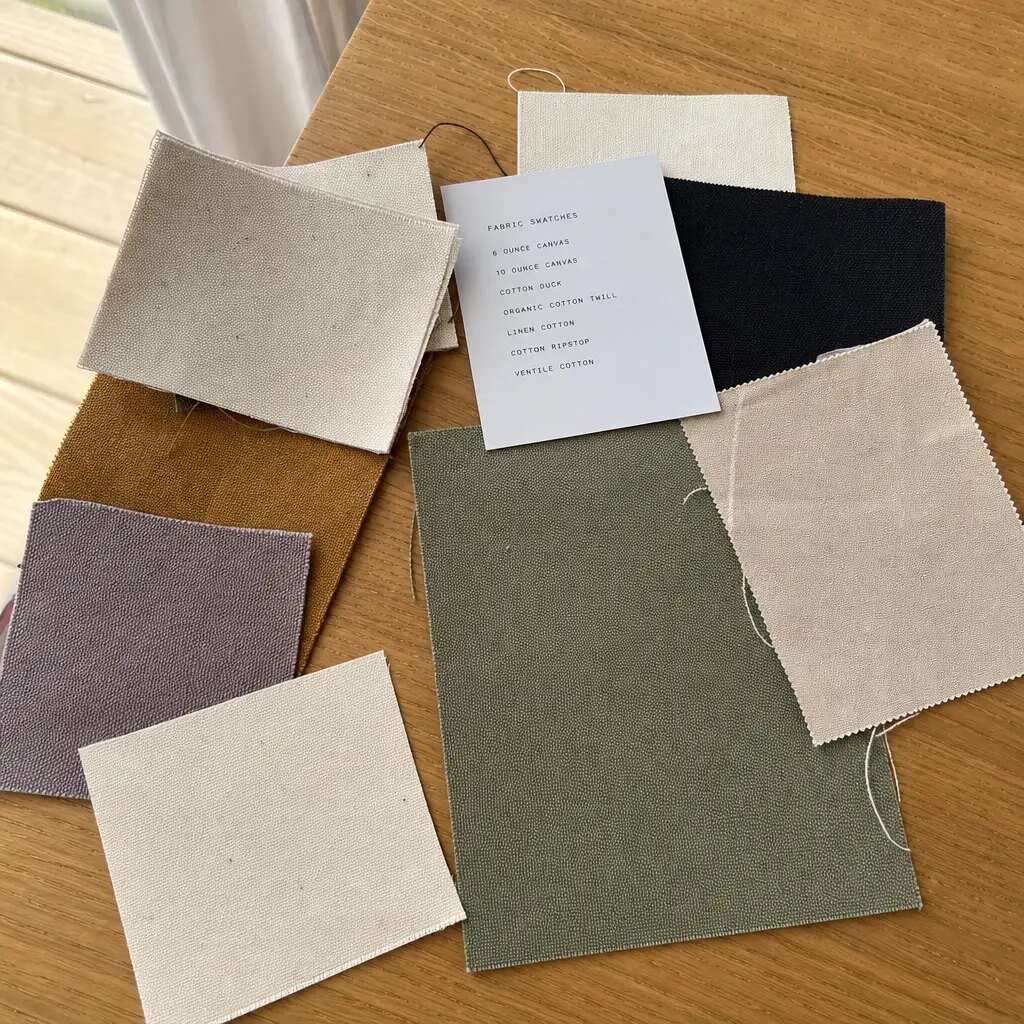
Fabric is the largest quality signal. “Cotton” is not a buying specification. Ask for composition, weave, target GSM, and acceptable production range. A quote for 300 GSM cotton canvas should not be compared with a quote for 180 GSM cotton sheeting, even if the product photos look similar.
Natural or unbleached cotton often works well for coffee brands because it fits kraft packaging, earthy palettes, and simple black or brown artwork. It may show seed flecks, yarn variation, and slight shade movement. These traits can be acceptable when they match the approved sample, but they should not be left undefined.
Dyed fabrics need tighter controls. Black, navy, olive, and custom colors can show lint, shade mismatch, and weak print opacity more clearly. Custom dyeing may require lab dips, a shade band, higher fabric MOQ, and added lead time. Organic or recycled cotton should be used only when the buyer can support the claim with suitable documentation and approved wording.
- Require a target GSM and range, such as 300 GSM target with 285 to 315 GSM approved production range.
- Approve natural cotton variation with a physical sample or clear photo standard.
- For dyed fabric, define lab dip approval, shade band, lot control, and panel matching.
- Do not make organic or recycled claims without document flow that supports the claim.
Separate real cost drivers from nice-to-have adders
The main cost drivers are fabric weight, finished size, decoration, color splits, and packing. Heavier canvas increases material use and shipping weight. Larger dimensions increase fabric consumption and carton cube. Custom dyed fabric adds approval steps and may increase MOQ. None of these choices is wrong, but each should be priced deliberately.
Decoration is another major driver. For bold coffee roaster logos, origin icons, event marks, and wholesale-kit branding, one-color screen printing is often practical when the artwork is simple and volumes are suitable. A second color adds setup and registration control. Dark fabric may need an underbase or double hit. Front-and-back printing adds another handling pass.
Small features can become meaningful cost items too. Woven side labels, hangtags, barcode stickers, metal cord tips, custom cord colors, and individual polybags should be listed separately. This keeps marketing upgrades visible and prevents the base unit price from becoming unclear.
- Ask for a base unit price and separate adders for each optional feature.
- Separate screen charges, color separations, strike-offs, woven labels, hangtags, and barcode stickers.
- Confirm whether underbase on dark fabric is priced as an additional screen, print pass, or ink charge.
- Compare the operational cost of packing choices, not only the factory material cost.
Use a landed-cost worksheet with placeholder formulas
Bulk price ranges can mislead procurement teams because cotton cost, exchange rates, labor, packing, artwork complexity, freight mode, and destination change the result. A better approach is to request current quotes against one controlled specification and put every supplier into the same worksheet.
Use a simple worksheet that exposes the cost build. For each tier, add: base unit price, quantity, setup charges, PPS sample, strike-off, screens, per-unit packing adders, label adders, inspection, inland delivery or export basis, freight estimate, duty or tax where applicable, and downstream 3PL handling. Then divide by usable approved units, not only ordered units.
Illustrative formula: Total program cost = (Order quantity x base unit price) + one-time setup + samples/courier + (order quantity x per-unit adders) + inspection + freight-related costs + downstream handling. Landed cost per usable bag = total program cost ÷ approved usable units received. If a defect reserve is used, show it openly rather than hiding it in a blended price.
- Worksheet line 1: Ordered units = [tier quantity].
- Worksheet line 2: Product cost = [ordered units] x [base unit price].
- Worksheet line 3: One-time cost = [screens] + [PPS] + [strike-off] + [artwork cleanup] + [courier].
- Worksheet line 4: Adders = [ordered units] x ([individual bagging] + [barcode] + [hangtag] + [label] + [sorting]).
- Worksheet line 5: Landed cost per usable bag = ([product cost] + [one-time cost] + [adders] + [inspection] + [freight] + [3PL handling]) ÷ [approved usable units].
Set MOQ and variant-split rules in writing
MOQ is rarely just one number. A supplier may quote “MOQ 1,000 pcs,” but that may mean 1,000 pcs in one fabric color, one artwork, one print color set, and one packing format. If a roaster wants natural, black, and olive bags with different cafe logos, the order may function as several smaller production runs.
Variant splits affect setup, cutting, printing, packing, labeling, and inspection. The safest way to reduce cost is to standardize the bag body. Use one size, one GSM, one cord type, one print position, and one packing format wherever possible. If store-specific marks are needed, keep them in the same print area and color system.
For distributor or multi-cafe programs, build a split table before quoting. Include SKU name, fabric color, artwork file, print colors, quantity, packing method, destination, and carton-label requirement. Ask the supplier to confirm which splits trigger extra setup, longer lead time, or separate MOQ.
- Clarify MOQ per PO, fabric color, artwork, print color set, SKU, packing method, and destination label.
- Keep variants limited at lower quantities because setup charges spread over fewer units.
- Use the same print dimensions and placement across store, city, or event logos.
- Ask for repeat-order pricing using the same approved specification and artwork.
Use artwork rules that protect brand quality
Artwork quality is especially important for coffee roasters because bags often sit near retail shelves, event tables, or wholesale gift kits. A poor print can make the brand feel less careful, even when the bag construction is acceptable.
Screen printing is a common choice for one-color or two-color cotton drawstring backpack programs when the artwork is bold and the production quantity supports the setup. Cotton canvas has texture, so fine serif text, thin map lines, QR codes, distressed effects, gradients, and halftones may not print as cleanly as they appear on a digital mockup.
Dark fabric requires special attention. White ink on black cotton may look dull without an underbase or double hit. Heavy ink can improve opacity but may create a stiff hand feel. Approve opacity, edge sharpness, color, and feel before bulk printing, especially for paid merchandise displayed at a cafe counter.
- Provide vector artwork and name the print colors, print size, and print position.
- Record logo width, logo height, distance from top hem, and centerline position.
- Request strike-offs for fine text, QR codes, distressed artwork, halftones, or large solid areas.
- For black or navy bags, ask how opacity will be achieved and whether it changes cost or hand feel.
Use sampling as the production control gate
Sampling should move from materials to final construction. First approve fabric swatches or lab dips for color, texture, and weight. Then approve artwork layout with exact print dimensions and placement. If the print is detailed or the fabric is dark, approve a strike-off before bulk production.
The pre-production sample should represent the final product: final fabric, final cord, final construction, final print method, and intended packing if packing affects presentation. Do not approve it with a quick “looks good.” Measure width, height, top-channel depth, cord length, cord diameter, print position, seam finish, bartack location, and label placement if applicable.
Keep a sample file for reorders. Include signed specification, photos, physical PPS if possible, artwork file, color references, shade band, measurement sheet, and packing instructions. This prevents repeat orders from drifting in GSM, cord quality, print placement, or corner reinforcement.
- Approve a PPS made to the final specification, not a generic showroom sample.
- Measure the PPS and record the results as the inspection standard.
- Approve final fabric shade and print opacity before bulk cutting or printing.
- Keep one retained sample for reorder and claim reference.
Define QC, packing, and shipment data before production
Quality control should protect durability, appearance, packing accuracy, and brand consistency. Set measurable tolerances for finished size, GSM, print placement, cord length, carton count, and acceptable shade range. Natural cotton flecks may be acceptable if they match the sample. Wrong artwork, open seams, missing cords, severe stains, weak cord exits, and incorrect counts should be treated as major defects.
Packing affects both cost and operations. A practical export format may be flat packed with cords tucked, 10 pcs per inner bag, and 100 pcs per export carton, but this should be adjusted for fabric weight, bag size, 3PL limits, and retail presentation. Individual polybags, barcode labels, hangtags, store sorting, and mixed-destination cartons should be priced as adders.
Before shipment, request carton dimensions, gross weight, net weight, carton count, Incoterm, inland delivery terms, export documentation assumptions, and inspection access. If the bags will go into cafe retail, subscription boxes, or wholesale kits, include downstream handling cost. Factory savings can disappear if the warehouse must re-count, re-label, or re-pack unclear cartons.
- Define critical, major, and minor defects before final inspection.
- Inspect construction, print, fabric, cords, labels, carton counts, and destination marks.
- Request estimated carton cube and gross weight at quote stage, then confirm before shipment.
- Include setup, samples, packing, labeling, inspection, freight, duty or tax where applicable, and 3PL handling in the landed-cost model.
Specification comparison for buyers
| Pricing field | 1,000 pcs test tier | 3,000 pcs growth tier | 5,000+ pcs program tier | Procurement rule |
|---|---|---|---|---|
| Best-fit roaster use | Cafe retail test, local festival, cupping event, limited subscription insert | Multi-cafe rollout, wholesale account kits, regional events, seasonal merch | Distributor packs, large subscription campaign, national event, planned replenishment | Match the tier to a real channel, not only to a lower unit-price target. |
| Base specification | One size, one cotton color, one artwork, one front print, bulk packing | Same body with limited logo or destination splits | Standard body with SKU map, repeat-order plan, and routing rules | Keep size, GSM, cord, print area, construction, and packing fixed before comparing suppliers. |
| Fabric control | Quote exact composition, weave, target GSM, and tolerance | Confirm GSM remains unchanged across color or logo variants | Require roll-level GSM checks and retained reference fabric | Do not compare 180 GSM sheeting with 300 GSM canvas as if both are the same cotton bag. |
| Decoration cost | One-color front print; setup has high per-unit impact | One- or two-color print; strike-off for detailed art or dark fabric | Repeatable print standard; optional labels or hangtags by SKU | Separate screens, underbase, double hit, color matching, strike-off, label, and hangtag charges. |
| Variant split impact | Avoid splits where possible | Allow controlled artwork splits if body and packing stay fixed | Use a SKU table by fabric, artwork, print colors, packing, and destination | Ask MOQ per fabric color, artwork, print color set, packing format, and destination label. |
| Packing basis | Flat bulk packs, such as 10 pcs per inner bag and 100 pcs per carton if suitable | SKU labels, cafe sorting, or wholesale kit-ready packs | Carton routing labels, pallet plan, barcode packs, destination allocation | Price bulk packing, individual polybag, barcode sticker, hangtag, mixed carton, and sorting separately. |
| One-time charges | Screens, artwork cleanup, PPS, courier, and strike-off can change the real cost | Lower per-unit impact, but splits may add more screens or samples | Still important when multiple labels, pack formats, or destinations are used | Show one-time charges outside the unit price and allocate them across each tier. |
| Logistics data | Carton count, carton cube, gross weight, Incoterm, domestic delivery basis | Add inspection, 3PL receiving needs, labeling labor, and freight estimate | Add routing rules, replacement reserve, storage impact, and destination allocation | Compare landed cost per usable bag, not only ex-factory unit price. |
| Repeat-order planning | Confirm which setup charges repeat and which do not | Lock approved fabric, print, cord, packing, and tolerances | Maintain retained sample and artwork control for replenishment | Request a repeat-order quote using the exact approved specification. |
Buyer checklist before sampling
- Define the commercial use: cafe retail SKU, festival giveaway, subscription box add-on, wholesale welcome kit, distributor pack-in, employee launch kit, or cupping event bag.
- Choose one controlled base specification before requesting quotes: size, GSM, fabric color, cord, construction, print method, and packing.
- State finished size in centimeters, measurement method, and tolerance, such as 35 x 45 cm measured flat after sewing and pressing with ±1 cm tolerance.
- Specify fabric composition, weave, and target weight, for example 100% cotton canvas, 300 GSM target, approved range 285 to 315 GSM.
- Confirm whether claims such as organic, recycled, unbleached, or fair-trade related wording require certificates, transaction documents, or approved claim language.
- Provide vector artwork with print dimensions, print position, print colors, and notes on fine text, QR codes, halftones, distressed effects, or large solid ink areas.
- Ask whether dark fabric requires an underbase, double hit, or extra screen for acceptable print opacity.
- Specify drawcord material, diameter, color, length range, end finish, knot style, and lower-corner attachment method.
- Require reinforced lower cord exits, bartacks at stress points, clean inside seam finish, and trimmed threads for retail-ready programs.
- Define packing by channel: bulk event cartons, cafe retail packs, barcode-ready 3PL packs, wholesale kit sorting, or destination-specific cartons.
Factory quote questions to send
- What exact fabric composition, weave, yarn style, and measured GSM are included in the quoted unit price?
- What GSM tolerance will you guarantee in bulk, and how will roll variation be checked before cutting?
- Is the quote based on natural cotton, stock dyed fabric, or custom dyed fabric? If custom dyed, what are the lab dip process, shade tolerance, MOQ, and added lead time?
- What finished size is included, how is it measured, and what size tolerance is guaranteed after sewing and pressing?
- Does the quoted construction include reinforced lower corners, cord tabs or patches, eyelets if applicable, and bartacks at cord exits?
- What stitch type, stitch density, seam allowance, top-channel width, and inside seam finish are standard in this price?
- What drawcord material, diameter, color, total length, and end finishing method are included? Are cord colors stock or custom matched?
- How many print colors, what maximum print dimensions, what print position, and what print method are included in the unit price?
- Are screen charges, artwork cleanup, color separation, print setup, ink matching, print strike-off, PPS sample charges, and courier charges included or separate?
- What is the MOQ per purchase order, per fabric color, per artwork, per print color set, per packing format, and per destination label?
Quality-control points to confirm
- Check fabric GSM against the approved range using representative roll samples before cutting; do not accept bulk fabric that is visibly lighter than the approved PPS.
- Measure finished width and height against the purchase-order tolerance, commonly ±1 cm for a 35 x 45 cm bag unless another tolerance is agreed.
- Match fabric composition, color, texture, and shade to the approved sample or shade band; black, navy, olive, and custom dyed lots need extra panel-to-panel shade checks.
- Measure print size and position from fixed reference points such as top hem, side seam, and centerline instead of judging centering by eye only.
- Inspect print opacity, registration, pinholes, ghosting, bleeding, smudging, color contamination, severe saw-toothing, and cracking after normal handling.
- For dark-fabric prints, check underbase show-through, dull white opacity, uneven ink deposit, and excessive stiffness on large solid print areas.
- Check cord length consistency pair-to-pair so the bag cinches evenly and hangs evenly when worn.
- Confirm cord diameter, material, color, knot security, and end finishing against the approved sample; fraying, missing knots, and mismatched cord shades should be defects.
- Inspect lower corner reinforcement and cord exits for secure bartacks, no skipped stitches, no tearing, no loose loops, and no weak tabs.
- Check packed cartons for correct SKU, artwork version, quantity, inner-pack count, carton marks, destination labels, and carton sequence.