Start With the Bakery Use Case
Cotton drawstring backpacks for artisan bakeries can be simple giveaways, but they can also be paid merchandise, bread club welcome gifts, farmers market loyalty rewards, retail bundle packaging, distributor resale items, or staff event bags. Those programs should not share one generic specification. A one-day sampling event can tolerate lighter fabric and simpler packing. A bag sold beside coffee beans, aprons, and gift cards needs a cleaner finish, stronger seams, and more controlled presentation.
The best buying sequence is commercial use first, specification second, price third. If procurement starts with only “cotton drawstring backpack, please quote,” suppliers will fill in the missing details differently. One quote may include 5 oz cotton, thin cords, and bulk cartons. Another may include 8 oz canvas, reinforced lower corners, individual packing, and a larger logo print. The finished size may look similar on paper, but the costs and risks are not comparable.
Bakery buyers also need the bag to feel appropriate in a food-adjacent retail environment. It may carry bread loaves, coffee packs, wrapped jars, small cookbooks, boxed pastries, or branded merchandise. Empty-bag appearance is not enough. If the lower cord corner tears when a customer loads the bag, the promotion becomes a quality problem for the bakery, not just the supplier.
- Giveaway program: prioritize low unit cost, one-color artwork, simple sewing, and efficient bulk packing.
- Retail merchandise: prioritize 8 oz canvas, print durability, consistent folding, clean finishing, and stronger stress points.
- Gift or subscription kit: check gusset depth, cord comfort, reinforced corners, and carton protection.
- Distributor resale: define SKU labels, barcodes, carton marks, inspection records, and repeatable specifications.
- Multi-store rollout: quote by artwork, destination, packing style, and carton mark instead of only total order quantity.
Choose a Practical Base Specification
A strong RFQ gives every supplier the same base product to price. For many bakery retail and loyalty programs, an 8 oz cotton canvas drawstring backpack around 35 x 45 cm is a useful starting point. It feels more substantial than an event giveaway bag without moving immediately into the higher freight weight and sewing demands of 10 oz canvas. That does not make 8 oz the only correct choice; it is simply a practical middle spec for comparison.
Fabric weights are often discussed in ounces and GSM. As buying benchmarks, 5 oz cotton may sit around 170 GSM, 6 oz around 200 GSM, 8 oz around 270 GSM, and 10 oz around 340 GSM. These conversions should be treated as supplier-dependent guideposts. Weave, finishing, moisture, and mill control can affect the actual result, so the quote should state the commercial fabric weight, target GSM range, and tolerance the supplier can realistically manage.
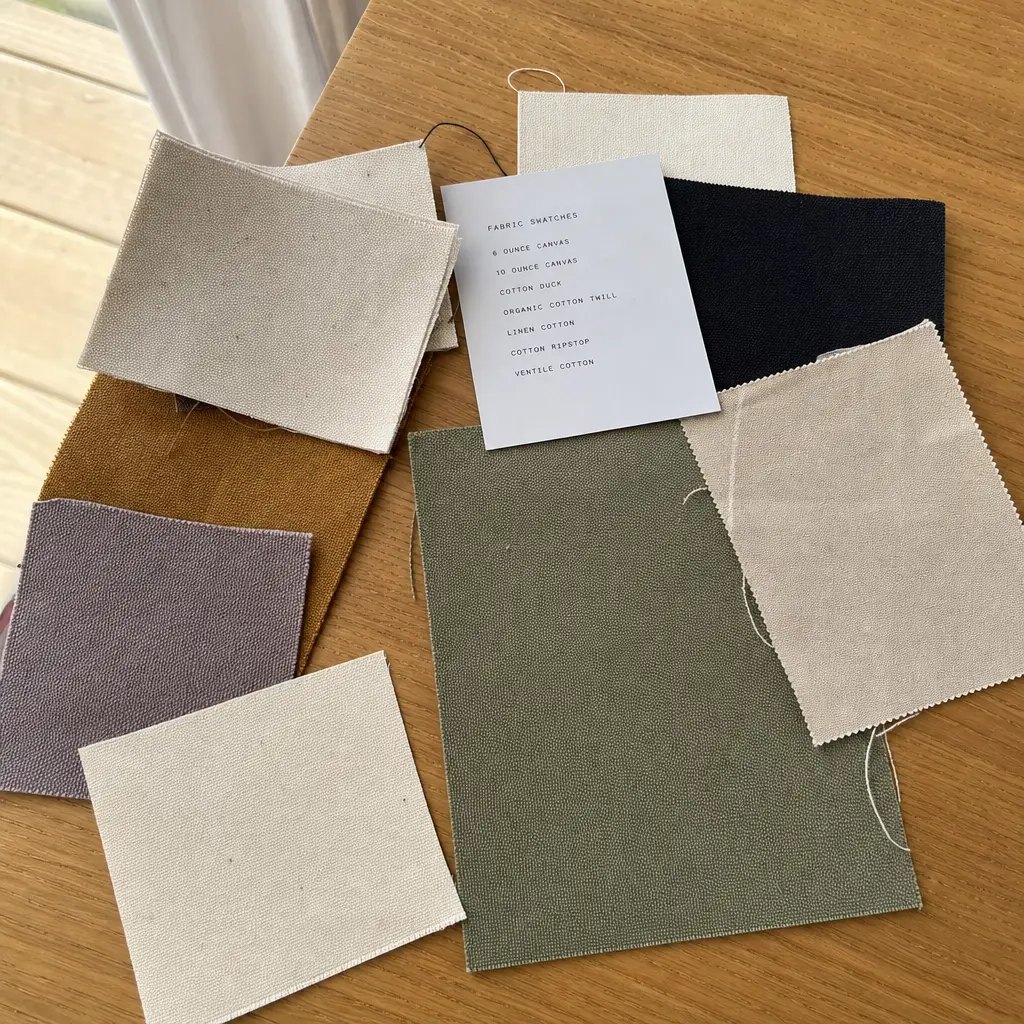
Natural unbleached cotton often fits artisan bakery branding because it looks warm and less synthetic than bright white promotional fabric. It may also show seed specks, slubs, and shade movement. Approve those features before production. Bleached or dyed cotton gives more control for strict brand colors, but it adds lab dip approval, shade tolerance, possible crocking checks, and more schedule risk.
- 5 oz cotton: best for short campaigns, low-cost handouts, and compact freight planning.
- 6 oz cotton: better hand feel than the cheapest event bag while staying budget-oriented.
- 8 oz canvas: balanced for loyalty programs, reusable customer bags, and bakery merchandise.
- 10 oz canvas: premium feel with higher material cost, freight weight, and stress on seams.
- Natural cotton: approve specks, slubs, shade range, odor, and surface cleanliness.
- Dyed cotton: approve lab dips, cord match, shade tolerance, and colorfastness expectations.
Build the Bulk Pricing Plan
A real bulk pricing plan is more than asking for a lower unit price at higher quantity. It should show how the same bag behaves at several order volumes and which cost lines change. Ask for 500, 1000, 3000, and 5000 pieces on one identical specification. Then ask suppliers to separate optional upgrades, setup charges, sampling, packing, and freight inputs. This gives the buyer a clean view of launch cost, reorder cost, and landed-cost exposure.
At 500 pieces, setup and approval work can carry a large share of the unit economics. Artwork review, screen setup, small-batch cutting, packing setup, and sample handling have fewer bags to absorb them. At 3000 or 5000 pieces, those costs dilute, and material purchasing may become more efficient. Still, the cheapest total quantity is not always the best decision. Seasonal bakery artwork, limited storage, uncertain sell-through, or store-level allocation can make a smaller order financially safer.
Keep the ladder clean. Do not compare 500 pieces with individual packing against 3000 pieces bulk packed. Do not let one supplier quote 6 oz cotton and another quote 8 oz canvas. Do not bury screens, labels, or testing inside one supplier’s unit price while another lists them separately. A quote comparison is useful only when every major cost driver is visible.
- Price ladder: request 500 / 1000 / 3000 / 5000 pcs on the same bag specification.
- Unit price: include fabric, cutting, sewing, cord, standard print, standard packing, and normal cartons.
- Setup lines: list screens, films, transfer setup, artwork adjustment, lab dips, labels, and barcode setup separately.
- Sample lines: list stock sample, custom sample, logo strike-off, pre-production sample, and sample freight.
- Repeat view: ask which first-order charges disappear or reduce on the next order.
- Decision view: compare ex-factory cost, estimated landed cost, storage capacity, and expected sell-through.
Use a Quote Comparison Template
A bakery buyer does not need a complicated spreadsheet, but each quote should land in the same structure. The goal is to identify why Supplier A is cheaper or more expensive before a purchase order is issued. A low unit price may be legitimate if the supplier has stock fabric and efficient printing. It may also hide thinner fabric, fewer stitches, smaller print coverage, weak cords, bulk-only packing, or missing setup costs.
For each supplier, capture the price ladder, fixed charges, packing costs, and landed-cost inputs. Then normalize the comparison. If one supplier includes paper belly bands and another quotes bulk packing, move belly bands into an optional add-on line. If one supplier quotes FOB and another quotes EXW, adjust the comparison or request the same Incoterm. If carton data is missing, the landed-cost view is incomplete.
This template also helps internal stakeholders. Marketing can see what a larger logo or seasonal artwork split costs. Operations can see carton counts and storage impact. Finance can separate first-order launch cost from repeat margin. Procurement can decide whether the best value is the lowest unit price, the most reliable specification, or the supplier with the clearest production controls.
- Supplier and terms: factory name, Incoterm, payment terms, production lead time, quote validity.
- Specification: finished size, fabric weight, cotton type, cord, construction, print method, print size, and packing.
- Quantity ladder: unit price at 500, 1000, 3000, and 5000 pieces on identical specs.
- Separate charges: sample, setup, lab dip, label, barcode, testing, special packing, carton marks, and inspection.
- Landed inputs: pieces per carton, carton dimensions, net weight, gross weight, freight mode, duty/tax assumptions.
- Commercial note: first-order total, repeat-order estimate, MOQ constraints, and supplier exclusions.
Control MOQ and SKU Splits
MOQ is shaped by more than the finished bag quantity. Fabric availability, dyeing, printing setup, cutting efficiency, sewing line planning, label ordering, packing labor, and inspection separation all matter. A natural 8 oz cotton backpack with a stock cord and one-color print may support a lower MOQ than a dyed bag with matching cords, woven labels, paper bands, barcodes, and store-specific cartons.
The biggest hidden cost is SKU splitting. A 3000-piece order in one body color with one logo is not the same as 3000 pieces split across six bakery brands, three fabric colors, and four packing styles. Each logo needs artwork review, print setup, approval, drying space, sorting, and inspection. Each body color adds shade control and material separation. Each packing format adds labor and carton risk.
For bakery groups, distributors, or franchise programs, show the quantity per artwork, per body color, per packing method, and per destination. If the same blank bag can serve several locations and only the print changes, the supplier can plan more efficiently. If each location needs different cords, labels, belly bands, or carton marks, those differences should be priced openly rather than hidden in a blended unit price.
- Lower MOQ is easier with stock natural cotton, common cords, standard ink, and bulk packing.
- Custom dyeing usually raises MOQ because lab dips and dye lots need efficient volume.
- Multiple logos reduce print efficiency even when the blank bag body stays the same.
- Quantity per artwork matters more than total order quantity for print setup cost.
- Store-specific cartons add sorting, labeling, inspection, and warehouse handling.
- Repeat MOQ improves only when fabric, cord, artwork, labels, and packing remain stable.
Specify Construction for Real Carry Loads
Drawstring backpacks look simple, so construction is often under-specified. The stress points are predictable: side seams, bottom corners, drawcord channel, cord exits, knots, fabric tabs, eyelets, and grommets. If a buyer upgrades from 6 oz cotton to 8 oz or 10 oz canvas but keeps weak corner anchoring and narrow cords, the bag can still fail under normal use. Treat the bag as a system, not a fabric panel with strings.
Dimensions should be written as finished measurements after sewing. Around 35 x 45 cm is common for promotional drawstring backpacks, but bakery contents vary. Flat recipe cards, wrapped bread, coffee packs, jam jars, and pastry boxes behave differently inside the bag. If capacity matters, a bottom gusset may solve more than simply increasing the width. If shoulder comfort matters, cord width and routing matter as much as fabric weight.
Seam language should be clear enough for production and inspection. The RFQ can state seam allowance target, stitch density, overlock or binding method, channel depth, and reinforcement points. For reusable bakery bags, many buyers request reinforced lower corners and stronger side seams. If the factory suggests an alternate construction, approve it through a physical sample, not only a drawing.
- Measurements: define finished width, height, gusset depth, channel depth, cord length, and cord width.
- Flat body: economical, compact to fold, and efficient for simple campaigns.
- Gusseted body: better for bread bundles, coffee packs, jars, or retail kits.
- Flat cotton cord: natural feel and comfortable shoulder carry when matched to bag weight.
- Braided rope: stronger visual character but may increase folded thickness and channel friction.
- Reinforcement: check lower corners, tabs, eyelets, grommets, knots, and bar tacks under pull.
Match Artwork to the Fabric
Bakery logos often include typography, wheat marks, seals, hand-drawn lines, bread illustrations, or small location text. For one to three solid colors, screen printing is usually the most efficient bulk method. It works well on cotton when the artwork is prepared for the fabric. Buyers should control print area, ink color, opacity, curing, placement, and minimum line detail before screens are made.
Cotton canvas has texture. Natural cotton may have slubs and seed specks under the ink. Fine type can close up, delicate lines can break, and large solid areas can expose curing or hand-feel issues. Ask the supplier to confirm minimum printable line thickness and smallest readable text size on the selected fabric. Some bakery logos need a simplified production version for bag printing, especially if the original artwork was designed for menus or signage.
DTF and heat transfer are useful for full-color artwork, gradients, short seasonal runs, or multiple small artwork SKUs. They reduce some setup friction but add different risks. Approve transfers on the actual bulk cotton, not on a smooth substitute. Check hand feel, edge lift, shine, heat press marks, flex cracking, and damage after folding. A woven side label can also create a premium detail without loading the front panel with a large print.
- Screen print: best for repeat orders, solid colors, bakery badges, typography, and line art.
- DTF or transfer: useful for short runs, full color, gradients, and seasonal pastry campaigns.
- Woven label: good for subtle side-seam branding or premium merchandise detail.
- Embroidery: use cautiously because large embroidery can distort lighter cotton panels.
- Pantone control: approve color on the final fabric, not only on a digital mockup.
- Placement control: define print size and distance from top and side edges in writing.
Approve Samples in the Right Order
Samples should become production standards, not sales props. A stock sample can show general size, fabric feel, and construction style, but it should not approve bulk production if the final fabric, cord, print method, or sewing construction will change. The pre-production sample should combine the final fabric, final cord, final stitching, final logo process, final labels, and intended folding or packing.
Sampling is easier when split into steps. A reference sample confirms shape and construction. A fabric swatch or lab dip confirms color and surface. A logo strike-off confirms ink color, line detail, opacity, curing, and artwork behavior on the chosen fabric. A packed pre-production sample confirms the whole product. That final sample should be measured, photographed, approved, and retained by both buyer and factory.
For artisan bakery branding, the print-and-fabric relationship deserves attention. Seed specks may show through pale ink. Slubs can interrupt fine line art. Large solid print areas may feel heavy or crack if curing is poor. These issues are manageable, but they should be solved before bulk printing, not during final inspection.
- Stock sample: use for early size, shape, and construction discussion only.
- Swatch or lab dip: approve fabric color, surface, specks, slubs, and shade range.
- Logo strike-off: approve print color, opacity, line detail, placement, and curing.
- Pre-production sample: approve the final product before bulk cutting or printing.
- Packed sample: check folding, creasing, scuffing, transfer damage, and carton fit.
- Retained sample: keep one approved sample with the buyer and one with the factory.
Set QC Criteria Before the PO
Quality control should be written before production starts. If acceptance standards are decided at final inspection, the process becomes subjective and expensive. Cotton drawstring backpacks should be checked for fabric weight, finished size, shade, print color, print position, curing, seam quality, cord function, fabric cleanliness, odor, packing accuracy, and carton condition.
Use finished measurements, not cutting dimensions. For many standard drawstring backpacks, a width and height tolerance around +/-1 cm is a practical benchmark. Print placement may use a benchmark such as +/-5 mm from the approved position for simple screen prints, depending on artwork and construction. If the logo sits close to a seam, channel, or top fold, tighter placement control or a revised layout may be needed.
Sewing inspection should focus on function. Loose threads that can be trimmed are different from skipped stitches at lower corners, weak seam allowance, poor bar tacks, or uneven channel stitching. Print inspection should include both appearance and performance. Screen prints should pass dry rub and reasonable hand scratch checks before packing. Transfers should be flexed and checked for edge lift, cracking, heat marks, shine, and adhesion on cotton texture.
- Major defects: wrong fabric, wrong logo, severe stains, mildew odor, failed cord pull, curing failure, or wrong carton marks.
- Minor defects: trim-able loose threads or small natural-cotton irregularities inside the approved range.
- Fabric checks: GSM range, shade, specks, slubs, stains, odor, and contamination.
- Measurement checks: finished width, height, gusset, channel depth, cord length, and print size.
- Stress checks: side seams, bottom corners, cord exits, knots, tabs, eyelets, and draw action.
- Packing checks: folded size, inner packing, barcode placement, carton count, carton marks, and moisture condition.
Plan Packing, Cartons, and Landed Cost
Packing affects unit cost, freight, warehouse receiving, inspection, and shelf presentation. A cotton drawstring backpack can be bulk packed, individually polybagged, wrapped with a paper belly band, fitted with a hangtag, barcoded, or sorted into store-specific cartons. Each option changes labor, material use, carton volume, gross weight, and lead time. Specify packing before comparing supplier quotes.
Bulk packing is usually the most economical and can reduce packaging material. It suits internal programs, central bakery warehouse distribution, and local repacking. Individual polybags improve cleanliness and receiving control, which may matter for retail or distributor programs, but they add plastic, labor, and carton volume. Paper belly bands can look more aligned with an artisan bakery brand, but they should be tested for scuffing, closure strength, compression, and barcode readability.
Landed cost can change the best quantity decision. A 10 oz canvas backpack with individual packing may look acceptable ex-factory and less attractive once carton volume and shipping weight are included. Ask for pieces per carton, carton dimensions, net weight, gross weight, carton marks, and destination sorting. Compare quotes on the same shipping terms and use actual carton data before booking freight.
- Bulk pack: lowest-cost route for repacking, internal distribution, or central warehouse handling.
- Individual polybag: cleaner receiving and retail control with higher material use and carton volume.
- Paper belly band: strong bakery presentation but requires scuff, compression, and barcode checks.
- Store sorting: useful for multi-location rollout but adds labor and carton-control requirements.
- Moisture control: use clean dry cartons and discuss liners or desiccants for humid routes.
- Landed-cost review: compare ex-factory price, packing volume, freight weight, duties, taxes, and local delivery.
Specification comparison for buyers
| Cost or spec line | Quote comparison format | What changes the price | Buyer control point |
|---|---|---|---|
| Base bag body | Price each at 500 / 1000 / 3000 / 5000 pcs on identical finished size | Fabric weight, cotton type, cutting efficiency, seam construction, gussets, reinforcement | Do not compare 6 oz flat bags against 8 oz reinforced canvas bags |
| Fabric weight | List oz and target GSM range, supplier-dependent tolerance noted | 5-6 oz lowers cost; 8 oz improves retail feel; 10 oz raises material and freight weight | Approve physical fabric swatch and record accepted shade, slubs, and specks |
| Logo method | Separate screen print, DTF/transfer, woven label, or mixed branding | Number of colors, print area, setup, curing, artwork detail, transfer film, label MOQ | Ask for setup charges and repeat-order charges as separate lines |
| Packing option | Quote bulk pack, individual polybag, paper belly band, and store-sorted cartons separately | Labor, packaging material, carton volume, barcode work, SKU separation | Keep the main price ladder on one packing method, then price upgrades as add-ons |
| MOQ and SKU split | Show total quantity plus quantity per logo, body color, packing style, and destination | Multiple artworks, dyed fabric, labels, barcodes, carton marks, and sorting reduce efficiency | Ask suppliers where MOQ applies: fabric, dye lot, print setup, label, or finished bag |
| Sampling and approval | List stock sample, swatch/lab dip, logo strike-off, pre-production sample, sample freight | Custom fabric, dyed cord, detailed artwork, special labels, repeated revisions | Require the pre-production sample to match bulk fabric, cord, print, stitching, and packing |
| Landed-cost inputs | Add carton dimensions, pcs/carton, gross weight, freight mode, duty/tax assumptions, local delivery | Heavier canvas, individual packing, low carton utilization, split shipments | Compare ex-factory price and estimated landed cost before choosing quantity |
| Inspection cost and standard | State whether factory internal QC, buyer QC, or third-party inspection is included | AQL level, sample size, reinspection, testing, defect rework, photo reporting | Define major defects before the PO: wrong logo, weak cords, stains, curing failure, wrong carton marks |
| Reorder economics | Separate first-order setup from repeat-order unit cost | Screens, labels, lab dips, retained samples, artwork files, stock components | Confirm which tools or approvals can be reused and when they expire |
Buyer checklist before sampling
- Define the bakery program first: giveaway, loyalty reward, bread club welcome gift, paid merchandise, retail bundle packaging, staff item, distributor resale, or multi-store launch.
- Choose one target specification for the first price ladder, including finished size, fabric weight, cotton route, cord type, construction, artwork size, print method, packing, and carton quantity.
- Request price breaks at 500, 1000, 3000, and 5000 pieces using identical specifications, then ask suppliers to price optional upgrades separately.
- Separate unit price from first-order costs such as sample charges, screen setup, artwork adjustment, lab dips, label development, barcode work, testing, carton marks, and sample freight.
- Ask for landed-cost inputs with every quote: pieces per carton, carton dimensions, net weight, gross weight, estimated carton count, HS code guidance if available, and shipping terms.
- Specify finished measurements after sewing, such as 35 x 45 cm, and include supplier-confirmed tolerance for width, height, gusset, channel depth, print placement, and cord length.
- State fabric in ounce weight and target GSM range, while treating conversions as supplier-dependent benchmarks rather than universal guarantees.
- Approve natural cotton character before production, including shade range, seed specks, slubs, odor standard, and unacceptable stains or contamination.
- Send vector artwork with Pantone references, final print size, placement from top and side edges, minimum line-detail concerns, and any simplified production version of the logo.
- Require a pre-production sample that matches bulk fabric, cord, print process, stitching, labels, folding, and packing before approving bulk production when the order value or brand risk is meaningful.
Factory quote questions to send
- Can you quote 500, 1000, 3000, and 5000 pieces using the same finished size, fabric, cord, construction, logo size, print method, packing, carton quantity, and inspection standard?
- What is the unit price at each quantity, and what one-time or semi-fixed charges are separate from the unit price?
- Which costs repeat on reorder, and which costs can be reused if the artwork, fabric, cord, and packing remain unchanged?
- What fabric weight in oz and target GSM range are included, and what practical GSM tolerance can your mill and factory control?
- Is the cotton natural, bleached, dyed, recycled blend, organic, or certified material, and what documents can support any commercial claim?
- What are the finished dimensions after sewing, and does the quoted construction include a flat body, gusset, reinforced lower corners, tabs, eyelets, or grommets?
- What cord material, width or diameter, color, length, end finish, and anchoring method are included in the price?
- Which logo method is quoted, how many colors are included, what maximum print area is priced, and what is the setup cost for screens, films, transfers, labels, or color matching?
- Does the sample use the same fabric roll quality, cord, stitch construction, print process, curing method, labels, fold, and packing as bulk production?
- What are the carton dimensions, pieces per carton, estimated gross weight, carton marks, packing format, and lead time after all approvals are complete?
Quality-control points to confirm
- Fabric weight should be checked against the approved sample and purchase specification; agree on a supplier-specific GSM tolerance before production rather than debating it at final inspection.
- Finished width and height should be measured after sewing; for standard promotional drawstring backpacks, about +/-1 cm is a practical benchmark unless the PO states a tighter tolerance.
- Gusset depth, channel depth, cord length, and print size should be measured separately because the bag can pass width and height while failing capacity or usability requirements.
- Logo placement should be measured from the top edge and side seams; around +/-5 mm is a common benchmark for simple screen prints, but artwork near seams may need tighter control.
- Print color should be compared with the approved physical sample or Pantone target under consistent lighting, not judged only from supplier phone photos.
- Screen prints should pass dry rub and reasonable hand scratch checks before packing; add wet rub or wash checks for paid merchandise or long-use retail programs.
- Transfer prints should be checked for edge lifting, heat marks, surface shine, cracking after flexing, adhesion on cotton texture, and damage after folding.
- Side seams, bottom corners, drawcord channels, cord exits, knots, tabs, and eyelets should be inspected as functional stress areas, not only cosmetic sewing details.
- Cord pull should be tested with steady force on both shoulder cords to check popped stitches, fabric tearing, slipped knots, distorted eyelets, or channel failure.
- Natural cotton should be inspected for mildew odor, oil marks, large dark contamination, excessive panel shade difference, and dirt from cutting or sewing tables.