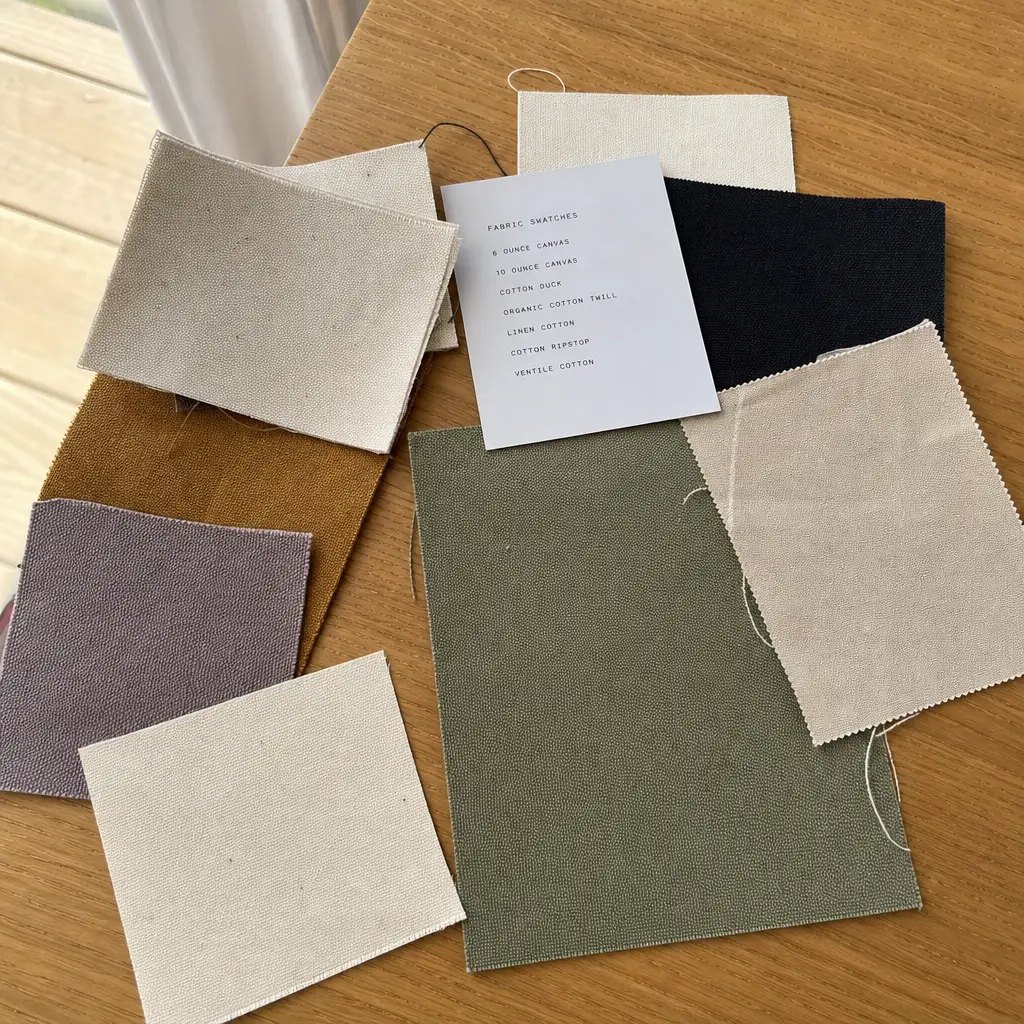
Define the Bakery Use Before Quoting
Cotton drawstring backpacks are often treated as a simple promotional item, but bakery programs use them in different ways. A bag handed out with a loyalty card has a different risk profile from a paid merchandise item, a baking class kit, or a franchise opening pack. The first sourcing decision is not the color or print method. It is the job the bag must do, how long the customer is expected to keep it, and what the bag will carry.
For artisan bakeries, the visible failures are usually brand-related: fuzzy script, weak brown ink, a logo printed too close to the cord channel, or natural cotton that looks dirty rather than warm and rustic. The functional failures are just as important: thin cord cutting into shoulders, bottom tabs pulling out, jars or flour mix packets stressing seams, or cartons arriving with dust marks across light fabric. A useful RFQ links these risks to measurable requirements.
Avoid repeating a generic requirement such as premium cotton backpack. Instead, state whether the bag is a low-cost market giveaway, a mid-range reusable customer gift, or a retail item with a price tag. That choice affects GSM, reinforcement, print tolerance, packing, and inspection level. It also helps suppliers avoid overengineering a giveaway or underbuilding merchandise.
- Buying brief: product use, target market, expected contents, retail or giveaway status, and delivery date.
- Common bakery contents: folded apron, recipe card, loyalty insert, boxed pastry voucher, small jam jar, flour mix, or class workbook.
- Primary approval risk: digital artwork accepted before print behavior is tested on the actual cotton.
- Quote control: compare suppliers using the same fabric, size, cord, print, packing, and inspection assumptions.
Choose Fabric by Market and Tolerance
Fabric recommendations should be treated as ranges, not universal rules. A 140-180 GSM cotton bag may be acceptable for a one-day farmer market giveaway where cost is the main driver. For a reusable bakery backpack, many buyers move toward 220-260 GSM cotton twill or roughly 8 oz canvas because the bag hangs better, feels more substantial, and provides a more stable print surface. Heavy 10 oz options can feel premium, but they raise material cost, carton weight, sewing bulk, and sometimes lead time.
The right weight also depends on the sales market and factory capability. Some factories sew thin cotton bags efficiently but struggle with heavy seams at the cord channel. Others handle heavier canvas well but have higher MOQs or limited stock shades. Ask the supplier what weight range they produce regularly and request a swatch from the same material source planned for bulk. A quoted specification is only useful if the factory can hold it consistently.
Natural cotton brings bakery-friendly warmth, but it is not a blank white sheet. Seed specks, slubs, and shade variation can support an artisan look in one market and trigger rejection in another. If the bakery brand uses clean white interiors, minimalist retail displays, or high-contrast photography, bleached or dyed cotton may be worth the extra cost. The purchase order should say what level of natural character is acceptable instead of leaving inspectors to guess.
- Light use: 140-180 GSM for short-term promotional giveaways with low load expectations.
- Merchandise use: 220-260 GSM or about 8 oz for reusable customer gifts, bakery class kits, and retail programs.
- Heavy use: 10 oz or higher only after checking sewing capability, cord comfort, carton weight, and unit economics.
- RFQ detail: fabric weight, weave, shade, shrinkage expectation, approved swatch, and acceptable natural cotton variation.
Match Printing to Bakery Artwork
Bakery artwork often includes small features that are harder to print on cotton than on paper: serif type, hand-drawn wheat, bread scoring marks, address lines, ingredient icons, or low-contrast cream and brown palettes. Water-based screen printing is a practical starting point for one to three spot colors because it can give a softer hand feel and a natural appearance on cotton. It is also easier to control in repeat production than complex full-color methods when the artwork is simple.
Screen printing is not automatically the best choice for every file. Digital print may be useful for short runs, gradients, or artwork with many colors. Heat transfer can reproduce detail but may add a film feel that conflicts with an artisan textile look. Dyed fabric may require an underbase to keep pale ink visible. Large solid ink areas may stiffen the bag face, while fine reversed text can fill in during bulk printing.
The factory should review the artwork before quoting final production, not after the order is placed. Ask them to mark risky elements: line thickness, minimum text height, large solids, halftones, underbase needs, ink coverage, and color-matching limits on the chosen fabric. A supplier that flags issues early is often safer than one that approves every file without comment.
- Best screen-print fit: bold logos, simple icons, limited spot colors, and repeatable bulk quantities.
- High-risk artwork: small address text, cream ink on natural cotton, thin wheat lines, distressed effects, and reversed lettering.
- Approval item: minimum printable line width and text height confirmed before strike-off.
- Buyer decision: prioritize natural hand feel, color accuracy, fine detail, or lowest unit cost; one method rarely optimizes all four.
Use a Real Print Proofing Workflow
A print proofing checklist should go beyond a PDF mockup. The PDF confirms layout intent, but it does not show ink absorption, cotton texture, actual color contrast, print hand feel, or how the design sits after sewing and folding. For bakery merchandise, a small mistake can be highly visible because the logo is often the main value of the product. A brown logo that turns gray or a cream mark that disappears on natural cotton changes the whole presentation.
Start with vector artwork at actual print size. Include Pantone references where relevant, the intended print width and height, and placement measured from the top seam, side seams, or cord channel. Avoid vague instructions such as centered on front. Drawstring backpacks change shape when the top closes, so the optical center may not match the flat pattern center. Placement should be checked on a sewn sample, not only on a panel.
A physical strike-off on the selected fabric is the most useful proofing control when brand appearance matters. It should be signed and kept as the reference for bulk inspection. If the factory uses a substitute fabric for the strike-off, the buyer should treat it as a color direction only, not a production approval. The complete pre-production sample then confirms how print, sewing, cord, label, and folding work together.
- Step 1: approve vector file, Pantone references, print size, and placement references.
- Step 2: approve fabric swatch before judging ink color.
- Step 3: approve strike-off on selected fabric for color, line sharpness, coverage, and hand feel.
- Step 4: approve complete pre-production sample before bulk cutting or bulk printing.
- Step 5: keep signed samples at factory and buyer side for inspection and dispute control.
Engineer the Bag, Not Just the Logo
The construction of a cotton drawstring backpack determines whether it performs as a reusable bag or only as a soft pouch. For bakery buyers, the stress points are predictable: side seams when the bag is filled, bottom corners when cords act as shoulder straps, and the cord channel when the top is pulled closed repeatedly. If a bag will carry baking class materials, jars, or retail mixes, corner reinforcement is not optional buyer detail; it is part of the product specification.
Cord material also changes the user experience. Cotton cord supports a natural brand story, but dyed cotton cord may need colorfastness attention if it is dark or used in wet conditions. Recycled polyester cord can improve abrasion resistance and color consistency but may feel less aligned with some bakery sustainability briefs. Thin cord may reduce cost but can feel uncomfortable on shoulders, especially when the bag carries more than paper inserts.
Specify the bottom-corner method: stitched tabs, fabric loops, eyelets, or reinforced holes. Metal eyelets can look clean but should be checked for sharp edges, rust risk, and secure setting. Fabric tabs are softer and often more natural-looking, but they depend on stitch quality. Ask the factory how they test the tab and cord assembly. A visual check alone will not catch weak reinforcement.
- Construction controls: side seam type, cord channel width, bottom reinforcement, stitch density, thread color, and seam allowance.
- Cord controls: material, diameter, length, knot method, colorfastness risk, and shoulder comfort.
- Load controls: target contents, expected carry weight, hang test duration, and pull test method agreed before production.
- Bakery failure scenario: a class kit with a jar and workbook can expose weak tabs that would survive a flat flyer giveaway.
Plan MOQ, Versions, and Quote Lines
MOQ problems usually come from unclear version planning. A factory may quote one base bag, one fabric color, one print design, one print color count, and one packing method. The buyer may later add branch names, seasonal art, franchise logos, or separate carton marks. Those changes can create new screens, strike-offs, packing labels, and production records. The unit price may change even when the bag shape does not.
For distributors and bakery groups, the best approach is to standardize the base specification and control variations in a matrix. One natural cotton backpack can serve several bakery accounts if the size, fabric, cord, label location, and packing method remain fixed. Each artwork version should still have its own file code, print colors, quantity, strike-off status, carton mark, and approval date. This reduces confusion when production, inspection, and warehouse receiving handle multiple logos.
Ask suppliers to separate the base bag cost from version-dependent costs. Screen charges, Pantone matching, sample courier fees, woven label setup, hangtag printing, and special packing should not be buried inside an unexplained unit price. This makes it easier to decide whether five small versions are commercially sensible or whether one shared campaign graphic is better.
- Version matrix fields: bakery name, artwork code, Pantone colors, quantity, label version, packing method, carton mark, and ship-to location.
- Cost lines: unit price, screen charge, strike-off fee, sample fee, label setup, hangtag, packing labor, carton upgrade, and inland transport.
- MOQ check: ask whether quantities can combine across artwork versions or only across identical bags.
- Procurement rule: freeze versions before bulk production or require written re-quote for cost and lead time.
Compare Supplier Quotes Fairly
Two quotes for cotton drawstring backpacks can appear similar while covering very different products. One supplier may include 220 GSM twill, water-based screen print, reinforced tabs, carton liner, and pre-production sample. Another may quote thinner sheeting, loose packing, no strike-off, and separate screen charges. The lower price is not meaningful until the assumptions are normalized.
Build a quote grid before negotiating. Include fabric weight and construction, finished size, cord specification, reinforcement, print method, number of colors, artwork versions, label, packing, carton count, sample policy, inspection support, and lead time. For landed cost, add carton dimensions, gross weight, units per carton, and whether cartons are export grade. Cotton bags are soft, but packing density can still change freight cost significantly.
A useful quote also states what is excluded. Pantone matching, courier charges, inspection rework, hangtags, recycled polybags, paper bands, and branded carton marks often sit outside the headline unit price. If the supplier cannot provide carton data until after production, use caution. Packing may become the hidden reason one offer is more expensive after freight.
- Request tiers only for realistic volumes, such as 500, 1,000, 3,000, and 5,000 units if those are plausible.
- Compare one common specification before asking for value engineering.
- Separate setup charges from unit price so version cost stays visible.
- Require carton dimensions, gross weight, and units per carton before final supplier selection.
Set an Inspection Framework Before Production
QC is stronger when defect rules are written before fabric is cut. For import or distributor orders, buyers often use final random inspection based on ANSI/ASQ Z1.4 or ISO 2859-1 sampling logic, commonly general inspection level II for normal appearance and workmanship. The exact AQL values depend on the buyer's risk tolerance, product value, and market requirements, but a typical consumer soft-goods framework separates critical, major, and minor defects with different acceptance limits.
The factory and inspector should know which issues make a bag unsafe, unusable, or commercially unacceptable. Critical defects may include mold odor, severe contamination, sharp metal from eyelets, wrong customer logo, or prohibited material. Major defects may include open seams, failed cord tabs, print color outside the approved strike-off, print position beyond tolerance, wrong size, or incorrect packing. Minor defects may include small thread tails, slight slub variation within the approved natural cotton range, or mild creasing that can be pressed out.
Sample size should follow the agreed inspection standard and lot size rather than a random handful chosen by the factory. If multiple artwork versions are packed in one shipment, the inspector should sample across versions, cartons, and production dates. Functional checks, such as load and cord pull tests, may need a separate special inspection level or defined sample quantity because they can stress or damage tested units. The key is to document the logic before shipment pressure begins.
- Inspection basis: lot size, sampling level, AQL limits, defect classes, and reinspection rule.
- Critical examples: mold odor, severe oil contamination, sharp metal, wrong logo, mixed customer artwork, or wet cartons.
- Major examples: open seam, cord pullout, print off-position, unacceptable color mismatch, wrong size, wrong packing, or missing label.
- Minor examples: trimable thread tails, slight approved slub variation, small fold creases, or minor shade difference within swatch range.
- Functional checks: agreed load test, cord pull test, drawstring operation, seam slippage check, and carton count verification.
Control Packing and Transit Risk
Packing decisions affect cost, presentation, and defect rate. Bulk flat packing in a lined export carton is often enough for wholesale distribution or bakery backroom handling. Retail shelves may need a paper belly band, hangtag, or individual bag. E-commerce handling may justify individual recycled polybags to keep the product clean through multiple touchpoints. Each option changes labor, carton volume, plastic use, and how the printed face looks when opened.
Natural cotton is vulnerable to dirt and moisture. A master carton liner can protect the goods while avoiding individual polybags. Carton strength matters because cotton bags compress and shift. Weak cartons can collapse, transfer dust, or leave deep folds across the print. If the buyer's warehouse uses pallets or conveyor systems, maximum carton weight and carton dimensions should be confirmed before production.
Approve the packing format with the pre-production sample. The approval should show folding direction, logo visibility after folding, quantity per bundle, inner protection, carton count, carton markings, barcode or SKU labels, and gross weight. If bakery versions are mixed, cartons must be marked clearly enough for warehouse teams to receive without opening every box.
- Bulk packing: lowest complexity when bags are unpacked by distributor or bakery staff.
- Paper band: useful for retail presentation and plastic reduction, but adds labor and crease control.
- Individual polybag: useful for e-commerce or high-handling routes, but increases cost, plastic, and carton volume.
- Carton controls: liner, export strength, max gross weight, units per carton, version marks, and moisture protection.
Build a Calendar Around Approvals
Lead time should start after final approvals, not after the first email inquiry. Cotton drawstring backpacks may be fast to sew compared with complex bags, but delays usually come from fabric booking, artwork revision, strike-off rejection, label setup, packing changes, or late buyer feedback. Bakery promotions tied to store openings, holidays, classes, or market events need a reverse calendar with decision deadlines.
A reliable schedule includes artwork review, fabric swatch approval, strike-off production, courier transit, buyer review, pre-production sample, bulk production, inspection, rework buffer, final packing, and shipment handover. If multiple bakery logos are involved, run approvals in parallel where possible and track each version separately. One delayed logo can hold the whole lot if all versions share a shipment or carton plan.
Set a written artwork freeze date. After that date, any change to logo, print color, placement, label, or packing should trigger a review of cost and delivery. Air freight can rescue a late shipment, but textile products can be bulky enough to damage margin. The safer procurement habit is to solve print proofing early, keep a sealed approved sample, and schedule inspection before cartons are sealed for export.
- Calendar start: count production lead time from approved strike-off, approved pre-production sample, deposit, and final packing instruction.
- Schedule risks: dyed fabric, custom cord color, woven label, multiple artwork versions, retail packing, and slow brand approval.
- Cutoff rule: changes after artwork freeze require written cost and timing confirmation.
- Shipment control: inspect when goods are packed or mostly packed, but before final release to forwarder.
Specification comparison for buyers
| Spec decision | Practical option | When it fits | Buyer risk to check |
|---|---|---|---|
| Fabric weight | 140-180 GSM for light giveaways; 220-260 GSM or about 8 oz for stronger bakery merchandise; heavier weights only when tested for cost and sewing bulk | Use lighter cloth for low-cost event handouts and the 220-260 GSM range for reusable retail bags, staff kits, bakery class packs, or gift bundles | A quote that says only cotton may hide thin sheeting, excessive wrinkling, weak opacity, or a bag that feels closer to a pouch than a backpack |
| Fabric shade | Natural, bleached, dyed, or stock color cotton confirmed by swatch | Natural cotton suits warm bakery branding; bleached or dyed cotton helps when brand color control is stricter | Seed specks and shade variation can be acceptable character or a rejection issue depending on market and buyer expectation |
| Finished size | Common adult range around 34 x 42 cm, adjusted to fit the buyer's inserts and target market | Works for folded aprons, recipe cards, A4 flyers, small packaged mixes, or bakery loyalty gifts | Oversizing increases fabric and freight; undersizing creates complaints when retail inserts, aprons, or gift items do not fit |
| Drawcord and corner build | 6-8 mm cord, reinforced bottom corners, stitched tabs, or approved eyelets depending on load and appearance | Useful when bags are carried on shoulders rather than handed out as flat promotional sacks | Thin cord, weak tabs, or untested eyelets can fail during use, especially with jars, mixes, or class materials |
| Print method | Water-based screen print for simple spot-color artwork; digital or transfer only when artwork demands it | Best for bakery logos, wheat icons, line drawings, store opening artwork, and seasonal merchandising | Fine serif text, low-contrast cream ink, large solids, and unapproved underbase choices can fail on cotton even when the PDF looks correct |
| Print placement | Measured from real seams, typically kept clear of cord channel, side seams, and bottom stress areas | Keeps the logo readable when the bag is flat, folded, hanging in store, or worn | Rules such as 7-10 cm clearance are starting points only; final clearance should be confirmed against bag size, print size, and factory sewing tolerance |
| MOQ and versions | One base bag spec with a controlled version matrix for logos, print colors, labels, carton marks, and packing | Fits distributors serving multiple bakery accounts or franchise groups with shared base materials | Each artwork, screen, label, or packing version can create separate setup cost, sample approval, and inspection tracking |
| Pre-production approval | Complete physical sample with final or production-equivalent fabric, cord, print, label, stitching, folding, and carton packing | Needed for retail merchandise, paid bakery kits, store rollouts, and any order with brand-color sensitivity | Digital approval alone does not control ink absorption, print hand feel, seam location, shrinkage, folding marks, or carton presentation |
| Inspection plan | AQL-based final random inspection plus targeted checks for print, seams, cord function, stains, odor, packing, and load performance | Useful for importers, distributors, and brands that need objective pass/fail rules before shipment | Without defect classes and sampling rules, disputes become subjective and the factory may inspect only appearance, not function |
Buyer checklist before sampling
- Define the commercial use first: paid merchandise, loyalty gift, baking class kit, staff pack, farmer market giveaway, or distributor promotion.
- Specify fabric by weight, weave, shade, and acceptable natural cotton character; do not approve a quote that only says cotton.
- Confirm finished size, usable opening, cord length, cord thickness, corner reinforcement, and whether A4 inserts, aprons, or packaged mixes must fit.
- Send vector artwork with Pantone references, actual print dimensions, placement from seams, minimum text height, and rules for fine lines or reversed artwork.
- Request a strike-off on the selected fabric when color, line sharpness, ink feel, or logo readability is commercially important.
- Approve one complete pre-production sample covering fabric, cord, stitching, label, print, folding, inner packing, carton count, and carton marks.
- Set measurable tolerances for finished size, print placement, print color, stitch quality, stains, odor, drawcord function, and load performance.
- Agree the inspection method before production, including AQL level, defect classes, sample size logic, and when rework or reinspection is required.
- Clarify MOQ by fabric color, print color count, artwork version, label version, packing version, and shipment split.
- Request carton dimensions, gross weight, units per carton, carton liner details, and packing layout before final landed-cost comparison.
Factory quote questions to send
- What fabric construction, GSM or ounce weight, shade, and shrinkage expectation are included in the price, and can you provide a bulk-source swatch?
- Is the MOQ based on one fabric color, one size, one artwork, one print color count, one label, and one packing method, or can versions be combined?
- Which print method do you recommend for this artwork on the selected cotton, and what minimum line thickness or text height should be adjusted?
- Are screen charges, Pantone matching, strike-offs, pre-production samples, courier fees, labels, hangtags, and carton markings included or separate?
- What finished-size tolerance and print-position tolerance can your sewing and printing teams realistically hold in bulk production?
- Can you make a complete pre-production sample with final or production-equivalent fabric, cord, print, label, stitching, folding, and packing?
- How are the side seams, bottom corners, and cord channel constructed, and what load or pull test do you apply for backpack use?
- What AQL standard do you accept for final inspection, and how do you classify critical, major, and minor defects for this bag type?
- How many units are packed per carton, what are the carton dimensions and gross weight, and are carton liners, paper bands, or polybags used?
- What is the lead time after each approval step, and which items could extend the schedule: fabric booking, dyeing, print approval, labels, or packing?
Quality-control points to confirm
- Use final random inspection with a stated AQL plan, commonly general inspection level II for appearance and workmanship unless the buyer specifies a different risk level.
- Apply tighter sampling or 100% checks for critical safety or contamination issues, especially sharp metal, mildew odor, severe oil stains, wet cartons, or prohibited materials.
- Classify critical defects as unsafe or unusable issues such as broken eyelets with sharp edges, mold odor, severe contamination, wrong logo, or mixed customer artwork.
- Classify major defects as commercially unacceptable issues such as print color outside approved tolerance, crooked print beyond agreed millimeters, open seams, cord failure, wrong size, or wrong packing.
- Classify minor defects as small issues that do not affect normal use, such as light thread tails, slight shade variation within approved swatch range, or minor slub variation accepted for natural cotton.
- Measure finished size flat after sewing and pressing from agreed reference points, with length and width tolerances stated in the purchase order.
- Verify fabric weight against the approved swatch and agreed tolerance; for natural cotton, also check shade, slubs, seed specks, stains, and odor under consistent conditions.
- Check print color against the signed strike-off under consistent light, not against a monitor image or phone photo.
- Measure print position from fixed seams or cord-channel references, and record acceptable deviation in millimeters for center, top, side, and bottom location.
- Inspect small bakery text, wheat icons, script details, and reversed lines for fill-in, broken strokes, pinholes, uneven ink, and excessive hand feel.