Why Reorder Planning Is Different for Museum Shops
A cotton drawstring backpack sold in a museum shop is not usually a one-time promotional bag. It sits between souvenir, practical visitor bag, school-trip item, and exhibition merchandise. That makes reorder timing more sensitive than a normal giveaway order. If stock arrives after a major exhibition opens, the lost sales cannot be recovered in the same way as an evergreen online SKU.
Reorder planning should start from the shop calendar, not from the factory's MOQ sheet. Museum retail demand often moves around exhibition launches, holiday tourism, school group bookings, membership events, and end-of-season markdowns. A buyer needs enough stock to cover the next selling window while avoiding leftover dated artwork after the exhibition closes.
- Plan separate reorder triggers for evergreen museum logo bags and exhibition-specific designs.
- Treat school holiday and tourist peak weeks as separate demand profiles, not normal average weeks.
- Allow extra approval time if artwork includes licensed images, artist estates, or sponsor logos.
- Do not let the cheapest reorder quantity create dead stock after the exhibition end date.
Build the Reorder Point from Real Lead Time
The reorder point is the stock level that should trigger a new purchase order. For imported cotton drawstring backpacks, it must include more than sewing time. A practical calculation includes sample or strike-off approval, fabric sourcing, cutting, printing, curing, sewing, trimming, packing, export booking, transit, customs, warehouse receiving, and final allocation to shop locations.
For a repeat order with unchanged artwork, some factories can reduce development time, but the buyer should still leave room for fabric lot approval and print color confirmation. Cotton fabric can absorb ink differently between lots, especially natural, unbleached, or dyed cotton. A reorder that skips approval may look close in the carton but different on a retail fixture next to old stock.
- Reorder point equals forecast sales during total replenishment time plus safety stock.
- Use the longest realistic lead time during peak production months, not the fastest lead time ever achieved.
- Add safety stock for best-selling designs that cannot be substituted by other SKUs.
- For exhibition stock, compare replenishment lead time against the remaining selling period before placing a reorder.
Choose Fabric Weight by Retail Use, Not Habit
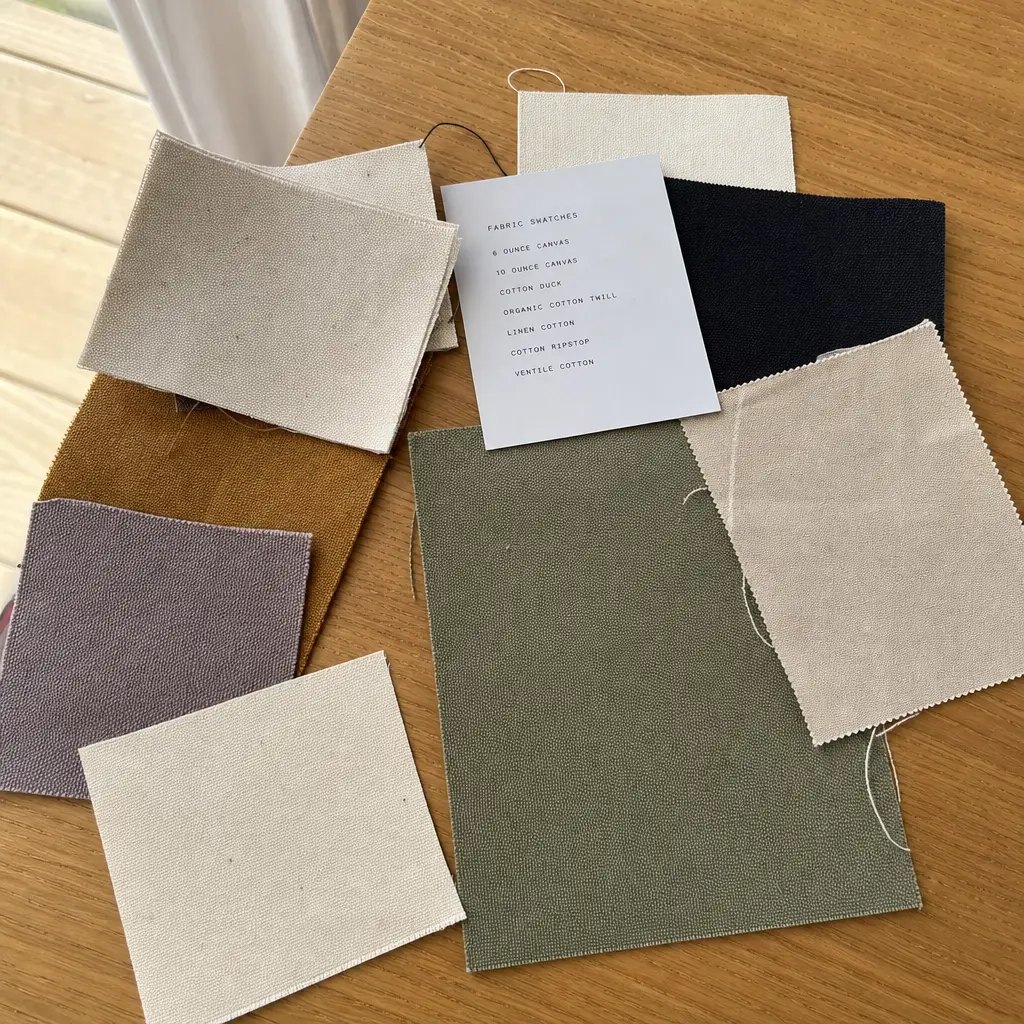
Most museum shop cotton drawstring backpacks work well in the 7 oz to 8 oz range, roughly around 230 to 270 GSM depending on fabric construction. This gives better perceived value than thin promotional cotton while still folding efficiently for packing and backroom storage. For premium heritage shops or higher ticket gift ranges, 10 oz cotton can feel stronger, but it raises unit cost, carton volume, and sometimes shipping cost.
The risk in repeat orders is assuming that the same ounce description means the same material. Two 8 oz cotton fabrics can feel different because yarn count, weave density, finishing, and shrinkage are different. A serious reorder RFQ should reference the approved sample and state an acceptable GSM range. If the supplier changes fabric source, the buyer should receive a production fabric cutting or strike-off before bulk printing.
- Use 5 oz to 6 oz only for budget or event-distribution ranges where low cost matters more than retail durability.
- Use 7 oz to 8 oz for most paid museum shop backpacks and souvenir bags.
- Use 10 oz when the bag is positioned as a premium reusable item and the higher landed cost is acceptable.
- Record fabric color, handfeel, shrinkage, and GSM with the approved sample, not only the supplier's quotation wording.
Keep Artwork Repeatable Across Print Runs
Screen printing remains the practical choice for many cotton drawstring backpack reorders because museum logos, line drawings, and simple exhibition graphics often use one to four solid colors. It gives good cost control once the screen setup is done, but only if the supplier keeps accurate records: Pantone references, ink type, mesh, squeegee angle, curing temperature, and print position.
Digital printing can be useful for small runs with complex artwork, watercolor-style images, or many colors. The tradeoff is color repeatability. Digital output on cotton depends on pre-treatment, fabric absorbency, machine calibration, and finishing. For repeat museum merchandise, a buyer should not approve digital artwork only from a PDF. A physical strike-off on the production fabric is the safer control point.
- For screen print, specify Pantone color, print size, position from top edge, and position from side seam.
- For digital print, approve a fabric strike-off and keep it with the sealed reference sample.
- For dark cotton fabric, confirm whether underbase printing is included in the quote.
- For natural cotton, expect small flecks and fabric texture to show through fine print details.
Use MOQ Logic That Matches Sell-Through
A factory MOQ can come from several places: fabric purchase quantity, dyeing minimum, blank bag sewing efficiency, print setup, or total order value. Museum shop buyers should separate these layers before comparing quotes. A supplier may quote 500 pieces as the bag MOQ but still price a one-color print much better at 1,000 pieces because setup and production changeover are spread across more units.
The best reorder quantity is usually not the lowest MOQ. It is the quantity that keeps the shop in stock through the selling window, fits carton and warehouse constraints, and keeps unit cost within the target margin. For multiple designs, the buyer may need to consolidate fabric and blank bag production, then split printing by design. This can protect cost while keeping design quantities closer to actual demand.
- Ask whether MOQ is per order, per bag color, per fabric weight, per print design, or per label version.
- Group evergreen designs with the same fabric and cord to improve production efficiency.
- Avoid ordering equal quantities of all designs if sales history shows clear winners and slow movers.
- Check whether the supplier can produce blank bags first and print in separate batches only when commercially useful.
Quote Data Needed for a Clean Comparison
A reorder quote should be more than a unit price. Buyers need the data that affects landed cost and operational reliability. For cotton drawstring backpacks, that means fabric specification, finished size, print method, print area, number of colors, label type, packing method, carton size, carton weight, sample policy, tooling or setup charges, production lead time, and payment terms.
When comparing suppliers, keep the specification identical. One quote may look cheaper because it uses 5 oz cotton, thinner cord, no individual packing, smaller print area, or lower carton strength. Another may include barcode stickers, hangtags, and stronger export cartons. Without a structured comparison, procurement may select the lower unit price and then lose the saving through repacking, claims, or missed delivery.
- Request unit price at two or three quantity breaks, such as 500, 1,000, and 2,000 pieces.
- Separate one-time setup charges from repeat unit price so future reorder cost is clear.
- Require carton dimensions and gross weight for freight quoting before purchase order approval.
- Ask whether the quote includes export carton marks, barcode application, hangtag stringing, and inner bundle packing.
Sample Approval Before a Repeat Production Run
For a true repeat order with no change in fabric, color, print, label, or packing, buyers may approve production against the sealed previous sample. But many reorders are not fully identical. The supplier may have changed fabric stock, the buyer may adjust artwork, or the shop may need a new barcode label. Any change that affects appearance, handling, or retail compliance should trigger at least a strike-off or pre-production sample.
A pre-production sample should represent actual materials and actual production method, not a quick sample made from substitute stock. For a museum shop, this matters because the product may be displayed near other branded items. A slight off-white fabric difference, uneven print position, or shorter cord can make the reorder look like a separate product line instead of a continuation of the same SKU.
- Approve fabric swatch when the cotton lot or dye lot changes.
- Approve print strike-off when artwork, ink, fabric color, or print method changes.
- Approve full bag sample when size, seam construction, cord type, label, or packing changes.
- Photograph approved sample details and store them with the PO, artwork file, and packing instruction.
Packing Choices Affect Cost and Shop Labor
Packing is often treated as a back-end detail, but it affects freight cost, warehouse handling, and shop replenishment speed. Individual polybags protect each cotton drawstring backpack and keep barcodes clean, but they add material cost, packing labor, plastic use, and unpacking time. Bulk packing with inner bundles can be better for museum shops that receive stock in a central warehouse and replenish fixtures regularly.
Carton organization must match how the buyer receives and allocates stock. If different prints, sizes, or languages are mixed in one carton, shop staff may spend time sorting and counting. For reorder planning, carton quantity should be stable from order to order so inventory teams can forecast storage space and receiving labor. Carton marks should show SKU, artwork version, quantity, carton number, gross weight, and destination if needed.
- Use bulk packing for lower plastic use and faster backroom replenishment when product protection risk is low.
- Use individual polybags when bags need to stay clean during multi-location distribution or online fulfillment.
- Pack one SKU per carton where possible to reduce receiving errors.
- Define inner bundle quantity, carton count, and carton label format in the purchase order.
QC Thresholds That Prevent Reorder Disputes
Quality control for cotton drawstring backpacks should focus on measurable details. General wording such as good quality or same as sample is not enough when a reorder crosses different production lots. Finished size, fabric weight, print color, print position, cord length, seam strength, label placement, barcode scan rate, and carton count should all have acceptance criteria.
Inspection should happen before the full order is sealed for export. Inline photos can catch obvious issues such as wrong cord color or incorrect print placement, but they do not replace measurement. For larger reorders, a final random inspection using agreed AQL levels can protect both sides. The buyer should make clear which defects are critical, which are major, and which are minor for this product type.
- Set finished size tolerance, commonly around plus or minus 1 cm unless the design requires tighter control.
- Set print position tolerance from fixed bag edges, not by visual centering only.
- Treat wrong artwork, wrong barcode, wrong country label, and severe print stains as critical defects.
- Treat loose seams, broken drawcord channels, heavy color deviation, and unreadable barcodes as major defects.
Landed Cost and Schedule Risk Review
A cotton drawstring backpack reorder can look simple until freight and timing are added. Thicker fabric, individual packing, and lower carton density can increase volume. A small urgent reorder may need air freight, which can erase the margin on a museum shop item. Before approving quantity, compare landed cost per sellable unit under normal sea freight and urgent air freight scenarios.
Schedule risk should be reviewed at the same time as cost. Peak factory months, cotton fabric availability, print approval delays, export booking space, and customs documentation can all affect delivery. Museum buyers should place evergreen reorders early enough to avoid emergency freight and should treat exhibition-specific reorders more cautiously if the remaining selling period is short.
- Calculate unit cost plus setup, sample, packing, inland freight, ocean or air freight, duty, customs fees, and expected defect allowance.
- Use carton dimensions to estimate freight volume before selecting fabric weight and packing method.
- Do not reorder dated exhibition stock if the realistic arrival date leaves too few selling weeks.
- Keep a small buffer of evergreen logo backpacks if they are used as substitutes when exhibition designs sell out.
Specification comparison for buyers
| Spec decision | Recommended option | When it fits | Buyer risk to check |
|---|---|---|---|
| Fabric weight for repeat museum shop orders | 7 oz to 8 oz cotton for standard retail drawstring backpacks; 10 oz only for premium ranges | 7 oz to 8 oz keeps the bag foldable for carton efficiency while feeling stronger than giveaway fabric | Reorders quoted in the same ounce rating may still vary by yarn count and shrinkage; request GSM range and approved handfeel reference |
| Bag size and usable capacity | Approx. 34 x 42 cm for adult visitors; smaller custom size only for children's exhibition ranges | This size holds brochures, light souvenirs, water bottles, and small purchases without looking oversized on a gift shop wall | If the reorder changes size by even 1 to 2 cm, shelf presentation and barcode label placement may no longer match existing stock |
| Drawcord material | Cotton cord for natural-positioned museum shops; polyester cord for lower cost and stronger color consistency | Cotton cord matches heritage, art, and eco gift assortments; polyester works for bright printed youth designs | Cord diameter and friction affect closure feel; thin cords can cut into shoulders and create return complaints |
| Print method for repeat artwork | Screen print for solid logos and exhibition graphics; digital print only for multicolor illustration or small mixed artwork runs | Screen print is easier to control on reorder if Pantone color, mesh, ink type, and print position are recorded | Digital print color can shift between fabric lots; physical strike-off approval is safer than approving from a screen image |
| MOQ planning | Set reorder quantity by SKU velocity, carton multiples, and fabric dye lot instead of only by lowest supplier MOQ | Museum shops with seasonal traffic can split designs but should keep each printed design above the efficient print setup quantity | Very small reorders often carry higher unit cost, extra setup charges, and longer production queues than expected |
| Labeling and barcode control | Use sewn side label plus removable barcode sticker or hangtag depending on shop POS requirements | A sewn CTM/CottonToMaker or buyer label gives continuity; hangtags support exhibition-specific storytelling | Barcode stickers placed on printed panels may damage ink when removed; define label position before production |
| Packing method | Individual polybag only if required by retail handling; otherwise bulk pack with inner bundles and carton labels | Bulk packing reduces plastic and unpacking labor for shops that replenish from backroom stock | Mixed designs in one carton create counting errors; use carton marks by SKU, color, print version, and quantity |
| Reorder approval control | Keep a sealed approved sample, artwork file, color standard, and packing photo as the reorder reference set | This prevents a repeat order from being treated as a new development project by either side | If the first order sample is missing, the reorder may match the supplier's current fabric stock rather than your retail standard |
Buyer checklist before sampling
- List the last order's SKU codes, artwork version, size, fabric weight, cord type, label layout, packing method, carton quantity, and approved sample date.
- Calculate average weekly sell-through by design, then separate normal weeks from exhibition opening weeks, school holiday weeks, and tourist peak periods.
- Set a reorder trigger that includes production lead time, sea or air transit, customs clearance, warehouse receiving, and shop allocation time.
- Keep each printed design above the supplier's practical screen-print setup quantity, not only above the stated bag MOQ.
- Request the fabric GSM range, cotton type, shrinkage tolerance, and whether greige fabric, dyed fabric, or finished bags are stocked before printing.
- Confirm whether repeat orders use the same screen, same Pantone ink recipe, same print position jig, and same curing process.
- Approve a physical pre-production sample or strike-off when changing fabric lot, ink color, cord color, label, or packing.
- Define acceptable size tolerance, print position tolerance, drawcord length tolerance, and carton gross weight range in the purchase order.
- Reserve time for barcode testing, hangtag approval, carton label review, and any museum licensing approval before mass packing.
- Compare quotes using landed cost per sellable unit, including setup charges, sample cost, inland transport, export carton size, and expected defect allowance.
Factory quote questions to send
- What exact cotton fabric weight will you use in GSM and oz, and is it the same construction as our last approved sample?
- Is the quoted MOQ based on blank bag sewing, fabric dyeing, screen-print setup, or total order value?
- Can you hold the previous artwork screen, print jig, Pantone ink formula, and packing specification for this reorder?
- What is the normal lead time for repeat production after deposit and final artwork approval, and what can delay it?
- Will you produce a full bag pre-production sample, a print strike-off on production fabric, or both?
- What are your tolerances for bag size, cord length, print position, print color, and carton quantity?
- How many pieces fit per export carton under our chosen packing method, and what are the carton dimensions and gross weight?
- Can you apply our barcode, hangtag, sewn label, and carton marks exactly as shown in the packing manual?
- What inspection points do you recommend before shipping, and can you provide inline photos before full production is packed?
- If cotton fabric, cord, or ink stock changes from the last order, how will you notify us before production starts?
Quality-control points to confirm
- Fabric weight should be checked against the approved GSM range before cutting, not only judged by handfeel after sewing.
- Finished bag size should be measured flat at top width, bottom width, height, and drawcord channel depth with an agreed tolerance.
- Drawcords should close smoothly, sit evenly on both sides, and withstand repeated opening without seam tearing at the channel.
- Print color should be compared to the approved physical standard under consistent light, with attention to ink coverage on natural cotton texture.
- Print position should be measured from the top edge and side seam, especially for front-centered museum logos or exhibition artwork.
- Seams should be checked for skipped stitches, loose threads, channel strength, and reinforcement at stress points.
- Labels, barcodes, and hangtags should match SKU, artwork version, country-of-origin rule, and POS scanning needs.
- Cartons should be counted by SKU and design, with inner bundle quantities matching the packing list and carton marks.