Why Coffee Roasters Need a Different Checklist
A cotton drawstring backpack for a coffee roaster is not just a promo bag. It often has to work as a retail gift, an event giveaway, a subscription insert, or a reusable carry pack for beans, filters, and small merch. That means the inspection standard should match the actual use case, not a generic tote-bag checklist. If the bag looks fine on a table but twists under load, shows print cracking after folding, or arrives packed in a way that crushes the cord channel, the customer sees a product problem, not a packaging problem.
The biggest sourcing mistake is buying by picture and unit price alone. Coffee buyers usually compare the bag against the roast, packaging, and brand experience, so the bag has to feel deliberate. A natural cotton body can look premium, but only if the GSM, stitching, and decoration are balanced. If the fabric is too light, the bag collapses; if it is too heavy, the bag becomes bulky and expensive to ship. The inspection checklist should therefore start with function, then move to appearance, then to packing and freight.
- Define the real carry load before you talk price.
- Treat the bag as retail packaging if it carries the brand experience.
- Inspect the bag the way your customer will use it, not the way a sample room displays it.
Set the Build Spec Before You Request Quotes
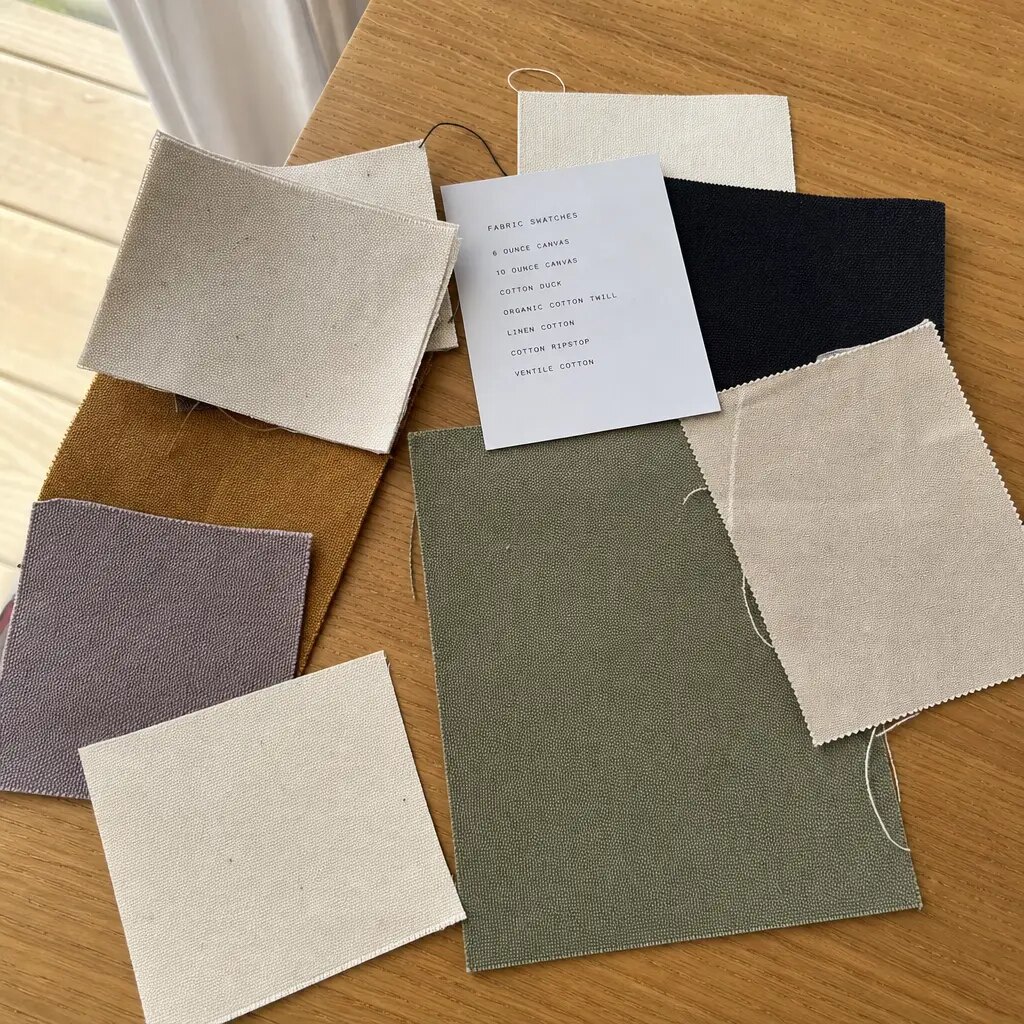
For coffee roaster programs, the most practical default is usually a cotton canvas in the 280 to 320 GSM range. That level gives enough body for daily reuse, supports cleaner screen printing, and handles a woven side label or small front mark without looking flimsy. If the bag is only for lightweight giveaways, 200 to 220 GSM can work, but the buyer should expect more wrinkling, less structure, and a lower perceived value. The right answer depends on what the bag will carry and how long the customer is expected to reuse it.
The spec should also cover cord type, channel construction, and reinforcement. A cotton or cotton-poly drawcord around 4 to 6 mm is common, but the key is not the diameter alone; it is smooth pull, even tension, and durability at the channel exit point. Ask for clean folded channels, secure bar-tacks where the load transfers, and no exposed thread ends. If the bag includes a side seam label or woven logo tab, that detail should be placed so it does not interfere with the cord path or distort the body when the bag is full.
- Use 200 to 220 GSM only when the bag is light duty and price-sensitive.
- Use 280 to 320 GSM for a more durable retail-grade feel.
- Require bar-tacks or equivalent reinforcement at every stress point.
- Confirm cord texture and pull resistance on both sides of the bag.
Choose the Decoration Method for Durability, Not Just Price
For most coffee roaster logos, single-color screen print is still the most dependable option. It holds well on cotton canvas, keeps the surface feel simple, and gives predictable repeatability when the art is not too detailed. If the artwork has several tones, fine type, or gradients, heat transfer or DTF may be cheaper to set up at low volume, but the buyer should test hand feel, edge lift, and wash performance before approving a full run. A sharp-looking transfer that peels after a few folds is a false economy.
If the brand wants a quieter look, a woven label or sewn side tag can carry the identity without turning the bag into a billboard. That works well for premium coffee lines, retail shop merch, and gift-with-purchase programs where the bag needs to feel reusable beyond the first campaign. The approval point here is placement discipline. Confirm the exact distance from top edge and seam, verify that the label does not pucker the fabric, and make sure the factory uses the same label stock and thread color in the pre-production sample as in the bulk order.
- Screen print for simple logos and better durability.
- DTF or transfer only when detail or low volume justifies it.
- Use woven labels when the bag should read as retail product, not promo stock.
- Lock placement with a measured sample, not a verbal agreement.
Compare Sourcing Routes Before You Compare Unit Prices
A quote for the same cotton drawstring backpack can hide very different sourcing routes. A direct factory quote often looks cleaner because the sewing, printing, and packing are controlled in one place. A trading company may quote a similar unit price but build in margin while also adding flexibility for mixed items and lower admin effort on your side. A stock blank plus local decoration can be the fastest route for a launch, but it often comes with the least control over fabric shade, cord quality, and repeatability across reorders. The real comparison is not who is cheapest on paper; it is who can reproduce the same bag next quarter without drift.
For coffee roasters, the best sourcing route depends on how the bag will be used across channels. If it is a short campaign for a new roast, a stock bag with local print may be enough. If it is a retail item that will sit beside your beans in shops, direct factory production with a stable fabric spec and approved label build usually pays back through consistency. Use the table to compare the route, not just the spec. If the supplier cannot explain who cuts the fabric, who prints the logo, and who signs off the final inspection, the quote is not complete.
- Compare the route as well as the bag spec.
- Ask who owns sewing, printing, packing, and final inspection.
- Treat repeatability as part of the price.
Approve Samples in the Same Material and Process You Will Order
A showroom sample is not enough. For a serious purchase, you want a pre-production sample made from the same bulk fabric, cord, and label stock that will go into production. Measure the body, gusset, opening, and strap lengths. Fold it the way your warehouse or retail team will fold it. Then load it with the actual contents you plan to sell or give away, such as a one-pound coffee bag, a brewing kit, or a small bundle of accessories. Many problems only show up when the bag is packed and handled, not when it is empty.
Approval should also include print registration, label alignment, and sewing finish. Ask for one sample with the final art and one with a reference tag for production control if the order is large enough to justify it. If the sample uses a different cotton lot, different cord texture, or a cleaner print process than the bulk order, mark that clearly before approval. Otherwise the factory can technically match the sample while the bulk shipment still disappoints your team.
- Measure the sample in real use, not only flat on a table.
- Use bulk-approved fabric and cord for the final sample whenever possible.
- Keep a signed sample image set with dimensions and placement marks.
- Reject samples that look right but use the wrong material lot.
Use Production QC Thresholds That Catch Real Failures
Bulk inspection should focus on failures that a coffee buyer will actually notice. Start with size, symmetry, and seam quality. A bag that is 1 cm short may not matter for a giveaway, but it matters if the bag must fit a branded box or a specific bundle. Check stitch density, seam lock, and the cord channel at the pull point. Then test the logo under light flexing and rubbing. If the print cracks when the fabric is folded, the decoration process is not durable enough for a bag that will be reused.
Load testing is important because the use case is practical, not decorative. A bag built for promotional inserts should still survive a realistic carrying load without seam opening or cord slippage. For coffee roasters, the useful test is the one that matches the destination: a small retail bundle, a club shipment insert, or a customer gift pack. You do not need lab theater. You need a simple, repeatable acceptance threshold that the factory can understand and that your inspector can apply quickly across cartons.
- Check stitch quality, cord travel, and print durability on the same bag.
- Match the load test to the actual contents of the program.
- Use simple measurable acceptance limits so the factory cannot reinterpret them later.
Packing Details Affect Damage, Returns, and Warehouse Cost
Packing is part of quality, not an afterthought. Cotton bags wrinkle, absorb moisture, and shift shape in transit, so the inner pack and master carton need to be set with the shipping route in mind. For retail-ready packs, a clean fold, one piece per polybag or paper sleeve, and a clear barcode or size sticker can make warehouse handling much easier. For eco-oriented brands, you may want to reduce plastic, but that decision still needs a protective alternative such as tissue wrap, carton liners, or a moisture barrier in the master carton.
If the bags ship by sea, carton strength and moisture control matter more than many buyers expect. Ask the supplier for carton dimensions, gross weight, carton count per pallet, and whether the cartons are single-wall or double-wall. Coffee roasters often overlook how much the bag packaging affects inbound receiving. A well-built backpack can still arrive looking cheap if the carton crushes the cord or the folding method creates a deep crease at the logo panel. Ask the factory to show the fold and pack method in the sample stage, not after shipment.
- Set inner pack count, outer carton count, and carton marking before production starts.
- Use moisture protection suited to the shipping lane.
- Check that the fold method does not mark the front logo panel.
- Confirm barcode and SKU placement if the bags go into retail inventory.
Build the RFQ Around MOQ, Lead Time, and Landed Cost
The quote should make the cost structure visible. Ask for bag price, decoration cost, label cost, packing cost, sample charge, and any setup fee as separate lines. Then compare those numbers at the exact MOQ you plan to buy. A low unit price at 5,000 pieces is useless if the factory cannot support your first 500-piece test run. For coffee roasters, MOQ logic usually tracks customization: stock fabric and one-color print can start lower, while custom colors, custom cords, or specialty labels push the MOQ up quickly.
Lead time should be broken into sample approval, material booking, production, inspection, and export preparation. That matters because the factory may be fast on sewing but slow on finishing, or vice versa. Freight changes the picture again. A bag with a modest factory price can become expensive once you add packaging upgrades, inland trucking, export docs, and airfreight for a missed launch date. Compare the landed cost per sellable unit, not only the ex-factory number. If two quotes differ, it is usually because one of them is missing a real cost item.
- Request pricing at 500, 1,000, and 3,000 pieces if possible.
- Separate setup, packing, and shipping prep from the unit bag cost.
- Compare landed cost, not just factory price.
- Ask how price changes when you change print color, label type, or carton pack.
Common Failure Modes and When to Reject the Lot
Most problems with cotton drawstring backpacks are boring and preventable. The fabric is too light, the logo is off-center, the cord frays at the exit, or the packing creases the front panel. In a coffee roaster program, these are not minor defects because the bag often sits beside premium product. If the bag looks inconsistent, the whole bundle feels less considered. A clean inspection standard should therefore reject more than just broken seams. It should reject any issue that would cause a buyer, retailer, or end customer to question whether the bag was made on purpose or simply assembled cheaply.
Rework can be acceptable when the issue is localized and the factory can correct it without changing the approved spec. Rejection is the better call when the fault is structural, repeated across cartons, or tied to the wrong material lot. If the sample was approved on 320 GSM canvas and the bulk arrives on a visibly lighter cloth, do not treat that as a cosmetic variance. If the print is acceptable but the cure is weak, rework is only valid when the factory can reprocess the whole lot under controlled conditions. Otherwise the order has already moved beyond a simple fix.
- Reject mixed fabric lots that are outside the approved GSM or shade band.
- Reject repeated seam failures or cord-channel defects across cartons.
- Treat weak print cure or wrong label construction as a lot-level issue.
- Use photos and measurement records to support any rework decision.
Specification comparison for buyers
| Spec decision | Recommended option | When it fits | Buyer risk to check |
|---|---|---|---|
| Sourcing route: direct factory with in-house sewing and printing | Best for repeat programs where you want one team to own fabric, stitching, and decoration | Stable reorders, retail lines, and roaster merchandise that may expand into more colors or sizes | Verify the factory actually controls cutting, sewing, and print; otherwise you still inherit subcontractor drift |
| Sourcing route: trading company or sourcing agent | Useful when you need mixed SKUs, language support, or a first order with less internal procurement time | Small teams that want one point of contact for multiple bag types or bundled café merch | Ask who makes the goods, who inspects them, and whether the quoted lead time includes a hidden factory queue |
| Sourcing route: stock blank bag plus local decoration | Lowest friction for fast event drops or test runs | Short campaigns, conference giveaways, and first market tests where speed matters more than exact customization | Blank stock often varies by lot; confirm fabric shade, size, and cord length before you commit to printing |
| Spec route: custom bag with woven side label instead of large front print | Best for premium retail presentation and understated branding | Roasters selling through shops that want the bag to feel more like reusable packaging than advertising | Make sure the label is sewn cleanly and does not distort the seam or rub against the cord channel |
| Fabric weight: 200 to 220 GSM cotton canvas | Light to medium weight with a lower unit cost | Giveaways, sampler packs, and merch that will carry only light contents | Too thin and the bag sags or wrinkles badly; inspect for transparency and seam strain under load |
| Fabric weight: 280 to 320 GSM cotton canvas | Better default for coffee roasters that want retail quality and reusability | Retail packs, subscription gifts, and event bags that may hold beans, cups, and collateral | Higher GSM raises freight and sewing cost; check whether the factory can still keep the cord channel neat |
| Decoration method: single-color screen print | Lowest cost and best durability for simple logos | One- or two-color brand marks on natural cotton at 500 pieces and up | Confirm cure temperature and wash resistance; under-cured print cracks or feels tacky |
| Decoration method: heat transfer or DTF | Good for small runs or detailed artwork | Test launches, multi-color art, or orders that cannot justify a screen setup | Check hand feel and wash life; some transfers look sharp but age badly on textured canvas |
| Branding route: woven label or sewn side tag only | Clean, premium look with minimal surface decoration | Brands that want the bag to read as retail product rather than promo item | A weak label stitch can fray or twist; ask for a seam or fold placement drawing before approval |
Buyer checklist before sampling
- Confirm finished size, gusset depth, and strap length in millimeters, not only in product photos.
- Lock fabric GSM and weave type before you compare prices; price means little without the same cloth basis.
- State whether the bag will carry beans, filters, mugs, or light merch so the load requirement is clear.
- Choose one decoration method for the quote and one backup method for comparison.
- Ask for a pre-production sample made from bulk-approved fabric, not a showroom sample from different material.
- Specify print placement tolerance and color reference method, such as Pantone or a sealed strike-off.
- Define packing count per polybag and per carton, plus any retail barcode or hangtag needs.
- Request lead time by order size and by colorway, not a single best-case number.
- Ask for carton dimensions and gross weight so you can estimate freight before approval.
- Require the quote to separate bag cost, decoration cost, label cost, packing cost, and inland handling.
Factory quote questions to send
- What exact fabric GSM and weave are you quoting, and is it dyed, bleached, or natural cotton?
- Which process is included in the price: cutting, sewing, screen printing, woven label, and packing?
- What is the MOQ for this exact bag build, and how does the price change at 500, 1,000, and 3,000 pieces?
- Is the print setup charge separate, and how many colors are included before the price changes?
- Can you supply a pre-production sample from the same bulk fabric and cord that will be used for production?
- What is the tolerance for finished size, strap length, and print placement?
- How do you test seam strength and load capacity on this bag style?
- What is your standard inner pack and master carton count, and can you change it for retail packing?
- How long is production after sample approval, and what part of that time is factory lead time versus shipping prep?
- What extra charges apply for rush orders, split shipments, carton marking changes, or third-party inspection?
Quality-control points to confirm
- Finished dimensions within agreed tolerance, typically plus or minus 1 cm on body size and plus or minus 1.5 cm on strap length unless the spec says tighter.
- Fabric GSM matches the approved swatch and the hand feel is consistent across the order, with no mixed lots unless disclosed.
- Seams are straight, fully locked, and reinforced at the cord channel, lower corners, and stress points with no skipped stitches.
- Drawcord pulls smoothly through the channel without fraying, snagging, or uneven tension between left and right sides.
- Print placement stays within the approved location window and registration is clean on both first and final color passes.
- Print cure passes a rub check and does not crack, stick, or transfer onto the fold after light flexing.
- Color variation between cartons stays within the approved shade band, especially if natural cotton or garment-dyed fabric is used.
- No oil marks, lint contamination, needle damage, loose threads, or odor that suggests poor storage or finishing.
- Load test meets the agreed use case without seam opening, cord slip, or body distortion.
- Packing count, barcode, carton label, and outer carton strength match the shipping and retail plan.