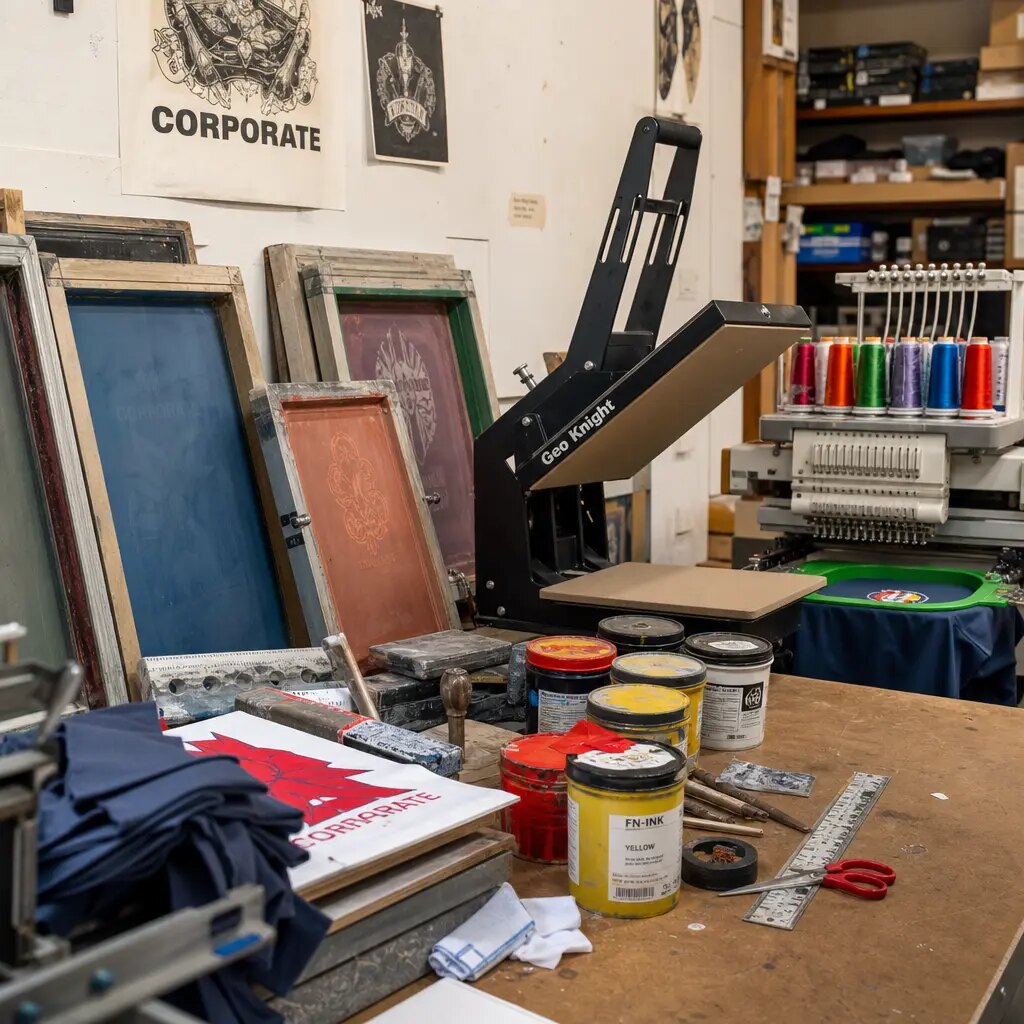
1. Why coffee roasters should proof these bags more tightly than a giveaway tote
A cotton drawstring backpack looks simple until it reaches a cafe shelf, subscription table, wholesale buyer, or event booth. Then it becomes part of the roaster’s brand system. It sits beside whole-bean coffee, brewing accessories, gift bundles, and point-of-sale displays. If the fabric feels thinner than expected or the print looks washed out, the bag does not read as a controlled merch item. It reads as an afterthought.
That is why print proofing matters. A screen mockup can show logo position, but it cannot show how ink settles into cotton fiber. It cannot predict whether natural canvas will reduce contrast, whether a drawcord channel will distort the top panel, or whether a retail fold will leave a hard crease through the artwork. Cotton canvas has texture, slub, shade variation, and absorbency. Sewing tension, fabric weight, print pressure, curing, packing compression, and dye lot can all change what the buyer receives.
For B2B procurement, the purpose of proofing is not to make one attractive sample for a meeting. The purpose is to create a production standard that can be measured during inspection. That means a physical pre-production sample, written dimensions, placement references, tolerance rules, packing instructions, and defect language on the purchase order. When those items are missing, buyer and supplier can both act in good faith and still disagree later about shade, opacity, alignment, or carton contents.
- Treat the proof as the production standard, not as a presentation mockup.
- Approve decoration on the final fabric weight, fabric color, drawcord, construction, label, and packing method.
- Use millimeter or inch measurements for logo size, placement, no-print zones, and tolerance.
- Keep one signed sample with the buyer and one with the supplier, supported by photos, measurement notes, and the approval date.
2. Start with the backpack construction, because it controls the print result
The blank bag comes before the artwork. A logo cannot be placed properly until the buyer knows the finished size, fabric weight, drawcord style, seam layout, reinforcement, and usable front panel. For coffee roaster merchandise, 8 oz cotton canvas can work for short events, lightweight kit bags, or price-sensitive giveaways. For retail or repeat-use programs, 10 oz cotton canvas, roughly 330-360 GSM, is a stronger baseline because it usually gives a firmer handfeel and better shelf presence. A 12 oz canvas, roughly 390-420 GSM, feels more structured and premium, but it can add sewing effort, carton weight, freight cost, and print-pressure adjustments.
Write dimensions as finished width x finished height. If there is a gusset, specify it separately. Do not rely on a quote that says only cotton drawstring backpack or heavy cotton bag. One supplier may be quoting cut size; another may be quoting finished size. One may be using a lighter weave. Another may include reinforced stress points. Cotton cutting, sewing, pressing, and finishing create normal variation, so tolerance should be agreed in advance. Depending on size and construction, a supplier may propose +/-5 mm or +/-10 mm. The exact number matters less than having the same number on the quote, sample sheet, purchase order, and inspection checklist.
The drawcord system also changes the product. Cotton cord, polyester cord, braided cord, flat tape, and rope-style cord each have a different handfeel and closure behavior. Ask for cord diameter, color, length, knotting method, channel width, and whether the bag uses metal eyelets, sewn buttonholes, or a simple channel. Eyelets can look more finished, but they introduce hardware checks such as sharp edges, corrosion risk, and secure setting. A simple sewn channel can be cleaner and lower cost, but the channel seam and bartacks need attention if the bag will hold multiple coffee bags or brew tools.
- Specify fabric weight in both oz and GSM, such as 10 oz / approximately 330-360 GSM.
- State finished bag dimensions, gusset, seam allowance expectations, and dimensional tolerance.
- Define drawcord material, diameter, color, cord length, channel width, eyelet style, and reinforcement points.
- Ask the supplier to identify the maximum recommended print area on the actual finished bag, not on a generic template.
3. Prepare roaster artwork for cotton canvas, not for a coffee pouch
Coffee brands often use beautiful detail: origin names, roast-level notes, fine borders, bean illustrations, vintage badges, coordinates, and textured stamp effects. Those details may work on labels, pouches, and cartons, but cotton canvas is a rougher surface. Screen ink bridges across the woven texture. Tiny counters in letters can close up. Distressed artwork can become muddy rather than intentional.
Before paying for screens or samples, ask the supplier to review the file. They should comment on minimum printable line width, minimum readable text height, halftone risk, and registration risk. As a practical starting point, many buyers avoid text below roughly 2.5-3 mm high and hairlines below about 0.3-0.5 mm on canvas. Those are not universal limits. Mesh, ink, fabric texture, print pressure, and artwork style all matter, so the factory should confirm what it can hold on the chosen fabric.
Send vector artwork whenever possible. AI, EPS, SVG, or press-ready PDF files with outlined fonts reduce the chance of missing fonts, fuzzy edges, and accidental scaling. If brand color matters, provide Pantone references and, when available, a physical color standard. Still, approve the color on cotton, not on a monitor and not only against coated paper. A black logo on natural canvas may look slightly softer than the same black on packaging film. Decide whether that is acceptable before the run starts.
Do not force packaging artwork onto a backpack without editing. A coffee pouch graphic that looks balanced at small scale can become too busy on a large front panel. The opposite also happens: a small pouch logo may look lost on a drawstring backpack. A simplified merch lockup often performs better. Use the main wordmark, icon, or badge instead of every origin note and tasting descriptor.
- Send vector art with fonts outlined and unnecessary hidden layers removed.
- Provide Pantone or brand references, but approve color on the actual cotton sample.
- Ask for supplier feedback on minimum line width, minimum text height, halftones, and distressed effects before screen setup.
- Create a simplified merch logo when fine packaging details will not reproduce cleanly on canvas.
4. Match the decoration method to the artwork and the inspection burden
For many coffee roaster drawstring backpacks, one-color screen printing is the most practical default. It works well for bold wordmarks, cafe badges, event graphics, and repeat seasonal orders. It is usually efficient at bulk quantities and gives the buyer a clear inspection target. But screen print is not automatic. Cotton shade, ink opacity, screen mesh, squeegee pressure, curing method, and operator control all influence the finished print.
Light ink on dark cotton deserves special review. Ask whether the supplier needs an underbase and whether that underbase changes handfeel or creates a visible edge if registration moves. On natural cotton, decide whether the desired look is dense and solid or slightly softer with some canvas character. Both can be acceptable. What causes problems is approving one look in conversation and receiving the other in bulk.
Embroidery can make a bag feel more premium, especially with a simple icon or short wordmark. It also adds new risks. Dense stitching can pucker lighter fabric. Small letters can close. Thread color may not match printed brand colors exactly. Review stitch count, backing, thread color, placement, and puckering on the actual bag before approval. If the canvas is 8 oz or lighter, dense embroidery needs extra caution.
Woven patches are useful when the artwork has several colors or fine detail that direct screen print cannot hold cleanly. They also add a second manufactured component, often with separate MOQ, lead time, edge finish, and color approval. Patch attachment then becomes a sewing inspection item. Heat transfer can handle complex art or smaller runs, but it must be checked for adhesion, edge lift, cracking, fold marks, and handfeel. The safest rule is straightforward: bulk production should use the same decoration process as the approved sample.
- Use screen print for bold one-color or low-color logos and repeat programs.
- Use embroidery for simple premium marks after checking puckering and minimum readable text.
- Use woven patches when multi-color detail is worth the added MOQ, sewing step, and alignment inspection.
- Use heat transfer only after approving adhesion, edge lift, flex performance, and packing crease resistance.
5. Make placement measurable: scale, color, no-print zones, and tolerance
Words like centered, slightly high, and front panel are too loose for a production order. A drawstring backpack is not a flat sheet. The top channel gathers when closed. The side seams can curve when the bag is filled. The front panel may not be perfectly square after sewing. A logo that looks centered on a PDF can sit too close to the cord channel in real life or appear low once the bag holds coffee bags.
Use stable reference points in the proof drawing. Show logo width and height. Measure down from the top edge or from the bottom of the drawcord channel. Measure from the side seams and mark the vertical centerline. Add no-print zones around the cord channel, side seams, bottom seam, bartacks, eyelets, and any planned fold line. For many simple screen print orders, buyers and suppliers may agree to placement tolerance around +/-5 mm if the factory can support it. Multi-color registration needs a separate tolerance because a print can be in the right location overall but still have color-to-color misalignment.
Color should also be approved physically. Pantone references help communication, but ink on cotton does not look exactly like ink on coated paper. Natural canvas can be cream, grayish, speckled, or uneven in tone. Dyed canvas can vary by dye lot. If color is important, review the sample under daylight and a consistent 5000K light source. Record whether the target is a dense brand color, a softer vintage look, or a tonal effect that intentionally allows fabric texture to show.
- Measure logo placement from top edge or channel, side seams, and centerline.
- Write placement tolerance, logo size tolerance, and multi-color registration tolerance into the approval sheet.
- Define no-print zones around seams, cord channels, bartacks, eyelets, and fold lines.
- Approve color from a physical strike-off or pre-production sample, not only from a screen image.
6. Use the pre-production sample as the commercial approval, not just a design check
A true pre-production sample should represent the order the roaster is buying. It should use the final fabric weight, final cotton color, final drawcord, final sewing construction, final artwork size, final decoration process, final label, and final packing format. A concept sample on a substitute blank can help early discussion, but it should not release bulk production. If the sample uses a different blank, different ink, different cord, or different packing method, the main risks remain open.
Inspect the sample the way a receiving inspector would. Lay it flat. Measure finished width and height, gusset if any, logo size, logo placement, channel width, cord length, and label position. Pull the drawcord closed several times. Does it move evenly? Does the top panel distort the print? Then fill the bag with realistic contents, such as two to four 12 oz coffee bags or similar weight. Check bottom corners, side seams, cord exits, and bartacks under load.
Do a few practical print checks. Flex the printed area. Lightly rub it with a clean white cloth if the ink feels dusty, tacky, or undercured. Look for cracking, flaking, smudging, ghosting, transfer to the opposite panel, or visible fabric show-through beyond the approved target. These checks are not a substitute for formal lab testing when that is required, but they catch common merch failures before hundreds or thousands of units are packed.
Sample approval should include packaging. If the backpack will be individually polybagged with a barcode, approve the fold, polybag size, warning label if required, barcode position, barcode scan, hangtag, and SKU sticker. If the bags are bulk packed, approve folded dimensions, inner bundle count, master carton count, carton marks, and SKU separation. After approval, keep the signed sample and attach photos and measurements to the PO.
- Do not approve bulk from a sample made on a different blank, fabric weight, ink, cord, or packing method.
- Record sample measurements for dimensions, print size, print placement, cord length, and label position.
- Check the sample flat, closed, filled, flexed, and folded before signing approval.
- Treat packing, barcode, hangtag, and carton marks as part of sample approval.
7. Quote MOQ and price by SKU, not by a blended headline number
A useful B2B quote separates the cost drivers. Ask for blank bag cost, decoration cost, setup or screen cost, sample cost, label cost, hangtag cost, packing labor, carton cost, domestic transport, and freight basis. Without that breakdown, a low quote may be low only because it assumes lighter fabric, bulk packing, a basic cord, no barcode labels, or weaker cartons. Procurement cannot compare those bids fairly.
MOQ usually follows setup. One artwork on one natural cotton bag with one print color is the cleanest run. Add a second bag color and the supplier may need separate material handling, shade control, and contrast testing. Add a second artwork version and the order may need another screen, another sample, and another inspection reference. Add embroidery, woven patches, custom labels, or retail packing and each element may have its own minimum. For seasonal origins, holiday bundles, cafe-exclusive graphics, or wholesale SKUs, quote each version separately.
Ask about repeat orders. Are screens held? Do digitizing fees repeat? Does patch tooling carry forward? Can the factory use the previous signed sample as the standard, or will a new dye lot require reapproval? Reorder planning matters for roasters that refresh merch several times a year.
Overruns and underruns also need a rule. Textile production can end with small quantity differences because of cutting yield, decoration rejects, or QC sorting. If your subscription program or launch kit requires an exact count, write that into the PO. If the supplier requests an overrun or underrun allowance, confirm whether the buyer must accept extras, whether shortages are credited, and how defects beyond the agreed limit will be replaced.
- Request line-item pricing for bag, print, setup, sample, label, packing, carton, and freight basis.
- Confirm MOQ per artwork, bag color, print color count, decoration method, label, and packing format.
- Ask whether screens, digitizing, or patch tooling fees repeat on reorders.
- Define overrun, underrun, shortage replacement, and defect remedy before issuing the PO.
8. Design the packing around the sales channel and warehouse process
Packing should not default to factory habit. It should match what happens after the cartons arrive. Cafe retail may need individual polybags, hangtags, barcodes, or a fold that shows the front logo clearly. Wholesale shipments may need inner packs and cartons labeled by destination. Ecommerce and subscription programs may require compact folding that fits a mailer without a hard crease through the print. Event teams may prefer bulk packing with minimal plastic so staff can unpack quickly.
Ask the supplier to show the fold before production packing begins. A fold through a high-opacity screen print or heat transfer can leave a line that customers read as damage. A fold over embroidery or patch edges can create impressions in the fabric. A fold that compresses the cord channel can make the bag look wrinkled right out of the carton. If the bag will hang in a cafe, confirm whether the cord loop, hangtag hole, or retail hook method works with the final fold.
Carton planning is part of proofing. Confirm pieces per polybag if used, pieces per inner bundle, pieces per master carton, carton dimensions, net weight, gross weight, carton marks, SKU labels, PO number, and destination code. If the warehouse scans barcodes at receiving, test the barcode on the actual label material and placement, not only on a PDF. For orders going to multiple cafes, distributors, or fulfillment centers, ask whether the supplier can carton by SKU or destination and quote that labor separately.
- Select bulk packing, individual polybag, recycled-content polybag, hangtag, belly band, barcode, or inner bundle based on sales channel.
- Approve fold direction and folded dimensions before production packing.
- Keep the main logo away from hard fold creases unless the signed sample proves it is acceptable.
- Confirm carton count, carton dimensions, gross weight, carton marks, SKU label, and barcode scan before shipment.
9. Compare landed cost and lead time on the same specification
The best RFQ gives every supplier the same target. Send one spec sheet, one artwork file, one placement drawing, one sample requirement, one packing spec, one tolerance sheet, and one requested shipping term. If one supplier quotes 8 oz canvas and another quotes 10 oz canvas, the unit price comparison is not valid. If one includes individual barcode labels and another quotes bulk folded cartons, the landed cost and warehouse labor will differ.
Landed cost includes more than the ex-factory unit price. Include sample fees, screen or setup charges, decoration cost, labels, hangtags, packing labor, cartons, domestic trucking, export charges if relevant, freight, duties, customs brokerage, receiving labor, and potential rework. Drawstring backpacks are not usually heavy compared with hard goods, but carton cube changes quickly when individual packing, retail folds, hangtags, or thicker canvas are added. Ask for estimated carton dimensions, pieces per carton, net weight, and gross weight before choosing a supplier.
Lead time deserves the same level of detail. Request a timeline for artwork review, sample production, sample transit, sample approval, material preparation, cutting, sewing, printing, curing or drying, QC, packing, and export handover. Build in time for one sample revision if the artwork has small text, multiple colors, dark fabric, underbase printing, embroidery, patches, heat transfer, custom labels, or new retail packing. A very short lead time with no revision buffer can be riskier than a longer schedule with clear checkpoints.
- Compare suppliers using the same incoterm, quantity, fabric weight, construction, decoration method, and packing format.
- Include setup, sampling, packing, freight, duties, receiving, and likely rework in landed-cost analysis.
- Request carton cube and gross weight early so freight estimates are based on actual packing.
- Use lead-time breakdowns to find the risk point instead of relying on one total-day estimate.
10. Write the inspection plan before production starts
Inspection should be tied to the signed sample and written standards. Many consumer textile orders use an AQL sampling plan with separate treatment for critical, major, and minor defects. The buyer and supplier should choose the exact AQL level based on order size and risk. Just as important, they need to agree on what counts as each defect type. A critical defect may include unsafe hardware, sharp eyelets, mold odor, or a wrong compliance label. A major defect may include wrong artwork, wrong color, print smearing, open seams, failed barcode, or incorrect carton count. A minor defect may be a small loose thread or slight shade variation within the approved range.
Print standards must be measurable. State acceptable placement variation, logo size tolerance, registration tolerance for multi-color prints, and no-print zones. If placement tolerance is +/-5 mm, inspectors should measure from the same reference points shown on the approval drawing. If the buyer approved a softer vintage print on natural cotton, attach the physical sample so inspectors do not reject normal fabric show-through. If dense opacity is required, the sample should show that density clearly.
Do not leave remedies until after cartons fail inspection. Some issues can be trimmed, cleaned, relabeled, repacked, or sorted. Other failures require replacement, credit, or remake. Wrong artwork, wrong fabric weight, failed curing, or mixed SKU packing can create expensive downstream work for a coffee roaster, especially when cartons are headed to multiple cafes or subscription fulfillment. The PO should state who pays for rework, how replacements are scheduled, and what happens if defects exceed the agreed acceptance limit. Clear rules keep the discussion commercial instead of emotional.
- Define critical, major, and minor defects before inspection starts.
- Use the approved sample plus written tolerances for print, sewing, dimensions, labels, packing, and cartons.
- Measure logo position from the approved reference points, not by visual judgment alone.
- Agree on rework, replacement, credit, remake, sorting cost, and shortage rules before bulk production.
Specification comparison for buyers
| Spec decision | Recommended option | When it fits | Buyer risk to check |
|---|---|---|---|
| Supplier route | Factory or supplier that controls sewing, decoration approval, final QC, and export packing | Repeat coffee merch, cafe retail, subscription inserts, event bags, and multi-location wholesale programs | If printing or packing is subcontracted without a locked process, the approved sample can drift in ink color, placement, curing, folding, or carton count |
| Fabric weight | 10 oz cotton canvas, approximately 330-360 GSM, as a retail-ready baseline | Reusable roaster merch that needs better handfeel than a low-cost giveaway bag | Quotes using only terms like cotton canvas or heavy cotton may hide lighter 6-8 oz fabric, different weave, weaker opacity, and lower perceived value |
| Budget fabric option | 8 oz cotton canvas, approximately 260-280 GSM | Short events, one-time giveaways, lightweight kit bags, or price-sensitive promotions | Thin fabric can show more slub, wrinkle more easily, carry less weight, and make screen ink look less solid |
| Premium fabric option | 12 oz cotton canvas, approximately 390-420 GSM | Higher-value retail merch, gift sets, or bags expected to hold several coffee bags and brew accessories | Heavier fabric increases sewing effort, carton weight, freight cost, needle size requirements, and may need adjusted print pressure |
| Decoration method | One-color screen print with ink tested on the final cotton fabric | Bold roaster logos, cafe wordmarks, simple badges, event branding, and repeat orders | Fine type below roughly 2.5-3 mm high, hairlines below about 0.3-0.5 mm, halftones, and distressed artwork can fill in or lose edge definition on canvas |
| Alternative decoration | Woven patch, embroidery, or heat transfer after artwork-specific review | Premium badges, multi-color art, small programs, or designs unsuitable for screen print | Embroidery can pucker light canvas, patches add sewing alignment and separate MOQ, and transfers need adhesion, edge-lift, and wash/rub checks |
| Placement standard | Measured placement diagram plus written tolerance, commonly +/-5 mm for simple screen print when factory capability supports it | Bulk orders where centered logo presentation matters on cafe shelves or online product photos | Without a measured reference from seams, top channel, and centerline, centered becomes subjective during inspection |
| Sample requirement | Pre-production sample using final fabric, final drawcord, final ink, final artwork size, final label, and intended packing | Any order with resale value, barcode receiving, strict brand color, or a launch date | Digital proofs and substitute blanks cannot prove ink opacity, fabric shade, cord function, seam quality, or fold creasing |
| MOQ logic | Confirm MOQ per bag color, artwork version, print color count, decoration method, label, and packing format | Seasonal drops, origin-specific graphics, wholesale SKUs, and cafe-exclusive colors | A total MOQ number can be misleading if each colorway or artwork needs its own screen, setup, patch run, or inspection reference |
Buyer checklist before sampling
- Define finished bag size in width x height, gusset if any, and target tolerance before artwork is placed; for sewn cotton bags, many suppliers work around +/-5 mm to +/-10 mm depending on size and construction, but the agreed number must be written.
- Specify fabric weight in both oz and GSM where possible, such as 10 oz / approximately 330-360 GSM cotton canvas, and require approval before any substitution in weight, weave, dye lot, or finish.
- Confirm cotton color and shade target: natural, bleached, dyed, washed, or pigment-dyed; ask how shade variation will be handled across panels, reorders, and mixed carton lots.
- Lock drawcord material, diameter, length, color, knotting, cord channel width, eyelet or no-eyelet construction, bartack positions, and reinforcement details before sample approval.
- Send vector artwork in AI, EPS, SVG, or press-ready PDF with fonts outlined, Pantone or brand color references, minimum line-width notes, and a marked placement diagram measured from seams, top channel, and centerline.
- Ask the supplier to review minimum printable line width, minimum readable text height, screen count, registration risk, and no-print zones before charging for screens or making a sample.
- Require a physical strike-off or pre-production sample on the final fabric, final bag color, final drawcord, final decoration method, final artwork size, and final packing format.
- Set written tolerances for logo placement, logo size, print registration, print opacity, dimensions, fabric weight, shrinkage if relevant, stitch quality, and packing count.
- Use concrete acceptance language: no smudges, no tacky ink, no ghosting, no exposed underbase outside registration tolerance, no open seams, no broken bartacks, no wrong barcode, and no mixed SKUs in unmarked cartons.
- Check the approved sample after filling the bag with realistic weight, such as two to four 12 oz coffee bags or similar load, to review seam stress, cord function, and logo distortion.
Factory quote questions to send
- What exact fabric will be used for the body: cotton type, weave, oz weight, GSM range, natural or dyed color, finishing treatment, and whether the fabric is pre-shrunk, washed, or untreated?
- What are the finished dimensions, gusset dimensions if any, dimensional tolerance, drawcord channel width, drawcord material, cord diameter, cord length, eyelet specification if used, and stress-point reinforcement details?
- What is the recommended maximum print area for this exact bag, and what no-print zones should be kept around the cord channel, side seams, bottom seam, bartacks, fold lines, and grommets?
- Will sewing, screen printing, embroidery, patch application, labeling, inspection, and packing be done in-house or by subcontractors? If subcontracted, who controls sample approval and bulk QC?
- Which decoration method, ink system, screen mesh or process route, curing method, and color-matching approach will you use on this cotton fabric?
- For this artwork, what are your minimum line width, minimum text height, registration tolerance, and expected opacity on natural cotton and on dyed cotton?
- How many screens, setup charges, digitizing fees, patch tooling fees, color-match fees, sample fees, or repeat setup charges apply? Are screens or digitized files held for reorders?
- Will the pre-production sample use the final blank, final fabric color, final drawcord, final label, final ink, final artwork size, final placement, and final retail or bulk packing method?
- What is the MOQ per artwork version, per bag color, per print color count, per label option, per embroidery or patch option, and per packing format?
- What overrun or underrun tolerance do you request, and how will shortages caused by QC rejection be replaced or credited?
Quality-control points to confirm
- Fabric weight is checked against the approved spec and tolerance, ideally by GSM test on a representative cut sample or supplier certificate supported by physical inspection; handfeel, weave, slub level, shade, and finish must match the signed sample.
- Finished dimensions, gusset if any, drawcord channel width, cord length, cord diameter, knotting, cord color, and drawcord function match the approved sample; closure should pull evenly without excessive friction, twisting, or cord slippage.
- Print size and placement are measured from agreed reference points such as top edge below channel, side seams, and centerline; placement must stay within the approved tolerance, commonly written in millimeters rather than described as centered.
- Print does not enter no-print zones around seams, cord channel, bartacks, grommets, bottom fold, side fold, or any approved retail fold line unless the sample specifically approved that effect.
- Ink coverage is even under daylight and 5000K light, with no pinholes beyond the approved sample, no smudging, no bleeding, no scorching, no ghosting, no fabric show-through beyond the agreed target, and no visible misregistration outside tolerance.
- The printed area passes practical handling checks agreed for the order, such as dry rub with a clean white cloth, flexing the fabric, and checking for cracking, flaking, powdery ink, tackiness, or transfer to adjacent panels after packing.
- Multi-color screen print registration stays within the agreed tolerance; underbase, if used, must not show as an unwanted outline, and all colors must match the approved physical sample more than the digital mockup.
- All side seams, bottom seams, drawcord tunnels, bartacks, reinforcement stitches, and stress points are secure, with no skipped stitches, broken threads, open seams, needle cuts, uneven tension, loose thread nests, or sharp grommet edges.
- Embroidery, woven patch, side label, or hangtag placement is straight, centered to the approved reference point, securely attached, and free from puckering, rough edges, loose backing, thread loops, or crooked stitching.
- Labels, care tags if used, hangtags, barcodes, warning labels, SKU stickers, and retail price labels are matched to the SKU, scannable, cleanly applied, and placed in the approved location without covering the logo.