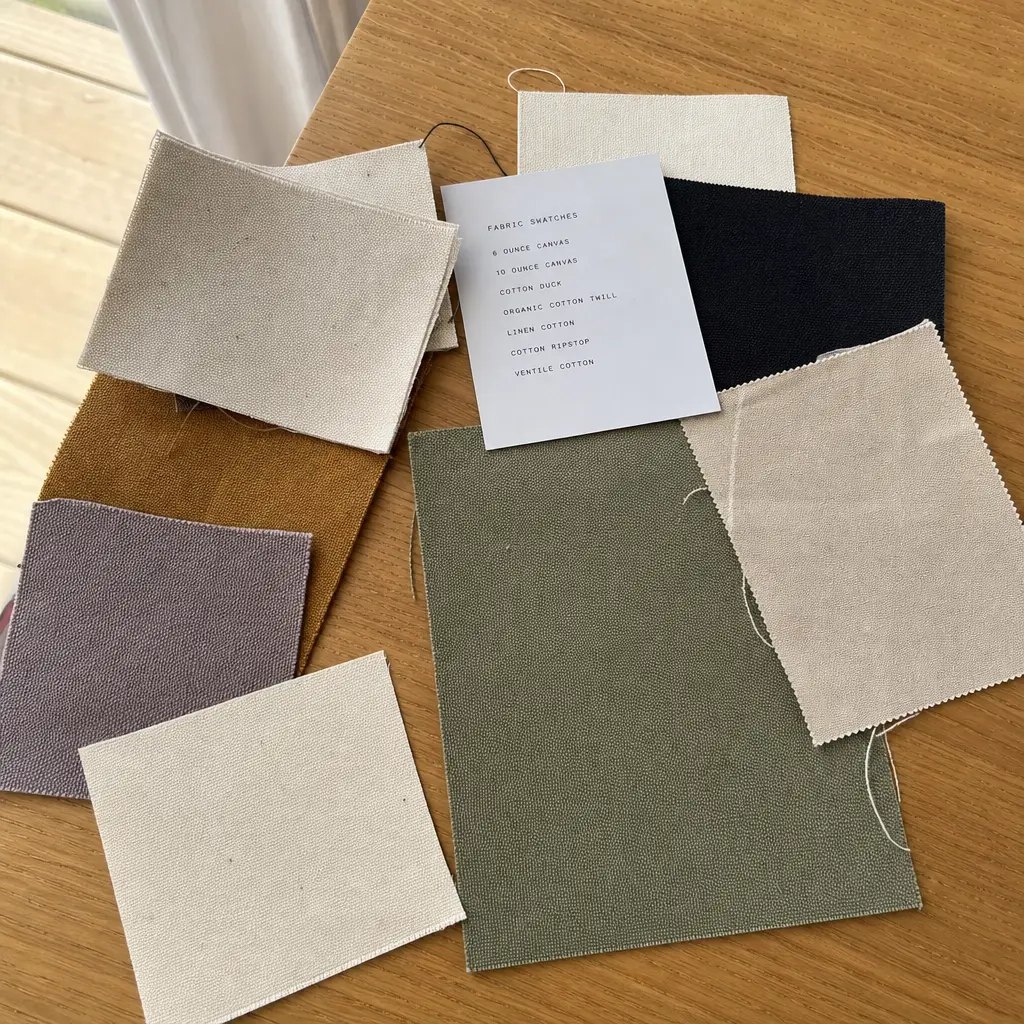
Use the worksheet to compare quotes, not just unit prices
A cotton drawstring backpack for a yoga studio looks simple, but small specification changes can move the price more than buyers expect. A quote based on 6 oz cotton, a small one-color print, thin cord, and bulk packing is not comparable with a quote using 10 oz canvas, custom-dyed fabric, woven label, individual bags, and reinforced eyelets. The pricing worksheet should force every supplier to quote the same bag, or clearly show where the cheaper offer has removed value.
For yoga studios, the commercial problem is usually not only price. The bag must feel consistent with the studio brand, survive repeated use, hold common class items, and arrive before a launch date or campaign. Procurement teams should build the worksheet around decisions that change cost, timeline, and quality risk. The fields below are the ones a factory merchandiser needs before preparing a serious quotation.
- Basic quote field: finished size, for example 34 x 42 cm or buyer specified.
- Material field: cotton canvas, cotton sheeting, recycled cotton blend, or organic cotton, with GSM.
- Decoration field: print method, logo size, number of colors, and placement.
- Construction field: cord type, reinforcement, stitching requirement, and seam style.
- Commercial field: order quantity, delivery term, packing, sample requirement, and target ship date.
Start with the use case before choosing fabric GSM
Fabric weight is one of the biggest price drivers in a cotton drawstring backpack. Many buyers write only "cotton drawstring backpack" in the RFQ, then receive quotes that range from light promotional cotton to heavy canvas. For yoga studios, the right weight depends on whether the bag is a free membership gift, a retail product, or part of a premium workshop package.
A common workable range is 6 oz to 10 oz cotton, roughly 200 to 340 GSM depending on fabric construction. At 6 oz, the backpack is lighter and cheaper, but it may wrinkle more and feel less substantial. At 8 oz, the product usually has a better retail hand feel while still folding easily. At 10 oz or heavier, the bag feels more durable but costs more in fabric, sewing time, and freight weight.
- 6 oz / about 200 GSM: suitable for low-cost event giveaways and short campaigns.
- 8 oz / about 270 GSM: practical default for yoga studio welcome kits and branded merchandise.
- 10 oz / about 340 GSM: better for retail resale, teacher training packs, or heavier daily use.
- Natural cotton: often lower dye cost and suits wellness branding, but shade variation must be accepted within limits (e.g., 4-5 on gray scale).
- Dyed cotton: stronger brand color control, but usually higher MOQ and longer lead time.
Build the target specification before the first quote round
A pricing worksheet should include one target specification and a few optional upgrades. If every supplier is allowed to choose their own fabric, cord, and print method, the buyer will waste time comparing unrelated products. The first quote round should use a controlled base spec, then request price adders for upgrades such as organic cotton, woven labels, or individual retail packing.
For many yoga studios, a sensible base specification is a natural 8 oz cotton drawstring backpack, finished size around 34 x 42 cm, double cotton cord, reinforced lower corners, and 1-color screen print on the front. This is not the cheapest possible bag, but it is a reliable starting point because it balances brand feel, printability, and cost control.
- Base bag: natural cotton canvas, 8 oz / about 270 GSM, finished size 34 x 42 cm.
- Cord: natural cotton cord, 6-8 mm diameter, double drawstring closure.
- Reinforcement: bartack or metal eyelet at lower cord attachment points.
- Print: 1-color water-based screen print, centered front, maximum print area stated in centimeters.
- Packing: bulk packed 50 pcs per carton unless retail packing is required.
Price worksheet fields that expose hidden cost drivers
The unit price alone does not explain why one supplier is 12 percent higher than another. A useful worksheet separates cost components so the buyer can see whether the difference comes from material, print, packing, MOQ, or production method. Factories may not disclose their full internal costing, but they can still provide line items for the buyer-facing charges that affect comparison.
For example, a quote that includes screen charges, pre-production sample, kraft belly band, and thicker cord may be fair even if the unit price is higher. A quote that excludes all setup costs can look attractive but becomes more expensive after order confirmation. The worksheet should require the supplier to mark each item as included, excluded, or optional.
- Material cost basis: fabric type, GSM, color, and whether fabric is stock or custom.
- Decoration charge: screen setup, print color count, print area, ink type, and strike-off cost.
- Label charge: woven label, printed label, care label, hangtag, or no label.
- Packing charge: bulk packing, individual polybag, paper band, inner carton, or retail hangtag.
- Sample charge: blank sample, print strike-off, pre-production sample, and refund condition.
- Logistics data: pieces per carton, carton size, gross weight, delivery term, and port or warehouse handover point.
Print method decisions for yoga studio branding
Most yoga studio logos work well with screen printing, especially if the design is minimal and uses one or two solid colors. Water-based ink is often selected for natural cotton because it gives a softer hand feel than thick plastisol-style ink. The tradeoff is that water-based print can appear slightly less opaque on darker dyed fabric, so buyers should approve a strike-off when the fabric color is not natural or white.
Heat transfer can reproduce gradients and full-color artwork, but it changes the surface feel and may not match the natural cotton positioning many yoga brands want. Embroidery gives a premium look but adds stitch cost and can pucker if the fabric is light. For pricing, the worksheet should treat decoration as a separate decision rather than a fixed assumption.
- Screen print: best for clean logos, one to three colors, lower cost at moderate volume.
- Water-based ink: softer hand feel, good for wellness brands, requires testing on dark fabric.
- Heat transfer: useful for multi-color graphics, but less breathable and more synthetic in appearance.
- Embroidery: premium for small marks, not ideal for large filled logos on light cotton.
- Woven side label: small brand detail that adds perceived value without covering the front panel.
MOQ logic: separate sewing MOQ from material MOQ
Cotton drawstring backpacks are often simple to sew, so buyers assume MOQ should always be low. In reality, MOQ depends on fabric availability, dyeing, cord color, label production, print setup, and packing materials. A factory may be able to sew 300 pieces, but custom-dyed cotton fabric may require a much higher minimum because the dye house or fabric mill has its own batch requirement.
A practical worksheet asks for price breaks at 300, 500, 1,000, and 3,000 pieces, then requests the reason behind each MOQ. This helps the buyer decide whether to use stock natural cotton for a smaller studio launch or move to dyed fabric for a larger franchise rollout. It also prevents a common mistake: negotiating the bag MOQ while forgetting that the woven label or custom cord has a separate minimum.
- Low-volume route: stock natural cotton, standard cord, screen print, bulk packing.
- Mid-volume route: stock dyed cotton if available, custom print, optional woven label.
- Large-volume route: custom dyed fabric, custom cord color, custom carton mark, retail packing.
- MOQ to clarify: fabric MOQ, print MOQ, label MOQ, cord MOQ, and packing MOQ.
- Inventory risk: avoid custom-dyed fabric unless the order volume justifies leftover material.
Sample approval should cover construction, not artwork only
Many quality problems start because the buyer approves a digital mockup or a print panel but never approves the actual backpack construction. A proper pre-production sample should use the same fabric weight, cord, stitching method, logo size, and packing method planned for bulk. If any part is substituted, the supplier should label it clearly and provide a date for the corrected sample or production reference.
For yoga studios, hand feel matters. The buyer should physically test how the bag closes, whether the cords slide smoothly, whether the lower corners pull under load, and whether the printed logo cracks or looks uneven when the fabric bends. The sample approval record should include photos, measured dimensions, logo placement measurements, and written comments, not just a quick email saying "approved".
- Measure finished width and height flat, with tolerance written on the approval sheet.
- Load test with typical contents such as towel, socks, light bottle, and folded clothing.
- Pull both cords several times to check movement, twisting, and cord length balance.
- Inspect reinforcement points for bartack density, eyelet setting, or seam strength.
- Compare print color under consistent lighting against Pantone or approved strike-off.
- Keep one approved sample sealed for final inspection comparison.
Packing choices change both cost and receiving efficiency
Packing is often treated as an afterthought, but it affects cost, carton volume, warehouse handling, and sustainability claims. Bulk packing is usually the most economical for yoga studios that distribute bags at reception desks or pack them into welcome kits after delivery. Individual polybags protect each bag but add plastic, labor, and sometimes more carton space.
A kraft belly band or paper band can be a useful middle option for retail shelves or teacher training bundles. It keeps the bag neat without fully enclosing it in plastic. If the buyer needs individual barcodes, hangtags, or location sorting, those items must be in the worksheet before quoting. Adding them after production has started can delay packing and require rework.
- Bulk pack: lowest handling cost, suitable for internal distribution and welcome kits.
- Individual polybag: better dust protection, less preferred for plastic-reduction policies.
- Kraft belly band: suitable for retail presentation with moderate added cost.
- Carton plan: common packing may be 50 pcs per carton, but final count depends on fabric weight and bag size.
- Shipping marks: include SKU, quantity, carton number, gross weight, and destination if multiple studio locations are involved.
Lead time planning and schedule risks
A realistic lead time starts after deposit, artwork approval, and sample approval, not from the first inquiry. For a standard cotton drawstring backpack using stock fabric, buyers commonly plan around 7 to 10 days for sample development and roughly 25 to 40 days for production, depending on order quantity, print complexity, and factory schedule. These are planning examples, not guaranteed delivery promises.
The biggest schedule risks are late artwork, custom fabric color, sample revisions, and packing changes. A yoga studio campaign tied to a grand opening, retreat, or seasonal membership drive should include a decision deadline for each approval step. If the buyer wants sea freight, the production schedule must be connected to vessel cutoff dates and destination receiving time.
- Artwork deadline: vector file and Pantone references submitted before sampling starts.
- Sample review window: buyer feedback within 24-72 hours to avoid losing production slot.
- Material risk: custom dyeing can add time and may require lab dip approval.
- Print risk: multi-color registration takes longer than one-color logo printing.
- Packing risk: late barcode, hangtag, or location split instructions can delay final packing.
- Shipment risk: carton dimensions and weight should be available early for freight estimation.
Landed-cost comparison: calculate beyond FOB unit price
A buyer comparing suppliers should not stop at FOB unit price. Cotton backpacks are not extremely heavy per piece, but fabric weight, packing method, and carton efficiency still affect freight. A heavier 10 oz bag with individual retail packing may be better for resale, but it should be compared against the gross margin or branding value it creates.
The worksheet should include a landed-cost section for each quote. Procurement can enter unit price, setup charges, sample charges, estimated freight, duty assumptions, inspection cost, and local handling. This creates a clearer comparison between a lower-cost promotional version and a higher-quality retail version. It also helps distributors set wholesale pricing without discovering margin loss after import.
- Unit price: quoted per piece under the agreed Incoterm.
- Setup cost per piece: screen charges and sample charges divided by order quantity.
- Packing cost: included or separate, especially for individual retail presentation.
- Freight estimate: based on carton dimensions, gross weight, and shipment mode.
- Inspection cost: third-party or buyer inspection allocated across the order.
- Buffer: include allowance for exchange rate movement, rework, or urgent local delivery.
Specification comparison for buyers
| Spec decision | Recommended option | When it fits | Buyer risk to check |
|---|---|---|---|
| Fabric weight | 8 oz / 270 GSM cotton canvas for standard yoga studio retail and welcome kits | Good balance of hand feel, print surface, and bulk freight weight | Quotes using 6 oz fabric may look cheaper but can feel flimsy and show contents through light colors; 10 oz increases freight cost by ~15% |
| Bag size | Approx. 34 x 42 cm with 6-8 mm cotton cord | Fits towel, grip socks, small water bottle, membership card, and light retail add-ons | Oversized bags increase fabric yield loss and carton volume; undersized bags create usability complaints; tolerance ±1 cm |
| Closure and cord | Double cotton drawcord with reinforced bottom eyelets or bartacked side channels | Best for repeated studio use and merchandise sales | Thin polyester cord may reduce cost but changes the natural product positioning; cord length must be equal on both sides |
| Logo print | 1-color water-based screen print for most studio logos | Clean for minimal yoga branding, lower setup cost at moderate quantities | Fine lines under 0.5 mm and very large solids can cause uneven ink coverage on textured cotton; require strike-off approval on final fabric |
| Premium decoration | Woven side label or small embroidery added to screen print | Useful for boutique studio chains, teacher training events, and retail resale | Embroidery on lightweight cotton can pucker unless backing and stitch count are controlled; woven label MOQ may be 500-1000 pcs |
| MOQ logic | 300-500 pcs for custom print on available fabric; 1,000+ pcs for dyed fabric or custom cord color | Keeps unit cost realistic without forcing excess inventory | Supplier MOQ may be driven by fabric dyeing, not sewing capacity; separate these in the quote; ask for MOQ per component |
| Packing method | Bulk packed 50 pcs per export carton, with optional individual paper band or kraft belly band | Best for studio distribution and lower plastic use | Individual polybags add labor, material cost, and carton volume; required only when retail shelf handling needs protection; paper band adds ~$0.05-0.10 per piece |
| Sample approval | Pre-production sample with final fabric GSM, cord, logo size, and packing reference | Prevents the common problem of approving print only and missing construction details | A digital mockup is not enough for color, fabric shrinkage, cord length, or seam strength approval; require physical sample with measured dimensions |
| Lead time buffer | Allow 7-10 days for sampling and 25-40 days for production after deposit and artwork approval | Realistic for seasonal studio launches and multi-location rollouts | Peak-season cotton fabric availability, late artwork, and slow sample feedback can push shipment dates; add 2 weeks for custom dyeing |
Buyer checklist before sampling
- Define the intended use: member welcome kit, retail merchandise, workshop giveaway, teacher training pack, or franchise opening stock.
- Set the target fabric weight in oz or GSM and require the supplier to state tolerance (e.g., ±5% GSM), not only the material name.
- Lock the finished bag size, cord type, cord length, and reinforcement method before comparing unit prices.
- Provide logo artwork as vector AI, PDF, or EPS and include Pantone references for each print color.
- Separate quotations for 300, 500, 1,000, and 3,000 pcs so the MOQ and price break are visible.
- Request itemized costs for fabric, printing, label, packing, sampling, mold or screen setup, and inland freight if applicable.
- Confirm whether fabric is stock greige, stock dyed, custom dyed, organic cotton, recycled cotton, or conventional cotton.
- Approve a physical pre-production sample that uses the same fabric, print, cord, and packing as bulk production.
- Specify carton quantity, carton dimensions, gross weight estimate, and whether cartons need shipping marks for studio locations.
- Include acceptable quality limits for stains, print misregistration, seam slippage, cord fraying, and measurement tolerance (e.g., ±1 cm).
Factory quote questions to send
- What is the exact fabric construction, weight in GSM or oz, and allowed tolerance (e.g., ±5%) for this cotton drawstring backpack?
- Is the quoted fabric stock available, or does it require weaving, dyeing, or special finishing before cutting?
- What is the finished bag size, and what size tolerance (e.g., ±1 cm) will be used during final inspection?
- What cord material, diameter, color, and length are included in the unit price?
- Which print method is quoted, how many colors are included, and what is the maximum print area in cm?
- Are screen charges, artwork handling, strike-off samples, and pre-production samples included or listed separately?
- What MOQ applies to the bag, fabric color, cord color, label, and packing material individually?
- How many pieces per carton are planned, and what are the estimated carton dimensions and gross weight?
- What is the production lead time after deposit, artwork approval, and sample approval, not from inquiry date?
- What inspection standard, defect classification (e.g., AQL 2.5), and rework procedure will be used before shipment?
Quality-control points to confirm
- Fabric weight should be verified by cutting and weighing a measured swatch, with tolerance agreed before production (e.g., ±5% GSM).
- Finished bag dimensions should stay within approximately ±1 cm unless the buyer sets another tolerance.
- Logo placement should be measured from the top seam or side seam using an approved pre-production sample as the reference.
- Screen print edges should not show heavy bleeding, skipped ink, obvious pinholes, or color deviation outside the approved standard (e.g., ΔE < 2).
- Drawcords should pull smoothly and be equal length on both sides after closing the bag.
- Bottom cord attachment points should be bartacked, eyeleted, or otherwise reinforced to resist tearing during use.
- Seams should be straight, with no open seam, broken stitch, loose thread cluster, or skipped stitching over a defined limit (e.g., 3 skipped stitches per seam).
- Natural cotton bags should be checked for oil marks, mildew odor, weaving defects, and unacceptable shade variation (e.g., within 4-5 on gray scale).
- Cartons should match the approved packing method, carton quantity, shipping mark, and moisture protection requirement.