Why MOQ becomes a negotiation problem on natural grocer backpack programs
Natural grocer buyers often want cotton drawstring backpacks for store openings, wellness promotions, produce-themed campaigns, loyalty redemptions, and community events. The order looks simple, but MOQ becomes difficult when the actual requirement is fragmented: several store groups, a few artwork versions, a sustainability claim, and a need to land before a fixed campaign date. Factories then price the item as a series of short runs rather than one efficient production lot, and the quote stops looking like a basic cotton bag.
The practical goal is not only to push the minimum lower. It is to structure the order so the factory can produce it as one run wherever possible. For this product, MOQ pressure usually comes from print setup, dyed fabric, custom cords, special packing, and order splitting by region. If your RFQ groups these variables correctly, you can often keep the commercial flexibility the grocery brand wants without paying for the full penalty of several separate SKUs.
- Main MOQ drivers: fabric color, print color count, custom size, cord type, and retail unit packing
- Common buyer mistake: requesting low quantity across too many colorways and art versions
- Best leverage point: standardize the body fabric, size, and cord, then vary only what truly matters
Start with a commercially workable base spec before negotiating quantity
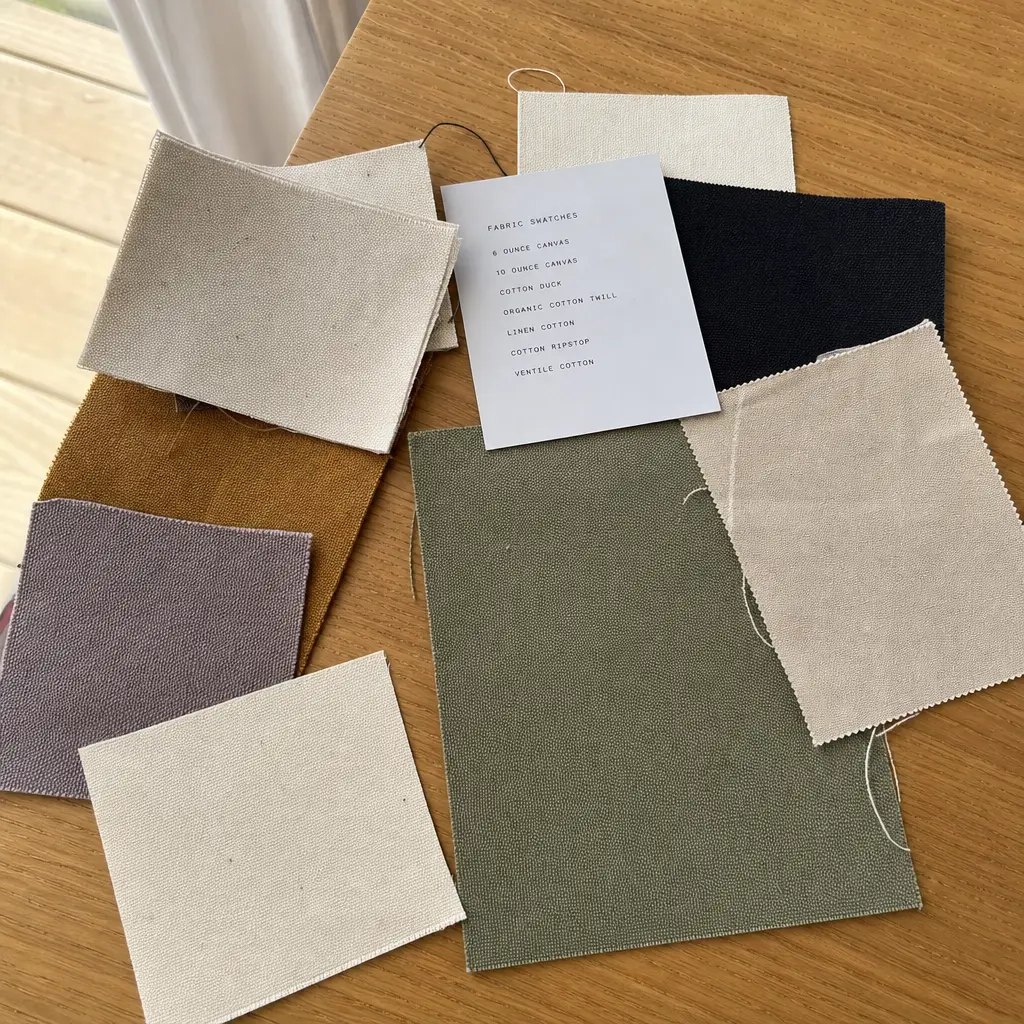
For natural grocer programs, the most workable base specification is usually a natural cotton drawstring backpack in 6 oz to 8 oz canvas, roughly 200-270 GSM, size around 38 x 42 cm, one-color screen print, and self-color cotton cords. This spec avoids custom dyeing, uses a print process available in most bag factories, and gives enough body for repeated reuse without moving into heavy canvas pricing. It is also easier to combine across regions and campaigns because natural cotton is broadly acceptable for wellness, zero-waste, and grocery-adjacent promotions.
If the buyer starts instead with a dyed body, oversized dimensions, large print area, or premium retail packing, the MOQ discussion shifts immediately from sewing capacity to material and setup waste. In other words, the quantity you think is low may be acceptable for sewing, but not acceptable for the fabric mill, dyeing house, or print line. MOQ negotiations work better when you separate 'must-have' brand elements from 'nice-to-have' product upgrades.
- Entry spec that usually negotiates best: natural cotton, 200-240 GSM, 1-color print, standard size
- Higher-risk spec for low MOQ: dark dyed fabric plus white underbase print plus custom insert card
- Useful RFQ wording: 'Please quote on standard body size and standard top channel construction unless noted otherwise'
How fabric weight changes cost, feel, and the true minimum order
Fabric weight is one of the most important commercial levers because it affects material cost, print behavior, sewing efficiency, and carton weight. For cotton drawstring backpacks, 140-170 GSM can work for low-cost giveaways, but many natural grocer buyers find it too soft and less durable for bottle, produce, or lunch use. Around 200-240 GSM is usually the sweet spot. It still folds well, carries a cleaner screen print, and does not feel like a one-time promo item. Above roughly 270 GSM, the product starts feeling more premium, but bulk shipping and unit cost rise quickly.
MOQ logic also changes with GSM. Very light fabrics may be available as stock greige fabric, but they can look less substantial in samples. Heavier fabrics may require fresh booking if the factory does not carry them regularly. When a factory says the MOQ is high, ask whether the limit comes from sewing, fabric procurement, or dyeing. If the issue is fabric booking, switching to a more common GSM can reduce minimums more effectively than haggling on price.
- 140-170 GSM: lowest cost, softer hand, higher show-through, less suitable for heavier everyday use
- 200-240 GSM: strongest all-around option for grocer campaigns and repeat promotional use
- 250-300 GSM: more premium feel, better structure, but higher material cost and shipping weight
- Specify tolerance example: fabric weight not less than minus 5 percent from approved bulk standard
Print method decisions that quietly change MOQ and quote structure
Many buyers treat print as a simple artwork issue, but on drawstring backpacks it is often the main reason quotes become hard to compare. A one-color screen print on natural fabric is usually the cleanest route for MOQ negotiation because screens, setup, and registration are straightforward. Once artwork moves to two or more colors, halftones, metallic ink, or a white underbase on dyed fabric, each setup adds time and waste. Factories may still accept the order, but they will spread setup cost over a smaller quantity, making the unit quote look inflated.
Natural grocer branding often leans toward earthy palettes and simple marks, which can help. If procurement can standardize one print size and one position across all stores or campaigns, factories can run multiple SKUs more efficiently. For example, changing only the print color while keeping the same dimensions and placement is easier than changing both the art size and bag size. That is the kind of detail that lets a supplier combine production lots instead of pricing each one as a custom short run.
- Most MOQ-friendly print route: 1-color screen print on natural cotton
- Higher setup burden: multi-color registration, puff print, metallic ink, discharge print, or all-over print
- Useful approval point: print placement tolerance such as plus or minus 0.5-1.0 cm from approved centerline
- If using dyed bags, confirm whether a white underbase is included in the quote
MOQ negotiation tactics that work better than simply asking for fewer pieces
A factory is more likely to reduce MOQ when the production risk is reduced at the same time. The strongest tactic is to consolidate specifications. Keep one body size, one fabric weight, one top channel construction, and one cord type across the full buy. Then negotiate flexibility in color split, shipment split, or print variants only where the line can absorb it. This approach lets the supplier buy fabric and plan sewing as one program while still serving multiple stores or regions.
Another practical tactic is to frame the order as a repeatable annual or seasonal item, but only if there is a credible reorder path. Suppliers are cautious with low MOQ if they must book uncommon material or make custom accessories. However, if the first order uses standard natural fabric and standard cord, they may accept a smaller starting quantity. You can also ask for price ladders rather than a single number. A quote at 1,000, 2,500, and 5,000 pieces often reveals where setup cost stops distorting the unit price.
- Negotiate mixed color packs only after confirming whether MOQ is counted by total order or by colorway
- Request quantity breaks to identify the point where setup costs flatten out
- Offer flexible delivery windows if the supplier is fitting your run between larger jobs
- Reduce custom elements first; do not start by pushing the factory to absorb all setup cost
Sample approvals should test bulk reality, not only artwork appearance
For this item, a digital mockup is useful for layout approval, but it does almost nothing to validate production risk. The more important step is a pre-production sample made in the actual bulk fabric, with the intended print method and cord construction. Natural cotton can vary in specking, shade, and surface smoothness, which changes print sharpness. A sample on substitute fabric can give the false impression that registration or ink coverage will be cleaner than the bulk run.
Good sample approval for drawstring backpacks should cover functional details, not only branding. Pull the cords repeatedly, inspect the channel seam, measure the finished size, and evaluate whether the bag sits flat when packed. If the product is for retail distribution, test barcode placement or any unit label during sample stage. This is also the right moment to confirm whether the approved sample is a workmanship standard or only a reference, because factories and buyers often mean different things by 'sample approved.'
- Approve actual bulk fabric swatch or sample, not only color chip or digital rendering
- Verify print hand feel, edge sharpness, and show-through on natural cotton texture
- Test cord movement through the channel and inspect for twisting or snagging
- State whether the PP sample becomes the final production standard for size, print, and stitch quality
Quality thresholds that prevent small defects from turning into return claims
Cotton drawstring backpacks look simple, but return claims often come from small repeat defects: cords fraying, print off-center, seam puckering, size variation, and stains picked up during handling. Because natural grocer buyers may distribute these through stores, events, or promotions, visible consistency matters more than on a purely industrial bag. The QC standard should therefore define both appearance and function. If the order is cost-sensitive, be explicit about which defects are critical and which are acceptable so the factory does not overbuild one area while neglecting another.
For practical acceptance, focus on stress points and customer-visible areas. Lower corners where cords anchor should be reinforced if the bag is meant for repeated use. Prints should be aligned within a clear tolerance and free from smears in the customer-facing zone. If natural cotton slubs are acceptable, say so; otherwise the factory may over-sort fabric and increase cost. Clear acceptance criteria help MOQ discussions too, because factories are more open to short runs when they understand the expected standard.
- Critical defects: open seams, missing cords, major print smears, wrong artwork, severe stains, or carton count errors
- Major defects: size out of tolerance, crooked print beyond agreed limit, unraveling cord ends, weak bartacks
- Minor defects if agreed: small natural cotton specks outside print area, slight fold creasing from packing
- Suggested QC note: inspect stress pull on random samples from top channel and lower cord anchor points
Packing choices can erase your MOQ savings if they are not controlled early
Packing is often treated as an afterthought, but on promotional backpack programs it can change total cost significantly. The lowest-friction route is flat packing in bulk export cartons, such as 50 pieces per inner polybag and 200 pieces per master carton, depending on fabric weight and warehouse limits. This keeps labor down and gives distributors flexibility to relabel or sort domestically. If the buyer instead requires individual retail polybags, hangtags, barcode stickers, or insert cards, labor time rises and carton dimensions often become less efficient.
Packing also affects damage risk and receiving speed. Over-compressed cartons can crease prints and distort cords, while under-filled cartons waste freight. If the order is split across store groups, define pack ratios clearly. A low MOQ order with many assortment packs can become error-prone fast. The better approach is usually one standard export pack with destination labels applied at the outer carton level unless the final retail channel truly needs piece-level presentation.
- Standard bulk packing usually negotiates better than retail-ready unit packing
- Set maximum carton weight if your warehouse or 3PL has manual handling limits
- If destination split is required, provide carton mark format in the PO
- Confirm whether silica gel, suffocation warning, or retail compliance labels are needed
Lead time planning: where short-run backpack orders actually get delayed
Buyers often assume the delay risk is in sewing, but for cotton drawstring backpacks the longer delays usually happen earlier: fabric booking, dyeing if any, print screen preparation, artwork revision, and sample approval loops. A standard natural fabric order with simple print can move quickly once approvals are complete. A dyed or certified material order takes longer because the fabric source and documentation need to align before cutting starts. If a campaign launch is fixed, build the schedule backward from final delivery and identify the no-slip milestones.
For procurement teams, the useful discipline is separating calendar time from production time. A supplier may quote 30-40 production days, but if artwork is not frozen, the practical timeline is longer. Build in time for print strike-off review, PP sample courier transit, and final inspection booking. If your order is near a seasonal peak or public holiday period, ask how the factory sequences short runs around larger orders. That response tells you more about schedule reliability than a generic lead time promise.
- Typical timeline components: artwork confirmation, sample making, material booking, printing, sewing, inspection, shipment booking
- Natural fabric and 1-color print usually schedule faster than dyed fabric with multi-color print
- Late changes to barcode, care label, or pack ratio often delay packing rather than sewing
- Ask for milestone dates, not only total lead time
How to compare quotes on landed value rather than unit price only
When comparing suppliers, the cheapest unit quote can still be the most expensive landed program if the fabric is lighter than stated, the packing is inefficient, or the defect rate creates rework. Drawstring backpacks are freight-sensitive enough that carton utilization matters, especially when moving larger promotional volumes. Heavier GSM improves feel and reduces complaints, but it increases carton weight. Conversely, a thin fabric may save unit cost but invite quality issues that matter to store distribution. The right choice depends on the channel and how the bag will be used.
A better quote comparison puts each supplier on the same commercial basis: identical GSM, size, print method, cord spec, sample stage, packing method, and inspection terms. Then review hidden cost differences such as screen charges, proof charges, export carton count, and whether mixed color packing is included. For natural grocer programs, the best landed-value supplier is often not the one with the lowest first quote, but the one whose spec is clear enough to prevent change orders, delays, and post-arrival sorting labor.
- Normalize quotes by net usable spec before comparing unit price
- Review carton dimensions and estimated CBM, not just pieces per carton
- Separate one-time setup costs from repeat-order pricing
- Include domestic relabeling or resorting cost if the factory cannot pack by destination correctly
Specification comparison for buyers
| Spec decision | Recommended option | When it fits | Buyer risk to check |
|---|---|---|---|
| Fabric weight | 6 oz to 8 oz cotton canvas, about 200-270 GSM | Best balance for natural grocer promo programs, event giveaway bags, and repeat seasonal orders | Below 180 GSM can feel too light for groceries or daily reuse; above 300 GSM raises carton weight and MOQ pressure |
| Cotton type | Natural conventional cotton for entry MOQ; certified organic cotton only when brand policy requires it | Use natural conventional cotton when price sensitivity and faster sourcing matter more than claim-led packaging | Organic material often needs separate fabric booking, longer lead time, and higher minimum fabric consumption |
| Bag size | Standard 38 x 42 cm with 5-8 mm cotton cord | Good for store promotions, wellness events, and light grocery carry without custom pattern cost | Custom dimensions can trigger new marker layout, packing inefficiency, and higher cutting waste |
| Print method | 1-color screen print on natural fabric | Most cost-efficient route for natural grocer branding, store logos, and campaign messaging | Halftones, dark fabrics, or multi-color art increase setup cost and may push practical MOQ higher |
| Cord construction | Self-color cotton cord threaded through folded top channel with bartack reinforcement | Suitable for retail and repeated use where a softer hand feel matters more than sport performance | Loose braid, weak cord ends, or missing bartacks can drive early breakage claims |
| MOQ route | Use mixed colorway order on one approved fabric weight and one print size | Works when chain buyers want several store regions or campaign colors without paying for many separate setups | Some factories count MOQ by color, print color, or style; mixed orders only help if quote terms define this clearly |
| Packing style | Flat pack 50 pcs per polybag, 200 pcs per export carton, no individual insert unless retail-ready | Best for distributors, importers, and in-store fill programs that relabel locally | Retail piece packing adds labor, carton volume, and barcode error risk if artwork changes late |
| Sampling path | Digital mockup, then pre-production sample in bulk fabric and actual print method | Appropriate for repeatable store programs where color tone, print position, and cord quality matter | Approving only a digital layout leaves shade, shrinkage, and print hand feel untested |
Buyer checklist before sampling
- Define whether MOQ is per style, per fabric color, per print color, or per shipment split before comparing quotes.
- Specify target fabric weight in GSM or oz, not only 'cotton' or 'canvas.'
- State finished size tolerance, for example plus or minus 1 cm on width and height after sewing.
- Declare print size, print location, number of print colors, and whether print bleed or halftone is allowed.
- Confirm cord material, diameter, color, and whether knots, metal tips, or heat-cut ends are required.
- Request a pre-production sample made in bulk fabric with the actual print process, not only a blank sewing sample.
- Set carton packing quantity and maximum carton weight if shipping through distributor warehouses with handling limits.
- Clarify if mixed color or mixed store pack ratios are allowed within one MOQ.
- Include AQL level or defect acceptance standard in the purchase terms.
- List any sustainability or testing documents needed before fabric booking so MOQ planning is realistic.
Factory quote questions to send
- How do you define MOQ for this backpack: by style, by fabric color, by print color, or by total order quantity?
- What is the standard fabric option in GSM and what are the cost differences between 140, 200, 240, and 280 GSM?
- Does the quote assume stock greige fabric, dyed fabric, or fresh fabric booking?
- What print method is included and what setup charges apply for each additional color or print location?
- Can mixed artwork or mixed bag colors run under one order if the bag size and base fabric stay the same?
- What is the sample timeline for blank sample, printed pre-production sample, and revised sample if artwork changes?
- How many pieces per carton and what are the estimated carton dimensions and gross weight?
- What sewing reinforcements are included at the cord exits and lower corners?
- What are the expected lead times for material booking, printing, sewing, and final inspection?
- Which defects are considered major on this item: print misalignment, seam opening, fabric stains, size deviation, or cord defects?
Quality-control points to confirm
- Fabric weight within agreed tolerance, with random GSM verification from bulk fabric lots.
- Finished size within agreed tolerance after sewing and pressing.
- Print position centered within approved tolerance and no visible smudging, pinholes, or major shade drift.
- Cord threading complete on every unit with secure end finishing and no unraveling.
- Bartack or reinforcement stitching present at stress points where specified.
- Seams even, no skipped stitches, no open seams, and thread ends trimmed.
- Fabric free from oil marks, mildew odor, major slubs in print area, and unacceptable shade variation within packed lots.
- Carton count accurate, pack ratio correct, and shipping marks match PO and destination labels.