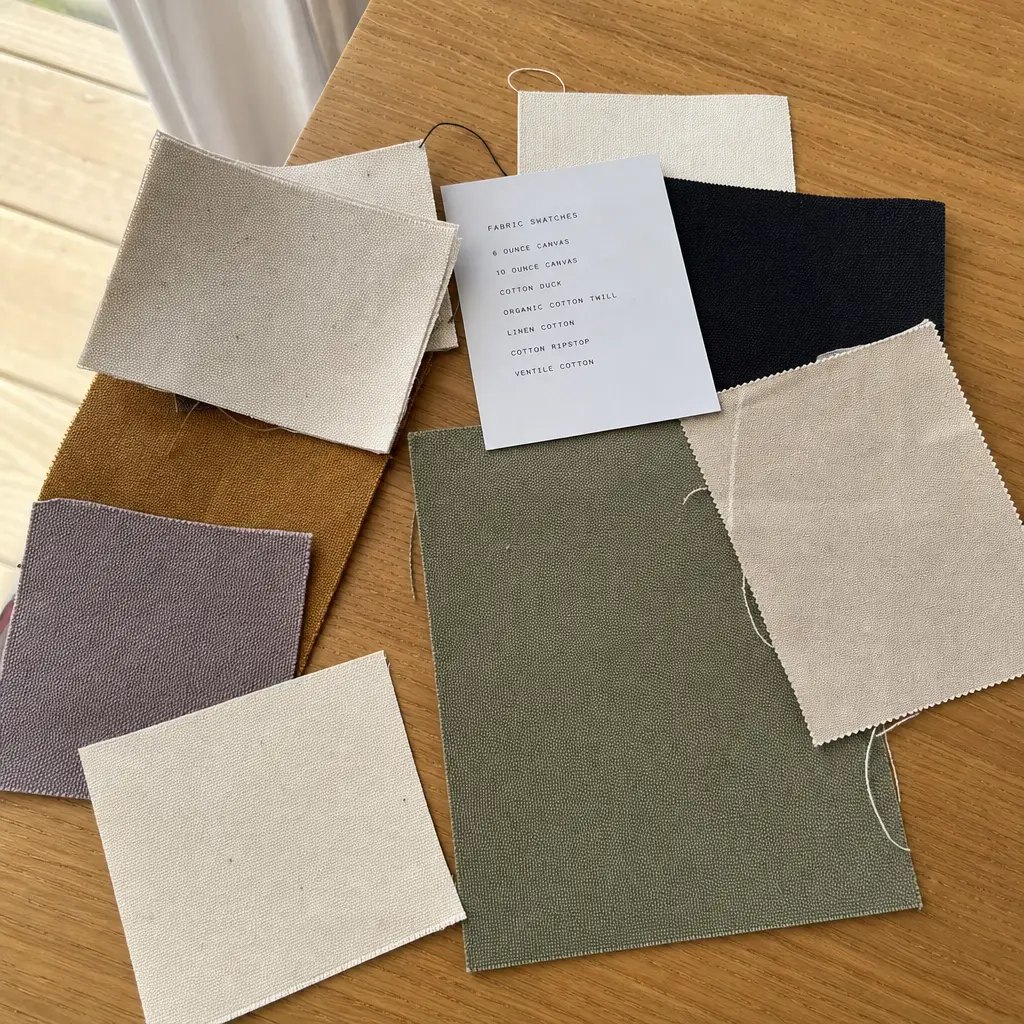
1. Start With the Spa Use Case, Then Work Back to MOQ
A cotton drawstring backpack used as a reception giveaway does not need the same specification as a paid retail accessory. That sounds obvious, yet many sourcing problems start with a short request such as “500 cotton drawstring backpacks with logo.” A factory can quote that request, but the quote may be based on the easiest fabric and construction available, not the bag your spa team actually needs.
Before you ask for pricing, name the job the bag must do. Is it a gift-with-purchase? A membership welcome kit? A robe-and-slipper carrier? A hotel spa amenity? A retail shelf item? A seasonal product bundle? Each answer changes the sensible fabric weight, cord, seam strength, logo method, packing, and minimum order quantity.
The contents matter too. An empty giveaway can prioritize softness, low cost, and a clean logo. A kit with a 500 ml lotion, a candle, a towel, and a voucher needs stronger seams and possibly a gusset. If the bag will be sold, customers will inspect stitching, print placement, handle comfort, and packaging more closely than they would for a free add-on.
MOQ pressure usually comes from four places: fabric availability, dyeing or printing setup, cutting efficiency, and labor batching. Stock natural cotton often supports lower quantities, sometimes around 300–500 pieces for a basic custom order. A custom dyed sage, special cord, lining, woven label, or all-over print may push the real MOQ higher because fabric mills and trim suppliers have their own minimums.
A useful procurement habit is to divide the brief into must-haves and nice-to-haves. Must-haves might include finished size, GSM range, clean logo placement, comfortable cord, and clean packing. Nice-to-haves might include a custom cord color, tissue wrap, hangtag, or location-specific insert. When you know which features can move, you can negotiate MOQ without weakening the bag.
- Write the intended load in the brief, for example: “must carry a 1.5 kg spa kit.”
- State whether the bag is free, bundled, or sold; paid retail items need tighter appearance and labeling control.
- For a first PO, avoid multiple fabric colors and multiple logos unless you accept higher MOQ and more QC work.
- Ask suppliers to quote a base option and upgrade options separately so MOQ drivers are visible.
- Do not approve pricing until the factory confirms whether MOQ is per color, per artwork, per size, or total order.
2. How Factories Commonly Calculate Cotton Drawstring Backpack MOQ
MOQ is rarely just a number a factory invents. It reflects the practical minimum for buying fabric, setting up printing, arranging a sewing line, cutting efficiently, and packing without excessive handling. When a factory has natural cotton rolls in stock, a smaller batch may be feasible. When the fabric needs to be dyed, washed, finished, or woven specially, the mill minimum can quickly become the real order minimum.
Decoration changes the calculation. Screen printing requires setup for each artwork and usually each color. Embroidery needs digitizing and machine setup, even when the logo is small. Woven labels may have a supplier minimum that is higher than the bag order. If a factory says “MOQ 500,” do not stop there. Ask whether that MOQ includes custom labels, print setup, packing, and all trims.
Finished bag weight is another useful reality check. A 35 x 40 cm single-layer cotton drawstring backpack in 140–160 GSM fabric may weigh roughly 70–110 g depending on seam allowance, cord, gusset, labels, and decoration. Heavier canvas, larger dimensions, lining, or thick cord can push the weight higher. GSM is fabric weight per square meter, not finished unit weight, so ask the supplier for both.
Spa chains with multiple locations can often reduce complexity by using one shared base design and adding location-specific insert cards, hangtags, or carton labels. The bag stays efficient to produce, while the marketing message can still vary by branch or promotion. If separate spa logos are required, ask whether production can be batched together, but expect separate setup charges and separate approval references.
- Stock natural cotton usually supports lower MOQ than custom dyed cotton.
- Custom fabric colors may require lab dips, dyeing minimums, and formal shade approval.
- Each print color normally adds setup time, cost, and a separate approval step.
- Woven labels, custom cords, toggles, and special packaging may have their own MOQs.
- Request price breaks at 300, 500, 1,000, and 2,000 pieces to see the actual cost curve.
3. Build a Specification Sheet That Makes Quotes Comparable
A strong RFQ should feel like a compact tech pack. It does not need to be complicated, but it should remove guesswork. Include finished size, fabric, construction, logo method, trim, packing, inspection expectations, and delivery target. Without this detail, two factories may both quote a “cotton drawstring backpack” while offering very different products.
Size should be stated as finished dimensions after sewing. For example: 35 cm W x 40 cm H, with a 4 cm bottom gusset if required. Add realistic tolerances such as width/height ±1 cm and gusset ±0.5 cm. For soft cotton bags, overly tight tolerances can increase rejection risk and cost, so agree on a range the supplier can consistently meet.
Logo placement also needs numbers. “Centered on front” is not enough for a clean retail program. A better instruction would be: 120 mm wide logo, centered horizontally, top of logo 160 mm below finished top edge, placement tolerance ±5 mm. For small woven labels, specify distance from side and bottom seams. Attach a marked drawing whenever possible.
For fabric, list composition and GSM separately. If sustainability claims matter, be precise. “Natural cotton look” is not the same as certified organic cotton. If you plan to market the bag as organic or certified, ask for certificate scope, certificate number, and chain-of-custody or transaction documentation before artwork, hangtags, or ecommerce copy are finalized.
Finally, state the expected use and care. Many cotton drawstring backpacks are packaging or promotional items, not laundry-tested apparel. If guests may wash the bag, or if it will contact wet towels, oils, or spa products, you need shrinkage control, stronger rub testing, and appropriate care labeling.
- Provide vector artwork such as AI, EPS, or editable PDF.
- List Pantone references, then approve final color with a physical strike-off when possible.
- Specify thread color, cord color, label position, and whether inside seams need overlock finishing.
- State packing requirements: bulk pack, individual bag, belly band, hangtag, barcode, master carton, or location-specific marks.
- Add allowable production overage or shortage, such as no more than ±3% unless approved.
4. Choose Fabric by Feel, Function, and Measured GSM
Fabric drives the first impression. For many spa retail programs, 140–160 GSM cotton plain weave is a practical starting range. It feels natural, folds easily, ships efficiently, and gives better opacity than very light cotton. A 110–120 GSM bag may work for a single-use event giveaway, but it can look thin when filled with dark bottles or boxed products.
Heavier cotton canvas, often around 180–220 GSM, gives a more retail-ready feel. It may be the right choice when the bag is sold as merchandise or packed with heavier products. The trade-off is cost, weight, carton volume, and sometimes a stiffer drawstring channel. Heavier fabric may also need stronger stitching and a cord that pulls smoothly through a thicker top fold.
Treat GSM as a measurable specification, not a style description. Use either a target with tolerance, such as 160 GSM ±5%, or an acceptable range, such as 150–170 GSM. Ask whether the supplier measures GSM from greige fabric, finished fabric, or bulk roll fabric after dyeing or washing. Finishing can change hand feel, shade, and weight.
Color selection is especially important for spa retailers because muted neutrals are common: natural, off-white, sand, beige, soft green, oatmeal, or pale grey. Natural cotton is often easier at lower MOQ, but shade can vary between lots because it is not heavily dyed. Bleached white looks clean but shows marks. Custom dyed colors require lab dips, shade tolerance, and usually more time.
Shrinkage matters whenever the bag may be washed, steamed, stored in humid conditions, or packed with damp towels. Ask for shrinkage data by test method, or agree on a simple internal check: measure before and after one cold wash and air dry. If final dimensions are critical, approve finished size after the shrinkage expectation is understood.
- Request swatches at 120, 140, 160, 180, and 220 GSM if comparing good/better/best options.
- Check opacity by placing the darkest planned spa product inside the bag under store lighting.
- Ask whether fabric is greige, bleached, dyed, washed, or pre-shrunk.
- For organic cotton claims, require valid certificates and transaction documentation, not only a supplier statement.
- Approve shade with a physical swatch or lab dip before bulk cutting begins.
5. Engineer the Cord, Channel, Seams, and Gusset for Real Use
The drawstring system is the part customers handle most. A cord can look beautiful in a photo and still feel frustrating if it catches, sheds, twists, or cuts into the shoulder. Specify the material, diameter, color, usable length, and finish. A 4–6 mm cord is common for cotton drawstring backpacks. Cotton cord supports a natural look; polyester cord can offer more consistent color and better abrasion resistance.
Approve cord length on a sewn sample, not from a chart alone. The length depends on finished bag size, channel construction, knot position, and how the drawstring becomes shoulder straps. Test whether an adult can wear the bag comfortably and whether the top closes fully when loaded. Knots should hold, ends should not unravel, and cord color should not transfer when rubbed damp.
Seams deserve the same attention as fabric. For a spa kit carrying 1–2 kg, require reinforced lower corners and drawstring exits. A stitch density of 8–10 stitches per inch is a practical range for many cotton bag constructions, but the approved sample should become the final workmanship reference. Inspect skipped stitches, loose tension, seam slippage, thread nests, and untrimmed ends.
A gusset is not always necessary. Flat drawstring backpacks are cheaper, lighter, and easier to fold. A 4–6 cm bottom gusset improves usable volume and helps kits sit more neatly when filled. If you need a gusset, define the construction clearly: true bottom gusset, side gusset, boxed corner, or simple fold. Terminology varies by factory, so a drawing or reference photo can prevent mistakes.
Do not judge construction only while the bag is flat. Fill it with the actual products or equivalent weight, then open, close, lift, and carry it. Bottle corners, candle boxes, and folded towels reveal stress points that are invisible on an empty sample.
- Use a load test based on real contents, such as 1.5 kg carried for 30 seconds and repeated several times.
- Specify reinforcement at channel exits and bottom corners for filled retail kits.
- Approve cord feel and shoulder comfort on a physical sample, not by material name alone.
- Measure channel width and confirm the cord pulls smoothly without excessive fabric bunching.
- For gusseted bags, fill the bag and place it on a flat surface to check symmetry.
6. Match the Logo Method to Quantity and Spa Brand Positioning
Logo decoration should support the brand without creating avoidable MOQ or quality risk. For simple spa logos, water-based screen printing is often a balanced option at quantities around 300 pieces and above. It can give a soft hand on cotton and is cost-effective for one or two colors. The catch is setup: each color and artwork version can require separate screens and approval.
Heat transfer can work for short runs or complex graphics, but it should be tested for flexibility, edge adhesion, gloss level, and rub durability. Some transfers look too shiny for a natural spa aesthetic. Digital printing may suit low-volume detailed artwork, though cost and color result can vary by fabric finish. Embroidery looks premium on small logos, initials, and icons, but it can pucker lighter cotton if not tested first.
Woven labels are often a good fit for understated spa retail. They feel more like merchandise than packaging, and they keep the front panel clean. However, label MOQs and label lead times may be separate from bag MOQs. Ask whether labels are cut-fold, end-fold, center-fold, or straight cut, and specify placement precisely.
For procurement comparison, ask suppliers to separate unit price from setup charges. Screen charges, embroidery digitizing, label sampling, label mold fees, and reorder charges should be visible. Also ask how long the factory stores screens, embroidery files, or label artwork. Reorders are easier when setup files and golden samples are controlled.
Pantone references help, but color on cotton will not look exactly like color on coated paper or a backlit screen. Approve a physical strike-off under agreed lighting. The strike-off should show color, opacity, edge sharpness, registration, ink hand feel, and placement.
- Choose 1-color screen print when cost control and clean spa branding are the priority.
- Test embroidery on the selected GSM before approval to check puckering.
- Consider a woven label for a subtle premium look, but confirm label MOQ separately.
- Avoid placing logos over drawstring channels, heavy folds, or bottom gussets.
- Keep the approved strike-off with the golden sample for final inspection.
7. Use Sampling to Lock the Product Before Bulk Production
Sampling is where a vague quote becomes a controlled product. A useful sequence is fabric swatch, logo strike-off, pre-production sample, and signed golden sample. For high-value or highly visible programs, you may request extra samples or a small pilot run. For many spa orders, one accurate PP sample is enough if it uses the intended bulk materials.
The swatch confirms hand feel, shade, weave, GSM, and opacity. The strike-off confirms logo color, size, ink coverage, registration, and texture on actual or equivalent fabric. The PP sample confirms the full bag: finished dimensions, seam construction, cord, gusset, logo placement, label, hangtag, folding, and packing.
Be careful with fast samples made from substitute materials. A supplier may sew a sample from available fabric while planning to use a different roll for production. That can be acceptable for an early concept sample if disclosed, but it should not be the final approval basis. Your PO should state that bulk production may not begin until a PP sample using bulk-intended materials is approved in writing.
Review samples the way a customer will use the bag. Fill it with intended spa products. Pull the cord repeatedly. Wear it on the shoulder. Check whether a bottle corner distorts the print. Place it under retail lighting. If the bag may contact wet towels, massage oils, or guest clothing, do a rub or wash check before approval.
Every change after sample review should be written into the specification sheet. Do not rely on email comments scattered across a long thread. The final approved tech pack and golden sample should match.
- Do not approve bulk production from a digital mockup alone.
- Mark the golden sample with date, PO number, supplier name, and buyer signature.
- Ask the factory to keep a duplicate golden sample on the production floor.
- If a sample fails, update the tech pack before requesting the next sample.
- Do not start bulk while logo color, cord, label, or packing is still “to be confirmed.”
8. Set Quality Control Standards Before the Purchase Order Is Issued
Quality control becomes harder to enforce after goods are finished. Define the inspection standard before the PO is placed, and make sure the supplier has accepted it. For cotton drawstring backpacks, common problems include stains, shade variation, wrong GSM, crooked logos, print bleeding, weak seams, poor cord movement, uneven gussets, odor, and incorrect packing count.
A practical inspection plan combines measurement checks, workmanship checks, function checks, and packing checks. Many buyers use ANSI/ASQ Z1.4 sampling with general inspection level II and agreed AQL levels; others use an internal sampling plan. Either approach can work if the definitions are clear.
Classify defects before production starts. Critical defects may include mildew, unsafe contamination, sharp objects, or completely wrong branding. Major defects may include wrong fabric, wrong logo, open seams, severe staining, unusable cord, or incorrect size outside tolerance. Minor defects may include a small loose thread that can be trimmed without affecting appearance or function.
Use measurable tolerances where possible. Finished width and height may be ±1 cm. Gusset may be ±0.5 cm. Logo placement may be ±3–5 mm depending on logo size. Cord diameter may be ±0.5 mm. GSM may be ±5% or a defined range. Stitching may be 8–10 SPI with no open seams. Carton count should match the packing list exactly.
Inspection timing also matters. An in-line check can catch print placement or stitching problems while goods are still repairable. Final random inspection should happen when production is complete or mostly complete and packed, but before balance payment and shipment. For first orders, event-critical promotions, or paid retail programs, budget for third-party inspection or require detailed factory QC photos and reports.
- Define critical, major, and minor defects before production starts.
- Inspect flat appearance and loaded function; both matter.
- Check first bulk output against the golden sample before full production continues.
- Request photos of fabric rolls, print setup, sewing line, packed cartons, and carton marks when possible.
- Do not release balance payment until inspection status and packing list are confirmed.
9. Plan Packing, Labeling, and Distribution With the Same Care as the Bag
Packing is part of the spa retail experience. Cotton can attract dust and absorb odors, so clean handling and storage matter. Standard export packing may be bulk folded into cartons, but spa retailers may prefer individual protection, paper belly bands, kraft sleeves, tissue wrapping, or branded hangtags. Each option changes labor, carton volume, cost, and sustainability messaging.
If the bag will be sold, labeling requirements become more important. Depending on destination and sales channel, you may need fiber content, country of origin, barcode, SKU, care instructions, warnings, or retailer-specific packaging. Do not assume the factory knows your compliance needs. Provide label artwork, placement, and barcode files, then confirm whether the supplier will print, attach, or pack buyer-supplied labels.
For spa chains, carton marking can save time at receiving. Ask for carton labels by location, SKU, quantity, PO number, color, and carton sequence. If one purchase order ships to several spas or warehouses, provide the distribution matrix before packing starts. Repacking after production adds cost and increases the risk of soiling, count errors, and delays.
Carton specifications also affect landed cost. Request carton dimensions, pieces per carton, net weight, and gross weight before booking freight. A carton gross weight below about 15 kg is often easier for manual handling, although your warehouse may have its own limit. In humid seasons or long ocean shipments, discuss moisture protection such as inner liners or desiccants, while staying within your brand’s packaging restrictions.
Packing approval should be physical where possible. Ask for a photo or sample showing folded size, logo direction, label placement, and carton layout. Small details, such as whether the logo faces outward, can affect how quickly store teams can merchandise or assemble kits.
- Confirm whether bags are individually packed, bundled, or bulk packed.
- Approve folded size and whether the logo must face outward.
- Request a packing list with carton number, quantity, gross weight, net weight, and dimensions.
- For retail sale, confirm destination labeling rules with your compliance team before production.
- Use location-specific carton marks when shipping to multiple spas or warehouses.
10. Build Lead Time, Landed Cost, and Reorder Logic Into the MOQ Decision
A custom cotton drawstring backpack timeline includes more than bulk sewing. Plan for RFQ clarification, swatches, artwork preparation, logo strike-off, PP sample, approval, bulk material preparation, cutting, sewing, decoration, finishing, inspection, packing, freight, customs if imported, and final distribution. A factory may quote several weeks for bulk production after sample approval, but the full project timeline is longer.
Work backward from the date bags must be in spa locations, not the date goods leave the factory. For a first custom order, an 8–12 week planning window is often safer, especially when custom color, label approval, third-party inspection, or international freight is involved. Reorders can move faster, but only when the same fabric, artwork, cord, packing, and QC standard are documented and still available.
Landed cost is the number procurement should compare, not unit price alone. Add setup charges, sample fees, courier costs, inspection, freight, duty, tax, customs brokerage, inland delivery, warehousing, repacking, labeling labor, and any disposal or rework costs. A bag that is cheaper by a few cents can cost more if cartons are inefficient, fabric is heavier than needed, or quality problems require sorting after arrival.
Compare quotes on the same Incoterm and packing basis. EXW, FOB, and delivered pricing do not include the same responsibilities. Also compare carton quantity and weight. Freight cost can shift the best option, especially when choosing between 140 GSM plain weave and heavier canvas.
For reorders, keep a clean file: approved fabric, GSM, shade, cord, logo size, strike-off, label supplier, carton quantity, inspection report, and golden sample photos. If the backpack becomes part of your core spa retail program, calculate reorder MOQ against real consumption. For example, if 10 locations use 40 bags per month, a 1,000-piece order covers about 2.5 months before safety stock. That math helps you avoid rush production, emergency air freight, and rushed QC.
- Ask for price breaks and lead times at several quantities before choosing MOQ.
- Compare EXW, FOB, and delivered quotes carefully; Incoterms change what is included.
- Keep setup files and approved samples organized so reorders are faster and more consistent.
- Forecast usage by location and promotion calendar, then add safety stock for delays.
- Avoid design changes after PP approval; they create re-sampling, delay, and cost risk.
Specification comparison for buyers
| Spec decision | Recommended procurement range | When it fits spa retail | Quote or QC risk to check |
|---|---|---|---|
| Bag size | 35 x 40 cm or 38 x 42 cm; finished size tolerance typically ±1 cm | Amenity kits, product bundles, robes, towels, sandals, and gift-with-purchase programs | Confirm finished size after sewing and any shrinkage. Cutting size and finished size are not the same. |
| Fabric weight | 140–160 GSM cotton plain weave for standard programs; 180–220 GSM canvas for premium retail | 140–160 GSM balances softness, packability, and cost; heavier canvas suits paid merchandise or heavier kits | Ask whether GSM is tested before or after finishing. Set tolerance at ±5% or a defined range such as 152–168 GSM. |
| Cotton type | Conventional cotton for cost control; certified organic cotton only with valid transaction documentation | Natural spa positioning, wellness gift sets, and brands with documented sustainability requirements | Avoid vague wording such as “eco cotton.” Request certificate scope, certificate number, and chain-of-custody documents before making claims. |
| Drawstring cord | 4–6 mm cotton cord or braided polyester cord; usable shoulder length approved on sample | Cotton cord gives a natural look; polyester cord can improve color consistency and abrasion resistance | Specify diameter tolerance ±0.5 mm, knot security, cord colorfastness, and smooth pull function after loading. |
| Seam construction | Lockstitch or chainstitch seams, 8–10 SPI, reinforced lower corners and channel exits | Bags expected to carry 1–2 kg of spa products, robes, slippers, towels, or retail bundles | Check skipped stitches, seam slippage, loose thread nests, and whether reinforcement is included in the quoted price. |
| Gusset | No gusset for flat giveaways; 4–6 cm bottom gusset for filled kits | A gusset helps packed spa sets sit flatter and improves usable volume | Measure finished gusset width ±0.5 cm. Inspect symmetry so the filled bag does not twist. |
| Logo method | 1-color water-based screen print for many 300+ pc orders; embroidery or woven label for small premium branding | Screen print works for clean spa logos; woven labels give a quieter retail finish | Confirm setup charges per color, Pantone tolerance, wash/rub test method, and maximum print area. |
| MOQ structure | Typical custom MOQ is 300–500 pcs per design/color for stock fabric; dyed fabric or custom trim can require higher MOQ | Useful for location-level replenishment, seasonal promotions, and membership kits | Clarify whether MOQ is per size, fabric color, print color, artwork, or total PO quantity. |
| Sampling | Fabric swatch, logo strike-off, pre-production sample, and approved golden sample | Reduces the gap between digital mockup, supplier interpretation, and bulk goods | Require the PP sample to use bulk-intended fabric, cord, thread, label, stitching, logo method, and packing. |
Buyer checklist before sampling
- Define the use case first: giveaway, paid retail item, spa membership kit, hotel amenity, pre-packed product bundle, or event gift.
- State finished bag dimensions, not only cutting dimensions; include tolerances such as width/height ±1 cm and gusset ±0.5 cm.
- Choose a fabric GSM range and request physical swatches from the same fabric category the factory intends to use in bulk.
- Ask whether MOQ is per fabric color, print design, logo color, bag size, packing style, or total purchase order.
- Keep first orders simple where possible: one bag size, one base fabric color, one logo method, and one packing format.
- Request a print strike-off for logo color and ink opacity, plus a sewn pre-production sample for construction and packing approval.
- Specify artwork format, Pantone references, maximum print size, logo placement from top/side seams, and acceptable placement tolerance.
- Set seam and stitch requirements: 8–10 stitches per inch, no skipped stitches, reinforced channel exits, and trimmed thread ends.
- Define cord requirements: material, diameter, color, usable shoulder length, knot finish, and smooth draw action under load.
- Ask for shrinkage, colorfastness, and print rub/wash test results if the bag may be washed or exposed to oils, moisture, towels, or guest clothing.
Factory quote questions to send
- What is your MOQ for this cotton drawstring backpack by fabric color, bag size, logo design, and print color?
- If we order below your standard MOQ, what surcharge applies and what causes it: fabric purchase, print setup, cutting loss, packing labor, or sewing-line minimum?
- Which fabric options can you quote from current stock: natural, bleached white, dyed colors, 140 GSM, 160 GSM, 180 GSM, or canvas?
- Can you provide fabric swatches with actual measured GSM, weave type, fabric width, and shrinkage test result?
- What finished size tolerance do you guarantee for width, height, gusset, and drawstring channel?
- What is the estimated finished bag weight per piece for each GSM option?
- Which logo methods do you offer for cotton bags: water-based screen print, pigment print, embroidery, woven label, digital print, or heat transfer?
- What are the setup charges per screen, embroidery digitizing fees, label mold fees, or other one-time charges?
- How do you match brand colors: Pantone C/U reference, physical color standard, lab dip, or print strike-off? What tolerance do you use?
- Can the pre-production sample be made with the same fabric lot, cord, thread, label, logo method, and packing planned for bulk?
Quality-control points to confirm
- Fabric GSM: test by the agreed method and accept only within the contracted tolerance, commonly ±5% or a defined range such as 152–168 GSM for a 160 GSM target.
- Finished size: measure width and height on relaxed flat bags; typical tolerance is ±1 cm for cotton drawstring backpacks unless a tighter range is agreed.
- Gusset width: measure at bottom center and both sides; tolerance ±0.5 cm, with no visible twisting when the bag is filled.
- Fabric defects: reject major stains, holes, obvious weaving slubs affecting appearance, oil marks, strong odor, mildew, or shade inconsistency beyond the approved sample.
- Seams: 8–10 stitches per inch, secure backtacking or reinforcement at stress points, no skipped stitches longer than 1 cm, no open seams, and no loose thread nests.
- Drawstring channel: even width, smooth cord movement, no catching, no tearing at channel exits, and secure channel seam after repeated pull testing.
- Cord: diameter within agreed tolerance, matched color, secure knots, no fraying, no excessive shedding, and functional length matching the approved sample.
- Load test: fill sample bags to the agreed product weight, often 1–2 kg for spa bundles, lift and carry for a defined cycle count, then inspect seams and cord exits.
- Print placement: measure from top edge and side seams; use tolerance such as ±3 mm for small logos and ±5 mm for larger prints unless otherwise agreed.
- Print quality: no pinholes that affect logo legibility, no bleeding, cracking, offset ink, poor curing, visible registration shift, or shade mismatch from the approved strike-off.