Why Material Selection Matters for Spa Retailers
Your spa's cotton drawstring backpack is more than a bag – it's a mobile advertisement for your brand. Guests carry it to the locker room, poolside, or home. If the fabric feels rough, the print fades after a few washes, or the drawcord snaps, the negative impression sticks. That's why material selection is the single most important decision in your sourcing process.
A well-chosen fabric weight and weave can reduce returns, improve guest satisfaction, and even lower your landed cost if you avoid over-engineering. This guide walks you through the key spec decisions, common pitfalls, and how to ask the right questions when comparing supplier quotes.
- Fabric weight directly affects perceived quality and durability
- Print method compatibility varies with weave and finish
- Pre-shrunk fabric prevents post-production surprises
- Drawcord material impacts both aesthetics and function
Fabric Weight: The GSM Decision
For a spa drawstring backpack, 140-180 GSM (grams per square meter) is the sweet spot. Below 140 GSM, the fabric feels flimsy and may tear under the weight of a towel and water bottle. Above 200 GSM, the bag becomes stiff and heavy, losing the soft, casual feel that spa guests expect. A 160 GSM plain weave cotton is a reliable starting point for most spa retail programs.
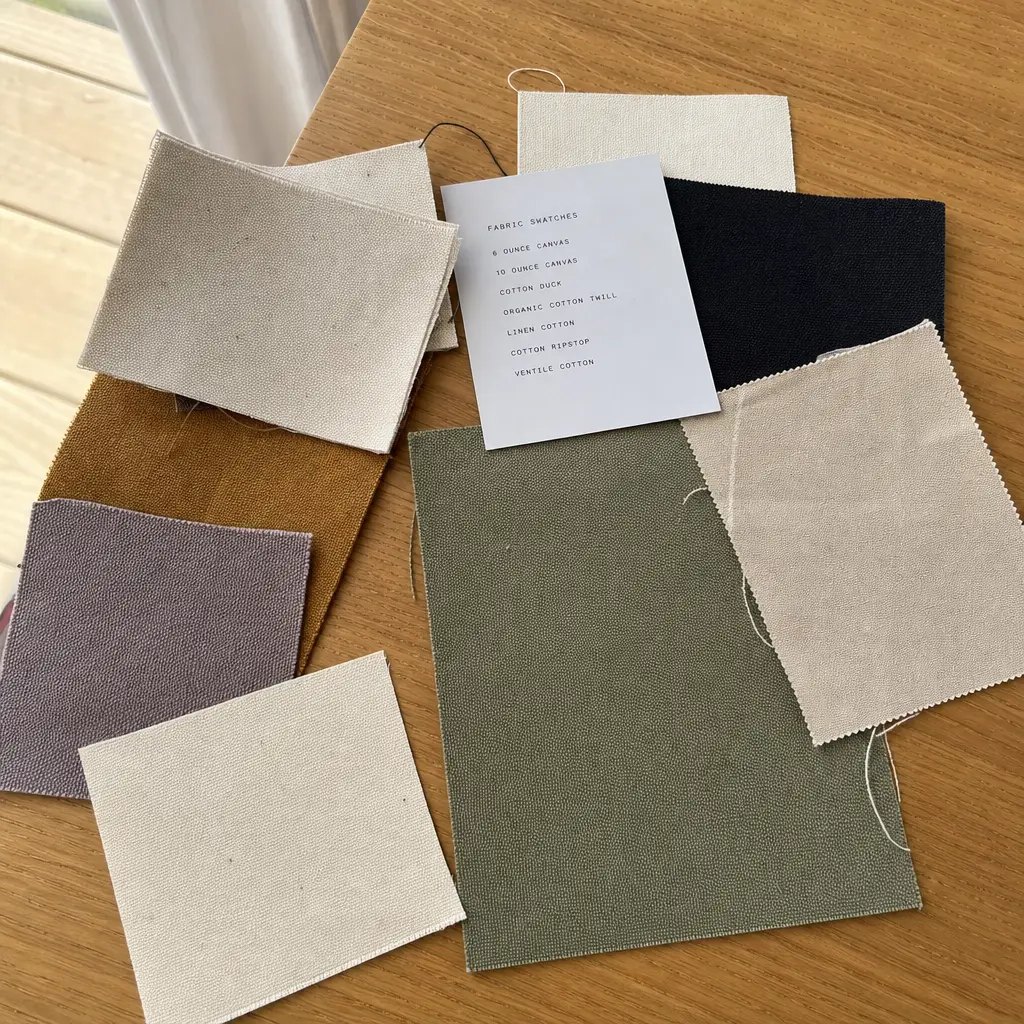
When you request quotes, ask suppliers for a swatch card with GSM labels. Some factories may offer 'heavyweight' at 180 GSM and 'standard' at 140 GSM. If you plan to screen print, the heavier fabric holds ink better and reduces bleed-through. If you're using a woven label instead of print, you can go lighter at 140 GSM to save cost.
- 140-160 GSM: lightweight, soft, best for woven labels or small prints
- 160-180 GSM: medium weight, good for screen print, holds shape
- 180+ GSM: heavy, stiff, better for box-bottom bags or premium lines
- Always request a pre-production sample to feel the fabric before bulk order
Weave and Finish: Plain vs. Twill, Washed vs. Unwashed
Plain weave is the most common and cost-effective choice for cotton drawstring backpacks. It provides a smooth surface for printing and consistent color absorption. Twill weave has a diagonal rib pattern that looks more premium but costs 10-15% more and can cause print bleeding if not pre-treated. For most spa retailers, plain weave at 160 GSM is the safest bet.
Fabric finish is often overlooked. Enzyme-washed or pre-shrunk fabric has been treated to reduce shrinkage to under 3% after the first wash. Unwashed fabric can shrink 5-8%, which may distort your print alignment or make the bag too small for its intended use. Always confirm in writing that the fabric is pre-shrunk, and request a shrinkage test on your sample.
- Plain weave: smooth surface, best for screen print, lower cost
- Twill weave: textured look, higher cost, requires print pre-treatment
- Pre-shrunk: essential for consistent size after washing
- Enzyme wash: softens fabric, reduces pilling, adds slight cost
Print Method and Compatibility
Screen printing with water-based ink is the standard for cotton drawstring backpacks. It bonds with the fabric fibers, feels soft to the touch, and holds up well to washing. Plastisol ink (used on polyester) is not recommended for cotton because it sits on top of the fabric and can crack. Heat transfer vinyl is an option for small runs but may peel on textured cotton.
If your design has fine details or multiple colors, screen print may require one screen per color, increasing setup cost. For a simple one-color logo on a 160 GSM bag, expect a setup fee of $30-60 per screen and a per-piece print cost of $0.15-0.30. Always request a print proof on the actual fabric before bulk production.
- Water-based screen print: best for cotton, soft hand feel, wash-resistant
- Heat transfer: OK for small runs (<200 pcs), but may peel over time
- Woven label: premium option, no print fading, but higher cost per piece
- Print location: center front is standard; side or bottom adds complexity
Drawcord Selection: Cotton vs. Recycled PET
The drawcord is a small component that can cause big problems. Cotton drawcord matches the natural look of the bag but can fray at the ends if not heat-sealed or tipped. Recycled PET (rPET) drawcord is stronger, more durable, and resists fraying, but it has a slight sheen that may not match the matte cotton fabric. Some suppliers offer a cotton-wrapped polyester core as a hybrid.
Standard drawcord length for an adult drawstring backpack is 100 cm (39 inches) per side, with a total of 200 cm per bag. If your bag has a bottom gusset, you may need a longer cord. Ask your supplier for a pull strength test – the cord should withstand at least 8 kg of force without breaking. For spa use, where guests may overstuff the bag, this is critical.
- Cotton drawcord: natural look, may fray, lower cost
- Recycled PET drawcord: stronger, fray-resistant, slight sheen
- Hybrid (cotton-wrapped polyester): best of both, higher cost
- Always request heat-sealed or metal-tipped ends to prevent fraying
Bottom Gusset: Flat vs. Box Bottom
Most standard cotton drawstring backpacks have a flat gusset – a simple folded bottom that lies flat when empty. This is the most cost-effective option and works well for lightweight items like a towel and sandals. A box bottom (also called a square bottom) adds volume and stability, allowing the bag to stand upright, but it increases sewing complexity and cost by 15-20%.
For spa retail, a flat gusset is usually sufficient. If you plan to sell the bag as a gift set with a water bottle or skincare products, a box bottom may be worth the extra cost. However, box bottoms can complicate print alignment because the print must be positioned above the gusset seam. Discuss this with your supplier early in the design phase.
- Flat gusset: simple, low cost, folds flat for packing
- Box bottom: stands upright, more volume, higher cost
- Print alignment: box bottom requires print placement above seam
- Cost impact: box bottom adds $0.20-0.40 per bag at 1000-piece MOQ
MOQ Logic and Cost Drivers
Minimum order quantities (MOQs) for cotton drawstring backpacks typically range from 500 to 1000 pieces per design per color. Some factories offer a combined MOQ – for example, 1000 pieces total across 3 colors – but this may limit your color matching options. Lower MOQs (200-300 pieces) are possible but often come with a 20-30% premium per piece due to setup and fabric waste.
The main cost drivers are fabric (40-50% of total), sewing labor (20-30%), print (10-15%), and packing (5-10%). A 160 GSM plain weave bag with one-color screen print and flat gusset typically costs $1.80-2.50 FOB for a 1000-piece order. Adding a box bottom, twill weave, or woven label can push the cost to $3.00-4.00. Always ask for a cost breakdown by component so you know where to negotiate.
- Standard MOQ: 500-1000 pieces per design per color
- Combined MOQ: may save cost but limits color flexibility
- Low MOQ (200-300): premium of 20-30% per piece
- Cost breakdown: fabric, labor, print, packing – ask for each line item
Sample Approval: What to Check Before Bulk Production
A sample is your only chance to verify that the factory understood your specifications. Request a proto sample (first sample) with your exact fabric, print, and drawcord. Check the GSM with a scale if possible – a 160 GSM bag should weigh approximately 80-100 grams for a standard size (38x43 cm). Measure the bag dimensions after a wash cycle to confirm shrinkage is under 3%.
Also check the print alignment, color accuracy (use a PMS swatch), and drawcord pull strength. If the sample passes, ask for a sealed sample – a final approved sample that the factory will use as the quality benchmark for bulk production. Keep this sample in your office for reference during QC inspection. A sealed sample prevents disputes over color, size, or finish.
- Proto sample: first sample to verify fabric, print, and construction
- Sealed sample: final approved sample used as QC benchmark
- Check after wash: measure dimensions and shrinkage
- Verify print color against PMS swatch under daylight
Packing and Lead Time Planning
Packing may seem like a minor detail, but it affects your retail readiness and shipping cost. Standard packing is 50-100 bags per polybag, then 10 polybags per master carton. If you need individual polybags with a header card or barcode label, specify this in your RFQ. Retail-ready packing adds $0.05-0.10 per bag but saves you time at the warehouse.
Lead time for a first order is typically 30-45 days from sample approval to shipment. This includes fabric sourcing (7-10 days), cutting and sewing (10-15 days), print (3-5 days), and QC (2-3 days). Rush orders (20-25 days) are possible but may incur a 10-15% expedite fee. Always build in a 1-week buffer for sample revisions, especially if you're new to the supplier.
- Standard packing: 50-100 bags per polybag, 10 polybags per carton
- Retail-ready: individual polybag with header card, add $0.05-0.10/bag
- Lead time: 30-45 days for first order, 20-25 days rush
- Always include a 1-week buffer for sample revisions
Landed Cost Comparison: Why the Cheapest Quote Isn't Always Best
When comparing supplier quotes, look beyond the FOB price. A $1.80 bag from Supplier A may become $2.40 landed after freight, duties, and inspection fees, while a $2.10 bag from Supplier B with better quality control may land at $2.60 but have zero defects. A 5% defect rate on a 1000-piece order means 50 unusable bags – that's $90-120 wasted at the low price, plus the cost of customer returns.
Ask each supplier for a landed cost estimate including freight (sea or air), insurance, customs duties, and inspection. If you're importing to the US, cotton bags fall under HTS 4202.92.3131 with a duty rate of 17.6%. Factor this into your margin calculation. A slightly higher FOB price with better QC and lower defect rate often results in a lower total cost of ownership.
- FOB price is not the final cost – include freight, duty, and inspection
- Defect rate: 5% defect on 1000 pieces = 50 wasted bags
- HTS code 4202.92.3131: 17.6% duty for cotton bags to US
- Total cost of ownership: FOB + freight + duty + inspection + returns
Specification comparison for buyers
| Spec decision | Recommended option | When it fits | Buyer risk to check |
|---|---|---|---|
| Fabric weight (GSM) | 140-180 GSM plain weave | Standard spa retail: soft hand feel, holds 2-3 kg load | Below 140 GSM risks tearing at 2-3 kg; above 200 GSM feels stiff and raises FOB cost |
| Weave type | Plain weave 1/1 | Most common for printability and cost | Twill adds 10-15% cost and may cause print bleed without pre-treatment |
| Fabric finish | Pre-shrunk + enzyme wash | Soft hand feel, shrinkage under 3% after first wash | Unwashed fabric can shrink 5-8%, distorting print and size |
| Print method | Water-based screen print | 1-3 spot colors on 140-180 GSM light cotton | Heat transfer may peel on textured cotton; avoid plastisol for spa use |
| Drawcord material | Cotton-wrapped polyester core | Natural look with fray resistance | Pure cotton frays; rPET has sheen mismatch; confirm 8 kg break force |
| Bottom gusset | Flat gusset (no box bottom) | Lightweight giveaways or retail packaging | Box bottom adds 15-20% cost and complicates print alignment |
| MOQ per color | 500-1000 pieces | First-time spa retail order with 2-3 SKUs | Lower MOQ often means 20-30% premium or limited color matching |
| Sample lead time | 7-10 business days | Proto sample with print proof | Rush samples (3-5 days) may skip shrinkage test |
| Packing | Individual polybag + master carton | Retail-ready with barcode label | Bulk packing without polybag risks dust and scuff marks |
Buyer checklist before sampling
- Confirm fabric GSM (e.g., 160 GSM) and weave type (plain 1/1) in writing before sample production
- Request a pre-wash shrinkage test on the sample fabric; target under 3% in length and width
- Verify print method matches your fabric weight: water-based screen print for 140-180 GSM
- Check drawcord length (100 cm per side, 200 cm total for adult size) and material
- Ask for a sealed sample with your logo before bulk production; keep it as QC benchmark
- Specify packing: individual polybag with header card or plain bulk; add barcode label if retail-ready
- Confirm MOQ per color and per design; ask if colors can combine under one MOQ
- Request a lab dip for color matching if using PMS colors; approve under daylight
- Set a lead time buffer: 30-45 days for first order including sample revision
- Get a quote breakdown: fabric, cutting, sewing, print, packing, and freight separately
Factory quote questions to send
- What is your standard fabric GSM for cotton drawstring backpacks, and can you provide a swatch card with GSM labels?
- Do you offer pre-shrunk fabric as standard, and what is the shrinkage percentage after first wash?
- What print methods do you recommend for 140-180 GSM cotton, and what is the minimum order per print color?
- Can you provide a sample with my PMS color and logo before bulk production, and what is the sample fee?
- What is your MOQ per design and per color? Can you combine multiple colors into one order?
- Do you use cotton, recycled PET, or cotton-wrapped polyester drawcords, and what is the standard length?
- What is your typical lead time for a 1000-piece order including sample approval?
- How do you pack the bags – polybag, bulk, or retail-ready? Can I add a barcode label?
- Do you have a quality control checklist for drawstring backpacks? Can I request photos during production?
- What is your payment term for first-time buyers? 30% deposit and 70% before shipment?
Quality-control points to confirm
- Fabric weight tolerance: ±5% of specified GSM (e.g., 152-168 GSM for 160 GSM target)
- Shrinkage after first wash: under 3% in both length and width
- Print alignment: within 2 mm of approved sample position
- Drawcord pull strength: minimum 8 kg break force
- Stitching: minimum 8 stitches per inch on all seams
- Bottom seam: double-stitched with reinforced bartack at stress points
- Color fastness: Grade 4 or above for both fabric and print (AATCC standard)
- Packing: no loose threads, no stains, no print smudges