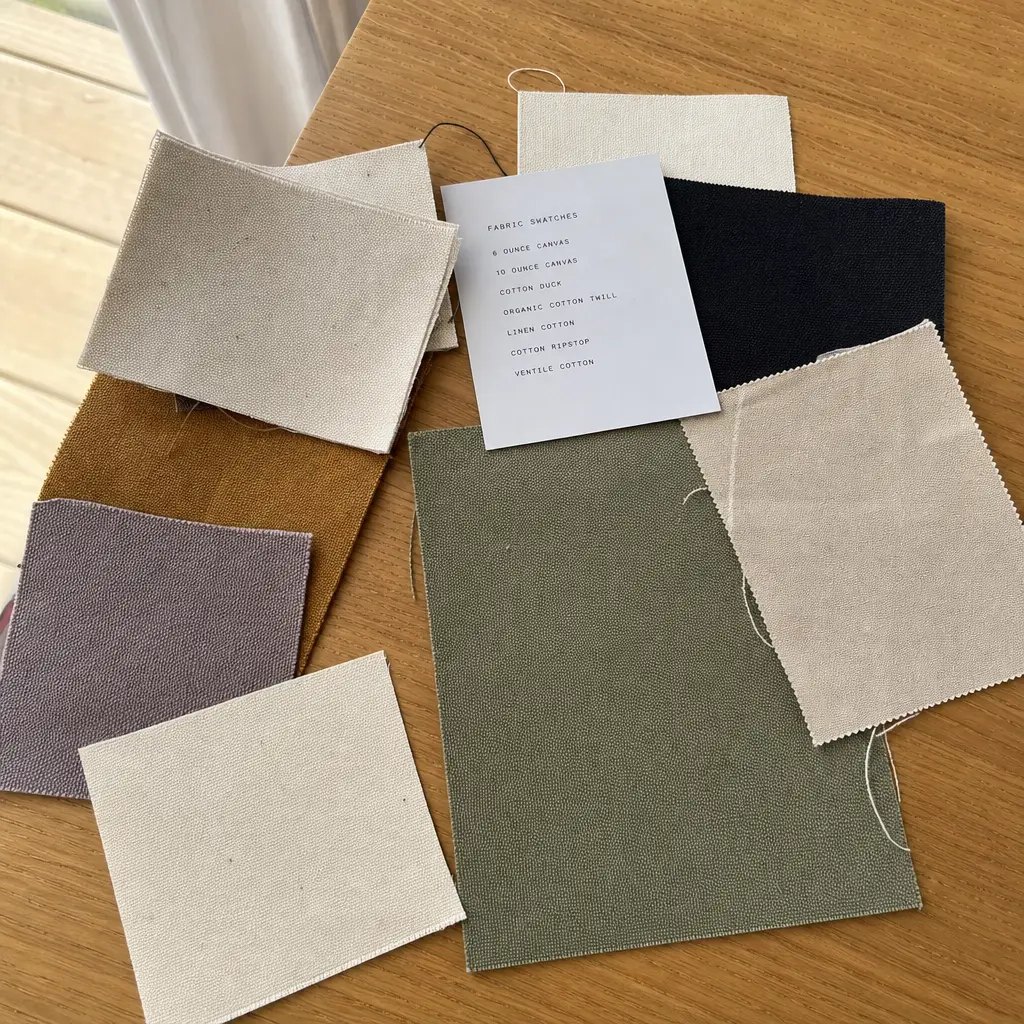
Why coffee roasters need a different drawstring bag spec
A cotton drawstring backpack for coffee roasters sits in a different buying category than a generic promotional gym sack. In many programs it is visible at point of sale, photographed for social content, included in subscription boxes, or sold as branded merchandise alongside coffee beans, drippers, mugs, or seasonal gift sets. That changes the sourcing logic. Procurement is not only buying a bag that closes; it is buying fabric hand feel, brand presentation, and repeatable quality at a target landed cost.
Coffee products also create a practical use case that exposes weak specifications quickly. A bag may carry one or more coffee packs, branded collateral, tasting accessories, or event materials. If the canvas is too light, the bag loses shape and feels low value. If the top corners are under-reinforced, they become a failure point after repeated opening and closing. If the print method is poorly matched to the fabric, the logo may crack, sit unevenly on the weave, or look weak against a natural brand palette.
For procurement teams, the main risk is not one dramatic defect. It is a chain of small specification gaps that add up to an unsellable or disappointing product: unclear GSM, vague print language, missing reinforcement details, and packing assumptions that distort freight cost. A supplier can still produce a visually acceptable sample from a loose brief, but bulk production will vary if the written standard is incomplete.
That is why a cotton drawstring backpack material selection guide for coffee roasters should start with use case and commercial objective. Is the bag a giveaway at a cupping event, a resale item in the roastery, a gift-with-purchase, or part of a premium subscription kit? The answer should shape the fabric weight, decoration method, and packing standard before RFQs go out.
- Treat the product as branded merchandise with visible retail value, not just a low-cost giveaway.
- Define the expected contents and handling pattern before choosing fabric and construction.
- Write the RFQ so every supplier is pricing the same bag, not interpreting the bag differently.
- Keep brand, quality, and landed-cost decisions linked; changing one usually affects the other.
Start with fabric weight, hand feel, and bag structure
For most coffee roaster programs, 10 oz to 12 oz cotton canvas is the most dependable starting range. It provides enough body for the bag to hold its shape better when empty, supports cleaner logo presentation on the front panel, and feels more substantial when handed to a customer. In practice, this range often suits retail resale, premium event kits, and subscription add-ons because the bag feels intentional rather than disposable.
An 8 oz cotton bag can still be commercially correct, but usually only in a more price-sensitive scenario. Examples include high-volume event distribution, short-life promotions, or a program where the bag is a supporting extra rather than a hero merchandise item. The risk with lighter canvas is not only durability. It can also affect perceived value. Specialty coffee buyers often respond to tactile cues, and a thin bag can make the entire brand package feel underbuilt even when the print looks good.
Buyers should also separate nominal fabric name from measurable fabric performance. Terms such as canvas, cotton bag fabric, or natural cotton do not provide enough information to compare quotes. Ask for measured GSM after finishing, yarn or weave description if available, and a note on whether the sample fabric is the same as the proposed production fabric. A heavier raw fabric and a lighter washed fabric may feel closer than expected, so the written measurement matters.
Hand feel matters because coffee roasters often position themselves around craft, origin, and authenticity. A stiff raw canvas may communicate ruggedness, but it can also feel unfinished if the brand aesthetic is clean and premium. A lightly washed or pre-shrunk fabric can improve first-touch perception, yet those finishes may change bag dimensions, increase price, and add lot-to-lot shade variation. Procurement should decide whether softness, structure, or cost discipline is the priority, then document that choice clearly.
- Use 10 oz to 12 oz canvas for most resale, gift, and premium merch applications.
- Use 8 oz only when unit cost, freight weight, or giveaway economics are more important than structure.
- Request measured GSM after finishing and keep that value on the approved spec sheet.
- Evaluate hand feel in person whenever possible; fabric names alone are too vague for purchasing decisions.
- Ask whether finishing affects shrinkage, shade consistency, or dimensional tolerance.
Choose the right fiber route for your brand and price point
For coffee roasters, fiber composition is often a branding decision as much as a sourcing decision. If the business positions itself around natural materials, craftsmanship, or environmentally conscious presentation, 100% cotton is usually the cleanest route. It aligns with the visual language many specialty roasters use and typically works well with simple screen-printed logos on natural or dyed canvas.
A cotton-poly blend may still be appropriate, but it should be chosen for a specific reason rather than accepted as an unexamined cost reduction. Blends can help with price targets, may influence shrink behavior, and can sometimes offer a more consistent production outcome depending on the mill and finishing process. However, they also change the hand feel, the way the fabric takes dye, and the way ink sits on the surface. For a roaster that sells an earthy, natural, origin-driven brand story, that difference can be noticeable.
There is also an internal procurement risk: suppliers sometimes suggest blend substitution late in the quoting or sampling process because stock is more available or pricing is easier to hold. If the quote does not lock composition in writing, the buyer may compare one supplier's 100% cotton bag with another supplier's lower-cost blend bag and think the offers are equivalent. They are not. Composition affects both product perception and technical performance.
The practical buying discipline is simple. Require the quote, sample approval, and PO to show the same composition standard. If blends are allowed as an alternative, quote them as a separate line item with their own sample and cost logic. That keeps procurement from solving a small raw-material issue by creating a larger brand or quality problem downstream.
- Choose 100% cotton when brand authenticity and natural hand feel are core to the program.
- Consider cotton-poly blends only after reviewing the impact on touch, appearance, and brand fit.
- Keep fabric composition fixed across the quote, sample, and PO documentation.
- Do not compare offers fairly unless the composition basis is identical.
Match the print method to artwork, abrasion, and order size
Decoration choice drives both appearance and commercial risk. For most coffee roaster logos, screen printing is the standard baseline because it is cost-efficient at volume, visually strong on canvas, and relatively durable under normal handling. Simple one-color or two-color logos, badge marks, slogan treatments, and event graphics usually fit this route well. On natural cotton, screen print can produce an intentionally matte, craft-oriented look that aligns with many coffee brands.
The key question is not whether a print method can be applied, but whether it remains acceptable after folding, packing, handling, and use. Drawstring backpacks are rubbed against clothing, stacked in cartons, and often stored flat. A decoration method that looks clean on a sample board may behave differently once applied to woven cotton fabric. Lighter transfers may crack on fold lines, large solid areas may show inconsistency over a textured weave, and detailed art may lose edge definition on coarse canvas.
Short runs or multicolor artwork may justify transfer or digital decoration, especially if the order quantity is low and the brand needs image complexity. In that case, the buyer should ask more aggressive questions. What is the recommended print area on this exact fabric? What rubbing or wash guidance does the factory provide? How does the decoration behave when the fabric is folded in bulk packing? What does the supplier consider an acceptable edge or position tolerance? These are practical procurement questions, not design questions.
Woven labels, sewn patches, or small brand tabs can be a stronger premium solution when the brand identity is minimal and the buyer wants longer-lasting detail without a large printed panel. The tradeoff is added sewing labor, placement tolerance, and a different visual hierarchy. For some coffee roasters, that understated branding fits the brand better than a broad front print. The right choice depends on artwork, quantity, use pattern, and the intended selling price of the finished item.
- Screen print is the safest default for simple roaster logos on cotton canvas.
- Use transfer or digital methods only when artwork detail or short-run economics justify them.
- Ask for decoration guidance based on the exact fabric weight and weave, not on a generic print capability list.
- Treat placement tolerance, opacity, and abrasion behavior as buying criteria, not afterthoughts.
- Consider woven labels or patches when premium restraint matters more than bold logo visibility.
Construction details that determine whether the bag feels premium or cheap
Buyers often focus first on fabric and logo, but construction usually decides how the bag is judged in the hand. A cotton drawstring backpack can use acceptable canvas and still feel low grade if the cord is thin, the channel is puckered, or the corners distort under light load. Coffee roasters using the product for resale or branded gifting should treat construction details as visible quality signals, not hidden factory decisions.
Start with the cord system. Drawcord diameter, material, and finishing all affect perceived quality and usability. A cord that is too narrow can cut into the hand and make the bag look budget-driven. A rough or inconsistent channel can cause the opening to bunch or drag. End finishing also matters; poorly heat-sealed ends may fray, while metal tips can look cleaner but add cost and require consistent attachment quality. Procurement should ask the supplier what drawcord they propose by diameter and material, not merely accept 'cotton rope' as an answer.
Stress-point reinforcement is the next major issue. The top corners, cord exit areas, and side seams are where weak bags usually fail first. Reinforcement may come through bar-tacks, backstitching, folded seam construction, or additional fabric layers depending on the design. What matters is that the reinforcement method is specified and visible on the pre-production sample. Without that, one supplier may build a bag for repeated use while another builds a bag that only survives light promotional handling.
Stitch density and seam cleanliness also separate a retail-capable bag from a throwaway item. Uneven seam allowances, skipped stitches, and excessive loose thread are not minor cosmetic issues on a simple cotton product. Because the bag is visually minimal, flaws are easy to notice. For that reason, buyers should inspect close-up sample photos and ask that the approved sample serve as the reference for seam appearance, not just for size and print.
- Specify cord material, diameter, and end finish instead of leaving the closure system generic.
- Identify the top corners and cord exit zones as mandatory reinforcement points.
- Use the pre-production sample to approve construction quality at close range, not only overall appearance.
- Include stitch consistency and seam cleanliness in the inspection standard for bulk goods.
How to compare supplier quotes without being misled by price
A low unit price is only meaningful when every supplier is quoting the same product basis. In cotton bag sourcing, that often does not happen automatically. One supplier may quote lighter fabric, basic print, and loose packing assumptions while another includes heavier canvas, reinforced construction, and tighter QC. Both quotes may be described as a cotton drawstring backpack, but they are not commercially equivalent.
For coffee roasters, the cleanest comparison method is to normalize five areas across all suppliers: fabric specification, decoration method, construction standard, packing method, and lead-time assumption. If any one of those areas is left open, the quote becomes harder to compare and later sample rounds consume time. Procurement should insist that each supplier respond to the same RFQ template and confirm any exceptions explicitly rather than burying them in note fields.
It is also important to separate core product cost from optional cost drivers. Fabric dyeing, custom labels, individual polybags, barcode application, multicolor print setup, and retail tagging should be visible as line items or clearly stated quote conditions whenever possible. That gives the buyer more control during internal cost review. A coffee roaster may decide that branded hangtags are worth the expense while individual polybags are not. Those decisions are easier when the quote structure is transparent.
Finally, compare supplier credibility, not only supplier claims. Ask for close-up sample photos, a true pre-production sample, and a clear answer on who is manufacturing the order. If the business is buying through a trading company, the buyer still needs enough factory-level information to understand how the bag will be built and inspected. Ambiguity is not neutral; it usually shifts risk to the buyer.
- Normalize the RFQ across fabric, print, construction, packing, and timing before comparing FOB prices.
- Treat hidden assumptions as quote gaps that require clarification, not as acceptable shortcuts.
- Request separate visibility on optional features that materially change cost.
- Use sample evidence and production clarity to judge supplier reliability alongside price.
MOQ, sampling, and lead time: where procurement decisions usually slip
MOQ on a cotton drawstring backpack is rarely arbitrary. It is usually tied to raw-material booking, print setup, and labor efficiency. Standard natural canvas with a simple one-color print can often support a lower minimum than custom-dyed fabric with sewn labels and retail packing. Buyers should ask what exactly is driving the MOQ, because the answer often reveals where cost and complexity are concentrated.
Sampling deserves more discipline than it often receives. A low-cost sample is not necessarily a useful sample. Some factories send a near-stock reference item with approximate fabric and decoration to keep the sample round moving quickly. That can be acceptable for confirming layout direction, but it should not be mistaken for a pre-production approval sample. For a roaster placing a meaningful order, the approval gate should include a physical sample built to the intended fabric, print method, and construction standard.
Lead time also needs to be split into its real components. Sample development, artwork confirmation, fabric booking, cutting, printing, sewing, finishing, inspection, and export booking all sit on the path. When suppliers compress this into a single reassuring promise, buyers lose visibility. A more useful question is: what needs to happen before bulk can start, and what events could cause delay? Fabric availability, color matching, accessory sourcing, and holiday capacity are often the real schedule variables.
Internally, procurement should document when the clock actually starts. Does bulk lead time begin after deposit, after artwork approval, after pre-production sample approval, or after fabric arrival? If that trigger is not defined, the delivery commitment becomes harder to enforce. This is especially important for coffee roasters working around seasonal promotions, holiday gifting, or launch dates tied to product releases.
- Ask what drives MOQ instead of treating the number as fixed and unexplained.
- Separate stock-reference samples from true pre-production approval samples.
- Break lead time into stages so schedule risk can be reviewed realistically.
- Define the official bulk lead-time start point in writing before placing the PO.
Quality control points that matter most for cotton drawstring backpacks
Quality control on this product should focus on the issues customers notice first and the defects that create returns or complaints. For a cotton drawstring backpack, those are usually fabric inconsistency, print problems, weak construction, incorrect size, and packing errors. The bag is simple, which means defects are not hidden by complex structure. If the front panel is crooked or the seams wave noticeably, the problem is visible immediately.
Fabric verification should cover both weight and consistency. Procurement teams should not assume that a canvas description on the quote guarantees the same fabric in bulk. Spot checking GSM and comparing hand feel and color against the approved sample are practical first steps. If the order relies on a natural or washed cotton look, shade variation across lots should be watched closely because mixed appearances inside one shipment reduce resale confidence.
Print inspection should go beyond logo presence. Check placement against the approved location, compare shade to the approved reference, and look for pinholes, weak coverage, smears, strike-through, and distortion caused by the weave. For coffee brands with minimal visual systems, small print defects stand out more because there is less artwork to distract from them. On premium merchandise, even slight crookedness can downgrade the perceived value of the item.
Construction inspection should emphasize the areas where failure begins: top stress points, side seams, cord channels, and cord ends. Pull the cords, open and close the bag, and examine whether the channel runs smoothly. Measure finished dimensions in a consistent way and confirm that the bag still falls inside tolerance after normal handling. Then review packing execution. An accurate product can still create warehouse problems if carton counts, outer marks, or label applications do not match the shipping standard.
- Use the approved sample as the visual and construction reference for inspection.
- Check fabric weight, hand feel, and shade consistency, especially on natural or washed cotton.
- Inspect print placement and opacity as carefully as color and artwork accuracy.
- Test the draw function and stress-point construction, not just overall appearance.
- Verify carton count, label application, and outer marks before shipment release.
Packing, carton planning, and freight cost control
Packing decisions can materially change landed cost on cotton bags because the product itself is soft and volume-sensitive. A backpack that is flat folded efficiently can ship at a much lower cube than the same bag packed with unnecessary fillers, small inner packs, or retail extras that the end customer never sees. Coffee roasters buying for their own stores, online fulfillment, or event distribution should decide early whether the product truly needs shelf-ready presentation or simply clean warehouse-ready packing.
Flat packing is often the most commercially sensible choice. It keeps carton efficiency high, simplifies receiving, and reduces unnecessary material cost. The bag can still be well protected through neat folding, clean inner handling, and consistent outer carton marking. If retail chain requirements or resale presentation demand individual polybags, hangtags, or barcode stickers, those additions should be treated as deliberate cost drivers rather than default packaging behavior.
Carton planning also affects internal operations after import. Units per carton, carton dimensions, carton weight, and mixed-color packing rules influence warehouse handling, order picking, and inventory counting. Procurement should ask for master-carton specifications before final approval, especially when comparing suppliers whose product quotes look similar. A bag program that saves a few cents per unit but creates a poor carton profile may cost more later in freight and handling.
For coffee roasters with seasonal demand, outer carton clarity matters as well. Clear shipping marks, style identification, and count accuracy make it easier to route inventory for events, ecommerce, or retail stores without opening unnecessary cartons. Packing is not a minor afterthought; it is part of the commercial design of the order.
- Choose flat packing by default unless retail compliance requires more elaborate presentation.
- Review unit-per-carton assumptions before approving the final quote.
- Confirm whether barcodes, hangtags, polybags, and shipping marks are included or extra.
- Treat carton dimensions and carton weight as procurement data, not just logistics data.
PO release checklist for coffee roaster buyers
Before issuing the purchase order, procurement should confirm that the approved sample, quotation, and written specification all describe the same product. This is where many avoidable disputes begin. The sample may look correct, but if the quote leaves open fabric finish, composition, cord detail, or packing format, the factory still has room to interpret the order differently in bulk. A clean PO should close those gaps.
Start with product identity. Confirm final bag dimensions, gusset status, colorway, drawcord specification, and any labels or patches. Then confirm measurable material data: composition, GSM or ounce weight, and finish type. If the bag uses washed or pre-shrunk cotton, note the expected size tolerance so bulk inspection can be judged against an agreed standard rather than memory.
Next, lock decoration and construction. The artwork file, print method, logo size, and placement should match the approved sample or signed proof. Reinforcement points, seam construction, stitch expectations, and cord finishing should be listed clearly enough that a production team can execute them without guesswork. Then close the packing section: units per carton, polybag requirement if any, barcode or hangtag application, carton marks, and target carton profile.
Finally, review the commercial controls: sample status, bulk lead time trigger, payment terms, inspection method, and claim handling process if bulk deviates from approval. That level of documentation may feel detailed for a simple cotton bag, but it is far less expensive than a shipment that arrives with the wrong fabric feel, weak corners, or inflated freight cube.
- Do not release the PO until the quote, sample, and written specification match exactly.
- Lock composition, GSM, finish, and dimensions in measurable terms.
- Tie artwork approval to a defined decoration method and placement tolerance.
- List reinforcement, stitching, and cord requirements clearly enough for production use.
- Close packing and carton details before production starts, not after goods are made.
- Document inspection timing, lead-time trigger, payment terms, and claim handling in the order file.
Specification comparison for buyers
| Spec decision | Recommended option | When it fits | Buyer risk to check |
|---|---|---|---|
| Fabric base | 10 oz to 12 oz cotton canvas; 8 oz only for price-driven programs | Best for coffee roaster merch, subscription add-ons, event kits, and retail resale where the bag needs body and print clarity | Light fabric can feel weak and may telegraph the contents; confirm measured GSM after finishing, not only the supplier's fabric name |
| Fiber choice | 100% cotton for natural brand positioning; cotton-poly blend only when shrink control or cost pressure is more important than pure hand feel | Useful when the buyer is balancing retail presentation, brand story, and target FOB | Blend content changes print response, shade, and hand feel; require composition disclosure on the quote and production spec |
| Fabric finish | Pre-shrunk or lightly washed cotton for better hand feel and size stability | Fits retail-facing programs and branded merchandise where the first touch matters | Washed lots can vary in shade and bag dimensions; approve a sealed pre-production sample from the intended fabric lot if possible |
| Print method | Screen print for simple logos; transfer only for short runs or detailed artwork; woven label or patch for understated premium branding | Choose by artwork, expected abrasion, order volume, and target price | Transfers may crack or lift; woven labels add sewing cost and placement tolerance issues; ask what method the factory has actually run on similar canvas weight |
| Closure style | Cotton rope or polyester-cotton drawcord with reinforced exit points | Good for bags that will be opened and closed repeatedly at retail, events, or gifting | Thin cords, rough cord channels, and weak corner reinforcement fail first; ask for close-up construction photos or pull-test approach |
| Reinforcement points | Bar-tack or backstitch at top stress points, double stitching on body seams, reinforced cord channel | Needed when the bag may carry coffee packs, gift items, or repeated daily-use contents | Without reinforcement, seam opening near top corners is a common complaint; define stitch density and reinforcement locations in the tech pack |
| Supplier route | Direct factory for custom control; trading company only if you need category consolidation or local communication support | Best when procurement wants clearer control over sampling, changes, and QC | Trading quotes can hide factory substitution; compare actual construction, sample quality, and inspection standards rather than only unit price |
| Packing method | Flat packed in master cartons with size or style identification; individual polybag only if retail compliance requires it | Fits importers optimizing freight cube, warehouse handling, and lower packaging cost | Over-packing increases carton cube and landed cost; under-packing may lead to dust, abrasion, and mixed counts |
| Lead time structure | Sample 7 to 14 days; bulk 25 to 45 days after approval depending on fabric booking, printing, and packing requirements | Realistic for seasonal coffee campaigns, store launches, and event deadlines | A short lead time promise without raw-material confirmation is a warning sign; lock the critical path before issuing the PO |
Buyer checklist before sampling
- Confirm final bag width, height, gusset if any, cord length, and realistic loading weight for coffee packs or gift contents.
- Specify fabric composition, measured GSM or oz weight, finish type, color standard, and acceptable shrinkage or size tolerance.
- Define decoration method, logo size, print position, Pantone references, and whether artwork approval is by digital proof, strike-off, or physical sample.
- Request sample photos plus one physical pre-production sample made to the final construction and packing spec before bulk approval.
- Lock reinforcement details including cord channel construction, top corner stress points, stitch type, and any bar-tack requirement.
- Agree packing method, units per carton, carton dimensions target, barcode or hangtag needs, and shipping marks before production starts.
- Record inspection checkpoints for fabric weight, stitching, print quality, stains, measurement tolerance, cord finishing, and carton count accuracy.
- Make the supplier quote exclusions explicit, including sample freight, plate cost, labeling, compliance testing, and destination charges if any.
Factory quote questions to send
- What is the exact fabric composition and measured GSM after finishing, and how do you verify it during production?
- Is the fabric raw, pre-shrunk, enzyme-washed, or piece-washed, and what finished size tolerance should we expect from that process?
- Which print method do you recommend for our artwork on this canvas weight, and what is the maximum practical print area without distortion?
- What reinforcement do you use at the cord channel, top corners, and body side seams, and can you share close-up photos of the construction?
- What drawcord material, diameter, and end finishing do you propose, and how does that choice affect durability and cost?
- Can you provide a true pre-production sample using the final fabric and print method before bulk production begins?
- What is the MOQ by fabric color, logo color count, and packing format, and what is driving the minimum quantity?
- What is included in the quoted packing: individual polybag, tissue, barcode, hangtag application, carton spec, and carton marks?
- What are the sample lead time, bulk lead time, and the main delay risks related to fabric booking, printing, or accessories?
- Which QC standard do you apply for fabric, stitching, print placement, size tolerance, and carton count, and do you support third-party inspection?
Quality-control points to confirm
- Fabric weight must match the agreed GSM within the supplier's stated tolerance; verify with a physical sample and bulk spot checks, not only a spec sheet.
- Fabric composition and finish should match the approved sample; if the order is sold on a natural cotton story, composition substitution should be treated as a major defect.
- Seam allowance and stitch density should be consistent across the body, cord channel, and stress points; inspect for skipped stitches, seam grin, loose thread ends, and uneven seam lines.
- Top corners and cord exit areas should show the agreed reinforcement method; these are the most common early-failure zones on a drawstring backpack.
- Cord ends should be secured cleanly; metal tips, knots, or heat-sealed ends must not fray, discolor, or scratch the fabric during transit.
- Print registration and placement should remain within agreed tolerance; check for smearing, pinholes, weak opacity, crooked placement, off-shade color, and ink strike-through on lighter fabric.
- Finished size should be measured flat using the approved method; confirm tolerance on width, height, and gusset if applicable, especially when washed cotton is used.
- Bag opening and draw function should be checked on random samples to confirm the cord channel is smooth and the cords pull evenly without snagging.
- Cartons should match the approved packing list exactly, including bag count, color mix, barcode or label application, carton marks, and overall packing condition.
- Bulk goods should be free of obvious stains, oil marks, mildew odor, excessive lint, and mixed fabric lots that change shade or hand feel within the same shipment.