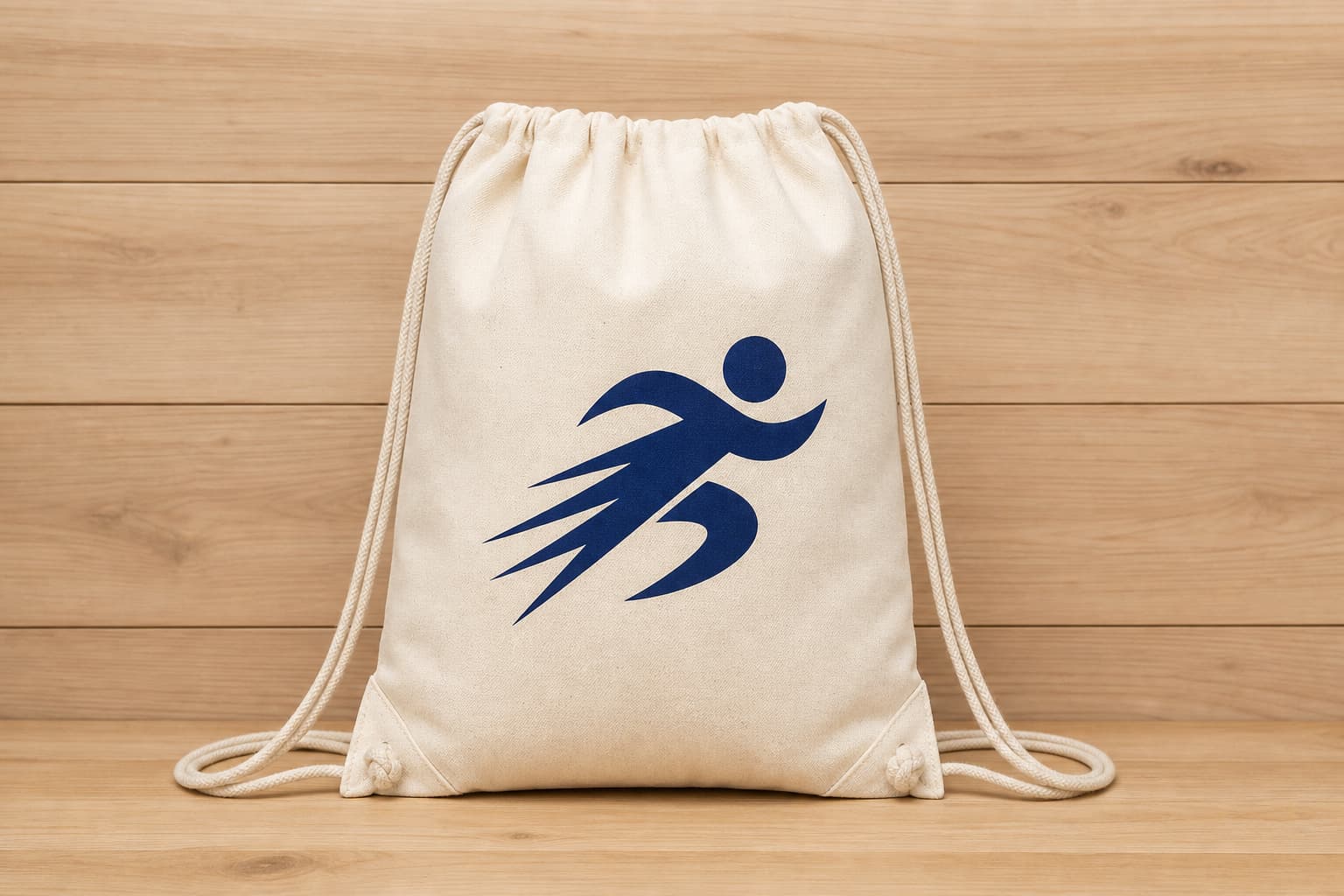
Why logo placement matters on cotton drawstring backpacks
On a cotton drawstring backpack, logo placement is not just a design choice. It affects print size, decoration method, sewing sequence, packing density, and how the bag looks when it is loaded with product or handed out at an event. A centered logo that looks clean on a flat panel can shift once the bag is filled, folded, or cinched tight.
For procurement teams, the real risk is inconsistent expectations between buyer and factory. If the RFQ only says "logo on front," the supplier may quote a small chest-level mark, a larger centered print, or a stitched label near the seam. That mismatch usually shows up in sample approval, not in the quote stage, which is the most expensive time to discover it. Clear cotton drawstring backpack logo placement instructions reduce rework and protect schedule.
- Placement changes visibility and brand recall.
- Placement can force a different print method or MOQ.
- Placement must be measured from seams, not guessed from a mockup.
- Placement can affect folding, carton count, and final presentation.
Start with fabric weight before choosing the logo position
Fabric weight sets the ceiling for what the bag can carry visually and physically. In many OEM quotes, 120-140 gsm is a common starting point for basic promo bags, but that range is not universal. Lower-cost suppliers may offer it readily for simple giveaways, while export-focused or premium factories may steer buyers toward 160-220 gsm for better shape, opacity, and print stability. Always confirm the actual measured GSM, because quoted weight can vary by mill, weave, and regional sourcing practice.
The right GSM depends on the job. If the bag is a promo handout, you may only need a one-color front print with a simple woven side label. If it is retail-ready, buyers usually want firmer fabric, sharper print edges, and a placement that still looks good after repeated use. For darker fabric colors or larger logos, a heavier cloth usually gives you more predictable print opacity and less distortion around seams.
- 120-140 gsm: common for lighter promo orders; check opacity and seam distortion carefully.
- 160-180 gsm: balanced option for better body, cleaner print edges, and wider buyer acceptance.
- 200-220 gsm: stronger feel, better for larger logos, premium positioning, and repeated use.
- Ask the factory to confirm whether this GSM has been printed successfully on the same decoration method before.
Compare the main logo placement options
The safest placement is usually the center front, but it is not always the best choice. A large centered logo gives maximum visibility, while a lower front mark can look more premium if the bag has a deep top tunnel or a dense cord area. Side labels work well when the buyer wants subtle branding and a cleaner retail look.
You should compare placement by visibility, risk, and production cost. A front print often uses the same setup across a larger run, while multiple placements can create more handling, more checks, and a higher chance of misalignment. For procurement, the best placement is the one the factory can reproduce consistently within your tolerance, not just the one that looks strongest on a digital mockup.
- Use center front for event giveaways and obvious brand recall.
- Use lower front when the top panel is visually crowded or folded.
- Use back panel branding when the front must stay clean for design reasons.
- Use a side woven label when you want more durable, less promotional branding.
Match the print method to the placement
Placement and decoration method should be decided together. Screen printing is usually the best fit for a simple front logo on cotton because it gives strong color and controlled cost on medium to larger quantities. Heat transfer can help with finer detail or multi-color artwork, but it must be tested on the actual cotton surface and at the final placement size, not only on a paper proof.
Embroidery and woven labels are more premium, but they are not always the best answer for a drawstring backpack. Embroidery can pucker lighter fabric if the stitch density is too high, and a sewn label needs enough seam space so it does not interfere with the drawcord channel or opening. Ask the supplier which method matches your desired look, your durability target, and your acceptable MOQ.
- Screen print: best for flat, visible front branding.
- Heat transfer: useful for finer detail or smaller runs, but confirm rub and wash resistance.
- Woven label: good for side branding, retail presentation, and repeated use.
- Embroidery: use carefully on heavier cotton or canvas-style bags only.
Use MOQ logic to keep the quote realistic
MOQ is usually tied to setup, not just unit count. One-color front printing on a single placement is easier to quote because the factory can run one screen, one placement check, and one packing routine. Once you add a second location, a woven side label, custom dyeing, or a multi-color design, the factory may move the order into a higher MOQ tier or add a setup charge.
MOQ behavior also depends on supplier tier, region, and order size. Smaller regional factories may accept a lower trial quantity for a simple one-placement order, while larger export suppliers may prefer a higher threshold because they spread setup, labor, and inspection costs across the run. Ask whether the MOQ applies per artwork, per placement, per fabric color, or per SKU, because those definitions can change the final quote more than the headline unit count.
- Ask if MOQ is linked to one logo position or the full bag spec.
- Ask whether a second placement changes setup cost, unit cost, or both.
- Ask if the quote is based on one fabric color, one print color, and one packing method.
- Do not compare quotes until placement and decoration method are identical.
Write the RFQ so the factory cannot misread the placement
A good RFQ should remove all guesswork. The factory needs the bag size, fabric weight, logo size, placement drawing, color count, and the method you want them to use. If you only send a logo file, the supplier may choose a placement that is easy for production but wrong for your brand presentation.
The most useful quote data is practical, not promotional. Ask for fabric GSM, sample lead time, bulk lead time, print method, carton count, overrun or underrun policy, and whether the bags are packed flat, folded once, or bundled in a polybag. If the order is for a specific market, include the compliance documents you need, such as fiber content labeling, chemical declarations, or test reports required by your importer or retailer. If a supplier quotes without these details, you are not comparing the same product.
- Specify logo width and height in millimeters or inches.
- Show the distance from top seam and side seam to the logo edge.
- State whether the logo must appear on one side only or both sides.
- Ask the supplier to quote sample cost, sample lead time, compliance documents, and bulk lead time separately.
Approve a sample with measurement, not just visual approval
A visual OK is not enough for logo placement. On cotton drawstring backpacks, the bag will move during sewing and packing, so the approved sample should be checked with a ruler and a straight edge. Confirm the placement against the seam line, cord tunnel, and bottom edge while the bag is flat and while it is lightly filled.
The sample stage is also where you should check artwork edges, stitch quality, and performance if the bag will be reused. A print that looks sharp in the sample room can still crack if the fabric is too loose, if the ink layer is too heavy for the GSM you selected, or if the decoration sits too close to a stress point. If your program needs consistent replenishment, keep the signed sample, measurement sheet, and color reference together as the control standard.
- Measure the logo position from fixed points on the bag.
- Check both flat and cinched views of the bag.
- Inspect print edges for blur, pinholes, or uneven ink density.
- Confirm the sample against the same fabric weight, color, and finishing as the bulk order.
Packing, lead time, and final buyer controls
Packing can change the final appearance of printed bags more than many buyers expect. If the factory folds the logo face inward too tightly, the print can rub against seams, tissue, or carton walls. For retail or gift programs, ask the supplier to show the fold method and carton count in the quote so you know what arrives at the warehouse.
Lead time should also be tied to the decoration method. A simple one-color screen print on a standard cotton bag usually moves faster than an order that needs a woven label, a second print position, a special fold, or post-production compliance testing. For planning purposes, sample approval, material booking, decoration, inspection, and packing should be treated as separate steps in the schedule. Confirm your acceptance method before bulk ships, including defect limits, measurement tolerance, and whether you will inspect to AQL or a custom standard.
- Confirm fold method before bulk production starts.
- Check carton count per size and per artwork version.
- Ask whether bulk lead time starts after artwork approval or after sample approval.
- Confirm overrun and underrun policy in the quote.
Specification comparison for buyers
| Spec decision | Recommended option | When it fits | Buyer risk to check |
|---|---|---|---|
| Center front logo | One-color screen print or simple transfer | Best for high visibility, sponsor branding, and straightforward artwork | Check seam clearance, cord tunnel height, and whether the logo still reads well when the bag is filled or cinched |
| Lower front logo | Screen print or heat transfer | Useful when the top area is crowded, folded, or you need a larger open print field below the cord channel | Check whether the print will sit in a fold line or get hidden by a front pocket or gusset detail |
| Back panel logo | Screen print for promotions or secondary branding | Good when the front carries instructions, event copy, a QR code, or another brand element | Confirm the back panel is not interrupted by seam allowances, reinforcement stitching, or care labels |
| Side seam label | Woven label or small sewn patch | Fits premium retail, repeated brand use, or a more subtle finish | Check fraying risk, label size, seam thickness, and whether the label interferes with the drawcord channel |
| Small cord-end or hem mark | Tiny woven tab, transfer mark, or internal label | Works for minimalist branding or secondary identification | Check whether the placement is too small to survive bulk sewing variation and carton handling |
Buyer checklist before sampling
- Confirm the exact logo placement with a measured sketch, not a verbal note or a generic mockup.
- State the fabric composition and measured GSM before discussing print method or price.
- Send vector artwork and define the number of colors, line thickness, and minimum text size.
- Set acceptance tolerances for placement, print color, and logo size before sample approval; do not leave them implied.
- Ask for a pre-production sample or strike-off with measurements from seams, edges, and the drawcord tunnel.
- Confirm whether the logo is printed before sewing, after sewing, or as a final decoration on finished bags.
- Check whether the quote includes one placement only or whether extra positions change the unit price, setup fee, or MOQ.
- Ask how the bags will be folded, packed, carton-counted, and labeled after printing.
- Request the compliance documents your market needs, such as fabric content, dye or chemical declarations, and any required test reports.
- Approve rub, wash, and alignment standards before bulk production starts, and state the inspection method you will use at receiving.
Factory quote questions to send
- What fabric weight do you recommend for this logo size and placement, and how does that change with our order quantity and destination market?
- Is the logo printed on cut panels before sewing or on finished bags after assembly?
- What is the maximum print area available on the front, back, and side seam, measured in millimeters?
- Does the quote include one placement only, and how do extra placements or extra colors affect price and MOQ?
- What artwork file format do you need, what minimum line width do you require, and what font size is still readable in production?
- Can you confirm the measured GSM, fabric composition, and whether the cloth is stock-supported or special order?
- Will you provide a pre-production sample with the exact placement, ink color, and print size?
- What placement tolerance can you hold in bulk production, for example plus or minus 3 to 5 mm from the approved sample?
- How will the bags be folded and packed in cartons after printing, and will the print face touch other bags or the carton wall?
- What is the realistic lead time for sample approval, compliance checks, and bulk production?
Quality-control points to confirm
- Measure logo position from fixed points on the bag: top seam, side seam, bottom edge, and cord tunnel.
- Set a written placement tolerance on the approved sample, such as plus or minus a few millimeters, and reject bulk against that standard.
- Check ink opacity on the actual fabric color, especially on natural cotton and darker dyed cloth.
- Inspect whether the print cracks, bleeds, or distorts when the bag is pulled open, folded, or lightly stuffed.
- Run the sample through any required rub or wash test for your market, and confirm the result on the actual fabric and decoration method.
- Verify that any woven label or sewn patch does not pucker the seam, block the drawcord channel, or create a rough edge inside the bag.
- Confirm carton packing keeps the print face from rubbing against rough folds, staples, or unwrapped hardware.
- Check color against a reference such as Pantone or a physical approved swatch if exact color matching matters.
- Use a receiving plan such as AQL 2.5 for major defects and 4.0 for minor defects, or your own buyer standard if stricter.