Start With the Use Case, Not the Artwork
Logo placement on cotton drawstring backpacks is not just a design choice. For farmers market vendors, the bag is handled, cinched, folded, stuffed, and reused, so the print needs to survive real use. If the mark sits where the cords rub or where the bag folds in transit, the first thing buyers notice will be damage, not branding.
Before you approve artwork, decide what the backpack is doing in the market. A giveaway bag needs high visibility and low cost. A retail item needs a cleaner finish and better presentation. A vendor tool bag may need durability and legibility more than decorative detail. That decision should drive print position, print size, and decoration method.
- Giveaway bags usually justify front-center branding and one-color print.
- Retail bags often work better with a subtle front logo plus a woven label.
- Vendor-use bags should prioritize print durability and seam-safe placement.
Bag Specs That Control the Print Zone
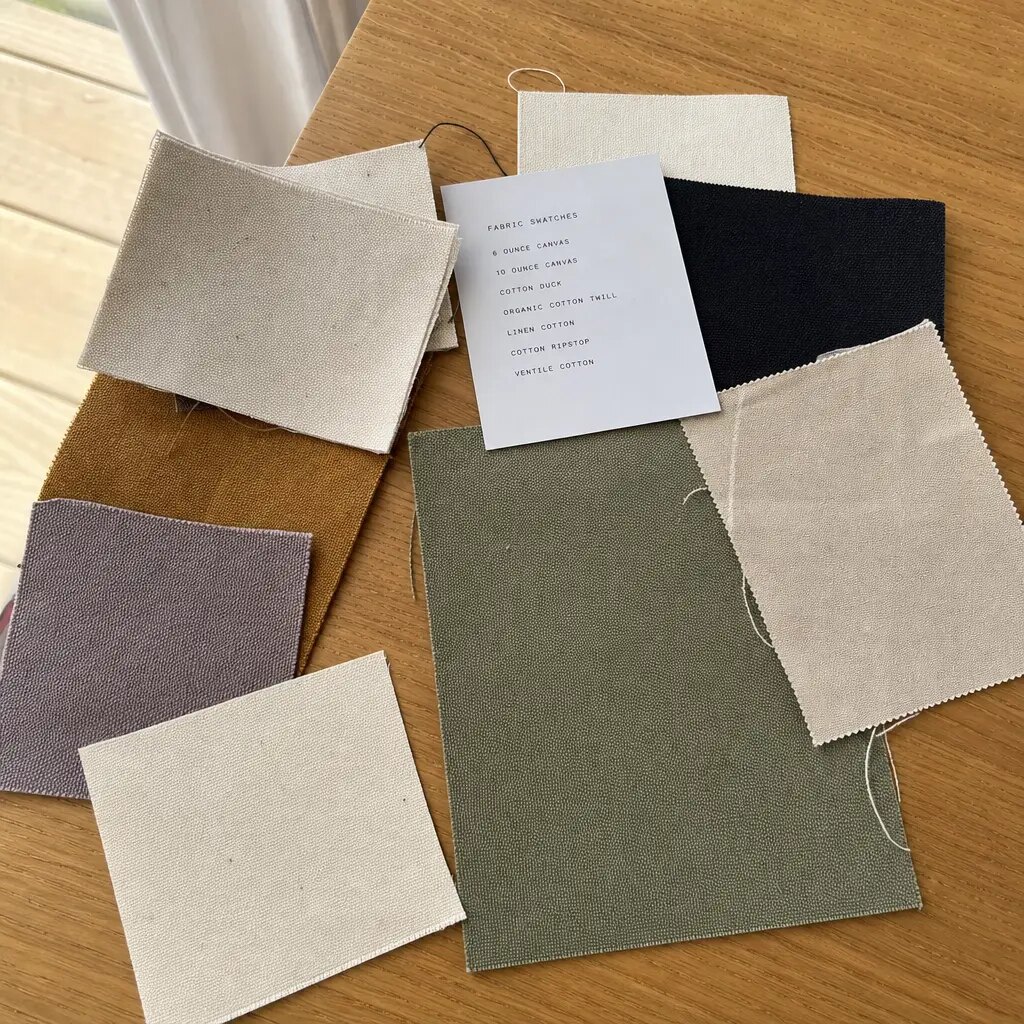
The fabric weight controls more than strength. On cotton drawstring backpacks, a light 5 to 6 oz fabric may be fine for a promotional item, but it can wrinkle and distort the logo area once the bag is filled. A midweight 8 oz to 10 oz cotton, roughly 270 to 340 GSM depending on construction, gives a better balance of print clarity, hand feel, and cost. Heavier fabric also gives embroidery a better base, but it raises material cost and can change the pack volume.
Do not treat the backpack as a flat printing canvas. The top cord channel, side seams, and seam allowances reduce the usable zone. For a common 35 x 45 cm bag, a front logo often works well around 18 x 20 cm on the main panel, while a smaller lower-front mark may be closer to 12 x 12 cm if the cords cross the upper area. Ask the factory for a dieline with seam lines, stitch lines, and cord path before you approve the screen or embroidery file.
- Ask for the printable area in millimeters, not just a rough visual mockup.
- Confirm whether the fabric is pre-shrunk or garment-washed before placement is fixed.
- Keep the artwork away from the top tunnel unless the factory has already approved that construction.
Placement Options That Actually Work
Front-center placement is the strongest option when the logo needs to be seen quickly across a crowded market aisle. It gives the best brand recall and usually works with simple one-color screen printing. The tradeoff is that the logo may crease when the bag is folded or flexed at the center line, so the artwork should be bold enough to survive a little distortion. Small text or thin lines are more likely to fail here than simple marks or strong wordmarks.
Lower-front placement is safer when the bag will be cinched tight and opened often. It keeps the logo away from the cord channel and can reduce wear from repeated friction. A side label or woven tab is useful when the buyer wants a cleaner retail look or an extra branding element without increasing print complexity. Use this option when the product needs to look finished, but the logo does not need to dominate the front panel.
- Front-center: best visibility, highest risk of folding creases.
- Lower-front: safer around cords, but the logo must stay large enough.
- Side label: good for subtle branding, weaker for distance visibility.
Print Method by Fabric Weight and Order Size
Screen print is usually the default choice for cotton drawstring backpacks because it is stable, repeatable, and cost-effective on simple art. It works best on midweight cotton with one to three spot colors and is usually the cleanest option for logos that need solid fill and sharp edges. Water-based ink gives a softer hand feel, while plastisol usually gives better opacity on darker or more textured fabric. If the bag is natural cotton, ask the supplier how they handle underbase and curing so the logo does not look washed out.
Heat transfer or DTF can make sense for small orders with full-color art or fine text, but the buyer should treat it as a different sourcing route, not a cheap substitute for screen print. If the order needs a premium look and the logo is small, embroidery can work well on heavier cotton, but the quote should include backing, thread count, and a tolerance for puckering. If the bag is very light, or if the artwork is close to the seam, embroidery may create more problems than it solves.
- Screen print is usually best for flat, durable logos on 8 oz to 10 oz cotton.
- Heat transfer is better for small runs with complex artwork, but it needs wash testing.
- Embroidery suits thicker fabric and simple marks, not small text or dense detail.
MOQ and Quote Logic
MOQ is often driven by setup rather than sewing capacity. A supplier may be willing to sew a small bag order, but every extra logo color, placement, or decoration method adds screens, alignment checks, and labor. That is why a one-location one-color logo can price very differently from the same bag with two placements or a front print plus side label. Buyers who compare only unit price usually miss the setup structure behind the quote.
The sourcing route matters just as much as the decoration method. A factory with in-house printing can usually keep the process tighter and faster. A bag maker that outsources decoration may still do good work, but the buyer needs to understand who owns timing, color matching, and defect responsibility. A trading company can combine multiple items into one order, which helps with consolidation, but the quote must still break out the real bag cost, decoration cost, and packing cost.
- Request MOQ per SKU, per color, per placement, and per decoration method.
- Ask whether the sample fee is refundable against bulk order value.
- Compare quotes only after you normalize the same bag size, print area, and packing spec.
Sample Approval: What to Measure
A good approval sample is not just a bag that looks acceptable from two meters away. Measure the print distance from the top seam, side seam, and centerline. Check the logo while the bag is flat and again when it is cinched closed, because the visual center often moves once the cords are tightened. If the logo is close to the opening, a slight shift can make the whole bag look poorly aligned.
Photograph the sample on a neutral background and note the actual measured size in millimeters. Confirm the ink color against a reference, inspect the edge sharpness, and check the reverse side for show-through or ghosting. If the bag includes a woven label, side tab, or embroidery, verify that the attachment does not interfere with the cord path or create an uncomfortable edge for the user.
- Measure from fixed construction points, not from the edge of the artwork file.
- Check the sample both empty and loaded so you see how the logo behaves in use.
- Approving a digital proof alone is not enough for production orders.
QC Thresholds Buyers Should Write Into the PO
Buyers get fewer surprises when the PO contains acceptance criteria. Define a placement tolerance in millimeters, such as a maximum offset from the centerline and a fixed distance from the top seam. For print, specify no smearing, no major pinholes, no misregistration between colors, and no cracking after folding. For embroidery, specify no loose ends, no pull marks, and no backing exposure through the front of the fabric.
The right tolerance depends on the order position. A promotion bag can usually accept a looser placement standard than a retail bag sold under a brand name. If the product will be used around food stalls or produce stands, add rub-resistance or wash-resistance language so the mark does not stain hands, clothing, or the bag surface. Put the standard in writing before production starts, because the factory will use that language when they inspect the finished goods.
- Define acceptable placement in millimeters.
- Define visible defects by type, not just by general quality language.
- Tie the finish standard to the use case: giveaway, retail, or vendor utility.
Packing and Carton Details
Packing affects both shipping cost and first impression. If the bag is sold at retail, the fold direction should preserve the logo without creating a hard crease through the print area. If the bag is a trade giveaway, bulk packing may be more efficient, but the factory still needs to keep the artwork from rubbing against zippers, cords, or carton edges. Do not let the packaging plan be decided after the bulk has already started.
Ask for carton count, pack quantity, carton dimensions, gross weight, and whether the factory can add hangtags or barcode labels without touching the print. A backpack packed too tightly can leave pressure marks across the logo, especially on heat transfer or low-cure ink. If the order has mixed sizes or mixed artwork, insist on clear carton marks and a packing list that matches the PO line by line.
- Choose fold direction to protect the logo, not just to save carton space.
- Keep decoration away from points where the packed bag gets compressed.
- Require carton markings that match the artwork version and pack count.
Lead Time and Schedule Risk
Most delays come from approval bottlenecks, not sewing. A simple one-color print can move quickly once artwork is final, but custom fabric, woven labels, or multiple logo positions add more steps and more chances for rework. If the buyer asks for a revised logo size after the sample is already made, the clock resets. That is why the approval schedule needs to be locked before bulk production starts.
Ask the factory exactly when lead time starts. Some suppliers count from deposit, some from artwork approval, and others from sample sign-off. Those are not the same. If the order supports a market season or event date, protect the schedule by confirming the sample deadline, bulk start date, and shipping buffer in writing. A clear timeline is more reliable than a promised fast delivery that has no formal start point.
- Lock artwork, sample, and packing before bulk production is released.
- Confirm the lead-time start point in writing.
- Build time for a second sample if the first approval is based on a revised logo placement.
How to Compare Supplier Quotes
Compare quotes only after the bag specification is identical. The same cotton drawstring backpack can price very differently if one supplier includes a woven label, another includes only print, and a third leaves out carton packing or overrun tolerance. Ask each supplier for the same artwork file, same bag size, same GSM, same placement drawing, and same packing instruction. Without that control, the low quote is usually just the quote with the fewest included details.
The best supplier is not always the cheapest. The safer supplier can explain how they measure logo position, what sample they will send, and how they will handle a re-order six months later. For procurement teams, that repeatability matters. A bag that looks acceptable once but cannot be repeated on the next lot creates hidden cost in returns, rework, and brand inconsistency.
- Normalize every quote to the same placement, decoration method, and packing spec.
- Compare sample quality, measurement clarity, and communication speed, not only unit price.
- Treat re-order consistency as part of supplier performance, not an afterthought.
Specification comparison for buyers
| Spec decision | Recommended option | When it fits | Buyer risk to check |
|---|---|---|---|
| One factory handles bag sewing and screen print | Factory-direct single-source production | Best for standard cotton bags, one- to three-color logos, and buyers who want fewer handoffs | Confirm the print room can hit the same placement on every lot and will itemize setup fees |
| Bag factory sews, specialist decorator prints later | Two-step sourcing with a separate decoration partner | Useful for full-color art, premium finishes, or a factory that cannot do the required print method in-house | Watch for schedule gaps, unclear responsibility for defects, and extra freight between suppliers |
| Blank stock bags plus domestic printing | Local finishing route | Works for urgent replenishment, small test orders, or buyers who need closer communication on artwork changes | Check cotton shade consistency, higher unit cost, and limited control over fabric lot matching |
| Front-center logo on the main panel | Highest-visibility placement | Fits giveaway bags, vendor staff bags, and brand activations where the logo must read from a distance | Make sure the mark does not fold under the cord tunnel or crease line when the bag is cinched |
| Lower-front logo below the cord path | Safer placement for repeated opening and closing | Works well when the bag is used daily and the logo still needs to be visible without hitting the drawstrings | Confirm the logo is still large enough after the bag is filled and viewed at arm's length |
| Woven side label plus small front print | Mixed-branding route | Good for retail buyers who want a cleaner look, a subtle brand cue, and a second branding element for the side seam | Verify the label does not interfere with the cord channel, stitching allowance, or fold pattern |
| Embroidery on the front panel | Premium decoration on heavier cotton | Suitable for small logos, higher perceived value, and thicker fabric that can support needle penetration | Check for puckering, backing show-through, and cost creep on multi-color embroidery |
| Heat transfer or DTF for full-color art | Short-run full-color decoration | Useful when the artwork has gradients, fine text, or a small MOQ that does not justify multiple screens | Request wash and fold tests so the film does not crack, lift, or become glossy after handling |
Buyer checklist before sampling
- Finalize the backpack size, fabric target, and GSM before discussing logo position.
- Send a vector artwork file and a clear placement drawing with measurements from seam lines.
- Decide whether the logo needs maximum visibility, a premium look, or low-cost production.
- Specify print method, number of colors, and whether a woven label or side tab is required.
- Ask for a physical pre-production sample, not only a digital mockup.
- Confirm packing format, carton count, and whether each piece needs an individual polybag or belly band.
- Request an itemized quote with setup charges, sample fee, unit price, and trade term.
- Lock the approval point for artwork, sample, and packing before bulk production starts.
Factory quote questions to send
- What is the exact printable area in millimeters, and how far is it from the top seam, side seam, and centerline?
- Which print method do you recommend for this fabric weight, and what is the reason for that choice?
- What is the MOQ per artwork, per color, and per placement if we add a second logo location?
- Are screen setup, plate fees, woven labels, or embroidery backing charges included or separate?
- What fabric GSM, shrinkage allowance, and color tolerance are included in your quote?
- Can you supply a pre-production sample with the actual print method, not just a blank bag with artwork proof?
- What packaging, carton size, packing quantity, and gross weight are included in the price?
- From which date do you count lead time: deposit, artwork approval, or sample approval?
- What defect tolerance or AQL standard do you use for logo placement, print clarity, and stitching quality?
Quality-control points to confirm
- Logo placement tolerance should be defined in millimeters, not words like centered or near the top.
- The print should stay clear after the bag is cinched, folded, and lightly compressed in a carton.
- Ink should not bleed into the seam allowance, cord tunnel, or stitching line.
- No puckering, broken stitches, loose threads, or needle marks should appear around embroidery or labels.
- The fabric GSM should match the approved sample, especially if the quote uses a blended or recycled cotton lot.
- Color should stay within the approved reference under daylight and factory inspection light.
- Individual packs should be consistent in fold direction and count per carton.
- Carton labels should match the PO, artwork version, and packing list before dispatch.