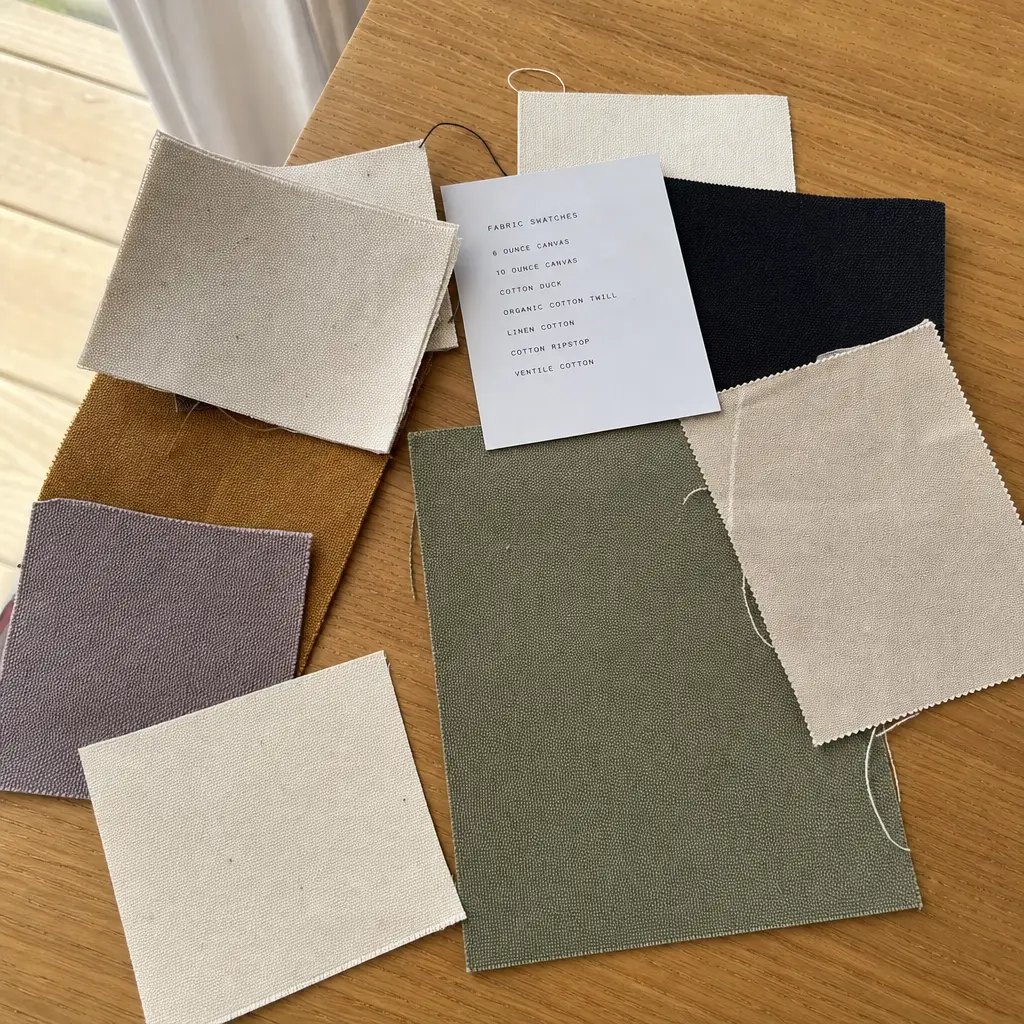
Start With the Bakery Use Case
Cotton drawstring backpacks for artisan bakeries are usually bought for one of four jobs: a retail merchandise item, a gift bundle bag, a tasting event giveaway, or a staff and workshop kit. Each job changes the correct fabric, print method, packing, and lead time. A buyer who only writes “cotton drawstring backpack with logo” will receive quotes that look cheap but are not comparable. One factory may quote 5 oz cotton with bulk packing, while another quotes 10 oz canvas with individual packaging and reinforced cord exits.
For bakery buyers, the product often sits close to food packaging, kraft boxes, aprons, recipe cards, or coffee merchandise. That does not mean the bag is food-contact packaging, but it does mean odor, dust, loose fibers, and print smell matter more than in a normal sports giveaway. The buying problem is not only getting a low unit price. It is making sure the backpacks arrive before a bakery launch, holiday campaign, or wholesale delivery window with the right hand feel and store-ready packing.
- Retail shelf product: use heavier cotton canvas, cleaner stitching, individual packing, barcode labels, and tighter visual inspection.
- Gift bundle packaging: prioritize correct capacity for boxed pastries, clean natural fabric, strong cords, and carton sorting by set.
- Event giveaway: use lighter GSM, simplified print, bulk or semi-bulk packing, and earlier artwork approval to protect the event date.
- Staff or bakery class kit: test shoulder comfort, cord strength, and wash or rub behavior because the bag may be reused often.
Choose GSM Before Asking for Price
Fabric weight is the first specification that changes both cost and lead time. Cotton drawstring backpacks can be made from light 5 oz cotton around 170 GSM, mid-weight 6 oz to 8 oz cotton around 200-270 GSM, or heavier canvas around 10 oz to 12 oz, roughly 340-400 GSM. For artisan bakery merchandise, 8 oz to 10 oz is often the practical range because it feels substantial without becoming too stiff for a drawstring closure. For a one-day tasting event, 5 oz or 6 oz can be acceptable if the buyer accepts a softer, thinner hand feel.
Do not compare supplier quotes unless the fabric weight is written in the same unit. Some factories quote in ounces per square yard, others in GSM, and some sales sheets use approximate names like “thick cotton” or “canvas style.” A proper RFQ should name the target weight and allow a small tolerance. If the bakery brand wants a natural unbleached look, also define whether visible cotton seed flecks are acceptable. Natural cotton varies by batch, and a buyer expecting a clean cream color may reject a normal unbleached fabric if this is not agreed before material booking.
- 5 oz to 6 oz cotton: lower cost, faster if stock fabric is available, suitable for light giveaways.
- 8 oz cotton canvas: balanced hand feel, good for printed bakery merchandise and reusable gift bags.
- 10 oz canvas: stronger retail feel, better opacity, higher freight weight, and slightly slower sewing on some lines.
- 12 oz canvas: premium structure, but less flexible at the drawstring channel and more expensive to ship.
- Natural cotton: attractive bakery look, but define acceptable specks, shade variation, and odor limits.
Size and Capacity Should Match Real Bakery Items
Many drawstring backpack size discussions stay too abstract. A bakery buyer should test capacity against the actual contents: a small bread loaf box, coffee bag, apron, class recipe booklet, pastry mix pouch, or folded staff T-shirt. A common adult backpack size is around 34 x 42 cm, but that may be too tall for a neat gift set and too narrow for a bakery box. If the product is used as secondary packaging for gift bundles, the width, gusset option, and drawstring closing height matter more than the nominal flat size.
A flat cotton backpack without gusset looks clean and is cost-efficient, but boxed bakery products create pressure at the seams and bottom corners. If the bag must hold a square pastry box or multiple retail items, consider a boxed bottom, side gusset, or at least heavier fabric with reinforced lower corners. These changes improve function but add sewing time, fabric consumption, and sample approval steps. The best RFQ includes both the finished size and the load test expectation, such as “hold 2 kg for 30 minutes without seam tearing or cord exit failure.”
- Flat size works for aprons, recipe cards, small packaged goods, and event merchandise.
- Gusseted size works better for boxed bakery gift sets but needs more fabric and sewing control.
- Top drawstring channel should close smoothly without folding bulky fabric into a hard lump.
- Finished size tolerance should be written, commonly plus or minus 1 cm unless the design is complex.
- Capacity testing should use real packed items, not only a weight block.
Print Method Drives Schedule Risk
For bakery logos, spot-color screen printing is usually the safest commercial choice. It works well for simple wordmarks, wheat icons, bread line drawings, and one to three solid colors. It is also easier to control on cotton canvas than full-color processes, provided the artwork is vector and the fabric surface is stable. The buyer should define print size, placement from top and side edges, ink type if required, and Pantone references. A signed print strike-off on the actual fabric is more reliable than a digital mockup.
Seasonal bakery artwork often creates trouble because illustrations of pastries, flour texture, or hand-drawn shading may contain fine lines and gradients. DTF transfer, heat transfer, or digital printing can reproduce more detail, but they add different risks: film hand feel, edge outline, curing control, cracking, or color shift on natural cotton. These methods are not wrong, but they need a sample stage before bulk production. If the launch date is fixed, avoid approving complex artwork late in the schedule.
- Screen print: best for solid bakery logos, lower color counts, and repeat orders.
- Water-based ink: softer hand feel, but color opacity must be tested on natural or dark cotton.
- Plastisol ink: stronger opacity, but buyers should check hand feel and curing odor.
- DTF or transfer: useful for multicolor art, but approve film edge, flexibility, and wash or rub behavior.
- Embroidery: premium look for small logos, but less common on lightweight drawstring backpacks and slower for bulk.
MOQ Logic Is More Than Total Quantity
A factory MOQ is usually built from material purchase, cutting efficiency, print setup, sewing line scheduling, and packing labor. For cotton drawstring backpacks, a simple 1-color print on stock natural cotton can have a lower MOQ than a custom-dyed fabric with three logo versions and individual retail labels. If a buyer asks for 1,000 units but divides them across five bakery branch logos and three fabric colors, the real production complexity becomes fifteen small batches. That increases setup loss and approval workload.
Importers and distributors should quote MOQ by SKU, not just by order. A SKU may be defined by fabric color, print design, cord color, size, hangtag, barcode, or destination carton mark. If the bakery program includes seasonal flavors or regional store names, group artwork where possible. A shared bag design with a removable paper tag often costs less and ships faster than printing a different logo panel for every location.
- Lowest MOQ route: stock natural cotton, one size, one print color, one packing method.
- Medium MOQ route: stock fabric with several print designs grouped into one production window.
- Higher MOQ route: custom dyed fabric, custom cord color, printed lining, or branch-specific artwork.
- Hidden MOQ driver: retail barcode labels and carton sorting by store can add labor even when bag production is simple.
- Better cost control: request price breaks at realistic quantities such as 500, 1,000, 3,000, and 5,000 units per design.
Build the Lead Time From Approval Milestones
The safest way to plan lead time is to separate decision time from factory production time. A typical workflow includes RFQ clarification, artwork preparation, fabric confirmation, sample or strike-off, buyer approval, material booking, bulk cutting, printing, sewing, trimming, inspection, packing, and shipment handover. The production clock should start after final approval of the pre-production sample or print strike-off, not after the first email or PO. This distinction prevents arguments when artwork is late or the buyer changes cord color after sampling.
For a normal cotton drawstring backpack order, sampling may take several working days after artwork and fabric are confirmed. Bulk production may take a few weeks depending on quantity, season, material availability, and print complexity. Export booking and inland transport add more time. Holiday bakery programs should add buffer because cotton mills, print rooms, and sewing lines become crowded before major retail seasons. If the program is tied to a bakery anniversary, catalog drop, or Christmas gift set, work backward from the warehouse receiving date, not the public launch date.
- Artwork and RFQ clarification: often the fastest step if the buyer sends vector files and clear dimensions.
- Fabric and cord confirmation: can be quick with stock materials, slower with custom dye or special rope.
- Print strike-off: essential for logo color, small text, and ink hand feel approval.
- Pre-production sample: confirms size, sewing, cord path, print placement, and packing together.
- Bulk production: should only start after signed sample approval to avoid rework.
- Freight handover: include time for inspection, carton labeling, export documents, and booking space.
Sample Approval Must Be Physical
Digital artwork approval is not enough for cotton backpacks. Cotton texture, fabric shade, print opacity, and cord behavior are physical issues. A buyer should approve at least a material swatch and print strike-off before allowing bulk printing. For new retail programs, a full pre-production sample is better because it shows finished size, drawstring movement, lower corner reinforcement, seam finishing, and packed presentation. If time is tight, approve a print strike-off first and keep the pre-production sample focused on construction.
A useful sample comment is measurable. Instead of writing “make print better,” write “increase logo width to 210 mm, center print 90 mm below top edge, keep Pantone 186 C target, and improve opacity so fabric specks do not show through red lettering.” For sewing comments, define the correction in position, material, or tolerance. Factories can fix precise comments faster, and procurement teams can keep approvals traceable for internal brand owners.
- Approve fabric shade under stable lighting and keep a signed swatch for bulk comparison.
- Measure the sample flat and record width, height, channel depth, cord length, and print position.
- Load the bag with the intended bakery items and test whether the top closes cleanly.
- Pull both cords repeatedly to check friction, twisting, slippage, and lower exit strength.
- Review packed sample if the goods will be displayed in retail, assembled into gifts, or routed through distributors.
Packing Affects Both Presentation and Freight
Packing is often treated as a final detail, but it affects cost, labor, carton size, retail readiness, and damage risk. Bulk packing is cheaper and works for event giveaways where the buyer will distribute bags from cartons. Individual polybags protect natural cotton from dust and moisture during long transit, but some bakery brands prefer less plastic. A paper belly band, hangtag, or glassine-style sleeve may improve retail presentation but needs extra material approval and packing labor.
For importers and distributors, carton data should be part of the quote. Quantity per carton, carton dimensions, gross weight, net weight, and CBM affect freight and warehouse receiving. A small unit price saving can disappear if the bags are packed loosely in oversized cartons. Light cotton bags compress well, but printed surfaces should not be crushed before ink is fully cured. The carton mark should match purchase order, SKU, color, print design, quantity, and destination rules.
- Bulk pack: low cost, efficient for events, but higher risk of dust marks and mixed counting at receiving.
- Individual polybag: stronger protection, easier counting, but may conflict with plastic reduction goals.
- Paper band or hangtag: good retail presentation, but test tearing, barcode scan position, and labor cost.
- Carton sorting by store: helpful for franchise bakeries, but adds packing time and label control.
- Moisture protection: important for natural cotton during ocean freight and humid warehouse storage.
Compare Quotes by Landed Cost, Not Unit Price
A cotton drawstring backpack quote should include enough data for landed-cost comparison. The unit price alone hides fabric weight, print setup, packing, carton cube, defect allowance, and inland transport assumptions. A lower quote based on 5 oz cotton may be unsuitable for a premium bakery retail shelf. A quote that includes 10 oz canvas, individual packing, retail labels, and inspection support may look higher but reduce downstream labor and claims.
Procurement teams should request price breaks and setup charges separately. Print screens, artwork handling, sample fees, custom labels, hangtags, and carton labels should not be buried in vague wording. For distributors, the most useful comparison is cost per sellable unit received at the warehouse, including expected freight volume and repacking needs. When the bakery brand has a fixed retail price, heavier fabric and premium packing must be justified by better perceived value, not by factory preference.
- Quote line items should show fabric specification, print method, number of print colors, packing, and carton data.
- Setup charges should be listed by artwork, color, screen, label, or packing component.
- Freight planning should use carton CBM and gross weight, not only unit quantity.
- Repacking cost should be considered if goods arrive bulk packed but need retail display preparation.
- Defect risk has a cost; weak print curing or dirty natural cotton can create returns even when unit price is low.
Set QC Thresholds Before Bulk Production
Quality control for cotton drawstring backpacks should focus on visible bakery-brand defects and functional failure points. Critical defects include mildew odor, sharp metal parts, wrong artwork, wrong fabric color, severe stains, and unsafe loose components. Major defects include print misregistration, poor ink curing, open seams, broken stitching, cord slippage, wrong size outside tolerance, and carton shortage. Minor defects may include small thread ends or slight natural cotton slubs within agreed limits.
AQL inspection is useful, but the defect list must match the product. For bakery retail, a stain on the front logo panel is more serious than a small thread on the inside seam. For gift bundle packaging, the bag must close properly when filled with the actual goods. For event giveaways, count accuracy and carton labeling may be the highest risk. The inspection checklist should be issued before bulk production, so the factory knows what will be rejected.
- Fabric: verify GSM, shade, odor, stains, weaving flaws, and unacceptable contamination.
- Print: verify color, placement, registration, opacity, curing, rubbing resistance, and cracked ink.
- Sewing: verify seam strength, skipped stitches, loose threads, channel width, and bartack quality.
- Cord: verify length, material, diameter, color, knot security, and smooth draw action.
- Packing: verify SKU separation, barcode labels, carton marks, quantity per carton, and export carton condition.
Specification comparison for buyers
| Spec decision | Recommended option | When it fits | Buyer risk to check |
|---|---|---|---|
| Fabric weight for bakery retail use | 8 oz to 10 oz cotton canvas, about 270-340 GSM | Retail merchandise, pastry class kits, gift bundles, or branded loyalty bags that need a sturdier hand feel | Below 6 oz may feel like a giveaway bag; above 12 oz increases unit weight, carton volume, and drawcord resistance |
| Fabric weight for event giveaways | 5 oz to 6 oz cotton, about 170-200 GSM | Bakery opening events, tasting festivals, school partnerships, or low-weight mailer inserts | Thin fabric can show dark print-through and may not carry boxed bakery products without distortion |
| Print method for bakery logos | Spot-color screen print with water-based or plastisol ink matched to approved artwork | Simple bakery marks, slogans, line drawings, and one to three solid brand colors | Fine flour-dust style textures, small serif text, and light ink on natural cotton need pre-production print proof approval |
| Print method for illustrated seasonal artwork | DTF transfer or digital print sample first, then bulk approval based on hand feel and wash rub result | Short seasonal runs with many colors, gradients, or detailed croissant and bread illustrations | Transfers can change bag softness and may crack if the film, curing, or fabric surface is not controlled |
| Drawcord material | Cotton rope or braided cotton cord, usually 6-8 mm for adult-size backpacks | Premium bakery retail items where natural look and shoulder comfort matter | Cord dye lot, shrinkage, knot security, and metal eyelet compatibility must be tested before bulk cutting |
| MOQ planning | Start from fabric color, print setup, and packing style rather than only total units | Mixed bakery branches, seasonal colorways, or distributor programs with several logo versions | Splitting 1,000 units across many prints can create higher setup cost and longer approval cycles than one clean bulk order |
| Packing style | Individual polybag or paper belly band, then export carton with size, color, and PO marks | Retail stores, distributor receiving, marketplace resale, or gift set assembly | Unprotected natural cotton can pick up dust, moisture, or carton abrasion during inland transport and warehousing |
| Lead time buffer | Approve fabric, lab dips, print proof, and pre-production sample before counting bulk production days | Bakery launches, holiday gift calendars, wholesale catalogs, and franchise rollout schedules | Counting from PO date instead of final sample approval is the most common cause of missed bakery launch dates |
Buyer checklist before sampling
- Define bag use first: retail merchandise, gift set packaging, staff uniform kit, tasting event giveaway, or distributor resale.
- Specify finished size with tolerance, fabric weight in oz or GSM, cotton type, fabric color, and whether shrinkage testing is required.
- Send vector artwork with Pantone references, print placement, maximum print area, and minimum readable text height.
- State whether cords should be cotton, polyester, recycled cotton blend, flat tape, or rope, including required color and diameter.
- Confirm reinforcement details at lower cord exits, seam allowance, bartack position, and whether metal eyelets are acceptable for the bakery brand look.
- Separate MOQ by fabric color, print design, packing method, and delivery destination instead of only asking for one total MOQ.
- Request sample stages: blank fabric swatch, print strike-off, fitted pre-production sample, and packed carton sample when timing allows.
- Require carton marks, individual packing method, carton dimensions, gross weight, and quantity per carton in the quotation.
- Build lead time from artwork approval, material booking, sampling, bulk cutting, printing, sewing, inspection, packing, and freight handover.
- Set acceptance criteria for stains, odor, print registration, seam strength, cord slippage, size tolerance, and carton damage before production starts.
Factory quote questions to send
- What fabric weight in GSM and oz are you quoting, and is it greige cotton, dyed cotton, washed cotton, or cotton canvas?
- Is the quoted price based on stock fabric or new dyed fabric, and what is the MOQ difference between those two routes?
- What finished size tolerance do you apply after sewing, and is shrinkage already considered in the cutting size?
- Which print method is included in the quote, how many colors are included, and what is the print setup charge per design?
- Can you provide a print strike-off on the actual fabric before bulk printing, and how many working days does it take?
- What cord material, diameter, color, and end treatment are included, and how is the lower cord exit reinforced?
- What packing is included: bulk pack, individual polybag, paper band, hangtag, barcode label, or retail carton sorting?
- What is the realistic production lead time after final sample approval, not after PO issue?
- How many units fit per export carton, and what are the estimated carton size, gross weight, and CBM?
- Which inspection standard will you use for AQL, and what defects are considered critical for bakery retail delivery?
Quality-control points to confirm
- Fabric GSM should be verified by cutting and weighing a measured fabric sample, not only by supplier description.
- Finished bag size should be measured flat with a stated tolerance, commonly plus or minus 1 cm for simple cotton backpacks.
- Print color should be compared against approved Pantone or signed strike-off under consistent light, not against a phone photo.
- Print adhesion and curing should be tested by dry rub, light wet rub, and reasonable bend or crease handling before packing.
- Cord channels and lower exits should withstand repeated opening, pulling, and shoulder loading without tearing or slipping.
- Seam ends should be backstitched or bartacked at stress points, especially near drawcord exits and top corners.
- Natural cotton must be checked for oil stains, mildew odor, weaving slubs beyond agreed limits, and visible dirt from workshop handling.
- Packing should protect light-colored cotton from carton dust, moisture, label adhesive transfer, and compression marks.
- Carton labels should match PO, SKU, color, print version, quantity, gross weight, net weight, and destination receiving rules.