Start With The Bookstore Program, Not The Fabric
Cotton drawstring backpacks for university bookstores are not one product with one correct fabric weight. The same basic shape can serve as a low-cost orientation bag, a retail item beside sweatshirts and caps, an alumni weekend add-on, a department giveaway, or a campus e-commerce SKU. Those jobs carry different expectations. A bag handed out with brochures can be lighter. A bag sold at full retail needs better hand feel, cleaner decoration, stronger cord exits, and more consistent repeat production.
A common sourcing problem starts with a short RFQ: cotton drawstring backpack, logo print, best price. That wording invites the supplier to fill in the blanks. The first quote may be based on the lightest available cotton, a narrow cord, minimal reinforcement, and generic carton packing. The price can look attractive until the sample arrives thin, the print looks patchy, or the lower corners strain when the bag is loaded. A stronger brief tells the supplier what the bookstore expects the product to do.
Before choosing GSM, write down the intended selling or distribution context. Is the bag free with admission packets, sold as campus merchandise, packed with textbooks, used for a club sale, or fulfilled through an online store? What will it carry? Will the logo be small and simple, or a large licensed graphic? Will the bag be reordered every season? These answers shape the right fabric, cord, reinforcement, packing, and QC plan.
- Orientation giveaway: prioritize low unit cost, simple print, 5 oz to 6 oz cotton, quick sampling, and efficient master-carton packing.
- Bookstore retail SKU: prioritize 7 oz to 8 oz canvas, stronger shelf presence, approved hand feel, retail labels, and repeat-order consistency.
- Premium alumni product: prioritize 10 oz canvas, reinforced lower cord exits, smoother cord operation, controlled shade, and a finished retail presentation.
- Department or club order: prioritize MOQ by artwork version, clear screen charges, logo approval records, and practical reorder documentation.
- Online-store SKU: prioritize barcode placement, individual or bundle packing rules, carton labels, and dimensions that fit fulfillment handling.
Use GSM And Ounces Without Guesswork
Fabric weight is usually discussed in ounces per square yard in cotton bag sourcing, while GSM gives procurement teams a clearer inspection reference. A practical guide is 5 oz cotton at about 170 GSM, 6 oz at about 200 GSM, 8 oz at about 270 GSM, and 10 oz at about 340 GSM. These numbers are useful, but they are not absolute. Mill practice, weave, moisture, finishing, dyeing, and washing can all shift the measured result.
For a university bookstore RFQ, state both the commercial ounce weight and the target GSM range. A useful line is not simply 8 oz canvas. It is closer to 8 oz cotton canvas, target 260 to 280 GSM, measured from bulk cutting-lot fabric before sewing. That extra language reduces room for disappointment because it tells the supplier what will be checked and where the reference comes from.
Tolerance matters because fabric variation is normal. The issue is not whether every roll lands on the exact same number. The issue is whether the delivered bulk fabric still matches the approved value and hand feel. Ask the supplier what tolerance they can control, then record it in the quote, sample approval, and inspection checklist. Keep the approved swatch and pre-production sample as the physical standard for weight, texture, shade, and feel.
GSM is also not a complete quality grade. A heavier fabric can still be poorly dyed, poorly sewn, or paired with a cord that jams in the top channel. A lighter fabric can be perfectly acceptable for a short event if the contents are light and the print is modest. Treat fabric weight as one measurable part of a complete product specification.
- 5 oz cotton, about 170 GSM: cost-sensitive giveaways with light contents and modest logo coverage.
- 6 oz cotton, about 200 GSM: common promotional weight with better opacity and hand feel than very light cotton.
- 7 oz to 8 oz cotton canvas, about 240 to 270 GSM: practical retail baseline for many bookstore programs.
- 10 oz cotton canvas, about 340 GSM: premium option that needs stronger reinforcement and careful channel planning.
- Tolerance language: define the acceptable GSM range and confirm the fabric will be measured from the cutting lot.
- Physical reference: file the approved swatch and sample so future orders are not judged by memory or catalog wording.
Match Fabric Weight To Real Loads
A drawstring backpack can look good when it lies flat on a sample table and still behave poorly when it is filled. Light cotton may sag around folders, notebooks, or a water bottle. The lower cord exits can pull sharply because they carry both the bag load and shoulder tension. Heavier canvas gives more body and often feels more credible as merchandise, but it also creates thicker folds, more seam bulk, and a stiffer top channel if the pattern is not adjusted.
For bookstore retail, 7 oz to 8 oz cotton canvas is often the most balanced starting point. It usually gives enough structure for display, supports a cleaner print surface, and feels more substantial in a customer’s hand than lightweight promotional cotton. For orientation kits and short-term giveaways, 5 oz to 6 oz cotton can make sense when the bag is carrying brochures, a T-shirt, a lanyard, or coupons. For premium alumni merchandise or heavier bundles, 10 oz canvas can work well, but only with appropriate cord routing and lower-corner reinforcement.
Finished size changes the load pattern. A 14 in x 17 in backpack and a 15 in x 18 in backpack may look close on paper, yet the wider version can pull more force toward the lower corners. A tall narrow bag may hold folders neatly but feel awkward with bulky apparel. Include expected contents in the RFQ so the supplier is not guessing from dimensions alone.
Do the load test before approving production. Put the likely bookstore contents into the sample: brochures, a sweatshirt, a notebook, a folder, or a filled water bottle if that is realistic. Pull the cords closed, wear it briefly, set it down, and inspect the bottom corners and side seams. This simple step catches more problems than a photo review.
- Light event contents: brochures, lanyards, coupons, and T-shirts can often work with 5 oz to 6 oz cotton.
- Retail merchandise: 7 oz to 8 oz canvas gives stronger shelf impression and better perceived value for campus-logo products.
- Heavier kits: notebooks, water bottles, tech accessories, or multiple apparel items call for 8 oz to 10 oz canvas plus reinforced lower corners.
- Large logo prints: heavier canvas usually improves surface stability, but ink thickness and stiffness still need sample approval.
- Wider bag shapes: specify reinforcement because load can pull outward at the lower cord exits.
- Repeat programs: lock finished dimensions and approved fabric references so future orders do not drift in size or hand feel.
Specify Construction, Finish, And Color Source
The word cotton is too broad for a controlled purchase order. A supplier may quote plain weave cotton, cotton canvas, washed cotton, organic cotton, recycled cotton blend, or a cotton-rich blend depending on what is available and what price point they are trying to hit. Two fabrics with similar GSM can feel different, print differently, shrink differently, and look different under store lighting.
Plain cotton is often softer and lower in cost, which can be fine for promotional programs. Cotton canvas is firmer and usually more retail-ready, especially at 7 oz, 8 oz, and 10 oz weights. Washed cotton may feel relaxed and casual, but it can wrinkle more and may not give the crisp presentation some bookstore buyers want. Natural undyed cotton has a familiar neutral look, but seed flecks and shade variation should be accepted or rejected on the swatch, not discovered in bulk.
Dyed cotton deserves extra attention. School colors are brand-sensitive, and the body panels, cords, patches, and labels may not all come from the same dye source. Ask whether the fabric is stock dyed, custom dyed, garment washed after sewing, or made to order. For official colors, provide Pantone references and ask what shade tolerance will be used. If the order may repeat, ask how the supplier controls dye-lot differences across seasons.
If organic cotton or recycled content is part of the buying requirement, bring it into the first RFQ. Ask what documentation is available and whether it applies to the exact bulk fabric used for the bags. Broad catalog wording is not enough for a purchasing file. Material content, certification or declaration, color process, MOQ impact, price impact, and lead-time impact should be separated clearly.
- Plain cotton: softer and often lower cost, suited to promotional bags where structure is less important.
- Cotton canvas: firmer and more retail-ready, usually preferred for 7 oz, 8 oz, and 10 oz bookstore backpacks.
- Natural undyed cotton: useful for neutral merchandise, but inspect flecks, shade variation, and logo contrast.
- Dyed cotton: confirm Pantone target, shade tolerance, colorfastness review, dye-lot control, and cord color matching.
- Washed cotton: check shrinkage, wrinkling, print crispness, dimensional consistency, and whether the washed look suits the retail fixture.
- Organic or recycled content: request documentation early and confirm whether the claim affects MOQ, sampling, price, or timing.
Choose Decoration Around The Artwork
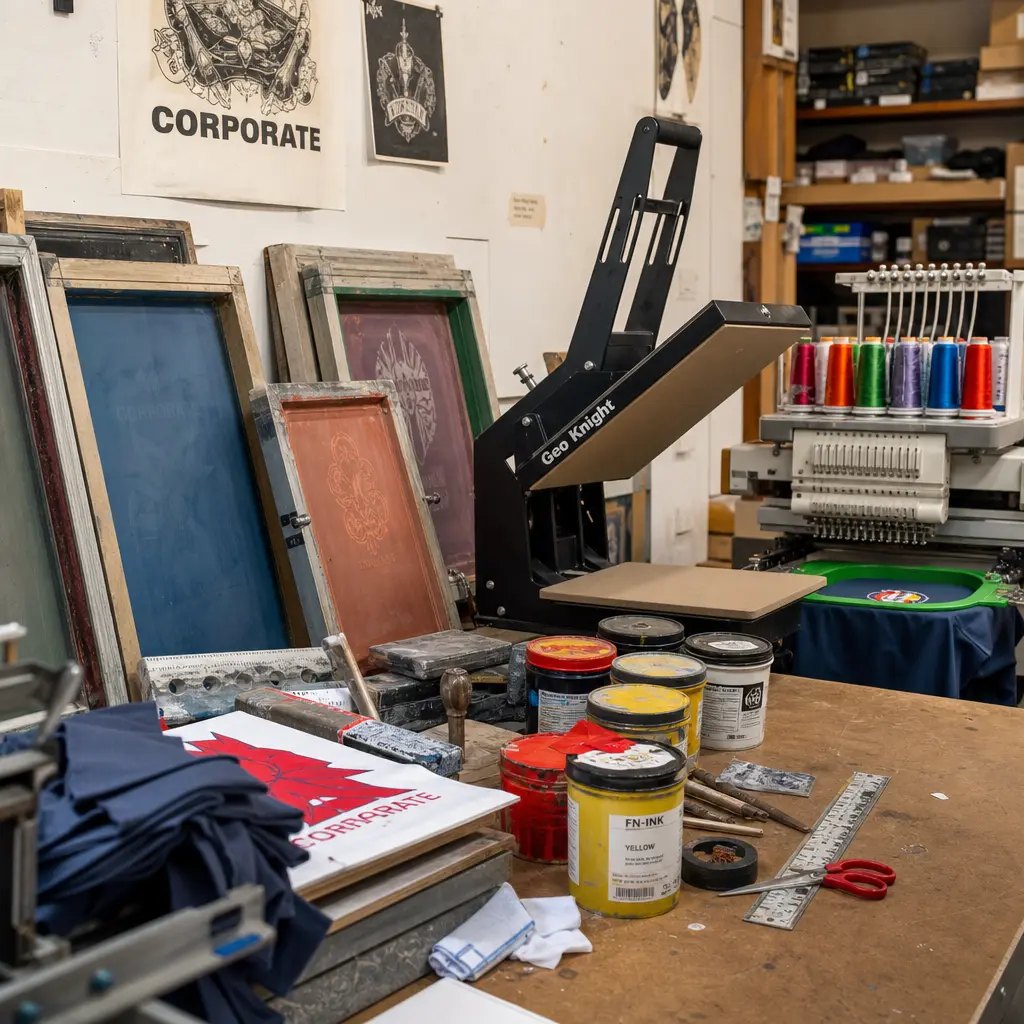
Screen printing is the standard decoration choice for many cotton drawstring backpacks because campus artwork often uses solid colors: school names, bookstore logos, mascots, department marks, and event names. It is practical for one to three colors and repeatable across larger quantities. Still, the print result depends on the fabric texture, ink system, logo size, ink opacity, curing, and how the bags are packed after printing.
Darker fabrics and official school colors need a more careful conversation. A white logo on navy canvas may need an underbase or high-opacity ink. That can improve coverage but also changes price and hand feel. A large solid print on 5 oz cotton may feel stiff or show pressure marks if cartons are packed too tightly. Water-based ink can feel softer, but opacity and color accuracy should be tested on the actual dyed fabric. High-opacity systems can cover better, yet they should be checked for tackiness, cracking, and fold marks.
Heat transfer can be useful when the artwork includes gradients, small separations, or detail that is difficult to screen print cleanly. The buyer should test transfer edge adhesion after folding and rubbing, and review gloss level against the final fabric. Embroidery can look premium on heavier canvas, especially for a small mark, but thin cotton may pucker or distort. For most university bookstore programs, screen print remains the practical default unless the artwork pushes the order in another direction.
Licensed logos should be approved at final size, final placement, final color, and final decoration method before screens or transfers are made. A mascot with fine lines may need simplification on textured cotton. A bookstore logo that looks clean on paper may lose crispness on loose weave fabric. The strike-off should show the real fabric or a close comparable, not only a smooth test sheet.
- Screen print: best for solid school names, bookstore logos, mascots, simple department marks, and repeat programs.
- Underbase: ask whether dark fabric requires an underbase and whether it is included in the quoted print charge.
- Water-based ink: softer feel, but test opacity, color accuracy, and rub performance on dyed cotton.
- High-opacity ink: stronger coverage, but review hand feel, tackiness, pressure marks, and cracking after folding.
- Heat transfer: useful for complex artwork, but inspect edge lift, gloss consistency, and adhesion on the actual fabric weight.
- Embroidery: use mainly on heavier canvas with proper backing, controlled stitch density, and a pucker check.
Do Not Treat Cords As An Afterthought
The top channel, drawcord, and lower cord exits decide whether the bag feels useful or frustrating. Fabric weight alone does not protect those areas. A 10 oz canvas body can still fail if the lower corners are weak. A lighter cotton backpack can perform acceptably for an event if the cord exits are properly reinforced and the load is modest.
A 5 mm to 7 mm cord is common, but the right diameter depends on channel width, fabric bulk, and shoulder comfort. Cord that is too thin can dig into the shoulder and look cheap beside heavier canvas. Cord that is too thick can jam in the channel, especially after printing, pressing, and carton compression. Cotton cord supports a natural look and often fits well with undyed cotton bags. Polyester cord may slide more smoothly, resist abrasion, and match dyed colors more consistently.
Lower cord exits need to be specified. Options include bar tacks, stitched patches, folded reinforcement, eyelets, grommets, or a combination. Metal hardware can look durable, but it adds cost, weight, and inspection points. Stitched reinforcement can be clean and soft when sewn accurately. The best choice depends on the fabric weight, target price, retail positioning, and the expected contents.
Ask for close-up sample photos of the bottom corners, top channel, knot or tip method, and side seams. Then handle the sample, not just the photo. Open and close the bag several times, load it, pull the cords, and look for twisting, binding, loose knots, pulled stitches, or puckering near the channel.
- Top channel: specify channel depth, stitch line position, and smooth cord movement after printing, pressing, and packing.
- Lower cord exits: require a bar tack, patch, eyelet, grommet, folded reinforcement, or approved equivalent shown on the sample.
- Cord diameter: 5 mm to 7 mm is common, but it must match channel width, fabric thickness, and shoulder comfort.
- Cord material: cotton supports a natural look; polyester can improve sliding and abrasion resistance; blends should be approved if quoted.
- Cord finish: knots, tips, heat sealing, or other finishes should be consistent and should not pull through the channel.
- Seams: inspect skipped stitches, seam slippage, loose threads, broken stitches, and uneven tension where thick canvas is folded.
Compare Quotes By The Whole Product
Fabric weight affects price, but it is only one line in the cost structure. A university bookstore quote can change with fabric construction, dyeing method, print size, number of colors, underbase, reinforcement, cord type, labels, hangtags, barcodes, individual packaging, carton count, and artwork versions. A low FOB price may simply mean several of those items were left out.
Ask each supplier to restate the full specification behind the quote. The reply should include fabric weight in ounces and GSM, construction, finished dimensions, cord diameter, reinforcement, decoration method, logo size, packing method, carton estimate, MOQ by version, sample cost, setup cost, and lead time. Without that detail, two quotes that appear to be for the same cotton drawstring backpack may represent very different products.
MOQ also needs version-level detail. A supplier may say the MOQ is 1,000 pieces, but that may mean one fabric color, one print, one packing method, and one SKU label. A bookstore order split across four department logos may create separate screen charges, smaller cutting lots, label differences, and added packing labor. Custom dyed school colors may have a higher minimum than natural cotton or stock black, navy, or red.
For a real buying decision, include landed-cost inputs. Capture unit cost, one-time setup fees, sample charges, print screens, fabric surcharges, label and barcode costs, inland freight, carton cube, estimated shipping, duty assumptions, and receiving requirements. This keeps a cheaper quote from winning when another quote includes better canvas, proper lower-corner reinforcement, and bookstore-ready packing.
- Material cost: GSM, canvas construction, organic cotton, recycled content, custom dyeing, and washed finishes all affect price.
- Decoration cost: screen count, underbase, Pantone matching, large print areas, transfer setup, and second-position prints should be itemized.
- Construction cost: reinforced corners, eyelets, grommets, premium cords, shaped bottoms, and added labels increase labor and inspection time.
- Packing cost: individual bags, hangtags, barcodes, inner bundles, master-carton labels, and SKU separation should be quoted clearly.
- Freight cost: heavier GSM increases carton weight, and flat packing choices can change CBM and landed margin.
- Reorder cost: separate one-time setup charges from reorder pricing so the bookstore can plan the next buying cycle.
Approve Samples Like A Buyer, Not A Viewer
Sample approval should be tactile. A photo can confirm general shape and logo placement, but it cannot tell you whether the cord slides smoothly, whether the print feels tacky, whether the lower corners strain, or whether the fabric feels strong enough for the intended retail price. Handle the sample, fill it, fold it, pull the cords, and inspect it under consistent lighting.
Sampling may happen in stages. A prototype made with substitute fabric can help confirm size, shape, artwork scale, and rough construction. That is useful, but it should not release production. The pre-production sample should use the final fabric weight, final fabric color, final cord, final print method, final logo size, final reinforcement, final label, and final packing concept. If anything is substituted, write down what remains unapproved.
For university bookstores, brand review is part of quality control. Licensed marks should be checked for placement, color, registration, clear space, and whether fine details survive on the cotton texture. If several campus stakeholders need to approve the artwork, collect that approval before the supplier makes production screens, transfers, labels, or cartons. Late artwork changes are expensive and can also disrupt the lead time.
Keep the approved sample file practical. Save the swatch, print strike-off, sample photos, final artwork, Pantone references, label proof, carton mark, packing photo, and inspection checklist together. When the order repeats, that file is more useful than a long email trail.
- Verify sample fabric weight against the intended GSM basis, using the same construction expected for bulk production.
- Measure finished width, height, channel depth, and cord length after sewing and pressing, not only flat cut panels.
- Load the bag with realistic bookstore contents and inspect sagging, shoulder comfort, side seams, and lower cord exits.
- Open and close the bag repeatedly to check cord slide, channel width, knot security, and whether the cord twists or binds.
- Fold and rub the print to detect cracking, tackiness, transfer edge lift, ink transfer, or poor curing.
- Compare fabric color and print color under consistent light, especially for official school colors and dyed cotton.
- Photograph and file the approved sample, swatch, print size, reinforcement detail, cord detail, label, and packing method.
Plan Packing Before The Cartons Arrive
Packing is not just a shipping detail. It affects receiving labor, count accuracy, backroom storage, in-store replenishment, e-commerce picking, and the condition of the print when cartons are opened. Flat packing is common for drawstring backpacks because it keeps the shape predictable and makes counting easier. Too much compression, however, can create hard fold lines, print pressure marks, ink transfer, trapped moisture, and distorted lower corners.
Ask for pieces per carton, carton dimensions, gross weight, net weight, CBM, inner bundle method, barcode rules, polybag policy, moisture control, and carton label format. A common range is 50 to 100 pieces per export carton, but the right quantity depends on bag size, fabric weight, print area, and acceptable carton weight. Heavier canvas may need fewer pieces per carton to avoid over-compression and awkward handling.
Bookstore operations may need more than bulk cartons. Retail SKUs may need hangtags, barcodes, size or color labels, and SKU separation. Online orders may benefit from individual packaging or scannable labels even when that adds cost. Multi-location campus distribution may need carton marks by destination. These details should be in the RFQ, not solved after production is packed.
Reorders need the same packing discipline as first orders. Fabric lots, cord shade, print opacity, and carton count can shift months later. Keep one approved physical sample, fabric swatch, artwork record, Pantone reference, SKU label, carton mark, carton data, and packing photo together so the next buying cycle has a clear standard.
- Bulk receiving: use carton counts and inner bundles that make counting practical for bookstore or campus warehouse teams.
- Retail handling: define hangtag, barcode, label placement, and whether individual packaging is needed for shelf or stockroom control.
- E-commerce fulfillment: individual packaging or barcode labels may reduce picking errors even when they add material cost.
- Print protection: avoid ink-to-ink pressure, hard fold lines, and transfer marks on large printed areas.
- Moisture control: require dry cartons and moisture-aware handling for dyed cotton, especially before container loading or long storage.
- Reorders: keep approved swatches, sample photos, print specs, carton data, supplier item codes, and inspection reports in one purchasing file.
Set QC Standards Before Production
Quality control works best when it is written into the quote and sample approval, not introduced after a shipment problem. For cotton drawstring backpacks, the useful checks are specific: fabric GSM, finished dimensions, shade, stitching, cord function, reinforcement, print quality, label accuracy, packing count, carton condition, and moisture signs. These checks are especially important for licensed-logo programs, custom dyed colors, first orders, and retail SKUs that will sit on bookstore shelves.
The inspection depth should match the order risk. A small event giveaway may need a simpler sample review and packing check. A large bookstore retail order should have a pre-shipment inspection report with photos of the front print, top channel, lower cord exits, side seams, cord ends, labels, inner packing, carton marks, and carton condition. GSM should be checked from bulk cutting-lot fabric, not a catalog swatch.
Supplier evidence should be concrete. Labeled fabric swatches, close-up construction photos, print strike-offs on comparable cotton, and packing samples are more useful than broad claims about quality. If the supplier says the bag is heavy canvas, ask for the GSM range. If they say the corners are reinforced, ask how. If they say the print is high quality, ask for the strike-off and inspection criteria.
Acceptance standards should connect back to the approved pre-production sample and written specification. That keeps the conversation practical. The goal is not to create a complicated inspection system for its own sake. The goal is to make the bulk shipment match the product the bookstore approved, priced, displayed, and plans to sell or distribute.
- Minimum QC checks: GSM, finished dimensions, stitching, cord operation, reinforcement, print quality, shade, labels, counts, and dry cartons.
- Useful supplier evidence: fabric swatches, construction samples, print strike-offs, reinforcement photos, packing photos, and inspection templates.
- Risk signals: missing GSM, vague terms like standard cotton, no cord diameter, no reinforcement detail, and no carton estimate.
- Inspection photos: request front print, top channel, lower corners, side seams, cord ends, labels, inner packing, and carton marks.
- Acceptance basis: connect the inspection checklist to the approved pre-production sample and written specification.
- Shipment readiness: confirm packing list, SKU labels, barcode placement, carton marks, and approved sample references before release.
Specification comparison for buyers
| Sourcing decision | Practical specification | Best fit for bookstore programs | Quote and QC risk to control |
|---|---|---|---|
| Entry fabric weight | 5 oz to 6 oz cotton, about 170 to 200 GSM, with a written bulk tolerance | Orientation welcome kits, admitted-student events, department giveaways, and light apparel inserts | Confirm actual cutting-lot GSM, opacity, shrinkage expectation, and whether darker contents show through the front panel |
| Retail fabric weight | 7 oz to 8 oz cotton canvas, about 240 to 270 GSM, approved by hand-feel swatch | Campus bookstore merchandise, alumni weekend items, club merchandise, branded bundles, and repeat seasonal SKUs | Compare FOB plus freight, carton cube, print setup, reinforcement, labeling, and receiving cost; unit price alone is not enough |
| Premium fabric weight | 10 oz cotton canvas, about 340 GSM, with upgraded top channel and reinforced lower corners | Limited-edition alumni merchandise, higher-ticket reusable bags, premium bookstore drops, and heavier kit programs | Inspect cord movement, bottom cord-exit strength, seam bulk, corner distortion, and carton creasing because heavier canvas changes sewing and packing behavior |
| Fabric construction | Plain weave cotton for budget use; cotton canvas for retail structure; dyed, washed, organic, or recycled content only when specified | Plain cotton for short-term promotional needs; canvas when shelf presentation, print density, and repeated handling matter | Require weave type, fiber claim, GSM tolerance, color process, shrinkage target, and whether the fabric is stock, custom dyed, or washed |
| Finished dimensions | Common adult drawstring backpack range is about 14 in x 17 in to 15 in x 18 in; buyer should set final tolerance | University logo merchandise, textbook bundle inserts, apparel kits, or event bags that need predictable load space | Ask for finished-size tolerance after sewing and pressing, not cut-panel size; check channel depth and usable internal height |
| Decoration method | Screen print for 1 to 3 solid colors; heat transfer for multicolor detail; embroidery mainly on heavier canvas | School names, mascots, bookstore logos, department marks, licensed university graphics, and event artwork | Large ink areas can stiffen light cotton; underbases affect cost and feel; embroidery may pucker thin panels; transfers need fold and rub checks |
| Drawcord and channel | 5 mm to 7 mm cotton or polyester cord, matched to channel width, fabric weight, and shoulder comfort | Cotton cord for a natural retail look; polyester cord for smoother operation, dyed-color consistency, and abrasion resistance | Cord too thin can dig into shoulders; cord too thick can jam; inspect knots, tipping, cord pull-through, and channel friction under load |
| MOQ structure | Quote MOQ by fabric color, artwork version, print position, packing version, and SKU label version | Orders split by school color, bookstore private label, department logo, event name, or retail barcode | Supplier may accept total MOQ but add dyeing, screen, cutting, labeling, or packing charges per version |
| Packing method | Flat pack in controlled bundles, commonly 50 to 100 pieces per export carton depending on GSM, size, print area, and carton weight | Bookstore receiving, backroom storage, in-store replenishment, campus e-commerce picking, and multi-location distribution | Over-compressed cartons can crease prints, transfer ink, trap moisture, distort corners, or create count errors across SKU splits |
Buyer checklist before sampling
- Define the program type: orientation giveaway, bookstore retail SKU, alumni merchandise, department promotion, club sale, textbook bundle insert, event kit, or online-store item.
- Set target fabric weight in both ounces and GSM, such as 6 oz or about 200 GSM, and request a written bulk tolerance instead of vague wording like medium cotton.
- Specify fabric construction and content: plain cotton, cotton canvas, organic cotton, recycled cotton blend, washed cotton, dyed cotton, natural undyed cotton, or accepted blend.
- State finished dimensions with tolerance after sewing and pressing, including width, height, channel depth, and whether the measurement includes the top drawcord channel.
- List drawcord requirements: material, diameter, color, length, knot or tip method, channel width, shoulder feel, and whether cord color must match the body fabric.
- Define reinforcement at the lower cord exits, side seams, and top channel, including bar tack, stitched patch, eyelet, grommet, folded reinforcement, or approved equivalent construction.
- Send final logo artwork with print size, position, Pantone references, number of colors, underbase needs, decoration method preference, and licensing approval responsibilities.
- Request fabric swatches or small cut panels for the quoted 5 oz, 6 oz, 8 oz, and 10 oz options before approving the full backpack sample.
- Approve a pre-production sample made with final fabric weight, final color, final cord, final decoration, final reinforcement, final label, and final packing concept.
- Test the sample with realistic contents such as brochures, folders, a sweatshirt, notebooks, and a filled water bottle; inspect sagging, cord comfort, and lower-corner strain.
Factory quote questions to send
- What is the quoted fabric weight in ounces and GSM, and what GSM tolerance will be controlled for bulk fabric before cutting?
- Is the material plain weave cotton, cotton canvas, washed cotton, organic cotton, recycled cotton blend, cotton-poly blend, or another construction?
- Is the fabric greige stock, natural undyed stock, stock dyed color, custom dyed, washed after sewing, or made to order?
- What are the finished bag dimensions after sewing and pressing, and what tolerance applies to width, height, channel depth, and cord length?
- What is the MOQ by fabric color, artwork version, print position, SKU label, and packing method, not only the combined order quantity?
- Which print method is included, and does the price cover screens, underbase, Pantone matching, heat-transfer setup, strike-off, and the stated print size?
- Can you provide swatches or cut panels for 5 oz, 6 oz, 8 oz, and 10 oz cotton options with GSM labels and construction details?
- What reinforcement is included at the lower cord exit points, side seams, and top drawcord channel, and can you show photos of that construction?
- What cord material, cord diameter, cord color process, cord finish, knot or tip method, and top channel width are included in the quote?
- What is the estimated carton quantity, carton size, gross weight, net weight, and CBM for each fabric weight and packing method?
Quality-control points to confirm
- Bulk fabric GSM should be checked from the cutting lot, not only from a sales swatch, catalog sample, or previous order.
- Finished dimensions should be measured after sewing, pressing, and normal packing relaxation, with tolerance applied to finished bag width, height, channel depth, and cord length.
- Fabric construction should match the approved specification, including weave type, cotton content claim, finish, color process, and approved swatch hand feel.
- Top channel stitching should be straight, secure, and wide enough for the selected cord to move smoothly without binding after printing and packing.
- Lower cord exits should match the approved reinforcement method, such as bar tack, stitched patch, eyelet, grommet, folded reinforcement, or documented equivalent.
- Side seams and channel seams should be inspected for skipped stitches, loose threads, seam slippage, broken stitches, needle damage, and uneven tension.
- Screen prints should have clean edges, correct placement, acceptable opacity, correct registration, no major pinholes, no bleeding, no tackiness, and no cracking after light folding.
- Heat transfers should be checked for edge lift, trapped lint, gloss inconsistency, poor adhesion, cracking, and pressure marks after folding and rubbing.
- Embroidery, when used, should be checked for pucker, backing visibility, thread trimming, stitch density, and panel distortion on the approved canvas weight.
- Dyed cotton should be reviewed for shade consistency between body panels, cords, reinforcement patches, labels, and production lots under consistent lighting.