Why Fabric Weight Is the First Buying Decision
For cotton drawstring backpacks, the fabric weight controls almost everything a buyer cares about: cost, drape, print quality, durability, and how the bag feels in hand at a booth or in a retail shipper box. If the fabric is too light, the bag collapses, reveals contents, and looks promotional rather than useful. If it is too heavy, unit cost rises quickly and the bag may feel overbuilt for a simple event giveaway.
The right GSM is not the same for every program. A trade show handout that carries brochures and a water bottle does not need the same fabric spec as a premium brand launch or retail merch line. Procurement teams should treat fabric weight as a commercial decision tied to use case, not just a material preference.
- Use 120-140 GSM for low-cost giveaways with simple print and short event life.
- Use 160-180 GSM when the bag must feel substantial, hold more weight, or support retail pricing.
- Ask the factory to quote the same design in at least two GSM options so you can compare landed cost and perceived value.
How Cotton GSM Changes Cost, Look, and Performance
At the low end, 100-120 GSM cotton can work for light event literature, but buyers often find the bag shows inner contents and wrinkles heavily after folding and packing. That may be acceptable for mass handout programs, but it usually looks weak under bright exhibition lighting. Once you move into 140-160 GSM, the bag starts to hold shape better and carries print more cleanly.
Above 160 GSM, the bag becomes more durable and more suitable for retail or repeated use, but the extra fabric also adds cutting waste, sewing time, and freight weight. The improvement is real, but the buyer needs to decide whether that improvement translates into higher perceived value or simply higher landed cost.
- Heavier GSM increases fabric consumption and can raise sewing labor if the seams are thicker.
- Thicker fabric usually improves print opacity for lighter ink colors and reduces show-through.
- If the quote jumps sharply between GSM levels, inspect whether the difference is from material, labor, or decoration setup.
Choose the Right Weight for the Use Case
For trade show exhibitors, the practical question is not 'what is the best cotton fabric' but 'what bag will survive the exact handout scenario.' A bag that only holds flyers and a small sample can stay in the 120-140 GSM range. A bag used for product inserts, catalogs, and on-site purchases should usually move up to 140-160 GSM or more.
Retail buyers and brand owners often need a cleaner silhouette because the bag becomes part of the brand presentation, not just a carrier. In that case, the fabric weight should support the print, the cord, and the overall shelf impression. Importers should compare how each GSM looks after folding into cartons, because a crisp sample can lose value if the final packed bag arrives creased and dull.
- 120-140 GSM: best for large-volume giveaways and tight budgets.
- 140-160 GSM: the most balanced range for mixed trade show and merch programs.
- 160-180 GSM: better for premium positioning, heavier contents, and retail resale.
Compare Supplier Quotes on the Same Basis
A common sourcing mistake is comparing two quotes that look similar but actually include different cotton weights, cord quality, or packing levels. One factory may quote a low price on 120 GSM with basic print and loose carton pack, while another quotes 160 GSM with better finish and individual packing. Those are not equivalent offers.
The cleanest way to compare suppliers is to lock the commercial spec first, then ask each source to quote the same fabric weight, print area, cord style, packing method, and carton count. If a supplier cannot quote on the same basis, the price is not useful for procurement.
- Demand the same GSM, same logo size, same print method, and same packing instructions.
- Ask for separate line items for blank bag, decoration, and packaging if the supplier can break them out.
- Require sample photos or a pre-production reference so quote accuracy can be verified before mass production.
Printing Method Should Match the Fabric Weight
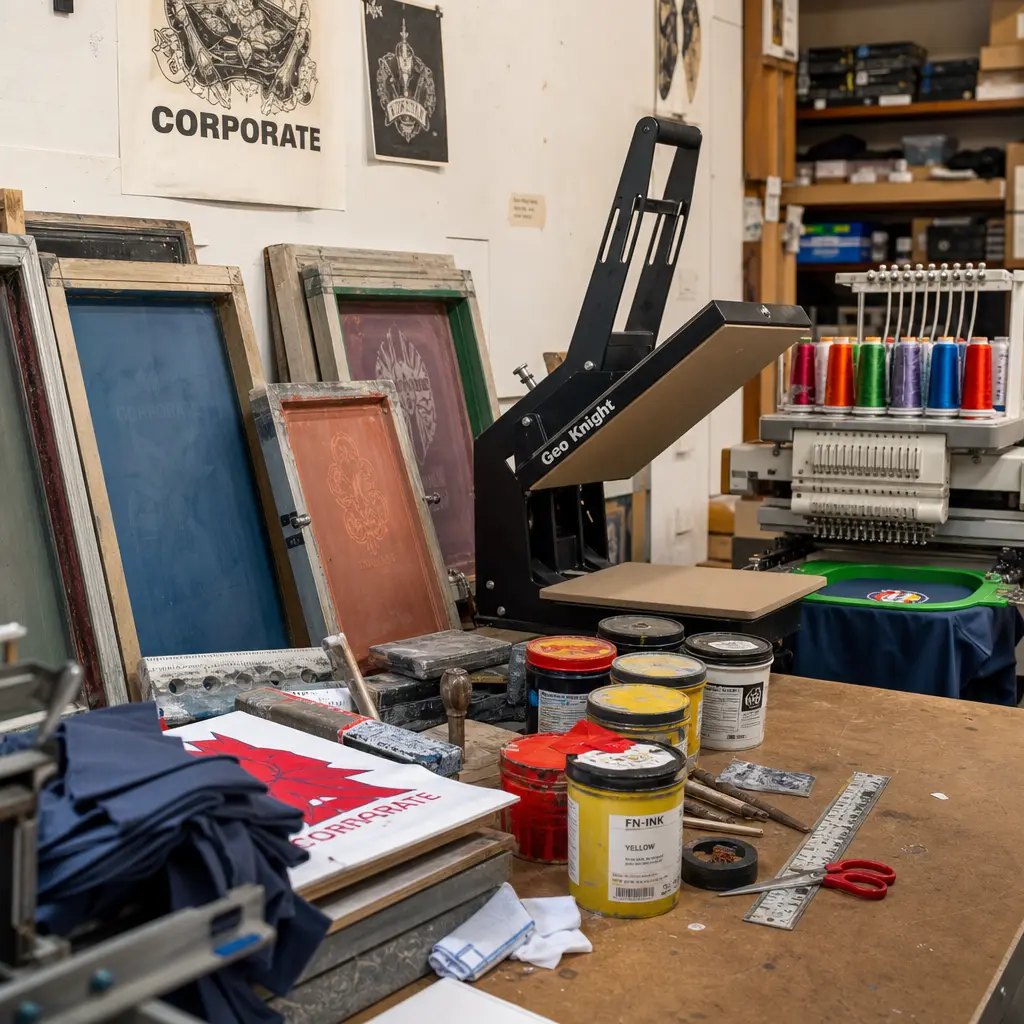
Screen print is still the workhorse for cotton drawstring backpacks because it is cost-efficient on simple logos and scales well on medium to high volume. On smoother or heavier cotton, it can deliver a clean result if the artwork is not too detailed. For trade show buyers ordering a single-color logo, it often gives the best balance of unit cost and durability.
Transfer methods can make sense for shorter runs, full-color artwork, or fast-turn programs, but they should be used with caution on textured cotton. The bag surface, print placement, and planned wear all affect the result. If the artwork includes small text, thin lines, or gradients, the buyer should insist on a clear sample approval stage before mass production.
- Use screen print for simple logos and repeat orders where setup cost can be spread out.
- Use transfer print for short runs or complex art, but test rub resistance and edge quality.
- For dark cotton, confirm ink coverage and whether a white underbase is needed.
MOQ Logic and Why It Changes by Spec
MOQ for cotton drawstring backpacks is rarely just a factory policy number; it is usually tied to fabric width, print setup, color count, and packing labor. A factory may accept a low MOQ on blank bags but require more volume once the order includes a custom logo or a special fabric weight. Buyers should separate blank minimums from decorated minimums when they compare offers.
If your program has multiple colors, sizes, or print variants, the MOQ can rise quickly because each variation adds cutting, printing, and carton complexity. Procurement teams can reduce risk by keeping one core spec for the first order and only introducing variants after the supplier proves stable production on the base item.
- Lower MOQ usually comes with higher unit price and less room for customization.
- Multi-color logos and special packing almost always increase setup cost.
- Ask whether the factory can mix colorways inside one order without changing the base MOQ.
Sample Approval: What a Good Pre-Production Sample Must Prove
A sample is not just for look-and-feel approval. It should prove that the selected GSM, cord length, print position, and seam construction work together in the actual production process. A good blank sample tells you the fabric hand. A good printed sample tells you the visual result. A good pre-production sample tells you whether the whole spec can be made consistently.
Before approving mass production, buyers should look closely at the drawcord channel, the lower corners, the print edge, and the internal seam finish. If the sample already shows crooked print or loose stitching, mass production will magnify those problems. Do not approve a sample until the bag matches your intended use, packing method, and event presentation.
- Compare sample color under daylight and indoor light because cotton tone shifts by lighting.
- Pull the cord repeatedly to test whether the channel holds shape and tension.
- Place real collateral inside the sample to see whether the bag still closes cleanly.
Packing Choices Affect Damage, Freight, and Retail Readiness
Packing is not a minor detail for cotton drawstring backpacks. Loose-packed bags can pick up dust, absorb moisture, and arrive wrinkled, while over-packed cartons can crush the print or crease the fabric harder than expected. The right packing method depends on whether the bags are going to a trade show distributor, a warehouse, or a retail shelf.
For exhibition programs, carton packing with clean polybags is often enough, but buyers shipping into retail or e-commerce should define barcode placement, carton labels, and unit bagging up front. If the product will sit in a fulfillment center, the packing spec should support fast receiving and low damage claims rather than just the lowest packaging cost.
- Confirm whether each bag is folded to a fixed size before bagging.
- Set carton pack count to match warehouse handling and replenishment needs.
- Request carton photos with labels, corner protection, and master mark placement before shipment.
Lead Time and Quote Data Buyers Should Compare
Lead time for cotton drawstring backpacks depends on fabric availability, print complexity, sample approval speed, and packing instructions. A supplier with the right fabric in stock can still lose time if the artwork is not final or if the carton label format changes late. Buyers should separate sampling time from mass production time so schedule risk is visible.
A useful quote should include fabric GSM, bag size, print method, color count, MOQ, sample charge, production lead time, carton pack, and shipping basis. If any of those fields are missing, the quote is too thin to support a real sourcing decision. For importers, the quote should also make clear whether the supplier is quoting ex-works, FOB, or another trade term.
- Compare sample lead time and mass production lead time separately.
- Make sure quote data includes the exact pack count per carton and carton dimensions.
- Watch for hidden costs in setup, color matching, and individual packing.
Specification comparison for buyers
| Spec decision | Recommended option | When it fits | Buyer risk to check |
|---|---|---|---|
| Fabric weight | 120-140 GSM cotton | Trade show giveaways, light apparel, brochures, and short event use | Too thin can show contents and wrinkle badly; confirm final hand feel and seam strength |
| Fabric weight | 160-180 GSM cotton | Premium brand merch, retail-ready giveaways, and repeat-use carry | Higher cost and slower sewing; verify quote includes stronger cord and reinforced corners |
| Print method | 1-color screen print | Large logo, simple artwork, best unit economics at medium volume | Fine text and gradients can fill in; require exact Pantone target and print size |
| Print method | Heat transfer or digital transfer | Short runs, multi-color logos, fast sample approval | Decoration can crack or peel if garment texture is rough; request wash/rub expectations in writing |
| Closure detail | Self-fabric channel with cotton cord | Most standard trade show programs and eco-positioning | Cord ends can fray or slip; confirm tipping or knotting spec |
| Supplier route | Direct factory with final packing in-house | You need control on QC, carton counts, and label placement | Without clear AQL and packing photos, defects can reach the carton stage |
| Supplier route | Trading company with multi-factory sourcing | You need speed or are comparing mixed materials across programs | Margin layers can hide actual fabric weight and decoration loss; demand mill test or swatch proof |
| Compliance level | Basic carton + polybag | Budget promotions, non-retail distribution, short transit chains | Bag scuffing and dust are more likely; get carton lining and moisture controls if shipping ocean freight |
| Compliance level | Retail-ready individual packing + barcode sticker | E-commerce, chain stores, and inventory-driven distribution | Unit packing raises cost and labor; confirm barcode position and carton master label format |
Buyer checklist before sampling
- Confirm target fabric weight in GSM, not just a vague 'heavy cotton' description.
- Lock artwork size, print method, and Pantone target before sample approval.
- Specify cord type, cord diameter, and whether tips or knots are required.
- State whether the bag must hold a defined load, such as 3-5 kg of printed collateral.
- Define carton pack count, polybag requirement, and master carton label content.
- Request pre-production photos of fabric, print strike-off, and stitching before mass start.
Factory quote questions to send
- What exact cotton fabric weight in GSM is included in your quote, and is it bleached, natural, or dyed?
- Does the quoted price include cord, stitching reinforcement, print, and individual packing?
- What is your MOQ for the stated fabric weight and print method, and can you split sizes or colors within that MOQ?
- What sample stage do you provide: blank sample, printed sample, or pre-production sample, and what is the charge?
- What are your standard carton dimensions, pack count, and gross weight for this backpack spec?
- What lead time applies after sample approval, and what factors can extend it?
- Which QC standard do you use for sewing, print alignment, and carton count, and can you share defect thresholds?
- If we move from one-color screen print to transfer print, how does the unit price and lead time change?
Quality-control points to confirm
- Fabric GSM must match the agreed tolerance band; do not accept a quote that only says 'cotton' or 'premium cotton'.
- Stitching at the cord channel and lower corners must be even, with no skipped stitches, open seams, or thread breaks.
- Print registration should stay within the agreed positional tolerance; text, edges, and small logos need a sharper acceptance standard than large icons.
- Cord length and symmetry should be consistent bag to bag; loose knots and uneven pull tension create retailer complaints.
- Bags must pass a practical load test with the intended event contents without seam tearing or cord failure.
- Carton count must match the order, with the correct size breakdown, inner packing, and master label details.
- Random sample cartons should be opened for odor, dust, stain, and print rub checks before shipment release.