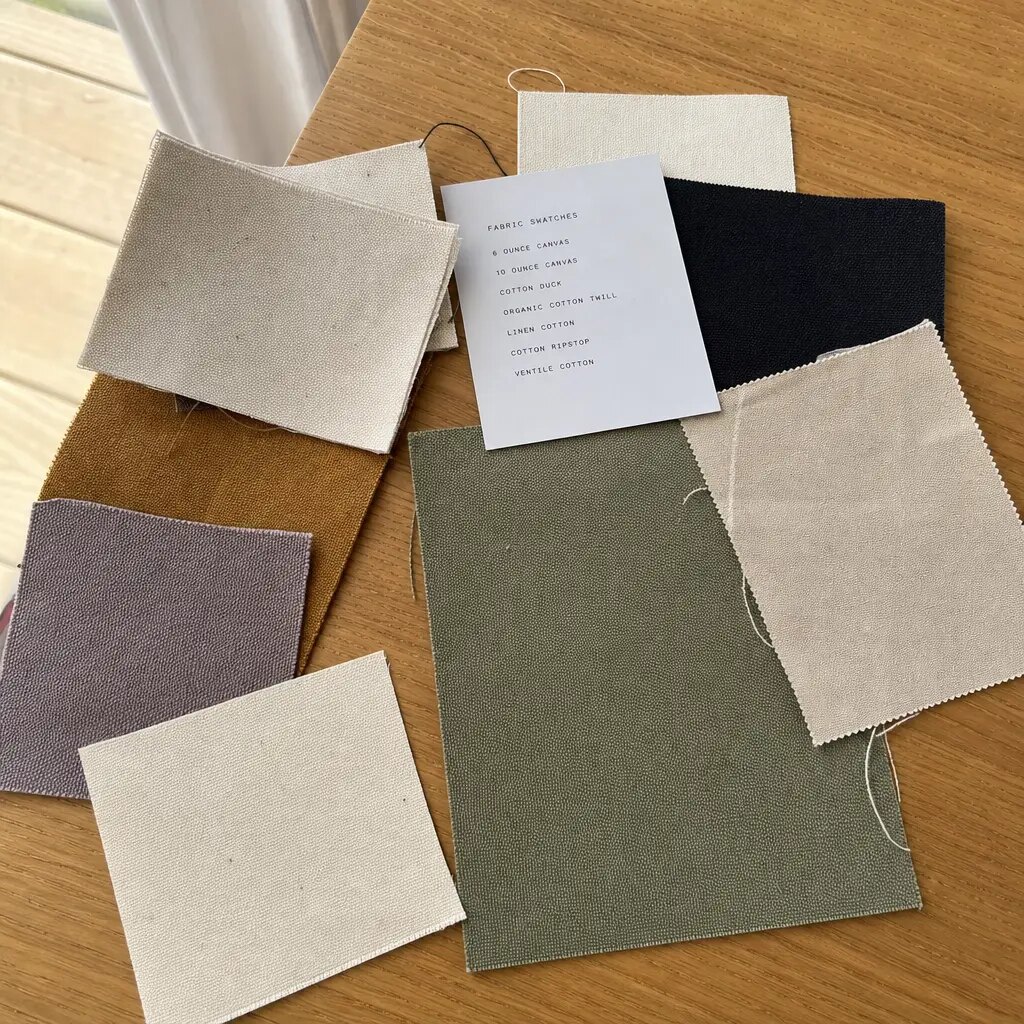
Start with the coffee use case before choosing GSM
For coffee roasters, the fabric weight decision is not only a materials question. It is a merchandising, logistics, and brand-risk decision. A drawstring backpack used for a weekend cupping event does not need the same structure as one sold beside brewing gear in a cafe. A subscription gift that carries two bags of beans through delivery handling has different stress points than a staff bag used for light personal items. Before a supplier can quote accurately, procurement should define the job the bag has to do.
The keyword buyers often search for is wholesale cotton drawstring backpacks for coffee roasters fabric weight guide, but the real buying question is more specific: how heavy should the cotton be for the load, price point, print quality, and repeat-order plan? Coffee is dense. A 1 kg coffee bag concentrates weight in the lower portion of the backpack, and gusseted retail packs push against a flat bag differently than apparel or paper brochures. A light cotton bag can look acceptable in a product photo, but once filled it may telegraph the coffee pack shape, pull at the cord exits, and feel disposable to the customer.
GSM should therefore be fixed near the beginning of the RFQ, before final artwork, labels, and packing. When the fabric weight is vague, two suppliers can both quote a cotton drawstring backpack while pricing completely different products. One may use 150 GSM plain cotton with no corner patch. Another may assume 280 GSM canvas with bartacks and heavier cord. The unit-price difference is not meaningful until the buyer normalizes the construction.
- Use 140-160 GSM only for light promo programs where low cost matters more than long-term carry performance.
- Use 180-210 GSM when the bag must feel better than a disposable giveaway but still stay budget controlled.
- Use 240-280 GSM cotton canvas for most retail merchandise and coffee bundle programs.
- Use 300-340 GSM heavy canvas when the bag is part of a premium merch program and carton weight is acceptable.
- Write the end use directly into the RFQ so the factory understands the stress level, not just the appearance target.
How GSM ranges translate into real coffee loads
The most useful way to choose fabric weight is to test the load scenario. A 250 g coffee bag plus printed material is a different product than two 500 g bags, a mug, a brew guide, and a small accessory. Coffee roasters often underestimate this because drawstring backpacks are visually simple. The construction may be simple, but the product carried inside is unusually dense for a fabric bag. Dense products stress bottom corners, cord exits, and side seams more than soft apparel.
For a very light campaign bag, 140-160 GSM plain cotton can be reasonable. It folds small, ships efficiently, and can carry a small sample bag or event materials. The buyer should not position that spec as retail-grade merchandise. For better promotional use, 180-210 GSM gives more confidence and a cleaner handfeel while keeping the order accessible for cafe openings, seasonal campaigns, or light gift-with-purchase programs.
The most dependable range for coffee roaster resale is usually 240-280 GSM cotton canvas. This weight gives enough body for the bag to feel intentional on a merch wall, supports cleaner screen printing, and handles coffee packs better when paired with corner reinforcement. At 300 GSM and above, the backpack becomes more structured and premium, but buyers must account for higher fabric cost, higher export carton weight, and a less soft drape. That is not a problem when the brand wants a substantial bag, but it should be an explicit choice.
- 250 g sample pack plus paper insert: 140-160 GSM can work if the bag is clearly promotional.
- One 500 g coffee bag plus light items: 180-240 GSM is a practical minimum depending on reinforcement.
- One 1 kg coffee bag or two 500 g bags: 240-280 GSM canvas with reinforced corners is safer.
- Coffee plus mug, notebook, or accessories: specify 280 GSM or higher, stronger cord, and bartacks.
- Any laptop expectation should be treated as a different requirement because drawstring backpacks lack padded structure.
Cotton construction: plain cotton, canvas, natural, and dyed fabric
Many quote problems start with the word cotton. In a casual conversation it sounds specific, but in procurement it is incomplete. Plain cotton, cotton canvas, and heavy canvas can all be described as cotton bags, yet they differ in weave density, handfeel, print behavior, strength, shrinkage risk, and price. A fair supplier comparison must state construction, not only fiber. If the product needs to be sold as a durable coffee roaster backpack, canvas normally gives a better result than loose plain cotton at the same visual size.
Natural cotton is common for specialty coffee brands because it pairs well with craft, organic, or low-processing visual language. It can also simplify material sourcing when the buyer accepts normal cotton character. However, natural does not mean every mark is acceptable. Seed specks, neps, and slight shade variation may be part of the look, but oil stains, moisture marks, and dark contamination should be rejectable. The buyer should define the acceptable natural-fabric standard before bulk production, preferably by approving a swatch range rather than a single perfect swatch.
Dyed cotton creates a more controlled brand look, especially for black, olive, rust, navy, charcoal, or cream merchandise programs. It can improve logo contrast and make the bag feel more retail-ready. The tradeoff is shade management. Custom dyeing can raise MOQ and lead time because the fabric mill has its own minimums. Stock dyed fabric may reduce MOQ but can be difficult to repeat exactly later. For repeat wholesale programs, ask how the supplier will control shade from order to order and whether the same fabric source can be maintained.
- Plain cotton is usually softer and lower cost but less structured under dense coffee loads.
- Canvas is denser and generally better for retail-grade drawstring backpacks.
- Natural cotton needs an agreed speck, slub, and shade standard so normal character is not confused with defects.
- Dyed cotton needs a shade reference, bulk-lot approval, and repeat-order plan.
- If the bag is marketed as all cotton, confirm whether the cord, label, and thread also support that claim.
Size, shape, and reinforcement matter as much as fabric weight
A heavier GSM will not rescue a poorly constructed backpack. For coffee products, size and reinforcement must be specified together with fabric weight. A common flat drawstring backpack size around 38 x 42 cm may work for many programs, but coffee packaging is bulky. A square-bottom gusseted coffee pouch can consume depth quickly, even when the flat bag measurement looks generous. Buyers should test actual retail packs inside the sample before approving the size.
The opening is especially important. Once a drawstring channel is sewn, the usable opening may be narrower than the flat panel width. If the roaster sells 1 kg gusseted pouches, boxed brewers, or bundled mugs, the sample should be packed and unpacked repeatedly. A backpack that technically holds the product but requires awkward force will frustrate cafe staff and customers. It can also stress the top hem and cord channel earlier than expected.
Reinforcement is the hidden detail that separates a cheap cotton sack from a useful coffee roaster backpack. Bottom corners and cord exit points carry much of the load when the bag is worn. A self-fabric triangle patch, extra patch layer, or properly placed bartack can reduce early failures. The RFQ should state reinforcement directly; do not assume it is included because a reference photo shows a similar bag. Low quotes often remove this detail unless the construction sheet calls it out.
- State finished size and tolerance, for example 38 x 42 cm +/- 1 cm, measured flat after sewing.
- Check usable depth below the drawstring channel, not only total panel height.
- Fit test with the largest coffee pack or bundle the bag will actually carry.
- Specify self-fabric corner patches or equivalent reinforcement for retail and gift-bundle bags.
- Ask for stitch density, seam allowance, and bartack placement when the bag will carry dense products.
Print method should match fabric, artwork, and brand expectations
For most coffee roaster drawstring backpacks, screen printing remains the best balance of cost, clarity, and repeatability. A one-color logo, badge, cafe mark, or simple illustration can print cleanly on natural or dyed cotton when the artwork is prepared correctly and the ink is cured properly. Canvas often gives a more stable surface than very thin cotton, but coarse texture can still affect small type and fine line detail. Procurement should approve a strike-off on the actual fabric, not only a digital mockup.
Dark fabric requires special attention. A white or light logo on black canvas may need an underbase or extra print pass to achieve brightness. If one supplier includes underbase and another does not, the prices are not comparable. The quote should also specify the print area. A small chest-size logo and a large front-panel graphic can use the same number of ink colors but require very different screen setup, ink usage, and production time.
Heat transfer, DTF, or digital printing can be useful when the artwork is detailed, multicolor, seasonal, or split across several small batches. These methods should be tested for handfeel, edge visibility, rub resistance, and wash behavior. A transfer may look crisp in a sample photo but feel less integrated with cotton canvas. For premium merchandise, the customer will notice the surface. For wholesale procurement, the decision should be based on the full artwork and use case, not only the lowest setup cost.
- Use screen print for clean roaster logos, simple badges, and one- or two-color merchandise designs.
- Confirm underbase pricing for dark bags and light ink colors.
- Avoid very small type on coarse canvas unless the strike-off proves it remains readable.
- Request dry rub and basic wash checks on the actual fabric and ink combination.
- Compare print quotes only when print size, color count, underbase, and curing standard are the same.
MOQ and pricing: what drives the real unit cost
MOQ for cotton drawstring backpacks is not a single number. It is built from fabric availability, color, cutting efficiency, print setup, accessories, packing, and the factory's production line planning. A stock natural cotton bag in a standard size can often be quoted at a lower MOQ than a custom dyed canvas bag with several artwork versions. The sewing factory may be flexible, but the fabric mill, dye house, printer, or label supplier can create minimums that affect the whole order.
Coffee roasters often want several SKUs: natural canvas with black logo, black canvas with cream logo, and perhaps a seasonal color for a subscription drop. Combining them in one PO may help total order value, but it does not erase per-color and per-artwork minimums. A supplier might quote 3,000 pieces total, while the practical minimum is 1,000 pieces per fabric color or per print version. The buyer should ask this directly so the order plan does not fall apart after artwork approval.
The best quote format separates fixed charges from running costs. Screen charges, sample fees, woven label setup, hangtag printing, barcode application, and special packing should not be buried inside a single unit price if the buyer needs to compare vendors. Ask suppliers to quote volume breaks using the same spec at 500, 1,000, 3,000, and 5,000 pieces where possible. This lets procurement see whether savings come from real production efficiency or from specification changes.
- Stock natural fabric usually gives the simplest MOQ path.
- Custom dyed fabric can trigger fabric-mill minimums beyond the sewing quantity.
- Multiple print artworks may require separate screens, strike-offs, and production setup.
- Woven labels, hangtags, and barcode stickers add both setup and handling cost.
- A low unit price is not useful unless fabric, size, print, reinforcement, and packing are identical.
Sample approval should be practical, not only visual
A good pre-production sample is a working product test. It should be reviewed with real coffee packs, real accessories, and the expected loading pattern. A sample that lies flat beautifully can still fail when a gusseted 1 kg pouch is inserted. The buyer should check whether the opening is wide enough, whether the lower corners distort, whether the cord digs into the shoulder, and whether the top channel closes smoothly after the bag is filled.
Sampling should happen in stages when the order has meaningful risk. A fabric swatch confirms weight and handfeel. A print strike-off confirms logo size, ink color, underbase, and surface quality. A pre-production sample confirms construction using the intended fabric, cord, print, and reinforcement. For larger or repeat programs, a shipment sample pulled from bulk helps confirm that production matches the approved sample. These stages can feel slower at the beginning, but they prevent more expensive delays after cutting or printing has started.
Approval notes should be written in measurable language. Instead of approving with a vague message such as looks good, record the accepted dimensions, print placement, fabric weight, cord length, reinforcement, label position, and packing format. If there are minor deviations you accept, write them down. If there are changes required, confirm whether the supplier must remake the sample or can correct them in bulk. Clear approval records protect both buyer and factory.
- Place actual filled coffee packs in the sample and carry it by the cords for several minutes.
- Check whether the print stays centered after the bag is loaded, not only when flat.
- Pull the cords repeatedly to inspect the top channel and cord exits.
- Rub the printed area with a dry white cloth after curing to catch unstable surface ink.
- Photograph and annotate approved construction details before bulk production starts.
Packing choices affect landed cost, warehouse handling, and product condition
Packing is often decided late, but it has a direct effect on landed cost and receiving quality. For wholesale cotton drawstring backpacks going to distributors, cafe chains, or central warehouses, bulk packing by SKU in lined cartons is often the most efficient route. Individual polybags add material cost, handling time, carton volume, and plastic use. They may be unnecessary if the bags are not sold as individually packaged retail items.
There are situations where unit packing is justified. If the bag needs a barcode, retail sticker, hangtag, insert card, or shelf-ready presentation, individual packing may reduce handling at the destination. If the bag is natural cotton and will sit in storage before distribution, a sleeve can reduce dust exposure. The buyer should decide this deliberately, not accept the supplier default. A quote that includes individual bags and a quote that uses bulk packing are not equivalent.
Carton planning is especially important for heavier canvas. A 320 GSM backpack packed too densely can create cartons that are awkward for warehouse teams and more vulnerable to crushing in stacked export loads. Procurement should request carton dimensions, carton quantity, and gross weight before confirming the PO. Natural and light-colored cotton should be protected with clean liners and dry cartons. Moisture, dust, and abrasion are easier to see on these fabrics, and avoidable packing defects can turn a good production run into a receiving problem.
- Use bulk lined cartons for most distributor and wholesale replenishment programs.
- Use individual polybags only when retail presentation, barcode control, or dust protection justifies them.
- Confirm carton quantity and gross weight for each GSM option before comparing landed cost.
- Require dry, clean export cartons and liners for natural cotton bags.
- Make carton marks match SKU, color, PO, quantity, and destination requirements to prevent relabeling work.
Quality control points for coffee roaster backpack orders
Quality control should focus on the failure points that matter for cotton drawstring backpacks carrying coffee products. The inspection should not be limited to cosmetic appearance. Fabric GSM, panel size, stitching, print quality, reinforcement, cord function, shade consistency, stains, and packing all affect whether the shipment can be received and sold without rework. The QC checklist should be shared with the supplier before production, not introduced only after the goods are packed.
Fabric inspection comes first because problems become expensive once cutting begins. Rolls should be checked for GSM, shade, stains, holes, oil marks, heavy slubs, and unacceptable thin areas. Natural cotton needs a defined standard for specks and neps; dyed cotton needs a shade reference. When panels from visibly different dye lots are mixed in the same bag or carton, the issue is difficult to correct after sewing.
Construction inspection should pay close attention to the top channel, side seams, bottom corners, and cord exits. These are the points that see stress when the customer carries coffee. Print inspection should include placement tolerance, color, coverage, curing, pinholes, edge quality, and rub resistance. Packing inspection should confirm carton count, SKU separation, carton labels, dry condition, and protection from dust transfer. For B2B buyers, the goal is not perfection in an abstract sense; it is a shipment that matches the approved commercial standard consistently enough to move through wholesale receiving without claims.
- Check GSM before cutting and compare bulk fabric with the approved swatch.
- Measure finished bags after sewing and confirm width, height, and usable opening.
- Inspect bartacks, corner patches, cord length, and drawcord movement under normal load.
- Review print placement and ink stability on loaded and flat samples.
- Open random cartons during final inspection to confirm packing, labels, and SKU separation.
Lead time risks usually come from fabric, color, and approval delays
The sewing step for a basic drawstring backpack is usually not the longest part of the project. Delays more often come from fabric sourcing, custom dyeing, sample revisions, print strike-off approval, label production, or packing material preparation. A stock natural cotton backpack with one-color screen print can move through development more smoothly than a custom dyed heavy canvas bag with several artwork versions and retail labeling.
Coffee roasters often have fixed launch dates: new cafe openings, holiday gift programs, subscription drops, wholesale trade shows, or seasonal blend releases. These dates make approval discipline important. If artwork is not final, if Pantone references are missing, or if the buyer changes packing after the sample is approved, the critical path shifts. Procurement should map the schedule by stages: swatch approval, artwork confirmation, print strike-off, pre-production sample, bulk material readiness, cutting, printing, sewing, inspection, packing, and shipment booking.
Reorders can be faster, but only if the original specification is controlled. If the first order used opportunistic stock fabric, the second order may not match in shade or handfeel. If the same screen, same print size, and same fabric source are retained, repeat production becomes more predictable. For ongoing roaster merchandise, it is worth keeping a retained sample and a written spec sheet so the supplier is not reconstructing the product from memory.
- Stock natural cotton is usually faster than custom dyed canvas.
- Dyeing, shade approval, and print strike-offs can add more time than sewing.
- Final artwork should be locked before screens or transfers are prepared.
- Repeat orders need retained samples, fabric references, and the same construction sheet.
- Holiday and trade-show timelines should include inspection and shipping buffer, not only factory production days.
Specification comparison for buyers
| Procurement decision | Recommended specification | Best fit for coffee roasters | Buyer risk to control |
|---|---|---|---|
| Entry promo fabric weight | 140-160 GSM plain cotton, standard flat backpack size | Trade shows, cupping events, light gift-with-purchase, small sample packs, printed flyers | Too light for 500 g to 1 kg coffee bags; print can show through; corners may strain if customers treat it as a daily bag |
| Better promo or light retail weight | 180-210 GSM cotton or light canvas | Event bags that still need a decent handfeel, small retail bundles, staff onboarding kits | May look retail-ready in photos but still needs reinforcement if carrying mugs, boxed accessories, or multiple coffee packs |
| Core retail resale weight | 240-280 GSM cotton canvas | Roaster merchandise sold in cafes, online shops, subscription upgrades, and distributor gift sets | Quote must confirm canvas construction, GSM tolerance, pre-shrink expectations, corner patches, and actual cord thickness |
| Premium merchandise weight | 300-340 GSM heavy cotton canvas | Higher-ticket merch, brand collaborations, loyalty gifts, reusable bags expected to hold dense products | Higher unit cost and carton weight; stiffer drape; large prints may feel heavy unless ink and artwork are tested |
| Natural cotton route | Unbleached or natural canvas with agreed speck and shade standard | Craft, organic, specialty coffee, and low-processing brand positioning | Seed specks, neps, and shade variation are normal unless limits are defined; stains are harder to hide |
| Dyed cotton route | Reactive dyed or pigment dyed cotton canvas with shade approval | Black, olive, rust, navy, cream, or brand-color programs with stronger shelf presence | Custom dyeing can increase MOQ and lead time; repeat orders need shade standard and lot control |
| Logo print for most roasters | 1-2 color screen print with approved print area and curing test | Clean wordmarks, badge logos, simple illustrations, cafe addresses, launch graphics | Dark fabrics may need underbase; fine lines can fill on coarse canvas; ink cracking risk if curing is weak |
| Detailed artwork route | Heat transfer, DTF, or selected digital process after wash and rub testing | Limited campaigns, multi-color illustrations, seasonal drops, artwork variants under one order | Transfer edge visibility, handfeel, and wash resistance vary by supplier; large artwork may raise cost sharply |
| Reinforced construction | Self-fabric corner patches, bartacks at cord exits, secure top channel, adequate stitch density | Any bag expected to hold coffee packs, mugs, grinders brushes, notebooks, or daily carry items | Some low quotes exclude reinforcement; weak bartacks and narrow seam allowance are common first-failure points |
Buyer checklist before sampling
- Define the commercial use before asking for price: event giveaway, retail resale, subscription gift, cafe staff bag, or wholesale distributor program.
- Specify finished dimensions with tolerance, for example 38 x 42 cm +/- 1 cm measured flat after sewing and before packing.
- State fabric construction clearly: plain cotton, light canvas, or heavy canvas; include target GSM and allowed GSM tolerance rather than writing only cotton bag.
- Confirm whether the fabric is natural, bleached, stock dyed, or custom dyed, and request shade approval rules for repeat orders.
- List the expected load, such as one 1 kg coffee bag plus a mug, two 500 g bags, or a coffee pack with notebook and accessories.
- Require bottom-corner reinforcement if the bag will carry dense coffee products; note patch shape, bartack position, and cord exit construction.
- Match print method to artwork: screen print for simple logos, transfer or digital only when detail or artwork variation justifies the cost.
- Ask whether dark fabric pricing includes a white underbase, extra screen, or additional print pass so logo brightness is comparable across suppliers.
- Request sample stages in writing: fabric swatch, logo strike-off, pre-production sample, and shipment sample from bulk production when needed.
- Test the sample with real filled coffee packs, not only paper inserts or visual inspection on a flat table.
Factory quote questions to send
- What exact fabric construction are you quoting: plain cotton, cotton canvas, or heavy canvas, and what GSM range will be tested in bulk?
- Is the quoted material stock greige cloth, stock natural cloth, stock dyed cloth, or custom-dyed production, and what MOQ applies to each route?
- What is the allowed GSM tolerance roll to roll, and will you provide fabric inspection records or swatches from the bulk lot?
- Does the unit price include self-fabric corner reinforcement, bartacks at cord exits, top hem drawcord channel, and double cords on both sides?
- What finished size is included in the quote, what tolerance do you use, and is the measurement taken before or after final pressing and packing?
- What cord material and diameter are quoted: cotton rope, cotton/poly braided cord, flat cord, or another option? Are ends knotted, taped, tipped, or sewn?
- What print method is included, what print area is assumed, how many colors are included, and is underbase included for dark fabric?
- Can you provide a print strike-off on the actual bulk fabric before starting full production? What is the approval timeline?
- For natural cotton, what level of seed specks, neps, shade variation, and slubs is considered acceptable versus rejectable?
- For dyed fabric, what shade standard will be used, and how will you control shade consistency across panels, cartons, and repeat orders?
Quality-control points to confirm
- Fabric GSM should be checked against the approved range before cutting; roll inspection should identify thin zones, stains, heavy slubs, or off-shade sections.
- Finished size must meet tolerance after sewing, especially opening width, usable depth below the drawstring channel, and symmetry from left to right.
- Fabric color should match the approved swatch or shade standard; dyed lots need carton-level shade review so panels from different lots are not mixed visibly.
- Natural cotton should be inspected for unacceptable oil marks, water stains, dirt, black specks beyond the agreed standard, and mildew or moisture odor.
- Print placement should match the approved artwork sheet with a clear tolerance for height, centering, and angle; front panels should not twist after sewing.
- Ink or transfer quality should be checked for coverage, pinholes, cracking, edge lifting, smudging, cure strength, and rub resistance on the actual fabric color.
- Drawcord length should be consistent pair to pair, smooth through the top channel, and long enough for normal wear without excessive dangling.
- Cord exit points and bottom corners should have secure bartacks or reinforcement; dense coffee products make these areas the most important stress points.
- Stitch density should be consistent, with no skipped stitches, open seams, broken threads, exposed raw edges, or loose top-channel stitching.
- Top hem channel should open and close smoothly without twisting the cord, catching on thread tails, or bunching unevenly on one side.