Start With the Load, Not the Logo
For a tech startup, a cotton drawstring backpack is often used as conference merchandise, employee onboarding packaging, investor-event swag, or a lightweight retail add-on. The buying mistake is treating all of those uses as the same product. A bag that only carries a T-shirt and brochure can use a lighter construction. A bag expected to hold a bottle, charger, notebook, demo device, or headset needs stronger fabric, better cord exits, and tighter seam control.
Before requesting prices, write the expected carry load into the RFQ. A useful durability test starts with a realistic loading condition: for example, 2 kg for a lightweight event bag, 3-4 kg for an onboarding kit, or higher only if the bag is truly designed for heavier daily use. This prevents suppliers from quoting a cheap pouch-style construction when the buyer actually needs a backpack-style product.
- For giveaway use, define whether the bag only carries printed literature and apparel.
- For employee kits, list the actual contents: charger, notebook, water bottle, badge, cable, or small device.
- For retail resale, treat the backpack as a product, not packaging; require stronger material and better finishing.
- For distributor stock, choose a middle specification that survives mixed use instead of optimizing only for the lowest price.
Choose Fabric Weight by Failure Risk
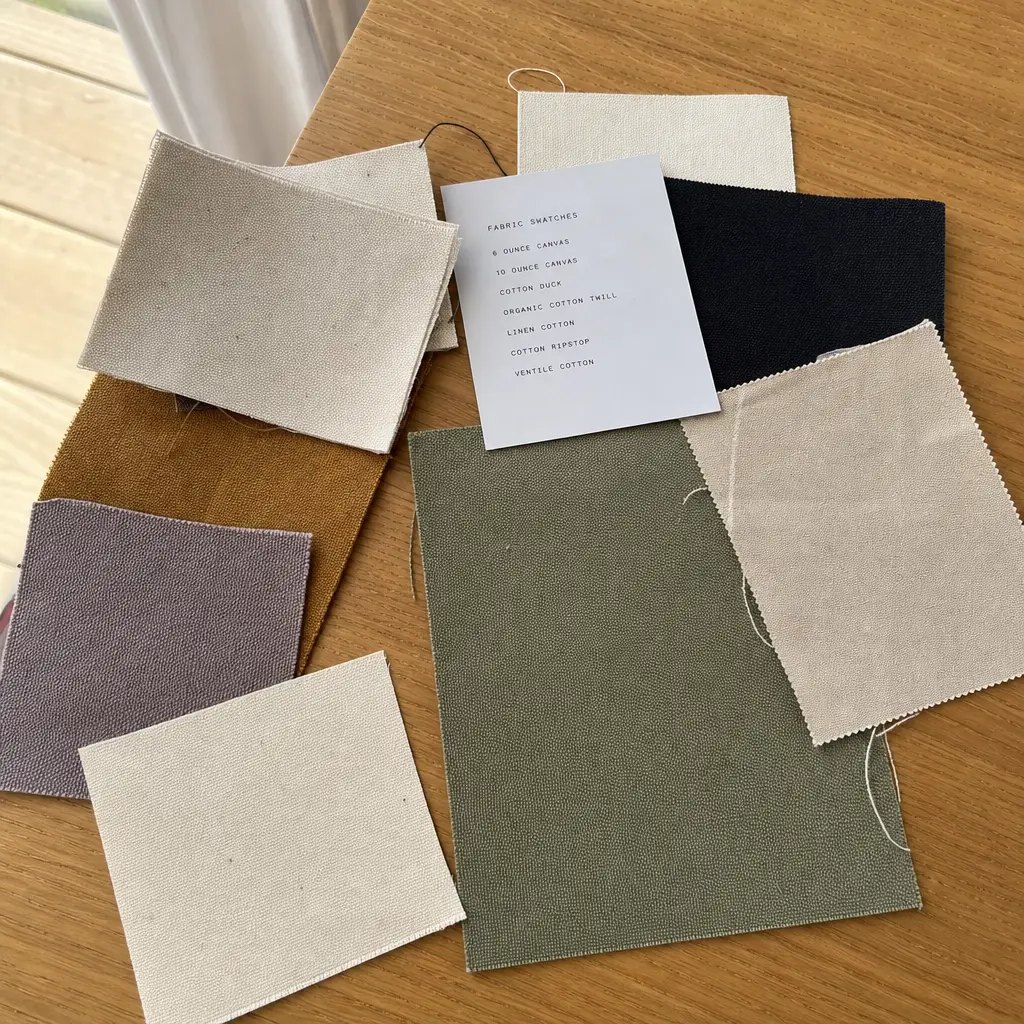
Cotton drawstring backpacks are commonly quoted in ounces, GSM, or vague descriptions such as natural cotton, canvas, or heavy cotton. Procurement teams should convert this into a controlled specification. A 5 oz cotton fabric may be acceptable for a simple drawstring bag, but it is usually too light for a backpack that will be worn repeatedly. For most branded tech orders, 8 oz is a minimum practical level, 10 oz is a good commercial balance, and 12 oz is more suitable for premium or resale programs.
GSM alone does not tell the full story. A loose weave can feel bulky but abrade quickly. A tighter canvas or duck weave usually gives better structure and seam holding. If the startup wants a clean natural look, request fabric with minimal slubs and acceptable shade variation. If the bag will be dyed in a brand color, add shrinkage and colorfastness checks because dyed cotton can behave differently from natural cotton during sewing and pressing.
- Light event bag: 8 oz cotton canvas, approximately 240-270 GSM, for low-load use.
- Standard durable bag: 10 oz cotton canvas, approximately 300-340 GSM, for most startup merchandise.
- Premium retail bag: 12 oz cotton canvas, approximately 380-410 GSM, for better structure and perceived value.
- Avoid unspecified cotton canvas because two suppliers may quote very different fabrics under the same name.
Reinforcement Determines Real Durability
Most failures on cotton drawstring backpacks happen at the cord exit points, bottom corners, top channel, and side seams. The fabric may be strong enough, but the sewing construction fails first. This is why the RFQ should describe the reinforcement method, not only the finished size and logo print. A low quote may remove bartacks, use a narrow seam allowance, or place the cord through a weak eyelet area without enough fabric support.
For stronger bags, specify double-fold side seams, secure top-channel stitching, and reinforced bottom cord anchors. If metal eyelets are used, they must be properly set and supported by enough fabric thickness; otherwise, the eyelet can cut the cotton under load. A sewn fabric tunnel or reinforced corner tab is often more reliable for natural cotton bags because it avoids a hard metal edge rubbing against the fabric.
- Use bartacks or short reinforcement stitches at cord stress points.
- Keep seam allowance wide enough to prevent fraying into the stitch line.
- Avoid raw punched holes on cotton fabric unless reinforced by eyelet or patch.
- Review the inside seam finish because internal fraying is a common hidden defect.
Cord Selection Affects Comfort and Returns
The cord is not a minor trim. It decides whether the bag closes cleanly, feels comfortable on the shoulder, and survives repeated pulling. Cotton rope looks consistent with a natural cotton backpack and suits eco-positioned merchandise, but poor-quality cotton cord can fuzz and fray. Polyester cord has better abrasion resistance and can be easier to color match, although it may not match an all-cotton positioning statement.
Specify cord diameter and length in the quote. A 4 mm cord may look neat but can cut into the shoulder when the bag is loaded. A 6-8 mm cord is more comfortable for typical drawstring backpack use. The cord end should be knotted, sewn, heat-sealed, or capped depending on material. For cotton cord, a tight knot plus clean cut is common, but the buyer should inspect whether ends loosen after handling.
- Choose cotton cord when natural material appearance is more important than maximum abrasion resistance.
- Choose polyester cord when repeated event use, outdoor handling, or stronger color matching is expected.
- Reject cords that slip unevenly through the top channel or cause puckering during closure.
- Test the fully packed bag on the shoulder, not only by pulling the cord by hand.
Print Method Should Match Artwork and Fabric
Tech startup logos often use flat marks, gradients, small taglines, or app icons. Screen printing is usually the safest option for solid-color logos on cotton canvas because it gives good coverage and stable cost at bulk quantities. For natural cotton fabric, the ink color will appear slightly different than on white paper or a digital mockup, so Pantone references must be approved on the actual fabric sample.
Heat transfer or digital print may be necessary for gradients, photographic artwork, or many colors at low quantity, but the durability risk is different. Transfers can peel or crack if curing pressure, temperature, or fabric surface is not controlled. Thick screen ink can crack if printed over a folded area or packed too tightly before curing. The approval sample should be rubbed, folded, and lightly scratched before the buyer signs off.
- Use screen print for one- to three-color logos, bold icons, and repeat programs.
- Use transfer print only when artwork detail requires it and peel testing is acceptable.
- Keep the logo away from heavy fold lines, bottom seams, and cord pressure points.
- Approve print size in centimeters and position from top or bottom edge, not only by visual mockup.
Build a Practical Durability Test Plan
A useful cotton drawstring backpacks durability testing checklist for tech startups does not need to copy a heavy luggage laboratory program. It should reflect the product's real use and the buyer's risk. The main questions are simple: does the fabric tear, do the seams open, does the cord damage the corners, does the print survive handling, and does the bag still look acceptable after packing and transport?
For commercial buying, combine factory checks with buyer-side sample checks. The factory can perform load hanging, seam pull, rub, and measurement checks during production. The buyer can run quick validation on the approval sample before releasing bulk. Record the test method in simple language so every supplier quotes against the same expectation.
- Load test: fill the bag to the stated kg load and hang or carry it for a defined period without seam opening.
- Cord pull test: pull both cords repeatedly and inspect bottom corners, top channel, and knots.
- Abrasion check: rub cord contact areas and printed areas to see whether fabric fuzzing or ink loss is excessive.
- Print fold check: fold the printed panel gently and inspect for cracking, lifting, or white stress lines.
- Measurement check: compare width, height, channel depth, and cord length against the approved sample.
Sample Approval Must Use Final Materials
Many production disputes begin with a sample that was not truly representative. A supplier may send a sample from available stock fabric, then quote bulk using a different fabric lot. The sample may use a similar cord, a temporary print ink, or hand-made sewing that is better than mass production. For a startup buyer with a launch event date, this creates a serious risk because there may be no time for rework.
The pre-production sample should be made with final fabric weight, final color, final cord, final print method, final label, and final packing. If the order is urgent and a full pre-production sample is not possible, the buyer should at least approve a fabric swatch, cord sample, printed strike-off, and sewing construction photo before bulk cutting. Keep one approved physical sample sealed and label it as the control sample.
- Approve fabric hand feel and thickness before approving the unit price.
- Approve the printed strike-off on the actual cotton fabric, not only on paper.
- Approve the cord exit construction with inside and outside photos.
- Approve one packed sample if individual packing, barcode labels, or retail presentation matter.
- Do not let bulk fabric cutting start before construction and print placement are confirmed.
Understand MOQ and Price Drivers
MOQ is not only a factory policy; it is tied to material sourcing, print setup, cutting efficiency, and packing labor. A standard natural cotton backpack with one-color screen print may be workable at a lower MOQ because fabric and cord are available. A dyed brand color, custom cord, woven label, multi-color print, or retail barcode packing can push the practical MOQ higher because each component has its own supplier minimum.
When comparing quotes, separate the cost drivers instead of asking only for a lower price. Fabric weight, reinforcement, print colors, label type, packing method, inspection requirements, and carton specification all affect cost. A supplier offering a much lower price may be quoting lighter fabric, fewer stitches, cheaper cord, thinner ink, or bulk packing when another quote includes retail-ready packing.
- Fabric cost rises with GSM, tighter weave, dyeing, organic cotton claims, and special color control.
- Sewing cost rises with reinforcement, inner binding, extra labels, bartacks, and tighter QC standards.
- Print cost rises with more colors, larger print area, special ink, transfers, and small batch setup.
- Packing cost rises with individual polybags, paper bands, hangtags, barcodes, and Amazon-style carton rules.
- Freight cost rises with heavy fabric, oversized cartons, and low carton density.
Packing Can Damage a Good Bag
Cotton canvas can crease, collect lint, and absorb odor if packing is poorly controlled. The printed panel is also vulnerable when bags are folded too tightly before the ink has cured. For event merchandise, bulk packing in bundles of 25 or 50 pieces can be efficient and lower waste. For retail or fulfillment, individual packing may be required, but it must be sized correctly so the bag is not crushed into a small sleeve.
Carton data belongs in the quote, not after production. Ask for pieces per carton, carton dimensions, net weight, gross weight, and total CBM. This lets the importer compare ocean, air, courier, or warehouse receiving cost. A cheaper unit price can disappear if cartons are oversized or packed with too much empty space.
- Use interleaving or careful folding when large prints face each other.
- Avoid packing before ink curing is complete, especially with thick screen print.
- Add silica gel only when appropriate and allowed by the destination market and buyer policy.
- Mark cartons with SKU, quantity, color, PO number, carton number, and gross weight.
- Request drop-safe carton strength for courier shipments and warehouse handling.
Lead Time Risk for Launch Dates
Tech startup merchandise is often tied to a funding announcement, product launch, trade show, recruitment season, or customer event. The production calendar should include artwork approval, material booking, sample making, sample transit, buyer review, bulk cutting, printing, sewing, inspection, packing, and freight. A quoted production lead time that starts after sample approval is different from a total project lead time starting today.
For a simple cotton drawstring backpack, sample development may take several working days, while bulk production depends on order quantity, fabric availability, and print complexity. Dyed fabric, custom labels, and multi-color printing add risk. If the deadline is fixed, choose fewer custom components and approve a robust standard construction rather than pushing for a complicated specification that leaves no inspection buffer.
- Reserve time for artwork correction before screen making or transfer preparation.
- Confirm whether production lead time starts after deposit, artwork approval, or sample approval.
- Keep inspection time in the schedule instead of shipping directly from the sewing line.
- For urgent events, avoid custom-dyed fabric unless the color is critical and time allows lab dip approval.
- Build a backup plan for partial shipment if event kits must arrive before the full order.
Specification comparison for buyers
| Spec decision | Recommended option | When it fits | Buyer risk to check |
|---|---|---|---|
| Fabric weight for daily event use | 10 oz cotton canvas, about 300-340 GSM, plain weave or light duck | Tech conferences, onboarding kits, investor events, campus recruiting, and light laptop accessory carry | Below 8 oz may feel thin; above 12 oz raises freight and may close poorly with standard cords |
| Fabric weight for premium retail resale | 12 oz cotton canvas, about 380-410 GSM, with reinforced cord channel | Retail merchandise, paid brand stores, subscription boxes, or higher perceived value giveaways | Heavy fabric needs stronger stitching and bigger carton space; compare landed cost, not only unit price |
| Cord material | 6-8 mm cotton rope or braided polyester cord with sealed ends | Cotton cord matches natural brand positioning; polyester cord improves abrasion resistance | Loose twisted cotton cord can fray; thin cord can cut into the shoulder and fail pull tests |
| Bottom and corner construction | Double-fold side seams with bartack or box reinforcement at cord exit points | Orders expected to carry chargers, bottles, notebooks, demo kits, or small electronics | Unreinforced grommet holes or raw cord exits often tear first during load testing |
| Print method for startup logos | Screen print for solid logos; heat transfer only for gradients or small multi-color art | Screen print is best for repeat orders and strong color blocks on cotton canvas | Thick ink cracks on folded fabric; transfer film can peel if curing and wash tests are skipped |
| Sample approval stage | Pre-production sample using final GSM, final cord, final print color, and final packing method | Any order above a small trial quantity or any campaign with a fixed launch date | Photo-only approval hides hand feel, cord friction, seam bulk, and real print color on natural cotton |
| MOQ logic | 300-500 pieces for standard cotton colors and simple print; higher MOQ for dyed fabric or custom cord | Startup merch tests, conference batches, distributor trials, and brand launch packs | Very low MOQ may use stock fabric that differs from bulk production; lock the fabric lot if color matters |
| Packing method | Individual polybag or paper band only when required; otherwise bulk pack with inner bundles of 25-50 | Bulk pack reduces waste and cost for event teams; individual packing helps retail and fulfillment | Over-tight cartons crease the print; oversized cartons increase dimensional weight and landed cost |
Buyer checklist before sampling
- Define the real carry load: empty giveaway, notebook-and-charger kit, bottle-and-brochure event pack, or retail backpack.
- Specify fabric by ounces and GSM, not only by the word cotton or canvas.
- State finished size tolerance, acceptable shrinkage, and whether the bag must fit a laptop sleeve, hoodie, or event kit.
- Require reinforcement details at cord exits, bottom corners, and top channel before approving the bulk price.
- Approve the exact cord material, diameter, length, knot method, and end treatment.
- Match the print method to artwork: screen print for solid color logos, transfer or digital only when artwork requires it.
- Request a pre-production sample made with final fabric, final print, final cord, and final packing.
- Set load, seam, abrasion, pull, and colorfastness acceptance criteria in the PO or quality file.
- Compare supplier quotes using the same packing method, carton size, gross weight, and incoterm.
- Keep one approved sample sealed as the control sample for incoming inspection and dispute resolution.
Factory quote questions to send
- What fabric weight in oz and GSM is included in the quoted price, and is it stock fabric or woven-to-order fabric?
- Is the cotton greige, natural, bleached, dyed, or organic cotton, and what color tolerance will you follow for bulk production?
- What is the finished bag size, seam allowance, and size tolerance after sewing and pressing?
- Which reinforcement method is included at the cord exits: bartack, box stitch, metal eyelet, or stitched fabric tunnel?
- What cord material, diameter, color, and end treatment are included, and can you send a cord pull test result or sample photo?
- Which print method is quoted, how many colors are included, and what ink or transfer curing process will be used?
- What are the sample cost, sample lead time, production lead time, and approval cutoff date for the requested delivery date?
- What packing is included: bulk pack, individual polybag, kraft band, hangtag, barcode label, or master carton only?
- What are the carton dimensions, pieces per carton, net weight, gross weight, and expected CBM for the order quantity?
- What inspection standard, defect classification, and replacement policy do you accept before shipment?
Quality-control points to confirm
- Fabric weight should be verified against the approved sample using a GSM cutter or weight calculation from a measured fabric area.
- Finished size tolerance should normally stay within plus or minus 1 cm unless the buyer approves a different tolerance.
- Top channel stitching should be straight, locked, and free from skipped stitches because this area receives repeated cord friction.
- Cord exits should withstand repeated pulling without tearing, puckering, or cutting into the fabric.
- Seams should not open after load testing at the buyer's stated carry weight plus a reasonable safety margin.
- Logo print should pass dry rub testing and reasonable scratch testing before bulk packing.
- Natural cotton shade variation should be reviewed under consistent lighting and compared against the sealed approval sample.
- Carton packing should prevent crushed corners, deep creases across the print area, and contamination from loose threads or dust.
- Barcode, SKU, carton mark, and country-of-origin requirements should match the buyer's receiving warehouse instructions.
- Random inspection should include measurement, load test, seam check, print check, needle detection if required, and packing verification.