Why this bag fails in subscription box programs
A cotton drawstring backpack looks simple, but that simplicity hides most of the sourcing risk. The problem is rarely the shape itself. The real issue is whether the bag arrives consistent enough to fit a subscription box workflow, survive handling, and still look intentional when the customer opens the kit. If the fabric is too light, contents show through. If the cords are weak or the stitching drifts, the bag becomes a packing problem instead of a value add.
For procurement teams, the right brief starts with the end use, not the product photo. Is the bag a low-cost insert, a reusable retail gift, or a premium carry item that should outlast the unboxing moment? That answer determines fabric GSM, reinforcement, print method, and packing format. A factory that understands the program will ask these questions before quoting; a supplier that does not is usually pricing against an incomplete spec.
The failure mode in subscription programs is often operational, not cosmetic. Bags that fold inconsistently slow kitting, bags that arrive wrinkled or dusty create quality complaints, and bags that vary in size can throw off box fill and freight planning. That is why a compliance checklist matters: it turns a vague promotional item into a controlled component that can be ordered, inspected, and re-ordered with less risk.
- Define the use case first: giveaway insert, premium gift item, or reusable everyday bag.
- Match the spec to the box contents, not only the front-of-pack photo.
- Treat consistency, packing density, and print durability as part of the product, not as afterthoughts.
Choose fabric weight around the fill weight
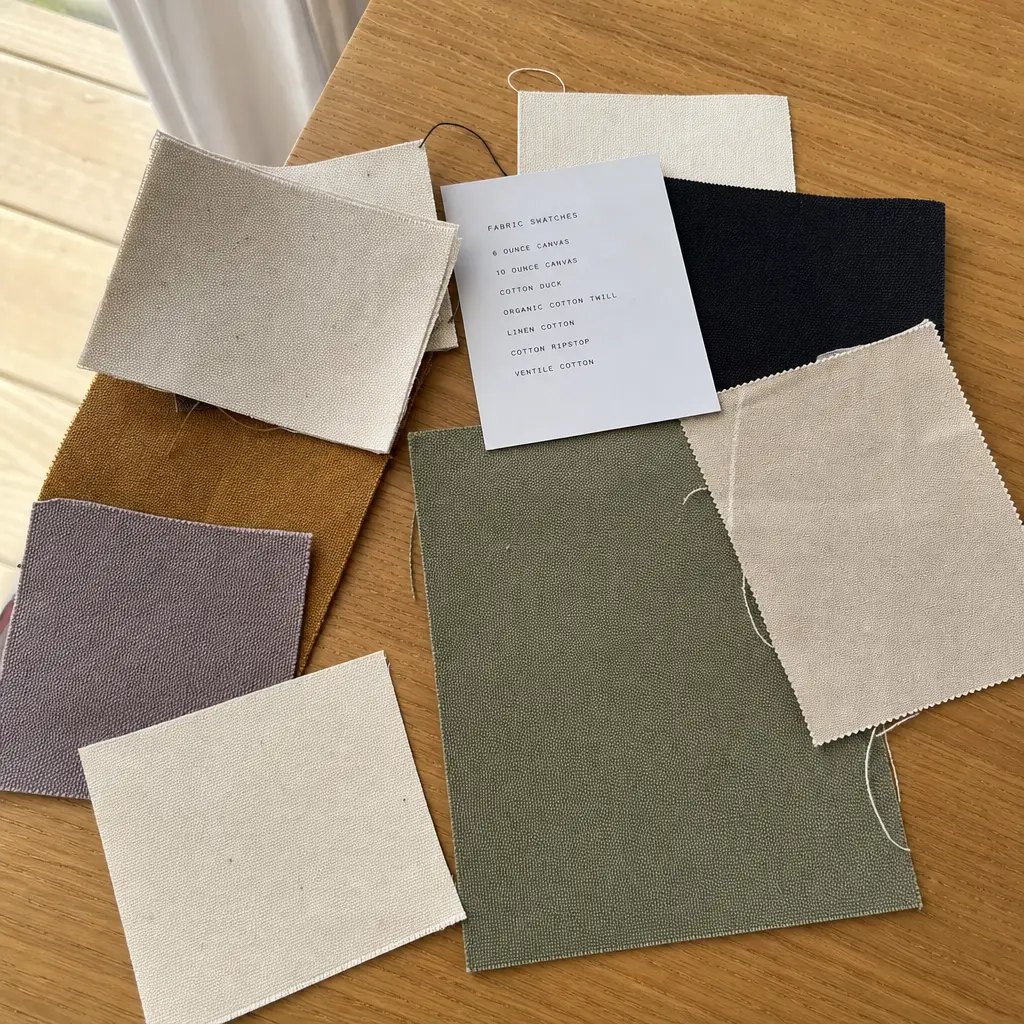
Fabric weight should be written in gsm and tied to the actual load the bag needs to carry. Lightweight cotton in the 140-180 gsm range can work for soft contents and low-cost subscription programs, but it will collapse visually more easily and may show the contents through the weave. A 200-240 gsm cotton or cotton canvas is usually the safer middle ground for brand programs that need a cleaner hand feel, better opacity, and less distortion after folding.
Heavier fabric in the 280 gsm and above range makes sense when the backpack is part of a premium kit or when the contents are denser, sharper, or more frequently reused. That said, heavier fabric changes sewing behavior, can increase freight, and may require different folding or carton planning. If a supplier says premium cotton without stating gsm, yarn count, weave type, and finished thickness, the quote is incomplete.
A practical brief also includes shrinkage and finish. Cotton can shrink after washing or steam exposure, and some finishes create a stiffer hand that changes print appearance and pack-out. Ask whether the fabric is pre-shrunk, whether the GSM is before or after finishing, and whether the supplier can hold color consistency across lots. Those details matter more than broad descriptors like heavy duty or natural cotton.
- Use 140-180 gsm only when the contents are light and appearance standards are modest.
- Use 200-240 gsm as the default starting point for most brand programs.
- Use 280 gsm or above when opacity, structure, and perceived value matter more than unit cost.
Build details that keep the bag usable in a box line
The backpack has to be easy to fold, count, and insert. If the finished size is too large, it consumes more carton volume than the fulfillment team expects. If it is too small, the contents compress badly and the bag looks underfilled. Buyers get better results when they define finished width, height, gusset or flat profile, cord length, and folded pack size together rather than treating them as separate specs.
Reinforcement is not optional if the bag will carry more than a few soft items. Bottom corners, cord entry points, and top hems need consistent stitching so the product does not tear during fulfillment or first use. Bar-tacks or reinforced stitch patterns are often worth the small increase in cost because they reduce returns, replacements, and complaints after the box ships.
It helps to define the bag like a component, not a generic promo item. Include seam allowance, stitch density, acceptable needle marks, cord end treatment, and whether the top edge must be hemmed, folded, or double-stitched. If the bag will be manually inserted into a subscription box, ask the supplier to show the folded state in a sample photo so your warehouse can confirm the handling method before release.
- Specify finished dimensions and tolerance in the same line as the fabric GSM.
- Ask for reinforced cord entry points if the contents are dense or angular.
- Require a clear folding instruction if the bags are inserted by hand at a fulfillment center.
Print method and artwork control
For cotton drawstring backpacks, screen printing is usually the most predictable option for a simple logo or a one- to two-color design. It provides strong coverage, repeatable placement, and a lower risk of artwork drift at scale. If the design is more complex or needs many colors, digital methods can work, but the supplier should show how the print will perform on cotton texture, what the hand feel will be after curing, and how placement is controlled batch to batch.
Artwork control should be written into the approval path. Do not rely on a screenshot in an email thread. Request a strike-off, print sample, or sewn sample with exact placement, Pantone references, and measured distance from seams, top edge, or center line. If the bag fabric is dark or textured, ask how they will manage opacity so the print remains legible without bleeding into the weave.
The brand decision should also include abrasion and cure behavior. A print can look acceptable on day one and still fail if it cracks, peels, or transfers in transit. Ask the supplier what rub test or hand-rub check they use, whether the print needs multiple passes, and whether a glossy or matte finish will change the look of the logo. Those are the questions that separate a production-ready brief from a marketing description.
- For simple branding, screen print is usually the best value and easiest to control.
- For softer hand feel or short runs, ask whether the supplier can still hold registration and opacity.
- Lock print placement with measurements from the seam, top edge, or center line.
Supplier compliance evidence that matters
A compliance checklist is only useful if it matches the market you are selling into. For some buyers, the main concern is factory identity and the ability to repeat the same product without surprises. For others, the supplier must also support social audit records, restricted substance testing, and documentation for retail distribution or import review. Ask for the evidence that protects your program, not a random stack of certificates that do not match the product or the actual site.
At minimum, the supplier should be able to identify the real production site, the fabric source if known, and the test or audit documents that support the materials used. If there are metal tips, printed coatings, woven labels, belly bands, or other accessories, those add compliance and quality risk. You want the supplier to show control over every component that touches the finished bag, including the packing materials if your customer or warehouse has packaging rules.
If the order will be repeated, ask how the factory keeps traceability. That can include lot codes for fabric, date stamps for production, or internal records tying the approved sample to the bulk run. Repeatability matters more than a glossy presentation because a subscription box program depends on the next order matching the first one closely enough that no one has to rebuild the kitting process.
- Request the current factory name and address that will actually produce the order.
- Ask for recent test reports for fabric, print, and any accessory materials used on the bag.
- Confirm whether subcontracting is allowed and, if so, who owns final QC responsibility.
MOQ logic and quote structure
MOQ is not a single number. For this product, the real minimum can be driven by fabric availability, screen setup, print color count, sewn label type, and packing format. A factory may accept a low sewing MOQ but still require a larger print run to make the setup economical. That is why buyers should request quote breaks by fabric, print, label, and packing rather than accept one blended unit price that cannot be compared across suppliers.
A fair comparison needs tiered quantities. Ask for 1,000, 3,000, and 5,000 piece pricing, even if you expect to start smaller, because the quote curve tells you where the supplier actually makes process sense. If the price falls sharply at a higher tier, it may reveal real setup costs. If the price barely moves, the supplier may be padding the low-end price or hiding extra charges elsewhere.
The most useful quote is the one that exposes assumptions. Ask the supplier to separate unit cost, screen or setup cost, sample cost, packing cost, carton spec, and inland freight. That makes it possible to compare factories on the same basis and to spot where a low quote is really just a different packing standard or a lower fabric grade.
- Request a quote with the same GSM, same print method, same packing, and same trade term from every supplier.
- Separate setup fees from unit price so artwork or screen costs do not disappear into the quote.
- Ask for overrun and shortage policy before you approve the final order quantity.
Sample approval and QC thresholds
Use samples as a control process, not as a formality. The proto sample should prove the basic construction and size. The pre-production sample should confirm the final fabric, print, cords, label, and packing. If the order is large or the artwork is sensitive, a top-of-production sample is worth the extra time because it shows whether the line is actually producing to the approved spec, not merely to the sample room version.
Write acceptance criteria that can be measured. For example, the bag should match the approved size within the agreed tolerance, the print should sit in the correct location, the cords should move freely, and the stitching should not show skipped areas, uneven tension, or obvious needle damage. If the program has a wash requirement, test it before bulk release. If it is a no-wash product, state that in the brief so the supplier does not over-engineer a finish you do not need.
The golden sample should be controlled. Keep one approved sample sealed or clearly marked, and use it during first-piece inspection and random inspection. That reduces disputes when the bulk run starts and the supplier wants to argue that a small deviation is within normal variation. For procurement teams, the value of sample discipline is simple: it gives you a fixed point of comparison when production issues appear.
Also define what fails the order. Visible stains, strong odor, loose threads, print misplacement, incorrect label position, broken cord movement, or carton counts that do not match should all be obvious rejection criteria. The more of those you write down before production, the fewer arguments you will have when the shipment arrives.
- Approve one golden sample and keep it for in-line comparison.
- Check the first production cartons before the line runs the full order.
- If the sample smells strongly of dye or finishing chemicals, stop and investigate before bulk approval.
Packing, carton planning, and fulfillment fit
Subscription box buyers should specify how the backpack must arrive to the kitting team. Bulk packed is cheaper, but it increases dust exposure, cord tangling, and handling marks. Individual polybags add cost and plastic, but they protect print quality and make fulfillment faster. The right choice depends on whether the bag is being inserted immediately, stored for a while, or shipped to multiple warehouses with different receiving rules.
Carton planning matters because a bag that folds poorly can waste volume and raise freight. Ask the factory to confirm carton count, carton dimensions, gross weight, and the exact fold direction. If your warehouse uses barcode scanning or SKU labeling, the label position should be fixed in the artwork stage so the receiving team can identify product without reopening cartons or handling every piece twice.
If the bags will be held in storage, also ask about moisture protection and carton strength. Cotton can pick up humidity and odor if packing is loose or the carton grade is weak. A simple conversation about how the product will be stored after arrival often prevents a lot of downstream frustration, especially when the fulfillment schedule is tight and the bags must move straight from receiving to kit building.
- Define whether the bag ships bulk, folded, banded, or individually bagged.
- Lock carton count and carton size before final production, not after.
- Confirm the outer carton marking format required by your warehouse or 3PL.
Lead time risk and schedule planning
A realistic schedule for cotton drawstring backpacks usually includes sample development, artwork approval, bulk production, packing, and transit. Simple programs can move quickly, but the fastest route still depends on fabric availability, screen preparation, and whether the supplier can repeat the same finish after approval. If the order starts with an incomplete brief, the delay usually shows up in sample revision rather than in sewing.
The best way to manage schedule risk is to freeze the elements that are hard to change. Fabric weight, print colors, label type, and packing method should be agreed before the bulk order is released. If the launch date is fixed, build in buffer for artwork corrections, test requests, factory holidays, and any warehouse receiving requirements that might add a repack step on arrival.
For recurring subscription boxes, plan the reorder differently from the first buy. Keep the approved spec, approved color standard, and approved carton layout in one place so the next order does not depend on memory or email threads. A recurring program is easier to maintain when the supplier is given one controlled reference instead of a fresh interpretation every cycle.
- Expect sample work to take longer when print placement or color matching is important.
- Do not lock your launch date until the pre-production sample is approved.
- Hold a reorder buffer if the bag is part of a recurring subscription box program.
Landed cost comparison and final sourcing decision
A proper landed-cost comparison includes more than the quoted unit price. You need to compare fabric GSM, print setup, label cost, packing method, carton spec, inland freight, testing, and the likely defect rate. A supplier that looks cheaper on paper can become more expensive once you add repacking labor, carton damage, extra sampling, or a delayed launch caused by poor documentation.
For brand owners and importers, the better choice is often the supplier that gives the cleanest quote structure and the strongest evidence of production control. If two quotes are close, choose the one that can explain the process in writing and back it with a sample that matches the brief. That reduces the chance that the bag becomes a kitting problem after it lands, which is usually where low-spec sourcing becomes expensive.
Use the final decision to review the whole program, not just the supplier. If the order has repeated revisions, vague artwork, or changing packing instructions, the issue may be the brief rather than the factory. The best sourcing outcome is the one that produces a stable, repeatable product with fewer exceptions on every reorder. That is the real commercial advantage of a disciplined cotton drawstring backpacks for subscription boxes supplier compliance checklist.
- Compare quotes using the same spec sheet and the same approval sample reference.
- Add hidden costs such as testing, repacking, and warehouse labor before deciding.
- Choose clarity over a small price difference when the program is customer-facing.
Specification comparison for buyers
| Supplier option | What to verify | Commercial advantage | Buyer risk to control |
|---|---|---|---|
| Direct sewing factory | cord material proof, reinforcement close-ups, load-test photos, approved sample tag, and bulk-line first-piece record | Better sample-to-bulk control and faster production feedback | May be weaker on export paperwork or branded packing unless checked early |
| Trading company | Factory name, production photos, trim-source proof, and who owns QC decisions | Can coordinate small mixed orders and extra services | Markup can hide real factory capability and slow defect decisions |
| Specialized bag workshop | cord diameter, eyelet or reinforced channel, bottom corner reinforcement, seam allowance, bar-tack position, and load target | More practical for detailed construction, trims, and repeat programs | Capacity may be limited during peak seasons |
| Low-price general supplier | 6-10 oz cotton canvas, 210D polyester, rPET, or blended cotton with shrinkage and colorfastness expectations set before sampling | Useful for simple promotional runs with loose specs | Material downgrades, weak packing, and vague inspection scope can erase savings |
| Retail-ready supplier | fold direction, cord protection, bundle count, carton compression, moisture bag, and retail label position | Can handle labels, SKU separation, carton marks, and receiving rules | Higher unit cost must be compared against reduced warehouse work |
| Compliance-focused supplier | Fabric records, labeling review, test plan, and production traceability | Safer for retail programs and repeat brand orders | Documentation claims need evidence, not only sales language |
| Local sample room plus bulk factory | Signed sample, bulk factory handoff, first-piece photos, and deviation owner | Good for complex branding before large production | Sample room quality may not match bulk line unless handoff is controlled |
Buyer checklist before sampling
- Confirm the target bag size, finished tolerance, and how much empty space the box insert can tolerate after folding.
- Lock the fabric weight in gsm, not only a marketing description such as heavy cotton or premium canvas.
- Define the print method, print size, Pantone references, and whether the artwork must remain soft-hand or abrasion resistant.
- State the packaging format in the RFQ: bulk, folded with belly band, individual polybag, or carton-ready with barcode label.
- Request supplier evidence for factory identity, production site, recent product test reports, and any required social audit documents.
- Ask for sample checkpoints in sequence: proto sample, pre-production sample, and top-of-production sample if the order is large.
- Set measurable quality limits for shrinkage, print placement, seam strength, needle damage, odor, and loose threads.
- Compare quotes on the same basis: same fabric GSM, same print colors, same label type, same packing, and same trade term.
- Include a reserve plan for lead time slip, artwork revision, or a fabric color mismatch before launch dates are fixed.
- Write down shortage and overrun tolerances so the supplier cannot treat carton counts or piece counts as a floating target.
Factory quote questions to send
- What is your exact fabric construction, yarn count, and finished GSM, and do you source the fabric in-house or from a mill?
- Can you quote the same design at 140-180 gsm, 200-240 gsm, and 280+ gsm so we can compare cost and hand feel?
- Which print method do you recommend for this artwork, how many colors are included, and what setup charges apply?
- What is your MOQ by fabric type, by print color count, and by packaging option such as individual polybag or bulk fold?
- What sample stages do you provide before bulk production, and what is the fee or lead time for each stage?
- Can you confirm size tolerance, seam allowance, cord length, and reinforcement details in writing before we place the order?
- Which compliance documents or test reports can you provide for fabric, print, dyes, and packaging materials?
- How do you handle overrun and shortage percentages, and what is your policy if cartons are short on final count?
- What is your bulk lead time after sample approval, and how much additional time do you need for packaging or testing?
- Please separate the quote by unit cost, setup cost, sample cost, packing cost, carton spec, and inland freight so we can compare suppliers fairly.
Quality-control points to confirm
- Measure finished size on at least 10 pcs per lot and keep the deviation within the agreed tolerance, typically plus or minus 1 cm for common sizes.
- Check fabric GSM or a comparable thickness control against the approved sample, especially if the product is sold as premium or heavy duty.
- Inspect print placement, print opacity, edge sharpness, and curing after a rub test so the logo does not crack or transfer in transit.
- Pull and release the cords repeatedly to confirm smooth movement, consistent tension, and no fraying at the entry points.
- Inspect seam density, bar-tack strength, and bottom corner reinforcement where the bag carries load or rubs against carton edges.
- Open random units to check odor, staining, broken threads, needle marks, and loose fibers before approving carton sealing.
- Verify the fold method and carton count match the approved packing plan, because poor folding creates kitting delays and crushed print areas.
- Confirm label position, barcode readability, and carton markings against the buyer's warehouse requirements before shipment.
- If wash performance matters, test shrinkage and print durability after one wash cycle, or specify no-wash use in the product brief.
- Use a golden sample at production start and compare first-run output against it before the line continues.