Plan the Carton Before Locking the Bag
For bakery buyers, carton planning is not an afterthought after artwork approval. The same cotton drawstring backpack may be sold at a counter, inserted into a bread club welcome kit, handed out at a market event, or shipped to several branches for replenishment. Each use case changes packing, counting, carton weight, and presentation risk.
Define two units in the RFQ: the distribution unit and the shipping unit. The distribution unit may be one retail-ready backpack with a belly band, an inner bundle of 10 for store staff, or a pack of 25 for an event team. The shipping unit is the master carton used for freight, customs, warehouse receiving, and final allocation.
Soft goods compress, so early carton estimates can be misleading. A blank sample may pack tightly, while the final version with thicker cords, a large print, hangtags, kraft sleeves, and barcode labels may require more cube. Ask for final packed-carton dimensions and weights from a trial using the intended folding method.
- Define pieces per store, event kit, distributor allocation, and master carton before approving bulk packing.
- Set carton targets early: pieces per carton, maximum gross weight, outer dimensions, and acceptable CBM range.
- Approve whether cartons are single-SKU, fixed-ratio mixed cartons, or bulk cartons for destination repacking.
- Ask for carton layer photos showing print protection, cord placement, retail packaging, and inner pack layout.
Choose Fabric Weight by Use Case
Fabric weight affects hand feel, print performance, folded thickness, carton quantity, and perceived value. Do not rely only on ounce descriptions. One supplier’s 6 oz cotton may not match another supplier’s 6 oz cotton. Ask for ounce weight, GSM range, GSM tolerance, fabric construction, and finished bag weight.
For light promotions, a supplier may quote 6 oz cotton near 180-220 GSM. Treat that range as a planning assumption to verify, not a fixed industry rule. It can work for recipe-card campaigns, loyalty giveaways, and low-cost seasonal events, but may feel too light for paid merchandise or heavier bakery bundles.
For retail programs, a supplier may quote 8 oz cotton near 260-290 GSM. This usually gives a stronger hand feel and a more stable print surface, but it also increases folded thickness. Heavy canvas should be reserved for programs where durability, structure, and selling price justify higher unit cost and freight cube.
- Use lighter cotton for giveaways, event bags, and low-load promotional programs.
- Use midweight cotton for paid merchandise, subscription kits, and reusable customer bags.
- Use heavy canvas only when structure and durability are more important than freight efficiency.
- Require the supplier to confirm GSM range, GSM tolerance, fabric finish, shade standard, and shrinkage expectation.
Size Around Real Bakery Contents
Catalog dimensions are only a starting point. A 33 x 42 cm or 35 x 45 cm bag may work for simple giveaways, but bakery contents vary widely. Bread sleeves, pastry boxes, coffee bags, aprons, recipe booklets, jam jars, and holiday bundles all sit differently inside a soft backpack.
Usable height matters more than total height when the top must close. The drawcord channel needs space to gather, so contents should sit below that channel with enough clearance for a clean closure. If the bag is too small, staff may force items inside and damage bakery packaging. If it is too large, the buyer pays for extra fabric, carton cube, and freight.
The simplest test is physical: load the sample with the largest expected item or bundle. Check bottom-corner strain, side seam twist, print distortion, cord closure, and shoulder comfort. If several branches use different items, size around the largest common package, not the average.
- Provide the largest item dimensions and target load weight before confirming bag size.
- State finished width x height and usable loading height below the drawcord channel.
- Check filled samples for closure, corner stress, seam strain, print distortion, and cord comfort.
- Use a size tolerance such as +/-1 cm only if it suits the contents and retail presentation.
Specify Drawcords and Stress Points
Drawcords affect both user experience and carton cube. Natural cotton cord often fits artisan bakery branding because it avoids a plastic look. Suppliers may quote cords around 5-7 mm diameter, but the RFQ should require the actual diameter, material, color, length, knot style, and end finish.
The channel must match the cord. A tight channel causes drag and seam stress; a loose channel may gather poorly. Stress points include channel ends, cord exits, bottom corners, and any eyelet or reinforcement location. If the bag will carry jars, boxed gifts, or coffee bags, ask whether reinforced stitching, bar-tacks, or eyelets are included.
For carton approval, also review how cords are folded. Uneven cord piles can press into printed panels, create carton bulges, or reduce pieces per carton. A neat cord layout is a small packing detail that can prevent visible pressure marks after transit.
- Specify cord material, diameter, color, length, knot style, and end finish.
- Confirm channel width and construction before approving the pre-production sample.
- State whether eyelets, bar-tacks, reinforced corners, or extra stitching are included in the quote.
- Review carton layering so cord bundles do not mark prints or deform retail packaging.
Control Print Risk on Cotton
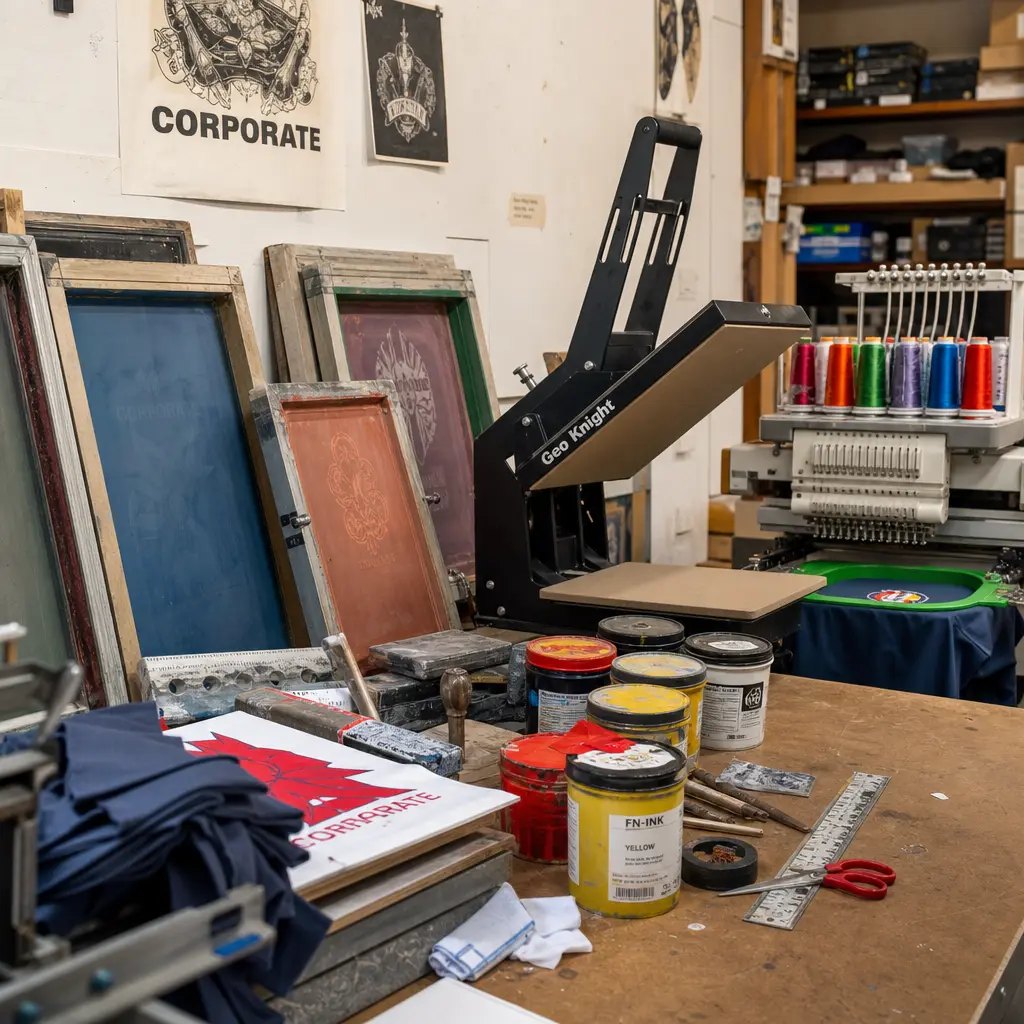
Bakery artwork often includes small serif type, wheat illustrations, flour sack graphics, circular seals, oven icons, and muted heritage colors. These details may look sharp in a digital proof but behave differently on woven cotton. Screen printing is practical for many one-to-three-color drawstring backpacks, but the ink system should match fabric color, coverage target, and hand-feel expectations.
Make the print specification measurable. Provide vector artwork, Pantone targets, final print size, and placement from fixed bag edges. Ask the printer to confirm minimum line thickness, small-type risk, and whether large solid areas need adjustment. A paper proof confirms layout, not ink behavior on the final fabric.
Printing also affects packing. Bags need proper curing and cooling before folding. If they are compressed too early or too tightly, ink may transfer, crack, block, or show fold marks. For large solids or dark inks, approve a fabric strike-off and review folded samples before locking carton quantity.
- Approve a print strike-off on the same fabric color, weight, and surface as bulk production.
- Measure print placement from fixed bag edges with the bag flat and squared.
- Avoid printing across seams, channels, heavy creases, or sharp fold lines where possible.
- Request cure confirmation, dry rub review, and fold-mark review for large solids or dark ink.
Separate MOQ From Version Complexity
MOQ is not only a sales minimum. It is linked to fabric sourcing, cutting efficiency, cord procurement, screen setup, label production, packing labor, and changeovers. A natural cotton bag with one print is much simpler than a program with dyed fabric, several branch logos, barcode stickers, and store-specific carton assortments.
Ask what each MOQ applies to: total order, fabric color, print design, label version, packaging method, or carton assortment. This is especially important for artisan bakery groups that want local identity across flagship stores, holiday launches, wholesale distributor programs, or co-branded coffee editions.
Separate the shared base-bag cost from version-specific charges. Screens, woven labels, hangtags, barcode stickers, and carton marks can make a low unit price less attractive. Version control also matters at inspection: designs should be counted, packed, and marked by SKU so receiving teams do not solve mix errors after shipment.
- Request MOQ by fabric color, print design, label version, packaging method, and carton assortment.
- Separate shared bag cost from charges for screens, labels, hangtags, barcode stickers, and carton marks.
- Define overrun and underrun tolerance by design, especially when exact branch quantities matter.
- Use single-SKU cartons when receiving accuracy matters more than reducing carton variety.
Use Simple Carton Calculations
A usable carton plan includes inner pack quantity, master carton quantity, outer dimensions, net weight, gross weight, CBM, carton board strength, carton marks, and folding method. Pieces per carton should come from real packing, not from a generic catalog estimate.
For example, if a carton measures 60 x 40 x 25 cm, the CBM is 0.060. If it holds 150 bulk-packed bags, the planning cube is 0.00040 CBM per piece before palletization, rounding, or void allowance. If a retail-packed carton measures 60 x 50 x 25 cm, the CBM is 0.075. If it holds 100 bags, the planning cube is 0.00075 CBM per piece. That difference can materially affect freight and storage cost.
Carton gross weight should follow the buyer’s warehouse or distributor handling rule. Some teams prefer planning below 15-18 kg where practical, but that number should be confirmed against the actual receiving environment. The final carton should protect presentation without creating overweight handling or excessive freight cube.
- Calculate CBM as length x width x height in meters, using final outer carton dimensions.
- Compare CBM per piece across bulk, inner-pack, polybag, hangtag, and belly-band options.
- Require final net weight, gross weight, carton quantity, carton marks, and board grade before shipment.
- Base freight booking on approved packed-carton data, not early blank-sample estimates.
Make Packing Costs Visible
Packing can turn a clean unit price into a confusing landed cost. Bulk flat packing is efficient for giveaways or local repacking. Inner bundles improve counting and allocation. Individual polybags support dust control and barcode handling, but they add material, labor, cube, and sustainability concerns.
Retail-ready elements such as belly bands, hangtags, kraft sleeves, and barcode labels can improve counter presentation, but they also need artwork approval, production lead time, application labor, and carton space. Quote each element as a separate line item so procurement can compare bulk, distributor-ready, and retail-ready options clearly.
Barcode control should be tested on the final material. A code that scans from a PDF may fail on kraft paper, a textured hangtag, or a sticker placed over a fold. Decide whether the barcode must stay with the product after unpacking; a sticker on a discarded polybag may not support counter sales.
- Use bulk flat packing for lowest cost when goods will be repacked or handed out quickly.
- Use inner packs when cartons must be split by store, event team, distributor, or sales representative.
- Quote polybags, belly bands, hangtags, kraft sleeves, stickers, and barcode labels separately.
- Test barcode size, contrast, material, and placement before approving retail-ready packing.
Approve Samples Under Real Conditions
A showroom sample can confirm the general style, but a production approval sample should use the final cotton weight, fabric shade, cord, print method, logo size, label, and folding direction. If any component is temporary, the supplier should identify it in writing and confirm the final material before bulk cutting or printing.
Sample review should include function. Measure width, height, channel width, cord length, print size, and print position. Load the bag with the intended bakery contents, close the top, pull the cords, and check corner stress, seam strain, shoulder comfort, and print distortion.
For carton planning, ask the factory to complete a packed-carton trial or a documented scaled trial using final components. The buyer may not need a full carton shipped for approval, but the supplier should provide photos, layer count, dimensions, net weight, gross weight, and CBM from real packing.
- Approve a pre-production sample using final fabric, cord, print method, logo size, label, and folding direction.
- Document any temporary sample substitutions and require final-material confirmation before bulk production.
- Load real bakery contents to test closure, carrying comfort, seam stress, and print behavior.
- Require packed-carton photos and data before locking freight cost and packing-list assumptions.
Set QC Rules Before Production
Quality control works best when preferences become measurable acceptance rules. Major defects may include wrong fabric weight, wrong size, incorrect shade, wrong artwork, severe print deviation, broken seams, unusable cords, missing labels, incorrect barcode, mixed designs, wrong carton quantity, odor, mold, damp cartons, or dirty packing.
Natural cotton needs a realistic standard. Seed flecks, weave texture, and slight shade variation may be acceptable if approved in advance. Oil stains, dirt, strong odor, moisture, insects, and mold should not be accepted, especially for food-adjacent branding. If the bakery wants a clean white look, specify bleached cotton or a tighter shade standard.
Inspection should cover product and packing together. Open cartons across the shipment, count pieces, measure size, compare print color and placement, rub printed areas, pull cords, inspect seams, scan barcodes, and verify carton marks against the purchase order. For multi-logo programs, confirm assortment by design and carton number.
- Define major and minor defects for size, GSM, shade, print, seams, cords, cleanliness, labels, and packing.
- Check bottom corners, side seams, channel ends, and reinforcement for skipped stitches and seam opening.
- Reject stains, odor, dampness, mold, insects, or dirty cartons that conflict with bakery presentation.
- Verify piece count, inner pack quantity, SKU mix, barcode scan, carton marks, dimensions, and gross weight.
Specification comparison for buyers
| Procurement decision | Supplier-confirmed planning assumption | Best fit for bakery programs | Carton and QC control |
|---|---|---|---|
| Economy cotton fabric | 6 oz cotton is often quoted near 180-220 GSM, but require actual GSM, tolerance, weave, and finished bag weight from the supplier | Bread club giveaways, farmers market events, loyalty gifts, recipe-card campaigns, and light inserts | Confirm fabric is not too sheer for the logo or intended selling context; compare GSM from bulk fabric to the approved sample |
| Retail-feel cotton fabric | 8 oz cotton is often quoted near 260-290 GSM, but treat this as a quote-specific assumption, not a universal standard | Bakery shop merchandise, subscription welcome kits, reusable customer bags, and premium gift sets | Run a packed-carton trial because thicker fabric may reduce pieces per carton and increase CBM |
| Heavy canvas option | 10 oz canvas or heavier should be quoted only when structure, durability, and retail price justify the added cube | Apron-and-bag gift sets, jars, boxed items, heavier retail bundles, and premium co-branded programs | Check seam bulk, skipped stitches, channel strength, bottom-corner stress, and carton compression marks |
| Finished size and tolerance | State width x height laid flat, usable height below the drawcord channel, and production tolerance such as +/-1 cm if acceptable | Programs carrying bread sleeves, pastry boxes, coffee bags, aprons, recipe cards, or bundled gifts | Test the real contents before approving size; oversized bags increase fabric use and freight cube |
| Drawcord specification | Cotton cord around 5-7 mm may be quoted, but confirm actual diameter, color, length, knot style, end finish, and reinforcement | Natural bakery branding where a reusable, low-plastic look is preferred | Thicker cords improve feel but add folded bulk; check pull smoothness, fraying, cord length pairing, and channel stitching |
| Print method | Water-based or pigment screen print for 1-3 spot colors on approved cotton fabric; confirm Pantone target, ink type, and print area | Wheat graphics, flour sack artwork, bakery seals, pastry icons, coffee marks, and simple shop logos | Approve a strike-off on the final fabric; define placement tolerance, minimum line thickness, cure, and rub expectations |
| Retail packaging | Quote belly band, hangtag, barcode sticker, kraft sleeve, individual polybag, and inner pack as separate line items | Bakery counters, gift shops, subscription boxes, wholesale retail accounts, and scan-ready shelf programs | Packaging adds labor and cube; test barcode scan, label position, fold condition, and carton assortment |
| Example carton scenario A | 150 pieces per carton x 0.060 CBM carton = 0.00040 CBM per piece before palletization or void allowance | Bulk flat-packed 6 oz promotional bags for events or branch allocation | If carton gross weight is 14 kg, handling is manageable for many warehouses, but buyer rules should control the cap |
| Example carton scenario B | 100 pieces per carton x 0.075 CBM carton = 0.00075 CBM per piece before palletization or void allowance | 8 oz retail bags with hangtags, belly bands, or thicker cords | Higher CBM per piece may be justified for retail presentation; require real packed-carton photos and weights |
Buyer checklist before sampling
- Define the commercial use case: free giveaway, paid merchandise, subscription welcome kit, holiday gift set, farmers market event bag, wholesale distributor pack, or branch replenishment unit.
- List the real contents the backpack must carry, including bread sleeves, pastry boxes, coffee bags, jars, aprons, recipe cards, gift cards, or bundled merchandise, and provide the largest item dimensions.
- State finished bag width x height, usable loading height below the drawcord channel, target carrying weight, and whether the opening must close fully over the contents.
- Select fabric by value target: lighter cotton for promotions, midweight cotton for retail feel, and heavy canvas only when durability and structure justify higher unit cost and freight cube.
- Require the supplier to confirm fabric construction, ounce weight, GSM range, GSM tolerance, shade standard, shrinkage expectation, and acceptable seed-fleck or slub level.
- Provide vector artwork with Pantone references, final print size, placement from fixed bag edges, minimum line thickness concerns, and the exact fabric color for printing.
- Request a print strike-off on the same cotton weight and color before approving the pre-production sample, especially for serif type, wheat illustrations, circular seals, and large solid ink areas.
- Confirm drawcord material, diameter, length, color, knot style, end finish, channel width, and whether eyelets, bar-tacks, or reinforced stitching are included or priced separately.
- Ask for inner pack quantity, master carton quantity, outer carton dimensions, net weight, gross weight, carton CBM, carton board strength, carton marks, and layer photos before approving the final quote.
- Set a maximum carton gross weight based on warehouse or distributor handling rules; any 15-18 kg target should be treated as a buyer-side planning preference, not a universal standard.
Factory quote questions to send
- What exact cotton fabric construction, ounce weight, GSM range, GSM tolerance, and finished bag weight are included in the quoted price?
- Is the quote based on stock natural cotton, bleached cotton, custom dyed fabric, washed fabric, or greige fabric prepared after order confirmation?
- What finished bag size, usable height below the drawcord channel, top channel width, bottom seam construction, and size tolerance are included?
- What cord material, diameter, color, length, knot style, cord-end treatment, and pull-through construction are included, and are eyelets or bar-tacks priced separately?
- Which print method, ink type, color count, curing method, maximum printable area, and placement tolerance are assumed in the price?
- Can you provide a print strike-off on the same cotton fabric, color, and weight before the pre-production sample is approved, and is that cost refundable against the bulk order?
- What artwork format, Pantone references, minimum line thickness, trapping allowance, and small-text limits do you recommend for this fabric?
- What is the MOQ per fabric color, print design, label version, packaging method, and carton assortment, and how are mixed branch logos handled?
- What setup charges apply for screens, woven labels, printed labels, hangtags, barcode stickers, carton marks, cutting dies, or special packing instructions?
- What overrun or underrun tolerance is normal for this product, and can final shipment quantity be controlled to exact PO quantities if required by design or branch?
Quality-control points to confirm
- Measure finished width and height with the bag laid flat, relaxed, and squared; use the agreed tolerance from the purchase order rather than an informal factory standard.
- Check usable height below the drawcord channel because total bag height overstates the space available when bakery contents must sit below a closed top.
- Verify fabric GSM from bulk fabric rolls and compare it with the approved pre-production sample because cotton lots, dyeing, washing, and finishing can vary.
- Judge natural-cotton shade, seed flecks, slubs, and weave texture against an approved reference so normal character is not confused with stains or defects.
- Pull both drawcords through the channels several times and check for seam tearing, twisting, slipping, uneven cord length, and uncomfortable pressure under the intended load.
- Inspect knots or cord-end finishes for early unraveling, and confirm eyelets, bar-tacks, or reinforcement match the approved sample.
- Measure print position from fixed bag edges after the bag is flat and squared, not from a fold line, stretched edge, or curved channel.
- Check screen print for unacceptable cracking, smearing, bleeding, missing details, wet ink transfer, pinholes, and color deviation against the approved strike-off.
- Perform dry rub checks after curing, especially for dark ink, large solids, or prints that will be folded under carton pressure.
- Inspect bottom corners, side seams, channel ends, and stress points for skipped stitches, loose threads, seam opening, weak reinforcement, and uneven stitching.