Why carton planning matters for bakery backpack orders
Custom cotton drawstring backpacks for artisan bakeries are often treated as a simple logo bag purchase, but the carton plan can change the landed cost more than buyers expect. A bag that looks only slightly thicker, larger, or more heavily printed can reduce carton quantity, increase cubic meters, raise carton weight, and create receiving problems at the distributor warehouse. For procurement teams comparing supplier quotes, the lowest unit price is not meaningful unless the packing method and carton data are quoted on the same basis.
Bakery buyers usually order these backpacks for gift sets, market events, loyalty programs, wholesale bakery chains, or retail merchandise walls. Those uses need a bag that feels better than a thin giveaway but still packs efficiently. The buying problem is not only choosing cotton fabric and logo printing. It is deciding a specification that protects the bakery brand, avoids freight surprises, and gives the supplier a packing method that can be repeated during mass production.
- Use carton planning before final PO approval, not after bulk production is packed.
- Compare quotes by unit price, pieces per carton, carton CBM, gross weight, and packing labor.
- Treat carton bulging, inconsistent fold size, and missing carton marks as commercial risks, not only warehouse details.
- Avoid approving a beautiful sample that cannot be packed safely at the target carton quantity.
Set the bag purpose before choosing size and fabric
A cotton drawstring backpack used as an empty retail merchandise item can be lighter and flatter than one used to carry bakery gift contents. If the bakery will pack cookie tins, coffee bags, preserves, recipe cards, or branded apparel inside, the backpack needs more seam strength and a better drawcord attachment. If it is mainly a promotional bag handed out at a bread festival, the buyer may accept a lighter body fabric and a simpler construction to control cost.
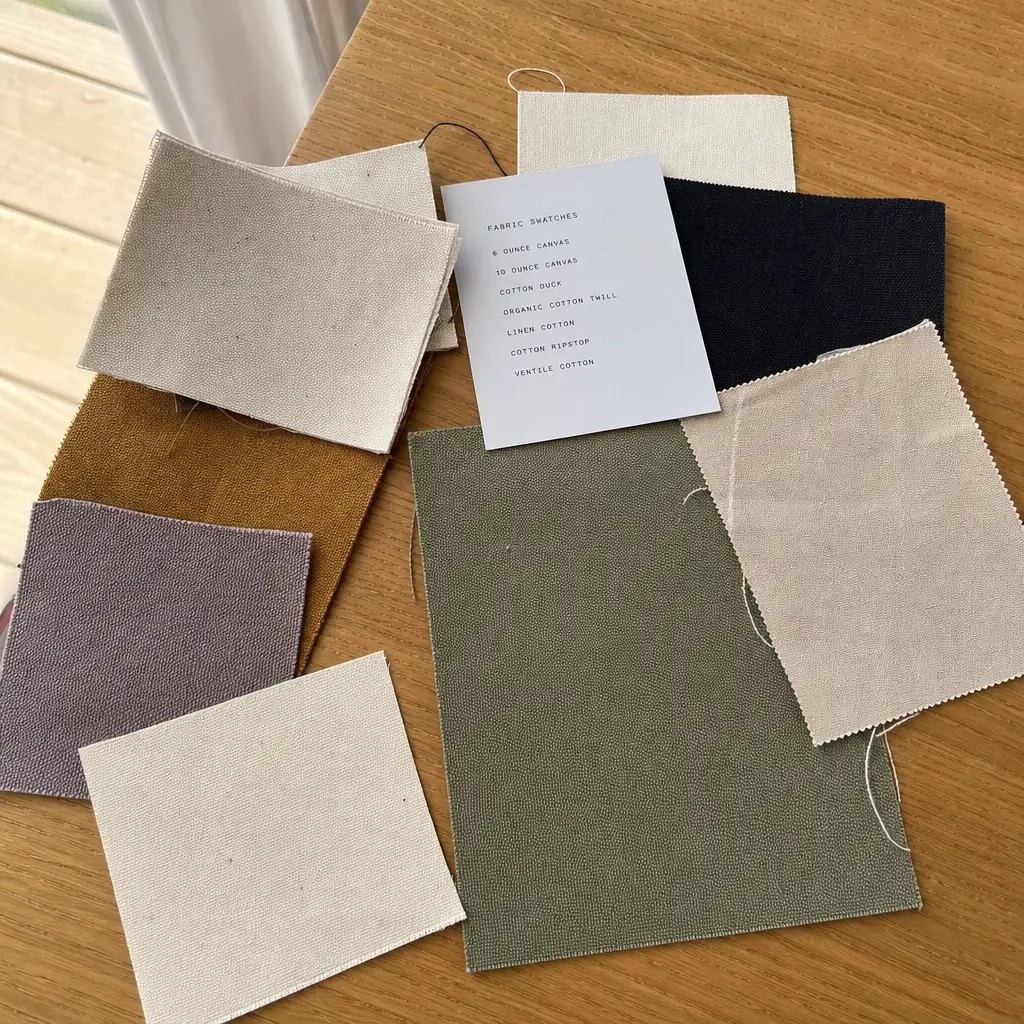
For most artisan bakery programs, an 8 oz cotton canvas around 270 GSM is a practical starting point. It gives enough structure for the logo area, folds predictably, and does not become as bulky as 10 oz or 12 oz canvas. A 6 oz cotton around 200 GSM can work for budget event orders, but it will feel less retail-grade. A 10 oz cotton around 340 GSM gives a stronger handfeel, but the buyer should expect fewer pieces per carton and higher freight volume.
- Common retail size: about 34 x 42 cm for a general bakery merchandise backpack.
- Budget event fabric: 6 oz cotton, approximately 190-210 GSM, suitable for short-term promotional use.
- Balanced bakery retail fabric: 8 oz cotton, approximately 260-280 GSM, suitable for repeat customer use.
- Heavy premium fabric: 10 oz cotton, approximately 320-350 GSM, suitable when the brand values structure over freight efficiency.
- Typical tolerance: plus or minus 1 cm on finished size unless a stricter tolerance is agreed.
Choose construction that survives real bakery use
Drawstring backpacks fail most often at the bottom cord attachment, side seam, or printed front panel. Bakery customers may use the bag for boxed pastries, bread, bottled drinks, or market purchases, so the load is not always light or flat. A simple channel at the top is acceptable, but the bottom corner should be reinforced by bar tack, metal eyelet with backing, or a sewn fabric loop strong enough for repeated pulling.
Flat cotton tape can feel softer on the shoulder than thin round cord, but it costs more and takes more space in packing. Round cotton cord is a safe standard if the diameter is not too thin. Polyester cord slides smoothly and is cheaper in some markets, but it can look less natural next to unbleached cotton fabric. For artisan bakeries, material consistency matters because the buyer is usually trying to communicate natural, reusable, and craft-oriented packaging.
- Use bar tacks at stress points where the cord meets the lower corners.
- Keep seam allowance consistent, usually around 0.8-1.0 cm depending on factory equipment.
- Avoid very thin cord if the bag may carry jars, coffee, or boxed gift contents.
- Specify whether bottom corners use eyelets, fabric tabs, or cord-through-seam construction.
- Request a simple load test result or factory pull test for the approved construction.
Match print method to bakery artwork and folding plan
Most bakery logos are suitable for screen printing, especially when the design uses one to three solid colors. Water-based screen print gives a softer handfeel on cotton and fits natural bakery positioning. Plastisol can give stronger opacity, but it may feel heavier on large print areas. Heat transfer is useful for detailed illustrations, gradients, or small multi-color runs, but buyers should evaluate cracking risk, edge feel, and how the transfer behaves after the bag is folded inside cartons.
The folding plan affects print quality after delivery. If the printed logo is folded through the middle and pressed inside a tight carton for several weeks, creasing can appear, especially on heavy ink coverage or transfer prints. A small change in fold direction may protect the artwork without changing the bag itself. This should be settled during sample approval because mass packers will repeat the approved fold method at speed.
- Best standard choice: water-based screen print for simple bakery logos on natural cotton.
- Use heat transfer when artwork requires fine detail, gradients, or many colors at modest quantity.
- Avoid large solid ink blocks if the bag must remain soft and fold flat.
- Define print size in centimeters and position from top edge and side seam.
- Approve one folded printed sample before confirming carton quantity.
Build MOQ logic around SKUs, not only total quantity
A supplier may quote a friendly MOQ for one cotton drawstring backpack design, but the cost changes when the order is split across bakery locations, seasonal slogans, or several fabric colors. Cutting, printing, ink setup, sewing line changeover, carton marking, and packing labels are all affected by SKU count. For distributors and retail buyers, the practical MOQ is the quantity per specification, not only the total order quantity.
A clean first order usually uses one fabric color, one bag size, and one main print design. If the bakery group needs multiple store names, it may be better to print a master brand logo on the bag and use hangtags, carton labels, or paper inserts for local identity. This keeps production efficient and reduces the risk of mixed cartons. If separate artwork is required, each version should have its own item code and packing instruction.
- Quote one base specification first, then price each artwork split separately.
- Separate MOQ for fabric color, print design, drawcord color, and packing label.
- Use SKU-level carton marks when multiple bakery locations or distributors are involved.
- Avoid mixing similar artwork versions in one carton unless the warehouse explicitly accepts it.
- Require a packing list that shows quantity by SKU and carton number.
Plan master cartons from real folded samples
The safest carton plan is based on a real folded sample made from the approved fabric, approved drawcord, and approved print method. A carton calculated from flat bag dimensions can be wrong because cotton thickness, cord bulk, print stiffness, and folding method all change the final stack height. For a common 34 x 42 cm 8 oz cotton drawstring backpack, a buyer might start with 100 pieces per master carton, but that number should not be locked until the sample packing test is done.
Carton dimensions should balance freight efficiency with handling safety. A carton that is too large may exceed warehouse lifting preferences or become weak during stacking. A carton that is too tight may compress the backpacks, crease prints, bend eyelets, or split at the seams. For export orders, a 5-ply corrugated master carton is a reasonable baseline, with the exact size adjusted after the packing test. Inner polybags can be 25 pieces per bag for counting, unless individual retail packaging is required.
- Practical starting point: 100 pieces per carton for many 8 oz cotton drawstring backpacks.
- Inner packing: 25 pieces per inner polybag can help counting and moisture control.
- Carton board: 5-ply export carton for sea freight and warehouse stacking.
- Carton fill: firm enough to reduce movement, not so tight that prints crease.
- Required quote data: pieces per carton, carton size, gross weight, net weight, and total CBM.
Control packing details that affect landed cost
Packing options are not free details. Individual polybags, hangtags, barcode labels, paper belly bands, desiccants, tissue, and custom printed cartons all add material cost and labor. They also increase carton volume and can change how many units fit into one master carton. A bakery retail buyer may need barcode labels for store receiving, while an importer selling to distributors may only need bulk inner bags and clean carton marks.
When comparing quotes, calculate freight by total CBM and carton weight, not only unit price. A slightly higher unit price with better carton density may produce a lower landed cost. The supplier should provide the carton packing data in the quotation before PO confirmation. If carton size is listed as estimated, the buyer should treat it as provisional until the pre-production sample packing test confirms the final numbers.
- Use individual polybags only when retail protection, barcoding, or distributor rules require them.
- Use paper belly bands for a more bakery-friendly presentation, but test whether they slow packing.
- Avoid custom printed master cartons unless the retail or distributor channel needs them.
- Set maximum carton gross weight according to the receiving warehouse requirement.
- Compare supplier quotes using total order CBM and total gross weight.
Approve samples with measurable acceptance criteria
A sample approval that only says “logo looks good” is not enough for mass production. The approved sample should record fabric weight, fabric color, drawcord material, drawcord length, finished bag size, print method, print size, print position, seam construction, bottom reinforcement, fold method, and packing style. These details become the factory reference when production starts and the inspection reference when goods are checked.
For bakery brand owners, the logo area is usually the most sensitive point. Natural cotton fabric can have small slubs and shade variation, so the buyer should decide what is acceptable before inspection. If the logo is printed over a seam, near a cord channel, or across a heavy fabric texture, defects will be more visible. A clear approval file with photos, measurements, and color references reduces argument later.
- Measure finished size flat, after normal smoothing, not under forceful stretching.
- Record print position from fixed edges such as top opening and left side seam.
- Approve fabric shade under consistent light because natural cotton varies by batch.
- Keep one sealed approved sample at the factory and one with the buyer or inspection team.
- Include folded sample and carton packing photos in the approval record.
Schedule production around artwork, fabric, and carton confirmation
Lead time problems usually start before sewing. Artwork files may need cleaning, Pantone targets may not be realistic on natural cotton, fabric may need dyeing or washing, and carton size may not be final until the packing test is complete. A realistic schedule separates sample making, sample approval, material purchasing, bulk printing, sewing, trimming, final inspection, packing, and shipment booking.
For planning purposes, buyers can treat sample development as one schedule and bulk production as another. A factory may produce a simple sample quickly when fabric is in stock, but bulk lead time still depends on fabric availability, print capacity, order quantity, and packing complexity. Seasonal bakery campaigns should not leave carton planning to the final week because shipping documents, pallet plans, and warehouse bookings all depend on accurate carton data.
- Start artwork review before sample making to avoid reprinting samples.
- Approve carton quantity after the pre-production sample packing test.
- Do not book final freight using estimated carton dimensions if the order has heavy fabric or individual packaging.
- Allow extra time for multiple artwork versions because print setup and approval multiply.
- Reserve inspection time before the requested vessel or air shipment cutoff.
Compare supplier quotes with a carton-based cost view
A useful quote for custom cotton drawstring backpacks should show more than FOB unit price. The buyer needs fabric specification, print method, MOQ by SKU, sample cost or sample policy, production lead time, packing method, carton dimensions, gross weight, net weight, total cartons, total CBM, and quote validity. Without those fields, procurement cannot compare suppliers fairly or estimate landed cost with confidence.
If two suppliers quote the same 8 oz cotton backpack, but one packs 100 pieces per carton and another packs 80 pieces per carton, the landed cost may be different even if the unit price looks similar. The lower carton count may also reduce receiving labor and storage space. On the other hand, forcing too many pieces into a carton can damage prints and create claims. The right decision is the lowest safe landed cost, not the smallest carton on paper.
- Reject vague carton data such as “standard export carton” without dimensions and weight.
- Calculate CBM per 1,000 pieces to compare packing efficiency across suppliers.
- Review whether quoted packing matches your retail or distributor receiving rules.
- Use the same incoterm, currency, artwork count, and packing method for all supplier comparisons.
- Treat quote validity seriously because cotton fabric and carton board costs can move.
Specification comparison for buyers
| Spec decision | Recommended option | When it fits | Buyer risk to check |
|---|---|---|---|
| Fabric weight for bakery retail merchandise | 8 oz cotton canvas, about 270 GSM, preshrunk or tested for shrinkage | Good balance for branded gift packs, bakery loyalty gifts, and retail add-on sales without making cartons too heavy | Very light 5 oz cotton may feel promotional; heavy 12 oz canvas increases carton CBM and freight cost |
| Bag size for pastry, bread, or gift items | Around 34 x 42 cm with 1 cm tolerance and no gusset unless volume is required | Fits folded apparel, boxed cookies, recipe cards, and bakery event items while keeping packing efficient | Oversized bags reduce pieces per carton and may create excess air space if goods are shipped flat |
| Drawcord construction | Cotton cord or flat cotton tape with reinforced bottom eyelet or bar-tacked corner loop | Suitable when the bag may carry boxed baked goods, small jars, or market-day purchases | Thin polyester cord can cut into cotton fabric; weak bottom attachment is a common complaint after loading |
| Print method for bakery artwork | Water-based screen print for 1-3 solid colors; heat transfer only for complex gradients | Best for artisan bakery logos, simple bread illustrations, seasonal messages, or store names | Large ink coverage on natural cotton can stiffen the bag; heat transfer may crack if folded sharply in cartons |
| Unit packing style | Flat pack, 25 pieces per inner polybag, 100 pieces per master carton | Works for wholesale distribution, retail backroom handling, and counting at bakery group warehouses | Individual polybags add cost, plastic, and carton volume unless needed for retail scanning or moisture control |
| Master carton strength | 5-ply export carton, about 58 x 38 x 32 cm adjusted after sample packing test | Suitable for sea freight, mixed consolidation, and warehouse stacking when bags are not over-compressed | A carton chosen before final fabric and print approval may become too full, rounded, or weak at corners |
| MOQ and color split | Start from one fabric color and one print version; split artwork only after confirming MOQ impact | Useful for bakery chains, distributors, or seasonal campaigns needing controlled first runs | Too many store names or colorways can push each SKU below efficient cutting, printing, and packing quantities |
| Carton marking and pallet planning | Print PO, SKU, color, quantity, gross weight, net weight, carton number, and carton dimensions | Helps importers, 3PLs, and retail buyers receive goods without opening every carton | Missing carton data delays customs documents, warehouse receiving, and freight quote comparison |
Buyer checklist before sampling
- Define the packed product use: empty merchandise bag, bakery gift bag, event kit, or reusable customer carry bag.
- Specify finished bag size, fabric weight in oz and GSM, cotton color, drawcord material, and reinforcement method.
- Limit the first RFQ to realistic artwork versions so MOQ, print setup, and packing labor are comparable.
- Request a carton packing test using the approved sample fabric, print method, and folding method, not a theoretical carton size.
- State whether units need individual polybags, paper bands, barcode stickers, hangtags, or bulk inner bags.
- Require sample photos of folded units inside the carton before mass packing starts.
- Set acceptance tolerances for size, print position, print color, drawcord length, seam strength, and carton weight.
- Ask for gross weight, net weight, carton dimensions, pieces per carton, and total CBM in the quotation.
- Reserve time for pre-production sample approval before bulk fabric cutting and printing.
- Confirm shipping route, pallet requirement, and maximum carton weight allowed by your warehouse or distributor.
Factory quote questions to send
- What fabric options can you quote for 6 oz, 8 oz, and 10 oz cotton, and what are the approximate GSM values?
- Is the cotton fabric greige, bleached, dyed, or washed, and what shrinkage result should we expect after a basic wash test?
- What is the MOQ for one bag size, one fabric color, and one print design, and how does MOQ change if we split store names or seasonal artwork?
- Which print method do you recommend for our artwork size and color count, and what setup charge applies per color or per design?
- Can you provide a packing test showing folded bag size, pieces per inner bag, master carton size, gross weight, net weight, and carton photos?
- What carton board grade do you use for export packing, and can the carton pass normal stacking without bulging?
- What are the sample lead time, production lead time after sample approval, and earliest realistic shipping date after final deposit and artwork confirmation?
- What inspection standard do you use for size tolerance, print defects, seam defects, drawcord attachment, needle marks, stains, and carton damage?
- Can carton marks include our PO number, SKU, item description, quantity, carton number, gross weight, net weight, and dimensions?
- What quote validity period applies if cotton fabric, carton board, or local freight cost changes?
Quality-control points to confirm
- Finished bag size tolerance should normally be controlled within about plus or minus 1 cm unless the design requires tighter retail display matching.
- Fabric GSM should match the approved sample range; large weight differences change handfeel, carton count, and shipping cost.
- Print position should be measured from top edge and side seams, not judged only by eye from a folded sample.
- Print color should be approved against a physical color reference or Pantone target with acceptable variation on natural cotton.
- Drawcord length should be consistent across cartons so the backpack closes properly and shoulder drop is not uneven.
- Bottom corner reinforcement should withstand a basic pull test; weak eyelets or thin corner loops create field failures.
- Loose threads, stains, oil marks, needle holes, skipped stitches, and fabric slubs near the logo area should be classified before inspection.
- Carton fill should be firm but not crushed; over-compression can crease prints and distort backpack corners.
- Gross weight per carton should stay within warehouse handling limits and match the shipping documents.
- Carton marks and SKU labels should be verified before the first production cartons are sealed.