Put carton planning into the RFQ, not the final shipping email
For eco apparel brands buying wholesale cotton drawstring backpacks, carton packing is part of the product specification. It shapes landed cost, receiving labor, claim risk, and the way the product looks when the warehouse opens the carton. A quote that covers fabric, sewing, and logo only is unfinished. Two factories can both quote a 38 x 45 cm cotton drawstring backpack, yet one may pack 120 pieces in a sensible export carton while another packs 70 pieces in bulky cartons with unclear board strength. The lower unit price may not be the lower total cost.
This matters even more when the same backpack supports several channels: apparel bundle packaging, event merchandise, ecommerce inserts, corporate gifting, retail floor stock, or influencer kits. Each channel has its own rules for cleanliness, barcode scanning, carton labels, plastic reduction, and presentation. If the instruction is only “eco-friendly packing,” the factory will usually fall back on its normal method. That may be workable for production, but it may fail your warehouse rules or sustainability policy.
Make the packing plan visible in the RFQ and repeat it on the PO. Ask for pieces per inner pack, inner packs per carton, master carton dimensions, net weight, gross weight, carton board type, sealing method, carton marks, and whether the figures come from a trial pack or an estimate. Procurement can then compare suppliers on a real operating basis, not just on unit price. The factory also gets a measurable target before cartons, labels, and packing labor are arranged.
- Treat carton packing as a controlled spec item, not a shipping afterthought.
- Compare suppliers by carton count, dimensions, GW, NW, fold method, and carton board strength.
- Ask whether packing figures are estimated or proven by a trial-packed sample.
- Freeze warehouse weight limits and carton mark requirements before bulk packing begins.
Build the backpack spec around both product use and logistics
A cotton drawstring backpack looks simple, but small design choices change how it packs. Finished body size, GSM, weave, drawcord diameter, reinforcement, label type, print coverage, and fold method all affect carton density. Common adult sizes include 34 x 42 cm for compact use and 38 x 45 cm for a fuller everyday bag. A +/- 1 cm finished measurement tolerance is practical for many wholesale orders, but it still needs to be written into the PO. Otherwise, size drift can lead to messy folds, unstable carton fill, and count disputes.
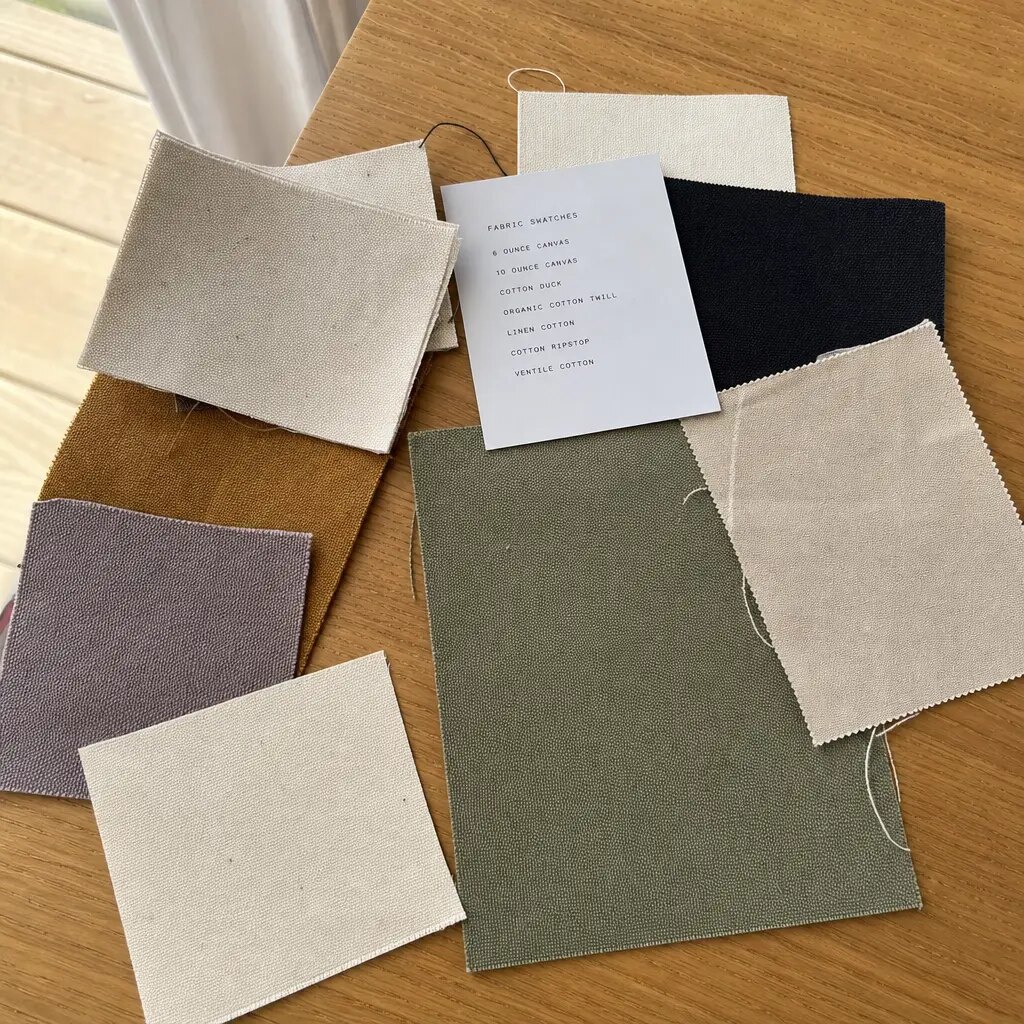
The fabric description should be clear enough for multiple factories to quote the same item. “8 oz cotton” is too loose by itself because suppliers may convert or interpret ounce weight differently. A better RFQ says: 100% cotton canvas, natural color, target 250 GSM, production tolerance +/- 5%, approved swatch dated and signed. If the body fabric is drill, twill, sheeting, or recycled-content cotton, say so. If your brand needs certification documents, request them at the quoting stage rather than after production starts.
Finished piece weight is a useful cross-check. It includes fabric, cords, seam allowance, labels, reinforcements, and print deposit, so it helps procurement understand carton gross weight. If one quote shows a much lighter finished bag while claiming the same GSM and size, ask why. The reason may be thinner cord, less seam allowance, lighter fabric, missing reinforcement, or a different weave. Any of those changes can affect performance as well as carton quantity.
- Specify size, GSM, weave, fabric finish, cord construction, label, reinforcement, and print before asking for carton counts.
- Use GSM and finished piece weight together; neither one alone gives the full packing picture.
- List features that reduce carton density: gussets, lining, pockets, eyelets, thick rope, heavy prints, and retail inserts.
- Require approval references: fabric swatch, print strike-off, sewn sample, and packed-sample photos.
Choose fabric weight with carton density in view
For many wholesale cotton drawstring backpacks for eco apparel brands, 8 oz to 9 oz cotton canvas is the practical middle range. Depending on the supplier’s conversion, this is often about 230 to 270 GSM. It folds flatter than heavier canvas, usually allows more units per carton, and works well for apparel add-ons, events, promotional drops, and lightweight merchandise. The fabric still needs a tight enough weave; otherwise the bag can feel weak, seams can distort, and print coverage can look uneven.
A 10 oz to 12 oz cotton canvas, roughly 300 to 360 GSM, gives a stronger hand feel and more structure on the print panel. It makes sense when the backpack is sold as a paid accessory or used for a more premium brand experience. The tradeoff is straightforward: fewer pieces per carton, higher gross weight, stronger crease memory, and potentially higher freight cost per unit. As a planning range, an adult-size 8 oz to 9 oz bag may fit about 80 to 120 pieces per carton, while a 10 oz to 12 oz version often drops to about 50 to 80 pieces once cords and folding are considered.
Heavier is not automatically better. A loose heavy canvas may crease badly, shed lint, or twist during sewing. A tighter mid-weight canvas can sometimes print more cleanly, recover better after compression, and offer a better cost-to-performance balance for a high-volume program. During sampling, fold the bag under pressure for 24 to 48 hours. Then open the bundle and check crease recovery, fabric marks, print condition, and cord impressions. That simple test tells you more about shipment presentation than a perfect loose sample on a desk.
- Use 8-9 oz canvas when carton efficiency, large volume, and flexible folding are priorities.
- Use 10-12 oz canvas when the backpack needs a stronger paid-retail hand feel.
- Ask for GSM tolerance and finished piece weight before comparing supplier prices.
- Do not approve bulk fabric until the target pieces per carton has been checked against the production fabric.
Control drawcords and seams before they create packing problems
Drawcords are often treated as a trim detail, but they add real bulk. A 6 mm cotton rope does not pack like an 8 mm rope, and round rope does not pack like flat cotton tape. Longer exposed cord lengths create more mass along the sides of the folded bag. Uneven knots or loose cord placement can create pressure points inside the carton, leaving marks on printed panels or light cotton fabric.
The RFQ should state cord material, diameter or width, color, total length, exposed length after threading, knot method, and whether the cord is dyed. If the cord is colored, ask about colorfastness to rubbing and migration, especially when it will sit against natural or white cotton. If the brand wants plastic-free or metal-free construction, state whether eyelets, aglets, synthetic cord, or plastic stops are prohibited. These choices affect sewing cost, sample approval, and carton density, so they cannot be left vague.
Seam construction deserves the same attention. Drawstring backpacks carry stress at the top cord channel and at the lower cord attachment points. Weak stitch density, skipped stitches, narrow seam allowance, or poor reinforcement may not show during a quick visual review. They can fail after repeated opening, closing, compression, and handling. A useful QC plan measures stitch density, checks seam allowance, tests cord movement, and inspects reinforcement from random cartons, not just from the factory’s best loose samples.
- Specify cord material, diameter or width, length, color, knot method, and threading status.
- Check left-right cord balance so the bag closes evenly and hangs symmetrically.
- Require consistent stitch density and reinforcement at the cord channel and bottom cord points.
- Include cord bulk when calculating pieces per carton, not only fabric weight.
Match logo method, print position, and fold direction
Decoration is one of the fastest ways to turn a clean order into a packing claim. For simple logos on cotton drawstring backpacks, water-based screen printing is often a practical wholesale option for one to three spot colors. It can give a flexible hand on cotton and can perform well in cartons when cured correctly. Still, the buyer should specify print size, location, color reference, placement tolerance, and whether the artwork may cross a fold line.
Large solid prints, dark ink coverage, puff ink, metallic effects, rubberized transfers, and heat transfers need more caution. These surfaces may block, scuff, crack, or pick up pressure marks when packed tightly, especially if the bags are folded too soon after decoration. A print can feel dry on the surface and still transfer under carton compression. For print-heavy designs, the packing plan may need a lower inner-pack quantity, separator sheets, controlled print-face orientation, longer rest time, or a fold method that avoids the main graphic.
Do not approve print only as a flat strike-off. Approve it in the packing condition. Ask the factory to fold the printed sample exactly as planned for bulk, place it into the intended inner bundle or carton, leave it under normal compression for 24 to 48 hours, and then unpack and photograph the result. Look for offset, blocking, tackiness, cracking, rub marks, and cord impressions. This does not replace formal lab testing when a retailer requires it, but it prevents many avoidable shipment issues.
- Mark the main fold zone on the artwork approval file.
- Require curing or fixation confirmation before folding and packing.
- Inspect print quality after unpacking from the actual packing method, not only before packing.
- Use separator sheets or adjusted fold direction only when the added cost is justified by print risk.
Use a carton formula, not a carton guess
A reliable carton packing plan connects finished piece weight, folded dimensions, cord bulk, inner pack count, master carton size, carton board strength, and maximum gross weight. A master carton around 55 x 40 x 35 cm is a useful benchmark for many adult-size cotton drawstring backpacks, but it is not a universal standard. The final carton should be confirmed by trial packing with the actual fabric, cord, logo, fold method, and inner packing materials.
For early planning, 8 oz to 9 oz cotton canvas backpacks often land in the 80 to 120 pieces per carton range. Heavier 10 oz to 12 oz bags, thick cords, pockets, gussets, or retail inserts often reduce the practical range to 50 to 80 pieces. Treat those numbers as starting points. If a supplier gives a high carton count, ask for carton dimensions, net weight, gross weight, and photos of the packed carton. If the carton bulges, crushes, or exceeds your handling limit, the count is not acceptable just because the pieces physically fit.
Gross weight matters as much as cube. Many textile accessory buyers prefer cartons around 12 to 16 kg gross for manual handling, but your warehouse, 3PL, or retailer may set a different limit. Overweight cartons slow receiving and can violate routing rules. Underfilled cartons waste freight cube and may crush more easily. The PO should state target pieces per carton, any acceptable carton-count tolerance, maximum gross weight, carton dimensions, and palletization requirements if they apply.
- Require pieces per inner pack, inners per carton, pieces per carton, carton dimensions, GW, and NW on the quotation.
- Reject vague answers such as “about 100 pcs/carton” without a trial-pack basis.
- Confirm warehouse maximum carton weight before approving carton count.
- Keep SKUs separate by carton whenever possible to reduce inbound sorting errors.
Choose inner packing that balances sustainability and count control
Eco apparel brands often want to reduce plastic, but “no plastic” is not a full packing instruction. Cotton goods can pick up dust, moisture, lint, and handling marks. Loose bags inside a master carton also create counting problems. For many wholesale programs, grouped inner packing is a practical compromise. A starting point might be 25 pieces per recycled PE polybag, kraft wrap, paper band, or another approved material. That reduces single-bag packaging while still giving the warehouse a countable unit.
The right inner pack depends on fabric color, print type, sales channel, and destination handling. Natural and white cotton show dirt quickly, so some barrier inside the carton may be needed. Retail-ready backpacks may need individual barcode labels or single bags if consumers handle them before purchase. Event merchandise and apparel bundle bags may not need individual packaging, but they still need clean handling and accurate counts. If you use paper bands, check whether the band rubs the print, deforms the fold, or breaks during transit.
Make sustainability language specific. Instead of asking for “eco-friendly packing,” ask the supplier to list material type and format: recycled PE inner bag, paper band, kraft wrap, water-activated tape, standard carton tape, desiccant, carton liner, or pallet wrap. If your brand restricts certain materials, put those restrictions on the PO. Clear language prevents last-minute substitutions and makes the carton plan easier for procurement, logistics, and sustainability teams to review.
- Use grouped inner packing unless retail presentation or barcode scanning requires single-bag packing.
- Specify packaging materials by type, not by vague sustainability claims.
- For light cotton colors, include a dust and handling protection plan.
- For large prints, manage print rub with orientation or separators rather than automatically adding individual polybags.
Specify export cartons, pallets, and carton marks before packing starts
The master carton must survive far more than the factory packing table. It may go through export handling, LCL consolidation, port storage, sea freight humidity, destination deconsolidation, pallet stacking, and 3PL receiving. A 5-ply export carton is a common baseline for cotton textile accessories. For high-volume, heavy, or multi-warehouse shipments, ask for board grade, burst strength, edge-crush information, or at least the supplier’s standard export carton specification.
Match sealing and moisture control to the route. Tape quality, strapping, liner bags, desiccant, pallet wrap, and corner protection may be useful on some shipments and unnecessary on others. Desiccant is not a solution for wet loading, weak board, or poor storage, but it can help reduce moisture risk on certain routes. If cartons will be palletized, confirm pallet size, carton stacking pattern, pallet height limit, pallet labels, and whether palletization cost is included in the quote.
Carton marks are not decoration; they are operational controls. At minimum, the long side and short side should show SKU or style, color, PO number, quantity, carton number and range, country of origin, gross weight, net weight, carton dimensions, and destination code if your warehouse uses one. Missing or inconsistent marks force receiving teams to open cartons, which adds labor and increases dirt risk. Approve the carton mark layout before production, not after finished goods are already packed.
- Use 5-ply export cartons as a baseline and request board strength details for demanding routes.
- Confirm whether strapping, liner bags, desiccant, palletization, and corner protection are included.
- Approve carton marks before bulk packing starts.
- Check carton marks against packing list, commercial invoice, and PO during final inspection.
Approve the bag in stages, including a packed-carton check
A loose backpack sample can approve appearance and construction, but it cannot prove the carton packing plan. A stronger approval path includes fabric swatch, print strike-off, sewn sample, pre-production sample, and packed-bundle or packed-carton sample. The packed sample is where you confirm fold method, inner pack count, cord placement, carton fill, print behavior, carton dimensions, gross weight, and carton mark format.
For small or simple orders, a packed inner bundle may be enough to confirm fold direction and count control. For larger, heavier, print-sensitive, or retailer-bound orders, a full packed carton is more useful. Ask the factory to photograph the process: individual folded bag, inner bundle, open carton fill, closed carton, carton marks, and gross-weight scale reading. These photos become the reference for final inspection and reduce arguments about what was approved.
Add a short compression review. Leave the packed bundle or carton under normal stacking pressure for 24 to 48 hours. Then unpack and inspect for print transfer, blocking, crease marks, cord impressions, dust, and deformation. If problems show up, adjust before bulk packing. The fix may be a different fold, fewer pieces per inner pack, separators, longer print curing time, or a lower carton count. Reworking at this stage is much cheaper than repacking finished goods or handling claims after shipment.
- Approve the bag and the packing method as separate sample decisions.
- Record packed-sample carton dimensions, GW, NW, count, board type, and mark layout.
- Use photos as the approved fold and carton reference for final inspection.
- Do not release shipment if bulk packing materially differs from the approved packed sample.
Write QC tolerances around real shipment failures
Generic QC wording such as “check workmanship and packing” is too weak for a carton packing plan. The common failure points are specific: print offset after compression, wrong inner counts, mixed SKU cartons, weak cord-channel seams, uneven cord length, dirty natural cotton, underfilled cartons, crushed cartons, inaccurate gross weights, and carton marks that do not match the packing list. These issues create receiving claims even when a loose bag looks acceptable on the table.
Inspection should connect product measurements to packing performance. If finished size moves beyond tolerance, folds become inconsistent and carton fill becomes uneven. If cord length varies, bundles become bulky and the backpack hangs poorly. If print curing is incomplete, the first visible signs may appear only after the bags are packed. Inspectors should pull samples from sealed cartons in different stock locations, including top, middle, and bottom areas where compression may vary. Factory-selected loose pieces are not enough.
A practical final inspection should verify measurements, GSM or fabric reference, finished piece weight, sewing quality, cord function, print condition, inner pack count, carton count, carton dimensions, gross weight, net weight, carton board condition, sealing, moisture condition, and carton marks. If AQL sampling is used, define packing defects clearly. Wrong carton quantity, mixed SKU cartons, unreadable marks, wet cartons, severe crushing, or excessive gross weight should be treated as shipment-control issues, not minor presentation defects.
- Pull QC samples from actual packed cartons in multiple stock locations.
- Inspect print after unpacking from the approved fold method.
- Classify wrong counts, mixed SKUs, wet cartons, and wrong marks as serious packing defects.
- Require corrective action photos if the factory repacks, relabels, or changes carton quantity after inspection.
Specification comparison for buyers
| Spec decision | Recommended option | When it fits | Buyer risk to check |
|---|---|---|---|
| Fabric weight for efficient wholesale packing | 8 oz to 9 oz cotton canvas, typically about 230 to 270 GSM, with GSM tolerance stated on the PO | Event merchandise, apparel bundle bags, promotional drops, and higher-volume programs where carton density matters | If weave is loose, the bag can feel thin, distort at seams, wrinkle heavily after compression, or show uneven print coverage |
| Fabric weight for paid retail accessory | 10 oz to 12 oz cotton canvas, typically about 300 to 360 GSM, approved by swatch and finished piece weight | Brand stores, museum shops, capsule collections, and higher perceived-value merch | Lower units per carton, higher gross weight, stronger crease memory, and higher freight cost per piece if not modeled before ordering |
| Finished size and tolerance | Common adult sizes include 34 x 42 cm and 38 x 45 cm; normal tolerance is +/- 1 cm unless retail spec requires tighter | Standard apparel add-on, light daily carry, gym kit, conference bag, or merch pack | Wide size variation causes inconsistent folding, uneven carton fill, count disputes, and poor retail presentation |
| Fabric description | Composition, weave, color, target GSM, GSM tolerance, finish, shrinkage expectation, and approved swatch reference | Any serious B2B RFQ where multiple suppliers are quoting the same product | Ounce-only descriptions are interpreted differently; two suppliers may quote different fabric while both call it 8 oz cotton |
| Drawcord construction | 6 mm to 8 mm cotton rope or flat cotton tape; specify material, diameter/width, length, colorfastness, knot or stop method | Eco-positioned programs that want natural-fiber trims instead of polyester rope | Cord bulk changes carton quantity; inconsistent cord length affects closure, shoulder fit, and QC appearance |
| Logo method | Water-based screen print for 1 to 3 spot colors; print strike-off approved before bulk and cured before folding | Most wholesale cotton drawstring backpacks with simple brand marks or medium front logos | Poor cure, thick ink deposit, or folding through heavy artwork can cause offset, blocking, tackiness, cracking, or pressure marks |
| Inner packing | 25 pcs per inner bundle as a starting point; recycled polybag, kraft wrap, paper band, or other approved material | Wholesale receiving where count control and reduced single-use packaging are priorities | No inner grouping increases dirt and counting risk; oversized bundles create deep fold memory and more print rub |
| Master carton design | Trial-packed 5-ply export carton; common benchmark around 55 x 40 x 35 cm, adjusted by product weight and fold method | Sea freight, LCL consolidation, palletized shipments, and 3PL receiving | Oversized cartons may bulge, crush, exceed warehouse lift limits, or waste pallet cube |
| Units per carton | Typical planning range: 80 to 120 pcs for 8-9 oz; 50 to 80 pcs for 10-12 oz; confirm by packed sample | RFQs where landed cost and receiving labor matter, not only unit price | A quoted carton count without dimensions, GW, NW, board grade, and fold method is not reliable |
Buyer checklist before sampling
- Define the finished bag size in centimeters, for example 38 x 45 cm, and state the measurement tolerance before the factory calculates carton quantity.
- Specify cotton composition, weave type, target GSM, GSM tolerance, fabric color, finish, and approved swatch reference; do not rely on ounce language only.
- Request finished piece weight in grams, including cords, labels, seam allowance, and decoration, because this is essential for carton gross-weight planning.
- Confirm whether the bag is flat stacked, folded once, folded twice, rolled, or bundled; require photos of the approved fold method.
- Set drawcord material, diameter or width, color, total length, exposed length, knot method, and whether cords are pre-threaded before packing.
- Specify logo process, print area, placement tolerance, color reference, curing requirement, and whether artwork may cross a main fold line.
- State whether single polybags are prohibited, required, optional, or replaceable with grouped inner packing, paper bands, kraft wrap, or recycled polybags.
- Ask for pieces per inner pack, inner packs per carton, master carton outer dimensions, net weight, gross weight, and total carton count on every quote sheet.
- Require the carton type, such as 5-ply export carton, plus board grade, burst strength, or edge-crush information when available for sea freight or LCL shipments.
- Set carton mark content before production: SKU, color, PO, quantity, carton number, carton range, country of origin, GW, NW, carton dimensions, and destination code if needed.
Factory quote questions to send
- What exact cotton fabric are you quoting: composition, weave, color, target GSM, GSM tolerance, finish, and approved swatch or stock reference?
- Is the fabric weight stated as oz per square yard or another local standard, and what is the equivalent GSM used for production control?
- What is the finished piece weight in grams, including fabric, drawcord, labels, sewing thread, reinforcement, and printed decoration?
- What are the finished size tolerance, print placement tolerance, and cord length tolerance you will accept in bulk production?
- What is the MOQ for this exact size, fabric color, cord type, print method, and packing format, and does MOQ change by colorway or artwork?
- How many pieces are packed per inner bundle, how many inner bundles per master carton, and what are the master carton outer dimensions in centimeters?
- What are the carton net weight and gross weight, and are these figures based on a trial pack, a similar previous order, or only an estimate?
- What fold method is included in the quote, and can you provide fold photos showing front, back, side, cord position, and inner-pack arrangement?
- Which logo method is included in the unit price, how many colors are included, what ink type is used, and how is curing or fixation controlled before packing?
- How do you prevent print offset, blocking, and cord pressure marks in cartons: rest time, separator paper, print-face orientation, reduced bundle count, or modified fold method?
Quality-control points to confirm
- Finished width and height should normally be controlled within +/- 1 cm for standard cotton drawstring backpacks unless a tighter retail tolerance is agreed in writing.
- Fabric GSM should be checked against the approved swatch with the production tolerance stated in the PO, commonly around +/- 5% unless the buyer specifies otherwise.
- Finished piece weight should be spot-checked because it reveals hidden changes in fabric density, cord thickness, seam allowance, and added trims.
- Fabric shade, slubs, weaving faults, oil spots, stains, mildew odor, and dirty handling marks should be inspected carefully, especially on natural, white, and light cotton bodies.
- Print color, registration, opacity, hand feel, placement, cure, and rub resistance should be checked before folding and again after unpacking from the approved carton method.
- Printed panels should show no blocking, offset, tackiness, cracking, cord impressions, or visible pressure marks after the packed-sample compression check.
- Drawcord material, diameter or width, total length, exposed length, color, knot position, and left-right balance should be measured so the bag closes evenly.
- Cord channel stitching should be checked by repeatedly opening and closing the bag; weak top-channel seams often fail after compression, pulling, and handling.
- Seam allowance and stitch density should be consistent at side seams, bottom seams, reinforcement points, cord channels, and any label attachment areas.
- Needle holes, skipped stitches, loose threads, broken stitches, seam puckering, and raw-edge fraying should be classified clearly in the inspection standard.