Why Wine Clubs Need a Dedicated Drawstring Backpack Spec
A standard cotton drawstring backpack designed for gym clothes or school books will not hold a wine bottle properly. The bottle is taller, heavier, and more fragile than a water bottle or a pair of sneakers. When a wine club member receives a bag that lets the bottle tip over or the drawstring cord is too short to close, the perceived value of the entire membership drops. This is not a minor detail – it affects renewal rates and referral word-of-mouth.
Wine clubs typically order drawstring backpacks for three use cases: new member welcome gifts, event giveaways at tastings, and retail add-on purchases. Each use case demands a different spec. A welcome gift bag can be lighter (140 GSM) because it will be used occasionally. A retail bag sold at the tasting room counter needs heavier fabric (180–200 GSM) and a reinforced bottom because customers will reuse it for grocery trips. If you send the same spec to three factories and compare only the unit price, you will end up with a bag that works for none of these scenarios.
The most common mistake wine club buyers make is specifying a bag that is too small. A standard 750 ml wine bottle is about 30 cm tall and 8 cm in diameter. The bag body must be at least 35 cm tall (to allow the drawstring to close above the bottle) and 12 cm wide (to fit the bottle plus a small wine accessory like a pourer or a corkscrew). Always add 3–5 cm to the bag dimensions for ease of use.
- Welcome gift: 140–160 GSM, no gusset, drawstring only, 1-color screen print
- Event giveaway: 160–180 GSM, 5 cm gusset, cord lock, 2-color screen print
- Retail add-on: 180–200 GSM, 5 cm gusset, cord lock, heat transfer or woven label
- Minimum bag size for a 750 ml bottle: 35 cm tall x 12 cm wide
Fabric Weight (GSM) – The First Cost Driver
Fabric weight is the single largest variable in your unit cost. A 140 GSM natural cotton drawstring backpack costs roughly 15–20% less than a 200 GSM version from the same factory. The difference in raw material cost is about $0.12–0.18 per bag at current cotton prices. For a 1000-piece order, that is $120–180 of savings – enough to cover the screen print setup fee or the cord lock upgrade.
But lighter fabric has tradeoffs. At 130 GSM or below, the fabric becomes translucent when stretched, and the drawstring eyelets may tear after a few uses. For a wine club that wants the bag to be reused (which is the whole point of a giveaway), 140 GSM is the minimum acceptable weight. If your budget allows, 160 GSM offers the best balance of cost and durability. For retail bags that will be handled daily, go to 180 GSM.
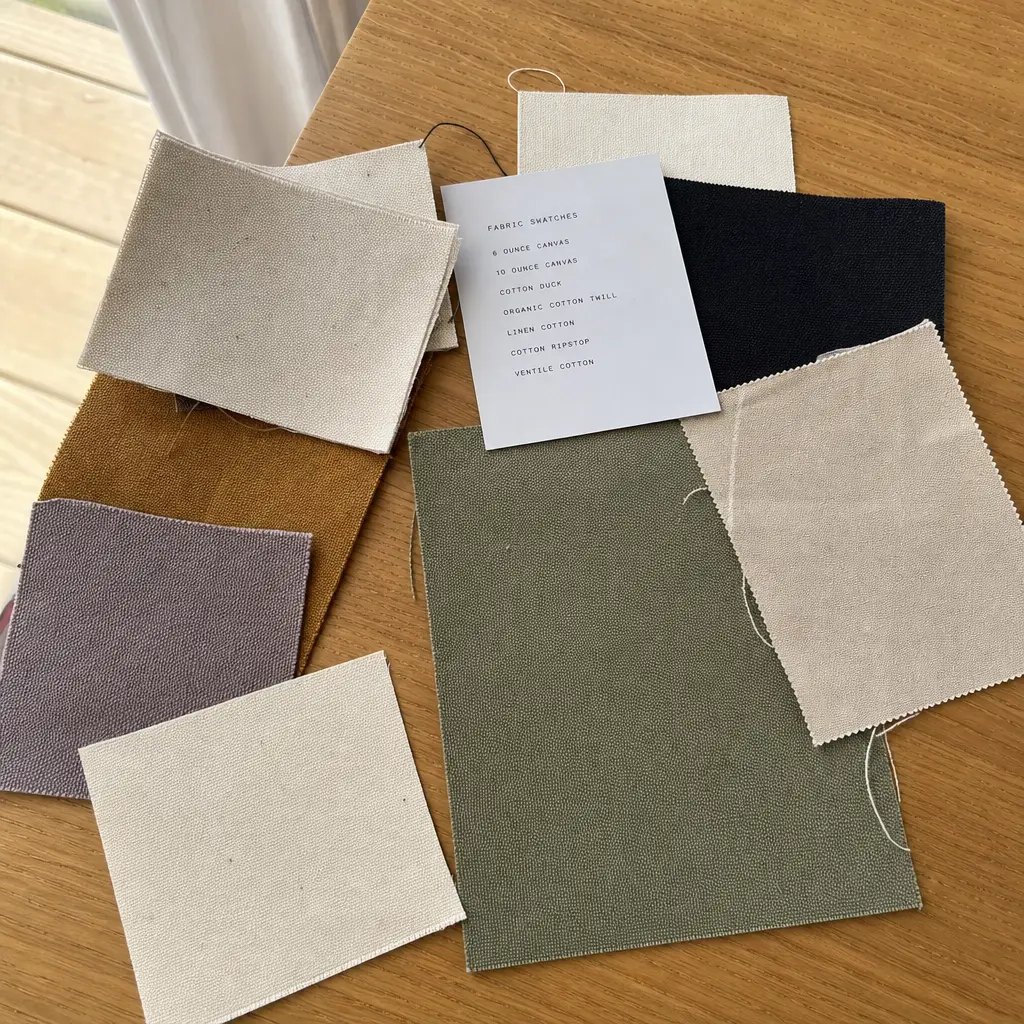
When comparing quotes, ask each factory to quote the same bag in 140, 160, and 180 GSM. Some factories will quote a lower GSM than you specified to win on price, then deliver a flimsy bag. Always request a fabric swatch card with the GSM written on it before approving the sample.
- 140 GSM: lowest cost, suitable for one-time event giveaways
- 160 GSM: best value for welcome gifts with moderate reuse
- 180 GSM: recommended for retail bags and frequent use
- 200 GSM: premium feel, but adds $0.15–0.25 per bag vs 160 GSM
Print Method – Matching the Logo to the Bag Use
Screen printing is the default choice for cotton drawstring backpacks because it is durable and cost-effective at volume. For a 1-color logo on 500 bags, the per-unit cost is typically $0.08–0.12 for the print. Each additional color adds $0.05–0.08 per bag plus a setup fee of $50–120 per color. If your wine club logo has three colors, the setup cost alone can be $150–360, which does not make sense for a small run.
Heat transfer (also called thermal transfer or DTF) is a better option for full-color logos or photographic wine labels. There is no setup fee, and the per-unit cost is about $0.15–0.25 regardless of the number of colors. The downside is durability – heat transfer prints can peel after 10–15 washes if the transfer film is low quality. Always request a wash test sample before approving a heat transfer design.
Woven labels are the premium option. A small woven label sewn into the side seam or the front panel costs $0.20–0.35 per bag and lasts the lifetime of the bag. Wine clubs that sell the bag as a retail item often use a woven label to justify a higher price point. The tradeoff is lead time – woven labels take 10–14 days to produce before the bag is even cut.
- Screen print: best for 1–2 colors, 500+ pcs, durable, low per-unit cost
- Heat transfer: best for full-color logos, no setup, lower MOQ, moderate durability
- Woven label: premium feel, longest lifespan, higher cost, longer lead time
- Always request a wash test sample for any print method before bulk production
Drawstring and Closure – Small Parts, Big Impact
The drawstring cord is the most handled part of the bag. A cord that is too short, too thin, or made of low-quality material will break or fray within weeks. For wine club bags, the cord should be at least 90 cm long to allow the bag to close fully over a tall bottle. Standard 70 cm cords are designed for flat gym bags and will not work.
Flat cotton tape (1 cm wide) gives a natural, eco-friendly look that matches the cotton fabric. However, cotton tape frays at the cut ends unless heat-sealed or tipped with a metal aglet. Polyester round cord is stronger and slides more easily through the eyelets, but it looks less natural. Some wine clubs use a combination – cotton tape for the visible part and a polyester core for strength.
Cord locks are optional but add perceived value. A metal cord lock costs $0.05–0.08 per bag and feels premium. A plastic cord lock costs $0.02–0.04 and is fine for giveaways. The risk with plastic cord locks is breakage – if the lock fails, the bag cannot be closed. Always request a sample of the cord lock and test it 20 times before approving.
- Minimum cord length for wine bottle: 90 cm (standard is 70 cm)
- Cotton tape: natural look, frays without heat sealing
- Polyester cord: stronger, slides better, less natural appearance
- Metal cord lock: $0.05–0.08, premium feel, durable
- Plastic cord lock: $0.02–0.04, fine for giveaways, test for breakage
Bottom Gusset – Why Flat Bags Fail for Bottles
A flat drawstring backpack (no gusset) is essentially a tube with a drawstring at the top. When you put a wine bottle inside, the bottle tips sideways because the bottom of the bag is not wide enough to support it. The bottle then hits the side of the bag, which can break the glass or at least make the bag look lumpy and unprofessional.
A bottom gusset of 5 cm creates a flat base that keeps the bottle upright. The gusset adds about $0.08–0.12 per bag in material and labor, but it transforms the bag from a generic pouch into a purpose-built wine carrier. For wine clubs that ship the bag to members, the gusset also helps the bag stand up in a shipping box, reducing the risk of bottle breakage during transit.
Some factories offer a box-bottom construction instead of a gusset. A box bottom is a square piece of fabric sewn into the bottom of the bag. It provides even more stability than a gusset but adds $0.15–0.20 per bag. Box bottoms are common in premium wine totes but are less common in drawstring backpacks because they change the bag's shape when folded.
- No gusset: lowest cost, bag lies flat, bottle tips sideways
- 5 cm gusset: $0.08–0.12 extra, bottle stays upright, recommended for wine
- Box bottom: $0.15–0.20 extra, maximum stability, changes bag shape
- For shipping: gusset or box bottom is essential to prevent bottle breakage
MOQ Logic – How to Get the Best Price Without Overordering
Minimum order quantities (MOQs) are not arbitrary. They are driven by the factory's setup costs for cutting, printing, and sewing. For screen-printed bags, the MOQ is typically 500 pieces per design because the screen setup cost ($50–120 per color) needs to be spread across enough units to make the unit price reasonable. Below 500 pieces, the setup fee dominates the cost.
Heat transfer has no screen setup, so factories can offer MOQs as low as 100 pieces. However, the per-unit cost for heat transfer is higher than screen print at volume. At 500 pieces, screen print is usually cheaper. At 100 pieces, heat transfer is the only economical option.
To get the best price, always ask for price breaks at 250, 500, 1000, and 2500 units. Some factories will quote a single price for 500–1000 and a lower price for 1000+. If you need 750 units, you might be better off ordering 1000 and storing the extra 250 for future events. The cost difference between 750 and 1000 units is often only $50–100, and you get 250 free bags essentially.
Another tactic is to combine multiple designs into one production run. If your wine club has three different logo versions (e.g., seasonal, classic, and event-specific), ask the factory if they can run all three in the same production batch. The factory may charge a small changeover fee per design but waive the full setup cost.
- Screen print MOQ: 500 pcs per design (setup cost driven)
- Heat transfer MOQ: 100 pcs per design (no setup cost)
- Always request price breaks at 250, 500, 1000, and 2500
- Combining multiple designs in one run can reduce per-design MOQ
- Ordering 1000 instead of 750 may cost only $50–100 more for 250 extra bags
Sample Approval – The Step That Saves You From a Bad Batch
A pre-production sample (PP sample) is the only way to confirm that the factory understands your spec. Never skip this step. A PP sample should be made from the actual production fabric, with the actual print method, and the actual drawstring cord. It should take 7–10 days for stock fabric or 14–18 days for custom-dyed fabric.
What to check on the PP sample: fabric weight (weigh it on a scale), print alignment (measure from the top edge), drawstring length (measure from knot to knot), gusset width (if applicable), and stitch quality (look for loose threads or skipped stitches). Also, test the drawstring by pulling it 20 times to see if the cord lock holds and the cord does not fray.
If the factory sends a sample that is close but not perfect, do not approve it with verbal corrections. Ask for a revised sample. A factory that cannot get the sample right on the second try will likely make mistakes in production. The cost of a revised sample ($20–40 including shipping) is trivial compared to the cost of 1000 bad bags.
One common issue: the sample is made from a different fabric than production. The factory may use a leftover roll of heavier fabric to make the sample look better, then switch to the specified lighter fabric for production. Always ask the factory to send a small swatch of the production fabric along with the sample so you can verify the GSM.
- PP sample: 7–10 days (stock fabric), 14–18 days (custom dye)
- Check: fabric weight, print alignment, drawstring length, gusset width, stitch quality
- Test drawstring 20 times to check cord lock and fraying
- Do not approve with verbal corrections – request a revised sample
- Ask for a production fabric swatch alongside the sample to verify GSM
Packing and Shipping – Hidden Costs That Add $0.20 per Bag
The way your bags are packed affects both the unit cost and the freight cost. Individual polybag packing (each bag in its own plastic bag) adds $0.05–0.08 per bag in material and labor. Bulk packing (50 bags per polybag) reduces this cost to $0.01–0.02 per bag. However, bulk packing increases the risk of print scuffing during transit because the bags rub against each other.
For wine club bags with screen-printed logos, individual polybags are recommended if the print is large or if the bags will be displayed at retail. For event giveaways where the bags are handed out immediately, bulk packing is fine and saves money.
Carton dimensions and weight directly affect freight cost. A standard carton of 100 drawstring backpacks (flat, no gusset) measures about 50 x 40 x 30 cm and weighs 8–10 kg. Adding a gusset increases the carton size by 10–15% because the bags do not stack as flat. Always ask the factory for a carton packing list with dimensions and gross weight before you get a freight quote.
Ocean freight from China to the US West Coast currently adds $0.15–0.30 per bag for a 1000-piece order, depending on the carton volume. Air freight is 4–6 times more expensive and is only justified for urgent orders. If your wine club event is 6 weeks away, ocean freight is fine. If it is 3 weeks away, you will need air freight, which may double your landed cost.
- Individual polybag: $0.05–0.08 per bag, protects print, good for retail
- Bulk pack (50 per polybag): $0.01–0.02 per bag, risk of scuffing
- Carton size increases 10–15% with gusset – factor into freight cost
- Ocean freight: $0.15–0.30 per bag (China to US West Coast)
- Air freight: 4–6x ocean cost, only for urgent orders (under 4 weeks)
Landed Cost Comparison – The Only Number That Matters
Comparing FOB (Free on Board) prices from different factories is misleading because it ignores freight, duty, inspection, and sample costs. The landed cost per bag is the total of: FOB price + ocean/air freight per bag + import duty (typically 12–17% for cotton bags from China) + inspection cost per bag (if you use a third-party inspector) + sample write-off cost (the cost of samples divided by the order quantity).
Here is a realistic example for a 1000-piece order of 160 GSM cotton drawstring backpacks with 1-color screen print: FOB price $1.80 per bag, ocean freight $0.20 per bag, duty at 15% = $0.27 per bag, inspection $0.05 per bag, sample write-off $0.02 per bag. Total landed cost = $2.34 per bag. If you only compared FOB prices, you might choose a factory at $1.65 FOB but with $0.35 freight and worse packing, ending up at $2.40 landed.
Always ask each factory for a complete price breakdown: FOB, packing cost, carton dimensions, and estimated freight cost to your port. Then calculate the landed cost yourself. A factory with a slightly higher FOB price but better packing (smaller cartons) and lower freight may be cheaper overall.
Also consider the cost of a bad batch. If you save $0.10 per bag by choosing a cheaper factory and 10% of the bags have print defects, you lose $0.18 per bag in replacement cost. The cheapest quote is rarely the cheapest landed cost.
- Landed cost = FOB + freight + duty + inspection + sample write-off
- Example: $1.80 FOB + $0.20 freight + $0.27 duty + $0.05 inspection + $0.02 sample = $2.34 per bag
- Always get a complete price breakdown from each factory
- Cheapest FOB is not always cheapest landed – factor in packing and freight
- A bad batch costs more than the savings from a cheaper factory
Lead Time and Schedule Risk – Why You Need a Buffer
A typical production lead time for cotton drawstring backpacks is 30–45 days from sample approval to shipment. This includes fabric sourcing (5–10 days), cutting and printing (5–7 days), sewing (10–15 days), packing (3–5 days), and quality inspection (2–3 days). If you need custom-dyed fabric, add 10–15 days for dyeing and drying.
The biggest schedule risk is sample approval. If you go through two or three rounds of samples, you can lose 2–3 weeks before production even starts. Plan for at least one sample revision in your timeline. If your wine club event is in 8 weeks, you should place the order now, not next week.
Another risk is Chinese New Year (typically late January to mid-February). Factories shut down for 2–4 weeks, and lead times before and after the holiday are unpredictable. If your order falls near Chinese New Year, add 3–4 weeks to the lead time and confirm the factory's holiday schedule in writing.
Always ask the factory for a written production schedule with milestones: fabric arrival date, print start date, sewing start date, packing start date, and estimated shipment date. A factory that cannot provide a milestone schedule is a red flag.
- Standard lead time: 30–45 days from sample approval to shipment
- Sample approval is the biggest schedule risk – plan for 2 rounds
- Chinese New Year adds 3–4 weeks of delay
- Request a written production schedule with milestones from the factory
- If event is in 8 weeks, place the order now – do not wait
Specification comparison for buyers
| Spec decision | Recommended option | When it fits | Buyer risk to check |
|---|---|---|---|
| Fabric weight (GSM) | 140–160 GSM for wine club giveaways; 180–200 GSM for paid retail | Giveaway budgets need lighter weight to hit cost target; retail needs durability for repeated use | Lighter than 130 GSM may tear at drawstring eyelets; heavier than 200 GSM adds $0.35–0.60 per bag without proportional value |
| Print method | Screen print for 1–2 color logos under 5000 pcs; heat transfer for photographic wine labels | Screen print is cheapest per unit at volume; heat transfer allows full-color label reproduction | Screen print setup cost ($50–120 per color) kills small runs; heat transfer may peel after 10 washes if not tested |
| Drawstring type | Flat cotton tape (1 cm) for natural look; round polyester cord for durability | Cotton tape matches eco-branding; polyester cord lasts longer and slides better | Cotton tape frays if not heat-sealed; polyester cord melts under high heat if bag is ironed |
| Bottom gusset | No gusset for flat bags (lowest cost); 5 cm gusset for bottle shape | No gusset works for flat items; gusset prevents bottle from tipping | Gusset adds $0.08–0.12 per bag and changes packing carton dimensions |
| Closure type | Drawstring only (simplest); drawstring with cord lock for security | Cord lock adds perceived value for premium wine clubs; drawstring only is fine for one-time events | Cord lock adds $0.03–0.06 per bag and may break if low-grade plastic is used |
| Sample lead time | 7–10 calendar days for stock fabric; 14–18 days for custom dyed | Stock fabric samples are faster and cheaper; custom dye adds time and minimum yardage | Rush samples under 5 days often skip wash test or print alignment check |
| MOQ logic | 500 pcs per design for screen print; 100 pcs per design for heat transfer | Screen print setup cost amortizes best at 500+; heat transfer has no setup so lower MOQ works | Factories may hide MOQ in unit price – always ask for price break at 250, 500, 1000, and 2500 |
| Packing method | Polybag individual + master carton; bulk pack (50 per polybag) for lowest freight | Individual polybag protects print for retail display; bulk pack reduces freight cost by 8–12% | Bulk pack without inner bags causes scuffing on screen prints during transit |
| Landed cost comparison | FOB price + freight + duty + inspection + sample write-off | Always compare total landed cost, not just FOB | Freight from Asia to US West Coast adds $0.15–0.30 per bag at current container rates |
Buyer checklist before sampling
- Confirm fabric GSM matches your use case – 140 GSM for giveaway, 180 GSM for retail
- Request a wash test sample (3 washes) to check print adhesion and fabric shrinkage
- Verify drawstring cord length – standard 70 cm is too short for a wine bottle bag; ask for 90 cm
- Check bottom gusset width – 5 cm minimum to hold a standard 750 ml bottle upright
- Ask for a polybag sample to confirm print does not stick to plastic after packing
- Get MOQ price breaks at 250, 500, 1000, and 2500 units before signing
- Confirm lead time includes sample approval time – not just production days
- Request a carton dimension and weight table to calculate freight cost per bag
Factory quote questions to send
- What is your unit price at 250, 500, 1000, and 2500 pieces for a 150 GSM natural cotton drawstring backpack with 1-color screen print?
- Do you offer a lower price if I use stock fabric (natural, black, or white) instead of custom dyed?
- What is the setup cost per screen print color, and is it waived at any volume?
- Can you provide a sample with my logo printed on the actual production fabric before I place the bulk order?
- What is the lead time for a pre-production sample (PP sample) vs. a production sample?
- Do you include a free cord lock with the bag, or is that an added cost?
- What is your standard packing – individual polybag or bulk pack – and can I choose?
- Do you have a minimum order quantity for custom drawstring cord color?
- What is your AQL (Acceptable Quality Limit) for a production run – 2.5 or 4.0?
- Can you provide a carton packing list with dimensions and gross weight per carton for freight calculation?
Quality-control points to confirm
- Fabric weight tolerance: ±5% of specified GSM – heavier fabric increases cost, lighter fabric reduces durability
- Print alignment: logo must be centered within ±2 mm on the front panel; ask for a print placement diagram
- Drawstring pull strength: cord must withstand 15 kg pull without breaking or detaching from the bag
- Eyelet reinforcement: if metal eyelets are used, they must be rust-proof and not scratch the bottle
- Stitch density: minimum 8 stitches per inch on all seams; loose stitching leads to seam failure
- Shrinkage after wash: fabric should not shrink more than 3% in length or width after 3 washes at 40°C
- Color fastness: screen print ink must not bleed or fade after 5 washes; request a wash test report
- Polybag quality: polybag must be at least 40 microns thick to prevent tearing during packing and transit
- Carton strength: carton must be double-walled for orders over 1000 pieces to prevent crushing