Start With the Studio Use Case, Not the Bag Size
A cotton drawstring backpack bulk order for yoga studios should begin with how the bag will be used. A bag for a weekend retreat giveaway has a different specification than a retail item hanging near the front desk. A new-member welcome kit may need to hold a towel, socks, welcome card, and water bottle. A commuter bag may need to carry heavier daily contents and survive repeated opening, closing, and floor contact.
Separate the order into use cases before requesting pricing. This prevents the common mistake of asking suppliers for a generic cotton drawstring backpack and then trying to make it work for every program. If the studio plans to sell the bag, the hand feel, label, print finish, and packing quality matter more. If the studio will use it for a one-day event, simplicity and schedule reliability may matter more.
For yoga studios, the biggest product-fit question is whether the bag is supposed to carry a yoga mat. A standard drawstring backpack can carry small goods well, but it is not automatically a mat bag. Many yoga mats are about 24 inches wide when rolled. A 14 x 18 inch or 16 x 20 inch drawstring backpack will not fully enclose that width. It may carry a thin mat only if the mat protrudes from the top, if the drawstring is used loosely around it, or if the bag has external straps. If full mat enclosure is required, ask for a longer yoga-mat bag or sling-style construction instead of a standard backpack pattern.
- Retail resale: prioritize fabric hand feel, branding, folding, barcode/SKU labels, and shelf presentation.
- New-member kits: test the full kit contents, including cards, towel, socks, bottle, and any retail samples.
- Retreat giveaways: focus on delivery date, pack-out efficiency, and easy distribution by size or location.
- Mat carry: decide whether the mat is inside, protruding, or externally strapped before approving dimensions.
Mat, Towel, and Bottle Compatibility: Measure the Real Contents
Do not rely on catalog dimensions alone. Yoga studios often sell or recommend mats with different widths, thicknesses, and rolling diameters. A thin travel mat, a standard mat, and a thick cushioned mat create very different load profiles. The same issue applies to towels: a microfiber towel packs small, while a cotton studio towel can fill much of a small drawstring bag.
Create a contents map before sampling. Measure the rolled mat width, rolled diameter, towel size when folded or rolled, bottle height, and any blocks or apparel bundles. Then decide which items must fit at the same time. If the bag is only for towel, bottle, and apparel, a standard drawstring backpack may be appropriate. If the mat must be included, your supplier should show a construction that addresses the mat width and carry method.
For a protruding-mat design, check member comfort. A mat sticking out of the top can work for short-distance carry from car to studio, but it may be awkward on public transit or bicycles. For full enclosure, the bag likely needs a longer body, a side-loading design, or a cylindrical sling format. For external carry, request straps or loops sized for the rolled mat diameter and test whether the mat slides out while walking.
- Measure rolled mat width; many standard mats are wider than common drawstring backpack heights.
- Measure rolled mat diameter for thin, standard, and thick mats used by your studio.
- Decide if the bag must close fully with contents inside or can remain partly open.
- Test water bottle placement so the bottle does not press uncomfortably against the wearer’s back.
- If blocks are included, confirm corners do not distort the bag or stress the seams.
Fabric Weight and Hand Feel: Choose for Brand Positioning and Load
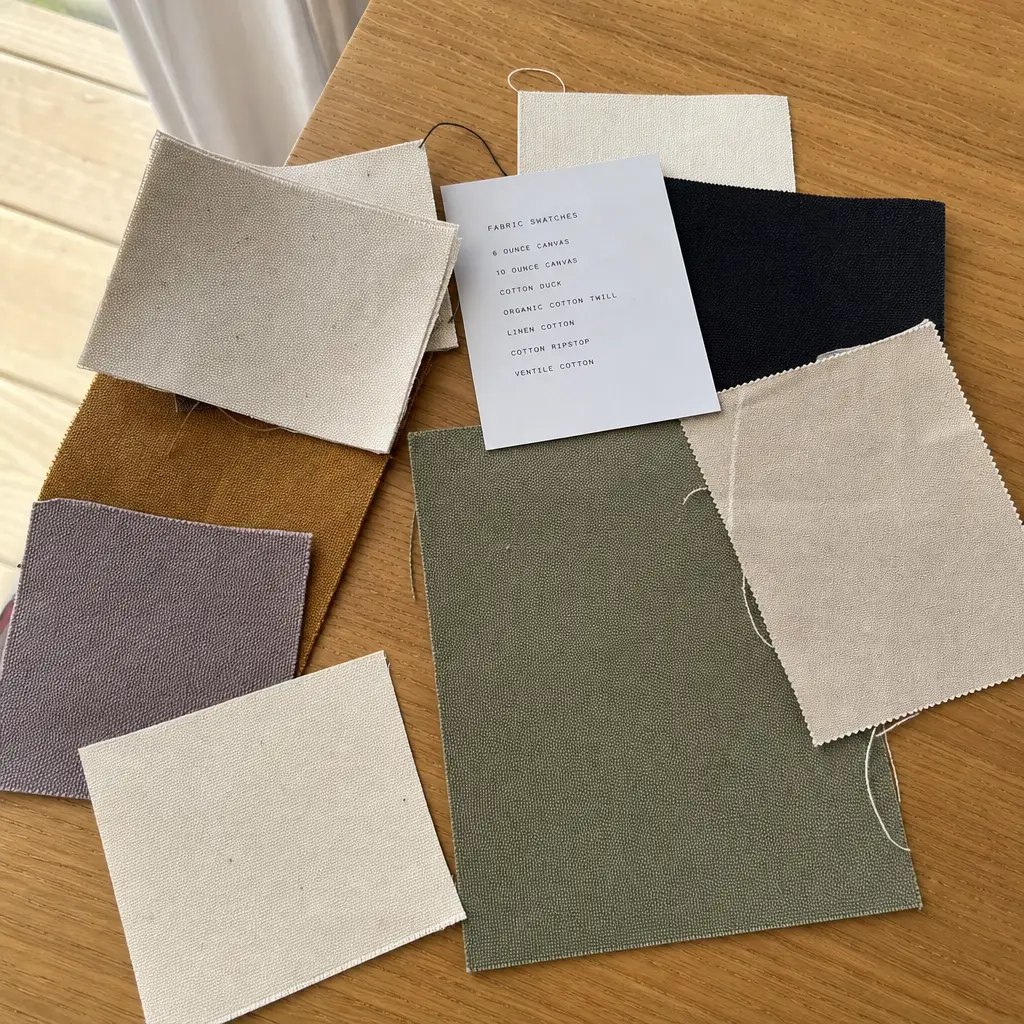
Cotton fabric weight affects durability, drape, print result, and shipping weight. Light cotton can be appropriate for promotional programs, but it may feel too thin for a premium studio brand. Midweight cotton or cotton canvas gives more structure and a stronger retail impression. Heavier canvas can feel durable but may be stiff, bulkier in cartons, and less comfortable if the drawstring cords are narrow.
Treat GSM as a helpful comparison point, not a complete quality guarantee. Yarn quality, weave density, finishing, and washing can change how the material performs. Ask for swatches and a finished sample rather than approving from a number alone. Natural cotton also varies in shade, with specks and seed marks that some studios like for an organic look and others find too rustic for retail.
If sustainability positioning matters, ask specific questions instead of relying on broad claims. Confirm whether the fabric is conventional cotton, organic cotton, recycled cotton blend, or certified material. If certifications are important for your marketing or retail compliance, request documentation early and make sure it applies to the actual fabric and factory process used for your order.
- Light cotton: useful for giveaways and low-load use; check opacity and seam strength.
- Midweight cotton canvas: often a balanced choice for member kits and merchandise.
- Heavy canvas: consider for premium resale, but test stiffness, cord comfort, and freight impact.
- Natural cotton: approve the shade and surface character before production.
- Certified cotton: request valid documents tied to the order, not only a supplier brochure.
Construction Details That Prevent Early Failures
Drawstring backpacks usually fail at predictable points: the drawstring channel, lower cord exits, side seams, bottom corners, and print or label area. These are small construction details, but they determine whether the bag feels reliable after repeated use. A low quote may omit reinforcement that is not obvious in a product photo.
Ask for a technical sketch or specification sheet showing seam type, reinforcement, cord routing, and gusset. If the cords also function as shoulder straps, the lower attachment points need particular attention. A simple stitched corner may be enough for lightweight use, while heavier loads may require bar tacks, reinforced patches, metal eyelets, or a different cord exit design. There is no single universal construction for every budget, so match reinforcement to intended load.
Cord choice should be tested, not assumed. Cotton cord has a natural look and good brand fit for many studios. Polyester cord can be smoother, more colorfast, and sometimes more abrasion-resistant depending on construction. Flat cord, braided cord, twisted cotton rope, and recycled cord all feel different on the shoulder. The best option is the one that works with the fabric, channel width, load, and studio aesthetic.
- Request close-up photos of the drawstring channel ends and lower cord exits.
- Specify whether cords are cotton, polyester, recycled polyester, or blended material.
- Check cord diameter for comfort and smooth movement through the channel.
- Inspect reinforcement patches, bar tacks, or eyelets if the bag carries heavier contents.
- Trim loose threads, but do not treat thread trimming as a substitute for seam strength.
Printing and Branding: Match the Method to the Artwork
Yoga studio branding often favors a calm, natural look: one-color logos, soft ink, tone-on-tone labels, or minimal front-panel marks. Water-based screen printing can work well on natural or light cotton because it has a softer hand feel than many heavier ink systems. However, it may appear more muted on unbleached cotton and may not produce strong opacity on dark fabric.
Plastisol or high-opacity inks can be useful when the logo needs to stand out, especially on black or dark cotton. The tradeoff is that heavier ink can feel more noticeable on the fabric. Cracking or peeling is usually a process issue involving ink thickness, curing, fabric movement, and wash conditions, not simply the name of the ink type. Digital printing and transfers can handle detailed artwork or small runs, but they should be sampled on the exact fabric because cotton texture affects detail.
For premium retail programs, consider combining a small print with a woven label or cotton label. A sewn label can carry brand identity even if the print is intentionally subtle. Confirm the label material, edge finish, fold type, and placement. A label sewn into a side seam looks different from a label stitched flat on the front panel. Both can work, but the decision should be deliberate.
- Provide vector artwork and Pantone or brand color targets when available.
- Request a strike-off before bulk printing, especially on natural or dark cotton.
- Check print size against the actual front panel, not only a digital mockup.
- Fold and rub the printed area lightly to check ink flexibility after curing.
- Use sewn labels for subtle retail branding, care information, or premium positioning.
MOQ, Color Splits, and Inventory Planning
Minimum order quantity depends on fabric availability, dyeing, cutting efficiency, print setup, label setup, and packing requirements. A supplier may offer a low MOQ for stock natural cotton but require higher quantities for custom dyed fabric or multiple print colors. Instead of assuming a universal MOQ, ask for a price ladder by quantity, color, and design.
For yoga studios, inventory risk matters as much as unit cost. A large order may reduce unit price but tie up cash and storage space. A smaller order may cost more per unit but reduce the risk of being left with outdated branding, old event dates, or slow-moving colors. Estimate monthly sell-through if the bags are retail merchandise. For welcome kits, calculate expected new members, retreat attendees, or seasonal campaign volume.
Color splits are a common hidden cost driver. Ordering 1,000 bags split into five colors may not price the same as 1,000 bags in one color because each color can require separate fabric handling, printing setup, and packing control. The same applies to multiple studio locations or co-branded retreat designs. Ask the supplier to quote each split clearly so you can decide whether variety is worth the operational complexity.
- Ask for price breaks at realistic quantities rather than only the supplier’s preferred MOQ.
- Separate quote lines by size, color, print, label, and packing method.
- Estimate sell-through before ordering retail merchandise for a full year.
- Avoid event dates printed on large quantities unless the order is only for that event.
- For multi-location studios, request carton labels by location to reduce receiving errors.
Sampling and Approval: Make the Pre-Production Sample Do the Work
A sample is not just a visual mockup. It is the reference that should control bulk production. The most useful sample includes the actual fabric, actual cord, actual print or label, correct dimensions, and intended packing. If the first sample uses substitute fabric or placeholder trim, mark it as a prototype only and do not treat it as bulk approval.
When the pre-production sample arrives, test it like a member would use it. Pack the intended contents. Pull the cords open and closed repeatedly. Wear it over studio clothes and over a jacket if commuters are part of your audience. Place it on the studio floor, hang it from a hook, and check how the branding looks from a normal viewing distance. Wash testing may be relevant if you expect members to launder the bag, but define the wash conditions and acceptance criteria with the supplier rather than applying an unsupported universal rule.
Document approval in writing. Photos are useful, but the written approval should list what is being approved: fabric, shade, size, print placement, label, cord, reinforcement, packing, and any known exceptions. If you approve a sample that is “close enough,” the supplier may reasonably copy those imperfections in bulk production.
- Label each sample version with date, supplier, material, and revision notes.
- Measure finished width, height, gusset, cord length, and print location.
- Test with actual yoga studio contents before signing approval.
- Record any approved deviations, such as natural cotton specks or muted print color.
- Keep one approved sample sealed for comparison during final inspection.
Packing, Storage, and Merchandising Requirements
Packing should match how the bags will be received and used. A studio that sells bags at the front desk may need clean individual packing, hang tags, barcodes, or paper bands. A studio assembling welcome kits may prefer bulk-packed bags in predictable bundles. A retreat organizer may need cartons separated by event, color, or location for fast distribution.
Individual plastic polybags are common, but they are not always the right choice. Some brands prefer reduced-plastic packing, paper bands, or bulk inner bags. If bags are natural cotton, moisture protection still matters during ocean or warehouse transit. Discuss the route, season, and storage conditions with the supplier or forwarder before eliminating protective packing entirely.
Carton specifications affect receiving and handling. Very heavy cartons are inconvenient for studio staff and can be damaged in transit. Very small cartons increase carton count and handling. Ask for proposed carton dimensions, unit count, gross weight, and carton marks before shipment. If the order goes to multiple locations, confirm whether the supplier can pack and label by location to reduce repacking work after arrival.
- Retail resale: confirm fold direction, label visibility, barcode placement, and shelf presentation.
- Welcome kits: request bundle counts that match your kit assembly process.
- Multi-location delivery: use carton marks that show location, SKU, color, and quantity.
- Reduced-plastic packing: confirm moisture-control alternatives before approving.
- Ask for packing photos before final payment or shipment release.
Quality Control Plan: Define Defects Before Production Starts
Quality control works best when defect definitions are agreed before cutting begins. A supplier, buyer, and inspector may all interpret “minor defect” differently unless the purchase order is specific. For cotton drawstring backpacks, functional defects include broken cords, open seams, holes, wrong dimensions, unusable closure, incorrect artwork, and severe stains. Cosmetic defects may include small thread ends, slight natural cotton shade variation, or minor wrinkles, depending on your brand standard.
Formal AQL inspection can be useful for larger orders, but it should not be copied into every order without context. If your company requires ANSI/ASQ sampling, state the inspection level, AQL limits, and defect classification in the PO. If you do not use formal AQL, still create a practical inspection checklist and sampling quantity. The key is to make the supplier accountable to a written standard.
Inspection should include function, not only appearance. A bag can look acceptable on a table and fail when filled. Include checks for cord movement, load comfort, seam security, print adhesion, label attachment, packing count, and carton marks. If the bag is intended to hold a mat, the mat-fit test should be part of QC, not an afterthought.
- Classify defects as critical, major, or minor before production.
- Check functional items more strictly than cosmetic thread trimming.
- Use an approved sample as the reference for shade, print, and construction.
- Inspect some units after packing to catch count and carton-label errors.
- Request corrective action photos if defects are found during in-line inspection.
Lead Time, Landed Cost, and Quote Comparison
Lead time depends on fabric stock, trim sourcing, print complexity, order quantity, factory capacity, inspection, and packing. A simple stock-fabric order can move faster than a custom dyed, multi-color, retail-packed program. Treat very fast timelines as something to verify, not automatically reject. Ask what steps are compressed and whether printing cure time, label production, or inspection time is affected.
Build the schedule backward from the date bags must be in the studio, not the date they leave the factory. Include sample creation, sample shipping, revision time, purchase order approval, deposit, production, inspection, export documents, freight, customs clearance, inland delivery, and unpacking. If bags are needed for a retreat or membership launch, add buffer because a late shipment has little value after the event.
When comparing quotes, separate product cost from logistics and import cost. FOB gives you more control over freight and customs but requires a forwarder or internal import process. CIF includes freight and insurance to the destination port but not all arrival charges. DAP or DDP may be easier for new importers, but confirm exactly what is included. Duty rates, freight rates, brokerage, and inland delivery vary by country, HS classification, season, shipment size, and carrier. Use current quotes from your broker or forwarder rather than relying on generic per-bag assumptions.
- Ask each supplier to quote the same spec sheet so prices are comparable.
- Request line items for sampling, mold/screen/setup, labels, packing, and freight terms.
- Confirm Incoterms and named port or delivery address on every quote.
- Use your customs broker to verify classification, duty, and import requirements.
- Do not schedule a launch on the factory completion date; schedule around delivered inventory.
Specification comparison for buyers
| Supplier option | What to verify | Commercial advantage | Buyer risk to control |
|---|---|---|---|
| Direct sewing factory | cord material proof, reinforcement close-ups, load-test photos, approved sample tag, and bulk-line first-piece record | Better sample-to-bulk control and faster production feedback | May be weaker on export paperwork or branded packing unless checked early |
| Trading company | Factory name, production photos, trim-source proof, and who owns QC decisions | Can coordinate small mixed orders and extra services | Markup can hide real factory capability and slow defect decisions |
| Specialized bag workshop | cord diameter, eyelet or reinforced channel, bottom corner reinforcement, seam allowance, bar-tack position, and load target | More practical for detailed construction, trims, and repeat programs | Capacity may be limited during peak seasons |
| Low-price general supplier | 6-10 oz cotton canvas, 210D polyester, rPET, or blended cotton with shrinkage and colorfastness expectations set before sampling | Useful for simple promotional runs with loose specs | Material downgrades, weak packing, and vague inspection scope can erase savings |
| Retail-ready supplier | fold direction, cord protection, bundle count, carton compression, moisture bag, and retail label position | Can handle labels, SKU separation, carton marks, and receiving rules | Higher unit cost must be compared against reduced warehouse work |
| Compliance-focused supplier | Fabric records, labeling review, test plan, and production traceability | Safer for retail programs and repeat brand orders | Documentation claims need evidence, not only sales language |
| Local sample room plus bulk factory | Signed sample, bulk factory handoff, first-piece photos, and deviation owner | Good for complex branding before large production | Sample room quality may not match bulk line unless handoff is controlled |
Buyer checklist before sampling
- Define the primary use case first: retail resale, new-member welcome kit, retreat giveaway, staff uniform item, towel-and-bottle carry, or true yoga-mat carry.
- Decide whether the bag must fully enclose a rolled yoga mat. A common 24 in wide mat will not fit completely inside a standard 14 x 18 in drawstring backpack; it needs a longer/wider format, protruding carry, or external straps.
- Measure your actual contents: rolled mat width and diameter, towel size, water bottle height, apparel bundle, blocks, and any insert cards or product samples.
- Request fabric swatches in at least two weights, usually a lighter promotional option and a midweight canvas option. Confirm that quoted GSM is an approximate fabric spec, not a finished-bag performance guarantee.
- Approve a construction drawing that lists finished dimensions, gusset, seam allowance, drawstring diameter/material, reinforcement points, label placement, print size, and tolerance.
- Ask for a pre-production sample made with the same fabric, cord, label, print method, and packing style intended for bulk production.
- Run a practical load test with your real contents. Lift the sample by both cords, wear it briefly, open and close it repeatedly, and inspect the drawstring channel and lower corners.
- For printed bags, approve a strike-off or printed sample under the lighting used in your studio or retail area. Natural cotton can shift perceived ink color.
- Confirm packing by use case: individual retail polybag or paper band for resale, bulk bundles for event giveaways, SKU-separated cartons for multi-location receiving.
- Ask the supplier to state inspection method, defect definitions, and acceptable tolerance in the purchase order rather than relying on informal sales messages.
Factory quote questions to send
- What fabric options do you recommend for a cotton drawstring backpack used by yoga studios, and can you send swatches with approximate GSM, weave, finish, and color options?
- Can you make a bag that fully encloses a 24 in wide rolled yoga mat, or do you recommend an external strap, protruding-mat design, or sling-style mat bag instead?
- What are the finished dimensions, gusset size, seam allowance, and dimensional tolerance you will quote?
- What cord materials and diameters are available, and how are the cord ends finished to reduce fraying?
- Which stress points are reinforced: drawstring channel ends, lower cord exits, side seams, bottom corners, and gusset corners?
- Can you provide a pre-production sample using the same fabric, cord, print, label, and packing as bulk production?
- For printing, do you offer water-based, plastisol/high-opacity, discharge, transfer, or digital methods on cotton? Which do you recommend for our artwork and fabric color?
- Can you provide a print strike-off and explain the expected curing, wash, crocking, or rub-check process you use internally?
- What is the MOQ by design, color, size, and print method? If we split colors or locations, how does that affect setup cost and unit price?
- What overage or shortage tolerance do you require, and how will over/under shipments be invoiced?
Quality-control points to confirm
- Approved sample control: keep one signed physical sample or detailed photo record showing fabric, print, cord, label, dimensions, and packing. Bulk production should match this reference within agreed tolerances.
- Incoming fabric check: verify color, hand feel, approximate GSM, fabric flaws, odor, and visible contamination before cutting. If shrinkage matters for your program, agree on a simple wash-test method in advance.
- Dimension check: measure finished width, height, gusset, drawstring length, print placement, and label position on samples from the production lot. Use tolerances agreed in the purchase order.
- Mat-fit check: if the bag is intended for yoga mat carry, test with the exact rolled mat size. Record whether the mat is fully enclosed, protruding, or secured externally.
- Seam inspection: check side seams, bottom seams, drawstring channel seams, and reinforcement points for skipped stitches, loose threads, seam slippage, and uneven tension.
- Drawstring function: open and close the bag repeatedly, then lift with the intended load. Inspect cord exits and channel ends for tearing or abrasion.
- Print inspection: check logo position, color consistency, ink coverage, smudging, pinholes, curing issues, hand feel, and visible cracking after folding or light rubbing.
- Label inspection: confirm label artwork, orientation, placement, stitch security, and whether the label scratches the wearer or twists after handling.
- Cleanliness and odor: inspect for oil marks, chalk marks, mildew smell, loose lint, and packing dust, especially on natural and white cotton.
- Packing verification: confirm unit count per bundle or carton, carton marks, SKU separation, fold direction, moisture protection, barcode/label placement if used, and carton condition.