Start with the roaster channel
A cotton drawstring backpack can serve several coffee-roaster jobs, but each channel needs a different buying standard. A festival giveaway may only carry a sample pouch and a brew card. A cafe retail item must look clean on shelf and feel worth selling. A subscription insert must pack flat without creating cord marks on the logo. A wholesale buyer kit may need to hold coffee bags, sample packs, pricing sheets, and small brewing accessories without seam failure.
The strongest RFQ starts with the use case, not the product name. State whether the bag will be handed out empty, sold as merchandise, packed inside a subscription box, used for sample flights, or bundled with common coffee formats such as 250 g, 340 g, 12 oz, 1 lb, or 500 g bags. If the bag may sit near roasted coffee, ask for clean odor and dust-free packing so the cotton does not arrive with warehouse smell, lint, or residue that affects presentation.
This cotton drawstring backpack bulk order guide for coffee roasters is meant to help procurement translate brand ideas into measurable production terms. Marketing may say the bag should feel natural, reusable, and premium. The supplier needs finished size, GSM, cord material, decoration method, label position, packing style, carton count, inspection rules, and delivery date.
- Write the channel into the RFQ: retail, festival, subscription, sample kit, wholesale kit, staff merch, or gift bundle.
- Estimate contents by real coffee bag sizes and total bundle weight before selecting fabric or reinforcement.
- Decide whether the bag must be shelf-presentable, warehouse-efficient, or simply low-cost for events.
- Include odor, dust, folding, and cord-placement expectations when bags will touch coffee retail packaging.
Match GSM to load and presentation
Fabric GSM affects hand feel, price, print result, and carton volume, but it should not be treated as the only quality measure. A 120 GSM cotton bag can work for light event use and sample cards. Around 140 GSM is often a useful comparison point for branded roaster programs because it gives more body without becoming expensive or bulky. A 160 GSM or heavier cotton may fit cafe retail, gift sets, or wholesale kits, especially when the bag carries multiple coffee packs.
Ask suppliers to quote two or three GSM options using the same size, artwork, cord, and packing. This turns quality discussion into a commercial decision. If one supplier quotes 120 GSM bulk packed and another quotes 160 GSM retail packed, the lower price is not automatically better; it is a different product. Also ask whether the GSM is measured before dyeing, after finishing, or based on mill specification.
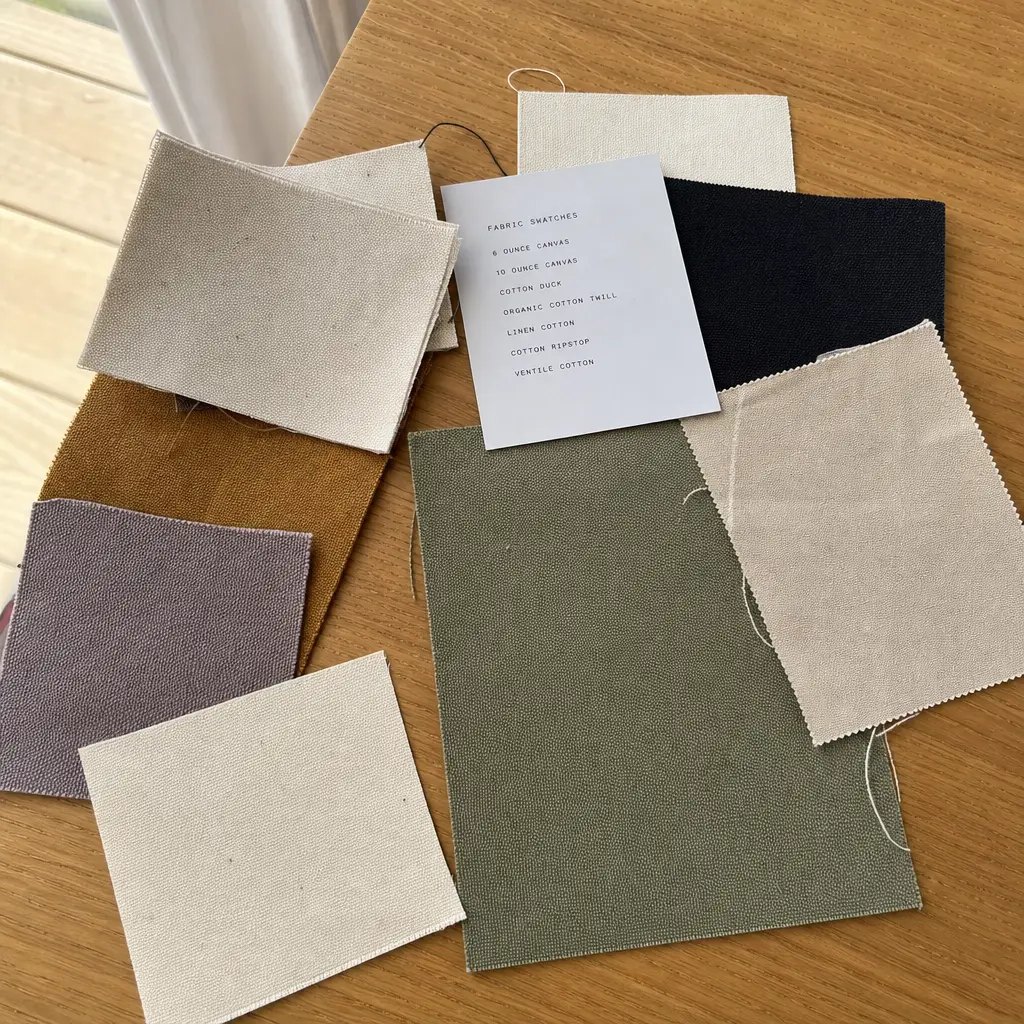
Natural cotton is common in specialty coffee because it fits simple branding, but shade variation is real. If your cafes display bags together, approve a physical shade reference and decide how much lot variation is acceptable. Bleached white can sharpen logo contrast. Dyed cotton can match brand colors but may raise MOQ, add time, and require colorfastness checks.
- Quote 120, 140, and 160 GSM when budget and quality are still open.
- Check seam reinforcement and cord channel quality; heavier fabric alone does not prevent failure.
- Use physical shade references for natural cotton or dyed fabric when retail appearance matters.
- Do not make organic, recycled, or sustainability claims without documents tied to the actual fabric lot.
Choose decoration that survives cotton texture
Screen printing is usually the practical choice for simple one- or two-color roaster logos. It is cost-efficient for repeat orders, but it still needs tight instructions: artwork file type, ink color reference, print size, print side, distance from top edge or side seam, and placement tolerance. Avoid approving only a digital mockup. Cotton texture, seam allowance, drawcord channels, and fabric stretch can all change how a centered logo looks in production.
Woven labels are useful when the bag should feel more like merchandise. They work well for small brand marks, side tabs, and understated cafe retail programs. Confirm label size, fold type, attachment position, thread color, and whether the label causes puckering. Heat transfer can hold fine detail but needs adhesion and rub checks. Embroidery adds texture but can distort lighter cotton and may require backing, higher MOQ, or longer production.
Coffee packaging often includes tasting notes, origin names, QR codes, and certification marks. These elements are not always suitable for textured cotton. Keep small or temporary information on a hang tag, brew card, or insert unless the supplier proves the decoration can hold the detail at bulk speed.
- Use screen print for simple roaster logos and repeat promotional volume.
- Use woven labels for minimalist retail merchandise or small side branding.
- Keep harvest names, brew notes, QR codes, and seasonal copy on inserts when possible.
- Define placement from fixed reference points instead of saying centered.
Build an RFQ that avoids hidden assumptions
A useful RFQ gives every supplier the same job to price. Include finished dimensions, fabric GSM, fabric color, cord material, cord diameter, cord length, cord-end finish, seam reinforcement, decoration method, logo size, logo placement, packing method, destination, order quantity, and required delivery date. Attach vector artwork and identify any alternate options you want priced.
For coffee roasters, include expected contents. A bag for two 12 oz retail coffee bags and a brew card does not need the same construction as a lightweight event handout. A wholesale kit with samples, sell sheets, and a cupping spoon may need stronger corners or a more reliable cord channel. A subscription insert may need flatter folding and lower carton cube more than heavier fabric.
Ask suppliers to separate commercial items. Setup charges, sample fees, print charges, label charges, inner packing, master carton, inspection support, and freight-ready handling should not disappear inside one number. You do not need a factory's private cost sheet, but you do need a quote that can be compared without guessing.
- Send one RFQ template to all suppliers.
- Request alternate pricing only for open decisions, such as GSM, label type, or packing.
- Ask suppliers to flag specs that raise MOQ, extend lead time, or increase defect risk.
- Require carton data early enough for freight and warehouse planning.
Compare suppliers on evidence
The cheapest quote is often based on the least precise assumption. Compare suppliers only after aligning fabric GSM, bag size, print method, cord, packing, inspection, and freight-ready terms. A direct sewing factory may be best for repeat orders when your team can manage approvals. A specialized bag workshop may be stronger when reinforcement, cord details, and load handling matter. A trading company may be useful for mixed promotional programs, but only if the factory and QC authority are transparent.
Supplier verification should be concrete. Ask for photos of current production lines, fabric roll labels, cord stock, first-piece samples, in-line inspection, packed cartons, and carton marks. For material claims, request documents that name the fabric or order lot. For retail packing, request a folded and packed sample photo, not only a flat bag photo. If the supplier refuses basic production evidence, treat the quote as higher risk.
Clarify who can approve rework or replacement. If final inspection finds major defects, the person selling the order must be able to stop shipment and coordinate corrective action. Put acceptance and rejection actions in the PO: rework before shipment, replacement quantity, discount only by written buyer approval, or shipment hold until defects are resolved.
- Verify whether the quoting company is the actual factory, agent, or trading company.
- Request document and photo evidence before deposit, not after problems appear.
- Ask who pays for reinspection if the first final inspection fails.
- Compare the cost of repacking, receiving errors, or late rework alongside the unit price.
Plan MOQ and versions carefully
MOQ is rarely just one number. It can be driven by fabric color, dyed fabric, artwork version, print color count, woven label, individual packing, carton marks, and production scheduling. A 5,000-piece order split across five cafe locations, two bag colors, and several seasonal logos may price worse than a simpler 3,000-piece order with one standard version.
For a first program, create one core specification and then price upgrades. Start with natural cotton, one-color screen print, standard cord, and bulk packing. Then ask for add-on prices for 140 to 160 GSM, woven label, second print color, individual polybag, kraft band, or inner bundles. This shows which brand choices are worth paying for and which ones create complexity without much buyer value.
Seasonal coffee launches need extra discipline. If the bag names a harvest, holiday, or event, leftover inventory may be hard to reuse. A permanent roaster logo with a seasonal brew card or hang tag usually gives more flexibility. Version control matters for reorders, too. Ask whether the same screen, label, or artwork setup can be reused and what minimum applies next time.
- Ask for MOQ by fabric color, logo version, print color count, label, packing, and carton mark.
- Limit the first order to the few versions that the channel truly needs.
- Use inserts or hang tags for temporary seasonal information.
- Confirm reorder MOQ, setup reuse, and whether fabric shade may vary on the next lot.
Control sampling and PO approval
A catalog sample proves general shape, not your production standard. For a meaningful pre-production sample, require production fabric, target GSM, production cord, approved decoration, correct label or tag, folding method, and packing when presentation matters. If the supplier can only provide a substitute-material sample, label it as a reference sample and do not approve bulk production from it alone.
Measure the approved sample. Record finished dimensions, GSM, cord length, print size, print position, stitch density target, fold direction, bundle count, and carton plan. Photograph the sample with a ruler at the logo, cord channel, bottom corners, and label. Keep the physical sample signed or sealed with supplier name, date, and spec version.
The PO should connect quote, sample, and inspection. Use clear language such as: bulk production must match approved pre-production sample and spec version, including fabric, shade reference, print placement, cord finish, stitching, folding, packing, and carton configuration. Deviations require written buyer approval before shipment. This gives the inspection team a standard and gives procurement leverage if goods do not match.
- Approve a production-material sample before bulk cutting when quality risk matters.
- Keep sample photos, measurements, and the physical reference together.
- Do not let verbal approvals replace a dated spec version.
- State acceptable actions for deviations: rework, replacement, shipment hold, or written concession.
Set QC and AQL before production
Quality control should be measurable. For cotton drawstring backpacks, inspect finished size, fabric, shade, stitching, cord function, decoration, label attachment, packing, carton condition, odor, and cleanliness. A practical size tolerance is often +/-5 mm to +/-10 mm, depending on the bag. Logo placement may need +/-3 mm to +/-5 mm if the bag is retail-facing or photographed for brand use.
Define defects before inspection. Critical defects may include contamination, mildew, unsafe sharp trim, or wrong branding. Major defects may include wrong fabric, wrong size outside tolerance, open seams, weak cord channel, misprinted logo, severe stains, loose labels, or failed load test. Minor defects may include small loose threads or slight cosmetic marks that do not affect function or retail presentation, if your team agrees.
AQL should be chosen based on order size and risk. Many buyers use AQL 2.5 for major defects and AQL 4.0 for minor defects when appropriate, but the exact plan should be confirmed with the supplier and inspector. For roaster use, add a simple load test based on intended contents: fill the bag, close the cords, lift, carry briefly, and inspect seams and channels. Also check for clean odor and dust-free packing so the bags do not compromise coffee presentation.
- Define critical, major, and minor defects before bulk production starts.
- Check cord channel, side seams, bottom corners, and reinforcement points closely.
- Test decoration after folding, rubbing, and normal handling.
- Inspect packed cartons, not only loose units on a table.
Manage packing, lead time, and shipping
Packing choices affect price, warehouse labor, and presentation. Bulk packing is efficient for event teams and importers. Inner bundles of 25, 50, or 100 help receiving and kitting. Individual polybags, kraft bands, or retail labels may be justified for cafe shelves, subscription inserts, or wholesale kits, but they add labor, material, carton volume, and sometimes MOQ.
For coffee roasters, folding matters. A bad fold can crease the print, leave cord pressure marks, or make a retail bag look used before it reaches the customer. Ask for a folded sample or packing photo that shows logo direction, cord placement, bundle count, and how bags sit in the carton. For humid routes or long storage, specify dry cartons, clean odor, and moisture-control packing if needed.
Lead time should be broken into stages: artwork proof, sample making, sample shipment, approval, material preparation, printing, sewing, inspection, packing, and freight-ready handoff. A straightforward production order may be estimated around 25 to 35 days after sample approval, but timing changes with quantity, print method, dyed fabric, retail packing, factory workload, and shipping mode. Work backward from the cafe launch, festival date, subscription drop, or holiday gift-set deadline, and include time for inspection and corrective action.
- Request carton dimensions, gross weight, units per carton, and carton marks before PO release.
- Confirm whether production days start after deposit, artwork approval, sample approval, or material arrival.
- Add time for custom dyeing, multiple artwork versions, woven labels, retail packing, and peak season.
- Do not remove inspection from the schedule unless the business accepts the risk in writing.
Specification comparison for buyers
| Supplier option | What to verify | Commercial advantage | Buyer risk to control |
|---|---|---|---|
| Direct sewing factory | cord material proof, reinforcement close-ups, load-test photos, approved sample tag, and bulk-line first-piece record | Better sample-to-bulk control and faster production feedback | May be weaker on export paperwork or branded packing unless checked early |
| Trading company | Factory name, production photos, trim-source proof, and who owns QC decisions | Can coordinate small mixed orders and extra services | Markup can hide real factory capability and slow defect decisions |
| Specialized bag workshop | cord diameter, eyelet or reinforced channel, bottom corner reinforcement, seam allowance, bar-tack position, and load target | More practical for detailed construction, trims, and repeat programs | Capacity may be limited during peak seasons |
| Low-price general supplier | 6-10 oz cotton canvas, 210D polyester, rPET, or blended cotton with shrinkage and colorfastness expectations set before sampling | Useful for simple promotional runs with loose specs | Material downgrades, weak packing, and vague inspection scope can erase savings |
| Retail-ready supplier | fold direction, cord protection, bundle count, carton compression, moisture bag, and retail label position | Can handle labels, SKU separation, carton marks, and receiving rules | Higher unit cost must be compared against reduced warehouse work |
| Compliance-focused supplier | Fabric records, labeling review, test plan, and production traceability | Safer for retail programs and repeat brand orders | Documentation claims need evidence, not only sales language |
| Local sample room plus bulk factory | Signed sample, bulk factory handoff, first-piece photos, and deviation owner | Good for complex branding before large production | Sample room quality may not match bulk line unless handoff is controlled |
Buyer checklist before sampling
- Define the channel first: cafe retail, festival giveaway, subscription-box insert, sample-pack carrier, wholesale buyer kit, staff merch, or gift bundle.
- List expected contents and approximate load, such as two 12 oz coffee bags, four 100 g sample packs, brew cards, a cupping spoon, or event collateral.
- Specify finished bag size, fabric GSM, fabric color, cord material, cord diameter, cord length, cord-end finish, seam reinforcement, and acceptable size tolerance.
- Choose the logo method and state artwork size, color reference, print side, distance from fixed edges, and placement tolerance in millimeters.
- Ask for MOQ by fabric color, artwork version, print color count, label type, packing method, and carton mark rather than one blended MOQ.
- Request a pre-production sample made with production fabric, production cord, approved logo method, label or tag, folding method, and packing when presentation matters.
- Separate setup charges, sample cost, print charge, label charge, inner packing, master carton, inspection support, export documents, and freight-ready handling in the quote.
- Confirm carton dimensions, units per carton, inner-bundle count, gross weight, carton marks, SKU separation, and moisture protection before issuing the PO.
- Set QC checks for size, GSM, stitching, print placement, print adhesion or curing, cord function, load handling, odor, carton condition, and AQL level.
- Keep the approved sample, artwork file, tolerance sheet, PO, inspection checklist, and any deviation approvals under one spec version for reorders.
Factory quote questions to send
- What fabric GSM is included in the base quote, and what is the unit price for 120, 140, and 160 GSM using the same size, logo, and packing?
- Is the fabric natural, bleached, dyed, organic cotton, recycled cotton blend, or another construction, and what documents support any material claim?
- What are the finished bag dimensions, size tolerance, cord material, cord diameter, cord length, cord-end finish, seam allowance, and reinforcement method?
- Which logo method is quoted: screen print, heat transfer, woven label, embroidery, or another method, and what setup charge applies per color or artwork?
- What is the maximum printable area, minimum line thickness, recommended artwork format, and expected placement tolerance on textured cotton?
- What MOQ applies by fabric color, artwork version, print color count, label type, individual packing style, and carton mark?
- Can you make a pre-production sample with production fabric, production cord, approved decoration, final fold, and final packing, and how many days will it take?
- What production lead time applies after sample approval for 1,000, 3,000, 5,000, and 10,000 pieces, and how does timing change for retail packing or dyed fabric?
- What AQL level do you use for final inspection, and which defects are classified as critical, major, and minor?
- Can you provide fabric roll photos, first-piece photos, in-line inspection photos, load-test photos or video, packed-carton photos, and final carton dimensions before shipment?
Quality-control points to confirm
- Finished size should be checked against the approved spec. A common tolerance is +/-5 mm to +/-10 mm depending on bag size, fabric behavior, and factory capability.
- Fabric GSM should match the approved range. Agree on a measurable tolerance, often around +/-5%, and confirm whether the supplier measures fabric before cutting or only by mill record.
- Natural cotton shade should be compared against a physical reference or approved sample. Normal lot variation should be accepted only within the range agreed before production.
- Stitching should be checked at the cord channel, side seams, bottom corners, reinforcement points, and label attachment. Open seams, skipped stitches, broken thread at stress points, and loose reinforcement should be major defects.
- Logo placement should be measured from fixed edges, not judged by eye. For branded programs, set a placement tolerance such as +/-3 mm to +/-5 mm after sample approval.
- Print quality should be checked for opacity, registration, edge sharpness, curing, transfer adhesion, ink rub, stains, and whether folding or cord pressure marks the decoration.
- Cord length should be even left to right, pull smoothly through the channel, and match the approved end finish, such as knot, heat cut, metal tip, or sewn-back end.
- Load testing should use the intended contents or an agreed weight. Check for seam opening, cord failure, channel tearing, and fabric distortion after filling, closing, lifting, and short carrying movement.
- Inspection should state the AQL plan before production. Many buyers use AQL 2.5 for major defects and AQL 4.0 for minor defects when suitable for order size and risk level.
- Carton inspection should confirm units per carton, inner bundles, carton marks, dry packing, clean odor, no mildew, no coffee-dust contamination, and carton strength suitable for normal handling.