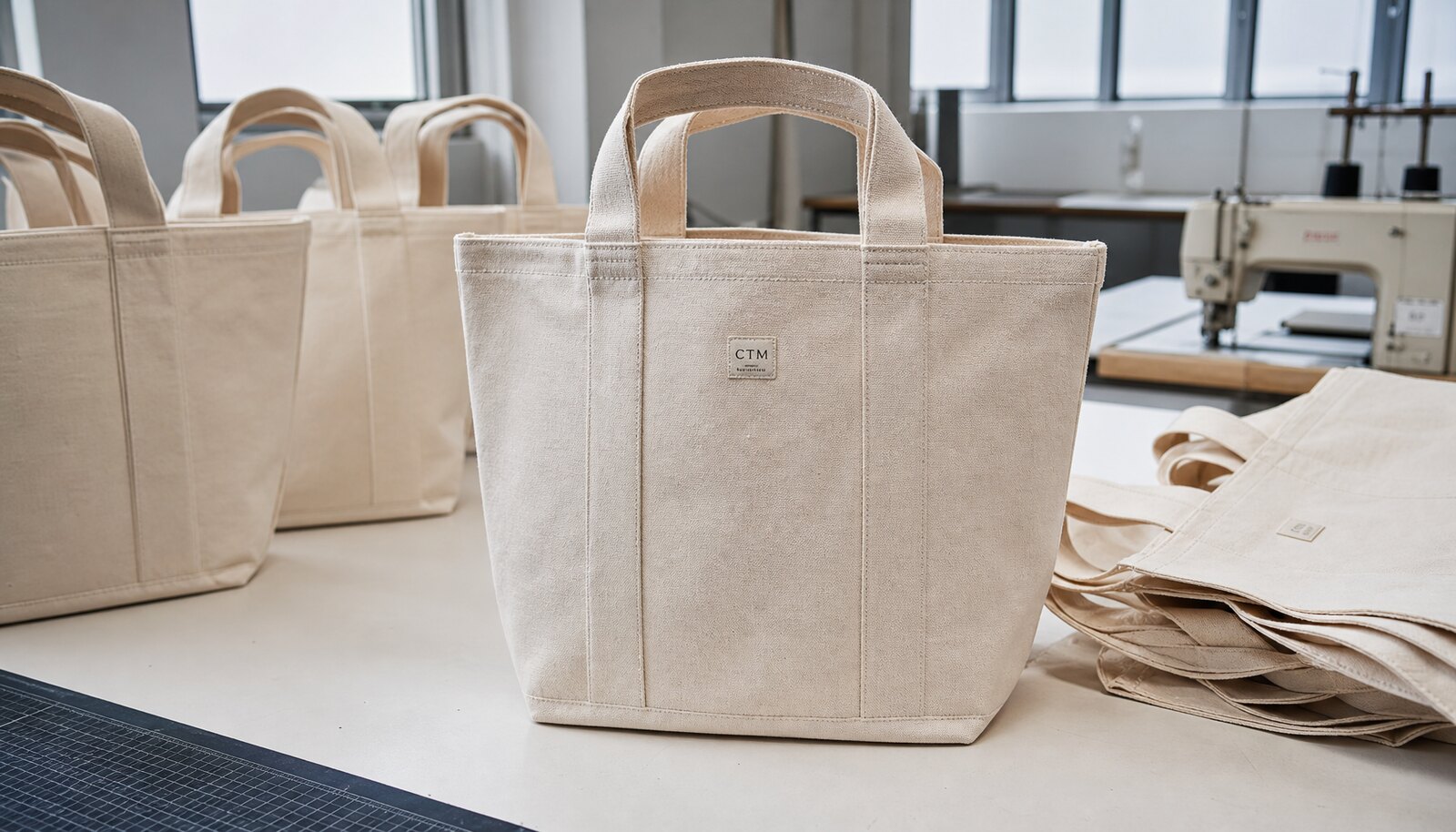
What buyers really mean by cotton bags personalised
In procurement terms, cotton bags personalised means more than adding a logo to a tote. The buyer is usually sourcing a branded carrier that has to satisfy a commercial job: retail resale, event distribution, loyalty gifting, packaging for a product launch, or a reusable bag program that reflects the brand on shelf and in use. The sourcing challenge is that every decision changes cost, lead time, and risk. A simple-looking tote can become expensive or unreliable if fabric weight, print method, and packing format are not defined up front.
For B2B buyers, the practical goal is not to buy the cheapest bag. It is to buy a bag that arrives consistent, printable, packed correctly, and acceptable to the end channel. That means the RFQ should read like a production brief, not a marketing request. If the factory only hears “cotton bags personalised,” they will fill in the blanks themselves. That is where quote comparisons go wrong, because one supplier may imagine a light 140 GSM promo tote while another prices a heavier retail bag with reinforced handles and individual polybags.
The most useful mental model is to treat the tote as a branded packaging component. It needs to fit the product, support the contents, survive handling, and communicate the brand properly. Once buyers think this way, the specification becomes easier: define function first, then construction, then print, then packing. The order of those decisions matters because the print method or packing style can change the economics of the whole program.
- Start with the end use: retail, giveaway, warehouse bagging, or event handout.
- Treat the tote as a branded supply item, not just a promo accessory.
- Write the RFQ so every supplier is pricing the same item, not their own assumption of it.
Fabric weight, weave, and finish drive most of the buying decision
Fabric is where most of the price spread comes from. For cotton tote sourcing, buyers commonly see 140-150 GSM for light promotional use and 180-220 GSM for retail-facing or repeat-use bags. Lower GSM reduces material cost and can help with freight, but it also increases the risk of print show-through, limp body shape, and weaker perceived quality. Higher GSM usually improves structure, print appearance, and confidence at the point of sale, but it raises sewing load and per-piece cost.
A good RFQ should state not only GSM but also the fabric style. Is it plain weave, a denser weave, a natural unbleached shade, a bleached white, or a dyed body? Is the fabric expected to be soft and drapey, or more structured and firm? Those choices affect how the bag sits, how the handles hang, and how the logo appears after printing. If the supplier gives only “cotton” as the spec, the quote is not complete enough for procurement.
Natural cotton is common because it is cost-effective and visually aligned with eco-positioning, but it is not uniform across mills or lots. Natural shade variance, slubs, and minor fiber specks may be acceptable in a casual promo bag, but they can be a problem in a premium retail launch. Bleached cotton often gives cleaner print contrast and a more controlled canvas for the logo, although it can add cost. If the brand is sensitive to visual consistency, request a pre-production swatch or fabric reference, not just a photo.
Buyers should also ask whether the GSM figure is quoted before or after washing/finishing. That detail matters because the number can change after processing. If the supplier cannot explain the basis of the fabric weight, the quote is at risk of being apples-to-oranges compared with others.
The most procurement-friendly approach is to define a minimum acceptable range and a visual standard together. Example: 180-200 GSM, natural cotton, acceptable slub range, no holes, no visible thin patches, and no dramatic shade variation within the lot. That gives the factory room to source efficiently while still protecting the result.
- Use 140-150 GSM for low-cost campaigns where the bag carries light items.
- Use 180-220 GSM for retail, premium gifts, and frequent reuse.
- Ask whether the GSM is measured before or after finishing.
- Approve a fabric reference when color consistency matters.
Construction details that separate a cheap tote from a reliable one
The bag body is only part of the product. Handle construction, seam density, bottom reinforcement, and gusset shape determine whether the tote survives real use. For personalised cotton bags, handle failure is a common complaint because the failure point is visible and immediate. A bag can look acceptable on a shelf, but if the handles are too short, too narrow, or lightly stitched, it will not hold up once loaded.
For B2B sourcing, self-fabric handles with reinforcement are often the cleanest option for standard totes. Buyers should ask whether the factory uses bar-tacks, X-stitch reinforcement, or both. These details sound small, but they affect load-bearing performance and the overall premium feel. Ask about the stitch density around the handle base, seam allowance, and whether the handle attachment is doubled on the inside. A neat-looking stitch line is not enough; the structure behind it is what matters.
Gusset choice also affects utility. A flat tote is cheaper and easier to sew, but it is less useful for apparel, books, or boxed items. A gusseted tote adds volume and better item fit, but it changes cutting efficiency and can make the bag dimensions less forgiving. If the bag needs to stand upright for retail display or packaging, the gusset is often worth the added cost.
The buyer should define a clear acceptable performance level. For example, if the bag is intended to carry brochures or lightweight merchandise, the construction may only need to support modest loads. If it will hold bottles, canned goods, or multiple retail items, then handle reinforcement, seam finish, and fabric weight need to move up together. Do not ask for a premium appearance and a minimum-cost structure in the same sentence; the factory will have to make a tradeoff somewhere.
- Confirm handle width, handle length, and handle drop, not just the overall bag size.
- Ask whether reinforcement is bar-tack, X-stitch, or both.
- Specify gusset depth if the bag must carry boxed or bulky items.
- Set the expected load use case so the factory can match structure to function.
Print method should follow artwork complexity, not habit
For cotton bags personalised, print method is one of the easiest places to overspend or under-specify. Screen printing is usually the best option for simple logos, solid colors, and repeat orders because it is durable and efficient once the setup is done. But screen printing becomes less attractive when the artwork has fine lines, multiple gradients, or many color changes, especially on small runs where setup costs are spread over fewer pieces.
Heat transfer and DTF can be useful for short runs or detailed graphics, but buyers should not treat them as interchangeable with screen print. They can change the hand feel, look different on unbleached cotton, and sometimes perform differently in wash and rub tests. If the bags will be used repeatedly or sold at retail, ask how the print will age over time, not just how it looks on day one. That question often separates a practical supplier from a sales-driven one.
Embroidery is possible on some cotton bags, but it is not the default route for flat tote branding. It adds cost, changes production time, and can distort lightweight fabric if the logo area is small or the stitch density is high. In most tote programs, embroidery is only worth considering when the brand wants a tactile premium look and is willing to accept the cost and design constraints.
The RFQ should separate setup from run cost. A factory can appear cheap on the per-piece price and then recover the margin through screen charges, film charges, art conversion fees, or extra-position fees. Buyers should also specify how many print positions are needed: front only, front and back, side mark, or interior label. Even a small second print location can add labor and line handling. The more precise the artwork plan, the more reliable the quote comparison becomes.
Placement tolerance should be written down. If the logo must sit a certain distance from the top edge or be centered within a fixed window, say so in the tech pack. ‘By eye’ is not a quality standard.
- Screen print is the default for simple, repeatable brand marks.
- Use DTF or heat transfer when detail matters more than lowest cost.
- Ask for setup charges separately from unit print price.
- State print position tolerance in millimeters or centimeters, not visually.
How MOQ really works on personalised cotton bag orders
MOQ is one of the most misunderstood parts of sourcing cotton bags personalised. It is not a single factory rule; it changes with size, color, print method, and packing complexity. A supplier might accept a low MOQ on one size and one color, but push the minimum much higher if the order includes multiple SKUs, extra print colors, or retail packing. This is why procurement teams should ask for MOQ by configuration, not just a headline figure.
The main lever buyers control is variation. If you want a lower unit price, reduce the number of bag sizes, fabric colors, artwork versions, and packing styles. A single-size order with one design is easier to cut, print, and pack than a program with three sizes, two handle lengths, and two barcode formats. Every variation creates changeover time and can leave the factory with small leftover fabric or print waste, which the supplier will price into the order.
There is also a difference between actual MOQ and economical MOQ. A factory may be willing to do 500 pieces, but the unit cost can be significantly higher than at 2,000 or 5,000 pieces because setup and cutting waste are spread over fewer bags. For pilot launches or test markets, that may still be the right commercial decision. For regular replenishment, it often makes sense to scale up the first order so the buyer can reduce unit cost and secure a more stable production slot.
Buyers should ask whether MOQ is tied to fabric availability or production capacity. If a supplier is offering a very low MOQ, it may be because they are using existing stock fabric or printed blanks. That can be useful for speed, but it may limit control over exact shade, weave, or finishing. A low MOQ is not automatically a good deal if it creates a quality mismatch later.
In practical procurement terms, the best MOQ strategy is to standardize what the brand can live with. One tote size, one print color if possible, one packing format, and one carton spec gives the best chance of a clean quote and predictable replenishment.
- Ask for MOQ by size, color, print design, and packing format.
- Separate pilot-order economics from repeat-order economics.
- Reduce SKU variation if you want a lower unit price and fewer production risks.
Use a sourcing route comparison instead of comparing supplier names only
The right sourcing route can matter as much as the supplier itself. Direct factories usually provide better visibility on fabric, stitching, and line control, which is valuable when the buyer cares about consistency across replenishment orders. Trading companies or local integrators can make sense for small trial runs, multi-category purchasing, or buyers who need one point of contact for several product types. The key is to understand what each route is actually quoting: finished production, assembled blanks, or a managed supply chain with multiple subcontractors.
A direct factory is often the better route when the buyer wants repeatability, firm control over the tote specification, and a clearer path to corrective action if defects appear. The tradeoff is that the buyer may need to manage more detail: sample rounds, print approvals, carton specs, and shipment coordination. A trading company can reduce coordination burden, but the buyer must ask harder questions about who actually prints and who actually sews, because accountability can get blurry when issues arise.
If the order is urgent, local integration can sometimes be a sensible route because it reduces freight time on blanks or shortens communication loops. But buyers should check whether the local assembler has control over the base bag quality or only the decoration stage. A bag can look locally produced while actually relying on imported blanks with limited traceability. That may be fine for a promotional order, but it is a different commercial story than a fully controlled factory program.
The procurement implication is simple: do not compare quotes from different routes as if they are identical manufacturing models. A lower unit price from a trading company may include less transparency, weaker QC leverage, or different fabric origin. A higher factory quote may actually be cheaper once the buyer counts rework risk, communication time, and the cost of missing the launch window.
For serious buyers, the supplier route should be a conscious decision: price control and consistency from a factory, convenience and flexibility from an intermediary, or speed and local finishing from an integrator. Once that decision is made, the rest of the RFQ becomes much easier to manage.
- Choose a factory for repeat orders and tighter spec control.
- Use an intermediary mainly for convenience, mixed sourcing, or small runs.
- Ask who controls fabric, printing, sewing, and final packing before you compare quotes.
What should be priced separately in a quote
A workable quote for cotton bags personalised should read like a cost build-up, not a single lump sum. Procurement teams need to see the base bag cost, print setup, per-color or per-position costs, packaging charges, sample charges, and shipping terms. If the supplier bundles everything into one number, the buyer cannot tell whether the price is being driven by fabric, decoration, or packing. That makes negotiation weak and comparison unreliable.
The most common hidden costs are print setup, artwork conversion, and packing labor. Print setup can be a major item on smaller orders because screens, films, or machine setup have to be recovered somehow. If the artwork needs adjustments for fabric absorption, the factory may charge to convert the file. Packing can also become expensive if the bags need folding, individual polybags, barcode labels, inserts, or hang tags. None of those steps should be assumed to be free.
Freight terms matter as well. EXW, FOB, CIF, and DDP are not just logistics language; they change who bears the risk and where the quote ends. Buyers comparing suppliers need to normalize those terms before they compare price. A lower EXW price can be misleading if the buyer later faces costly inland freight, export handling, or unexpected packaging changes. A higher FOB price may actually be cleaner if it includes more of the production-to-port process.
For direct procurement use, ask suppliers to break the quote into line items. A clean structure is: base tote, print setup, print unit cost, optional extra position, packaging, carton charges, sample charges, and freight terms. That structure is easier to benchmark and easier to re-buy later. It also helps the buyer identify where a future cost reduction is possible: simpler artwork, fewer colors, different packing, or a standard size instead of a custom one.
If the quote includes value-added claims such as eco-friendly, organic, or recycled cotton, ask for documentation and clarify whether that changes MOQ or lead time. A claim without a supporting paper trail can become a compliance risk later.
- Ask for base unit price, not a bundled guess price.
- Separate setup fees from run costs.
- Normalize freight terms before comparing supplier offers.
- Request documentation for any eco or organic claim.
Sample approval should protect bulk production, not just artwork
The sample stage is where many orders either become manageable or become expensive. A production sample for personalised cotton bags should use the actual fabric weight, actual sewing process, and final print method. Approving a generic sample made on a different fabric or by a different process can create false confidence. The bag may look right in a showroom and still fail once the bulk run starts on the real material.
A strong sample review includes measuring the tote, checking the print position, confirming handle drop, examining seam finish, and reviewing the final folding or packaging style. If the bag will be used in retail, the sample should also be judged as a shelf item: does it hang correctly, does the print look centered, and does the fabric read as premium or promotional? Those are commercial questions, not just technical ones.
The buyer should compare the sample against a written approval sheet. That sheet should include the artwork file version, print color reference, dimensional tolerances, packing method, and acceptable visual defects. Without that paper trail, the factory may treat later discussions as subjective. With it, the buyer has a clear standard for bulk production and a stronger basis for any dispute or rework request.
If the order is important, consider a pre-production sample and, for larger programs, an initial production check after the first output from the line. That extra step can catch issues like print shift, thread tension problems, or packing mistakes before the entire order is finished. The cost of a second check is usually small compared with the cost of rework on a full shipment.
The goal is not to delay the order with endless approvals. The goal is to lock the production variables early enough that the bulk run has a realistic chance of matching what was signed off.
- Approve only after seeing the actual fabric and actual print process.
- Document measurements, artwork version, and packing format on the approval sheet.
- Use a first-article or early-line check on larger orders.
- Treat the sample as a production gate, not a design mockup.
Packing, carton marks, and warehouse intake can make or break an otherwise good order
Packing is often overlooked until the shipment arrives and the warehouse team starts receiving cartons. That is a mistake. For cotton bags personalised, packing requirements affect labor, carton size, freight utilization, and counting accuracy. If the bags are mixed by size or color and the cartons are not labeled clearly, the warehouse may reject the delivery or spend time sorting it manually. That cost is real even when the bags themselves are perfect.
The buyer should define whether the order is bulk packed, folded a certain way, individually polybagged, retail-ready with barcode labels, or set-packed with inserts. Each choice has a different cost profile. Individual polybags may be necessary for retail presentation or dust protection, but they also add plastic cost, labor, and carton volume. Bulk packing is more efficient for distribution and warehousing but may not suit a retail shelf program. The best choice depends on channel, not habit.
Carton labels matter too. At minimum, outer marks should match the PO and packing list. For multi-SKU orders, carton separation by size or color should be obvious and consistent. Buyers should ask for carton count, carton dimensions, and gross weight before shipment booking. That information helps freight planning and reduces surprises at receiving. If the bags are compressed too much or packed too loosely, the final freight cost can change more than expected.
A clear packing spec also reduces disputes about shortages. If a carton is supposed to contain 50 pieces and the buyer receives cartons with 48 or 52 pieces, the issue may not be quality but pack discipline. That is why packing inspection belongs in the QC plan, not only in logistics.
For many buyers, the smartest approach is simple: use one packing format unless there is a strong commercial reason to vary it. Simplicity reduces error, and with tote bags, error often costs more than the small savings from a complex packing arrangement.
- Specify bulk pack or retail-ready pack before quoting.
- Require carton count and SKU separation for multi-variant orders.
- Confirm carton dimensions and gross weight before booking freight.
- Inspect packing accuracy as part of quality control, not only logistics.
Lead time risk: where tote programs usually slip
Lead time for cotton bags personalised depends less on the bag shape than on how many variables are still open when the order is placed. The usual delay points are fabric sourcing, artwork revision, sample approval, print setup, and packing changes. If the buyer changes the logo size after the sample is approved, the supplier may need to remake screens or adjust the print position. If the buyer changes the carton labeling after packing has started, the factory may need to stop and rework the order. Those delays are avoidable if the RFQ is clear.
A reliable schedule starts with a clear distinction between sample lead time and bulk lead time. Buyers should ask when the factory starts the clock. Is it from PO receipt, from artwork sign-off, from sample approval, or from deposit receipt? If the answer is vague, the lead time is not yet procurement-grade. For launch-critical programs, ask the supplier to identify the critical path step. Often it will be fabric availability or print setup, not sewing itself.
Custom dye, special finishes, or multiple SKUs can extend the schedule more than most buyers expect. Even when the bag is simple, a small change in packaging or logo placement can trigger a longer approval cycle. That is why repeat orders often move faster than first orders: the spec is already locked and the factory knows the quality target. Buyers planning a first-time buy should build in a buffer for sample iteration, even if the supplier gives an optimistic production window.
The safest way to manage lead time is to lock the spec before PO issue. That means size, fabric weight, print method, packing format, and quantity split all need to be final. If a launch date is fixed, it is better to order a simpler tote on time than a more complicated tote late. In procurement, lateness usually costs more than a modest upgrade in material or decoration.
If the supplier promises a very short lead time, ask what they are assuming. Stock fabric? One-color print? No packing extras? One carton format? Those assumptions should be written into the quote so the promise is auditable later.
- Start the lead-time clock only after sample approval or another agreed milestone.
- Build buffer time for artwork revision and packing changes.
- Ask what assumptions make the quoted lead time possible.
- Use a simpler specification if the launch date is immovable.
Specification comparison for buyers
| Procurement decision | Lower-risk recommendation | Where it works best | Commercial implication / risk to check |
|---|---|---|---|
| Fabric weight | 140-150 GSM for low-cost promotions; 180-220 GSM for retail-facing carry bags | Trade shows, giveaways, light merchandise, bookstore totes, apparel carry bags | Lower GSM reduces cost and freight, but thin fabric can show print-through, distort after sewing, or feel too flimsy for resale. Higher GSM improves structure but raises cost and sewing load. |
| Fabric type and finish | Natural cotton for value programs; bleached cotton or tighter weave for cleaner print reproduction; organic only when the buyer can justify the premium | Brand launches, eco-positioned retail, premium gifting, repeat-use programs | Natural cotton can vary by lot in shade and slub content. Bleached cotton usually prints cleaner but may increase cost. Organic claims require documentation and can extend sourcing time. |
| Handle construction | Self-fabric handles with reinforced bar-tacks or X-stitch; longer drop for shoulder carry | Retail totes, premium events, customer loyalty gifts | Handle failure is one of the most visible quality issues. Ask whether reinforcement is stitched, bartacked, or both, and confirm stitch density at the stress points. |
| Print method | Screen print for simple artwork and repeat volumes; DTF or heat transfer for small runs or detailed graphics | Single-logo campaigns, multi-color graphics, short-run promotional batches | Complex methods can improve artwork fidelity but may change hand feel and wash performance. Quote setup costs separately from unit print costs. |
| Bag size route | Use a standard stock size with custom print unless the product must fit a defined item | Campaigns with fixed timelines, cost-sensitive programs, and programs with multiple destinations | Custom size adds cutting complexity, higher MOQ pressure, and greater measurement variance. Only specify custom dimensions when the bag must fit a specific use case. |
| Supplier route | Direct factory for repeat orders; trading company or local integrator for very small or mixed-product buys | Annual replenishment programs versus one-off or bundled sourcing | Intermediary pricing can hide the actual production route. Ask who prints, who sews, and who packs to avoid unclear accountability if quality issues appear. |
| MOQ logic | Keep one size, one fabric, one print area, one carton spec whenever possible | Multi-market rollouts, retail programs, branded merch platforms | Every extra color, placement, or packing variant splits the lot and can raise both unit price and defect risk. Ask for MOQ by SKU, not only overall order quantity. |
| Packing method | Bulk pack in cartons with size/color separation and clear outer marks; retail folding and individual polybag only when the channel needs it | Warehouse distribution, e-commerce prep, wholesale, and retail-ready display | Packing can become the hidden cost driver. Polybags, inserts, barcode labels, and folding standards add labor and carton volume. |
| Sample approval | Pre-production sample in actual production fabric, final print method, and final packing format | Launches, branded programs, retailer approvals, and contract renewals | Artwork approval alone is not enough. A sample made from different fabric or print method can give false confidence and cause bulk rejection. |
Buyer checklist before sampling
- Define the end use first: retail resale, giveaway, trade show, document carry, wine carry, grocery use, or gift packaging.
- Lock the fabric weight range, fabric color, and whether the cotton is natural, bleached, dyed, recycled, or organic.
- Specify bag dimensions, gusset depth, handle length, handle width, stitch type, and any reinforcement required at the stress points.
- State the print method, number of colors, artwork size, placement, and the acceptable tolerance for logo position on the bag.
- Confirm whether the order is bulk packed, individually polybagged, folded with inserts, barcode-labeled, or fully retail-ready.
- Ask for a pre-production sample that uses the actual production fabric, real print process, and final carton packing method.
- Request a quote that separates base bag cost, print setup, unit print cost, packaging, sample cost, and freight terms.
- Ask for measurements, carton count, carton dimensions, gross weight, and outer carton marks before booking freight.
- Define your QC acceptance criteria in writing: seam integrity, stitch density, print alignment, fabric flaws, and dimensional tolerance.
- Clarify whether the lead time starts from PO date, artwork approval, or signed sample approval, and ask what events can delay shipment.
Factory quote questions to send
- What exact GSM or oz weight are you quoting, and is that measured before washing, after finishing, or by supplier estimate?
- Is the price based on stock fabric, greige fabric, bleached fabric, or custom dyed fabric?
- How many print colors are included, what is the setup charge per color, and what is the cost for a second print position?
- What is the MOQ by size, by color, and by design, and does the MOQ change if packing requirements change?
- Can you make a pre-production sample using the same fabric weight, same print method, and same stitching as the bulk order?
- What is your standard tolerance for bag dimensions, handle length, print placement, and seam alignment?
- What packaging options are quoted, and what is the labor or material surcharge for each option?
- How many pieces per carton will you pack, and can you confirm carton dimensions, gross weight, and palletization if needed?
- What inspection standard do you use before shipment, and what defect threshold triggers rework or sorting?
- What is the lead time after sample approval, and which steps are most likely to extend it?
Quality-control points to confirm
- Fabric weight should match the approved GSM within the supplier’s stated tolerance. If the agreement is vague, request a lab cut or supplier test sheet before bulk production. Be cautious if the fabric feels unusually thin, transparent, or uneven by lot.
- Inspect weave consistency for slubs, thin spots, broken yarns, and color variation. Natural cotton can have some visible character, but the buyer should define what is acceptable versus rejectable before production starts.
- Check the seam construction at side seams, bottom seams, and handle attachment points. Look for skipped stitches, loose thread ends, open seam corners, and uneven seam allowance. Handle reinforcement should be visible, not decorative only.
- Measure bag body width, height, gusset depth, and handle drop against the approved tech pack or sample. A practical starting tolerance is often ±0.5 to 1.0 cm for standard totes, but the buyer should set the tolerance by size and use case.
- Review print quality under normal light and, if possible, a second light source. Reject major misregistration, haloing, visible pinholes, cracking, flaking, heavy bleeding, or color shift outside the approved sample reference.
- Ask for a rub test and wash test when the bag is intended for repeat use or retail resale. A simple field method is dry rub and wet rub against a white cloth, plus a wash cycle if the bag will be laundered or sold as washable.
- Check folding, packing count, and SKU separation before carton sealing. Mixed sizes, mixed colors, or mixed print variants can create costly warehouse receiving disputes even when the bags themselves are acceptable.
- Confirm carton marks, PO number, SKU code, quantity, and country of origin against the packing list. Carton labels should be legible and consistent across the shipment.
- If the order is retail-facing, inspect for adhesive residue, stains from handling, creases that do not recover, and label placement errors. These are small defects that often become visible on shelf or in e-commerce photography.
- Use a clear defect classification for inspection: critical defects such as torn fabric or open seams; major defects such as unreadable or badly misaligned print; and minor defects such as loose threads or small cosmetic marks. Define in the PO what needs 100% sorting, rework, or rejection before shipment.