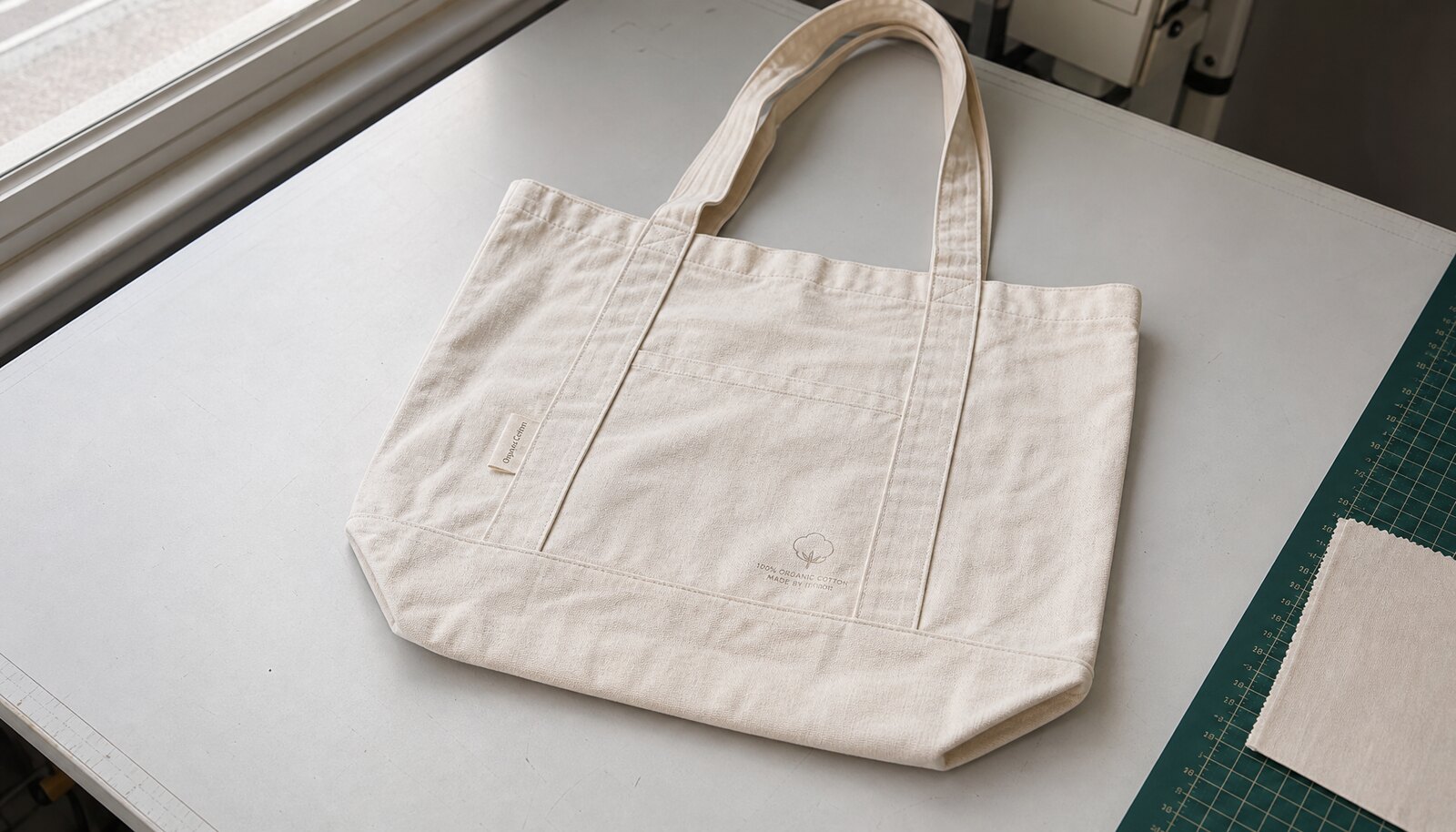
Why cotton bag design decides price, usability, and rejection risk
Cotton bags design is not mainly a graphics exercise. It is a balance of fabric weight, sewing method, print durability, and packing format. If those four items are loose, the quote will look attractive but the bulk order will not hold up when the buyer compares samples, receives cartons, or hands the bags to a retailer. A good design spec protects you from the most common failure in this category: the bag looks acceptable in a sample photo but performs badly in real use because the cloth is too light, the handles are too weak, or the print cracks after folding.
For procurement teams, the real problem is not choosing a bag style. The real problem is defining the bag in a way that two suppliers can quote the same item. That means the RFQ has to describe finished size, fabric GSM, weave, handle length, stitch type, logo placement, packing, and test expectations. When those details are missing, suppliers fill the gap with assumptions, and the quote comparison becomes meaningless. The safest buyer approach is to design the bag around the load it must carry, the shelf it must sit on, and the freight profile it must survive.
- Use the target use case to set the bag spec, not the artwork file.
- Separate visual requirements from structural requirements in the RFQ.
- Treat sample approval as a production control step, not a creative review.
Start with the use case, because a promo bag and a retail tote are not the same product
A cotton bag for a trade show handout can be thin, flat, and simple. It only needs to hold brochures, a notebook, and maybe a sample pack. In that case, a 140 to 160 gsm plain weave is often enough, especially if the buyer wants a low unit price and compact shipping. The same bag may fail immediately in a retail environment where shoppers load groceries, books, or heavier apparel. For retail or reusable daily-carry use, a heavier cloth in the 180 to 220 gsm range is usually the safer starting point because it keeps its shape better and tolerates more handling.
The product brief should also say who handles the bag after delivery. A distributor who folds and relabels the bags has different needs from a retail brand that wants shelf-ready presentation. If the bags go into a kit or a mailer, the packing format matters as much as the bag body. If they are handed out at an event, cost and print speed may matter more than a premium hand feel. This is why design work should begin with the channel, the load, and the expected reuse rate. Once those are clear, the factory can recommend the right cloth, seam reinforcement, and finish without guessing.
- Promo handouts usually reward lower GSM, simpler construction, and bulk packing.
- Retail or grocery use usually needs heavier cloth, gusseted volume, and reinforced handles.
- Reusable bags need clearer test criteria than one-time giveaway bags.
Choose the cloth, GSM, and construction around performance, not habit
Cotton bag buyers often overfocus on whether the bag is called canvas, drill, or plain cotton. Those labels matter less than the actual cloth weight, weave density, finishing, and shrinkage behavior. A 140 gsm fabric from one mill can feel very different from a 140 gsm fabric from another if the yarn count, twist, and finishing are not controlled. For that reason, a serious RFQ should state GSM, weave type, and if the cloth is bleached, natural, or dyed. If the bag will be printed, also ask whether the cloth has been pre-shrunk or whether the supplier expects a post-sewing shrink tolerance.
Construction should match the intended load path. Flat bags are cheaper and easier to pack, but a side and bottom gusset gives usable volume and reduces stress on the center panel. Handles are another common weak point. Self-fabric handles keep cost down, but they need enough width and stitch density to avoid tearing. Webbing handles cost more, but they are usually stronger and more comfortable for longer carry. Top hems, corner reinforcement, and bar-tacks are not cosmetic details; they determine whether the bag feels solid in the hand or turns into a warranty problem after the first round of use.
- State GSM and weave instead of relying on generic terms like canvas or cotton.
- Specify whether the cloth is pre-shrunk or what shrinkage tolerance is acceptable.
- Match handle width and reinforcement to the expected load, not just the sample look.
Print method changes unit cost, lead time, and what counts as an acceptable sample
The print method should be selected after the fabric spec is fixed, not before. Screen print is still the most practical option for many cotton bags because it is durable and cost-effective for simple logos and limited color counts. Water-based or discharge printing can give a softer hand feel, which matters on retail bags where the decoration should not feel like a thick plastic layer. Embroidery or woven labels are better when the brand wants a more premium finish, but they increase setup effort and can change the visual balance of the product. Heat transfer can be useful for small runs or complex artwork, but the buyer should not assume it behaves like direct print in durability or texture.
Artwork also needs production rules. Fine lines, gradients, and tiny text often look acceptable on a screen but break down on fabric. The factory may simplify the file unless the buyer defines minimum line thickness, ink color references, and logo placement zone. If the logo sits too close to a seam or the print area crosses a gusset fold, the final result can distort when the bag is filled. A proper strike-off should confirm not only color but also print registration, surface coverage, and how the graphic behaves after the bag is folded and packed.
- Use screen print for simple logo work and medium volumes.
- Use softer print methods when the bag is sold as a retail item and hand feel matters.
- Approve a strike-off on the actual fabric before mass production.
How to compare supplier quotes without comparing different products
A cotton bag quote is only useful if every supplier is pricing the same spec. In practice, one factory may quote 160 gsm cloth with a one-color screen print and bulk folding, while another quotes a heavier cloth, a two-color print, and individual polybag packing. Those numbers do not compare. The RFQ should force line-by-line transparency: fabric weight, dimensions, handle length, print colors, packaging format, carton count, and trade term. If a supplier does not break out the elements, the buyer cannot tell whether the low quote is genuine efficiency or just a lighter build with fewer controls.
Supplier route also matters. Direct factories usually give the cleanest control over cloth, stitching, and packing, especially on repeat orders. Trading companies can be useful if the order includes multiple product categories, but the buyer must watch for hidden handling layers and less direct control over production changes. Local decorators can be useful for small urgent runs, yet they often depend on sourced blank bags rather than controlled bag manufacturing. For a brand buyer, the best route is the one that matches the order profile. If you need repeatable retail quality, direct factory control is usually worth more than a slightly lower quote that is difficult to verify.
- Compare quotes only after you normalize fabric, print, packing, and trade terms.
- Ask suppliers to identify any substitutions before PO release.
- Treat a very low quote as a risk signal until the spec gap is explained.
Use a sample path that proves the bag, not just the artwork
The sample stage should answer three questions: does the bag fit the intended load, does the decoration match the approved artwork, and does the construction survive handling? A photo of a sample is not enough for that. A buyer needs a physical pre-production sample with measured dimensions, seam details, and the same fabric lot or a controlled equivalent. If the print is important, a strike-off should be approved separately so the factory cannot hide a color or registration issue inside a finished bag that is already sewn. That sequence matters because print quality and sewing quality are not always the same problem.
A useful sample review is mechanical, not emotional. Measure the finished bag after pressing, check handle drop, inspect the hem and gusset corners, and load the bag with a realistic weight. The sample should also be folded the way it will be packed for shipment, because heavy print ink, stiff labels, or poor folding can create creases and pressure marks. If the bag will be sold to retailers, include the final barcode placement and any warning or fiber content labels in the sample review. Otherwise the approved sample may still fail packaging or shelf presentation requirements later.
- Approve the strike-off separately from the sewn sample when logo accuracy matters.
- Measure the sample after pressing so the size reflects the final condition.
- Test fold marks and label placement before bulk approval.
Define QC thresholds before production starts, or the factory will define them for you
Quality control on cotton bags is straightforward if the acceptance criteria are written clearly. The most important measurements are finished size, handle length, seam density, print placement, and visible defects such as skipped stitches, loose threads, or ink bleed. For reusable bags, also add a basic load test and, where needed, washing or color fastness requirements. If the bag is for retail, a buyer may also need dimensional tolerance and fold consistency so the final presentation is uniform across the carton. The factory should know in advance which deviation is acceptable and which triggers rework or rejection.
The highest-risk issues often appear at the handle anchors and the gusset corners. That is where poor thread tension or weak bar-tacks show up first. A bag can look fine on a sample table and still fail when filled. For that reason, QC should include both visual inspection and functional checks. A buyer does not need a lab to catch most problems. A simple pull test, a loaded carry test, and a print rub check will expose many of the defects that create claims later. The goal is not perfection for its own sake. The goal is to stop small workmanship shortcuts from turning into costly returns or brand damage.
- Write tolerances for size, print position, and handle length into the spec sheet.
- Use simple load and rub checks that reflect real use.
- Focus inspection on seams, corners, and handle anchors, where failures usually begin.
Packing and carton design matter because they affect cost, moisture, and shelf readiness
Packing is often treated as an afterthought, but for cotton bags it can change both the freight bill and the resale condition. Bulk-folded packing usually gives the best cube efficiency for importers and distributors. It reduces carton volume and keeps unit cost lower. Retail-ready packing, however, may need individual polybags, insert cards, barcodes, and sometimes desiccant if the route is long or the destination climate is humid. None of that is free. The cost is not just the polybag itself, but also the labor to pack and the added cubic volume in the container or pallet.
The buyer should specify how each bag is folded and how many units go into each carton. If the fold is loose, the bags can arrive creased or misshapen. If the fold is too tight, printed areas can crack or leave pressure marks. Carton strength matters too, especially for export shipments that may be double-stacked. For retail programs, define the carton mark format and barcode placement before production begins. It is much easier to align packaging with the DC requirement at sample stage than to rework carton labels after the goods are ready to ship.
- Bulk folding is usually the lowest-cost route for B2B distribution.
- Retail packing needs barcode, fold, and carton mark details in the RFQ.
- Check carton size and palletization early if freight cost is sensitive.
Lead time, MOQ, and landed cost are design decisions, not just purchasing terms
MOQ on cotton bags is usually tied to fabric procurement, print setup, and sewing line efficiency. A simple one-color bag in a standard cloth width can often support a lower MOQ than a custom dyed fabric with multiple print colors and special labels. Buyers sometimes push for a low MOQ without adjusting the design, then wonder why the unit price rises or the schedule slips. The better way is to design the bag so the supplier can run it efficiently. One body color, one print method, and a stable fabric choice usually beat a more complex spec that looks better on paper but creates waste on the floor.
Lead time depends on more than sewing capacity. It includes fabric sourcing, lab dip or color approval if dyeing is involved, print strike-off, sample approval, bulk cutting, sewing, packing, and final inspection. Each step can slip for a different reason. This is why a good buyer asks the factory which step is most exposed to delay and which materials need to be booked in advance. If the order is time-sensitive, make the schedule visible in the RFQ. Then compare the landed cost, not just the ex-factory number. A slightly higher unit price can still win if it avoids air freight, rework, or retailer chargebacks.
- Design for the MOQ you can actually place, not the MOQ you hope to negotiate.
- Treat lead time as a chain of steps, each with its own approval gate.
- Compare landed cost after packing, freight, and likely rework risk are included.
Specification comparison for buyers
| Spec decision | Recommended option | When it fits | Buyer risk to check |
|---|---|---|---|
| Fabric weight | 140 to 160 gsm for promo use, 180 to 220 gsm for retail or repeated carry | Use lighter fabric when unit cost matters and the bag carries handouts, apparel, or light groceries; move heavier when the bag must hold shape and survive frequent reuse | Too-light cloth stretches, shows print through, and fails seam pull tests; ask for actual GSM, weave count, and shrinkage after washing |
| Bag structure | Flat body for simple distribution, side and bottom gusset for better volume and shelf presence | Flat bags suit event handouts and compact packing; gusseted bags fit retail, grocery, and heavier contents | If the quote omits gusset depth, you may approve a bag that looks right on paper but cannot hold the intended product load |
| Handle style | Folded self-fabric handles for low cost, webbing or reinforced handles for comfort and strength | Use self-fabric for lightweight promotional bags; use webbing when the bag will be carried on the shoulder or loaded heavily | Thin handles can cut into the hand and fail at the bar-tack points; require handle width, stitch pattern, and drop length in the quote |
| Print method | Screen print for simple logos, water-based or discharge print for softer hand feel, woven label or embroidery for premium positioning | Screen print fits one to three spot colors and medium volumes; premium finishes suit retail and corporate gifting | If artwork has fine gradients or tiny text, the factory may simplify it; approve a strike-off and define line thickness before mass production |
| Supplier route | Direct factory for best control, trading company for mixed-category sourcing, local decorator for fast small runs | Direct factory works when you need fabric control, repeat orders, and packaging consistency; trading companies help when you need one PO across multiple items | A low quote from an intermediary may hide fabric substitutions, inconsistent inspection, or extra handling steps that raise landed cost |
| Sampling route | Pre-production sample plus print strike-off before bulk | Use this when artwork accuracy, logo placement, or color match affects brand approval | A single photo approval is not enough; require physical sample measurements, print location, and seam details |
| Packing method | Bulk folded with size insert for B2B, retail fold and polybag with barcode for consumer shelf | Bulk packing suits DC replenishment and lower freight cost; retail packing suits store-ready delivery | Polybags increase cost and carton volume; if you need barcodes or warning labels, define the label position and carton pack count upfront |
| Compliance and test scope | Specify wash color fastness, dimensional tolerance, and if needed azo-free or restricted substance requirements | Use this when shipping into stricter retail channels or regulated markets | If compliance is not written into the RFQ, the factory may quote a basic build that cannot pass your buyer or retailer QA |
Buyer checklist before sampling
- Define the end use first: promo handout, retail tote, grocery carrier, gift bag, or reusable pack-in.
- Fix the fabric spec in GSM, weave, and finish before asking for pricing.
- State the bag dimensions, gusset depth, handle length, and seam construction in writing.
- Lock the print method, number of colors, logo size, and placement zone before sample approval.
- Ask for a pre-production sample and a print strike-off, not just a digital proof.
- Confirm whether the quote includes hangtags, inner packing, carton marks, and barcode labels.
- Request shrinkage, color fastness, and seam strength targets where the bag will be reused or washed.
- Compare quotes on the same basis: same fabric, same print method, same pack format, same trade term.
- Check carton pack count, carton size, and total CBM if the order ships by sea freight.
- Get the factory to name any likely substitutions before you release the PO.
Factory quote questions to send
- What is the exact fabric GSM, weave type, and whether the cloth is bleached, natural, or dyed?
- What are the finished dimensions, gusset depth, handle length, and seam allowance after sewing?
- Which print method is included, how many colors are priced, and what setup charges apply?
- Is the quote based on a pre-production sample, and will a strike-off be approved before mass production?
- What is the MOQ for this exact spec, and what changes if we reduce quantity or change print colors?
- What packing is included, bulk folded or retail packed, and what is the carton pack count?
- Which quality tests can you provide, such as shrinkage, color fastness, or seam pull results?
- What is the production lead time after sample approval, and what part of the schedule is most likely to slip?
- What terms are included in the quote, such as EXW, FOB, or DDP, and what freight assumptions are being used?
- Which material or process substitutions might you make if stock is tight, and how will those be approved?
Quality-control points to confirm
- Measure finished size against the approved spec after pressing, not before sewing.
- Check GSM or fabric weight on incoming cloth so a lighter replacement does not pass unnoticed.
- Inspect seam density, bar-tack placement, and thread tension at the handle anchors and side seams.
- Test print alignment, edge sharpness, and logo position on left and right samples from the same batch.
- Run a simple load test that reflects the real use case, such as books, groceries, or apparel cartons.
- Check for puckering at the top hem and at gusset corners, where weak sewing shows first.
- Review color match under daylight and store lighting if the bag is part of a branded retail range.
- Verify fold direction, insert card, barcode label, and carton mark if the bags will hit a retail DC.
- Confirm shrinkage after washing or steam exposure if the bag is meant to be reusable and laundered.
- Hold back the first bulk carton until the factory proves the same construction across the line.