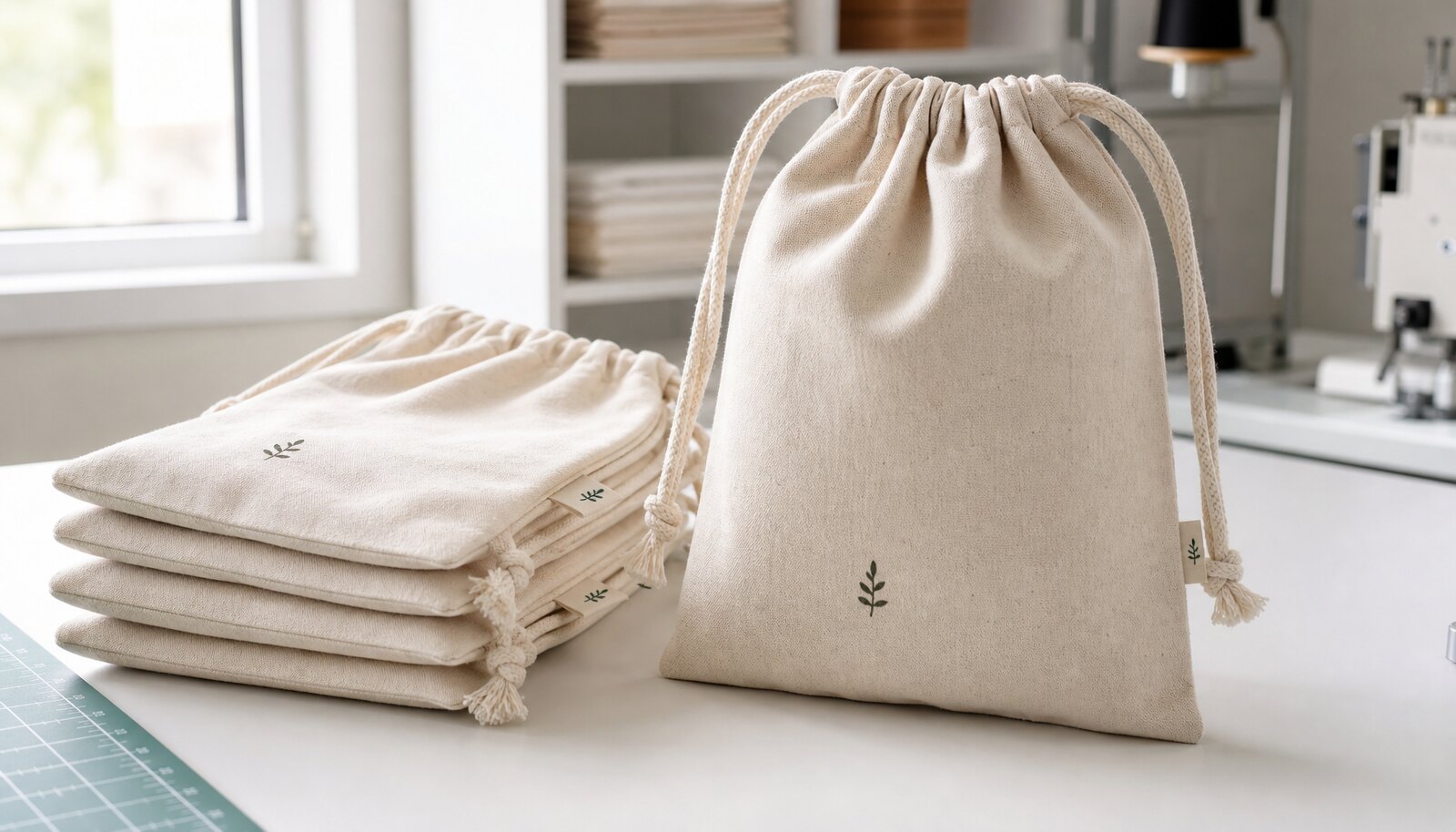
What hotel buyers actually need from a cosmetic drawstring pouch
For hotel procurement, a cosmetic drawstring pouch is usually doing three jobs at once: packaging, branding, and guest utility. It may hold toiletries, spa items, amenity kits, retail cosmetics, or small welcome gifts. The pouch has to look clean, close securely, and survive repeated handling without turning into a wrinkle-prone throwaway that damages the brand presentation.
The biggest mistake is sourcing it like a generic promotional bag. Hotels usually care more about hand feel, logo placement, clean stitching, and consistent pack-out than about flashy features. If the pouch is used in-room or in a spa setting, the fabric and print quality are visible immediately; if it is sold in a retail corner, the buyer also has to think about shelf appearance and barcode-friendly packing.
- Common use cases: guestroom amenity packs, spa kits, premium toiletries, mini retail sets, VIP welcome gifts
- Typical decision balance: presentation first, cost second, durability third
- Best buying outcome: a pouch that looks premium in photos and still packs efficiently in cartons
Fabric choice: the GSM range that makes sense for hotels
For most hotel programs, cotton in the 90-140gsm range is the practical starting point. At the lower end, 90-110gsm works for light amenity use, welcome kits, and budget-conscious supply programs. At 120-140gsm, the pouch looks fuller, holds shape better on a bed tray or in a bathroom set, and gives you more surface stability for screen print or a side label. If the pouch will be reused by guests or sold through retail channels, 8-10oz canvas is a safer upgrade because it resists abrasion better and stays presentable after multiple uses.
The fabric choice also affects how the drawstring behaves. Very thin cotton can crumple around the channel and make the pouch feel limp after packing. Very heavy fabric can make the mouth harder to cinch, especially on small cosmetic sizes. Hotel buyers should specify whether the pouch must look relaxed and soft or structured and upright, because that changes seam construction and the best GSM range.
- 90-110gsm cotton: lower cost, lighter appearance, suitable for disposable or low-reuse packs
- 110-140gsm cotton: balanced option for most hotel cosmetic pouches
- 8-10oz canvas: best for premium presentation and repeated guest use
- Ask for fabric shrinkage allowance if the pouch will be washed or steam-handled
Print method and branding details that hold up in hotel use
For simple hotel logos, 1-2 color screen print is usually the cleanest and most cost-effective method. It handles flat artwork well, gives good opacity on natural cotton, and is easy to repeat across replenishment orders. If the logo has fine detail, gradients, or a very small font, a woven label or sewn side label can be a safer route than trying to force detail through a low-cost print process.
Embroidery can work, but only on thicker fabric and only when the pouch size is large enough to avoid distortion. On thin cotton, embroidery often causes puckering around the logo area and can pull the fabric out of shape. For hotel buyers, the right question is not which decoration looks expensive; it is which method stays clean after packing, transport, and guest handling.
- Screen print: best for flat logos and stable unit cost
- Woven label: good for repeated branding and cleaner small text
- Embroidery: use only on thicker fabrics and larger logo areas
- Avoid tiny detail under 1.5-2 mm line width unless the factory has proven capability
How MOQ works for cosmetic drawstring pouches
MOQ is usually driven by fabric booking, print setup, and sewing line efficiency rather than the pouch itself. A simple stock cotton pouch with one-color print may be possible at a lower MOQ, but once you add custom size, custom cord color, or special packing, the factory needs a larger run to keep the unit price reasonable. For many hotel projects, a realistic custom MOQ starts around 3,000-5,000 pieces per size or per color group.
If you are testing a new hotel concept or launching a seasonal amenity program, it is smarter to reduce variables before reducing quantity. Keep the same pouch size, same fabric, and same print method, then vary only the logo color or the pack-out. That approach gives you a meaningful pilot without pushing the factory into inefficient small lots that distort the quote.
- Lower MOQ usually means fewer fabric options and fewer decoration choices
- Mixed colors may be allowed if the base fabric run is the same
- Small trial orders should lock size and material first, not add multiple custom features at once
Comparing supplier routes: direct factory, trader, or local converter
The cheapest quote is not always the cheapest route. A direct factory with drawstring pouch production can usually give better control over fabric weight, sewing standard, and print placement. A trader may be useful if you need sourcing support across multiple items, but the risk is that fabric details and QC limits get diluted in translation. A local converter or decorator can be helpful when you need quick replenishment or local compliance, yet their fabric cost is often higher and color matching can vary from lot to lot.
For hotel buyers comparing quotes, the right benchmark is not just unit price. It is whether the supplier can reproduce the pouch consistently over multiple replenishment cycles. That means asking for photos of recent similar production, a clear spec sheet, and a willingness to lock a golden sample before bulk starts.
- Direct factory: best for control, better for repeat orders, requires clearer spec discipline
- Trader: useful for bundled sourcing, but quote transparency can be weaker
- Local converter: faster response, often higher cost, useful for urgent replenishment
- Best-fit route depends on whether your priority is cost, speed, or repeatability
Comparison table: sourcing routes and what each one changes
Hotel buyers often compare suppliers only by unit price, but the route itself changes the risk profile. A pouch sourced direct from a factory may have a lower base price, while a trader may add margin but simplify coordination. The right decision depends on whether your team can manage spec control, artwork approval, and shipping details directly.
Define the measurable checks around cord pull test, seam strength check, logo rub test, size tolerance, color shade check, and loaded hang review. Add tolerance ranges only where the buyer truly cares, and ask for photos that show the measurement point, not just a finished product overview.
- Write decisions in measurable language, not only descriptive wording.
- Ask for sample photos plus one physical approval sample for important orders.
- Keep quotation, sample approval, and inspection notes tied to the same spec version.
What to require in the sample approval stage
A good sample is not just a visual reference; it is the contract for the bulk run. The pre-production sample should show the actual fabric, actual cord, actual print method, and final packing style. If the factory sends a hand-made sample with better workmanship than the production line can maintain, the bulk order will drift away from what was approved.
Hotel buyers should measure the sample flat and filled, test the cord action several times, and compare the logo location against the artwork file. If the pouch is going into a guest-facing set, also review how it folds, how it sits inside the kit, and whether the pouch mouth stays open enough for practical use.
- Lock one sealed golden sample before mass production
- Measure finished size, cord length, print size, and seam allowance
- Check whether the sample reflects the real packing method, not a display version
- Confirm color against Pantone reference if the pouch is dyed or printed on colored fabric
Packing, carton loading, and presentation control
Packing details can quietly add cost or cause damage. For hotel supply, bulk packing in polybags and master cartons is usually enough, especially if the pouches will be repacked into room amenity sets on arrival. If the pouch is meant for retail shelves or guest resale, then you may need individual inner bags, barcodes, and cleaner carton labeling. That changes labor cost and can affect lead time.
Carton loading should be designed around the pouch size, not forced into a standard box that crushes the drawstring opening. A sensible quote should state the piece count per inner bag, pieces per carton, carton dimensions, gross weight, and whether the factory uses compression packing. If the pouch is a soft cotton style, excessive compression can leave permanent wrinkles and make the first impression worse.
- Bulk pack is usually best for hotel amenity programs
- Retail-facing programs may need barcode stickers and individual polybags
- Carton size affects freight cost more than many buyers expect
- Avoid over-compressing pouches with cords tied too tightly in transit
Lead time and schedule risk: where delays usually happen
A standard production window for custom cotton pouches is often around 25-35 days after sample approval, but that assumes fabric is available and the print queue is not overloaded. If you choose dyed fabric, special cord colors, or more complex packing, the schedule can move to 35-45 days or longer. What matters is not the calendar promise on the quote; it is whether the supplier has already reserved fabric and can confirm when cutting will actually start.
The most common schedule risk is late artwork approval. The second is a production hold caused by sample revision after the factory has already prepared material. Hotel buyers can reduce risk by freezing the spec early, sending artwork in the correct format, and insisting that any sample changes be documented before bulk material is cut.
- Standard cotton and simple print usually move fastest
- Dyed fabric, custom cords, and complex pack-out extend lead time
- Early artwork approval is one of the cheapest ways to protect delivery dates
Quote comparison: what a usable supplier quote should show
A useful quote should separate the pouch cost from the hidden variables. You need to see the fabric basis, print method, packing method, and delivery term clearly enough to compare one supplier against another. If one supplier quotes a low price but includes only a thin stock fabric and another quotes higher with a heavier GSM and proper carton packing, the first quote may not be the better buy.
For landed-cost comparison, convert every quote to the same basis. Compare EXW, FOB, or DDP only after adding freight, duties, local handling, and any carton surcharges. For hotel procurement, the cheapest per-piece factory price can become the most expensive landed cost once oversized cartons, air freight, or rework are included.
- Separate unit price from packing, sample charge, and shipping term
- Normalize all offers to one landed-cost basis before deciding
- Watch for carton size inflation and missing test or admin charges
- Reject quotes that do not state fabric weight, print colors, and packing count
Specification comparison for buyers
| Spec decision | Recommended option | When it fits | Buyer risk to check |
|---|---|---|---|
| Fabric route | 110-140gsm cotton for premium feel; 90-120gsm cotton for cost-sensitive sets; 8-10oz canvas for higher abrasion resistance | Hotel amenity kits, spa packs, guestroom welcome sets, and retail resale where hand feel matters | Too-light fabric can look thin after packing; too-heavy fabric raises cost and weakens drawstring closure performance |
| Decoration method | 1-2 color screen print for flat logos; woven label or side label for repeated use; embroidery only on thicker fabric | Logo-driven hotel branding with low to mid artwork complexity | Fine lines may fill in on screen print; embroidery on thin pouch fabric can pucker and distort the mouth opening |
| Closure style | Cotton cord with metal eyelets or stitched channels; double drawcord for larger pouches | Pouches handling cosmetics, toiletries, small retail accessories, or VIP gift sets | Single-string closures may not hold shape well during packing; weak channel stitching can tear at the mouth after repeated use |
| Supplier route | Direct factory with pouch specialization rather than general gift bag trader | When you need tighter control of GSM, print alignment, and packing instructions | General traders may quote low but miss fabric density, stitching standard, or carton packing details |
| MOQ strategy | Start with 3,000-5,000 pcs per size/color if using custom print; lower MOQ only if stock fabric and simple one-color logo are acceptable | Pilot hotel groups, seasonal programs, or brands testing a new amenity pack | Very low MOQ often means higher unit cost, color limits, and weaker control over fabric consistency |
| Packaging route | Bulk packed in OPP or poly bags with master carton labels; individual retail insert only if the pouch is guest-facing merchandise | Hotels, distributors, and hospitality procurement that repack internally | Overpacking inflates cost; underpacking can create dust, smudging, or mixed sizes in transit |
| Quality reference | Approve via pre-production sample plus sealed golden sample; measure size tolerance, print sharpness, and stitch density | Any order with custom logo, custom size, or multi-SKU pack-out | If the sample is not locked, the factory may vary cord length, print placement, or hem allowance |
| Lead time profile | 25-35 days after sample approval for standard cotton; 35-45 days for dyed fabric or complex packing | Standard replenishment and seasonal hotel supply orders | Fabric booking delays and print queue congestion can extend delivery even when sewing is quick |
| Landed-cost route | Compare EXW, FOB, and DDP separately and convert to per-piece landed cost including freight, duties, and local handling | Importers comparing multiple supplier quotes or building a retail margin model | A low unit price can hide expensive cartons, oversized packing, or weak freight efficiency |
Buyer checklist before sampling
- Final pouch size in mm, including tolerance and whether measured flat or filled
- Fabric type, weave, and GSM/oz target with acceptable shade variation
- Logo artwork in vector format plus approved print position and print size in mm
- Cord material, cord diameter, closure structure, and whether ends are knotted, heat-sealed, or metal-tipped
- Packing method, inner polybag requirement, carton quantity, carton marks, and barcode needs
- Target order quantity by size/color and whether mixed sizes can share the same fabric run
- Quality standard for stitch count, seam allowance, print registration, and AQL target
- Delivery term required for quote comparison: EXW, FOB, or DDP
Factory quote questions to send
- What fabric GSM, weave, and shrinkage allowance are included in the quote?
- Is the quoted price based on blank stock fabric, dyed fabric, or custom woven material?
- How many colors are included in the print price, and what is the extra charge per additional color?
- What is the MOQ by size and by print design, and can mixed colors share one production run?
- What are the exact carton dimensions, carton weight, and pack quantity per carton?
- How do you measure the pouch size and what tolerance do you guarantee after sewing?
- Can you provide a pre-production sample, and what is the sample lead time and sample charge policy?
- What QC process do you apply for stitching, drawcord function, print adhesion, and packed quantity accuracy?
- Which Incoterm is quoted, and what costs are excluded from the unit price?
- Can you share photos of a recent similar pouch order showing fabric, stitching, print, and packing?
Quality-control points to confirm
- Finished dimensions within agreed tolerance after sewing and light pressing
- Fabric GSM or oz confirmed against production lot and not just the sample sheet
- Print registration centered and consistent across the full order
- Rub test passed after curing with no visible ink transfer
- Cord action smooth, with no snagging, slipping, or uneven channel tension
- Stitching clean at side seams, bottom corners, and top channel reinforcement
- Packing count accurate per inner bag and per carton
- Cartons labeled correctly with size, color, quantity, and PO reference