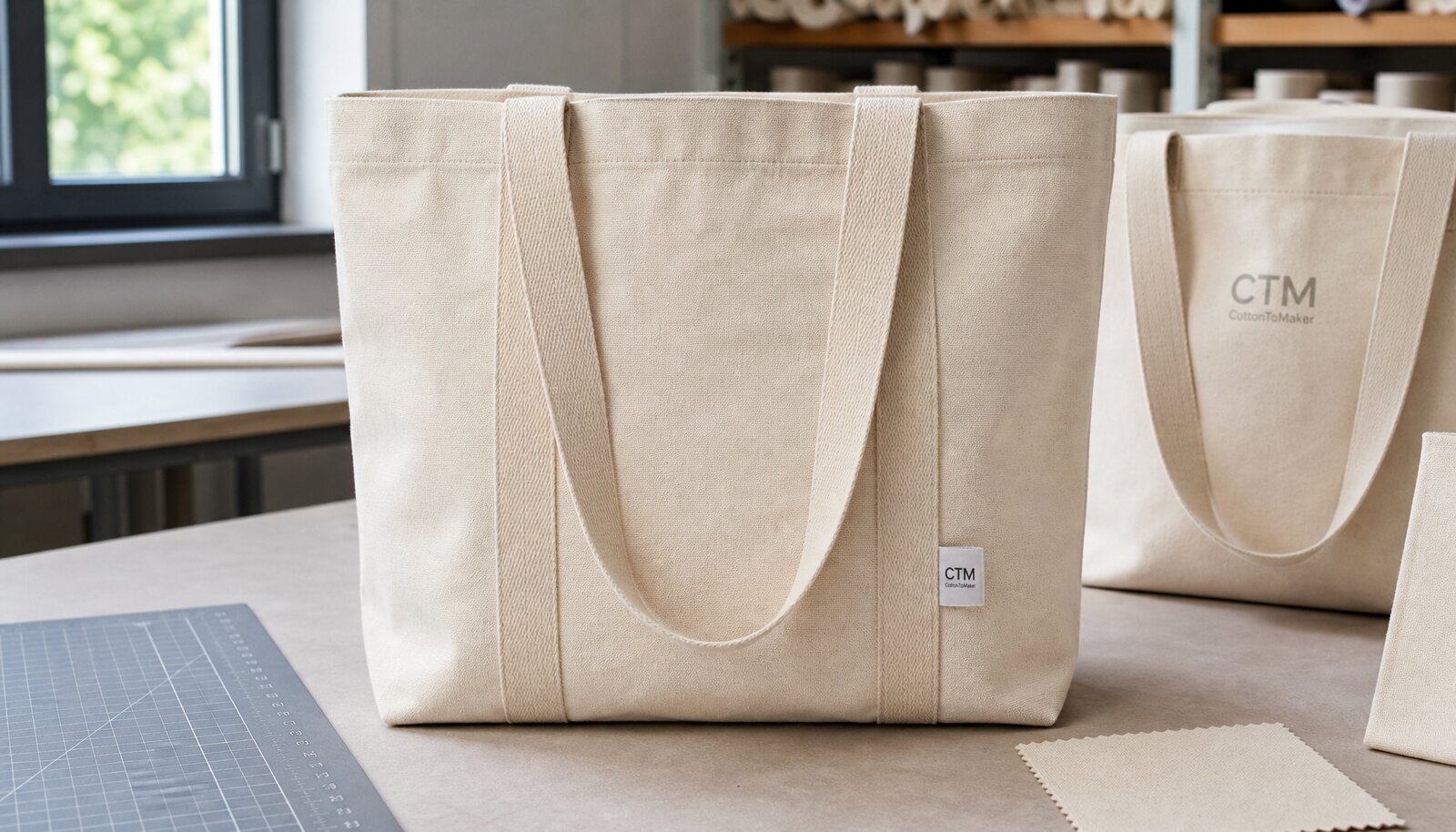
Why farmers market retail bags need a procurement spec, not just a style brief
A bag for a farmers market retail program sits between merchandising and utility. It has to look like a retail product on shelf, carry food and produce without collapsing, and move through fulfillment without turning into a damage claim. That combination means the spec has to be operational from the start: the buyer should know the target weight, expected load, decoration method, packing format, and re-order behavior before sending an RFQ.
The most common sourcing mistake is to over-focus on the image and under-spec the build. A simple bag can still fail a commercial program if the fabric is too soft, the handles are too short, the print bleeds into the weave, or the carton format wastes freight cube. For procurement teams, the real objective is repeatable bulk supply, not a one-off sample that looks good in a photo.
Use the bag’s commercial role to drive the brief. A retail merchandise tote sold at the checkout counter can prioritize clean branding and a lower cost target. A reusable market bag meant for weekly carry should prioritize seam strength, handle comfort, and a more structured body. A buyer who names the use case clearly gets more useful factory feedback and fewer quote ambiguities.
- Retail resale bags need more consistent sewing and print placement than a giveaway tote.
- Farmers market brands usually prefer natural or lightly bleached canvas because it supports the market aesthetic and is easy to merchandise.
- If the bag is expected to carry heavy produce or bottles, construction details matter as much as fabric weight.
Choosing fabric weight: the point where feel, cost, and freight start to diverge
For this category, the most practical range is usually 10–12 oz canvas, which is roughly 340–410 GSM when you are talking about finished fabric. That range gives enough body for retail presentation while keeping sewing and freight costs manageable. Below 10 oz, bags can feel thin, fold too loosely, and telegraph print distortion. Above 12 oz, the bag starts to feel premium, but the added weight affects unit price, carton gross weight, and sometimes sewing efficiency.
The key procurement question is not “what is the heaviest fabric we can buy?” It is “what fabric weight supports the use case at the lowest landed cost with acceptable appearance?” That answer changes if the bag is meant for light merch, produce carry, or long-term reuse. It also changes if the design includes a large print area, a gusset, or a reinforced base, because those features increase cloth usage and sewing labor.
Ask the supplier how they measure weight and what form of cloth they are quoting. Some quotes are based on greige fabric, some on finished fabric after dyeing or washing, and some simply describe the nominal yarn or mill spec. Those are not interchangeable. A quote that does not disclose the measurement basis is not a clean commercial comparison.
- 10 oz canvas: lower cost, softer hand, and suitable for light retail merch or short-run market promotions.
- 12 oz canvas: better structure, stronger hand feel, and the safest general-purpose retail choice for farmers market bags.
- Heavy canvas above 12 oz: premium presentation and better shape retention, but higher sewing effort and freight cost.
Natural, bleached, or dyed canvas: selecting the right surface for the brand and the print
Natural unbleached canvas remains the standard choice for this category because it aligns with the farmers market aesthetic and usually gives the best cost position. It also hides minor handling marks better than bright white fabric. The tradeoff is that natural canvas often has visible slub, weave texture, and shade variation, so the buyer must decide what level of variation is acceptable before bulk production starts.
Bleached canvas is a better fit when the brand needs cleaner contrast for artwork or a more polished retail look. It can help logos read more sharply, especially when the artwork has narrow lines or small type. Dyed canvas creates stronger visual identity but increases the number of ways the order can drift: dye lot variation, higher MOQ by color, and more risk on repeat orders if the supplier is not disciplined about shade control.
If you need a repeatable program, ask for a shade reference or lab dip approval path even for natural fabric. Natural does not mean uncontrolled. Buyers can and should ask the supplier how they will manage batch consistency, whether the same mill will be used on reorders, and what happens if the mill changes yarn source or finishing chemistry.
- Natural canvas: best for rustic, organic, and local-market branding.
- Bleached canvas: better for brighter logos and cleaner retail presentation.
- Dyed canvas: useful for brand color matching, but requires tighter shade approval and stronger reorder controls.
Construction choices that determine whether the bag survives real market use
Fabric is only part of the bag. The construction choices are what separate a display piece from a reusable product. Buyers should pay close attention to seam type, seam allowance, handle attachment, gusset design, and whether the bag needs a bottom board or box bottom for shape retention. These details influence both durability and how the bag stacks in carton.
Self-fabric handles are usually the most economical and visually integrated option. They work well when the bag is light to moderate in load and the brand wants a softer, unified look. Cotton webbing handles are usually better when the bag will be carried often or loaded with produce, bottles, or heavier retail purchases. Webbing adds cost, but it also gives a cleaner load path and usually a more predictable feel in hand.
If the style has a gusset, ask the factory to confirm the corner construction. A bag with a gusset can look structured on shelf, but the corner is also a stress concentration point. If the sewing or reinforcement is weak there, the bag can deform or fail at the exact point buyers will notice first. For any bag intended for repeated use, the handle attachment and gusset corners deserve line-side inspection, not just final inspection.
- Self-fabric handles: economical and visually simple, best for lighter use or merch programs.
- Cotton webbing handles: stronger and more comfortable for heavier carry loads.
- Boxed bottoms and reinforced gussets improve shape retention but increase sewing complexity and cost.
Decoration method: what holds up on textured canvas and what does not
For most canvas retail merchandise bags for farmers markets, screen print remains the commercial default. It is usually the best balance of cost, opacity, and durability for simple logos and one- or two-color artwork. On textured canvas, a good screen print can sit cleanly over the weave and stay legible after repeated folding and handling. The tradeoff is that each added color increases setup work and misregistration risk, especially when the fabric is slubby or the artwork has tight registration demands.
Heat transfer is often used for smaller runs or artwork that needs more detail than screen printing can reasonably deliver. It is useful when the buyer needs a short launch run or multiple SKU names that would otherwise create high screen setup cost. The downside is that transfer films can feel heavier on the bag surface and may show wear faster if the tote is handled a lot or folded tightly in carton.
Embroidery and woven labels are premium alternatives, but they are not always the best fit for procurement. Embroidery changes the hand feel, adds labor, and can distort lighter fabric. Woven labels can be a useful brand accent when sewn into a seam or side panel, but they should be treated as a separate line item in the quote and sample approval process. The art department may like these options, but the buyer should still ask whether they improve sell-through enough to justify the cost.
- Best default: 1-color screen print on natural canvas.
- Good for small runs or detail-heavy graphics: heat transfer, with wear testing considered.
- Premium options: embroidery or woven label, if the merchandising value justifies the added cost.
Supplier route: how to evaluate the production chain instead of just the price
The supplier route changes accountability. A direct factory that cuts, sews, prints, and packs in one site can usually give better control over sample-to-bulk matching and faster problem resolution. That is valuable when the spec includes measured handle length, controlled print placement, and retail-ready packing. If something shifts in production, there is less room for a blame loop between multiple vendors.
A trading company or sourcing intermediary can still be the right choice in some cases, especially if your buying team needs a broader product mix or if you are consolidating several sourcing categories under one contact. The risk is opacity. If the intermediary cannot clearly name the actual production site, show audit documentation, and explain which steps they own versus outsource, then your ability to manage quality and claims drops sharply.
Use a simple vendor evaluation scorecard before awarding the order. Ask for the legal factory name and address, business license if standard in the market, recent factory audit summary, and any relevant social compliance audit such as SMETA or BSCI if available. Request proof of the actual process ownership: who cuts, who prints, who inspects, and who packs. If the supplier outsources sewing or printing, ask for the subcontractor’s name and whether they are approved for the same quality standards. Also ask for sample traceability: can they show which line and which material lot produced the approved sample? Those questions expose whether the supplier is operating a controlled production system or a loose brokerage model.
- Direct factory: better for repeatability, process traceability, and corrective action.
- Intermediary: acceptable if the actual factory, subcontractors, and responsibilities are fully transparent.
- Evaluation minimums: factory identity, audit evidence, process ownership, and sample traceability.
MOQ and variant planning: where buyers accidentally create expensive inventory
MOQ rarely refers to one simple number. In canvas tote sourcing, it is usually a combination of style, fabric color, print color count, label type, and packing method. Buyers often think they are ordering one program, but the factory sees several SKUs. A single order split across three market logos or seasonal graphics can turn a workable MOQ into a series of small production runs, each with its own setup cost.
This is why the quote has to separate the base bag from the customization. If one supplier includes one print color and standard packing while another includes a woven label, individual polybagging, and a custom carton mark, the quotes are not comparable. The buyer should ask for the pricing breakpoint at which each added feature becomes efficient. That tells you whether it is better to simplify the art, consolidate variants, or change the construction altogether.
When procurement teams are under pressure to lower MOQ, the best lever is usually simplification, not negotiation theater. Reduce the number of fabric colors, keep the print to one color if possible, standardize the handle, and avoid unnecessary trim options. If the program still needs several artwork versions, keep one common construction and change only the print. That keeps raw material use and sewing operations stable while limiting the number of unique SKUs.
- Every added fabric color, print color, or label type can create a separate MOQ pool.
- The lowest quote often assumes the most restrictive and simplest spec.
- Consolidating artwork on one base construction usually lowers total complexity more effectively than pushing for a lower minimum on each variant.
Sample approval: a practical path from concept to bulk authorization
A proper sample process should answer three separate questions: does the bag look right, does it measure right, and can the factory reproduce it in bulk? A single photo or a soft sample rarely answers all three. The safest process is to review a blank sample first to confirm shape and fabric feel, then a printed pre-production sample, then a sealed gold sample that both buyer and factory can keep as the production reference.
The sample should be measured, not just approved visually. Check the body width, body height, gusset depth, handle length, and handle drop against the spec sheet. Confirm the print sits in the approved location and that the logo is centered or aligned as required. For natural canvas, inspect the shade and weave. Some variation is acceptable, but the buyer should decide the acceptable band before bulk starts, not after cartons arrive.
If the supplier offers revisions, ask how many sample rounds are included and what triggers a charge. A buyer should know whether a change to handle length, print size, or packing format resets the sample process. The answer affects schedule and cost. If the factory cannot explain the sample chain clearly, it is usually a sign that the bulk process is not yet well controlled.
- Approve a blank sample, then a printed sample, then a sealed gold sample.
- Measure the bag against the drawing, not only against visual expectations.
- Define what sample changes are free, what changes trigger a re-sample, and who signs the final approval.
Quality control: the defects and tests that actually matter for canvas totes
Quality control for canvas bags is straightforward if you focus on the right failure modes. The most common problems are off-spec dimensions, weak seam construction, poor handle reinforcement, print misalignment, shade inconsistency, and visible contamination from the factory floor. Because the product is simple, buyers have no excuse for vague QC language. Set tolerances, define defect classes, and require the factory to inspect in-line before cartons are sealed.
For a procurement spec, separate critical, major, and minor defects. Critical defects are the ones that make the bag unsuitable for sale: broken seams, missing handles, major print offset, severe stains, or wrong style construction. Major defects can affect retail value or brand perception: wrong handle length, poor print registration, loose reinforcement, or obvious carton packing errors. Minor defects are cosmetic issues that do not undermine function, such as small loose threads or slight natural shade movement within the approved range.
If your buying program is serious, ask the supplier which tests they perform or can arrange. Typical checks include seam strength, dimensional verification, colorfastness to rubbing, and visual inspection under consistent lighting. If the bag will be distributed into a regulated retail channel or a branded program with compliance requirements, ask for material declarations and any applicable restricted substance documentation for fabric, ink, trims, and labels. The goal is not to collect paperwork for its own sake. The goal is to prove the product being shipped matches the approved build and can survive reasonable use.
- Critical defects: broken seam, missing handle, major print shift, severe stain, wrong style.
- Major defects: handle length out of tolerance, print bleed, poor reinforcement, carton count mismatch.
- Minor defects: loose thread ends, slight slub variation, minor fold crease, within-agreed shade movement.
Packing and carton design: the hidden part of landed cost
Packing can change both product presentation and landed cost. A bag that is folded too aggressively can crease the print and make the first retail impression worse. A bag that is packed too loosely may look better, but it wastes carton volume and can increase freight cost enough to erase savings on the product price. The right packing solution depends on whether the bags are for retail shelf display, wholesale distribution, or e-commerce fulfillment.
Ask for the full packing specification at quote stage: fold method, piece count per inner pack, polybag or banding decision, carton dimensions, gross weight, and whether palletizing is included. If the supplier cannot tell you the carton size, the quote is incomplete because freight cannot be estimated accurately. For import programs, even modest changes in carton dimensions can affect container utilization and warehouse receiving efficiency.
Retail labeling should be treated as part of the spec, not as a warehouse afterthought. If the bags require barcode stickers, hangtags, country-of-origin labels, or carton marks, define those requirements before production. That avoids last-minute handwork, inconsistent placement, and added labor charges. For bags sold as merch, a clean label application can matter as much as the logo print itself because it affects shelf appearance and checkout readiness.
- Flat-pack is efficient, but only if it does not damage the printed surface.
- Polybag protection helps if abrasion or moisture is a risk in transit.
- Carton size and gross weight should be quoted before award so landed cost is real, not estimated after production starts.
Specification comparison for buyers
| Spec decision | Recommended option | When it fits | Buyer risk to check |
|---|---|---|---|
| Fabric weight | 10–12 oz canvas / about 340–410 GSM finished fabric | Standard retail tote programs where the bag must feel substantial without pushing freight and sewing costs too high | If the supplier quotes greige weight or an unwashed base weight, the finished bag may arrive lighter or less stable than expected |
| Fabric finish | Natural, unbleached canvas with controlled slub and visible weave | Farmers market merchandising, seasonal retail, and brands that want a handmade or organic look | Excess shade variation, stains, or loose yarns can become rejectable if you do not define an approved sample standard |
| Handle construction | Self-fabric handles for a softer look, or reinforced cotton webbing for higher carrying load | Retail bags expected to carry produce, jars, bottles, or repeated weekly use | Handle pull-out, stitch failure, and short drop length are common issues if bar-tack placement and stitch density are not specified |
| Decoration method | 1-color screen print for the default case; 2-color screen print for simple brand graphics | Simple logos, market names, and short seasonal artwork on textured canvas | Fine text, reversed type, and halftone details can fill in on canvas if the print process is not matched to the artwork |
| Supplier route | Direct factory with sewing and print capability, plus named subcontractors if any step is outsourced | Repeat programs where you need traceability, faster corrective action, and stable bulk quality | A trading-only quote can hide the actual factory, which makes audits, claims, and lead-time control harder |
| MOQ structure | Base MOQ per style, then separate MOQ for each fabric color and print color | Programs with one core bag and multiple retailer or market versions | Low MOQ per variant can inflate unit cost and create stranded inventory if every artwork version is treated as a new style |
| Inner packing | Flat-packed 25–50 pcs per polybag or banded stack, with protection where print rub is a concern | Wholesale, retail replenishment, or e-commerce distribution | Over-compression can crease artwork, and under-packing can waste cube and freight budget |
| Carton packing | Master cartons sized to protect shape and keep gross weight practical for handling | Imports where cube, palletization, and warehouse receiving all matter | Oversized cartons raise freight cost and can push you over weight or dimension thresholds |
| Sample approval route | Blank sample, then printed pre-production sample, then sealed gold sample retained by both sides | Any launch that depends on print placement, shade consistency, or accurate bag dimensions | Approving from photos alone can miss stitch quality, handle symmetry, and actual print texture on canvas |
Buyer checklist before sampling
- Define the use case before you ask for pricing: retail resale, branded market merch, reusable shopping tote, or packaging gift item. Each one drives a different fabric and construction target.
- Write the fabric spec in finished weight or finished GSM, not just a vague material name. Ask the supplier to confirm whether the number refers to woven fabric before sewing, after finishing, or after washing.
- State the body size, handle length, handle drop, gusset depth, and whether the bag needs a boxed bottom, bottom board, or self-standing shape.
- Specify decoration in operational terms: print method, number of colors, print size, placement tolerance, and whether artwork must avoid seams or side gussets.
- Ask for packing details up front: fold method, polybag or banding, piece count per carton, outer carton marking, barcode requirements, and pallet assumptions if relevant.
- Request the exact compliance and test documents you need before award, such as fabric composition confirmation, colorfastness results, azo or restricted substance declarations if applicable, and factory audit evidence.
- Set a defect classification in writing: critical, major, and minor defects, with measurement tolerances and acceptable shade variation attached to the spec sheet.
- Require a pre-production sample and a retained sealed gold sample for every style or colorway, especially if the program will be reordered seasonally.
- Ask for landed-cost inputs, not just unit price: carton size, gross weight, sample charges, lead time, inland packing costs, and any tooling or print setup fees.
- Confirm whether the supplier owns sewing, printing, and final packing in-house. If not, identify the subcontracted process steps and who is responsible for each quality checkpoint.
Factory quote questions to send
- What is the finished fabric weight in oz or GSM, and can you confirm whether that is measured before or after sewing and finishing?
- Which process steps are in-house, and which are outsourced for sewing, printing, label attachment, or packing?
- What audit documents can you share for the actual production site, such as ISO certification, SMETA or BSCI if available, fire and safety records, or a recent third-party factory audit summary?
- Which test standards do you routinely use for canvas bags, such as seam strength, colorfastness to rubbing, wash performance, or dimensional checks? Please share recent test reports if available.
- How do you handle restricted substance compliance, and can you provide material declarations or test evidence for the inks, trims, and fabric finish used on this order?
- What is your MOQ by style, fabric color, print color, and label option, and what happens to price if we reduce any one of those?
- Can you quote the bag separately from printing, labels, and packing so we can compare base product cost to add-on cost?
- What are the carton dimensions, pieces per carton, and gross weight, and can you confirm whether the shipment will be palletized?
- What is your sample path: blank sample, printed sample, pre-production sample, and gold sample, and what is the turnaround time for each step?
- If the bulk result differs from the approved sample, what corrective action do you commit to in writing before production starts?
Quality-control points to confirm
- Fabric weight tolerance: agree a practical range, typically within about +/- 5% of the target finished GSM or oz unless the cloth is intentionally slubbed or washed.
- Body dimensions: set tolerance for width, height, gusset depth, and handle drop, and require the factory to measure a defined sample size at the end of the line.
- Seam construction: verify straight stitching, no skipped stitches, no loose thread clusters at stress points, and reinforcement where the handle meets the body.
- Handle durability: require bar-tacks or equivalent reinforcement at each attachment point and confirm the number of stitches or reinforcement pattern in the spec.
- Print placement: define the centerline, height from top edge, and left-right tolerance so the logo does not drift between samples and bulk.
- Print quality: inspect opacity, edge sharpness, color consistency, and whether the ink sits cleanly on the weave without excessive bleed or cracking.
- Shade control: approve a natural canvas shade band or a lab dip for dyed fabric, and define what variation is acceptable between lots.
- Cleanliness: reject oil marks, water stains, broken needles, dust, and manufacturing debris inside folded cartons or polybags.
- Odor and contamination: confirm there is no strong chemical smell, mold, or residue from finishing agents, adhesives, or packing materials.
- Carton and label accuracy: verify product count, SKU labels, barcode placement, carton marks, and country-of-origin or compliance marking if required by your market.