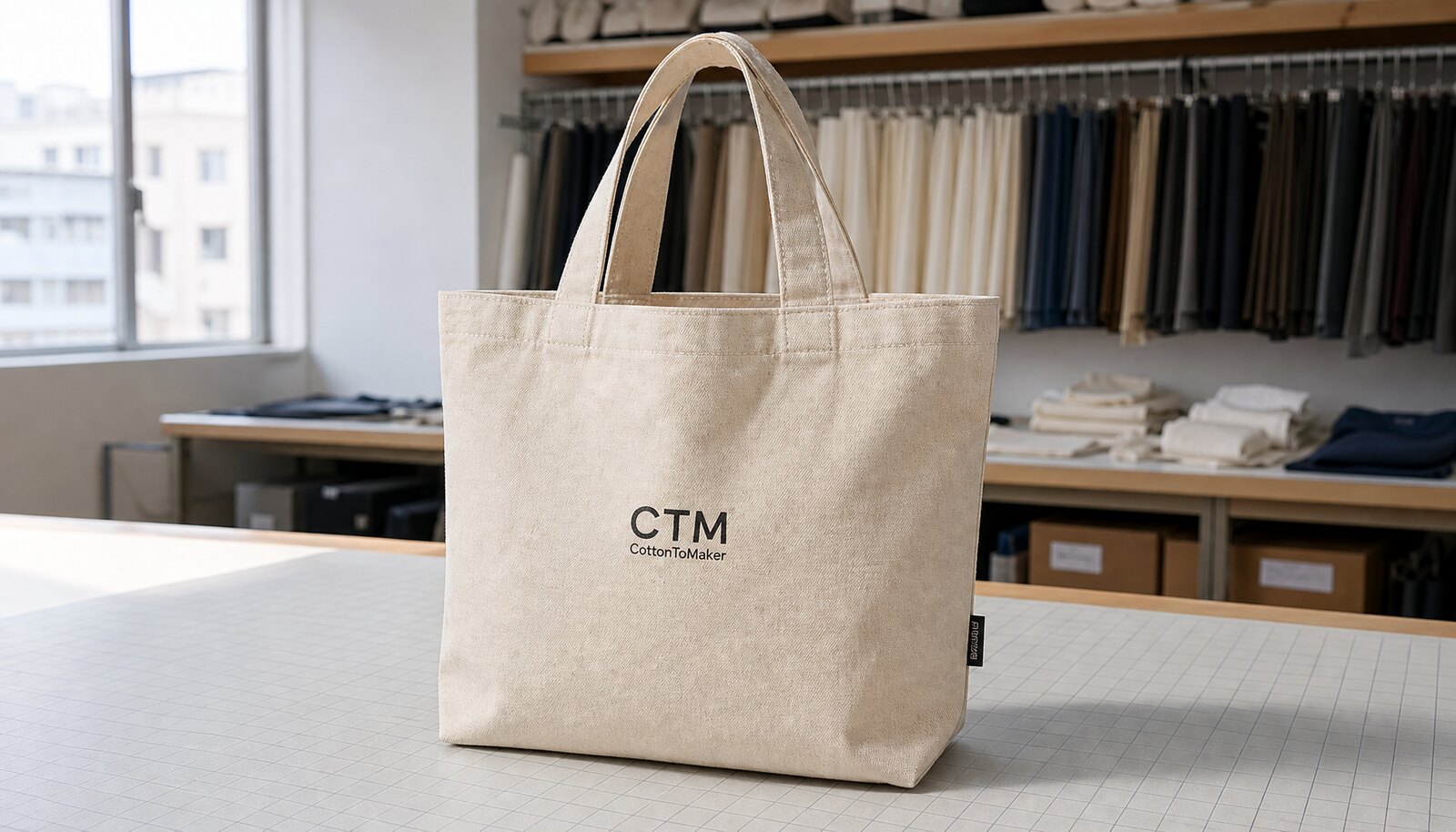
Why cheap canvas bags with logo are not all priced the same
In sourcing terms, cheap canvas bags with logo usually means the buyer wants a low unit price without losing logo visibility, acceptable hand feel, and enough strength for the intended use. The price can swing sharply depending on fabric weight, print method, handle material, bag structure, and how much the factory has to do after sewing. A bag that looks cheap on paper can become expensive once you add a wider print, a gusset, a color-matched handle, or retail packing.
For procurement teams, the first mistake is comparing quotes that are not built on the same spec. One supplier may quote a 10 oz unlined tote with one-color screen print and bulk packing; another may be pricing 12 oz canvas, longer webbing handles, inner polybag, and boxed retail packing. That is not a fair comparison. Set the baseline before you compare unit costs, or the cheapest quote will usually become the most expensive order after revisions.
- Cheap does not mean thin only; it means the spec is stripped to what the end use really needs.
- The logo cost is often driven more by print size, color count, and setup than by the bag itself.
- If the bag is for resale, presentation matters more than a giveaway item, even at entry-level price points.
Start with the use case, not the bag shape
A logo canvas tote for a trade show giveaway should not be specified like a retail shopping bag. If the bag only needs to carry leaflets, a notebook, and a bottle of water, a 10 oz or 12 oz natural canvas tote is usually enough. If the buyer expects it to hold weekly groceries or heavier merchandise, you need stronger seams, a more stable handle, and probably a gusset. The cheapest bag is the one that still survives the real load the first week after delivery.
Shape also affects value perception. A flat tote is lower cost and faster to sew, but a gusseted bag holds more and looks more substantial on shelf. Many buyers save a little in factory cost and lose much more in retail appeal. When you are quoting cheap canvas bags with logo, decide whether the bag is meant to be handed out, carried daily, or sold as a branded accessory.
- Give the factory the intended contents or maximum fill weight.
- State whether the bag is for short-term promo use or repeat retail use.
- Avoid specifying premium construction features unless they support the bag’s actual role.
Fabric weight and finish: where the unit price really moves
Canvas pricing is not only about the raw fabric cost; it is also about how the fabric behaves in cutting and sewing. For low-cost orders, 8 oz canvas is the bottom end for light-duty use, while 10 oz to 12 oz is the more common range for cheap canvas bags with logo that still feel credible in the hand. Below that, the bag may fold too softly, wrinkle more, and show print distortion. Above that, the bag starts moving into a more durable and more expensive category.
Natural, bleached, and dyed canvas also change the quote. Natural canvas tends to be the simplest and least expensive option. Bleached or white canvas can improve logo contrast, but it adds processing cost and can show stains more easily during production and packing. If a brand wants a clean retail look without moving into a premium price band, a natural 10 oz or 12 oz canvas with a strong one-color print is often the best balance.
- 8 oz: suitable for very light promo distribution, not ideal for heavy contents.
- 10 oz: a practical entry point for affordable branded totes.
- 12 oz: better body and shelf appeal, usually still cost-efficient in bulk.
- If the bag will be dyed, expect extra risk on shade consistency between lots.
Logo application: the print method decides both cost and appearance
For cheap canvas bags with logo, one-color screen print is usually the lowest-cost method that still looks professional. It works well on plain canvas, has good opacity, and is efficient once the screen setup is done. If the logo is simple and the order is repeated, screen print is often the strongest commercial choice. Heat transfer is useful for small runs or more detailed artwork, but it can look less natural on textured canvas and may add cost if the artwork is complex.
Embroidery, woven labels, and sewn patches can improve perceived value, but they are rarely the cheapest route for bulk tote programs. If the buyer wants a luxury look on a very tight budget, that conflict should be resolved early. A factory can quote a low bag price and then add a logo method that pushes the order well above target. Keep the artwork simple if price is the priority, and specify the acceptable print size, color count, and placement in the RFQ.
- Screen print is usually best for one-color logos and repeat bulk orders.
- Heat transfer works better for fine detail or short runs, but confirm durability.
- Embroidery and patches are stronger for branding feel, but they are not the cheapest route.
Supplier routes: factory direct, trading company, or print shop sourcing
For price transparency, factory direct is usually the better route when the buyer knows the spec and wants to compare exact material and sewing details. A dedicated tote factory can tell you the fabric weight, thread spec, handle construction, and packing method without hiding labor behind a reseller margin. That matters when the order size is large enough that a small unit difference becomes material at container scale.
Trading companies can still be useful when you need several product types in one shipment or your artwork changes often. The tradeoff is less visibility into where the work is actually done and how much margin is sitting in each part of the quote. A print shop alone can also be workable for domestic or emergency orders, but it is usually not the best route for the lowest landed cost on imported canvas bags.
- Factory direct: better for spec control and repeat pricing.
- Trading company: useful for mixed-category sourcing, but compare hidden margins carefully.
- Local print shop: fast for urgent small jobs, less competitive for imported bulk cost.
How to compare quotes without getting fooled by a low unit price
A proper quote comparison starts with the same bag, not a similar-looking one. Ask each supplier to quote the same finished size, same canvas GSM, same handle material, same print size, and same carton pack. Then compare the unit price, sample charge, setup fee, packing cost, and freight basis. One supplier may quote FOB, another EXW, and another may hide domestic trucking inside the total. If the terms are different, the price comparison is not meaningful.
It also helps to separate one-time and recurring cost. Screen setup, plate making, and artwork prepress can be acceptable if the order repeats. What you want to avoid is a quote that looks cheap only because it strips out packing, testing, or carton labeling. For cheap canvas bags with logo, the cheapest supplier is often the one who gives the clearest quote, not the lowest number on line one.
- Compare identical specs line by line before comparing price.
- Separate one-time setup charges from repeat bulk pricing.
- Make sure freight basis, tax, and carton packing are visible in the same quote.
Quote data that should be on the same sheet
The best RFQ for cheap canvas bags with logo reads like a production instruction sheet. It should include finished dimensions, fabric weight, handle length, print size, print position, packing quantity, and destination port or delivery address. Add the expected order quantity in the first request, because MOQ and price breakpoints depend heavily on volume. A factory may quote one price at 3,000 pieces and another at 10,000 pieces because fabric yield, setup amortization, and carton loading all change.
If your purchasing team is comparing suppliers, ask each one to separate the quote into material, sewing, printing, packing, and export cost. That lets you see whether one supplier is saving money on fabric and overcharging on printing, or vice versa. For branded canvas bags, a detailed quote is more useful than a single all-in number because it shows where the factory is competitive and where it is cutting corners.
- Finished size in cm or inches
- Fabric weight in oz or GSM
- Handle length and handle width
- Logo artwork file type and print size
- Carton pack count and carton dimensions
- Incoterm and destination
MOQ logic and why low MOQ is not always cheaper
The MOQ on canvas bags is driven by fabric minimums, print setup, and sewing line efficiency. A factory may accept a low MOQ if it already stocks the right canvas weight and can run your logo on an existing screen setup, but the unit cost usually rises. The common buyer error is assuming a small test order will reveal the true bulk price. In reality, the price of a 500-piece pilot order can be materially different from a 5,000-piece program order because the fixed costs are spread over fewer bags.
If the plan is to launch with a small quantity and reorder quickly, tell the supplier that the spec must be repeatable. Keep fabric, print size, and handle style standard. That makes it easier to hold the same quote structure for the second order. If the initial order is highly customized, the factory may treat every repeat as a new job and the savings from low MOQ disappear.
- Lower MOQ usually increases unit cost because setup and wastage are spread over fewer bags.
- Standard fabric colors and standard print placements help keep MOQ costs down.
- A small pilot order should match the bulk spec if you want a meaningful test.
Sample approval: what to inspect before bulk production
For cheap canvas bags with logo, a pre-production sample is not a formality. It is the only chance to see how the logo sits on the actual fabric, whether the handle length feels right, and whether the bag shape looks balanced when filled. A paper proof cannot tell you if the canvas is too soft, the print is too faint, or the top hem pulls after stitching. Approve a sample only when it matches the final fabric, final print method, and final packing style.
The sample should be inspected under the same standards you want in bulk production. Look at print opacity, stitch straightness, handle symmetry, inside seam finish, and overall size. If the sample is being used as the production reference, mark it clearly and keep one signed copy on both sides. This avoids later disputes about whether a slight shade shift or a few millimeters of size drift is acceptable.
- Approve with the actual material, not a substitute fabric.
- Measure width, height, and handle drop against the spec sheet.
- Record the approved print position and artwork size on the sample card.
- If color matters, keep a physical approval sample, not only photos.
Packing, carton loading, and shipping cost control
Packing has a direct effect on both damage risk and freight efficiency. Cheap canvas bags with logo are often bulk packed, but that should still mean controlled stacking, clean carton counts, and clear label information. If the bags are packed loosely, printed surfaces can crease and carton counts can drift during warehouse handling. For retail buyers, a simple inner polybag may be worth the small added cost if the bags will be shelf displayed or distributed through multiple warehouses.
Carton size matters more than many buyers expect. A well-optimized carton reduces wasted air, improves pallet loading, and helps sea freight planning. Ask the supplier to propose pack quantity by carton volume, not just by habit. If the order is mixed by color or size, the packing list should separate cartons clearly so receiving teams can count and sort without opening everything.
- Use size-specific carton labels and PO references.
- Avoid overstuffed cartons that crush print areas and strain seams.
- Confirm whether inner polybags are necessary for retail presentation or moisture protection.
Specification comparison for buyers
| Spec decision | Recommended option | When it fits | Buyer risk to check |
|---|---|---|---|
| Fabric weight | 10 oz to 12 oz canvas for low-cost retail; 8 oz only for very light use | Promotional programs, giveaway bags, entry-level retail, and short carry distances | Too-light fabric can twist at seams, show print show-through, and reduce perceived value |
| Bag construction | Simple unlined tote with folded top edge and no gusset if volume is the priority | Price-led orders where carrying capacity is secondary to logo visibility | A flat body can look cheaper than expected; test whether the bag stands up after packing |
| Print method | 1-color screen print for the lowest unit cost; heat transfer only for short runs or fine detail | Brand launches, promo events, and repeat orders with one or two artwork colors | Multi-color art or gradients can inflate cost and cause poor registration on woven canvas |
| Handle option | Same-fabric handles or 25 mm cotton webbing handles | Retail bags and promotional carry bags that need a clean, simple look | Short handles can be uncomfortable; thin webbing can cut into the hand with heavy fill |
| MOQ route | Factory direct with standard fabric and standard print size | Annual programs, distributors, and buyers who can repeat the same spec | Low MOQ often means higher unit cost, limited fabric choice, or extra setup fees |
| Supplier route | Specialist tote factory rather than trading company when price transparency matters | Buyers comparing fabric, printing, and packing line by line | Trading quotes can hide subcontracted print costs, longer lead time, or weaker QC control |
| Packing method | Bulk packed with size-separated cartons and clear carton labels | Wholesale distribution, import container loading, and retail re-packing later | Loose packing can crease print areas, create count errors, and slow warehouse receiving |
| Sample approval | Pre-production sample with actual fabric, actual print, and final packing method | Any order with brand logo, retail claims, or seasonal delivery deadlines | Paper proofs and fabric swatches alone do not reveal print density, handle length, or carton fit |
| Quality target | Commercial tolerance on stitch count, print registration, and size variance | Bulk promotional orders where visual consistency matters more than handmade perfection | No written acceptance criteria often leads to disputes over what counts as acceptable |
Buyer checklist before sampling
- Define bag size, finished fabric GSM, handle length, and whether the bag needs a gusset or base insert.
- Lock the logo art in vector format and specify one-color, two-color, or full-color print before quoting.
- State target use case: giveaway, retail shelf, trade show handout, or light grocery carry.
- Request an actual pre-production sample made with final fabric and final print method.
- Confirm packing quantity per carton, carton dimensions, and whether inner polybags are needed.
- Ask for sample and bulk lead times separately, not a single total timeline.
- Compare quotes on the same basis: same GSM, same print size, same handle type, same packing, same Incoterm.
Factory quote questions to send
- What exact canvas GSM or ounce weight are you quoting, and is it bleached, natural, or dyed fabric?
- Is the logo printed by screen print, heat transfer, digital print, embroidery, woven label, or sew-on patch?
- What is the MOQ per colorway and per print design, and do setup charges change below that MOQ?
- Can you quote the same bag with and without a gusset, and show the unit cost difference?
- What is included in the quote: fabric, printing, sewing, inspection, packing, and export carton?
- What are the sample lead time, bulk lead time, and the cutoff for seasonal order delays?
- What carton pack quantity and carton size do you recommend for sea freight efficiency?
- What tolerances do you apply for size, stitch quality, print alignment, and shade variation?
Quality-control points to confirm
- Fabric GSM matches the approved sample within a commercial tolerance suitable for woven canvas production.
- Logo placement stays centered or within the agreed offset, with no blurred edges or color break-up.
- Handles are even in length, securely bartacked, and do not twist when the bag is loaded.
- Top hem is neat, seam allowance is consistent, and there are no broken stitches at stress points.
- Finished size is within the agreed tolerance for width, height, and gusset depth if applicable.
- Carton count matches the packing list, and cartons are labeled by size, color, and PO number.
- No visible oil stains, severe thread trims, major print smears, or mixed shade lots in the same carton.