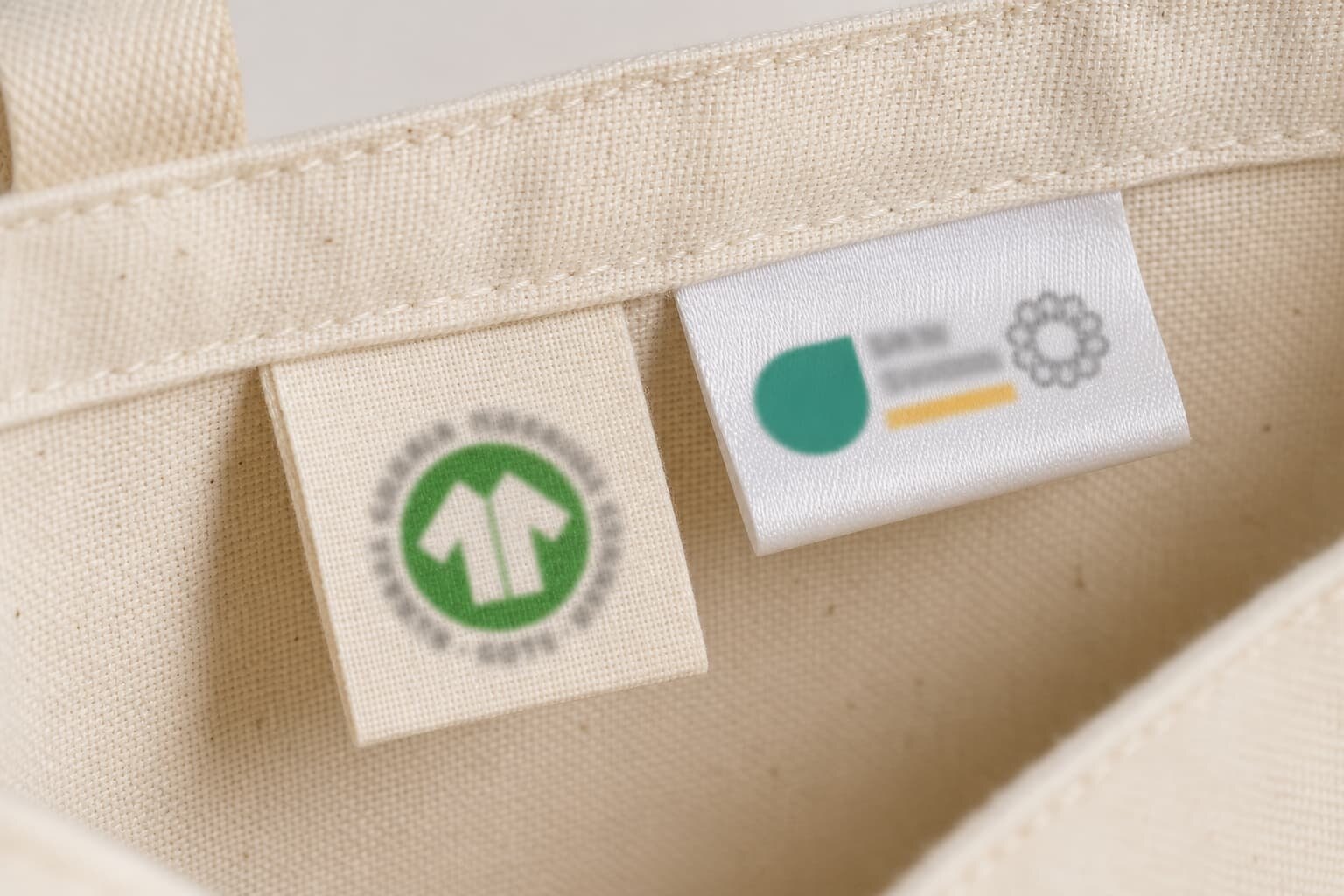
1. Start With the Buying Problem: Certified Claim Versus Usable Bag
Wholesale buyers often begin with the phrase certified cotton shopping bag, but factories need a more precise order definition. Certification describes the material and chain of custody. It does not automatically define fabric weight, handle strength, printing performance, washing behavior, packing condition, or retail usability. A compliant bag can still feel too thin, print poorly, or arrive with wrinkled panels if the RFQ is incomplete.
The practical sourcing problem is to make the sustainability claim and the production specification match. If your marketing team wants to communicate organic cotton, your procurement team must confirm what document support is required and whether the claim appears on packaging, website copy, hangtag, or the bag itself. If the bag is only used as a retail carrier and not marketed with a certified claim, the documentation burden may be different, but the fabric and sewing requirements still need to be controlled.
- Do not ask only for a certified cotton bag price; ask for the certified material scope, finished bag specification, and document package.
- Separate brand claim requirements from physical bag performance requirements in your RFQ.
- Confirm whether your retailer, distributor, or customs broker needs certificate copies before shipment.
2. Define Certification Scope Before Comparing Factory Prices
A common quote mistake is comparing a factory that includes traceable certified cotton documentation with a factory that only says the material is organic or certified. These are not equal offers. For wholesale orders, buyers should ask for the supplier's valid scope certificate or equivalent chain-of-custody proof, but also ask what order-level document can be issued after production. Depending on the certification system and trading route, the document name may differ, so avoid assuming one fixed document without checking your compliance requirement.
If your purchase order requires a certified product claim, the factory must be able to source qualified fabric, process it in a controlled way, and issue or support the required paperwork. This affects MOQ and lead time because certified fabric may not be available in every GSM, color, and width. A natural unbleached cotton bag may be easier to source than a dyed certified cotton bag in a custom Pantone shade.
- Ask whether certification covers raw cotton, yarn, fabric, dyeing, printing, sewing, or only material trading.
- Check that the certificate holder name matches the production or trading entity you are buying from, or ask how the chain is documented.
- For private label programs, confirm whether your company name, PO number, article number, and quantity can be referenced in the document set.
3. Choose GSM Based on Use, Not Only Target Cost
Fabric GSM is one of the fastest ways to change price, but it is also one of the easiest ways to create a weak bag. For lightweight shopping use, 140-180 GSM cotton is common because it folds well, keeps freight volume reasonable, and supports simple logo printing. For a more structured retail bag or longer reuse expectation, 200-280 GSM gives better hand feel, stronger panels, and cleaner print edges, especially on larger bag sizes.
Buyers should avoid specifying only ounces if the factory quotes GSM, or only GSM if the local retail buyer thinks in ounces. Make the conversion clear in the product sheet and state whether the GSM is before or after finishing. Natural cotton, bleached cotton, dyed cotton, and washed cotton can feel different at the same nominal GSM. The approved sample should be made in the target bulk fabric, not a close substitute from the sample room.
- 120-140 GSM: budget giveaway or very light shopping use; check transparency and handle reinforcement carefully.
- 140-180 GSM: practical wholesale range for foldable shopping bags and grocery-style carriers.
- 200-280 GSM: better for retail merchandise, premium reusable bags, and heavier print coverage.
- 300 GSM plus: closer to canvas tote territory; confirm needle size, seam bulk, carton volume, and unit cost impact.
4. Specify Construction Details That Affect Complaint Rates
Two bags can have the same fabric and size but perform very differently because of sewing construction. For shopping bags, handle attachment is usually the highest-risk point. A simple top-stitched handle may pass a light promotional use case, but retail buyers carrying books, bottles, cosmetics, or packaged food usually need box stitch, X stitch, bartack, or another reinforced method. The RFQ should state the intended load and reinforcement style rather than leaving it to the lowest-cost factory default.
Side seams, bottom gussets, and hem finishing also affect appearance and strength. A bottom gusset improves capacity and shelf appearance but adds sewing time and fabric consumption. French seams or bound seams can create a cleaner interior, but they may not be necessary for budget grocery bags. The buyer's task is not to choose the most expensive construction; it is to match construction to the product's actual use and the brand's complaint tolerance.
- State finished size as width x height x gusset, and specify whether dimensions are measured empty and flat.
- Define handle size by width and drop length; shoulder carry often needs a longer drop than hand carry.
- Ask for reinforcement photos from previous bulk production, not only a verbal promise.
- Include stitch color if contrast stitching is part of the design.
5. Match Print Method to Artwork and Fabric Texture
Screen printing is usually the safest choice for wholesale cotton shopping bags with solid logos, slogans, or simple brand graphics. It gives good cost control at volume and works well on natural or dyed cotton if the artwork uses limited spot colors. For fine gradients, photographic artwork, or many colors, heat transfer or digital printing may be better, but those methods need careful testing for hand feel, wash resistance, cracking, and edge definition on woven cotton.
Procurement teams should not approve a quote until the print area, number of colors, print position, and print side are locked. A one-side, one-color logo in the center of the panel is a different job from two-side printing with a large ink block near the seams. Heavy ink coverage can stiffen lightweight cotton and may show unevenness on coarse fabric. If color accuracy matters, provide Pantone references and accept that natural cotton background color can visually shift the printed shade.
- Use vector artwork for screen print and confirm minimum line thickness before sampling.
- Ask whether the factory uses water-based ink, plastisol-type ink, discharge process, pigment print, heat transfer, or digital direct print.
- Check curing temperature and time for print durability, especially if the bag will be folded soon after printing.
- Approve a real printed sample on the actual fabric, not a paper proof or digital mockup.
6. Understand MOQ Logic Before Building an Assortment
MOQ for certified cotton shopping bags is rarely just one number. It may be controlled by fabric roll quantity, dye lot, cutting efficiency, print setup, sewing line scheduling, and certification document handling. A factory may quote a reasonable MOQ for one natural cotton bag with one logo, then increase cost sharply when the buyer splits the order across five colors, three sizes, and multiple distributor logos.
For importers and distributors, the best approach is to group SKUs by fabric and construction first, then vary artwork where possible. If you need several logos for different retail accounts, ask whether the factory can print after sewing or print panels before sewing, and how that affects MOQ per design. Printing panels before sewing may improve print position control, but it can complicate small mixed-logo runs.
- Ask MOQ per fabric color and per print design, not only MOQ per purchase order.
- For custom dyed certified cotton, confirm minimum dye lot and lab dip approval time.
- If you need mixed cartons, state the packing ratio in the RFQ so labor and carton labels are quoted correctly.
- Avoid changing SKU mix after sample approval without asking for a revised production plan.
7. Request Samples That Represent Bulk Production
A sample is useful only if it represents the production method. Many sample rooms use available stock fabric to shorten sample time, but that can mislead the buyer on weight, shrinkage, color, and print behavior. For a certified cotton order, ask whether the sample is made from certified material or only made to demonstrate size and construction. If the sample is not certified, mark it as a construction sample and do not treat it as full material approval.
For serious wholesale orders, use a two-step sample process when schedule allows. First approve size, shape, handle drop, and artwork position. Then approve a pre-production sample made from actual bulk fabric, actual print process, actual sewing method, and actual packing method. This reduces disputes because the final approved sample becomes the reference for inline inspection and final inspection.
- Check finished size tolerance, handle length, seam allowance, and gusset shape.
- Weigh the sample and calculate whether fabric GSM is plausible for the quoted specification.
- Fold and unfold the printed area to check cracking, sticking, or transfer.
- Place sample bags in the proposed carton style to assess wrinkling and carton fit.
8. Build the Quote Sheet Around Real Cost Drivers
A useful factory quote should show more than unit price. For certified cotton shopping bags, the buyer needs enough detail to understand why one supplier is higher or lower. Fabric weight, certified material availability, printing method, handle reinforcement, packing method, and document handling can each change cost. If the quote hides all items inside one price, procurement may choose the cheapest offer without seeing which requirement was omitted.
Ask the factory to provide a structured quote with Incoterms, currency, validity period, production lead time, sample cost, tooling or screen charges, packing details, carton dimensions, estimated gross weight, and CBM. For larger programs, request price breaks by quantity and by simplified SKU structure. This helps you decide whether increasing order quantity, reducing color count, or standardizing bag size creates meaningful savings.
- Separate base bag cost from printing cost when artwork may change between orders.
- List setup fees such as screen charges, plate charges, digital file adjustment, and sample courier cost.
- Ask for estimated CBM per 1,000 pcs to compare sea freight impact between GSM options.
- Make quote validity clear because cotton, dyeing, and freight conditions can change.
9. Control Packing, Cartons, and Warehouse Requirements
Packing is often treated as a final detail, but it affects appearance, warehouse handling, freight cost, and plastic reduction targets. Cotton shopping bags are commonly packed flat in bundles inside export cartons. If bags are folded too tightly, natural cotton panels may crease and printed areas may mark each other. If cartons are overfilled, handles and seams can become distorted before the goods reach your warehouse.
Retail buyers may need barcodes, carton marks, inner bundles, assortment packing, master carton labels, or no individual polybags. Distributors may prefer smaller cartons that can be lifted safely and reshipped without repacking. Ecommerce programs may require stricter label placement. State these requirements before quotation; otherwise the factory will quote a simple export carton method and charge later for special packing labor.
- Define pieces per inner bundle and pieces per export carton.
- Confirm whether each bag is flat packed, folded, belly banded, tagged, or individually polybagged.
- Ask for carton dimensions, gross weight, net weight, and carton strength.
- Provide carton mark layout and barcode data before mass packing starts.
10. Plan Lead Time Around Material, Printing, and Document Flow
Lead time should be broken into steps: artwork confirmation, sample making, sample approval, material booking, cutting, printing, sewing, trimming, inspection, packing, and export documentation. Certified cotton orders can require extra time for material sourcing and paperwork. If the buyer approves artwork late or changes fabric color after lab dip, the factory cannot keep the original production schedule without risk.
For repeat orders, keep an approved production file with fabric GSM, supplier material reference, print ink, handle reinforcement, packing method, and inspection standard. This allows the factory to repeat the same bag more accurately and quote faster. For new programs, add buffer before launch dates, especially if the bags are tied to a retail opening, seasonal campaign, or distributor catalog release.
- Ask for sample lead time separately from bulk lead time.
- Confirm when the lead time starts: deposit date, artwork approval, sample approval, or material arrival.
- Set inspection timing before final carton sealing if you need third-party inspection.
- Request production photos at material arrival, printing, sewing, and packed carton stage.
Specification comparison for buyers
| Spec decision | Recommended option | When it fits | Buyer risk to check |
|---|---|---|---|
| Fabric certification scope | Transaction certificate or valid chain-of-custody documents tied to the order lot | Brand programs, retail compliance, organic cotton claims, and distributor catalog items | A supplier may show a general certificate but not provide order-level traceability; ask before deposit |
| Fabric weight | 140-180 GSM cotton for foldable shopping bags; 200-280 GSM for heavier retail use | 140-180 GSM suits grocery, promo, and lightweight retail; 200 GSM plus suits premium reusable bags | Low GSM can look transparent, distort print, and fail handle pull tests if the buyer only approves bag size |
| Bag construction | Lock-stitched side seams, reinforced handle cross stitch, optional bottom gusset | General retail shopping, supermarket use, bookstore bags, apparel packaging | Unreinforced handles are cheaper but create complaint risk when consumers carry heavier goods |
| Print method | Screen print for solid logos; heat transfer for gradients; digital print for short runs and complex artwork | Screen print works best for wholesale logo bags with one to four spot colors | Artwork color count and print area can change cost more than small fabric weight differences |
| MOQ logic | Confirm MOQ by fabric, color, size, and print setup, not only total order quantity | Mixed SKU orders, seasonal colors, distributor assortments, and multi-logo programs | A quoted MOQ may apply per design or per color; splitting quantities can move pricing to sample-level cost |
| Packing plan | Flat pack 50-100 pcs per inner bundle, export carton with carton mark and optional polybag | Wholesale warehousing, retail distribution centers, Amazon-style prep, and distributor reshipment | Loose packing can wrinkle bags and damage print; excessive individual packing adds cost and plastic use |
Buyer checklist before sampling
- Define whether the bag needs organic cotton, recycled cotton, conventional cotton, or simply cotton-look fabric before asking for quotes.
- State the certification claim you will print or market, and ask whether the factory can support that exact claim with order-level documents.
- Confirm finished bag size, gusset, handle length, fabric GSM, yarn/fabric color, stitching color, and tolerance in the RFQ.
- Send vector artwork with Pantone references, print size, print placement, and whether both sides require printing.
- Ask if MOQ applies per size, per fabric color, per artwork, or per shipment.
- Request one pre-production sample made in the actual fabric weight, color, print method, and construction.
- Define packing method, carton quantity, carton marks, barcode labels, and whether individual polybags are allowed.
- Ask for lead time separated into sample time, material booking, bulk production, inspection, and export packing.
- Require quote lines to separate bag cost, print setup, certification documentation, packing, inland freight, and mold or plate charges if any.
- Set acceptance criteria for fabric weight, finished size tolerance, print adhesion, handle strength, seam condition, odor, stains, and carton condition.
Factory quote questions to send
- Can you provide current certification documents and order-related transaction or scope documents for the cotton used in this production?
- Is the quoted fabric greige, bleached, dyed, or finished natural cotton, and what is the target GSM after finishing?
- What fabric GSM tolerance do you apply in production, and how do you test it before cutting?
- Does your MOQ apply per order total, per bag size, per fabric color, per logo design, or per print color?
- Which print method are you quoting, and what is the maximum recommended print area for this fabric weight?
- Are print setup charges, screen charges, sample charges, and artwork adjustment costs included or listed separately?
- What handle reinforcement method is included in the quote: single row, X stitch, box stitch, or bartack?
- What is the standard packing quantity per carton, estimated carton size, gross weight, and CBM per 1,000 pcs?
- What inspections are included before shipment, and can you provide photos of fabric, cutting, printing, sewing, and final packing?
- What lead time is valid after deposit, artwork approval, sample approval, and certification document confirmation?
Quality-control points to confirm
- Check fabric GSM by cutting and weighing a measured sample from bulk material, not only from the approved sample.
- Measure finished bag width, height, gusset, and handle drop against the approved production specification.
- Inspect handle reinforcement with a pull test suitable for the intended retail load.
- Rub test printed logos after curing to check cracking, peeling, and color transfer.
- Compare bulk fabric shade against approved sample under consistent lighting.
- Check seams for skipped stitches, loose thread, broken needles, puckering, and open corners.
- Confirm cotton certification paperwork matches the supplier, material lot, product type, and order quantity.
- Review packing count, carton strength, carton marks, barcode labels, and pallet requirements before shipment.