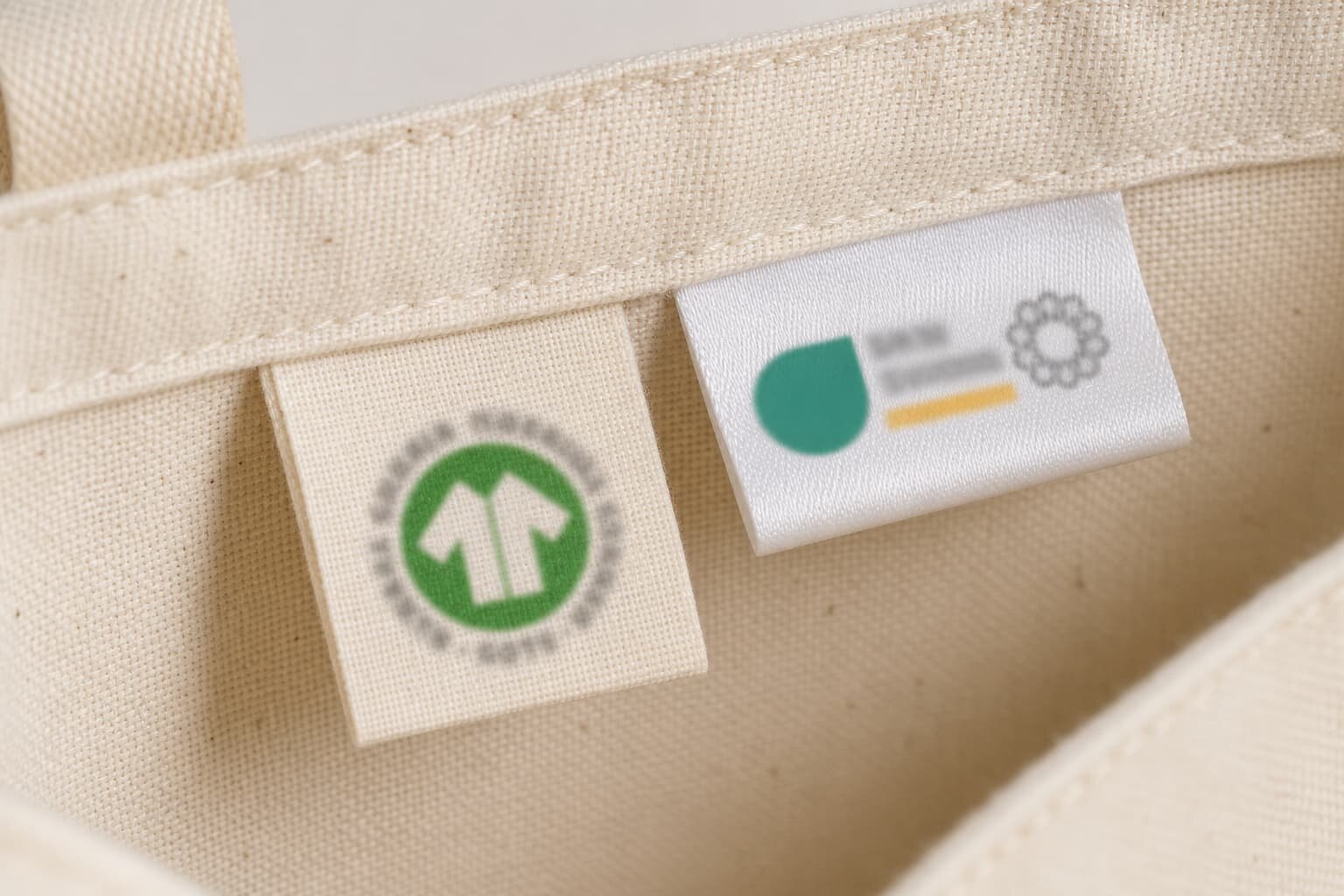
1. The main buying problem: certification is not the same as quality
Wholesale buyers often treat a certified cotton shopping bag as a compliance purchase first and a manufactured product second. That is where problems start. A certificate can support a material claim, but it does not guarantee the bag has the correct GSM, strong handles, clean printing, accurate size, or export-ready packing. Your inspection plan needs to cover both sides: document control and physical product quality.
The safest RFQ is not just “certified cotton shopping bag, natural color, logo print.” It should tell the factory what claim you intend to make, how the bag will be used, what load it must carry, how it will be packed, and what inspection criteria will apply before shipment. That gives the supplier enough information to quote the correct fabric, production route, and quality control workload instead of quoting the cheapest similar-looking cotton tote.
- For a retail grocery program, handle strength and carton packing may be more important than a luxury hand feel.
- For an apparel brand, print sharpness, fabric shade, label accuracy, and surface cleanliness may carry more risk.
- For an importer selling to multiple retailers, certification traceability and consistent carton labeling can decide whether the shipment is accepted.
2. Define the certification claim before you ask for price
The word “certified” needs a precise meaning. Some buyers mean certified organic cotton. Some mean OEKO-TEX tested fabric. Others mean recycled cotton, BCI cotton, or a factory social audit. These are different requirements with different documents, costs, lead times, and supply limitations. If your RFQ uses vague wording, suppliers may quote based on different assumptions, and the lowest price may not match the claim your sales team wants to print on a hangtag.
Ask the supplier which document they can provide and whether it is linked to your order. A general certificate showing that a factory or fabric mill is certified may be useful, but it may not prove that the specific fabric used in your shopping bag order is certified. If your customer requires order-level traceability, say that before sampling. Otherwise, you may approve a sample and later discover that the required transaction documentation affects MOQ, material source, or delivery time.
- Write the exact standard name in the RFQ instead of using “eco,” “green,” or “sustainable cotton.”
- Ask whether the document covers fiber, yarn, fabric, finished product handling, or only the facility.
- Confirm whether the supplier can show the document before shipment and whether your company name or PO can appear where required.
- Do not put certification logos on the bag or label unless your use of the logo is authorized under that standard.
3. Choose GSM based on use, not only on target price
Fabric weight is one of the biggest drivers of cost and perceived quality. For certified cotton shopping bags, common wholesale options range from around 120 GSM lightweight cotton to 280 GSM cotton canvas. A 120 GSM bag can work for light promotional distribution, but it may look thin, crease easily, and feel less durable. A 220 GSM or 280 GSM canvas bag feels stronger, but it costs more, occupies more carton space, and may require more careful printing and sewing control.
For most retail shopping applications, 140-180 GSM certified cotton is a practical middle range. It folds well, supports common screen printing, and keeps freight volume reasonable. If the bag will carry books, wine, canned goods, or repeated supermarket loads, move to heavier canvas or adjust the construction with gusset, wider handles, and reinforced stitching. Always connect GSM to bag size and load expectation. A small 160 GSM bag may be adequate, while a large 160 GSM bag with long handles may deform badly under weight.
- 120-130 GSM: light giveaway, short-term event use, lower perceived durability.
- 140-180 GSM: standard reusable shopping, apparel retail, cosmetics, general wholesale.
- 200-220 GSM: stronger retail merchandise bags with better body and less transparency.
- 260-280 GSM: premium canvas shopping bag, heavier load, higher unit cost and freight volume.
- Ask whether the quoted GSM tolerance is plus or minus 5%, 7%, or 10%, and include this in inspection criteria.
4. Specify construction details that affect failure rates
Many certified cotton shopping bags fail not because the fabric is poor, but because the construction is under-specified. Handle attachment is the most common weak point. If the handle is sewn with only one straight line and no reinforcement, it may look acceptable on a flat inspection table but fail when a consumer carries heavy goods. For wholesale orders, specify reinforced cross stitch, box-X stitch, or another approved reinforcement pattern at the handle root.
Also define seam type, thread color, stitches per inch, gusset construction, and hem finish. A clean top hem improves appearance and helps the bag keep shape, but it adds labor. A side gusset or bottom gusset increases carrying capacity, but it also creates more sewing points where skewing and loose threads can appear. These details should be included in the quotation sheet so that competing suppliers are not pricing different products.
- Request finished size tolerance, for example plus or minus 1 cm for width and height unless your retail fixture requires tighter control.
- Define handle drop, not only handle total length; shoulder-carry bags need a different drop than hand-carry shopping bags.
- Specify back tack or reinforcement at stress points, especially for bags above 180 GSM or large gusseted sizes.
- Check stitch density because very loose stitches reduce strength, while overly dense stitches can cut the fabric.
5. Match the print method to the fabric and claim
Water-based screen printing is often the best starting point for certified cotton shopping bags with one to three solid logo colors. It has a softer hand feel than many plastisol-style prints and fits the natural positioning of cotton bags. However, it still requires correct mesh selection, ink mixing, curing, and drying space. If the print is under-cured, it can rub off or transfer to the next bag in the carton.
For detailed artwork, gradients, small text, or QR codes, the factory may suggest heat transfer or digital printing. These can solve detail problems but create new risks: a heavier print hand feel, cracking after folding, color shift on natural cotton, or conflict with your brand’s environmental message. Do not approve a print method only from a digital artwork file. Approve it from a physical sample made on the same GSM and color fabric as bulk production.
- Set print placement tolerance, such as plus or minus 5 mm from the approved position for standard shopping bags.
- Provide Pantone references and also accept that natural cotton base color can influence the final printed shade.
- Check white ink coverage carefully on natural or dyed fabric because poor opacity makes logos look weak.
- Ask for rub test and tape test results if the bag will be folded tightly or packed print-to-print.
- Avoid printing too close to seams, gussets, or handle roots unless the factory confirms it can hold alignment in production.
6. Build sampling around production reality
A nice sample is not enough if it is made from substitute fabric or a different print method. For early design approval, a counter sample using available fabric may be acceptable, but it should not become the final quality standard. Before bulk cutting, request a pre-production sample that uses the actual certified cotton fabric, actual GSM, actual thread, actual label, actual handle construction, and actual print process.
When checking samples, measure and record every key point. Do not rely on photos only. Take a fabric weight reading if possible, measure bag width and height, check handle drop, pull the handles manually, fold the printed area, and compare the logo size against the artwork file. If your brand requires a hangtag, care label, woven label, or certification statement, approve the wording and placement at the same time as the bag sample.
- Keep one signed approved sample at your office and one at the factory for production reference.
- Mark whether the sample is approved for fabric, size, stitching, printing, packing, or only for general appearance.
- If the approved sample uses non-bulk fabric, require a bulk fabric swatch approval before cutting.
- Photograph the approved sample with a ruler and color reference to reduce later argument.
7. Understand MOQ logic before comparing quotes
MOQ for certified cotton shopping bags is not only a sewing quantity. It may be driven by fabric sourcing, dyeing, printing setup, label production, certification paperwork, or carton efficiency. A supplier may accept 500 pieces for a natural cotton bag using stock fabric, but require a much higher MOQ for custom dyed certified cotton or a custom GSM. If you compare only unit price without MOQ logic, the quote comparison will be misleading.
Ask each factory to separate the MOQ by component where possible. Stock natural fabric may have one minimum. Custom dyed fabric may have a dye lot minimum. Printed labels may have their own minimum. If the bag uses certified organic cotton and you need order-linked documentation, material sourcing may also affect the minimum order. This information helps buyers decide whether to consolidate SKUs, reduce color variations, or use one standard bag size across multiple retail programs.
- Lower MOQ usually means stock fabric, limited color choices, and less flexibility on GSM.
- Custom dyed fabric increases shade control work and may require lab dip approval before bulk dyeing.
- Multiple logo colors or store versions can increase screen setup cost even if the bag size is the same.
- Certification document requirements should be confirmed before accepting a small trial order.
8. Inspect bulk production with measurable acceptance criteria
A useful inspection plan separates critical, major, and minor defects. Critical defects include wrong certification claim, unsafe contamination, mold, or severe structural failure. Major defects include wrong size, weak handles, serious stains, misprinted logos, wrong fabric GSM outside tolerance, or incorrect packing that affects distribution. Minor defects include small loose threads, slight wrinkles, or minor shade variation within the approved range.
For most wholesale shipments, a pre-shipment inspection using an AQL plan is a good baseline, but do not stop at visual checks. Add functional tests that match the product. A certified cotton shopping bag should pass handle pull checks, seam checks, print rub checks, odor checks, carton count verification, and packing review. Inspection should happen after production is packed but before final shipment release, with enough time for rework if problems are found.
- Measure a sample set from different cartons, not only from one top carton prepared for inspection.
- Check both front and back panels because stains and weaving defects often appear unevenly across fabric rolls.
- Verify handle length consistency because mixed handle lengths make retail presentation look poor.
- Open several cartons to confirm piece count, folding method, inner bundle quantity, and shipping mark accuracy.
- Record defects by carton number or production lot so the factory can isolate and rework affected goods.
9. Packing decisions can protect or damage the finished bag
Packing is often treated as an afterthought, but it can create serious quality claims. Cotton bags packed while damp can develop odor or mildew. Bags compressed too tightly can arrive with heavy creases that do not recover before retail use. Printed panels packed directly against each other before full curing can transfer ink. For certified cotton bags, excessive individual plastic bags may also conflict with the buyer’s sustainability message.
Define the packing method in the RFQ and confirm it during sample approval. Common wholesale packing is flat folded bags in bundles of 25 or 50 pieces, then packed into export cartons with a weight that warehouse staff can handle. If individual packing is required for retail or ecommerce, specify whether it is paper band, recycled polybag, compostable bag, or no bag. Carton dimensions and gross weight should be included in the quote because they affect freight and warehouse receiving.
- Ask for carton size, net weight, gross weight, and estimated CBM before placing the order.
- Set a carton weight limit if your warehouse rejects heavy cartons.
- Use moisture protection for sea freight, especially in humid seasons or long transit routes.
- Specify barcode label content, placement, and scan direction if cartons go to a retailer distribution center.
- For printed bags, confirm whether tissue paper, interleaving, or print-outward folding is needed.
10. Lead time and quote data buyers should require
A complete quote should show more than unit price. It should show fabric specification, certification support, print method, sample cost, sample lead time, bulk lead time, MOQ, packing method, carton details, trade terms, validity period, and what is excluded. Without this data, a cheap quote can become expensive after artwork, certification, packing, and freight details are added.
Lead time should be broken into steps: artwork confirmation, material sourcing, lab dip if dyed fabric is needed, sample making, sample approval, bulk fabric preparation, printing, sewing, inspection, packing, and export booking. A realistic schedule protects both buyer and factory. If your delivery date is fixed for a retail launch, ask which production step is the bottleneck and whether approval delays will move the ship date.
- Ask suppliers to quote based on the same Incoterm so freight responsibility is clear.
- Require separate lines for printing setup, sample charge, label charge, certification document charge if any, and packing upgrade cost.
- Check whether the quoted price is valid for a specific fabric market period.
- Confirm whether the factory needs final artwork in AI, PDF, or another vector format.
- Do not release bulk production until sample approval comments are written and acknowledged.
Specification comparison for buyers
| Spec decision | Recommended option | When it fits | Buyer risk to check |
|---|---|---|---|
| Fabric weight | 140-180 GSM certified cotton for standard retail shopping bags | Grocery, apparel, cosmetics, event retail giveaways where foldability and unit cost matter | Too low GSM may look transparent, distort after washing, or fail handle pull tests |
| Premium fabric option | 220-280 GSM certified cotton canvas | Reusable brand merchandise, bookstore bags, gift retail, heavier products | Higher freight volume, higher sewing needle marks, and longer drying time after printing |
| Handle construction | Self-fabric handles with reinforced cross stitch or box-X stitch | Most wholesale shopping bag programs needing strength and consistent appearance | Unreinforced straight stitching can tear at the handle root under load |
| Logo printing | Water-based screen print for 1-3 solid colors | Organic-positioned retail bags where soft hand feel and lower chemical concern are important | Poor curing can cause rub-off, wash fading, or print transfer during packing |
| Small detailed artwork | Heat transfer or digital print only after testing on the exact fabric lot | Fine lines, gradients, QR codes, or full-color campaign artwork | Transfers may feel plasticky, crack on folded areas, or fail eco-positioning expectations |
| Certification claim | Request transaction certificate or scope certificate support linked to material supply | Buyers making certified cotton claims on product tags or marketplace pages | A factory logo certificate alone may not prove the cotton used in your order is certified |
| Packing method | Flat pack 25-50 pcs per inner bundle, export carton with moisture control | Retail distribution centers and importers needing easy carton counts | Over-tight baling causes permanent creases and print offset marks |
| Inspection level | Pre-shipment inspection using AQL plus functional load and print adhesion checks | Most wholesale orders shipped by sea or consolidated with other SKUs | AQL visual inspection alone may miss handle strength, odor, GSM, and packing issues |
Buyer checklist before sampling
- Define the certification expectation clearly: certified organic cotton, recycled cotton, BCI, OEKO-TEX, or another standard; do not write only “eco cotton” in the RFQ.
- State finished bag size, gusset size, handle length, fabric GSM, color, shrinkage tolerance, and whether size is measured before or after washing.
- Confirm whether GSM is greige fabric, dyed fabric, or finished fabric weight; ask the factory how they will verify it during incoming material inspection.
- Request a pre-production sample made with actual bulk fabric or, if not available, require a second confirmation sample before cutting bulk fabric.
- Specify print method, Pantone colors, print size, placement tolerance, curing method, and acceptable hand feel.
- Ask for stitch type, stitches per inch, reinforcement method at handles, seam allowance, and thread color.
- Set acceptance criteria for fabric defects, oil stains, loose threads, skewed panels, handle length variation, print misregistration, and carton damage.
- Require packing details including pieces per polybag or no polybag, inner bundle quantity, carton dimensions, carton weight limit, shipping marks, and barcode label position.
- Check whether the quoted MOQ is based on fabric weaving, dyeing, printing setup, or certification document minimums.
- Before shipment, review production photos, carton packing photos, inspection report, and certification documents tied to the order or material batch.
Factory quote questions to send
- Which certification can you support for this order, and can you provide order-linked documentation rather than only a general factory certificate?
- What fabric construction are you quoting: GSM, yarn count if available, weave type, dyed or natural, and expected shrinkage?
- Is the fabric in stock, or does it need to be woven, dyed, or finished after order confirmation?
- What is your MOQ for natural cotton, dyed cotton, custom GSM, and certified material separately?
- What print method do you recommend for this artwork, and what are the setup charges, color limits, curing requirements, and test risks?
- Will the sample be made from the same fabric, thread, webbing, label, and print process as mass production?
- What are your normal tolerances for bag size, handle length, GSM, print placement, and color difference?
- What load test can you perform for this bag size and handle style, and how will you document the result?
- How many pieces per carton, what carton size and gross weight, and can the packing pass our warehouse receiving limits?
- What is the production lead time after sample approval and deposit, and which steps may extend the schedule: fabric, certification paperwork, printing, sewing, inspection, or vessel booking?
Quality-control points to confirm
- Verify fabric GSM by cutting and weighing a measured fabric sample from bulk material, not only by reading the supplier quotation.
- Check certification documents for relevance to the claimed material and order, including supplier name, material type, validity, and transaction linkage where applicable.
- Measure finished bag width, height, gusset, and handle drop against the approved sample and specification sheet.
- Inspect handle root reinforcement for correct stitch pattern, thread tension, back tack security, and no fabric tearing.
- Check seam strength by manual pull test and, where required, a defined load test using the buyer’s expected product weight plus safety margin.
- Review fabric defects under normal light: slubs, holes, dark yarn, weaving lines, stains, color shading, and excessive lint.
- Perform print adhesion, rub, scratch, and folding checks after curing; compare Pantone color against approved standard under consistent lighting.
- Confirm odor is acceptable and there is no mold smell, chemical solvent smell, or damp carton odor before shipment.
- Inspect packing count, carton weight, shipping marks, barcode labels, inner bundle protection, and whether printed panels touch each other without protection.
- Record major and minor defects with photos and lot location so the factory can rework before final carton sealing.