Define The Buying Problem Before Asking For Price
A certified cotton shopping bag looks simple, but a weak RFQ can create three different quotations for three different products. One factory may quote 120 GSM natural cotton with a basic one-color print. Another may quote 180 GSM certified organic cotton with a gusset and reinforced handles. A third may include certification documents and export packing. The lowest price is not useful if the specifications are not the same.
For wholesale buyers, the first job is to define the commercial use of the bag. A promotional giveaway bag, a retail resale bag, a grocery shopping bag, and a branded packaging bag do not need the same fabric, handle strength, print durability, or packing method. The production spec should connect the bag to the load, the expected use cycle, and the brand claim.
- For low-cost promotion, start with a flat 120-140 GSM cotton bag and keep the print simple.
- For retail resale, consider 160-220 GSM fabric, cleaner sewing, stronger handles, and better individual presentation.
- For groceries or heavier merchandise, define gusset depth, handle reinforcement, and load expectation.
- For certified claims, confirm the documentation route before confirming artwork or hangtags.
Certification Must Be Specified Like A Material
The phrase certified cotton is not enough for production. Buyers should state the exact standard or compliance requirement, such as organic cotton certification, OEKO-TEX, recycled claim, or another brand-specific material standard. These are not interchangeable. A supplier may have certified fabric access but may not be certified for processing, printing, or issuing transaction documentation.
If the bag will carry an organic or sustainability claim, the RFQ should ask who holds the certificate, what process is covered, and what document can be provided after production. Some buyers only need a fabric certificate for internal sourcing records. Other buyers need transaction documents, hangtag approval, or certification chain support. This affects cost, lead time, and eligible suppliers.
- Ask for certificate name, certificate number if available, validity date, and certified scope.
- Confirm whether the certificate covers fabric only, finished bag production, printing, or trading.
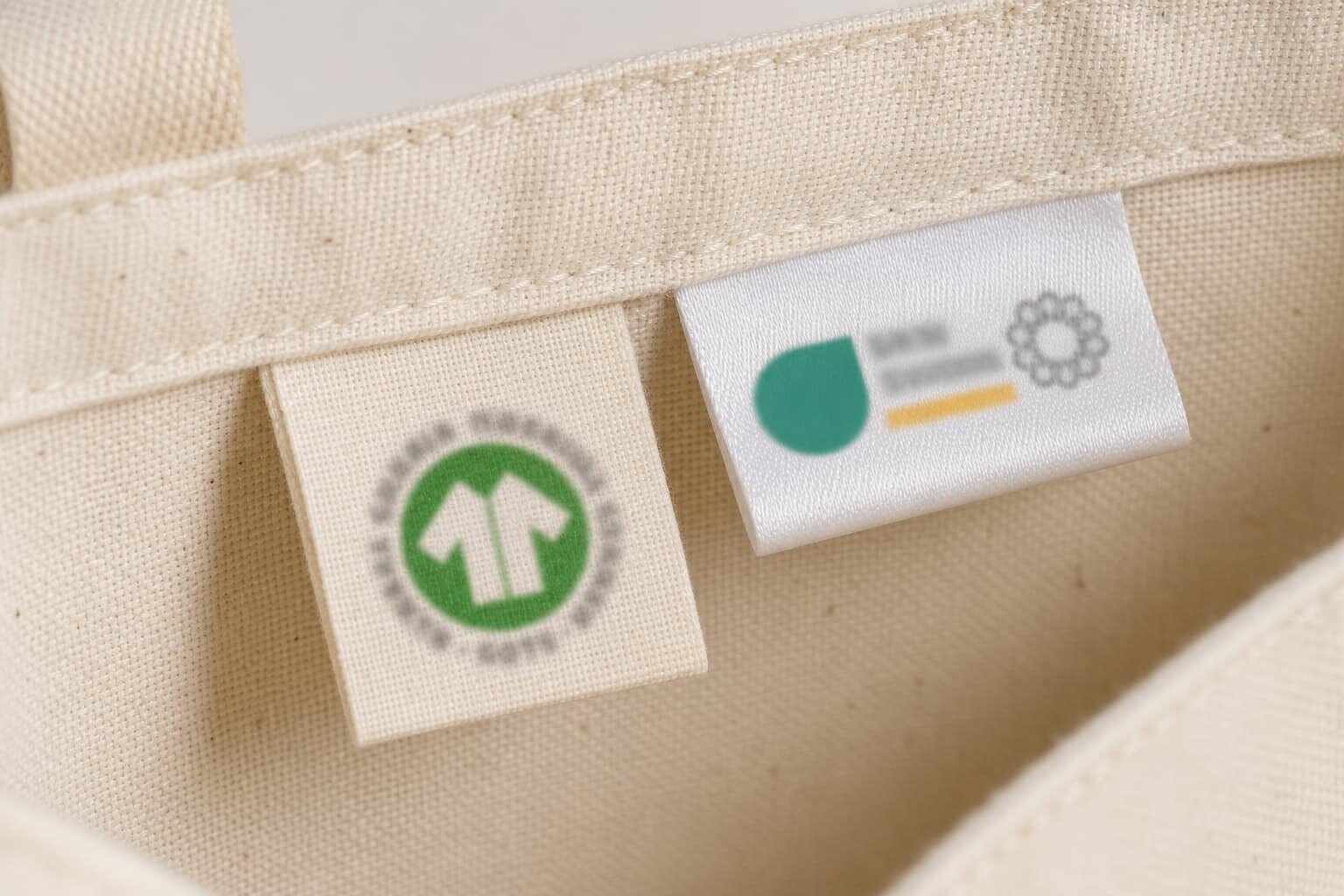
- Do not print certification logos unless the brand has permission and artwork approval under that scheme.
- Treat documentation as part of the order deliverable, not an informal afterthought.
Choose Fabric GSM By Use, Not By Guesswork
Fabric weight is one of the biggest cost and quality drivers. Cotton shopping bags for wholesale programs often fall between 120 GSM and 220 GSM. Below that range, the bag may be too transparent or weak for repeated use. Above that range, the bag may look stronger but can become expensive in material, carton volume, and ocean or air freight.
A common mistake is asking for a heavy cotton shopping bag without defining GSM. In factory terms, heavy can mean different things depending on the supplier's usual product line. The RFQ should state both the target GSM and acceptable tolerance. If the fabric is dyed, washed, or finished, ask whether the quoted GSM is greige fabric weight or finished fabric weight.
- 120-140 GSM: economical promotional cotton bags, light retail packaging, short-term campaigns.
- 150-180 GSM: balanced choice for many branded shopping bags and repeat-use programs.
- 200-220 GSM: stronger handfeel for resale, heavier merchandise, and premium retail use.
- Canvas weights above this range may be better for tote bags than simple shopping bags.
Lock The Construction Details Early
The same front size can become a very different product depending on gusset, handle length, and sewing method. A flat cotton bag is easier to produce and pack, while a bottom or side gusset gives more loading volume. If the bag must hold shoe boxes, folded garments, books, or grocery items, the buyer should specify the target contents instead of only sending a width and height.
Handles are another quotation trap. A hand-carry bag may use a shorter handle drop, while a shoulder bag needs a longer handle. Wider handles feel better under load but use more fabric. Reinforced stitching adds labor but prevents failures at the most visible stress point. For wholesale buyers, it is better to approve handle construction on the pre-production sample than argue about broken handles after delivery.
- State finished size as width x height x gusset, for example 38 x 42 x 10 cm.
- Define handle drop, total handle length, and handle width.
- Request box stitch or cross stitch if the bag will carry heavier products.
- Ask the factory to show seam allowance and gusset folding on the sample if shape matters.
Match Print Method To Artwork And Fabric
Most certified cotton shopping bags use screen printing because it is efficient for simple logos, solid colors, and medium to large wholesale quantities. Water-based screen print is common for natural cotton bags because it keeps the handfeel softer than heavy plastisol-like deposits. For detailed artwork, gradients, small text, or many colors, digital print or heat transfer may be discussed, but each method changes cost and durability.
Before quoting, the buyer should send vector artwork and identify Pantone colors, print size, number of print positions, and whether the print is one side or two sides. Large ink coverage on natural cotton can feel stiff, show cracking if handled badly, or create drying and packing issues. Dark ink on light cotton is usually easier than light ink on dark dyed cotton.
- Use screen print for simple logos, slogans, and 1-3 solid colors.
- Use digital print only when artwork detail justifies the higher unit cost or slower output.
- Ask for a printed strike-off when brand color is important.
- Keep print away from seams, gusset folds, and handle attachment points.
- Include dry rub and wet rub expectations for darker prints or retail resale orders.
Understand MOQ Logic Before Comparing Suppliers
MOQ is not only a factory preference. It is often driven by fabric availability, dyeing minimums, printing setup, certification paperwork, label production, and packing materials. A natural cotton bag with one-color print may have a lower MOQ than a dyed certified cotton bag with custom woven label, hangtag, and multi-color print.
When comparing quotes, ask the factory to separate MOQ by component. This helps buyers decide whether to reduce SKUs, combine colors, simplify labels, or accept a standard fabric. If a supplier offers a very low MOQ for a certified material, check whether they are using stock fabric, whether documentation can match the order, and whether reorder consistency is realistic.
- Natural stock fabric usually has more flexible MOQ than custom dyed fabric.
- Custom Pantone dyed cotton may require fabric mill minimums above the sewing factory's MOQ.
- Each print color may add setup cost even if MOQ stays the same.
- Custom labels and hangtags may have their own minimums and lead times.
- Certified documentation may require batch control that limits small mixed orders.
Sample Approval Should Prove The Real Order
A sample is useful only if it represents the bulk order. Many early samples are made from available fabric, not booked bulk fabric. That is acceptable for shape checking, but not enough for final approval of fabric weight, certification claim, print color, or packing fold. Buyers should clearly separate prototype sample, print strike-off, and pre-production sample.
The pre-production sample should use the actual fabric quality, actual handle construction, actual print method, actual label, and intended packing method. This sample becomes the reference standard for production and inspection. It should be signed, dated, photographed, and kept by both buyer and factory. Any change after approval should be recorded in writing.
- Check fabric thickness, transparency, handfeel, and color against the approved swatch.
- Measure finished size, gusset, handle drop, and handle width.
- Review print sharpness, color, registration, and distance from seams.
- Check stitching, thread color, label position, and inside finishing.
- Fold the sample as it will be packed to see whether print marks, creases, or distortion appear.
Packing Details Affect Cost And Arrival Quality
Packing is often ignored until the end of the order, but it affects carton volume, labor cost, print protection, warehouse receiving, and customer presentation. Flat packing gives a cleaner appearance but can increase carton size. Tight folding reduces carton volume but may create creases across the printed area. Individual polybags protect bags but add cost, plastic use, and unpacking labor.
For wholesale distribution, the buyer should request carton quantity, carton dimensions, gross weight, net weight, and folding method in the quotation. These details allow real comparison of freight cost. A lower unit bag price can lose its advantage if carton volume is much higher or if the packing method causes retail rejection.
- Specify bulk pack, inner bundle pack, or individual pack before final quotation.
- Confirm pieces per carton and maximum carton weight for warehouse handling.
- Ask whether printed panels face inward or are protected from abrasion.
- Define carton marks, SKU labels, barcodes, and country of origin marking if needed.
- Avoid over-compressed packing for fresh prints or heavy ink coverage.
Build A Quote Sheet That Exposes Hidden Differences
A good quote sheet should make factories quote the same bag. It should include material, certification requirement, fabric GSM, size, gusset, handle construction, print method, artwork details, labels, packing, inspection, delivery term, and document requirements. Without this structure, buyers may receive attractive prices that exclude necessary items.
For commercial comparison, ask suppliers to show the unit price and the main assumptions behind it. A factory does not need to disclose every internal cost, but it should confirm what is included. Buyers should especially check sample charges, mold or screen charges, print setup, document fees, packing cost, and whether the price is EXW, FOB, CIF, DDP, or another delivery term.
- Request price breaks for realistic quantities, for example 1,000, 3,000, 5,000, and 10,000 pieces.
- Ask whether the price changes if fabric GSM moves from 140 to 180 or 200 GSM.
- Separate one-side print and two-side print pricing.
- Confirm whether certification documents are included or charged separately.
- Ask for carton volume so landed cost can be compared, not only factory unit price.
Set Acceptance Criteria Before Production Starts
Quality control works best when the buyer and factory agree on acceptance criteria before production. Cotton is a natural material, so minor slubs and shade variation may exist. But stains, oil marks, bad odor, broken stitching, poor print adhesion, incorrect size, and wrong labels are preventable production issues. The inspection standard should reflect the use of the bag and the buyer's retail channel.
For certified cotton shopping bags, QC should cover both physical quality and claim control. If the bag uses certification wording, hangtags, or labels, those materials must match the approved artwork and documentation. A well-made bag with incorrect claim wording can still create a compliance problem. Keep approved artwork, sample, and documents together as the inspection reference.
- Set size tolerance, commonly around plus or minus 1 cm depending on construction and buyer requirement.
- Define acceptable print position tolerance before bulk production.
- Check handle strength through pull testing or practical load testing for the intended use.
- Inspect for stains, mildew smell, fabric holes, loose threads, skipped stitches, and sharp thread ends.
- Review label content, country of origin, certification wording, and carton marks before shipment.
Specification comparison for buyers
| Spec decision | Recommended option | When it fits | Buyer risk to check |
|---|---|---|---|
| Fabric weight | 140-180 GSM certified cotton for standard retail shopping bags | Promotions, grocery, fashion retail, event merchandise, and lightweight resale bags | Too light fabric can look transparent and weak; too heavy fabric may increase freight and fail target unit cost |
| Bag construction | Flat bag for lowest cost; bottom gusset for better retail loading | Flat bags suit catalogs and apparel; gusset bags suit boxed goods, groceries, and gift sets | Gusset size must be shown on artwork and sample, otherwise packing volume may change after approval |
| Handle type | Self-fabric cotton handles, cross-stitched or box-stitched at stress points | General wholesale orders where durability and simple appearance matter | Handle length, width, and reinforcement are often quoted differently by suppliers |
| Print method | Water-based screen print for simple 1-3 color logos | Most certified cotton shopping bag orders with solid logo areas | Large ink coverage can change handfeel and may need wash or rub testing before bulk |
| Logo position | Center front print with clear margin from seams and gusset folds | Retail and brand merchandise needing clean presentation | Artwork placed too close to seams may distort during stitching or packing |
| Certification claim | Ask for valid scope certificate and transaction certificate process where applicable | Organic cotton or certified cotton programs requiring traceability | A logo on fabric is not certification proof; certificate scope must match material and supplier role |
| Packing | Flat pack 50 or 100 pieces per export carton with inner polybag only if required | Wholesale distribution and warehouse receiving | Over-tight cartons can crease prints; excessive individual bags add cost and may conflict with sustainability goals |
| Sample approval | Pre-production sample using bulk fabric quality and actual print method | Orders with retail resale, compliance claims, or strict brand color requirements | A photo sample or substitute fabric sample does not lock production risk |
| MOQ logic | Confirm MOQ by fabric type, dye color, print colors, and certification paperwork | Buyers consolidating SKUs or testing a new reusable bag program | One total MOQ may hide separate minimums for dyed fabric, printed logo, labels, or certified material |
Buyer checklist before sampling
- Define the certification requirement clearly: organic cotton, recycled content, OEKO-TEX, GOTS, or another standard, and state whether certificate copies or transaction documents are needed.
- Specify fabric composition, color, weave, and weight in GSM instead of using only words such as thick, premium, eco, or heavy duty.
- Confirm finished bag size as width x height x gusset, and state whether measurements are taken flat, after washing, or after finishing.
- Add handle length, handle width, reinforcement method, and whether the handle must fit hand carry, shoulder carry, or both.
- Send print artwork in vector format with Pantone references, maximum print size, number of colors, print position, and acceptable color tolerance.
- Request a pre-production sample made with actual fabric, actual handle construction, actual label, actual print method, and intended packing fold.
- Ask the factory to quote carton quantity, carton size, gross weight, net weight, and packing method so freight and warehouse costs can be compared.
- Set approval checkpoints for fabric swatch, strike-off or printed panel, pre-production sample, bulk production photos, and final inspection.
- Clarify whether unit price includes certification documentation, hangtag, care label, inner packing, export carton markings, and delivery terms.
- Include acceptance criteria for size tolerance, print registration, color matching, stitching, stains, odor, loose threads, and carton condition.
Factory quote questions to send
- What exact fabric composition, weave, and GSM are included in this quotation, and is the fabric certified under the required standard?
- Can you provide the relevant certificate type, certificate holder name, validity period, and whether transaction documentation can be issued for this order?
- Is the quoted size finished size or cutting size, and what tolerance do you apply after sewing and finishing?
- What handle length, handle width, and stitching reinforcement are included in the price?
- Which print method is quoted, how many colors are included, and what is the maximum print area before price changes?
- Is the quoted sample made from available fabric or from booked bulk fabric, and what sample charges and sample lead time apply?
- What MOQ applies to the fabric, dyeing, printing, labels, packing, and certification paperwork separately?
- What are the carton packing details: pieces per carton, carton dimensions, gross weight, net weight, and whether bags are folded or flat packed?
- What production lead time starts after which approval: deposit, artwork confirmation, fabric approval, pre-production sample approval, or document confirmation?
- What inspection standard do you accept, and can final inspection be arranged before balance payment or shipment release?
Quality-control points to confirm
- Verify fabric GSM with a cut-weight test or supplier lab report against the approved swatch.
- Check finished size, gusset depth, handle drop, handle width, and seam alignment on random samples from bulk cartons.
- Inspect stitching density, loose threads, skipped stitches, broken seams, handle reinforcement, and stress points.
- Perform dry rub and wet rub checks on printed areas, especially dark logos on natural cotton.
- Compare print color and placement against the approved artwork, strike-off, and pre-production sample.
- Check stains, oil marks, fabric slubs, odor, mildew risk, and foreign fibers on light-colored cotton bags.
- Review labels, hangtags, certification claim wording, carton marks, and barcode placement before packing is sealed.
- Confirm carton strength, carton quantity, polybag use, folding method, and whether printed panels are protected from abrasion.
- Keep one approved sample sealed and signed as the standard for production comparison.
- Match final shipment documents with the order quantity, packing list, certification documents, and buyer compliance requirements.