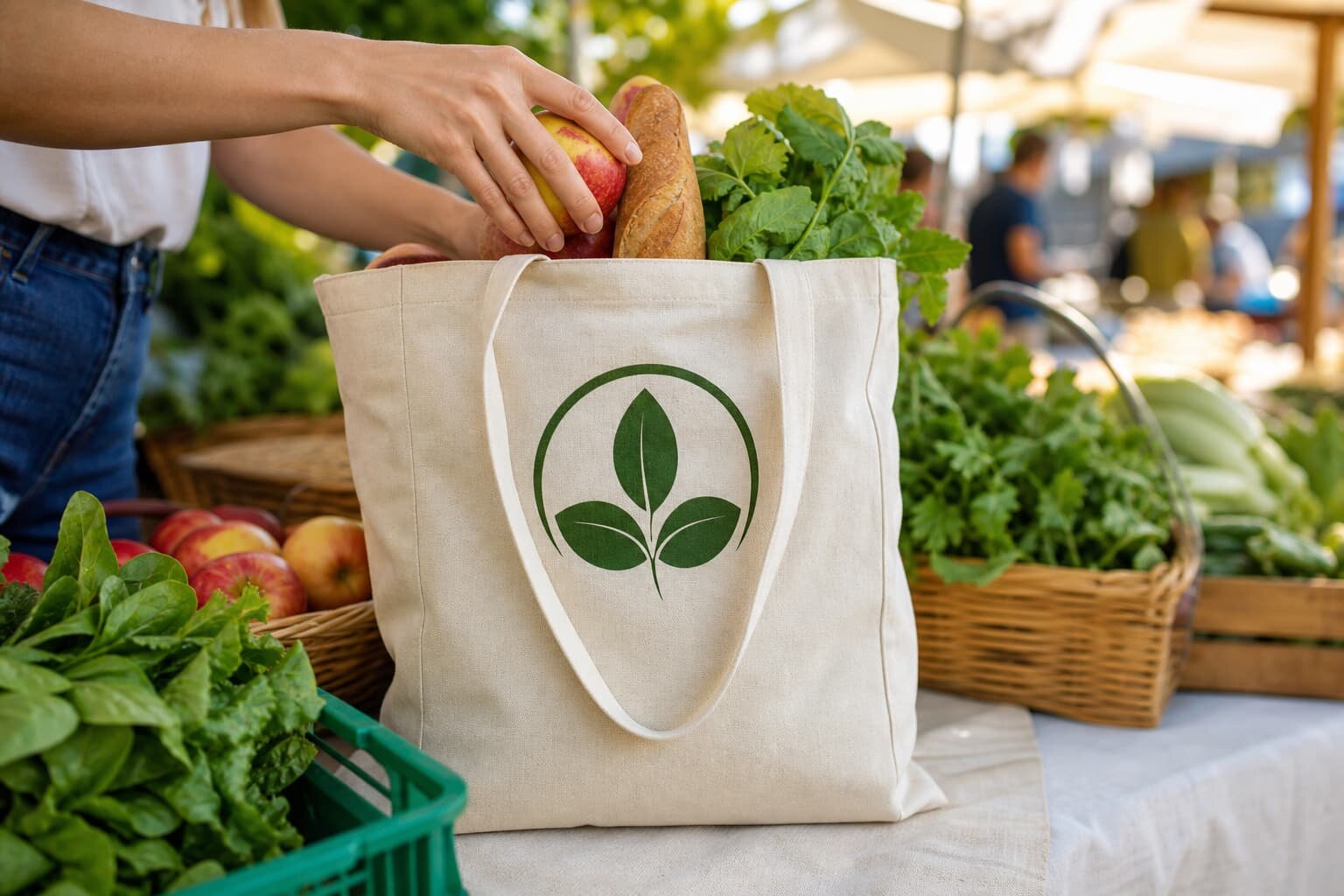
1. Start With the Certification Claim, Not the Bag Shape
For a startup brand, the first sourcing mistake is asking for a certified cotton shopping bag without defining what certified means. Factories can produce cotton bags from conventional cotton, organic cotton, recycled cotton, or blended materials, but the paperwork, cost, lead time, and labeling rules are different. If your product page says organic cotton but your purchase order only says cotton tote bag, you are leaving a compliance gap that can create trouble with retailers, customs brokers, or sustainability audits.
Decide whether the certification is for internal sourcing records or for an external claim printed on the product. If the claim will appear on the bag, hangtag, website, retail packaging, or invoice, the factory may need to follow stricter chain-of-custody and labeling procedures. A supplier saying certified material available is not the same as providing a compliant finished-product claim.
- Use certified organic cotton when the brand claim is about organic farming and chemical control.
- Use certified recycled cotton when the claim is about recycled content and waste reduction.
- Ask whether the factory can provide scope certificates, transaction certificates where applicable, and material traceability.
- Do not approve printed certification logos unless the correct approval route is confirmed in writing.
- Separate the marketing claim from the material description in your RFQ so the factory understands both requirements.
2. Define the Real Use Case Before Choosing GSM
Fabric weight is one of the largest cost drivers in a cotton shopping bag quote. For startup retail bags, 140-180 GSM plain weave cotton is usually the practical range. A 120 GSM bag may be fine for a light giveaway, but it can feel thin, show the product shape inside, and reduce the perceived retail value. A 200 GSM or heavier bag becomes more premium, but it also raises fabric consumption, sewing time, shipping weight, and carton volume.
The correct GSM depends on the load, the desired hand feel, and how often the end customer will reuse the bag. If you sell skincare, small apparel, stationery, or lightweight accessories, 140-160 GSM may be enough. If the bag carries books, boxed products, bottled goods, or a premium starter kit, 180 GSM or a canvas construction may be safer. Do not compare supplier quotes unless the GSM and finished dimensions are identical.
- 120-130 GSM: economical event or giveaway use, not ideal for premium retail claims.
- 140 GSM: entry-level reusable shopping bag with better structure than thin promotional cotton.
- 160 GSM: balanced option for many startup retail brands and gift-with-purchase programs.
- 180 GSM: stronger hand feel and better print surface for brands wanting a more durable bag.
- 200 GSM plus: closer to canvas tote positioning; check freight impact before approval.
3. Bag Size, Handle Drop, and Construction Affect Both Cost and Complaints
A small change in bag size can change fabric consumption more than a buyer expects. A standard flat cotton shopping bag around 38 x 42 cm is common because it fits general retail use and cuts efficiently. Adding a gusset improves capacity but increases sewing operations and may require more careful folding and packing. Oversizing the bag for brand impact can look good on a spec sheet but may become expensive once cartons and ocean or air freight are calculated.
Handle design is just as important as the main body. For shoulder carry, a finished handle length around 55-65 cm works for many markets, but the right drop depends on the end user and bag height. Handles that are too short make the bag hand-carry only; handles that are too long can drag when held by hand. For startup orders, self-fabric handles are usually more consistent with a cotton shopping bag look than webbing handles, unless you want a heavier canvas style.
- Specify finished width and height, not only cutting size.
- State whether the bag is flat, bottom gusseted, side gusseted, or full box gusseted.
- Define handle width, handle length, and finished handle drop.
- Require reinforced handle stitching such as cross-stitch, bartack, or double backstitch.
- Set measurement tolerance, for example plus or minus 1 cm for main dimensions unless your retailer requires tighter control.
4. Choose Print Method Based on Artwork, Not Only Unit Price
Most certified cotton shopping bags for startup brands use water-based screen printing because it gives a clean result on natural cotton and works well for simple logos. Screen printing is cost-effective for one to three spot colors, but the setup cost and minimum print quantity must be included in the quote. If your artwork has gradients, tiny text, photographic detail, or full-color illustration, ask the factory to recommend alternatives and provide print limitations before sampling.
Print performance on cotton depends on fabric texture, ink type, curing, and color contrast. Natural cotton is not a pure white surface, so light ink colors may look softer than the digital artwork. Large solid print areas can create a heavier hand feel or uneven coverage if not tested. For certified bags, also check whether the ink or print process affects your sustainability claim or retailer chemical restrictions.
- Send vector artwork in AI, PDF, or EPS format with outlined fonts.
- Specify print size in centimeters, not only percentage of bag front.
- Give print placement from top edge, side seam, and bottom edge.
- Use Pantone references, but allow realistic tolerance on natural cotton.
- Ask for a strike-off if the logo color is critical or the artwork has fine lines.
- Confirm whether both sides, inside pocket, label, or handle printing are included.
5. Understand MOQ Logic Before Negotiating Too Hard
Many startup buyers focus only on the finished bag MOQ, but the real minimum order quantity may come from certified fabric procurement, dyeing, printing setup, custom labels, or carton printing. A factory may accept 300 or 500 pieces if stock certified natural cotton fabric is available, but a dyed certified cotton bag may require a much higher fabric MOQ. If a quote seems unusually low for a certified product, confirm whether the material is truly certified and whether documentation is included.
A practical sourcing approach is to ask for two or three MOQ levels using the same specification. This shows how unit cost changes when the factory can spread cutting, printing, sampling, and administration costs across more pieces. For a startup, the best first order is not always the absolute lowest MOQ. It is the quantity that gives acceptable unit cost, enough stock for launch, and limited inventory risk.
- Ask for MOQ by material, color, print design, and packaging style.
- Separate sample MOQ from bulk production MOQ.
- Request price breaks such as 500, 1000, 3000, and 5000 pieces where realistic.
- Check whether mixed colors or mixed prints are allowed under one MOQ.
- Confirm whether certification document fees, label approval, or audit-related fees are included.
6. Sampling Should Prove the Production Method, Not Just the Look
A showroom sample is not enough for production approval. The pre-production sample should use the quoted GSM, the same seam construction, the same handle reinforcement, the correct print process, and the intended label and packing method. If the sample uses available fabric only for appearance, it should be clearly marked as a reference sample, not a production standard.
Startup brands often approve a sample based only on logo appearance and later discover handle weakness, seam puckering, inconsistent fabric shade, or packing creases. Build your sample approval around measurable criteria. Keep one approved sample with the buyer and one sealed sample at the factory. The final inspection should compare bulk goods against that reference.
- Measure finished size after sewing and pressing.
- Check GSM and fabric hand feel against the quote.
- Load test handles using a weight suitable for the expected contents.
- Rub the print dry and slightly damp to check ink transfer.
- Inspect inside seams and thread trimming because these affect retail perception.
- Fold the sample as it will be packed to see whether print cracking or deep creasing occurs.
7. Packing Specification Can Change Cost, Freight, and Retail Readiness
Packing is often treated as an afterthought, but it can affect unit cost and delivery condition. Bulk packing is common for B2B distribution, events, and warehouse replenishment. Individual packing may be necessary for online fulfillment, retail shelf handling, or gift programs, but it adds labor, packaging material, and carton volume. If you want plastic-free packing, test paper bands or recycled paper sleeves carefully because some paper materials can rub, shed fibers, or transfer color onto natural cotton.
Carton details matter for importers and distributors. A carton that is too heavy creates warehouse handling issues. A carton that is too large may increase dimensional weight for air shipments. If bags are folded inconsistently, the final presentation at the store can suffer. Define folding method, pieces per inner bundle, pieces per carton, carton marks, barcode labels, and maximum gross weight before the supplier calculates the final quotation.
- Bulk pack 50-100 pieces per carton for economical warehouse handling.
- Use inner bundles if the carton will be opened and distributed to multiple stores.
- Specify carton gross weight limit, commonly under a handling-friendly threshold set by your warehouse.
- Request carton dimensions in the quote so freight can be estimated.
- Confirm moisture protection, especially for natural cotton bags shipped by sea.
- Avoid untested colored tissue or paper sleeves touching light cotton fabric.
8. Quote Data You Need to Compare Suppliers Fairly
A good quote for a certified cotton shopping bag should be more than a single unit price. It should identify the material, GSM, certification basis, finished size, handle details, print method, color count, label type, packing method, MOQ, sample terms, production lead time, and freight term. Without this data, the cheapest quote may simply be quoting a thinner fabric, non-certified material, smaller bag, weaker handle, or bulk packing when you expected individual packing.
For startup buyers, quote comparison should also include risk. A supplier with a slightly higher unit price but clear certification documents, stable sampling, and realistic lead time may be cheaper after avoiding remakes and launch delays. Ask factories to quote the same spec in the same format. If one supplier refuses to state GSM, certification scope, carton data, or print limits, do not treat that quote as equivalent.
- Material: cotton type, certification standard, GSM, weave, color, and shrinkage if relevant.
- Construction: size, gusset, handle length, handle width, reinforcement, seam type.
- Decoration: print method, number of colors, print size, placement, label or hangtag.
- Packing: individual or bulk, pieces per carton, carton size, gross weight, carton marks.
- Commercial terms: MOQ, price breaks, sample cost, tooling or screen charges, lead time, payment term, Incoterm.
- Documentation: available certificates, transaction documents, test reports, and inspection records.
9. Lead Time Planning for Startup Launches
Certified cotton bags can take longer than standard cotton bags because the material and documentation may need additional coordination. Lead time should be counted from the last approval, not from the first email. In practice, production cannot start until artwork is confirmed, sample is approved, deposit or payment condition is met, material is secured, packing is defined, and certification instructions are clear.
If your launch date is fixed, build a sourcing timeline backward. Include time for RFQ clarification, sample making, sample shipping, internal approval, production, inspection, export booking, and customs clearance. Air freight can solve some timing issues but may destroy the cost advantage of a lightweight cotton bag. The best way to protect launch timing is to freeze the specification early and avoid artwork or packing changes after sample approval.
- RFQ clarification: allow time for the factory to confirm certification, material, and print method.
- Sample production: depends on fabric availability, print complexity, and label requirements.
- Sample review: include internal brand, product, compliance, and logistics approval.
- Bulk production: starts after final sample approval and commercial confirmation.
- Inspection and packing: should happen before final balance payment or shipment release where agreed.
- Export and delivery: plan according to Incoterm, shipping mode, and destination customs process.
10. Common Production Mistakes and How to Prevent Them
The most common problems in startup bag orders are caused by incomplete specifications. A buyer asks for a certified cotton shopping bag, sends a logo, and expects the factory to choose the rest. The factory then quotes based on its usual construction, which may not match the brand’s retail expectation. When the bulk order arrives, the buyer may complain about thin fabric, short handles, visible seams, weak print, or missing certification support, even though those details were never locked in.
Prevention is mainly about written acceptance criteria. If a detail affects cost, compliance, customer experience, or retail handling, it belongs in the RFQ and purchase order. Keep the spec practical, but do not rely on assumptions. A clear first production order gives the factory a stable target and gives your inspection team a fair basis for approval or rejection.
- Mistake: asking for organic look instead of a documented certified material. Prevention: name the required standard and documents.
- Mistake: approving artwork on screen only. Prevention: approve physical print color and placement on actual fabric.
- Mistake: comparing 140 GSM and 180 GSM quotes as if they are the same. Prevention: standardize GSM before price comparison.
- Mistake: forgetting handle strength. Prevention: define reinforcement and perform pull testing.
- Mistake: changing packing after price approval. Prevention: include packing in the first RFQ and sample review.
- Mistake: assuming natural cotton shade is always identical. Prevention: approve acceptable shade range and lot variation.
Specification comparison for buyers
| Spec decision | Recommended option | When it fits | Buyer risk to check |
|---|---|---|---|
| Fabric weight | 140-180 GSM plain weave cotton for standard retail shopping bags | Startup launch orders, gift-with-purchase, light apparel, cosmetics, books, and event retail use | Too light may look transparent or weak; too heavy may raise freight cost and push the bag toward canvas pricing |
| Cotton claim | Use certified organic cotton or certified recycled cotton only when the certification chain can be documented | Brands making sustainability claims on packaging, website, or retailer compliance forms | Do not print certification wording unless the factory can provide valid scope, transaction documents, and labeling approval where required |
| Bag size | Standard 38 x 42 cm or 35 x 40 cm with 2-3 cm tolerance unless custom fit is required | General shopping use and lower cutting waste | Oversized bags increase fabric consumption and carton volume; undersized bags create product fit complaints |
| Handle construction | Self-fabric handles 2.5-3 cm wide, 55-65 cm long, cross-stitched or reinforced at top | Shoulder carry retail shopping bags and reusable customer bags | Narrow handles cut into the shoulder; weak handle stitching is one of the most common return issues |
| Print method | Water-based screen print for solid logos and simple artwork | Small to medium brand logos, 1-3 spot colors, natural cotton look | Fine lines, gradients, and large ink coverage need testing for bleeding, hand feel, and shade variation |
| Inside finishing | Overlock seams for economical certified cotton bags; French seams if premium finish is needed | Overlock for startup cost control; French seam for boutique retail presentation | French seams cost more and reduce internal space slightly; overlock thread color must be approved |
| MOQ logic | Start with factory dye/stock fabric MOQ or print setup MOQ instead of only asking for the lowest order quantity | First production runs where cash flow and inventory risk matter | Very low MOQ may carry higher unit cost, limited fabric choices, and less efficient QC |
| Packing | Bulk packed 50-100 pcs per export carton, or individual recycled poly/paper sleeve only when retail handling requires it | B2B distribution, event warehousing, or direct-to-store shipment | Individual packing increases labor, material cost, and carton volume; paper sleeves must not stain natural cotton |
Buyer checklist before sampling
- Confirm the exact certification needed: organic cotton, recycled cotton, GOTS, OCS, GRS, or another retailer-approved scheme.
- State whether the certification claim must appear on the bag, hangtag, packaging, invoice, or only in internal sourcing records.
- Define finished bag size, handle length, seam type, fabric GSM, color, and acceptable tolerances before requesting price.
- Attach artwork in vector format and specify print size, placement from seams, Pantone references, and print method preference.
- Ask whether the quoted fabric is greige, bleached, dyed, or stock natural cotton, because each affects shade, shrinkage, and lead time.
- Request a pre-production sample using correct fabric weight, print method, handle construction, and label position.
- Check handle pull strength, seam security, print adhesion, colorfastness, odor, loose threads, and measurement tolerances on samples.
- Specify packing method, carton marking, carton size limits, carton gross weight limits, and any retailer routing requirements.
- Require quote data broken down by fabric, printing, labels, packing, certification documentation, sample cost, and freight term.
- Keep a signed reference sample or sealed pre-production sample for final inspection comparison.
Factory quote questions to send
- Which certified cotton standard is available for this bag, and what documents can be supplied with the shipment?
- Is your certificate scope valid for manufacturing this product, or only for trading, cutting, sewing, printing, or packing?
- What fabric GSM, weave, yarn count, and shrinkage range are included in the quoted price?
- Is the quoted fabric in stock, made to order, or dependent on certified yarn procurement?
- What is the MOQ for the fabric, the bag production, the print setup, and any custom label or packaging?
- Can you quote 140 GSM, 160 GSM, and 180 GSM options with the same size and print for comparison?
- Which print method do you recommend for our artwork, and what are the limits for line width, ink coverage, and wash resistance?
- What are the sample charges, sample lead time, and whether the sample cost is refundable after bulk order confirmation?
- What finished-size tolerance, GSM tolerance, color tolerance, and print-position tolerance will you accept in production?
- How many bags per carton, what carton dimensions, and what estimated gross weight per carton are you quoting?
Quality-control points to confirm
- Measure finished width, height, gusset if any, and handle drop against approved tolerance.
- Check fabric GSM by cutting and weighing a measured sample or using an approved GSM cutter where available.
- Review cotton shade under consistent light because natural and organic cotton can vary between fabric lots.
- Perform handle pull testing using an agreed load and duration suitable for the intended product weight.
- Inspect handle attachment for cross-stitching, bartack, backstitch, skipped stitches, and broken thread.
- Check seam allowance, overlock density, loose threads, and whether inner seams are clean enough for retail use.
- Test print adhesion with rub testing and tape testing where suitable for the ink system.
- Confirm print placement from top edge, side seam, and bottom according to the approved artwork sheet.
- Check odor, mildew marks, stains, oil spots, insect contamination, and damp cartons before shipment.
- Verify carton quantity, inner packing method, barcode or carton marks, and mixed-SKU separation.