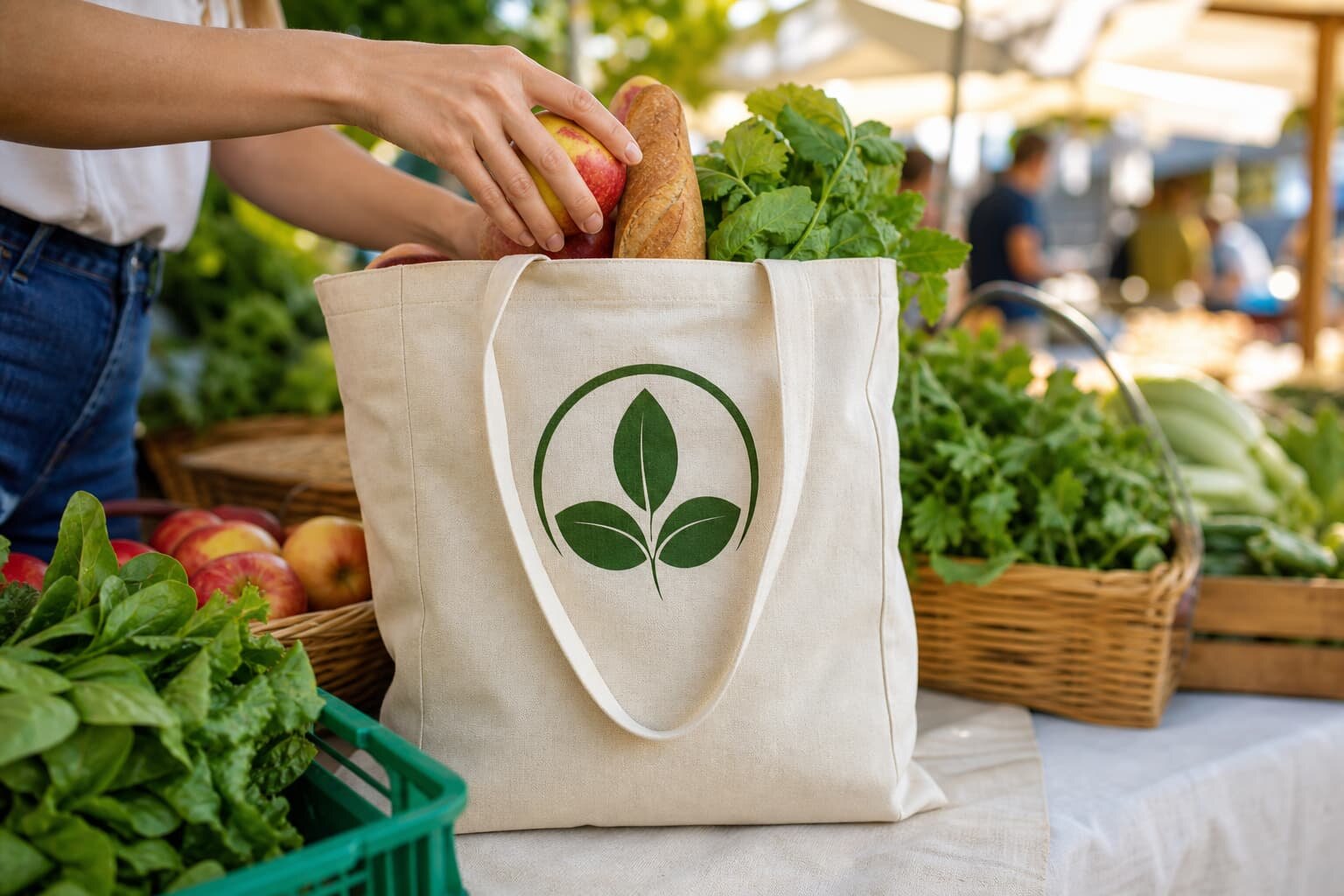
Start with the retail use case, not the logo
Most buyers start with artwork and end up with a bag that looks fine on screen but fails in store. For a certified cotton shopping bag, the first decision is how the customer will carry it: light apparel purchase, daily grocery use, promotional handout, or premium boutique packaging. That use case sets the fabric weight, handle build, gusset depth, and whether the bag needs to stand up on a shelf or fold into a smaller footprint.
When you write the RFQ, define the item carried, expected load, whether the bag is reused, and whether it should keep a crisp retail shape after packing. A supplier can only quote accurately when the end use is clear, because the same cotton structure can be too soft for grocery use or unnecessarily heavy for a lightweight retail program.
- Target load in kilograms or estimated item count
- One-trip or repeated-use expectation
- Foldable or structured silhouette
- Single-color logo or full-side decoration
- Shelf display, checkout handout, or shipping insert
Specify the certification claim in plain language
Certified cotton is not a single generic claim. In the RFQ, state whether you need organic cotton, recycled cotton, or another documented cotton claim, and ask the supplier to confirm which standard applies. If the brand needs a verified organic chain, request the scope certificate, transaction certificate if required, and the exact wording that can appear on the bag, label, or carton mark.
Do not confuse fiber certification with factory social audits or product testing. A factory can be compliant in one area and still fail your cotton claim if the yarn source, dyehouse, or label text is not covered by the documentation. The safest approach is to align the claim, the paperwork, and the production lot before sampling starts.
- Ask for certificate number and scope
- Confirm whether yarn, fabric, and finished bag are all covered
- Check if labels or hangtags need pre-approval
- Confirm any restrictions on coated, dyed, or printed components
Choose GSM by function, not by habit
Fabric weight is the fastest way to control feel, cost, and performance. Around 140-160 GSM usually suits lightweight retail bags that must fold small and keep the quote lean. 180-220 GSM is the practical middle ground for most store programs because it balances hand feel, print quality, and carrying strength. 240-280 GSM starts to suit premium or heavy-carry use, but it raises material cost, sewing load, and often the shipping weight.
GSM alone does not guarantee quality, but it does help you compare suppliers on the same basis. Ask whether the quoted weight is before or after finishing, whether the fabric is pre-shrunk, and what tolerance they allow. A thin bag with a reinforced seam can outperform a heavier bag with weak construction, so do not approve GSM without checking the full build.
- Use lower GSM for foldable giveaways and light apparel
- Use mid-range GSM for everyday retail bags
- Use heavier GSM only when the bag must carry more weight or feel premium
- Ask for GSM tolerance and shrinkage target in writing
Weave, yarn, and finish change the quote more than buyers expect
Plain weave is the default for many cotton shopping bags because it gives a clean surface and usually prints well. Twill or denser structures can add body and improve abrasion resistance, but they also change the hand feel and cost. If the bag needs a softer look for fashion retail, ask for combed yarn or a smoother finish; if it needs a natural, rustic look, a less processed fabric may be better.
Finishing is where small spec changes become real cost differences. Pre-shrunk fabric reduces size drift but may add processing time. Calendaring can tighten the surface for sharper print, while enzyme or softener wash changes drape and touch. The point is not to chase every finish; it is to choose the minimum finishing package that supports the retail use case and avoids a quote comparison based on different assumptions.
- Plain weave for print clarity and cost control
- Twill when durability and body matter more than low price
- Pre-shrunk if the bag must stay on spec after press or wash
- Ask what finish was used on the approved sample
Match the print method to the artwork and order size
For simple logos, screen print is usually the cleanest commercial choice because it is durable and scale-friendly. It works well for one or two spot colors, strong brand marks, and repeat programs. If the artwork has many colors or fine details, direct-to-fabric or heat-transfer methods may be possible, but the buyer should check the hand feel, wash resistance, and whether the print remains acceptable on a textured cotton surface.
Print method changes the MOQ logic. Screen printing often needs screen setup per color and per placement, so a quote with multiple artwork versions can climb quickly. Ask the factory what is included in setup, how many color separations are counted, and whether the same print can be repeated on future orders without resetting the full prepress cost.
- Use screen print for strong logos and stable repeat orders
- Use digital or transfer only when artwork complexity justifies it
- Confirm one-side or two-side print pricing separately
- Ask for Pantone targets, print size, and placement drawing
Construction details decide whether the bag survives use
Handle design affects both comfort and failure rate. Self-fabric handles keep the bag visually clean and usually fit retail cotton programs well, while webbing or reinforced handles can improve comfort and carry strength. The important detail is not just the handle material but the join: ask for bartacks, cross-stitching, or another reinforcement pattern at the top edge and stress points.
Look closely at the body construction as well. A gusset adds usable volume and changes how the bag stands, while a turned hem at the top edge usually looks neater than a raw finish. If the bag will carry bottles, catalogs, or boxed goods, specify seam allowance, bottom reinforcement, and any inner pocket or closure before quoting. These details affect labor time and failure risk more than many buyers expect.
- Specify handle length for hand carry or shoulder carry
- Ask for bartacks or X-stitch at every load point
- Confirm gusset depth and top hem finish
- Request a pull test method for handle attachment
Use MOQ and sampling to control risk early
MOQ should be read as a system, not a single number. The true minimum can change with fabric width, dye lot, print colors, label type, and packing method. A supplier may quote a low unit MOQ for a simple blank bag, then require a higher quantity once you add multi-color printing or branded packing. Ask for MOQ by size, color, and artwork so you can see where the cost jumps.
Sampling is where most preventable mistakes show up. A practical sequence is counter sample, pre-production sample, and then a production reference sample that stays with the line. Check the fabric shade, size after pressing, print position, handle symmetry, and label text on every sample stage. If the supplier cannot explain which stage is for design approval and which is for production signoff, the order is not yet ready.
- Request sample fee, sample lead time, and refund policy
- Ask for MOQ by print color and by SKU
- Approve a sealed pre-production sample before bulk cutting
- Keep one signed sample as the line standard
Compare quotes line by line, not by unit price
A useful quote includes more than a single price. Ask suppliers to break out fabric, cutting, sewing, printing, labels, packing, testing, and freight terms if they can. That lets you compare apples to apples and see whether a low quote is simply missing a carton spec, a test report, or a real packing allowance. When suppliers quote different fabric weights or different finishing assumptions, the price gap may be meaningless.
For serious buying, request quote data in the same format from every factory: finished size, GSM, weave, print method, handle construction, carton count, unit weight, MOQ, sample cost, production lead time, and incoterm. That gives procurement, merchandising, and logistics the same view of the order. If the quote cannot answer those fields clearly, the risk usually moves downstream into delays or rework.
- Compare the same spec sheet across all suppliers
- Ask what is excluded from the price
- Require lead time by stage, not only one delivery date
- Check whether artwork changes trigger new setup fees
Set acceptance criteria before production starts
Quality control is easier when the pass-fail rules are written before cutting. For cotton shopping bags, define what counts as a critical defect, such as wrong certification wording, broken seams, or a size miss that affects packing. Then define major defects like off-center print, weak handle stitching, or visible stains. Finally, set the minor defects that are acceptable only within a limited rate.
The factory should inspect raw fabric, in-process sewing, printed pieces, and packed cartons. For retail buyers, the most useful checks are dimensional stability after pressing, print alignment, handle strength, and packing count. If the bag is meant for a shelf display or gift set, add a cosmetic standard for surface cleanliness and fold consistency, because retail customers notice those details first.
- Define critical, major, and minor defects in the PO
- Check dimension after pressing or light steaming
- Test handle attachment on random samples
- Verify carton count, label, and barcode before shipment
Packaging and lead time belong in the product spec
Packaging changes both cost and shelf readiness. Some programs need each bag in a polybag, some need a simple bulk pack, and some need a retail sticker or barcode on the inner pack. State whether you want moisture protection, folding method, carton cube targets, and any master carton marks. A bag that packs neatly in the factory is easier to receive, count, and distribute after landing.
Lead time should be written as a timeline, not a promise. Ask the supplier to separate sample approval, material reservation, print setup, sewing, packing, and export booking. That makes schedule risk visible. For imported retail programs, the longest delays usually come from late artwork approval, unconfirmed certification documents, or a packing change after production has started.
- Confirm inner pack count and carton size
- Ask whether polybags are included or optional
- Get a stage-by-stage production timeline
- Lock artwork and label text before bulk fabric cutting
Specification comparison for buyers
| Spec decision | Recommended option | When it fits | Buyer risk to check |
|---|---|---|---|
| Fabric weight | 140-160 GSM | Light retail bags, giveaways, or foldable shopping bags | May feel thin, show contents, or need stronger seams |
| Fabric weight | 180-220 GSM | Most everyday retail programs and branded store bags | Check shrinkage, handle reinforcement, and print opacity |
| Fabric weight | 240-280 GSM | Premium bags, heavier carry loads, or structured retail use | Higher cost, more sewing load, and longer lead time |
| Print method | 1-2 color screen print | Simple logos and repeat orders with stable artwork | Screen setup cost and color registration need to be clear |
| Print method | Digital or heat transfer | Short runs or complex multi-color artwork | Hand feel, wash durability, and unit cost may be weaker |
| Handle construction | Same-fabric handle with bartacks | Clean retail appearance and balanced carry strength | Stress points must pass pull tests and stitching review |
| Certification docs | OCS/GOTS scope proof and required transaction docs | Verified organic claim on finished goods | Scope mismatch or missing lot documentation can stop shipment |
Buyer checklist before sampling
- Confirm the exact cotton claim needed: organic, recycled, or another documented standard
- Lock finished size, gusset depth, handle length, and print area before asking for quotes
- Choose fabric GSM based on end use, carry weight, and target shelf appearance
- Ask for the print method, number of colors, and setup charges in writing
- Request a sample stage plan: counter sample, pre-production sample, and bulk reference sample
- Check whether the quoted GSM is before or after finishing and whether shrinkage is controlled
- Ask for packing count, carton size, inner pack method, and barcode or label rules
- Request a line-item quote with fabric, sewing, print, packing, and testing separated
- Define acceptable defect levels for size, print position, seams, and labels
- Approve one signed sample as the production standard before bulk cutting starts
Factory quote questions to send
- What exact cotton certification claim applies to the fabric and finished bag, and can you provide the scope or transaction documents if needed?
- What is the fabric GSM, and is that measured before or after finishing?
- What shrinkage tolerance do you allow after pressing, washing, or steaming?
- Which print method is included, how many colors are counted, and what is the setup cost?
- What is the MOQ by size, color, and artwork version?
- Can you quote the same spec at 1,000, 3,000, and 5,000 units so we can compare pricing logic?
- What is included in the unit price: fabric, sewing, print, labels, packing, and testing?
- What is the sample fee, sample lead time, and refund rule after bulk order confirmation?
- What is the full production lead time after sample approval, broken down by stage?
- What inspection standard and defect rules do you use before shipment?
Quality-control points to confirm
- Fabric weight matches the approved sample and the supplier's stated GSM tolerance
- Finished dimensions are within tolerance after pressing or light steaming
- Stitching at side seams, bottom seams, and handle joins is even, secure, and free of skipped stitches
- Print position, color, sharpness, and registration match the approved artwork
- No visible stains, holes, broken yarns, oil marks, or other surface defects on retail-facing panels
- Handle attachment passes the agreed pull test or stress test method
- Shrinkage stays within the accepted limit after the agreed conditioning process
- Label text, certification wording, and carton markings match the approved claim
- Inner pack count and master carton count match the packing list
- No excessive odor, residue, or finish issue remains on the packed goods