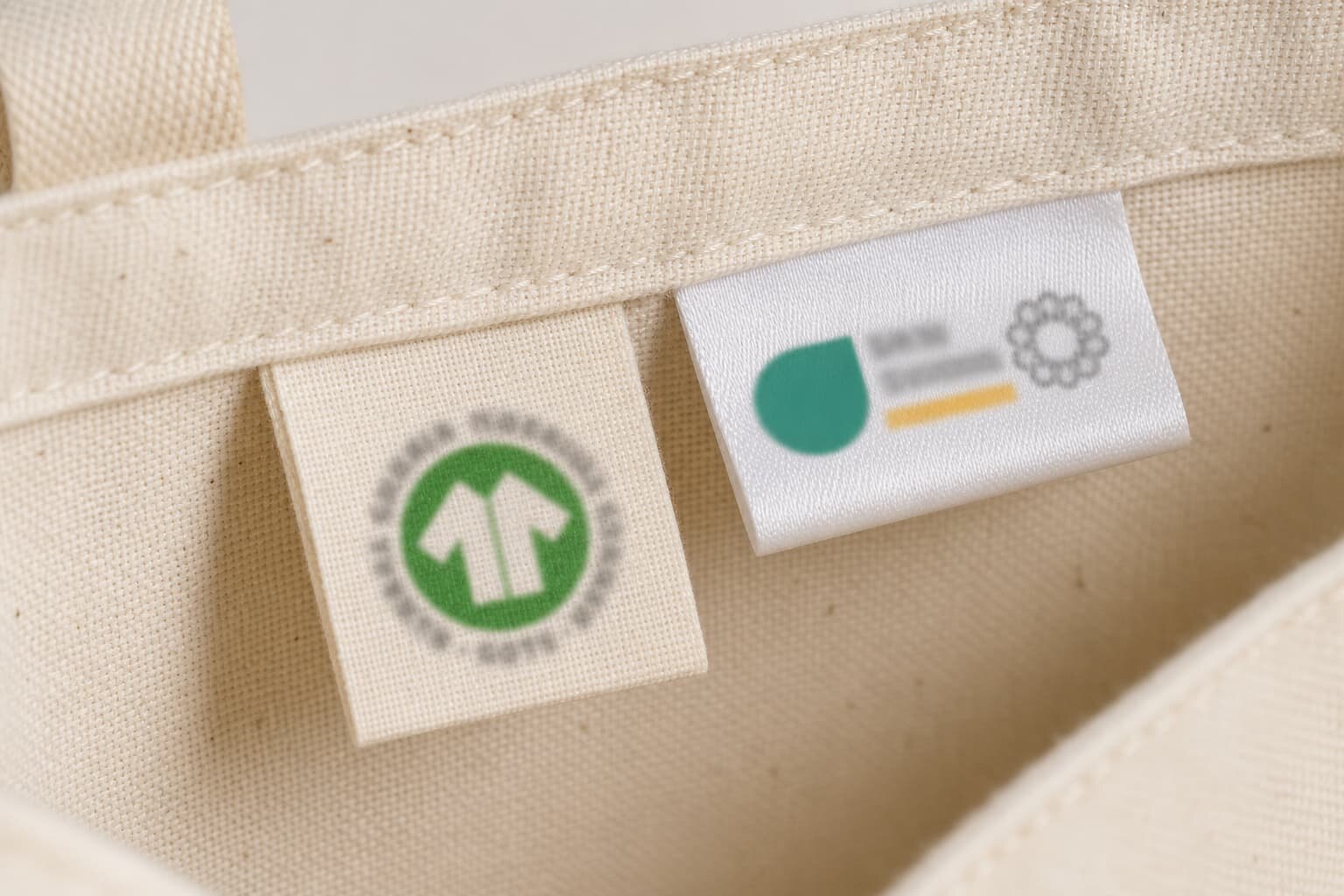
Start with the certified claim, not only the bag style
A certified cotton shopping bag order is different from a standard tote bag order because the claim must be document-verifiable. Brand owners should begin the RFQ by stating the intended claim: for example, a GOTS-certified organic cotton bag, an OCS 100 cotton bag, or an OCS Blended cotton bag with a defined certified content percentage. The words used in the quote, label, invoice, website copy, and carton marks should match what the certification program allows.
This matters because “organic cotton” can be used casually in emails even when the shipment does not qualify for a certified claim. A factory may have access to organic cotton fabric, but the sewing unit, printer, trader, or exporter may not have the required scope to sell the finished bag as certified. For a brand owner, that gap can create relabeling costs, delayed shipment, or a sustainability claim that cannot be supported during an audit.
A practical certified cotton shopping bag for brand owners factory order guide should therefore include a certification checkpoint before price comparison. Ask the supplier to identify the certification standard, certificate holder, certificate number, certification body, scope of operations, expiry date, and whether a transaction certificate can be issued for the order. If any process is subcontracted, ask how chain of custody is maintained across fabric, printing, sewing, packing, and export.
Do not approve certification logos or claim wording based on a salesperson’s reassurance. Certification programs have rules for logo use, license numbers, product labeling, and document wording. Some claims may be allowed on invoices but not on consumer-facing labels unless the certified entity, product category, and labeling approval are correct. The buyer’s safest process is to review documents first, then approve claim wording, then release artwork and production.
- Write the exact intended claim before RFQ: GOTS, OCS 100, OCS Blended, or another specified standard.
- Request the supplier’s current scope certificate and confirm it covers the product and process steps needed for finished bags.
- Ask whether a transaction certificate will be issued for the specific shipment and what references must appear on order documents.
- Confirm who approves certification logo use and claim wording before any labels, hangtags, or printed bags are produced.
Understand GOTS, OCS, scope certificates, and transaction certificates
GOTS and OCS are not interchangeable purchasing terms. GOTS covers organic textile processing and includes requirements beyond fiber origin, such as processing controls and social or chemical criteria within the standard. OCS, the Organic Content Standard, verifies the presence and chain of custody of organically grown material in the final product but does not mean the same thing as GOTS processing certification. OCS 100 is generally used where the product contains a very high percentage of certified organic material, while OCS Blended applies when certified organic material is blended with other material. Buyers should confirm the current standard wording with their certification adviser or certification body because rules can change.
The first document buyers usually request is the scope certificate. It shows the certified organization, certification body, certificate number, validity period, product categories, and process categories. A scope certificate alone does not prove that your shipment is certified; it proves that the company is certified for certain activities during a stated period. The document must be current and relevant to the work being performed.
The transaction certificate, sometimes called a TC, is the shipment-level chain-of-custody document. It connects a specific quantity, product description, seller, buyer, invoice, and shipment to certified material. For brand owners, this is often the document that substantiates a certified procurement claim for a specific order. If the supplier cannot issue or arrange the TC, the order may need to be described differently, even if the fabric itself came from an organic source.
Labeling deserves separate attention. A bag printed with a GOTS or OCS logo may require approval, correct license number use, and exact claim wording. A brand logo plus sustainability text such as “made with organic cotton” may also be subject to rules depending on market and certification status. Procurement should not leave this to final artwork checking; it belongs in the purchase specification.
- Treat the scope certificate as supplier eligibility evidence, not shipment proof by itself.
- Treat the transaction certificate as shipment-specific evidence that should match the PO, invoice, product description, and quantity.
- Check whether the certification holder is the same legal entity quoting the order or whether a certified trader/exporter is involved.
- Keep approved claim wording in the artwork file, PO, and QC checklist so factories do not improvise labels.
Define fabric specification by use case, GSM, weave, and finish
Certified cotton shopping bags can look similar in photos while performing very differently in use. A thin 5 oz or 170 GSM muslin bag may be suitable for a light event giveaway or apparel dust bag. A 7 to 8 oz fabric, roughly 240 to 270 GSM, is common for general promotional totes. A 10 to 12 oz canvas, roughly 340 to 400 GSM, is more appropriate for heavier retail use, premium gifting, or reusable shopping programs where the bag must feel substantial.
Weave affects hand feel, print result, and strength. Plain weave is common and cost-effective. Canvas is heavier and has a more structured feel. Twill or drill can look more premium and may drape differently. Natural unbleached cotton may show seed flecks and shade variation; that can be acceptable for an eco-positioned product but should not surprise the marketing team. Dyed or bleached certified cotton adds color control questions and may require more lead time, lab dips, and certification coverage for dyeing.
Procurement should specify the target GSM or oz/yd² and tolerance, not just “heavy cotton” or “premium fabric.” A realistic tolerance might be agreed as a percentage range or a stated GSM band, depending on the fabric and supplier. Also define shrinkage expectation if bags may be washed, steamed, ironed, or exposed to humidity. Some buyers require pre-shrunk fabric; others only need a note that the item is not intended for washing.
Color standards should be visible in the file. For natural cotton, approve a physical swatch range rather than a single perfect shade. For dyed fabric, use Pantone references plus lab dip approval, and state the viewing condition where possible. If the bag is part of a retail display or campaign kit, even small shade differences between production lots can matter.
- Specify fiber content, certified content percentage, weave, GSM or oz/yd², color, finish, and shrinkage requirement.
- Use physical swatches for natural cotton shade ranges because seed flecks and tone variation are normal.
- Ask whether the quoted fabric is stock, greige fabric to be finished, or a new production lot with certification documents.
- Record fabric tolerance and test method before comparing suppliers on price.
Lock bag construction before comparing unit prices
A unit price for a cotton shopping bag is only meaningful when the construction is fixed. Finished width, height, gusset, seam allowance, handle drop, handle width, reinforcement, inner seam finish, and stitch density all affect cost and durability. A factory can reduce price by using shorter handles, a narrower webbing, fewer stitches, lighter fabric, or no reinforcement; these changes may not be obvious in a simple quote line.
Handle design should match how the bag will be carried. A hand-carry shopping bag may use a shorter drop, while a shoulder tote needs a longer drop. Common handle widths might range from narrow self-fabric straps to wider cotton webbing, but the buyer should specify the exact width and acceptable tolerance. Reinforcement can include bartacks, cross-stitch, box-X stitching, or additional fabric patches. For heavier use, handle attachment deserves more attention than the front logo.
Seam finishing also changes perceived quality. A basic overlock seam can be acceptable for budget promotional bags. Bound seams or French seams may look cleaner and improve inside appearance, but they add labor and can affect MOQ or lead time. Bottom gussets and boxed corners improve capacity but require more precise pattern control. If the bag needs to stand, carry groceries, or hold folded garments, the bottom construction should be specified rather than assumed.
Ask the supplier to show close-up photos of seams, handle joints, bottom corners, and inside finishing on the sample. The approved sample should be the reference for inspection, but written construction details prevent disagreement when a second production line or repeat order is used.
- State finished dimensions with tolerance, including gusset depth and handle drop.
- Define handle material, width, length, reinforcement method, and expected load condition.
- Choose inside seam finish based on price point, retail visibility, and durability needs.
- Require close-up sample photos for handle attachments, bottom corners, seam finish, and label placement.
Choose decoration method by artwork, fabric texture, and durability
Logo decoration should be specified as a production process, not only an artwork file. Screen printing is often suitable for solid logos and medium to large runs because it offers good opacity and repeatability when screens are properly prepared. Digital printing may suit detailed artwork, gradients, or shorter runs, but results depend on fabric surface, pretreatment, and color expectations. Embroidery gives texture and a premium look but can pucker lighter fabrics and may be less suitable for very fine text. Woven labels, printed labels, or hangtags can support a more subtle brand presentation without covering a large fabric area.
Certified orders add another layer: inks, dyes, labels, and processing may need to be compatible with the certification route and the buyer’s restricted-substance requirements. If the bag is sold in regulated markets or used by children, request testing requirements early. Do not wait until final inspection to ask whether the ink system or label material is acceptable.
Artwork approval should include size, placement, color references, file version, and placement tolerance. For example, a front logo may need to be centered within a stated tolerance from the bag top and side seams. If the bag has a gusset or folded packaging, confirm that the logo is not hidden, distorted, or creased in the retail presentation. For multiple-color prints, registration tolerance should be defined before production.
A print strike-off or pre-production sample is strongly recommended for new artwork. The strike-off should be made on the approved fabric or a clearly identified substitute. Review opacity on natural cotton, edge sharpness on canvas texture, color match under agreed lighting, and whether the print withstands handling and folding. If washing is expected, add wash or shrinkage-related print checks.
- Use screen print for strong solid logos, digital print for detailed artwork, embroidery for premium texture, and labels or hangtags for low-risk branding.
- Confirm whether decoration materials and processes are compatible with the certification and market requirements.
- Approve artwork file version, logo size, placement tolerance, color references, and print strike-off before bulk printing.
- Check decoration after folding because retail packing can crease or hide the brand mark.
Build a comparable RFQ: MOQ, cost drivers, and lead time
Certified cotton shopping bag pricing should be broken into visible cost elements. Ask suppliers to separate the base bag unit price, fabric cost or surcharge, decoration setup, sample charge, packing cost, certification documentation cost if any, testing cost, inspection support, and export handling. A quote that combines everything into one number may look simple, but it makes it difficult to compare suppliers or understand what changes when quantity or artwork changes.
MOQ is often driven by more than sewing capacity. Fabric mills may require a minimum greige fabric lot. Dyeing may require a minimum batch. Certified chain-of-custody administration can make very small orders inefficient. Screen printing setup is affected by color count and number of artwork positions. Custom labels, hangtags, barcodes, plastic-free packaging, or retail cartons may each have their own minimums. Ask the supplier to identify which MOQ is binding for the current order.
Lead time should be milestone-based. A simple repeat order using stock certified fabric and existing artwork may move faster than a new certified program requiring document review, fabric production, lab dips, artwork proofing, sample approval, testing, and final inspection. Buyers should ask for estimated days for each milestone rather than accepting a single optimistic shipment date. This is especially important before events, retail launches, or sustainability campaign deadlines.
Incoterms and payment triggers also belong in the RFQ. A low EXW price may not be comparable to an FOB quote. If the buyer requires final inspection before balance payment, certification documents before shipment, or a transaction certificate after shipment, the quote should state what will be available and when. Procurement should also ask whether delays in buyer artwork approval, lab dip approval, or certification document approval reset the timeline.
- Request price breaks at realistic order quantities and keep the same specification across all suppliers.
- Ask which MOQ driver applies: fabric lot, dye lot, certification handling, print setup, trim, packing, or carton production.
- Use milestone lead times instead of one generic production time.
- Compare Incoterms, documentation, testing, inspection, and packing costs, not only unit price.
Control samples, lab dips, strike-offs, and approval evidence
Samples should answer specific questions. A prototype checks shape and construction. A lab dip checks dyed fabric color. A print strike-off checks logo process and color on fabric. A pre-production sample checks the full approved specification before bulk production. For a certified cotton shopping bag order, the pre-production sample should also show label wording, hangtags, and any certification claim placement.
Buyers should be cautious when early samples are made from substitute fabric. That can be acceptable for checking dimensions or artwork position, but the sample file must clearly state what is not final. A sample made from non-certified stock fabric cannot prove the final certified material, hand feel, shrinkage, or shade. The approved sample used for final inspection should be as close as possible to bulk production conditions.
Record approval evidence in a format the factory and inspector can use. Include front, back, side, inside seam, handle joint, bottom, logo close-up, label, hangtag, fold style, and packing photos. If a physical sample is approved, mark it with date, version, buyer name, supplier name, and any accepted deviations. Digital approval should reference file names and versions, not just “approved” in an email thread.
Deviation control is important. If the buyer accepts a slightly darker natural shade, a small logo placement change, or a different inner fold, write it down and state whether it applies only to the sample, the first order, or all future orders. Unwritten sample deviations are a common cause of final inspection disputes.
- Define the purpose of each sample: construction, color, print, certification label, packing, or full pre-production approval.
- Avoid treating substitute-fabric samples as proof of final certified fabric performance.
- Keep dated photos and one signed physical sample for new or high-value orders.
- List approved deviations clearly and state whether they apply to repeat orders.
Set actionable QC standards before production starts
Quality control should be written before the factory cuts fabric. For certified cotton shopping bags, the QC plan should include product checks and document checks. Product checks cover fabric, measurements, seams, handles, logo, labels, packing, and cartons. Document checks cover certification evidence, approved artwork, approved sample, purchase order, packing list, and any required test reports.
AQL should be agreed in advance if the buyer uses sampling inspection. Many consumer goods programs use critical, major, and minor defect categories with separate acceptance levels, such as zero tolerance for critical defects, tighter limits for major defects, and a more flexible limit for minor defects. The exact AQL should match the buyer’s policy and risk level. What matters is that the supplier knows how defects will be classified before final inspection.
Defect examples make inspection more consistent. Critical defects can include metal contamination, unsafe sharp objects, mold, or unauthorized certification claims. Major defects can include wrong fabric, wrong size beyond tolerance, broken seams, loose handles, severe stains, wrong logo color, missing labels, mixed SKUs, or carton shortages. Minor defects can include small loose threads, light wrinkles, or tiny slubs within an approved natural cotton range. Natural fabric character should be defined so inspectors do not reject acceptable flecks or accept unacceptable stains.
Testing should match the use case. A lightweight giveaway bag may need basic visual and measurement checks. A retail reusable shopping bag may need load testing, seam strength checks, print rub testing, colorfastness review, shrinkage testing, and carton drop or stack considerations. If needle detection is required, the factory should maintain needle control records and final detection logs. If moisture is a concern, check carton dryness, odor, desiccant use, and storage conditions before shipment.
- Agree AQL levels and defect categories before the supplier starts bulk production.
- Define critical, major, and minor defects with cotton bag examples.
- Use load testing for handles and seams when bags will carry retail goods or groceries.
- Check print rub, shrinkage, needle control, moisture, and cartons according to the buyer’s market risk.
Specify packing, warehouse handling, and carton performance
Packing is part of the product specification because it affects cost, warehouse receiving, and customer presentation. Define whether bags are flat packed, folded, rolled, bundled, tied with paper bands, packed individually, or packed plastic-free. If polybags are used, specify warning text, recycled content requirements, suffocation labels, or market restrictions where relevant. If the buyer wants plastic-free packaging, confirm how the factory will prevent dust, moisture, and handling marks.
Carton details should include units per inner pack, units per master carton, carton dimensions, gross weight limit, shipping marks, SKU separation, barcode labels, and pallet requirements if applicable. Heavy cotton bags can make cartons dense; a carton that is too heavy may fail warehouse handling limits. A carton that is too large may crush during stacking. Ask the supplier to propose carton strength and stacking limits if the shipment will travel by sea or be stored for a long period.
Mixed cartons need strict rules. If several colors, sizes, or artwork versions ship together, specify whether mixed cartons are allowed, how they are labeled, and how the packing list identifies them. Many receiving problems come from correct products packed in confusing cartons. For retail or e-commerce programs, carton label accuracy can be as important as the bag itself.
Final packing evidence should include photos of the folded bag, inner pack, carton loading, carton marks, sealed carton, pallet if used, and carton count. For certified orders, keep certification-related documents separate from normal packing photos, but make sure product descriptions and quantities align across the packing list, invoice, and transaction certificate request.
- Define fold method, bundle count, inner protection, and whether plastic-free packing is required.
- Set carton quantity, carton dimensions, gross weight limit, shipping marks, and barcode rules.
- Control mixed SKUs with clear carton labeling and packing list references.
- Review carton strength, drop risk, stacking risk, moisture risk, and receiving requirements before shipment.
Release shipment only when documents, inspection, and deviations match
Shipment release should be a controlled decision, not a rush after the cartons are closed. Before balance payment or handover, collect the final inspection report, defect summary, rework evidence, carton photos, packing list, commercial invoice draft, certification documents available at that stage, and any approved deviations. The buyer should be able to connect the shipped cartons to the approved specification without searching through old messages.
For certified cotton shopping bags, document consistency is essential. Product name, certified claim, quantity, buyer, seller, invoice number, shipment reference, and fabric or lot references should align as required for the certification process. If a transaction certificate is issued after shipment, confirm the expected timing, responsible party, and data needed. Keep a clear record if the TC is not available before the goods leave the factory.
Deviation approvals should be explicit. If final inspection finds minor loose threads that will be trimmed, ask for rework photos and a re-inspection note. If the buyer accepts a minor shade variation, state the accepted range and quantity affected. If a major defect remains unresolved, hold shipment until the commercial solution is agreed. Avoid vague release language such as “ok to ship” without listing what was accepted.
A good release file becomes the starting point for the next order. It helps procurement compare supplier performance, estimate realistic lead time, repeat approved construction, avoid old artwork versions, and support sustainability reporting. The strongest brand-owner buying process is not just about preventing one bad shipment; it is about creating a repeatable certified bag program.
- Collect inspection reports, carton photos, packing list, invoice draft, certification evidence, and deviation approvals before release.
- Check that certification claim wording is consistent across PO, invoice, labels, carton records, and TC request.
- Do not release unresolved major defects without written commercial approval.
- Archive the final file so repeat orders start from verified specifications rather than memory.
Specification comparison for buyers
| Spec decision | Recommended detail | When to lock it | Buyer risk to check |
|---|---|---|---|
| Certification claim | State whether the order needs GOTS, OCS 100, OCS Blended, or another verified cotton claim; request valid scope certificate, license number where applicable, and transaction certificate plan | Before RFQ comparison | A supplier may offer organic cotton fabric without being certified for the process or without chain-of-custody documents for the shipment |
| Fabric weight and weave | Common shopping bag ranges include 5 oz/yd² to 12 oz/yd² or about 170-400 GSM; specify plain weave, canvas, twill, muslin, or drill and whether the fabric is natural, dyed, or bleached | Before pricing | Quotes are not comparable if one factory prices a lightweight promotional tote and another prices a heavier retail bag |
| Bag dimensions | Record width, height, gusset, bottom shape, finished measurement tolerance such as ±5 mm for small bags or ±10 mm for larger totes | Before sample pattern | Finished size can change after washing, steaming, shrinkage, or seam allowance differences |
| Handle specification | Define self-fabric or webbing handles, width, finished length, drop length, reinforcement stitch, cross-stitch or box-X, and expected carrying load | Before sampling | Handles are a frequent failure point if the quote excludes reinforcement or uses narrow low-density webbing |
| Construction | Specify seam type, overlock or bound inside seam, stitch density target, bartacks, bottom reinforcement, labels, and loose-thread standard | Before bulk cutting | Weak seams can pass visual approval but fail during loading, retail use, or carton compression |
| Decoration method | Choose screen print, heat transfer, digital print, embroidery, woven label, or hangtag based on fabric texture, artwork detail, color count, and durability expectation | Before artwork approval | Ink bleed, poor opacity, cracked transfers, puckered embroidery, or incorrect logo placement can make the bag unusable for brand campaigns |
| MOQ and price breaks | Ask for MOQ by fabric, color, certification route, print setup, trim, carton packing, and inspection level; request price breaks such as 500, 1000, 3000, 5000, and 10000 pcs where relevant | During RFQ review | Certified cotton minimums may be driven by fabric lot traceability, dyeing, printing setup, and transaction certificate administration rather than sewing capacity only |
| Sample approval | Require pre-production sample using the correct fabric lot or approved substitute, correct logo process, label wording, packing mock-up, and documented deviations | Before bulk production | A nice prototype made from non-certified or substitute fabric can create false confidence if it is not tied to the production specification |
| QC inspection | Define AQL level, defect classification, measurement tolerance, seam strength/load check, print rub test, shrinkage test if required, needle detection for strict programs, moisture check, and carton verification | Before production release | Late inspection without written standards leads to arguments about what is acceptable |
Buyer checklist before sampling
- Define the use case first: giveaway, retail shopping bag, apparel packaging, grocery tote, event kit, or premium reusable bag.
- Choose the certification route and claim wording: GOTS, OCS 100, OCS Blended, or another approved claim; do not use a certification logo unless the supplier and label rules allow it.
- Request the supplier’s valid scope certificate, applicable license number or certification body details, and confirmation that the product category and process scope cover spinning, weaving, dyeing, printing, sewing, or trading as needed.
- Ask how transaction certificates will be issued for the order and what shipment, invoice, fabric lot, or purchase order references will appear on the documents.
- Specify fabric in measurable terms: fiber content, certified claim, weave, GSM or oz/yd², color, dyeing/bleaching, shrinkage expectation, and color tolerance.
- Lock the bag construction: finished size, gusset, handle material, handle drop, stitch type, reinforcement, label position, seam finish, and load requirement.
- Match decoration to the use case: screen print for solid logos, digital print for detailed art, embroidery for premium texture, woven label for subtle branding, and heat transfer only where durability and hand feel are acceptable.
- Separate the quote into unit price, fabric surcharge, print setup, sample cost, certification document cost if any, packing cost, inspection cost, tooling, and Incoterms.
- Approve a physical pre-production sample for new programs, new artwork, new fabric weight, strict retail use, or any certified order where claim wording and labels matter.
- Set QC rules before production: AQL level, major/minor/critical defects, measurement tolerances, load test method, print rub check, shrinkage test requirement, needle control, moisture limit, and packing inspection.
Factory quote questions to send
- Which certification can you support for this order: GOTS, OCS 100, OCS Blended, or another program, and which claim wording is allowed on the product, invoice, and carton?
- Please provide your current scope certificate, certificate number, certification body, expiry date, covered product categories, and covered processing steps relevant to cotton shopping bags.
- Will the order be eligible for a transaction certificate, and what information must be shown on the purchase order, invoice, packing list, and shipment documents to issue it?
- Are the spinning, weaving/knitting, dyeing, printing, sewing, and trading steps covered under the required chain of custody, or will any subcontractor documents be needed?
- What exact fabric are you quoting: fiber content, certified content percentage, weave, GSM or oz/yd², width, color, shrinkage, dye method, and available stock or production lot?
- What finished bag size, gusset, handle width, handle drop, reinforcement stitch, seam type, stitch density, and load capacity are included in this price?
- Which logo method do you recommend for our artwork and fabric weight, and what are the size limit, color limit, setup cost, placement tolerance, and durability risks?
- Can you quote price breaks by quantity and show separate costs for fabric, decoration, sample, packing, certification documentation, inspection support, and export handling?
- What MOQ drivers apply if we change fabric color, GSM, print color count, handle type, label, packing style, or certification claim?
- Which sample will become the inspection reference: proto sample, print strike-off, size set, or pre-production sample, and will it use certified production fabric?
Quality-control points to confirm
- Verify certification evidence before production: valid scope certificate, covered process scope, supplier name matching the contracting party or declared trader, certificate expiry, product category coverage, and transaction certificate plan.
- Check fabric identity and lot traceability: fiber content, certified content percentage, fabric roll labels, GSM or oz/yd², weave, shade, width, defects, stains, odor, and whether the lot matches approved documentation.
- Measure finished dimensions against the approved sample and specification, including width, height, gusset, handle width, handle drop, seam allowance, and logo position.
- Classify defects before inspection: critical defects such as unsafe metal contamination or wrong certification claim; major defects such as broken seams, wrong size, severe stains, wrong logo, or missing labels; minor defects such as small loose threads or slight wrinkles within tolerance.
- Use an agreed AQL plan where appropriate, for example AQL 0 for critical defects, AQL 2.5 for major defects, and AQL 4.0 for minor defects, or the buyer’s internal standard if stricter.
- Perform practical seam and handle checks: visual reinforcement review, bartack or box-X consistency, stitch density, skipped stitches, seam slippage risk, and a controlled load test using the buyer’s required weight and duration.
- Test decoration durability based on method: dry and wet rub for print, tape or scratch check where suitable, color comparison to approved Pantone or artwork proof, registration, opacity, cracking, embroidery tension, and label edge security.
- Check shrinkage and colorfastness if the bag may be washed, steamed, or used in damp environments; record test method, sample size, and acceptance tolerance before bulk release.
- Apply needle and metal control where required for retail, children’s, food-adjacent, or strict brand programs; document needle policy, broken-needle logs, and metal detection results if used.
- Review moisture and packing condition: bag moisture risk, odor, mold, desiccant use if needed, carton dryness, carton drop or compression suitability, carton gross weight, and stacking limits.