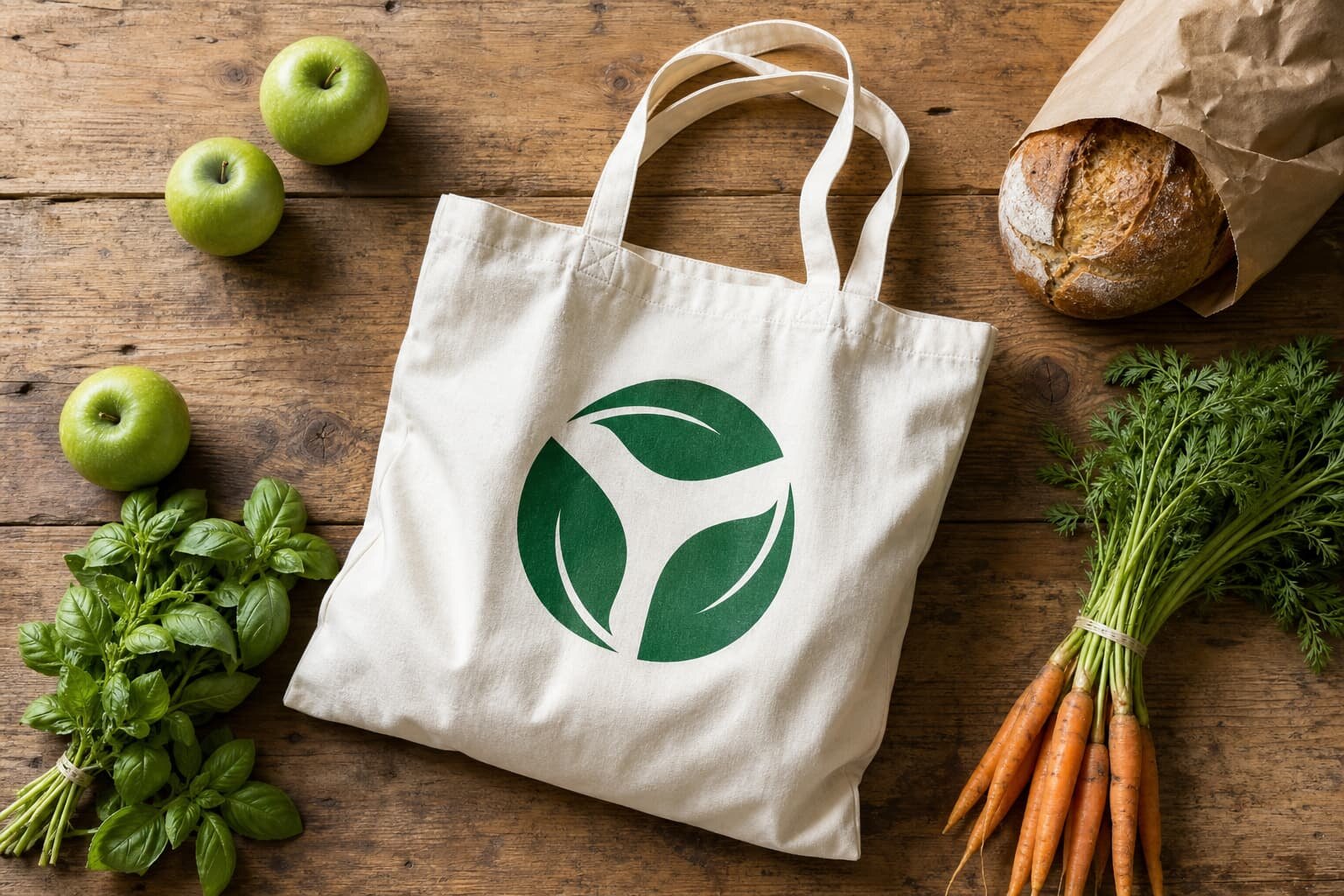
What This Cost Review Should Solve
A certified cotton shopping bag looks simple on a quote sheet, but the cost can move quickly when certification documents, fabric weight, print method, packing, and MOQ are not defined. For an ecommerce brand, the bag is usually not just a giveaway. It may be part of the unboxing experience, a retail return bag, a subscription insert, a pop-up store item, or a reusable customer carry bag. Each use case needs a slightly different cost decision.
The main buying problem is quote comparison. If one supplier quotes natural 140 GSM cotton with a basic logo and another quotes 220 GSM certified organic cotton with a transaction certificate and reinforced handles, the unit prices are not comparable. A useful cost review memo should force every supplier to quote the same construction, or clearly show where each factory has changed the specification.
- Separate product cost from compliance cost, packing cost, and logistics cost.
- Use the same artwork size and print colors across all RFQs.
- Ask for finished bag weight, because freight cost often exposes a weak quote.
- Treat certification documents as a commercial requirement, not a decoration.
Start With the Bag Use Case
Before discussing cotton certification, decide what the bag must carry. A shopping bag used for a light apparel order does not need the same construction as a grocery-style bag used for books, bottles, or boxed cosmetics. Ecommerce buyers often overpay by copying retail tote specifications when they only need a light branded cotton ship-with item. The opposite mistake is worse: a bag made too light may tear when the customer reuses it, which damages the brand after delivery.
For most ecommerce packaging programs, a practical certified cotton shopping bag sits between 160 and 220 GSM. This range keeps the bag foldable and cost controlled while still feeling more substantial than a thin promotional bag. For heavier retail use, 240 GSM or canvas construction can be considered, but that becomes a different cost category and should not be compared directly with standard shopping bag quotes.
- Light ecommerce insert: 140-160 GSM, simple logo, low carry load.
- General shopping bag: 160-220 GSM, folded top hem, self-fabric handles.
- Retail or heavier reuse: 220-280 GSM, reinforced stress points, stronger seam standard.
- Premium canvas feel: 10 oz or above, higher fabric cost and freight impact.
Certification Cost Is Not One Line Item
Many quote mistakes begin with the word certified. A buyer may ask for a certified cotton shopping bag, while one supplier assumes organic cotton fabric, another assumes OEKO-TEX fabric testing, and another only means its factory has passed a general audit. These are different claims. They also carry different document trails, material sourcing rules, and cost structures.
If your brand will make an organic content claim, confirm whether you need a scope certificate, transaction certificate, material composition statement, or product testing report. The certificate must match the supply chain and product category, not just appear as a PDF from somewhere in the supplier folder. If your claim is softer, such as safer chemistry or responsible sourcing, the required document may be different. Procurement should align with legal, sustainability, and marketplace compliance teams before locking the RFQ.
- Ask what exactly is certified: yarn, fabric, finished bag, ink, trim, or factory.
- Confirm whether the certificate can be issued for your order quantity and buyer name.
- Check if logo printing, dyeing, or washing changes the certificate requirement.
- Avoid using certification wording on the bag until the document path is confirmed.
Fabric GSM and Construction Drive the Base Price
Fabric is usually the largest cost driver. GSM tells you fabric weight per square meter, but it does not tell the full story. Yarn thickness, weaving density, shrinkage control, cotton grade, bleaching, dyeing, and finishing all affect the finished bag. A loose 180 GSM fabric may feel weaker than a tighter 160 GSM fabric. That is why the approved sample matters as much as the number in the quote.
Construction also matters. A basic flat shopping bag with a folded top hem is faster to sew than a gusseted bag. A bottom gusset gives more capacity and better standing shape, but it adds fabric consumption and sewing time. Handle width, handle length, box stitching, cross stitching, and seam allowance all change labor minutes. These details look small in a drawing but become real money when multiplied across thousands of pieces.
- Request fabric GSM and finished bag weight together.
- Specify whether the bag is flat, bottom gusseted, side gusseted, or full box construction.
- Define handle length from top edge to highest point, not just total handle strip length.
- Set size tolerance, commonly plus or minus 0.5-1 cm depending on construction and fabric.
Printing Choices That Change the Quote
For certified cotton shopping bags, water-based screen printing is often the cleanest and most economical choice for simple ecommerce branding. It works well for one to three solid colors, has a softer hand-feel than heavy plastisol, and suits natural cotton fabric. The quote should still state print size, number of colors, print position, ink type, and whether screen charges are included.
Digital printing, heat transfer, embroidery, woven labels, and sewn side labels can all be valid, but they solve different problems. Digital printing may fit complex artwork or low quantities but can cost more per piece. Embroidery adds perceived value but may pucker lighter fabric. A woven or cotton side label can carry brand or certification wording without printing a large front logo. The right choice depends on artwork, quantity, compliance wording, and expected use.
- For simple logos, compare water-based screen print before choosing a more expensive process.
- For fine text or QR codes, request a print test at actual size.
- For dark dyed fabric, confirm ink opacity and curing method.
- For certified claims, check whether ink or label material affects your compliance statement.
MOQ Logic for Ecommerce Programs
MOQ is not only a factory preference. It comes from fabric sourcing, cutting efficiency, printing setup, sewing line planning, certificate administration, and packing labor. A natural cotton bag with one black screen print may have a lower practical MOQ than a custom dyed bag with four print colors and individual barcode labels. When buyers ask for many small SKU splits, the unit price rises because the factory loses efficiency at every stage.
For ecommerce brands, the smartest MOQ discussion starts with the annual program, not only the first order. If the first order is a launch test, ask the factory to quote both the trial quantity and the reorder tier. This helps your team decide whether to pay a higher first-unit cost or consolidate volume. It also prevents the common problem where a marketing team approves a low-volume sample, then procurement discovers the bulk order cannot be made at the expected price.
- Ask MOQ by fabric color, print design, and certification document requirement.
- Request price tiers such as 1,000, 3,000, 5,000, and 10,000 pieces if relevant.
- Clarify whether multiple artworks can share one fabric lot.
- Check whether short quantity affects carton packing, labeling, and inspection cost.
Packing and Freight Can Reverse the Cheapest Quote
A cotton shopping bag has low unit value but can create bulky cartons, especially when packed individually. Bulk packing is usually cheapest and more efficient for warehouse receiving. Individual polybags, belly bands, hangtags, barcode stickers, tissue wrapping, or retail display packing add labor, material cost, carton volume, and inspection points. They may be necessary, but they should be priced clearly.
Ask each factory for pieces per carton, carton dimensions, gross weight, and net weight. Without this data, your landed cost review is incomplete. A bag that is slightly heavier or packed with too much air can cost more in ocean LCL, air freight, courier, or 3PL receiving. Ecommerce teams should also check whether the cartons can survive handling and whether carton marks match warehouse routing rules.
- Bulk export packing: lowest cost and suitable for repacking at your warehouse.
- Inner polybag by set: useful when bags must stay clean before kitting.
- Individual polybag: only use when required by retail or 3PL rules.
- Retail hangtag or barcode: confirm placement, scan grade, and carton segregation.
Lead Time and Sampling Control
Lead time should be quoted from confirmed artwork, approved sample, deposit, and certification confirmation. If any of those items are missing, the clock has not really started. Natural fabric and simple screen printing can move faster than dyed fabric, custom labels, or document-heavy certified orders. Buyers should not accept a lead time number without knowing what assumptions sit behind it.
For a branded ecommerce bag, approve a pre-production sample before bulk cutting. The sample should use the correct fabric weight, color, handle construction, logo size, print method, and packing label where possible. If the factory cannot sample with certified fabric immediately, label the sample as construction reference only and do not use it as final approval for fabric claim, shade, or hand-feel.
- Development sample: checks size, artwork position, sewing concept, and first cost direction.
- Pre-production sample: final approval before bulk material cutting and printing.
- Shipping sample: confirms actual mass production result before or during shipment.
- Retained sample: kept by buyer and factory for dispute control.
Quote Data to Put in Your Cost Memo
A cost review memo should make weak quotes visible. Do not compare only unit price. Put the key cost drivers into the memo so decision makers can see why one quote is lower. The quote may exclude screen charges, sample charges, certification paperwork, carton labeling, export documents, or inland freight. It may also assume a lower GSM or a smaller print area.
A useful memo includes both commercial and technical data. Procurement can then compare supplier risk, not only price. The best supplier is not always the lowest quote, but the factory that can hold the approved spec, provide credible documentation, pack correctly, and ship within the required window. For ecommerce brands, a late or non-compliant packaging item can block a product launch just as seriously as a missing main product.
- Unit price by quantity tier and currency.
- Incoterm, port, quote validity, and payment terms.
- Fabric GSM, finished bag weight, size, and construction.
- Print method, print colors, print size, and setup charges.
- Certification document availability and any related cost.
- Packing method, carton quantity, carton size, and gross weight.
- Sample lead time, bulk lead time, and production start conditions.
Common Cost Mistakes to Prevent
The most common mistake is approving a beautiful sample without locking the measurable specification. A sample can be made carefully by a sample room, while bulk production may shift to thinner fabric, different seam allowance, or weaker handles if the PO is vague. Your purchase order should repeat the approved details and attach artwork, size drawing, packing instruction, and inspection standard.
Another mistake is using sustainability wording before the document path is confirmed. If the bag or label says organic cotton, certified cotton, or similar wording, your team must be comfortable proving that claim. Keep claim language simple and approved. When in doubt, print the brand logo on the bag and keep certification explanation for compliant packaging inserts or product pages after documents are checked.
- Do not compare 140 GSM and 220 GSM quotes as if they are the same product.
- Do not approve logo color from a screen photo only; use physical or controlled color reference.
- Do not ignore carton data when reviewing air shipment or urgent launch cost.
- Do not allow the factory to change handle width or seam method without written approval.
- Do not print certification claims until compliance wording is cleared.
Specification comparison for buyers
| Spec decision | Recommended option | When it fits | Buyer risk to check |
|---|---|---|---|
| Fabric weight | 160-220 GSM certified cotton | Ecommerce mailer insert, retail checkout bag, light apparel, beauty, accessories, or subscription packing | Confirm finished bag weight, not only fabric GSM; some quotes use thinner yarn or loose weaving to reduce cost |
| Bag construction | Side and bottom seams with folded top hem | Flat shopping bag used for pick-and-pack, brand packaging, giveaways, or store replenishment | Check handle attachment, seam allowance, and whether stress points are reinforced |
| Handle type | Self-fabric handles, 2.5-3 cm width | Most ecommerce brands needing a clean cotton look and moderate carrying strength | Narrow handles save cost but feel weak when the customer carries boxed products |
| Printing method | Water-based screen print for 1-3 solid colors | Logos, simple brand marks, QR code blocks, care icons, or campaign artwork | Ask for print hand-feel, wash/rub test result, and whether ink is certified or only the fabric is certified |
| Certification claim | Transaction certificate or scope certificate matched to order requirements | Brands making organic or recycled content claims in sales channels or compliance files | Do not accept a supplier logo claim without document scope, product category, and chain-of-custody confirmation |
| MOQ logic | Start from fabric dye/print efficiency, normally higher for custom color than natural cotton | Importers consolidating multiple SKUs, seasonal ecommerce packaging, or retail distributor replenishment | A low MOQ can hide higher unit price, mixed-lot fabric, or unavailable certificate support |
| Packing | Bulk packed 100-200 pcs/carton or inner polybag by set if required | Warehouse receiving, 3PL prep, or retail DC intake | Individual polybags add labor, material, carton volume, and sustainability questions |
| Sample approval | Pre-production sample using correct fabric, print, size, handle, and packing label | Any branded ecommerce bag where color, logo size, and certification claim matter | Photo approval alone can miss fabric weight, print cracking, shrinkage, and handle strength |
Buyer checklist before sampling
- Define the certification you need before requesting prices: organic cotton, recycled cotton, OEKO-TEX, or another compliance requirement.
- State finished bag size, gusset or no gusset, handle size, fabric GSM, color, logo print size, and packing method in one RFQ sheet.
- Ask suppliers to quote the same fabric weight and construction; otherwise the cheapest quote may simply be a lighter bag.
- Request the finished bag weight in grams and carton size so your team can estimate freight and warehouse handling.
- Confirm whether the certification applies to yarn, fabric, finished bag, ink, or only the supplier facility.
- Check MOQ by fabric color and print design, not only by total order quantity.
- Ask for pre-production sample approval before bulk cutting, especially when logo color and certification wording are used.
- Require seam, handle pull, print rub, size tolerance, and packing checks in the inspection standard.
- Compare quote validity, payment terms, sample fee, tooling charge, carton mark cost, and export document cost.
- Keep one approved sample sealed for final inspection reference and one working sample for your warehouse or merchandising team.
Factory quote questions to send
- What certified cotton standard can you support for this exact shopping bag, and can you provide the relevant scope certificate or transaction certificate if required?
- What is the quoted fabric GSM, yarn construction if available, and finished bag weight in grams?
- Is the fabric natural, bleached, dyed, or custom matched, and does color affect MOQ or lead time?
- What are the finished size tolerances for width, height, gusset, handle length, and print position?
- Which print method are you quoting, and is the ink water-based, pigment, plastisol, discharge, or heat transfer?
- Are screen setup charges, sampling charges, certification document charges, and export carton costs included?
- What is the MOQ for one design, one print color, and one fabric color, and what happens if we split the order across SKUs?
- How many pieces per carton, what is the carton size and gross weight, and can you pack to our 3PL receiving rules?
- What is the sample lead time and bulk lead time after artwork, deposit, and certificate confirmation?
- What in-line and final inspection points do you use for cotton shopping bags before shipment?
Quality-control points to confirm
- Fabric GSM checked against approved sample and purchase specification.
- Finished bag size measured after sewing, including height, width, gusset, handle length, and hem width.
- Logo print checked for color, position, sharpness, registration, curing, hand-feel, and rubbing resistance.
- Seam strength checked at side seams, bottom seam, handle attachment, and top hem.
- Loose threads, oil marks, needle holes, stains, slubs, and uneven panels sorted before packing.
- Carton quantity, inner packing, barcode label, carton mark, and SKU separation matched to the packing list.
- Certification wording on label, hangtag, or carton checked against approved compliance language.
- Random carton opening during final inspection to confirm no size, shade, or print mixing between SKUs.