Why Carton Planning Matters for This Product
Canvas zipper portfolios look simple on a quote sheet, but they are easy to damage in packing because the product is flat, wide, and edge-sensitive. Wellness studios often use them for onboarding folders, membership welcome packs, retreat documents, voucher sets, and retail counter displays. The portfolio needs to arrive clean, square, and easy to merchandise, not bent at the corners or marked by zipper pressure from the piece above it.
The buying problem is not only how to make the portfolio. It is how to specify the product and carton together so the factory can cut, sew, print, inspect, and pack around the same finished use. A strong carton packing plan reduces chargebacks, store complaints, repacking labor, and unnecessary air freight caused by late discoveries.
- Treat carton design as part of the product specification, not a shipping afterthought.
- Approve a final packed sample before bulk production whenever the order is for retail or multi-location distribution.
- Do not compare supplier prices until each quote uses the same pieces per carton, carton grade, polybag type, and protection method.
- Include the carton packing plan in the purchase order so inspection can verify it against written requirements.
Set the Portfolio Specification Before Asking for Carton Data
A useful RFQ starts with finished size, fabric weight, zipper type, inner construction, print method, and packing requirement. If the product must hold A4 or US letter documents, do not quote only the paper size. Add clearance for zipper seam allowance, inner sleeve, inserts, and any printed welcome booklet. A common sourcing mistake is approving a nice-looking sample that becomes too tight after the zipper tape, lining, and seam bulk are finalized.
For wellness studios, a clean flat profile usually works better than a bulky travel pouch. Buyers should define whether the portfolio is a document holder, a retail gift pouch, or a kit bag. The intended loading weight affects the canvas GSM, zipper strength, seam reinforcement, and carton stacking method. A light paper-only folder can use a softer body, while a welcome kit with oils, bands, cards, or small accessories needs firmer construction and better corner protection.
- Typical finished size should include document clearance plus seam and zipper allowance.
- Specify main compartment depth if the portfolio carries more than paper.
- State whether the product needs an inner sleeve, card pocket, pen loop, lining, or label.
- Define opening style: top zipper, L-shaped zipper, or three-side zipper, because each packs differently.
- Add finished size tolerance, commonly tighter for document fit and looser for soft cotton goods.
Fabric Weight and Handfeel Choices
For canvas zipper portfolios, 10 oz, 12 oz, 14 oz, and 16 oz cotton canvas are the most common discussion points. A 10 oz canvas, roughly around 300-340 GSM depending on yarn and weave, is economical and soft but can wrinkle more easily in cartons. A 12 oz canvas, often around 380-410 GSM, is a practical middle point for wellness studio branding because it gives enough body without making the zipper edge bulky. Heavier 14 oz to 16 oz canvas can feel premium but may increase sewing time, needle marks, freight weight, and corner thickness.
Do not judge fabric only by oz. Two fabrics with the same nominal weight can behave differently depending on weave density, finishing, washing, and shrinkage. If the print requires sharp registration, request a fabric swatch and print strike-off before approving bulk. Natural canvas may have seed flecks and slight color variation, which many wellness brands accept, but retail buyers should define the allowable level before production.
- Use 10 oz canvas for budget paper folders where softness is acceptable.
- Use 12 oz canvas for most branded studio portfolios with screen print and retail packing.
- Use 14 oz canvas when the buyer wants a firmer handfeel and stronger perceived value.
- Use lining or light interlining instead of jumping to very heavy canvas when shape control is the main need.
- Require shade control for dyed canvas, especially when multiple production lots ship to the same retail program.
Print Method, Logo Placement, and Artwork Risk
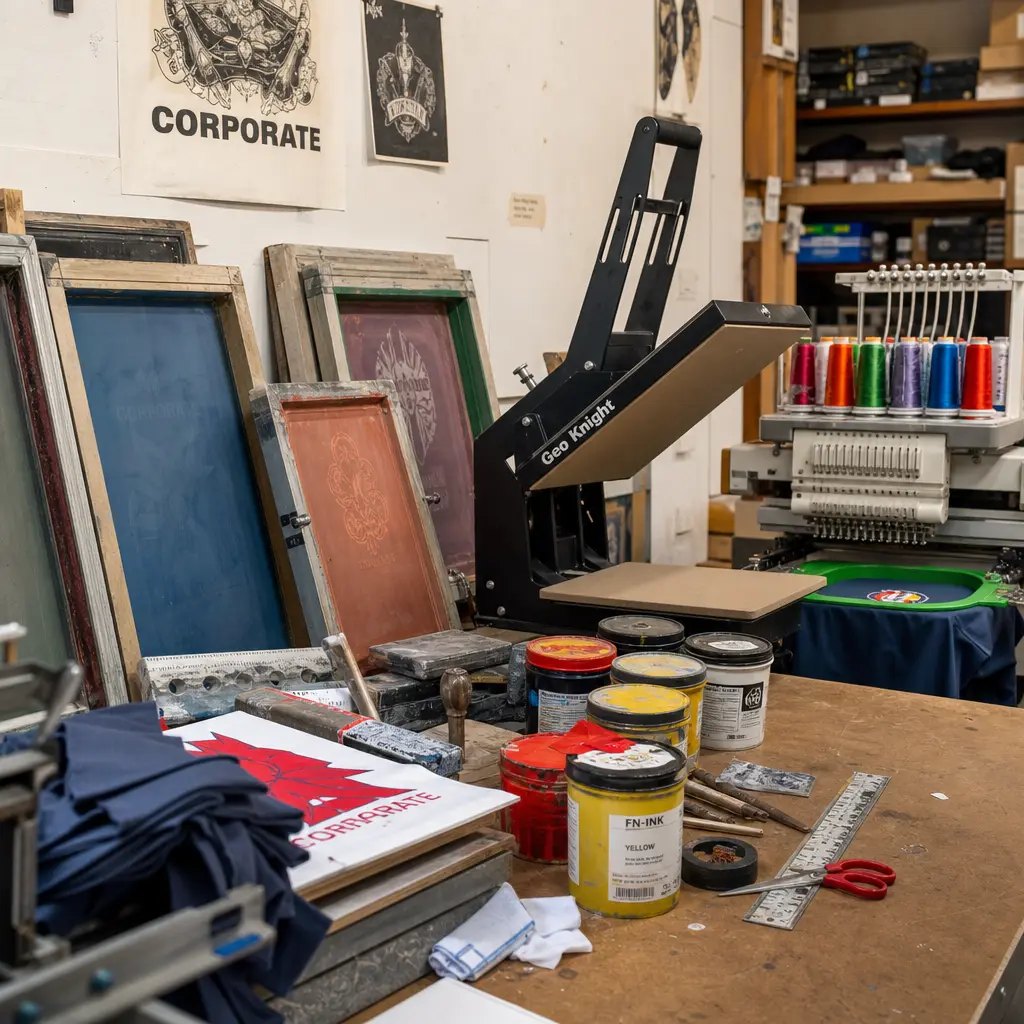
Most canvas zipper portfolios for wellness studios are best served by screen printing if the logo uses solid colors, clean lines, and moderate print size. Screen print gives good opacity on natural or dyed canvas and is cost-efficient once the setup is approved. Heat transfer can handle gradients, fine photographic details, or small multi-color graphics, but the buyer should test handfeel, edge adhesion, and resistance to scuffing during packing.
Logo position must be planned around the zipper path, seam allowance, fold lines, and carton stacking pressure. A logo printed too close to the corner may look correct on a flat sample but suffer abrasion when cartons are compressed. A large solid ink block can also make natural canvas feel stiff and may show cracking if folded sharply. Put exact logo dimensions and placement measurements in the artwork file and sample approval sheet.
- Use screen print for one to three color logos and simple wellness brand marks.
- Use heat transfer only when artwork detail justifies the extra testing and handfeel review.
- Avoid printing across zipper tape, raised seams, or the bend radius of a three-side opening.
- Approve ink color on actual canvas, not only by digital proof.
- Run a rub test on the printed area after the packed sample is compressed and unpacked.
MOQ Logic and Cost Drivers Behind the Quote
The MOQ is not only a factory preference. It is driven by fabric purchasing, dyeing, cutting efficiency, zipper color, print setup, label preparation, packing materials, and line changeover. A buyer may request 300 pieces across three fabric colors and three logos, but the factory may need to price it like nine small productions. That is why the RFQ should separate base MOQ from split-color MOQ and split-artwork MOQ.
For distributors and retail buyers, the cleanest first order often uses one body fabric, one zipper color, one print method, and multiple carton labels by destination. If the buyer needs several studio locations, it may be cheaper to keep the product identical and handle location-specific inserts at the warehouse. When comparing quotes, make sure the lower unit cost is not hiding separate screen fees, label charges, barcode charges, carton surcharge, or higher freight volume.
- Base unit price should state fabric, zipper, print, label, polybag, and carton inclusion.
- Separate one-time charges such as sample fee, screen charge, and artwork setup.
- Request price breaks at practical order quantities, not random round numbers.
- Ask whether unused fabric or custom zipper color creates a minimum material purchase.
- Compare total program cost, including inland freight and repacking, not only FOB unit price.
Sample Approval That Prevents Bulk Surprises
A proper sample sequence should include fabric swatch, print strike-off, construction sample, and pre-production sample. The construction sample checks size, zipper, pockets, seam bulk, and handfeel. The print strike-off confirms ink, placement, and adhesion on the actual fabric. The pre-production sample should combine all approved materials and be packed using the proposed polybag and carton method.
For this product, the packed sample is especially important. A portfolio can look acceptable on a table and fail after stacking because the zipper pull marks the front panel, corners flatten, or print scuffs against the neighboring piece. Ask the factory to pack samples in the same orientation and piece count logic intended for bulk, even if the sample carton is smaller. This gives the buyer realistic evidence before mass cutting.
- Measure finished sample size at top, middle, and bottom, not only one edge.
- Load the portfolio with the intended inserts and test zipper movement.
- Photograph logo position with a ruler before giving approval.
- Keep one sealed approved sample at the factory and one with the buyer.
- Do not approve bulk production from a sample made with substitute fabric or substitute zipper unless the substitution is documented.
Carton Packing Plan for Flat Canvas Zipper Portfolios
Flat stacking is usually better than folding for canvas zipper portfolios because fold memory can remain visible on heavier canvas and printed panels. The carton should be wide enough to avoid forcing the product edges upward, but not so loose that pieces slide and abrade. Depending on finished size and thickness, buyers commonly evaluate 20, 25, 30, or 40 pieces per carton, but the right count must be confirmed by carton strength, gross weight, and handling route.
For sea freight, humid storage, or long warehouse dwell time, add a carton liner or moisture barrier bag and consider desiccant if the materials and destination justify it. Corner boards or kraft dividers may be worthwhile for retail orders with large printed panels. The goal is not excessive packaging; it is preventing the most expensive failures: crushed corners, dirty surfaces, warped zipper edges, and cartons that exceed warehouse handling limits.
- Pack portfolios flat with consistent logo orientation and zipper pulls protected from the printed panel.
- Use inner bundles when the carton quantity is high or when warehouse teams need faster counting.
- Keep carton gross weight manageable for manual handling and destination warehouse rules.
- Use five-layer export cartons for international shipment unless the route and buyer standard allow otherwise.
- Specify carton marks, SKU, color, artwork code, quantity, gross weight, net weight, and destination if needed.
Quality Thresholds for Inspection
Inspection should be written for how the product is used. A generic bag checklist may not catch document fit, zipper smoothness across a long flat opening, print skew, or carton compression marks. The inspector should open and close the zipper, load a standard insert, measure print position, review seam alignment, and verify the packed carton count against the purchase order.
Acceptance criteria should distinguish minor cosmetic issues from functional failures. A small natural canvas fleck may be acceptable if agreed in advance, while a jammed zipper, wrong print color, strong odor, or mispacked SKU is not. For retail buyers, barcode and carton mark accuracy can be as important as sewing quality because one wrong label can cause receiving delays.
- Set size tolerance for length, height, and opening clearance.
- Define maximum acceptable print position deviation from approved sample.
- Reject sharp zipper ends, broken sliders, skipped stitches at stress points, and loose pullers.
- Control odor, stains, oil marks, mold risk, and excessive lint before packing.
- Verify carton quantity, SKU separation, barcode readability, and outer mark consistency.
Lead Time Risks and Scheduling Control
A realistic schedule starts after artwork, material, sample, and packing details are approved, not when the first email is sent. For canvas zipper portfolios, delays often come from late artwork changes, dyed fabric shade approval, custom zipper color, label corrections, or revised carton marks. If the buyer needs retail launch timing, the purchase order should include approval deadlines and a cut-off date for changes.
Factories can often produce faster when the buyer keeps the specification stable. Changing from screen print to heat transfer, adding an inner pocket, or revising carton quantity after cutting can disturb the production line and inspection plan. For importers, the safest schedule includes time for sample shipment, buyer review, bulk material purchasing, production, final inspection, carton correction if needed, and vessel or truck booking.
- Lock artwork before print screens or transfer films are made.
- Approve fabric and zipper color before bulk material purchase.
- Confirm carton dimensions early enough for freight quotation and warehouse planning.
- Leave time for final inspection and corrective action before the cargo handover date.
- Avoid changing packing ratio after barcode labels and carton marks are prepared.
Quote Data Needed for Landed-Cost Comparison
A good quote for canvas zipper portfolios should show more than unit price. Buyers need finished size, fabric weight, print method, zipper type, MOQ, sample cost, production lead time, packing ratio, carton size, gross weight, net weight, and CBM. Without this information, the importer cannot estimate freight, warehouse handling, or retail receiving accuracy.
When two suppliers quote the same portfolio, the cheaper price may be caused by lighter canvas, smaller finished size, weaker carton, fewer pieces per carton, excluded print setup, or no individual packing. A fair comparison uses the same specification sheet and requires both suppliers to disclose what is included and excluded. This is especially important for distributors shipping to multiple studio locations, where carton accuracy and repacking labor can erase unit-price savings.
- Compare FOB unit price together with CBM per piece and gross weight per carton.
- Require a packing diagram or written packing method for retail orders.
- List included and excluded charges in the quote instead of accepting a single blended price.
- Request photos of similar production capability without relying on unverified catalog images.
- Use the approved sample and packing plan as the basis for final inspection and payment release.
Specification comparison for buyers
| Spec decision | Recommended option | When it fits | Buyer risk to check |
|---|---|---|---|
| Outer canvas weight | 12 oz cotton canvas, about 380-410 GSM, pre-shrunk if strong color registration is needed | Good balance for wellness welcome kits, retail membership folders, instructor onboarding packs, and branded document holders | Below 10 oz may wrinkle and collapse in cartons; above 16 oz may increase sewing difficulty, carton weight, and landed cost |
| Portfolio structure | Flat zipper portfolio with one main compartment, inner document sleeve, and optional elastic pen loop | Works for class schedules, contracts, gift cards, vouchers, printed guides, and light wellness accessories | Too many internal pockets slow production and create inconsistent seam bulk unless a tolerance sample is approved |
| Zipper specification | No. 5 nylon zipper with color-matched or black tape and metal or cotton puller | Reliable for repeated studio front-desk handling without making the product look like a heavy travel pouch | Cheap coil zippers can wave after sewing; request smooth pull testing after the portfolio is fully loaded |
| Logo application | Screen print for one to three solid colors; heat transfer only for detailed gradients or photo-style graphics | Screen print suits most wellness brands using clean typography, icons, and limited-color identity systems | Large print areas across zipper seams or folded corners can crack, skew, or suffer abrasion during carton compression |
| MOQ planning | Use one fabric color, one zipper color, and one print setup for the base MOQ; split artwork only after confirming factory efficiency | Best for distributors and studios testing multiple locations without overcomplicating production | Small color splits may trigger extra dye lot, print screen, cutting, or packing charges that hide inside unit price |
| Retail packing | Individual OPP or recycled polybag with warning text, then 10-25 pieces per inner bundle depending on thickness | Suitable for clean delivery to retail stores, studio reception shelves, and distributor pick-and-pack warehouses | Unbagged portfolios can collect lint and carton dust; over-tight bagging can crush zipper corners and leave fold memory |
| Carton format | Five-layer export carton with flat stacking, corner protection, moisture barrier bag if sea freight or humid storage is expected | Protects front panels, zipper edges, and printed logos during consolidation and inland delivery | Cartons that are too tall may compress lower layers; request carton drop test notes and finished carton dimensions |
| Inspection level | AQL-based final inspection with added checks for zipper function, print position, seam puckering, odor, and carton count | Useful for importers buying for multiple wellness studios or retail programs where returns are expensive | Generic textile inspection may miss functional failures unless the portfolio is opened, loaded, zipped, and handled |
Buyer checklist before sampling
- Define finished portfolio size with tolerance, not only document size; allow room for paper inserts, pen, voucher cards, or slim samples.
- State outer fabric weight in oz and approximate GSM, and require the supplier to submit a fabric swatch before bulk cutting.
- Confirm whether the portfolio must stand flat, hold shape, or stay soft; this determines canvas weight, lining, and optional interlining.
- Place the logo away from zipper curves, heavy seams, and fold pressure points; include exact print size and position from edges.
- Approve a packed sample, not only an unpacked product sample; carton compression often exposes corner, zipper, and print abrasion issues.
- Request carton dimensions, gross weight, net weight, pieces per carton, and CBM before confirming the purchase order.
- Set acceptance criteria for zipper smoothness, print adhesion, seam alignment, fabric stains, odor, needle holes, and loose threads.
- Clarify retail labeling, barcode placement, carton marks, polybag warning text, and whether mixed designs are packed by SKU or assorted.
- Build the schedule around artwork proof, fabric approval, pre-production sample, bulk production, inspection, and carton booking.
- Compare quotes using the same packing plan and carton quantity; otherwise the lowest unit price may become the highest landed cost.
Factory quote questions to send
- What exact fabric weight will be used in oz and GSM, and is it greige, dyed, washed, or pre-shrunk before cutting?
- What is the finished portfolio size, allowed tolerance, zipper length, zipper type, and puller material included in the quote?
- Which print method is priced, how many colors are included, what is the maximum print area, and are setup charges separated?
- What is the MOQ for one fabric color and one artwork, and what surcharge applies for split colors, split logos, or multiple packing SKUs?
- Will the bulk fabric, zipper tape, thread, lining, and labels be submitted for approval before mass production starts?
- How many pieces are packed per polybag, inner bundle, and export carton, and what are the finished carton dimensions and gross weight?
- What carton strength is used, and is a moisture barrier, desiccant, corner board, or divider included for sea shipment?
- What inspection standard will be used for zipper function, print position, seam quality, stains, odor, and carton count accuracy?
- What are the sample lead time, bulk lead time after sample approval, and latest date for artwork and packing file confirmation?
- Which costs are excluded from the unit price, including sample fee, screen charge, mold charge, labels, barcode stickers, testing, inspection, and inland delivery?
Quality-control points to confirm
- Fabric weight should match the approved swatch within the buyer-agreed tolerance, with no obvious slub concentration, stains, oil marks, or color shade variation by panel.
- Finished size should remain within stated tolerance after sewing and pressing; zipper edge waviness should not distort document fit.
- Zipper must open and close smoothly for the full length after the portfolio is loaded with the intended insert weight.
- Logo print position should be measured from two fixed edges, with color, opacity, and adhesion matching the approved print strike-off.
- Seams should be straight with secure backstitching at zipper ends, corners, and stress points; loose threads and skipped stitches should be removed before packing.
- Portfolio corners should not crush, curl, or permanently crease after sample carton stacking and normal handling.
- Polybag, barcode, hangtag, care label, and carton mark should match the packing file and purchase order SKU data.
- Final cartons should match approved pieces per carton, gross weight, carton size, closure method, and outer shipping marks.