Define the bookstore use case first
Canvas zipper portfolios for university bookstores can look similar in product photos, but the sourcing specification should change by use case. A low-cost orientation portfolio carrying welcome papers is not the same product as a retail portfolio displayed next to planners, laptop sleeves, and alumni gifts. The first may be opened a few times and distributed in cartons. The second will be handled by shoppers, scanned at checkout, restocked by bookstore staff, and judged on zipper feel, logo accuracy, and shelf cleanliness.
The common procurement mistake is issuing an RFQ that says only “canvas zipper portfolio with university logo.” That lets each supplier decide fabric weight, lining, zipper type, pocket layout, packing, print method, and inspection standard. The lowest quote may simply be a lighter, unlined, weaker-zipper version. For B2B comparison, buyers should define the product by measurable function: what it must carry, how often it will be opened, whether it is retail-ready, whether it uses licensed marks, and how it must arrive at the bookstore or distribution center.
Separate event distribution from retail merchandise. Orientation kits usually prioritize cost, delivery date, simple artwork, and efficient carton handling. Campus retail requires stronger unit presentation, barcode accuracy, cleaner packing, better zipper performance, and tighter cosmetic standards. Alumni or gift assortments may justify heavier canvas, a structured body, premium puller, woven label, or patch. If multiple needs exist, consider one shared base construction with different packing and branding, or two specifications with different target costs and QC levels.
- Orientation kits: prioritize unit cost, delivery certainty, simple print, and bulk-friendly packing.
- Campus retail: prioritize zipper feel, clean stitching, scannable labels, and shelf-ready appearance.
- Tech accessory use: prioritize usable inside size, lining smoothness, padding, and reinforced corners.
- Gift or alumni assortment: prioritize premium handfeel, flat structure, discreet branding, and color consistency.
- Licensed merchandise: prioritize PMS control, logo placement tolerance, strike-off approval, and barcode accuracy.
Specify size by contents, not guesswork
Portfolio size should be built around the real contents. A letter-size paper sleeve, A4 notebook holder, tablet organizer, and planner bundle all need different inside dimensions. The finished outside size is not enough because seam allowance, zipper tape, binding, lining, and stiffener reduce usable space. For example, a portfolio quoted at about 260 x 350 mm outside may not comfortably fit A4 documents if the zipper opening is narrow or the corners are too rounded. Buyers should state both finished outside size and minimum usable internal size.
Use the load test as part of sampling. Place the intended documents, planner, pen, tablet, or welcome packet inside the sample and close the zipper without forcing it. Check whether corners curl, the zipper strains, the lining pulls out, or the logo distorts when full. If the portfolio will hold a tablet, specify device size by dimensions rather than screen size only because bezels and cases vary. If the portfolio is sold as a document holder, confirm whether the buyer expects it to hold loose paper, folders, notebooks, or a gift set.
Opening style also changes usability and cost. A top opening uses less zipper tape and sewing time, but access is limited. An L-shape opening is better for loading documents. A U-shape or three-side opening is easier for planners, tablets, and bundles, but it requires longer zipper tape and more careful corner sewing. The RFQ should include a simple drawing or measurement sheet showing zipper route, opening width, pocket locations, logo placement, and required tolerances.
- State outside size and minimum usable inside size separately.
- Measure usable opening width with the zipper fully open, not only the panel dimension.
- Allow clearance for contents; avoid designing exactly to paper or tablet dimensions.
- Define corner radius because tight corners make zipper operation harder on thick canvas.
- Include a measurement chart for panel size, pocket size, logo location, zipper length, and label position.
Choose canvas weight by performance
Canvas weight is a key cost and quality driver, but heavier is not automatically better. The same nominal ounce weight can feel different depending on weave density, yarn, finishing, dyeing, washing, and whether the product has lining or stiffener. For canvas zipper portfolios for university bookstores, 12 oz cotton canvas is often the safest starting point because it has enough body for retail handling, supports common logo methods, and does not create excessive seam bulk. In GSM terms, 12 oz canvas commonly falls around 380-410 GSM after finishing, but buyers should confirm the supplier’s actual fabric specification.
A 10 oz canvas, roughly 300-340 GSM, can be appropriate for orientation packs, light stationery, and budget bookstore programs when paired with a lining or light interlining. Without internal support, it may collapse on shelf, wrinkle heavily, and make coarse-yarn print coverage look uneven. At the premium end, 14 oz to 16 oz canvas, roughly 450-540 GSM, gives a sturdier handfeel and can support a higher retail price point. It also increases sewing difficulty at zipper corners, needle-hole visibility, packed thickness, carton volume, and freight cost.
Ask for both oz and GSM after finishing. Ounce ratings are common in canvas sourcing, while GSM gives procurement teams a more comparable metric across suppliers and regions. Also ask whether the canvas is natural, bleached, dyed, washed, laminated, coated, or treated. Natural canvas may show seed specks and slubs that are normal for the material, while dyed canvas introduces shade control and colorfastness risk. If the program includes school-color canvas, approve lab dips and bulk fabric before cutting.
- 8 oz, about 240-280 GSM: use only for very light promotional sleeves or fully lined budget items.
- 10 oz, about 300-340 GSM: workable for light-duty portfolios when lining or interlining is included.
- 12 oz, about 380-410 GSM: practical default for bookstore retail and orientation programs.
- 14-16 oz, about 450-540 GSM: premium option; check seam bulk, zipper corners, and CBM impact.
- Quote rule: compare prices only when fabric weight, finishing, color process, lining, and stiffener are identical.
Select lining and reinforcement together
The interior determines whether the portfolio feels like a finished retail product or a simple sewn sleeve. Unlined canvas can be acceptable for very basic document use, but it exposes seam allowances, may shed lint, and looks unfinished when the customer opens the zipper. For most bookstore retail programs, 210D polyester lining is a practical baseline. It improves the opened appearance, helps paper slide in cleanly, and hides internal seams. A 300D polyester lining offers a firmer hand and can be better for tablet-oriented or higher-use portfolios.
Lining color should be specified and tested. Black, grey, and natural are easy to manage and hide dirt or lint. School-color lining can strengthen the campus merchandise story, but dark red, navy, green, or black lining should be checked for rubbing and color migration, especially against natural canvas or white documents. Ask the supplier what colorfastness standard they can support and request rubbing checks on the actual lining. Strong odor, oily residue, or powdery coating should be rejected before bulk approval.
Reinforcement is a separate decision. Light non-woven interlining or 1-2 mm foam can improve handfeel without making the portfolio rigid. A PE board or PP sheet around 0.8-1.5 mm can help the product stay flat and giftable, but it can create hard ridges, warped corners, and pressure marks. Board also reduces packing efficiency. Buyers should decide whether the product must be flexible for backpacks, flat for shelf stacks, or protective for documents and devices. The best construction is the one that matches the actual retail promise.
- Use lining for retail sales, dark canvas, internal pockets, tablet use, or products opened by shoppers.
- Use 210D polyester for standard interiors and 300D polyester for firmer, more abrasion-resistant interiors.
- Use non-woven interlining or foam when the buyer wants body without rigid-board feel.
- Use 0.8-1.5 mm PE/PP board only after checking folding marks, corner sewing, and carton pressure.
- Specify pocket dimensions, pen loops, card slots, mesh panels, elastic loops, and divider materials in the RFQ.
Lock zipper construction before pricing
The zipper is the component most likely to cause complaints because it is used every time the portfolio is opened. A sample can look good in a photo and still fail if the slider drags, the coil separates at corners, the puller has burrs, or the lining catches in the teeth. For most letter-size and A4 canvas zipper portfolios, a No.5 nylon coil zipper is the practical standard. It is flexible, cost-effective, and suitable for typical campus bookstore use. For oversized portfolios, thick canvas, padded interiors, or higher-capacity organizers, a No.8 nylon coil zipper may be justified.
Do not specify only “zipper.” The RFQ should state zipper size, coil or molded type, tape material, tape color, slider material, plating color, puller design, one-way or two-way opening, and whether the slider is lock or non-lock. Nylon coil is preferred for curved portfolio openings because it flexes better than many molded options. If a metal-look slider is used, check plating consistency and sharp edges. If a rubber puller is used, check color match, odor, flexibility, and pull strength. If a fabric pull tab is used, confirm stitching and fray control.
Zipper route affects cost and function. A top opening is simplest and cheapest, but it limits access. L-shape openings improve document loading. U-shape or three-side openings are better for planners, tablets, and gift kits, but they use more zipper tape and require stronger corner sewing. The sample should be tested with the intended load and opened at least 20 times during review. Any catching, grinding, uneven slider movement, loose end stop, or fabric bite should be corrected before production.
- Default: No.5 nylon coil zipper for most A4, letter-size, and medium-duty bookstore portfolios.
- Heavy-duty: No.8 nylon coil zipper for oversized, thick-canvas, padded, or tech-accessory versions.
- Slider: confirm one-way or two-way, lock or non-lock, plating color, puller material, and puller length.
- Route: define top, L-shape, U-shape, or three-side opening with approximate zipper length.
- QC focus: check smooth travel, reinforced ends, lining clearance, corner drag, and puller sharpness.
Match decoration to licensing requirements
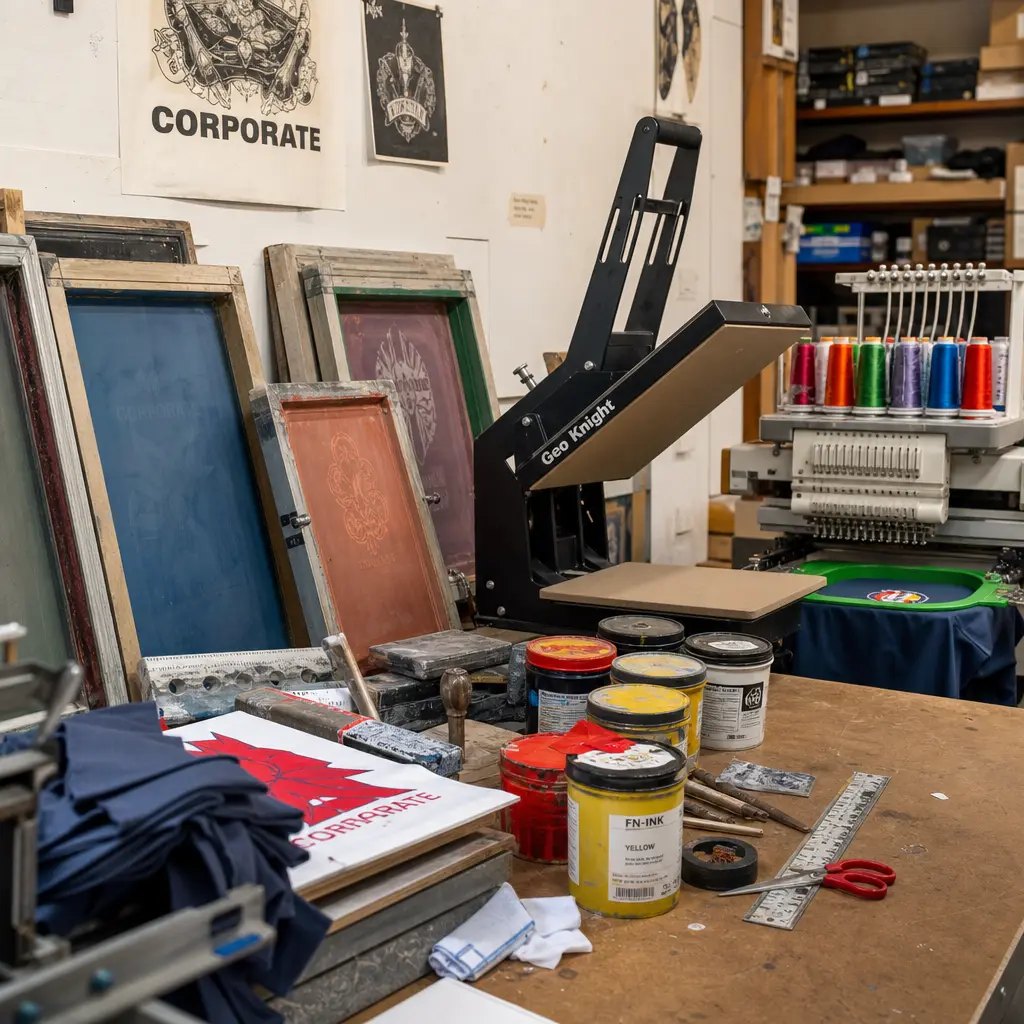
University bookstore merchandise often carries licensed marks, so logo application must be controlled more tightly than ordinary promotional printing. Screen printing is usually the best cost-performance option for one to three solid colors on canvas. It works well for school names, department marks, mascots, and bold graphics. The main limitation is fine detail: small text, thin outlines, halftones, and tight registration can fill in or break on coarse canvas. Buyers should ask for a strike-off on the actual approved canvas, not just a digital mockup.
Heat transfer can reproduce gradients, fine detail, and multicolor graphics more cleanly, but it introduces different risks. Test for edge lifting, cracking, cloudy film, scorch marks, and a plastic handfeel that may not match natural canvas. Embroidery can look premium for small marks, initials, or simple icons, but dense stitching can pucker soft canvas and create rough backing inside the portfolio. Woven labels, side labels, PU patches, or leather patches can add retail value, but each requires approval for color, size, alignment, sewing, and compliance with university branding rules.
A licensing guide should be included with the RFQ whenever available. The supplier needs approved vector artwork, PMS targets, clear-space rules, minimum logo size, mascot-use restrictions, trademark symbol requirements, label requirements, and any restrictions on altering colors or proportions. Ink on natural canvas often appears warmer than the PMS chip, and dyed canvas can change contrast. The approval process should include artwork proof, decoration strike-off, and a complete pre-production sample using final materials.
- Screen print: best for bold licensed marks, solid colors, controlled cost, and large orders.
- Heat transfer: useful for gradients and fine detail; test adhesion, film feel, and fold performance.
- Embroidery: premium for small marks; risky for large filled logos on light or soft canvas.
- Woven label: good for side branding, collection identity, and subtle retail finish.
- Patch: premium look; approve material, odor, cracking, stitch placement, and colorfastness.
Build MOQ around SKU complexity
MOQ for canvas zipper portfolios is rarely one simple number. It may be driven by fabric purchase minimums, dye lot size, zipper tape color, lining color, puller style, decoration setup, pocket layout, and packing version. Natural canvas normally supports lower MOQ because it is widely stocked. Custom-dyed university colors may require lab dips, a fabric minimum, and longer approval time. Custom zipper tape, custom lining, molded rubber pullers, patches, and printed belly bands may each have separate minimums.
A 3,000-piece order can be efficient if it uses one base construction and three logo versions. The same 3,000 pieces can become inefficient if split across six universities, three canvas colors, two lining colors, two zipper colors, multiple pocket layouts, and separate retail packs. Each variation increases setup time, material segregation, inspection complexity, and risk of mixed cartons. Buyers should ask suppliers to quote per SKU and identify shared setup costs separately from SKU-specific material costs.
Cost control should begin with the base product. If the bookstore wants a lower unit price, standardize canvas color, lining, zipper tape, and pocket layout, then vary visible branding such as print, hangtag, or puller color. If the program requires custom school colors, keep the zipper, lining, and packing consistent to protect efficiency. The quote should state MOQ per design, per color, per print colorway, and per packing version so the buyer can understand real cost drivers before internal approval.
- Lowest-risk setup: natural canvas, stock zipper, stock lining, one-color screen print, and standard carton packing.
- Moderate customization: stock canvas, school-color puller, two-color logo, hangtag, and barcode label.
- Higher MOQ setup: custom-dyed canvas, custom zipper tape, custom lining, patch, and multiple pocket layouts.
- Quote control: request unit price by SKU and separate shared setup costs from SKU-specific costs.
- SKU discipline: standardize construction first, then customize the most visible brand elements.
Make samples production-representative
Samples should prove construction, not just appearance. A first development sample can confirm dimensions, pocket layout, and general look. The final pre-production sample should use bulk-equivalent canvas, final lining, final zipper, final puller, final decoration, final labels, and final packing. If any component is substituted, the supplier should mark the sample as visual reference only. Buyers should not approve a visual sample and expect production-grade performance without a second approval step.
Review the sample the way bookstore customers and staff will handle it. Load the intended contents and leave them inside overnight to check shape retention and corner stress. Open and close the zipper repeatedly. Check whether the lining catches, whether the zipper puller is comfortable, whether the panel bows, and whether the logo distorts when the portfolio is filled. Measure outside dimensions, usable internal dimensions, pocket dimensions, zipper opening width, and logo placement. Record measurements in a sample approval sheet rather than relying on subjective comments.
Also review the sample as a retail unit. Confirm barcode placement, scan quality, hangtag position, bag or belly band, country-of-origin marking, warning labels if needed, and carton configuration. Natural canvas can pick up dirt during shipment, so packing should protect the product without making the retail presentation excessive. If the bookstore prefers reduced-plastic packaging, test whether a paper band or tissue wrap prevents abrasion and keeps the unit scannable.
- Use final or bulk-equivalent components for the pre-production sample.
- Measure outside size, usable inside size, zipper opening, pockets, logo placement, and label position.
- Load intended contents overnight to check shape retention, seam stress, and lining movement.
- Operate the zipper at least 20 cycles and note drag, catching, puller weakness, or slider defects.
- Approve retail packing, barcode readability, carton count, and SKU separation before bulk production.
Write QC tolerances before production
Quality control should be defined before cutting, sewing, and printing. The buyer and factory should agree on defect classes: critical, major, and minor. Critical defects include wrong licensed logo, wrong barcode, unsafe sharp metal, mold, contamination, or a zipper that cannot function. Major defects include open seams, broken zipper, severe stains, wrong material, wrong size outside tolerance, missing label, or logo outside placement tolerance. Minor defects may include small thread ends, slight approved shade variation, minor canvas slubs, or slight packing wrinkles.
AQL inspection is useful only when the defect list is specific. Many buyers use ANSI/ASQ Z1.4 or ISO 2859-1 sampling plans, with common apparel/bag settings such as critical 0, major 2.5, and minor 4.0, but the exact plan should match buyer risk, order size, and contract terms. Licensed logo and barcode errors may require 100% sorting because even a small number of wrong units can create retail and compliance problems. The purchase order should state inspection level, AQL, defect definitions, and rework rules.
Canvas requires realistic cosmetic standards. Natural cotton canvas may show small slubs, seed specks, and yarn irregularities that are normal unless the buyer specifies cleaner fabric. Oil stains, mildew, heavy dirt, odor, large weaving defects, and color contamination should not be accepted. Dyed canvas should be checked for shade consistency across panels and lots. Functional QC should focus on zipper movement, seam strength points, print adhesion, lining insertion, stiffener flatness, and packing accuracy.
- Critical defects: wrong logo, wrong barcode, unsafe sharp edge, mold, contamination, or unusable zipper.
- Major defects: zipper failure, open seam, severe stain, wrong material, wrong size, missing label, or logo shift beyond tolerance.
- Minor defects: trimmed thread issue, small approved slub, slight shade variation, or minor packing wrinkle.
- Practical tolerances: size plus/minus 5 mm for many small portfolios; print placement plus/minus 3 mm where feasible.
- QC documents: approved sample, artwork sheet, measurement chart, packing standard, defect list, and inspection report.
Plan packing and carton data
Packing is part of the product specification because it affects shelf condition, receiving accuracy, and landed cost. Natural canvas marks easily from carton dust, dark lint, metal pullers, and abrasion. If portfolios are stacked without protection, zipper pullers can press into printed panels or leave dents. Individual recycled polybags are common for retail protection, while paper belly bands or tissue wrapping may support reduced-plastic campus policies. The packing method should be approved with the sample and tested for cleanliness, barcode access, and abrasion resistance.
University bookstore distribution centers need clear SKU separation. If one order includes multiple universities, departments, colors, or logo versions, carton planning should prevent mixing. Use carton-by-SKU packing where possible. If mixed cartons are approved, require inner bundles, divider labels, and a clear carton packing list. Master carton marks should include PO number, SKU, item description, color, quantity, carton number, country of origin, gross weight, net weight, and any buyer routing information. UPC or EAN labels should be scanned from the packed unit before release.
Carton dimensions can change the economics of the order. A lower FOB unit price may not be better if thick stiffeners, oversized pullers, or inefficient stacking increase CBM. Ask for pieces per carton, carton size, gross weight, net weight, and estimated CBM per 1,000 pieces based on the approved packed sample. For manual handling, many buyers prefer keeping carton gross weight around 15-18 kg where feasible, but the requirement should match the bookstore or DC’s handling rules. Compare suppliers on landed cost, not just unit price.
- Use separator sheets or controlled stacking when pullers touch printed panels.
- Keep retail units clean, scannable, and protected without unnecessary packaging waste.
- Pack by SKU where possible; use inner labels if mixed cartons are unavoidable.
- Mark cartons with PO, SKU, color, quantity, carton number, COO, gross weight, and net weight.
- Compare landed cost using unit price, packing cost, carton dimensions, CBM, gross weight, and incoterm.
Specification comparison for buyers
| Spec decision | Recommended option | When it fits | Buyer risk to check |
|---|---|---|---|
| Outer canvas baseline | 12 oz cotton canvas, typically about 380-410 GSM after finishing; agree GSM tolerance before cutting | Balanced university bookstore retail, orientation packs, document sleeves, planner bundles, and mid-duty campus merchandise | Quotes are not comparable unless GSM, finishing, color process, lining, and stiffener are all stated; request a fabric swatch and bulk-lot approval |
| Economy fabric option | 10 oz cotton canvas, typically about 300-340 GSM, preferably lined with 210D polyester or supported by light interlining | Cost-controlled orientation kits, welcome documents, stationery sets, and light paper carry | Unlined 10 oz can feel limp, wrinkle on shelf, and show uneven screen-print coverage on coarse yarns |
| Premium fabric option | 14-16 oz cotton canvas, typically about 450-540 GSM; confirm seam bulk and needle/needle-hole appearance | Alumni shops, gift assortments, premium bookstore SKUs, and higher retail price points | Thicker canvas increases sewing time, zipper-corner resistance, carton volume, and risk of pressure marks when packed tightly |
| Lining material | 210D polyester for standard interiors; 300D polyester for firmer tech or gift versions; specify color and denier | Improves opened appearance, hides seams, reduces lint transfer, and protects papers, pens, or tablet corners | Dark lining may bleed or crock onto light canvas or documents; request colorfastness, odor, and rubbing checks |
| Zipper specification | No.5 nylon coil zipper for most letter/A4 portfolios; No.8 nylon coil zipper for oversized or heavy-duty versions | No.5 is flexible around corners and suitable for daily bookstore use; No.8 fits thicker panels or larger capacity | Low-grade sliders, short zipper length, weak pullers, and tight corner radius cause zipper drag, tooth separation, or lining catching |
| Structure and reinforcement | Canvas outer plus lining; optional 0.8-1.5 mm PE board, 1-2 mm foam, or non-woven interlining depending on target handfeel | Useful when the buyer needs a flat, giftable portfolio that protects documents and presents well in shelf stacks | Over-stiff construction can crack at fold lines, distort corners, increase CBM, and create visible ridges through canvas |
| Logo decoration | Screen print for 1-3 solid colors; heat transfer for gradients; woven label, embroidery, or patch for premium accents | Screen printing is usually cost-effective for school names, department marks, and bold licensed graphics | University licensing may control PMS, mascot proportions, clear space, minimum size, and trademark labels; approve strike-off on actual fabric |
| Retail packing | Individual recycled polybag or paper belly band, hangtag, UPC/EAN label, SKU label, and master carton by color/design | Bookstore DCs need scannable units, clean presentation, and low receiving error rates across campus-specific SKUs | Overpacking raises landed cost and waste; underpacking causes dirt, abrasion, bent corners, mixed-SKU cartons, and barcode issues |
| Inspection level | ANSI/ASQ Z1.4 or ISO 2859-1 sampling plan with agreed AQL, plus 100% checks for critical logo/barcode issues if required | Licensed bookstore programs, multi-SKU orders, time-sensitive back-to-school shipments, and retail-ready packing | Without written defect definitions, factories may treat zipper drag, print shift, stains, odor, and shade variation as acceptable |
Buyer checklist before sampling
- Define the actual load: letter paper, A4 notebook, planner, tablet size, pen set, welcome documents, retail gift bundle, or department kit.
- State finished outside size and required usable internal size; allow for seam allowance, zipper binding, lining thickness, stiffener, and corner radius.
- Select canvas by oz and GSM after finishing; request tolerance, expected shrinkage, finishing type, color process, and fabric swatch before quote approval.
- Choose lining and reinforcement together; specify denier, color, interlining, foam, PE board thickness, pocket fabric, binding tape, and seam finish.
- Specify zipper route: top opening, L-shape, U-shape, or three-side opening; include zipper size, slider count, puller material, tape color, and opening length.
- Provide licensed artwork files with PMS targets, print dimensions, placement from edges, clear-space rules, label requirements, and approval authority.
- Ask suppliers to quote per SKU when canvas color, lining color, zipper tape, puller, print colorway, pocket layout, or packing method changes.
- Require a pre-production sample made with bulk-equivalent canvas, final zipper, final lining, final logo method, final label, and final packing.
- Set measurable QC tolerances: finished size, usable inside size, print placement, stitch density, thread length, zipper smoothness, and carton markings.
- Approve carton dimensions after packed-sample review; stiffened portfolios and metal pullers can reduce carton efficiency and increase CBM.
Factory quote questions to send
- What is the exact canvas weight in oz and GSM after finishing, and what tolerance can the fabric mill maintain, such as plus or minus 5%?
- Is the canvas natural, bleached, dyed, pigment-dyed, washed, laminated, coated, water-repellent treated, or enzyme-finished?
- Can you state weave type, yarn count if available, expected shrinkage after finishing, and whether the bulk fabric will be from one dye lot?
- What are the finished outside dimensions and the guaranteed usable internal dimensions after zipper, seam allowance, lining, and stiffener are installed?
- Which lining is included: denier, composition, color, GSM if available, colorfastness level, and whether it is sewn-in, bound, or laminated?
- Will the portfolio include foam, non-woven interlining, cardboard, PE board, PP sheet, or other stiffener; what thickness and placement are included?
- What zipper size, type, tape material, slider material, plating color, puller style, zipper path length, and zipper tape color are included in the unit price?
- Is the slider auto-lock, semi-auto-lock, or non-lock, and is the design one-way or two-way?
- What stitch density is planned for main seams and stress points, for example stitches per inch or stitches per centimeter?
- What decoration method is quoted, how many colors are included, and what is the maximum print area before price changes?
Quality-control points to confirm
- Agree canvas GSM tolerance before cutting; plus or minus 5% is a common practical target when the mill can support it, but the actual tolerance must be written into the PO.
- Check fabric shade against approved lab dip or bulk swatch under consistent light; keep tolerance practical for cotton canvas, especially across dyed lots.
- Finished outside size tolerance should be realistic for sewn portfolios, typically plus or minus 5 mm for small and medium sizes and plus or minus 8 mm for larger formats unless tooling supports tighter control.
- Usable internal size must be measured separately from outside size because zipper binding, seam allowance, stiffener thickness, and corner curve can reduce loading capacity.
- Print placement should have a written tolerance, commonly plus or minus 3 mm from approved sample for front logo location; licensed clear-space rules override convenience.
- Stitch density should be agreed, such as 7-9 stitches per inch for many canvas bag seams, and inspected for skipped stitches, loose loops, broken thread, and uneven tension.
- Thread ends should be trimmed to an agreed limit, such as no loose thread longer than 5 mm on visible retail surfaces unless otherwise approved.
- Zipper should open and close smoothly for at least 20 inspection cycles without slider lock failure, coil separation, puller breakage, sharp edges, or lining catching.
- Zipper end stops, corner areas, pull-tab seams, pocket openings, and stress points should have secure back-tacking or reinforcement with no open seams.
- Screen print should be checked for color, registration, opacity, pinholes, dry rub resistance, tape-pull adhesion, and cracking when the portfolio is flexed normally.