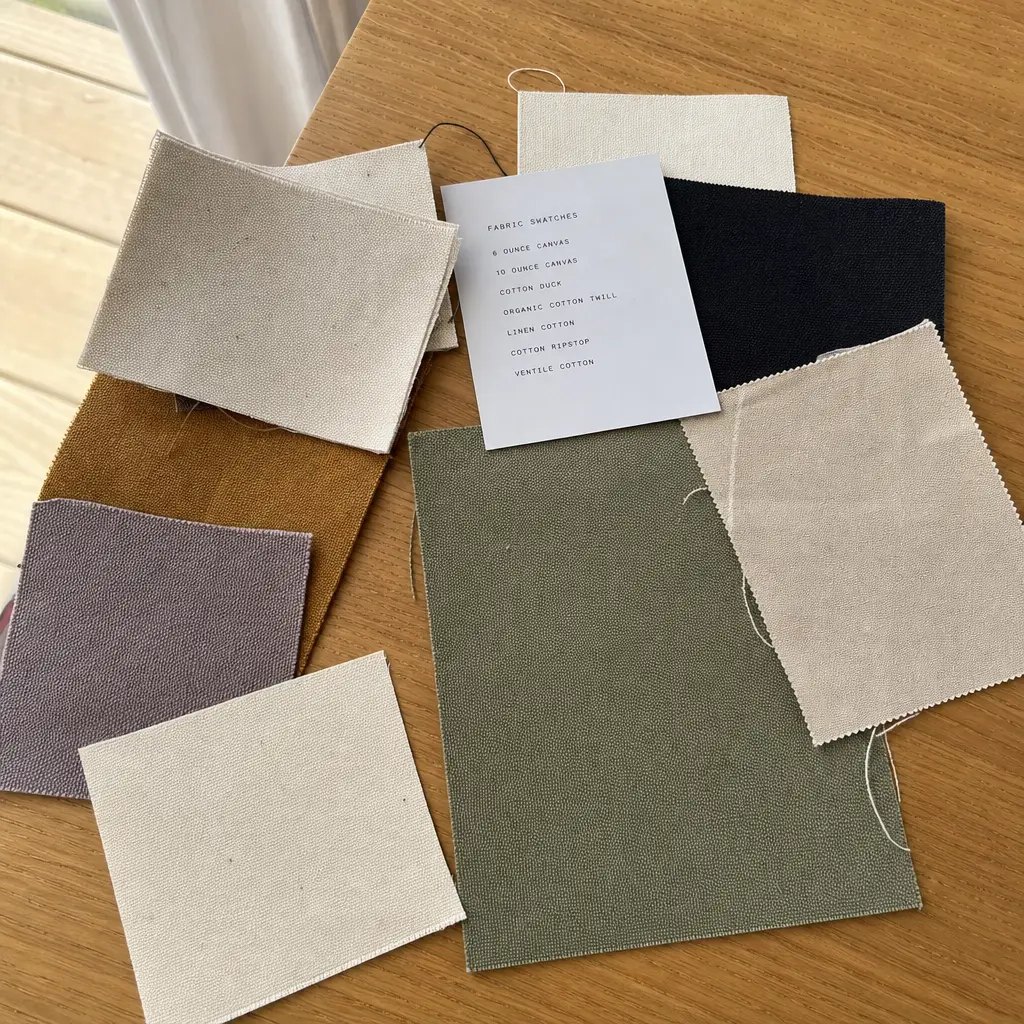
Start with the real use case, not the style
Canvas zipper portfolios for tech startups are often purchased for onboarding kits, sales meetings, event handouts, investor packs, and small internal document sets. Those are different jobs. If the brief only says “portfolio,” suppliers will usually default to a generic promotional build that may look fine in a photo but fail once it holds a notebook, charger, tablet sleeve, or cable bundle.
The first sourcing question is simple: what will the portfolio carry, how often will it be opened, and who will handle it? A lightweight paper-only kit can use a simpler build. A client-facing pack that includes devices or accessories needs stronger shape retention, a cleaner interior, and a more reliable zipper. The use case should drive the spec before price is discussed.
Tech startup buyers also need to think about distribution model. Handing out 200 pieces at an event, shipping 500 kits to remote staff, and storing 1,000 units for phased rollouts all create different packing and QC requirements. If the supplier does not know how the item will be deployed, they cannot quote a true production standard.
A good RFQ therefore states three things clearly: contents, handling, and presentation level. Contents tell the supplier the load. Handling tells the supplier the durability and packing risk. Presentation level tells the supplier whether the product is a giveaway, a business tool, or a premium branded item. That framing removes a lot of ambiguity before the quote is issued.
Procurement should also avoid over-specifying decorative detail before function is settled. A startup may care about logo placement, but if the zipper opening is too short or the bag sags under load, branding quality will not save the order. Practical fit and finish come first. The buyer who names the use case early gets cleaner quotes and fewer sample rounds.
- Name the contents, handling method, and presentation level before asking for price.
- Do not buy a style; buy a controlled use-case solution.
- Treat device-carrying kits and paper-only kits as different builds.
- Ask who will receive the product and where it will be opened.
Choose canvas weight with a load test in mind
For most canvas zipper portfolio programs, 12 oz to 14 oz cotton canvas is a practical starting range. The range is broad enough to cover document carry, light tech accessories, and branded meeting kits without making the product feel bulky. That said, buyers should not treat ounce weight as the only truth. The same nominal weight can feel different depending on weave density, finish, pre-shrinking, and coating.
Ask suppliers to state both the ounce basis and the finished GSM. Those figures are related but not interchangeable across every mill and construction. A supplier quote that only says “12 oz” is incomplete because the buyer cannot compare it against another factory on a consistent basis. Ask for the mill spec or test reference so you are comparing like for like.
The weight choice should match contents. Use the lighter end when the portfolio mainly holds paper documents, thin brochures, or event inserts. Move toward the heavier end when the item must stay structured, sit flat in a seat or bag, or protect a tablet sleeve, notebook, and accessories from crushing. The best option is not the thickest canvas; it is the lightest build that still holds shape and passes the load test.
Request a filled-bag test before approval. Put in the actual contents the user will carry: notebook, charger, cable, power bank, device sleeve, or paper pack. Check whether the zipper closes without forcing the opening, whether the top edge collapses, and whether the bag recovers after light compression. An empty sample can hide performance problems that appear immediately when loaded.
Also ask whether the fabric is pre-shrunk or stabilized. Untreated canvas can shrink or skew after finishing or during humidity changes, which affects both appearance and fit. For repeat programs, fabric stability matters because a small shift in canvas behavior can move zipper alignment and logo placement enough to create inspection disputes. If the factory cannot explain its shrink-control method, the buyer should treat the sample as higher risk.
- Use 12 oz for lighter document use and controlled cost.
- Use 14 oz when structure and load support matter more.
- Ask for ounce basis, finished GSM, and stabilization status.
- Run a loaded sample test with the actual user contents.
- Check whether the fabric is pre-shrunk or otherwise controlled.
Specify lining, zipper, and reinforcement as one system
The interior build is where many portfolios lose quality. Buyers often approve the outer canvas and then discover that the lining feels rough, the zipper catches, or the seam finish sheds fibers into the contents. If the bag will carry papers, electronics, or branded inserts, the inside should be clean enough that the product feels deliberate rather than improvised.
Keep lining language precise. Denier and thread count are different ways of describing different constructions, so do not let the quote blur them together. If the lining is polyester, ask whether it is 210D oxford, 210T taffeta, or another specific fabric. If the lining is cotton, ask for weight and weave. This matters because it changes cost, feel, and sourcing consistency on reorders.
For the zipper, nylon coil is usually the safest general-purpose choice. A #5 zipper is suitable for light to medium loads and tends to give smooth operation with less bulk. A #8 zipper can make sense for wider openings or heavier contents, but only when the sewing line can keep it centered and flat. A bigger zipper does not solve weak construction; it can make alignment problems more visible.
The opening itself should be measured, not judged by eye. Approve the finished opening width and the stop position to a fixed reference point, usually within 5 mm. If the opening is too short, loading becomes awkward. If the stop or bar-tack is weak, the zipper can pull out under stress. Ask the factory to show exactly how the end stop is reinforced and whether the zipper tape is centered before bulk starts.
Reinforcement should be written in the spec: bar-tacks at stress points, clean trimming, and stable stitching at zipper ends and corners. If the portfolio will be shown to clients or executives, also ask whether the inner seams are bound, serged, or left raw. None of those is automatically wrong, but the buyer should know which finish is being purchased because it affects appearance, labor, and complaint risk.
- State lining as a specific construction, not a vague label.
- Use nylon coil zippers for smoother operation and lower risk.
- Measure opening width and stop position before approval.
- Specify reinforcement at zipper ends and stress corners.
- Ask how inner seams are finished if the interior will be visible.
Build the comparison table around real supplier differences
A useful comparison is not a spec sheet copied into a table. Procurement needs to see how suppliers differ in control, flexibility, and risk. For canvas zipper portfolios, compare factories and trading partners on four practical dimensions: who actually makes the goods, how they handle samples, how they control material changes, and how they respond to production issues.
Direct factories are usually stronger when the buyer needs one accountable production chain. They can often show cutting, sewing, printing, inspection, and packing in one place. That makes it easier to verify zipper insertion, seam consistency, and final carton control. A trading partner can still work well, but only if it can prove the factory relationship and show process evidence, not just a sales presentation.
When comparing offers, ask each supplier for the same evidence set: material cards, decorated strike-off, pre-production sample, inline QC photos, and packing photos. The value of that request is not paperwork for its own sake. It tells you whether the quote is backed by an actual production method or only by a generic promise. Suppliers that cannot provide process evidence are usually weaker on bulk consistency.
One practical filter is material substitution control. Ask what happens if the agreed zipper or fabric lot is unavailable. A good supplier should require written approval before substituting. If it says substitutions are normal and do not need approval, that is a risk signal. The buyer may accept a small change in some programs, but it should be a conscious decision, not an accident.
Communication speed also matters. Slow answers during sampling usually become slow answers during bulk. If a supplier takes days to clarify logo placement or carton marking, that can create schedule risk when the order is already in motion. A reliable sourcing route is the one that gives clear answers, clear ownership, and visible production control.
- Compare who makes the item, not only who quotes it.
- Request the same evidence set from every supplier.
- Treat unapproved substitutions as a risk, not a convenience.
- Use sample-stage responsiveness as a control signal.
- Prefer the route that can show process ownership end to end.
Use quote questions that expose hidden cost drivers
A strong quote should be broken into material, labor, decoration, packing, and setup costs. If the supplier offers only one lump sum, procurement cannot tell which part of the build is expensive or what changed when the price moves. That makes it hard to negotiate intelligently and harder to compare multiple offers fairly.
For this category, the biggest cost drivers are canvas weight, zipper grade, branding method, and packing detail. If one quote includes a heavier zipper, lined interior, and individual polybag while another excludes those items, the headline price is meaningless. Ask every supplier to quote on the same basis and to label the incoterm clearly, such as ex-factory or FOB.
Setup fees are common and should be transparent. Screen printing may carry screen or plate charges. Embroidery may involve digitizing fees. Heat transfer may require art setup or film cost. These are not problems as long as the buyer can see them. Hidden setup charges often show up later as “small extras,” which makes the true landed cost higher than expected.
MOQ should be split by color, logo version, and packing configuration. A factory may accept a low total quantity but still require a minimum per fabric color or print setup. That matters for startups running several regional variants or campaign-specific versions. If the supplier cannot state MOQ by version, the buyer may end up paying for unused stock or overordering into the wrong colorway.
Ask for a standard-versus-upgraded pricing view. For example, compare a basic giveaway build against a more polished client-facing build with better zipper grade, cleaner inner finish, and stronger packing. That gives the team a clear view of which upgrades are worth paying for and which ones are simply cosmetic. It also prevents endless renegotiation after the order is already scoped.
- Request a line-item quote, not a single blended price.
- Match incoterms and carton counts before comparing suppliers.
- Ask for setup fees for print, embroidery, or transfer work.
- Get MOQ by color, logo version, and packing format.
- Ask for standard versus upgraded build options.
Ask better sourcing questions before you shortlist
The best supplier questions are the ones that reveal whether the factory actually understands the product. Start with material control: what exact canvas construction do you recommend, how do you verify weight, and how do you manage lot changes? Then move to hardware: which zipper brand or grade do you use, how do you test the puller and stop, and what happens if the zipper source changes? Finally, ask about quality control: when do you inspect, what defects stop packing, and who signs off on substitutions.
You should also ask who is responsible for each step. Is cutting done in-house? Is printing in-house? Is final packing in-house? A supplier that outsources key steps may still be fine, but you need to know where the quality gates are. If the trading company can only relay messages and cannot explain the factory flow, procurement loses leverage when a defect appears.
For startup buyers, flexibility is useful, but uncontrolled flexibility is not. A vendor that says “we can do anything” is often hiding weak standardization. Better answers sound more specific: here is the canvas spec, here is the zipper grade, here is the sample route, here is the tolerance, and here is what cannot change without approval. Specificity is a sign of maturity.
Ask for reference documentation, not just references. Useful documents include spec sheets, decorated strike-offs, sample approval images, inspection reports, carton marks, and packing photos. Those items tell you more than a sales pitch because they show how the supplier works when no one is looking. If a supplier cannot share those records, the buyer should assume the process is less controlled than advertised.
The shortlist decision should favor factories that answer in measurable terms. If a response is vague, convert it into a concrete request. For example, “good zipper” becomes zipper grade, pull cycle expectation, and end-stop method. “Strong QC” becomes defect categories, inspection stage, and corrective action path. That shift helps procurement compare apples to apples.
- Ask how weight, zipper, and lot changes are verified.
- Identify which steps are in-house and which are outsourced.
- Prefer specific answers over broad capability claims.
- Request documents, not only sales references.
- Convert vague quality claims into measurable requirements.
Set sample rules that prevent rework later
The pre-production sample should be made from the same bulk materials and methods that will run in production. That means the same canvas, zipper, decoration method, lining, reinforcement style, and packing approach. If the sample is built from different materials, it is a style reference only. It cannot be treated as production approval.
Approve the sample against measurable criteria. The zipper should glide smoothly. The logo should sit in the agreed position. Stitches should be even, with no skipped sections, loose threads, or puckering around the opening. The corners should look reinforced rather than compressed or collapsed. Those are basic production controls, not cosmetic preferences.
Test the sample with real contents. For a tech startup kit, that could mean a notebook, a charger, a cable, a power bank, and a slim tablet or sleeve. Check whether the portfolio still closes without forcing the zipper, whether the opening is wide enough, and whether the bag returns to shape after light compression. A clean empty sample can hide an awkward loaded profile.
It is useful to define defect severity before the sample review. Minor issues might include a slightly off hang tag or a small thread tail in a hidden area. Major issues might include a crooked zipper, visible seam skip, poor logo placement, or a bag that does not close properly when loaded. A written severity rule keeps the sample review from becoming subjective and saves time when multiple stakeholders are involved.
Keep the approval trail together. The approved sample, decorated strike-off, spec sheet, carton mark, and sign-off note should all stay in one file or folder. That record is essential if there is a dispute later about whether the bulk order matched the approved sample. Good source control is document control as much as it is sewing control.
- Approve only a sample that matches the bulk build.
- Test with realistic contents, not just an empty bag.
- Define minor versus major defects before review.
- Keep the sample, strike-off, and carton mark together.
- Treat the sample as the production baseline, not a style mockup.
Use a QC checklist with pass-fail criteria
A useful inspection plan should work at both sample stage and pre-shipment stage. At sample stage, check dimensions, material hand feel, decoration clarity, zipper function, and shape under load. At pre-shipment stage, sample enough pieces to catch batch drift, especially in seam tension, logo location, and fabric shade. The goal is to catch the defect pattern before it reaches the buyer’s warehouse.
Start with the most visible issues. Canvas should be free from oil spots, visible shade bands, and uneven weave density on exposed panels. Stitching should be clean and consistent, especially at zipper ends and corners. The zipper should open and close without jamming, twisting, or catching the lining. If a piece already fails on the worktable, it should not move into packing.
Then check load behavior. Filled with the approved contents, the portfolio should still close cleanly and keep a reasonable profile. If the top edge buckles or the zipper strain is obvious, the structure is too weak. If the bag opens too wide or the contents shift too easily, the opening and reinforcement may need revision. A bag that only works empty is not ready for bulk approval.
Your QC plan should also include defect grading. For example: critical defects are function failures such as a broken zipper, missing stitching at stress points, or incorrect size that prevents use. Major defects are visible problems that make the item unacceptable for client-facing distribution, such as crooked logo placement, severe puckering, or mismatched panels. Minor defects are small issues that do not affect use but should be tracked, such as loose thread tails outside visible areas. This grading helps inspectors know when to stop packing and escalate.
Pre-shipment sampling should not ignore carton quality. Count by SKU, color, and batch. Confirm that cartons match the purchase order, that labels are legible, and that nothing was mixed without approval. If the supply chain includes export handling or a 3PL, ask whether the cartons need extra marking, moisture control, or palletization. The best portfolio can still create receiving problems if the pack-out is sloppy.
Inspection is most effective when it is tied to the approved documents. The actual sample, spec sheet, purchase order, and carton mark should all match. If the supplier presents a bag that looks close but not identical, the buyer should stop and document the difference. QC works best when it is specific enough to be repeated by another inspector next week.
- Inspect dimensions, decoration, stitching, and zipper operation.
- Test the bag fully loaded with the approved contents.
- Grade defects as critical, major, or minor.
- Verify carton count, labels, and batch separation.
- Stop packing when the approved documents and the shipment do not match.
Write measurable tolerances instead of approving by eye
Subjective approval is one of the fastest ways to create avoidable disputes. Procurement should put tolerances into the PO or spec so the factory knows what variation is acceptable. For a canvas zipper portfolio, that can include size, zipper placement, logo position, stitch spacing, and carton count. Even modest precision makes inspection more consistent.
As a practical starting point, small portfolio dimensions often use a working tolerance around ±3 mm when the supplier can hold it consistently. Logo placement usually needs tighter control because it is highly visible and easy to compare against a seam or centerline. Zipper insertion should also be measured against a fixed reference point, because a small shift can affect opening width and how straight the bag looks when closed.
Stitching should be specified in terms of consistency and reinforcement rather than just “good quality.” Ask for stitch density targets, allowable skipped stitches, and the reinforcement method at stress points. If the factory uses a different but equivalent reinforcement method, it should be approved in advance. Buyers should not be surprised by a construction change that was never written down.
Shade control matters if the order may repeat. Canvas can drift across dye lots, and that becomes obvious when one batch sits beside another. If brand continuity is important, ask for lot tracking and written approval before any material change. That is especially important for startup programs that run in phases or reorder later for new employees or events.
Packing tolerances matter too. A carton that is short one or two units may seem minor, but it creates receiving delays and reconciliation issues. Ask for carton labels that state SKU, color, quantity, and batch number, and require those labels to match the PO. The result is faster warehouse receiving and fewer disputes over missing units.
- Write size, placement, and stitching tolerances into the spec.
- Measure logo placement from fixed reference points.
- Approve equivalent reinforcement methods before bulk if needed.
- Track fabric lot changes when shade continuity matters.
- Require carton labels to match the PO exactly.
Make packing part of the quality system
Packing is not a final afterthought. It affects scuffing, moisture, warehouse speed, and the first impression when the boxes are opened. Individual polybags are useful when the product will travel far, sit in storage, or pass through multiple hands. They add cost, but they reduce surface damage and help keep canvas clean. For export and 3PL programs, the extra control is often worth it.
Carton count should reflect shipping and receiving conditions, not just the maximum that can fit. Overpacking can create pressure marks on canvas or zipper heads, while loose cartons waste freight and move too much in transit. The factory should state how the portfolio is packed, how many pieces per carton, and whether inserts or separators are used to prevent compression damage.
For client-facing programs, the packaging should look neat and open easily. For warehouse distribution, it should be accurate and durable. That distinction matters because a product that looks beautiful in a sample room can still be annoying to receive if labels are vague or carton marks are incomplete. Buyers should state the receiving environment in the RFQ so the factory does not guess.
Moisture control is worth discussing explicitly. Canvas absorbs humidity, and long transit or storage can lead to odor, dull hand feel, or light staining. Depending on lane and climate, ask whether the supplier uses desiccant, carton liners, or other basic protections. There is no universal standard here; the right answer depends on route and storage time. What matters is that the factory can explain its default and why it chose it.
If your order goes through a 3PL or distributor, confirm whether that partner has carton rules. Some warehouses need clean barcodes, pallet labels, or specific carton dimensions. Those requirements should be fed back into the factory quote early. Packing mistakes are expensive because they are hard to correct after bulk production is complete.
- Use polybags when moisture, dust, or scuffing is a real risk.
- Avoid overpacking that distorts zippers or corners.
- Ask for carton labels, batch numbers, and clear SKU marks.
- Confirm whether desiccant or carton liners are needed.
- Match packing to the receiving environment, not the factory default.
Specification comparison for buyers
| Buying decision | What to specify | Best fit | Supplier risk to watch |
|---|---|---|---|
| Canvas weight | 12 oz to 14 oz cotton canvas; confirm the mill basis and finished GSM separately | Document kits, onboarding packs, and sales portfolios that need shape without excessive bulk | Do not accept a generic ounce claim without the exact fabric spec or test report |
| Fabric finish | Pre-shrunk or stabilized canvas with consistent shade and weave face | Repeat orders, logo consistency, and programs with close brand color control | Untreated fabric can shrink, skew, or show lot-to-lot shade drift |
| Lining | 210D oxford, 210T taffeta, or cotton lining stated as a separate line item | Kits carrying tablets, chargers, or mixed accessories | Do not mix denier and thread-count language; unclear lining specs hide cost and quality differences |
| Zipper | Nylon coil zipper, usually #5 for light loads and #8 only when opening size or fill load justifies it | Smooth operation, lower scratch risk, and easier sewing control | Premium-looking metal zippers can be less forgiving if sewing accuracy is weak |
| Branding | Screen print for simple logos; embroidery or heat transfer only after strike-off approval | Promotional kits, internal programs, and premium client-facing packs | Small text can blur in print, and embroidery can distort if stitch density is not controlled |
| Supplier route | Direct factory with visible in-house control, or trading partner with factory proof and process evidence | Buyers needing stable specs and accountability | Verify who cuts, who sews, who inspects, and who approves substitutions |
| Packing | Individual polybag, carton count, carton mark, and moisture control specified separately | Export orders, 3PL receiving, and repeat distribution programs | Packing shortcuts often cause damage, scuffing, or warehouse delays |
| Sample control | Pre-production sample built from the exact bulk materials and decoration method | Any new program or spec change | A reference sample is not enough if the bulk build changes fabric, zipper, or packing |
Buyer checklist before sampling
- Define the contents first: paper only, tablet plus documents, or mixed tech accessories.
- Lock canvas weight, weave, lining, zipper grade, zipper length, and thread color before sampling.
- Approve artwork in the exact decoration method that will run in production; request a strike-off when color matters.
- Require a pre-production sample built from the same material lot or a written substitute-approval rule.
- Set acceptable tolerances for stitching, zipper smoothness, logo placement, panel alignment, and carton count.
- Specify packing count per polybag and per carton, plus carton strength and moisture-control expectations.
- Ask the supplier to break out fabric, lining, zipper, print, sewing, packing, and setup fees.
- Request photos or short video of cutting, sewing, zipper insertion, and final packing before bulk release.
Factory quote questions to send
- What exact canvas ounce weight, finished GSM, weave detail, and finish do you recommend for this use case, and what tradeoff should I expect in body, print quality, and cost?
- Is the quoted price based on direct factory production, and which steps are in-house versus outsourced?
- What is the MOQ by color, by print setup, and by logo variation?
- Which zipper grade, zipper length, puller style, and end-stop method are included in the quote?
- What sample type is included before bulk approval, and what changes would trigger a new sample charge?
- What is your standard packing method, and can you quote alternate carton counts, polybag options, or desiccant inclusion?
- What lead time applies after sample approval, and which production stages could extend it?
- Can you show a breakdown for fabric, lining, zipper, print, sewing, packing, and any screen, plate, digitizing, or setup fees?
- What tolerances do you hold for logo placement, stitch density, and zipper alignment, and how do you inspect them during production?
- Can you confirm whether fabric and zipper lot changes need written buyer approval before bulk use?
Quality-control points to confirm
- Canvas weight and finished fabric spec match the approved sample; no weak spots, oil stains, visible shade bands, or uneven weave density on exposed panels.
- Panel dimensions and fabric width stay within tolerance, typically around ±3 mm for small portfolios unless the supplier can prove tighter capability.
- Zipper runs smoothly for at least 10 open-close cycles on sample inspection without jamming, twisting, tooth separation, or puller interference.
- Zipper tape sits centered and is stitched evenly, with no skipped stitches or visible puckering along the opening edge.
- Logo placement falls within the agreed tolerance and color matches the approved Pantone, strike-off, or physical reference sample.
- Stitch density is consistent, with reinforced stress points at zipper ends, side seams, and pull-tab attachments if present.
- Corner reinforcement and bar-tacks are intact, with no loose threads longer than 3 mm on visible outer surfaces unless the buyer accepts a different trim standard.
- Panel alignment is acceptable, with no obvious skew, corner collapse, or asymmetry when the bag is filled with the approved load set.
- No broken needle marks, oil contamination, dye migration, or visible abrasion on the front panel, zipper tape, or lining.
- Packing count is correct, with no mixed sizes, mixed colors, missing inserts, or unapproved substitutions.